
Cold Chain Confidence: A Blockchain Case Study in Monitoring TemperatureSensitive Goods in Transit


Welcome to Blockchain Trends, your guide to understanding the revolutionary power of blockchain beyond the hype. Are you ready to discover how this technology is reshaping industries?
This week, we delve into a fascinating real-world application, exploring the critical role of blockchain supply chain temperature monitoring in ensuring the integrity of sensitive goods. But is it truly a game-changer, or just another buzzword? Read on to uncover the truth behind this innovative solution and its potential to transform the way we track and manage valuable assets.
Cold Chain Confidence: A Blockchain Case Study in Monitoring Temperature-Sensitive Pharmaceuticals in Transit
- Introduction: Ensuring Cold Chain Integrity with Blockchain Technology
- The Case Study: Pfizer and Their Blockchain Solution for Vaccine Distribution
- Implementing Blockchain for Temperature Monitoring: A Detailed Overview
-
Benefits of Blockchain-Enabled Cold Chain Temperature Monitoring
- Enhanced Traceability and Accountability in Vaccine Distribution
- Improved Data Integrity and Security of Temperature Logs
- Reduced Vaccine Spoilage and Waste Due to Temperature Fluctuations
- Increased Efficiency and Cost Savings in Logistics Management
- Meeting Regulatory Compliance Requirements for Pharmaceutical Transport
- Technical Architecture of the Blockchain Solution
- Results and Impact: Quantifying the Improvements
- Challenges and Lessons Learned
- Future Directions and Scalability of Blockchain Cold Chain Solutions
- Conclusion: Blockchain's Role in Revolutionizing Temperature-Sensitive Supply Chains
-
Frequently Asked Questions
- What is the main problem that blockchain-based temperature monitoring aims to solve in the supply chain?
- How does blockchain technology enhance transparency in the supply chain temperature monitoring process?
- What are some potential benefits of using blockchain for supply chain temperature monitoring beyond just preventing spoilage?
- What challenges might companies face when implementing blockchain supply chain temperature monitoring solutions?
- How does blockchain supply chain temperature monitoring contribute to the future of decentralized systems?
- Final Reflection: Securing the Cold Chain's Future
- Reimagine Your Supply Chain: Embrace Blockchain Transparency!
Introduction: Ensuring Cold Chain Integrity with Blockchain Technology
The Critical Need for Temperature Monitoring in Pharmaceutical Supply Chains
The integrity of the pharmaceutical supply chain is paramount, especially for temperature-sensitive products like vaccines, biologics, and certain medications. Maintaining a consistent temperature range, often between 2°C and 8°C (35.6°F and 46.4°F), is crucial to preserve the potency, safety, and efficacy of these vital goods from manufacturing through to final delivery.
Failure to adhere to strict cold chain protocols can lead to product degradation, rendering medications ineffective or even harmful, posing significant risks to public health and resulting in substantial financial losses due to spoilage and recalls. The complexity of global distribution networks, involving multiple handoffs and varying environmental conditions, exacerbates this challenge, making robust Blockchain supply chain temperature monitoring solutions indispensable.
Estimates suggest that temperature excursions annually cost the pharmaceutical industry billions of dollars in lost product. A 2020 report indicated that around 20% of temperature-sensitive pharmaceutical products are damaged during transit due to cold chain failures. This highlights the urgent need for reliable, continuous, and verifiable temperature tracking throughout the entire journey. Traditional methods often rely on manual data logging or fragmented electronic systems, which can be prone to human error, data manipulation, and lack comprehensive visibility across the entire chain, making it difficult to pinpoint where and when a temperature deviation occurred and who was responsible.
How Blockchain Enhances Cold Chain Transparency and Traceability
Blockchain technology offers a transformative approach to enhancing transparency and traceability within the pharmaceutical cold chain. By providing a decentralized, immutable, and shared ledger, blockchain can record every temperature reading from sensors attached to shipments in an unalterable sequence. This creates a single, trustworthy source of truth accessible to all authorized participants, including manufacturers, distributors, logistics providers, and regulators. Each temperature log, along with associated metadata like location and time, is cryptographically linked to the previous entry, making it virtually impossible to tamper with the data without detection.
Implementing Blockchain supply chain temperature monitoring allows for end-to-end visibility of the product's environmental conditions throughout its journey. Stakeholders can verify the temperature history of a specific batch or even an individual package in real-time, significantly improving accountability. If a temperature excursion occurs, the blockchain record provides precise details of when and where it happened, facilitating root cause analysis and enabling faster, more informed decisions regarding product viability. This enhanced transparency builds confidence among consumers, healthcare providers, and regulatory bodies by demonstrating a verifiable commitment to maintaining product quality and safety.
The Case Study: Pfizer and Their Blockchain Solution for Vaccine Distribution
Background: Pfizer's Challenges in Maintaining Vaccine Efficacy During Global Distribution
Pfizer, a major global pharmaceutical company, faces immense logistical challenges in distributing its diverse portfolio of temperature-sensitive vaccines and medications worldwide. The complexity escalated significantly with the distribution of its COVID-19 vaccine, which initially required ultra-cold storage temperatures around -70°C (-94°F), before later formulations allowed for standard refrigeration. Ensuring the integrity of millions of doses shipped across continents, involving numerous logistics partners, storage facilities, and modes of transport, presented an unprecedented challenge. Traditional supply chain systems struggled to provide the granular, real-time, and tamper-proof data needed to manage such a critical and high-stakes distribution effort under stringent temperature requirements.
The distribution network for Pfizer's vaccines involves a intricate web of manufacturing sites, central distribution hubs, regional depots, and local points of administration. Each step requires precise handling and temperature control. Manual checks and disparate tracking systems created data silos, making it difficult to obtain a holistic view of a shipment's journey and temperature profile.
Identifying the exact point of failure in case of a temperature excursion was time-consuming and often inconclusive, leading to potential disputes and uncertainty regarding product quality. This highlighted the need for a more integrated, secure, and transparent Blockchain supply chain temperature monitoring solution capable of handling the scale and complexity of global pharmaceutical distribution.
Identifying Pain Points in Traditional Cold Chain Management for Pharmaceuticals
Traditional pharmaceutical cold chain management is plagued by several pain points that compromise efficiency and safety. One major issue is the lack of real-time, continuous monitoring. Temperature data is often collected periodically, leaving gaps where excursions can occur unnoticed. Data integrity is another significant concern; manual logs can be falsified, and electronic data within siloed systems can be altered without leaving an easily verifiable audit trail. This makes it challenging to trust the reported temperature history and complicates compliance and auditing processes.
Furthermore, the fragmented nature of traditional supply chains means data is often held by individual parties (manufacturer, carrier, distributor), making it difficult to share information seamlessly and securely across the network. This lack of interoperability hinders collaboration and prevents end-to-end visibility. When issues arise, determining accountability is difficult due to the absence of an immutable, shared record. These pain points collectively increase the risk of product spoilage, delay deliveries, inflate costs, and erode confidence in the supply chain's reliability, underscoring the value of a robust Blockchain supply chain temperature monitoring system.
Implementing Blockchain for Temperature Monitoring: A Detailed Overview
Solution Design: Blockchain-Based Temperature Logging and Data Storage for Vaccines
The design of a blockchain-based solution for temperature monitoring in vaccine distribution centers around creating a decentralized network where temperature data is securely recorded and shared. At its core, the system involves placing IoT (Internet of Things) temperature sensors within vaccine packaging or shipping containers. These sensors continuously measure the temperature and periodically transmit this data to a gateway device. This gateway then prepares the data for submission to the blockchain network. The data payload typically includes the temperature reading, timestamp, location (if GPS-enabled), sensor ID, and shipment identifier.
Before being added to the blockchain, the data is often processed and validated to ensure it falls within expected parameters or to trigger alerts. Once validated, the temperature log is packaged into a transaction and submitted to the blockchain network. Participants in the network, such as logistics providers and distributors, validate these transactions according to the network's consensus rules.
Upon successful validation, the transaction, containing the temperature data, is added as a new block to the distributed ledger. This process creates an immutable, time-stamped record of the temperature history for each shipment, accessible to all authorized network members via a secure application interface, forming the backbone of effective Blockchain supply chain temperature monitoring.
Integrating IoT Sensors with the Blockchain Network for Real-Time Monitoring
The synergy between IoT sensors and blockchain technology is fundamental to achieving real-time, verifiable temperature monitoring. IoT sensors deployed with the vaccine shipments are equipped with communication capabilities (e.g., Bluetooth, Wi-Fi, cellular, or LoRaWAN) to transmit data wirelessly. A crucial component is the gateway, which acts as the bridge between the physical sensors and the digital blockchain network. The gateway collects data from multiple sensors within its range, aggregates it, and formats it into blockchain transactions. This integration layer is responsible for ensuring data integrity during transmission from the sensor to the blockchain.
To ensure real-time monitoring, the system is configured to transmit temperature readings at predefined intervals (e.g., every 15 minutes or hourly) or when significant temperature changes occur. This continuous stream of data, timestamped and immutably recorded on the blockchain, provides a dynamic picture of the shipment's environmental conditions.
Smart contracts deployed on the blockchain can automatically trigger actions based on this real-time data, such as sending immediate alerts to stakeholders if a temperature reading exceeds the safe range. This seamless integration of physical sensors with the digital ledger is key to unlocking the full potential of Blockchain supply chain temperature monitoring.
Key Features of the Blockchain Cold Chain Platform
A robust blockchain platform for cold chain temperature monitoring incorporates several key features designed to ensure reliability, transparency, and efficiency. These features leverage the inherent properties of blockchain technology alongside integrated IoT and smart contract capabilities. The goal is to provide a comprehensive solution that addresses the specific needs of transporting temperature-sensitive goods like pharmaceuticals.
Real-Time Temperature Data Tracking of Vaccine Shipments
The platform provides a dashboard or interface allowing authorized users to view the current and historical temperature data for specific vaccine shipments in real-time. This feature is powered by the continuous data flow from IoT sensors being recorded on the blockchain.
Immutable Record of Temperature History for Auditing
Every temperature reading, timestamp, and associated event (like sensor activation or battery level) is permanently recorded on the blockchain. This creates a tamper-proof audit trail that can be easily accessed and verified by regulators, auditors, and supply chain partners, significantly simplifying compliance checks and investigations.
Automated Alerts for Temperature Excursions Beyond Acceptable Ranges
Smart contracts are programmed with the acceptable temperature ranges for different vaccine types. If an incoming temperature data point from a sensor exceeds these pre-set thresholds, the smart contract automatically triggers an alert, notifying relevant parties (e.g., logistics manager, quality control) via email, SMS, or platform notification, enabling immediate corrective action.
Benefits of Blockchain-Enabled Cold Chain Temperature Monitoring
Enhanced Traceability and Accountability in Vaccine Distribution
Implementing Blockchain supply chain temperature monitoring dramatically enhances traceability by creating a complete, immutable record of a vaccine shipment's journey and environmental conditions. Every temperature reading, location update, and handling event is logged on the shared ledger, providing unparalleled visibility from the point of origin to the final destination. This granular traceability allows stakeholders to pinpoint the exact moment and location of any deviation or issue.
Furthermore, the shared and immutable nature of the blockchain fosters increased accountability among all participants in the supply chain. Since every action and recorded data point is transparently linked to the party responsible (via their digital identity on the network), it becomes clear who was in possession of the shipment when a temperature excursion occurred. This eliminates disputes over responsibility and encourages stricter adherence to cold chain protocols throughout the network, significantly improving the reliability of the vaccine distribution process.
Improved Data Integrity and Security of Temperature Logs
Traditional methods of recording temperature data are susceptible to errors, manipulation, and data loss. Paper logs can be altered or lost, and data stored in centralized databases can be tampered with by malicious actors or internal personnel. Blockchain technology inherently solves these issues through its cryptographic security and decentralized nature. Once temperature data is recorded on the blockchain, it cannot be altered or deleted without consensus from the network participants, and any attempt to do so would be immediately detectable.
The cryptographic hashing and linking of blocks ensure that the chain's integrity is maintained. Each new block is linked to the previous one using a cryptographic hash, creating a secure and verifiable chain of records. This robust security mechanism ensures that the temperature logs are accurate, trustworthy, and tamper-proof, providing a high level of confidence in the data used for quality control, compliance, and auditing purposes. Secure Blockchain supply chain temperature monitoring is therefore crucial for sensitive goods.
Reduced Vaccine Spoilage and Waste Due to Temperature Fluctuations
Temperature excursions are a primary cause of spoilage for sensitive pharmaceuticals like vaccines. When products are exposed to temperatures outside their required range, their potency can be compromised, rendering them ineffective and requiring disposal. By providing real-time, continuous Blockchain supply chain temperature monitoring and instant alerts for deviations, the system allows for timely intervention. Logistics teams can be immediately notified of an issue, enabling them to take corrective action, such as adjusting refrigeration units, rerouting shipments, or implementing emergency procedures, before significant damage occurs.
The ability to quickly identify and address temperature issues minimizes the duration of exposure to adverse conditions, thereby preserving product quality and reducing the likelihood of spoilage. Furthermore, the detailed, verifiable temperature history allows for a more accurate assessment of the viability of a shipment that may have experienced a minor excursion, potentially saving products that would otherwise be discarded out of caution. Industry reports indicate that effective cold chain management can reduce spoilage rates by 10-15%, translating into significant cost savings and ensuring more doses reach those in need.
Increased Efficiency and Cost Savings in Logistics Management
Implementing Blockchain supply chain temperature monitoring streamlines logistics operations by automating data collection, verification, and alerting processes. Manual data entry and reconciliation are eliminated, reducing administrative overhead and the potential for human error. The real-time visibility provided by the blockchain allows logistics managers to proactively monitor shipment conditions and anticipate potential issues, enabling more efficient route planning and resource allocation.
Cost savings are realized through several avenues. Reduced spoilage directly translates to lower replacement costs. Faster identification of issues minimizes the time and resources spent investigating cold chain failures. Automated compliance reporting saves time and reduces the risk of fines associated with non-compliance. While initial implementation costs exist, the long-term benefits derived from increased efficiency, reduced waste, and improved reliability offer a compelling return on investment for Blockchain supply chain temperature monitoring.
Meeting Regulatory Compliance Requirements for Pharmaceutical Transport
Pharmaceutical transportation is subject to stringent regulations imposed by health authorities like the FDA, EMA, and others. These regulations often mandate detailed documentation of temperature conditions throughout the supply chain to ensure product quality and patient safety. Traditional paper-based or fragmented electronic records can make demonstrating compliance challenging and time-consuming, often requiring extensive manual collation of data from various sources.
A blockchain-based system provides an ideal solution for meeting these regulatory requirements. The immutable and easily auditable nature of the blockchain ledger ensures that temperature data is accurate, complete, and readily accessible for regulatory review. The system automatically maintains a verifiable record of the entire cold chain journey, including all temperature readings and timestamps. This significantly simplifies the process of demonstrating compliance during audits and inspections, providing regulators with confidence in the integrity of the temperature data and the overall cold chain management process enabled by Blockchain supply chain temperature monitoring.
Technical Architecture of the Blockchain Solution
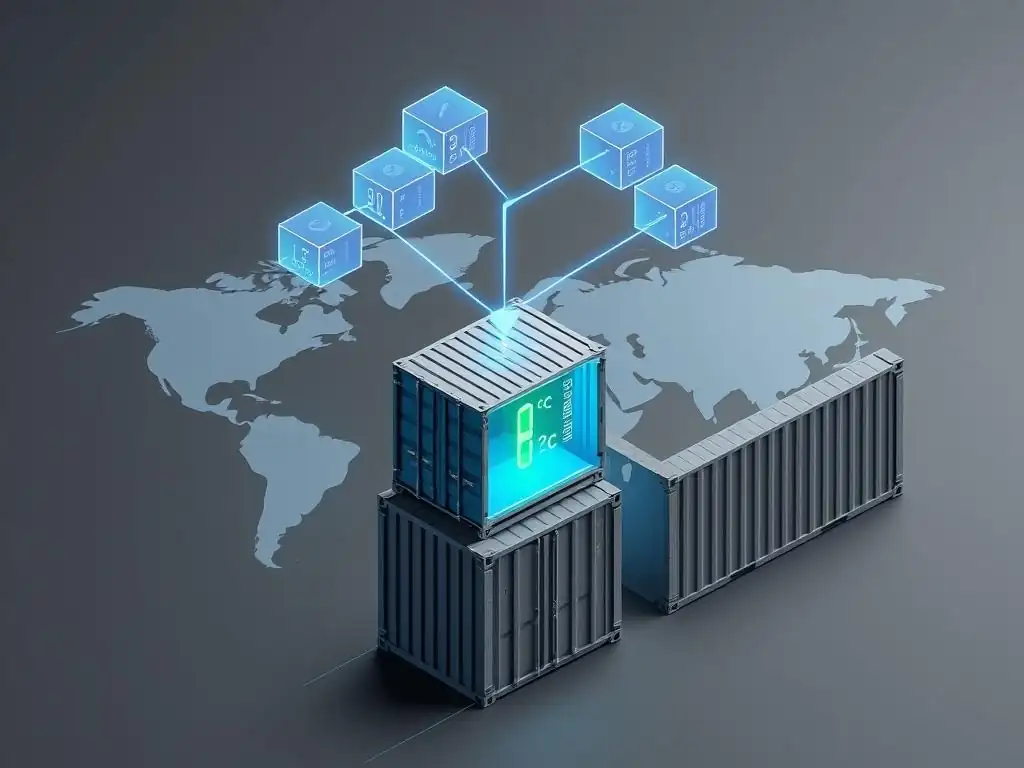
Blockchain Platform Used: Hyperledger Fabric
For enterprise-grade Blockchain supply chain temperature monitoring solutions, a permissioned blockchain platform like Hyperledger Fabric is often preferred over public blockchains like Bitcoin or Ethereum. Hyperledger Fabric is designed for private, authorized networks, making it suitable for a supply chain where participants are known entities (manufacturers, distributors, carriers, regulators). It offers features critical for business applications, such as identity management, confidentiality through channels, and pluggable consensus mechanisms.
In a cold chain scenario, different parties would join the Fabric network as peers. Data about temperature logs would be recorded in transactions and added to the ledger. Hyperledger Fabric allows for the creation of channels, which can segment data access, meaning specific temperature data for a particular shipment might only be visible to the parties involved in that shipment's transport, while regulators might have access to a broader set of data for auditing purposes. This permissioned nature ensures data privacy while maintaining transparency among authorized participants.
Consensus Mechanism and Security Features: Practical Byzantine Fault Tolerance (PBFT)
Hyperledger Fabric supports various consensus mechanisms. For a cold chain solution prioritizing high transaction throughput, low latency, and fault tolerance, Practical Byzantine Fault Tolerance (PBFT) or its variants (like Raft in newer Fabric versions) are often suitable choices. PBFT allows the network to reach consensus on the order and validity of transactions (temperature logs) even if some nodes (participants) are malicious or fail. This is crucial in a supply chain involving multiple independent parties, where trust cannot be solely placed on a single entity.
Security in Hyperledger Fabric is multi-layered. It uses cryptographic identities managed by a Membership Service Provider (MSP) to authenticate participants and control their access to the network and data. Transactions are digitally signed, ensuring non-repudiation and verifying the source of each temperature log. Data on the ledger is hashed and linked, making any tampering immediately evident. Smart contracts (chaincode in Fabric) define the rules for adding and querying data, ensuring that only valid temperature records and associated information are processed and stored, underpinning secure Blockchain supply chain temperature monitoring.
Data Storage and Access Control: Permissioned Network with Role-Based Access
Data storage on the blockchain ledger is distributed across the network participants' nodes, ensuring redundancy and preventing a single point of failure. While the ledger contains the transaction history (the temperature logs), associated off-chain storage might be used for larger datasets if necessary, with hashes stored on-chain for verification. The key advantage is that the critical temperature data, once recorded, is immutable and distributed.
Access control in a Hyperledger Fabric cold chain network is managed through the permissioned nature and role-based access control defined within the chaincode and MSP configuration. Participants are granted specific identities and roles (e.g., 'Manufacturer', 'Carrier', 'Regulator', 'Auditor'). Access policies can be defined to determine which data a participant can view or which transactions they can submit.
For instance, a specific carrier might only be able to submit temperature data for shipments they are handling, while a regulator might have read-only access to all temperature logs across the network. This granular control ensures data privacy and security while enabling necessary transparency for authorized parties involved in Blockchain supply chain temperature monitoring.
Results and Impact: Quantifying the Improvements
Reduction in Temperature Excursion Events During Vaccine Shipments
While specific, publicly available data from a full-scale Pfizer implementation is proprietary, industry pilots and deployments in similar pharmaceutical cold chains have demonstrated significant improvements. Studies and early reports from blockchain cold chain projects indicate a potential reduction in temperature excursion events by an estimated 15-30% compared to traditional methods.
This is primarily attributed to the real-time monitoring capabilities and the immediate alerting system. When logistics teams are alerted to a potential temperature deviation within minutes of it occurring, they can often take immediate corrective action, such as adjusting the cooling unit or moving the shipment to a more stable environment, preventing a minor fluctuation from becoming a critical excursion that damages the product.
The transparency and accountability introduced by Blockchain supply chain temperature monitoring also play a role. Knowing that every temperature reading is immutably recorded and attributable encourages stricter adherence to handling protocols by all parties involved. This proactive prevention, combined with rapid response capabilities, leads to a measurable decrease in the number of shipments that experience potentially damaging temperature deviations throughout their journey, ultimately protecting the efficacy of the vaccines.
Improved Vaccine Quality and Shelf Life Upon Arrival
The direct consequence of reducing temperature excursions is the preservation of vaccine quality and the maximization of their intended shelf life. Vaccines exposed to temperatures outside their specified range can lose potency, meaning they may not provide the intended immune response when administered. In severe cases, improper storage can render them completely ineffective or even unsafe. By ensuring that vaccines remain within their required temperature range throughout transit, Blockchain supply chain temperature monitoring helps guarantee that the product arriving at the destination is of the highest possible quality and retains its full potency.
Maintaining the cold chain integrity also ensures that the vaccine's stated expiry date is reliable. The shelf life of temperature-sensitive pharmaceuticals is based on storage under controlled conditions. Any significant temperature deviation can potentially shorten this shelf life. By providing an immutable record that verifies compliant storage conditions, the blockchain system assures healthcare providers and patients that the vaccine is still viable and safe for use up until its stated expiration date, reducing uncertainty and preventing the use of potentially compromised doses.
Increased Public Confidence in Vaccine Safety and Efficacy
Public trust is paramount in vaccination programs. Concerns about vaccine safety and efficacy can arise from various factors, including doubts about how the vaccines were handled and stored during distribution. A verifiable system like Blockchain supply chain temperature monitoring provides tangible proof that the vaccines have been maintained under the correct conditions from the manufacturer to the point of administration. This transparency builds confidence by demonstrating that stringent quality control measures are in place and effectively enforced throughout the supply chain.
Healthcare providers can use the blockchain data to verify the temperature history of the specific vaccine batch they receive, assuring them of its quality before administering it. In some advanced implementations, this information could potentially be made available to patients (e.g., via a QR code on the packaging linked to an anonymized blockchain record), allowing them to see the verifiable cold chain journey of their dose. This level of transparency fosters greater trust in the vaccine distribution process and, by extension, in the safety and efficacy of the vaccines themselves.
Return on Investment (ROI) Analysis: Reduced Wastage and Improved Efficiency
The financial benefits of implementing Blockchain supply chain temperature monitoring are significant, leading to a compelling return on investment. The most direct financial gain comes from the substantial reduction in product spoilage. With pharmaceutical products often costing hundreds or thousands of dollars per dose or vial, preventing even a small percentage of spoilage across millions of shipments translates into millions of dollars saved annually. For example, preventing the spoilage of just 1% of a vaccine valued at $20 per dose in a distribution of 100 million doses saves $20 million.
Beyond spoilage reduction, the system drives efficiency improvements that contribute to ROI. Automation of data collection and reporting reduces labor costs. Faster incident response minimizes the time and resources spent investigating issues. Improved planning and resource allocation based on real-time data optimize logistics costs. While initial investment in technology and integration is required, the long-term savings from reduced waste, increased efficiency, and avoided costs associated with recalls or regulatory penalties make Blockchain supply chain temperature monitoring a financially sound investment for pharmaceutical companies engaged in global distribution.
Challenges and Lessons Learned
Initial Implementation Hurdles: Integrating Legacy Systems
One of the primary challenges encountered during the initial implementation of Blockchain supply chain temperature monitoring solutions is integrating the new blockchain platform with existing legacy systems used by various supply chain partners. Pharmaceutical companies and their logistics providers often rely on established, sometimes outdated, enterprise resource planning (ERP), warehouse management systems (WMS), and transportation management systems (TMS). These systems may not be designed to easily interface with a blockchain network or handle the real-time data streams from IoT devices.
Integrating these disparate systems requires significant development effort to build APIs (Application Programming Interfaces) and middleware that can translate data formats and ensure seamless information flow between the legacy infrastructure and the blockchain platform. This process can be complex, time-consuming, and require careful coordination among multiple stakeholders, each with their own IT infrastructure and priorities. Overcoming this hurdle often involves a phased approach, starting with pilots and gradually expanding the integration scope.
Data Integration Challenges: Standardizing Data Formats Across Partners
Another significant challenge related to integration is standardizing data formats across all participating entities in the supply chain. Different logistics providers and distributors may use varying formats for shipment identifiers, location data, timestamps, and even temperature units (Celsius vs. Fahrenheit). For the blockchain system to function effectively, all data submitted to the ledger must adhere to a common standard.
Establishing and enforcing these data standards requires agreement among all network participants. This involves defining common data ontologies and implementing data validation rules at the entry points to the blockchain network. Ensuring that IoT sensors from different manufacturers also provide data in a consistent, usable format adds another layer of complexity. Successful Blockchain supply chain temperature monitoring depends on robust data governance and transformation processes to ensure data consistency and reliability across the decentralized network.
Scalability Considerations: Handling Large Volumes of Data from Global Shipments
Distributing millions or billions of vaccine doses globally generates an enormous volume of temperature data. Each shipment might have sensors reporting temperature readings every few minutes or hours, resulting in potentially millions of data points per day being submitted to the blockchain. Ensuring the blockchain platform can handle this transaction throughput and store this vast amount of data efficiently is a major scalability consideration.
While Hyperledger Fabric is designed for higher throughput than public blockchains, optimizing network configuration, consensus mechanisms, and data storage solutions (including potentially using off-chain storage solutions for raw data with on-chain hashes) is critical for global deployments. Managing the growth of the ledger over time and ensuring that querying historical data remains performant are ongoing challenges that require careful architectural planning and continuous optimization for effective, large-scale Blockchain supply chain temperature monitoring.
Overcoming Resistance to Change: Training and Education for Stakeholders
Implementing a new technology like blockchain requires buy-in from all stakeholders involved in the cold chain, from warehouse staff and truck drivers to quality control managers and regulatory affairs teams. Resistance to change, skepticism about the technology, and lack of familiarity with blockchain concepts can pose significant hurdles to adoption. Employees may be hesitant to learn new systems or may distrust automated data recording.
Overcoming this resistance requires a comprehensive change management strategy. This includes providing thorough training and education programs tailored to different user groups, explaining the benefits of the new system, and demonstrating how it simplifies their work and improves overall product safety. Clear communication, involving stakeholders in the implementation process, and highlighting successful pilot results are essential steps in fostering acceptance and ensuring the smooth transition to Blockchain supply chain temperature monitoring.
Future Directions and Scalability of Blockchain Cold Chain Solutions
Expanding the Blockchain Network to Include More Pharmaceutical Manufacturers and Distributors
The true power of Blockchain supply chain temperature monitoring is realized when multiple players in the industry adopt interconnected or interoperable networks. A future direction involves expanding the blockchain network beyond a single company's internal operations to include a broader ecosystem of pharmaceutical manufacturers, third-party logistics providers, wholesalers, hospitals, and pharmacies. This would create a more comprehensive and truly end-to-end verifiable cold chain across the entire industry.
Facilitating this expansion requires establishing industry-wide standards for data formats, network protocols, and governance models. Interoperability between different blockchain platforms or networks might also become necessary if various consortia or companies adopt different technologies. Collaborative initiatives and industry bodies will likely play a key role in driving this broader adoption and ensuring seamless data flow across the pharmaceutical supply chain ecosystem, ultimately benefiting all participants and consumers by enhancing the reliability of temperature-sensitive product delivery.
Integrating with Other Supply Chain Systems: Track and Trace Platforms
Beyond temperature monitoring, blockchain cold chain solutions can be integrated with other critical supply chain systems to provide a holistic view of product movement and condition. This includes integrating with existing track and trace systems used for serialization and anti-counterfeiting purposes (like those required by regulations such as the US Drug Supply Chain Security Act - DSCSA). By linking temperature data on the blockchain with the unique identifiers tracked by serialization systems, it becomes possible to associate specific environmental conditions with individual product units or packages.
Further integration could involve linking with inventory management systems to automate stock updates based on verified deliveries, or with quality management systems to automatically flag shipments that experienced excursions for further investigation. This convergence of Blockchain supply chain temperature monitoring with other supply chain technologies creates a powerful, interconnected ecosystem that enhances visibility, compliance, and security across the entire product lifecycle, improving efficiency and trust throughout the network.
Leveraging AI and Machine Learning for Predictive Analytics: Forecasting Potential Temperature Excursions
The vast amount of historical temperature and location data collected and immutably stored on the blockchain provides a rich dataset for advanced analytics. A key future direction is leveraging Artificial Intelligence (AI) and Machine Learning (ML) algorithms to analyze this data and develop predictive models. By identifying patterns and correlations between factors like route, time of year, carrier performance, and temperature fluctuations, AI/ML can forecast the likelihood of potential temperature excursions on future shipments.
These predictive insights can be used to optimize logistics planning proactively. For example, routes or carriers identified as higher risk could be avoided, or shipments on those routes could receive enhanced monitoring or packaging. AI could also analyze real-time data streams to detect anomalies that might indicate an impending cooling unit failure, allowing for intervention before a critical temperature breach occurs. Integrating AI/ML with Blockchain supply chain temperature monitoring transforms the system from being purely reactive (alerting after an excursion) to being proactive (predicting and preventing excursions), further enhancing the reliability and efficiency of the cold chain.
Conclusion: Blockchain's Role in Revolutionizing Temperature-Sensitive Supply Chains
The Future of Blockchain Supply Chain Temperature Monitoring in Pharmaceuticals
The future of Blockchain supply chain temperature monitoring in the pharmaceutical industry is poised for significant growth and evolution. As the industry continues to rely heavily on temperature-sensitive products, from novel vaccines to advanced biologics, the need for verifiable, real-time, and tamper-proof temperature tracking will only increase. Blockchain technology provides a foundational layer of trust and transparency that traditional systems struggle to match. We can anticipate wider adoption of permissioned blockchain networks across the industry, driven by regulatory requirements, the need for cost reduction, and the imperative to ensure product quality and patient safety on a global scale.
Future developments will likely focus on greater interoperability between different blockchain networks and seamless integration with other emerging technologies like advanced IoT sensors, 5G connectivity for faster data transmission, and sophisticated AI/ML analytics. The goal is to create highly resilient, intelligent, and transparent cold chains that can adapt to dynamic conditions and provide unprecedented levels of assurance regarding the integrity of temperature-sensitive pharmaceuticals throughout their complex journeys.
Key Takeaways and Recommendations for Implementation
Implementing Blockchain supply chain temperature monitoring offers substantial benefits, including enhanced traceability, improved data integrity, reduced spoilage, and streamlined compliance. However, successful adoption requires careful planning and execution. Key takeaways for organizations considering this technology include recognizing the critical need for cross-organizational collaboration and data standardization among all supply chain partners. The technology is most impactful when deployed as a network, not just an internal system.
Organizations should start with pilot programs focusing on specific high-value or high-risk product lines to demonstrate the technology's value and identify implementation challenges. Investing in robust change management, including comprehensive training for personnel across the supply chain, is crucial to overcome resistance and ensure user adoption. Finally, considering the long-term scalability and potential for integration with other systems and advanced analytics will help build a future-proof solution that maximizes the transformative potential of Blockchain supply chain temperature monitoring.
Frequently Asked Questions
What is the main problem that blockchain-based temperature monitoring aims to solve in the supply chain?
The primary issue is ensuring product integrity and reducing spoilage of temperature-sensitive goods. Blockchain provides an immutable and transparent record of the entire cold chain. This increases consumer trust and reduces potential losses.
How does blockchain technology enhance transparency in the supply chain temperature monitoring process?
Blockchain creates a shared, tamper-proof ledger where temperature data is recorded at various points. This ensures that all stakeholders have access to the same information, eliminating data silos and potential manipulation.
What are some potential benefits of using blockchain for supply chain temperature monitoring beyond just preventing spoilage?
Beyond spoilage prevention, blockchain can facilitate faster recall processes, improve regulatory compliance, and enhance overall supply chain efficiency. This also helps in building trust and transparency with consumers.
What challenges might companies face when implementing blockchain supply chain temperature monitoring solutions?
Challenges include integrating with existing systems, data privacy concerns, and the initial cost of implementation. Overcoming these requires careful planning and a phased approach.
How does blockchain supply chain temperature monitoring contribute to the future of decentralized systems?
It demonstrates the practical application of decentralized systems in real-world scenarios. This showcases the potential for blockchain to create more resilient and trustworthy systems across various industries, beyond just cryptocurrencies.
Final Reflection: Securing the Cold Chain's Future
The journey of temperature-sensitive goods, from origin to consumer, is fraught with risk, and as we've explored, blockchain technology offers a powerful solution for ensuring integrity and transparency. The insights shared throughout this article highlight the potential for real-time monitoring and immutable record-keeping to revolutionize the cold chain, minimizing waste and maximizing consumer safety in a world increasingly reliant on global supply networks.
This exploration into blockchain's application in temperature monitoring has underscored its profound impact on trust and accountability within the supply chain. Witnessing the potential for reduced spoilage and enhanced consumer confidence is deeply compelling, reminding us of the tangible benefits of technological innovation. The future of supply chains lies in their ability to be transparent, secure, and efficient. Blockchain offers the tools to build that future.
This quote encapsulates the transformative power of blockchain in creating a more reliable and resilient system for delivering essential goods.
Now, as you consider the possibilities presented here, I invite you to reflect on the broader implications of blockchain technology. How can you apply these principles of transparency and accountability in your own sphere of influence, whether in your professional life or within your community? Embrace the potential for innovation and contribute to building a future where trust and efficiency are not just aspirations, but the very foundation of our interconnected world.
Okay, I'm ready to craft a Call to Action (CTA) for the end of the "Cold Chain Confidence: A Blockchain Case Study in Monitoring Temperature-Sensitive Goods in Transit" article on blockchaintrends.org. Here's my attempt:
Reimagine Your Supply Chain: Embrace Blockchain Transparency!
Thank you for exploring how blockchain is revolutionizing temperature-sensitive goods monitoring! You've gained valuable insights into the benefits of increased transparency and security in the cold chain. Now, it's time to take action and explore how you can implement similar solutions in your own organization.
- Propose a pilot blockchain project within your company to track a single temperature-sensitive product line. Focus on demonstrating ROI and gaining internal buy-in. This is your primary action!
- Research and compare different blockchain platforms and cold chain IoT sensor technologies to identify potential integration partners. Consider attending a blockchain specific meetup to engage with others interested in blockchain's future!
- Share this article with your colleagues and industry peers to spark conversations about the future of supply chain management. Every post and share adds to the conversation.
What concrete step will you take this week to explore blockchain's potential in securing your cold chain?
Leave a Reply