
Smart Cities Powered by Decentralization: Blockchain & IoT for Urban Innovation


Welcome to Blockchain Trends, your gateway to understanding the evolving landscape of blockchain technology!
Delve into the transformative power of decentralized systems and discover how they're reshaping industries beyond just cryptocurrencies. Intrigued by the potential for urban innovation? Our latest deep dive explores " Blockchain smart city solutions 2024," revealing how blockchain and IoT are converging to create smarter, more efficient, and more resilient urban environments. Explore the possibilities and uncover the future of smart cities, starting now!
Smart Cities Powered by Decentralization: Blockchain & IoT for Urban Innovation
- Introduction: The Rise of Blockchain-Enabled Smart Cities
- Blockchain and IoT: A Synergistic Partnership for Urban Development
-
Use Cases: Blockchain Smart City Solutions in Action
- Secure and Transparent Public Services with Blockchain
- Decentralized Energy Grids: Powering Smart Cities with Blockchain
- Smart Transportation Systems: Optimizing Mobility with Blockchain and IoT
- Waste Management and Environmental Monitoring with Blockchain IoT Solutions
- Enhanced Citizen Engagement and Governance Through Decentralized Platforms
- Addressing Challenges and Opportunities in Blockchain Smart City Implementation
- The Future of Urban Innovation with Blockchain and IoT
- Conclusion: Embracing Blockchain for Smarter, More Resilient Cities
-
Frequently Asked Questions
- What role does blockchain play in smart city development, specifically in the context of "Blockchain smart city solutions 2024"?
- How can blockchain and IoT (Internet of Things) work together to create more innovative urban environments?
- What are some of the key enterprise applications of blockchain in smart cities, moving beyond just cryptocurrency?
- What regulatory challenges exist in implementing blockchain solutions within smart city infrastructure?
- What does the future hold for decentralized systems and the evolution of "Blockchain smart city solutions 2024"?
- Final Reflection: Embracing Decentralized Urban Futures
- Ignite Urban Transformation: Become a Smart City Innovator!
Introduction: The Rise of Blockchain-Enabled Smart Cities
Defining the Smart City Concept and its Challenges
The concept of a smart city envisions urban centers leveraging technology to enhance the quality of life for their citizens. Smart cities aim to optimize various aspects of urban living, from resource management and infrastructure efficiency to public safety and citizen engagement. This is achieved through the deployment of interconnected devices, sensors, and data analytics platforms that collect and analyze real-time information to inform decision-making and automate processes.
However, the traditional centralized approach to smart city development faces significant challenges. These include data silos, lack of transparency in data management, vulnerabilities to cyberattacks due to centralized data storage, and concerns about citizen privacy as massive amounts of personal data are collected and controlled by central authorities. Furthermore, the potential for vendor lock-in and the lack of interoperability between different smart city systems can hinder innovation and scalability.
The reliance on centralized systems creates single points of failure, making smart city infrastructure susceptible to disruptions and manipulation. For example, a centralized energy grid controlled by a single entity can be vulnerable to cyberattacks that could cause widespread blackouts. Similarly, centralized transportation management systems can be compromised, leading to traffic chaos and safety hazards.
Moreover, citizens often lack control over their data and have limited visibility into how their information is being used by city authorities and private companies involved in smart city initiatives. These challenges underscore the need for a more robust, secure, and citizen-centric approach to smart city development, paving the way for decentralized solutions.
The Role of Decentralization in Overcoming Urban Challenges
Decentralization offers a compelling alternative to the traditional centralized model of smart city development. By distributing control and data across a network of participants, decentralization enhances security, transparency, and resilience. Blockchain technology, with its inherent decentralized and distributed ledger properties, emerges as a key enabler for building decentralized smart city infrastructure. Decentralization addresses the limitations of centralized systems by eliminating single points of failure, making systems more resistant to cyberattacks and censorship. Data stored on a blockchain is immutable and transparent, fostering trust and accountability among stakeholders, including citizens, government agencies, and private sector entities.
Furthermore, decentralization empowers citizens by giving them greater control over their data and enabling participatory governance models. Blockchain-based platforms can facilitate secure data sharing and collaboration among different smart city systems, promoting interoperability and breaking down data silos. For instance, decentralized identity management systems can allow citizens to control access to their personal data and selectively share it with authorized services, enhancing privacy and security.
Decentralized energy grids, enabled by blockchain, can facilitate peer-to-peer energy trading and promote the adoption of renewable energy sources. By shifting away from centralized control, decentralization fosters a more democratic, resilient, and citizen-centric approach to building smart and sustainable urban environments.
Blockchain and IoT: A Synergistic Partnership for Urban Development
Understanding the Convergence of Blockchain Technology and IoT in Smart Cities
The synergy between Blockchain technology and the Internet of Things (IoT) is pivotal in realizing the full potential of smart cities. IoT provides the network of sensors and devices that collect vast amounts of data from the urban environment, ranging from traffic flow and air quality to energy consumption and waste levels. Blockchain, on the other hand, provides a secure and transparent infrastructure for managing and utilizing this data.
The convergence of these two technologies creates a powerful ecosystem where IoT devices generate data, and blockchain ensures the integrity, security, and accessibility of this data. This convergence moves beyond simple data collection to enable secure data exchange, automated processes, and trusted interactions within the smart city ecosystem.
Imagine a scenario where IoT sensors monitor air quality across a city. These sensors continuously transmit data, which is then recorded and secured on a blockchain. This blockchain record provides an immutable and transparent audit trail of air quality data, accessible to citizens, environmental agencies, and researchers.
Furthermore, smart contracts on the blockchain can be programmed to automatically trigger alerts or initiate actions based on predefined air quality thresholds. For example, if air pollution levels exceed a certain limit, the system could automatically notify relevant authorities, adjust traffic flow to reduce emissions, or even activate public awareness campaigns. This seamless integration of IoT data and blockchain-enabled automation exemplifies the transformative potential of their convergence for smart city applications.
Key Benefits of Integrating Blockchain and IoT for Urban Infrastructure
Integrating blockchain and IoT into urban infrastructure offers a multitude of benefits, enhancing efficiency, security, and citizen trust. Enhanced security is a primary advantage. IoT devices, often vulnerable to cyberattacks due to their limited processing power and security features, can be secured by leveraging blockchain's cryptographic capabilities. Blockchain can provide device authentication, data encryption, and tamper-proof data storage, mitigating the risks of data breaches and device manipulation.
Transparency is another key benefit. Blockchain's distributed ledger ensures that all data transactions are recorded transparently and immutably, fostering trust among stakeholders. Citizens can have greater confidence in the integrity of data collected by smart city systems and the fairness of urban services.
Efficiency gains are also significant. Blockchain can streamline processes and reduce operational costs in various urban services. For example, in supply chain management for city resources, blockchain can track the provenance and movement of goods, ensuring accountability and reducing fraud. In energy distribution, blockchain-based microgrids can enable peer-to-peer energy trading, optimizing energy consumption and reducing reliance on centralized utilities.
Furthermore, improved citizen engagement and governance are facilitated by blockchain. Decentralized platforms can enable citizens to participate in decision-making processes, provide feedback on urban services, and even vote on local initiatives securely and transparently. This integration of blockchain and IoT creates a more resilient, efficient, and citizen-centric urban infrastructure, paving the way for truly smart and sustainable cities.
Use Cases: Blockchain Smart City Solutions in Action
Secure and Transparent Public Services with Blockchain
Blockchain technology can revolutionize the delivery of public services in smart cities by enhancing security and transparency. Consider digital identity management. Traditional centralized identity systems are vulnerable to data breaches and identity theft. Blockchain-based digital identities offer a more secure and citizen-centric approach.
Citizens can control their digital identities stored on a blockchain, granting selective access to different public services without relying on centralized databases. For example, Estonia, a leader in digital governance, utilizes blockchain-based e-Residency, allowing individuals worldwide to access Estonian digital services and establish EU-based companies. This demonstrates the practical application of blockchain for secure and transparent digital identity in a national context, which can be adapted for smart city public services.
Another example is land registry. Traditional land registry systems often suffer from inefficiencies, corruption, and lack of transparency. Blockchain-based land registries provide an immutable and transparent record of land ownership, reducing fraud and disputes.
Countries like Georgia and Sweden have piloted blockchain-based land registry systems, demonstrating the potential for increased efficiency and transparency in property management. In smart cities, blockchain land registries can streamline property transactions, facilitate urban planning, and improve access to land information for citizens and developers. Furthermore, blockchain can be used to secure and track public records, licenses, and permits, ensuring authenticity and preventing tampering, thereby building greater trust and efficiency in public service delivery.
Decentralized Energy Grids: Powering Smart Cities with Blockchain
Decentralized energy grids powered by blockchain offer a sustainable and resilient approach to meeting the energy demands of smart cities. Traditional centralized energy grids are susceptible to large-scale outages and often rely heavily on fossil fuels. Blockchain-based microgrids enable peer-to-peer energy trading, allowing citizens and businesses to generate, consume, and trade energy locally, often from renewable sources like solar panels.
This reduces reliance on centralized utilities, promotes energy efficiency, and fosters the adoption of clean energy. The Brooklyn Microgrid project in New York City is a real-world example of a blockchain-based peer-to-peer energy trading platform. This project allows residents with solar panels to sell excess energy directly to their neighbors, fostering a local and sustainable energy ecosystem.
Blockchain can also enhance the efficiency and transparency of energy distribution within smart cities. Smart contracts can automate energy billing and payments, reducing administrative overhead and ensuring accurate and timely transactions. Furthermore, blockchain can track the provenance of renewable energy, ensuring that green energy credits are accurately accounted for and traded.
Companies like LO3 Energy are developing blockchain-based platforms for managing and optimizing decentralized energy grids. By enabling peer-to-peer energy trading, promoting renewable energy integration, and enhancing grid resilience, blockchain is playing a crucial role in powering smart cities in a sustainable and decentralized manner, contributing to the development of blockchain smart city solutions 2024.
Smart Transportation Systems: Optimizing Mobility with Blockchain and IoT
Smart transportation systems are crucial for improving urban mobility and reducing congestion in smart cities. The combination of blockchain and IoT can optimize various aspects of transportation, from traffic management to public transit and autonomous vehicles. For instance, blockchain can enhance the security and transparency of vehicle data and communication.
In a future with autonomous vehicles, secure communication and data integrity are paramount. Blockchain can provide a secure and tamper-proof record of vehicle data, including location, speed, and maintenance history, ensuring trust and accountability in autonomous transportation systems. Projects like MOBI (Mobility Open Blockchain Initiative), a consortium of automotive companies and technology providers, are exploring the use of blockchain for various mobility applications, including vehicle identity, data sharing, and supply chain management.
Furthermore, blockchain can facilitate decentralized ride-sharing and micro-mobility platforms. Traditional ride-sharing platforms are centralized, taking a significant commission from drivers and controlling user data. Blockchain-based ride-sharing platforms can connect riders and drivers directly, reducing transaction fees and empowering participants.
Similarly, for micro-mobility solutions like shared scooters and bikes, blockchain can provide secure and transparent tracking of assets, payment processing, and user authentication. Companies like Arcade City have experimented with decentralized ride-sharing platforms using blockchain. By enabling secure data sharing, facilitating decentralized mobility services, and optimizing traffic flow through IoT sensor data integrated with blockchain, these technologies are transforming urban transportation and contributing to more efficient and sustainable mobility solutions.
Waste Management and Environmental Monitoring with Blockchain IoT Solutions
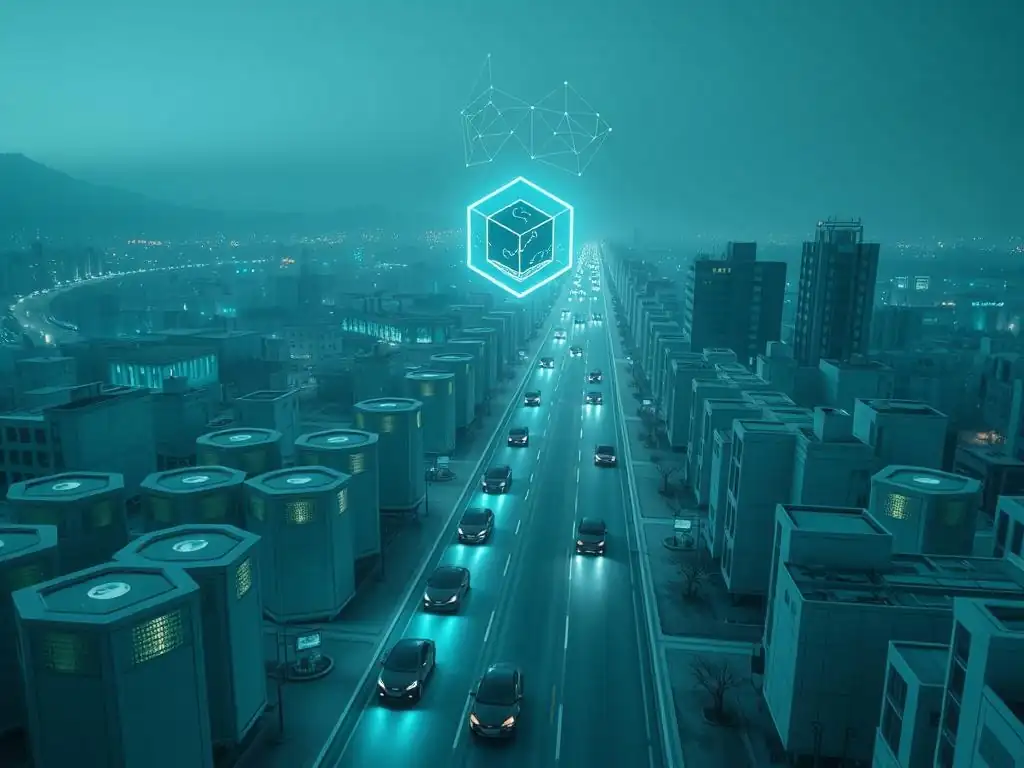
Efficient waste management and environmental monitoring are critical for creating sustainable and healthy smart cities. Blockchain and IoT can be combined to create innovative solutions for tracking waste, optimizing collection routes, and monitoring environmental conditions. For example, IoT sensors can be embedded in waste bins to monitor fill levels and optimize collection schedules.
This data can be recorded on a blockchain, providing a transparent and auditable record of waste generation and collection, improving efficiency and reducing costs. The city of Amsterdam has piloted smart waste management systems using sensors and data analytics to optimize waste collection routes and reduce traffic congestion.
Blockchain can also enhance transparency and accountability in waste management supply chains. By tracking waste from generation to disposal or recycling on a blockchain, cities can ensure that waste is handled responsibly and ethically. This can help combat illegal dumping and promote circular economy initiatives. Furthermore, IoT sensors can be used to monitor environmental conditions such as air and water quality, noise levels, and pollution levels.
This data, secured on a blockchain, provides a transparent and reliable source of environmental information for citizens and policymakers. Initiatives like the EU-funded Decode project are exploring the use of decentralized technologies for citizen-centric data governance in areas like environmental monitoring. By enabling efficient waste management, enhancing environmental transparency, and promoting citizen participation in environmental monitoring, blockchain and IoT are contributing to greener and more sustainable smart cities.
Enhanced Citizen Engagement and Governance Through Decentralized Platforms
Decentralized platforms powered by blockchain can significantly enhance citizen engagement and governance in smart cities. Traditional centralized governance models often lack transparency and citizen participation. Blockchain-based platforms can empower citizens by providing secure and transparent channels for communication, feedback, and participation in decision-making processes. For example, blockchain-based voting systems can ensure secure and transparent elections for local initiatives and city council positions. These systems can enhance trust in the electoral process and increase voter turnout. Voatz, a blockchain-based mobile voting platform, has been used in several elections, demonstrating the feasibility and security of blockchain voting.
Furthermore, decentralized citizen feedback platforms can enable residents to provide input on urban services and policies directly to city authorities in a transparent and auditable manner. Blockchain can ensure that citizen feedback is recorded immutably and that responses from city authorities are also tracked and transparent. This can improve accountability and responsiveness of city governance.
CityCoins, a project leveraging blockchain technology, aims to create digital tokens for cities that can be used to fund city projects and reward citizen participation. By fostering greater citizen participation, enhancing transparency in governance processes, and building trust through decentralization, blockchain is contributing to more democratic and citizen-centric smart city governance models.
Addressing Challenges and Opportunities in Blockchain Smart City Implementation
Scalability and Interoperability Considerations for Blockchain-Based Urban Systems
Implementing blockchain-based systems in smart cities presents scalability and interoperability challenges that need careful consideration. Blockchain networks, especially public blockchains, can face scalability limitations in terms of transaction throughput and processing speed. Smart cities generate vast amounts of data from numerous IoT devices and applications, requiring blockchain solutions that can handle high transaction volumes efficiently.
While blockchain technologies are continuously evolving to improve scalability, including layer-2 solutions and sharding techniques, scalability remains a key consideration for large-scale smart city deployments. For instance, Ethereum, a popular blockchain platform, has faced scalability challenges in handling high transaction volumes, although upgrades like Ethereum 2.0 aim to address these limitations.
Interoperability is another crucial aspect. Smart cities often involve diverse systems and stakeholders, requiring seamless data exchange and communication between different blockchain platforms and legacy systems. Lack of interoperability can create data silos and hinder the full potential of blockchain-based smart city solutions.
Developing open standards and protocols for blockchain interoperability is essential. Projects like Polkadot and Cosmos are focused on building interoperable blockchain networks, enabling different blockchains to communicate and exchange data. For smart city implementations, choosing blockchain platforms and developing interoperability solutions that allow different urban systems to work together seamlessly is critical for achieving widespread adoption and maximizing the benefits of decentralized technologies.
Data Privacy and Security in Decentralized Smart City Infrastructure
While decentralization offers enhanced security, data privacy and security remain paramount concerns in blockchain-based smart city infrastructure. Blockchain's transparency, while beneficial for accountability, can also raise privacy concerns if sensitive citizen data is stored directly on a public blockchain. Careful consideration must be given to data anonymization, encryption, and access control mechanisms to protect citizen privacy.
Techniques like zero-knowledge proofs and homomorphic encryption can enable secure data processing and analysis without revealing sensitive data on the blockchain. Regulations like GDPR (General Data Protection Regulation) in Europe mandate stringent data privacy requirements, which must be addressed in blockchain smart city implementations.
Security vulnerabilities, although mitigated by decentralization, can still exist in smart contracts and blockchain applications. Smart contract vulnerabilities can be exploited by malicious actors, leading to data breaches or financial losses. Rigorous security audits and testing of smart contracts are essential to minimize these risks.
Furthermore, the security of IoT devices themselves, which generate data for blockchain systems, must be ensured. Implementing robust device authentication, encryption, and security updates for IoT devices is crucial for maintaining the overall security of blockchain-based smart city infrastructure. Balancing transparency with data privacy and ensuring robust security measures are critical for building trust and public acceptance of decentralized smart city solutions.
Regulatory Frameworks and Governance Models for Blockchain Smart Cities
The development of appropriate regulatory frameworks and governance models is essential for the responsible and sustainable implementation of blockchain smart cities. The decentralized nature of blockchain challenges traditional regulatory approaches that are often based on centralized control and intermediaries. Regulators need to adapt to the decentralized paradigm and develop frameworks that foster innovation while addressing potential risks and ensuring consumer protection.
Clarity on legal and regulatory aspects of blockchain-based services, such as data ownership, liability, and smart contract enforceability, is needed to provide legal certainty for smart city stakeholders. Jurisdictions like Malta and Switzerland have been proactive in developing regulatory frameworks for blockchain and digital assets, providing examples for other regions to follow.
Governance models for blockchain smart cities need to be inclusive and participatory, reflecting the decentralized ethos of the technology. Traditional top-down governance models may not be suitable for decentralized urban systems. Exploring new governance models that involve citizens, businesses, and government agencies in decision-making processes is crucial.
Decentralized autonomous organizations (DAOs) offer a potential model for governing decentralized smart city infrastructure, enabling community-driven decision-making and resource allocation. Developing clear regulatory frameworks and innovative governance models that are aligned with the principles of decentralization is essential for fostering the growth of blockchain smart cities in a responsible and sustainable manner, and for achieving the goals of blockchain smart city solutions 2024.
The Future of Urban Innovation with Blockchain and IoT
Emerging Trends in Blockchain Smart City Development
Several emerging trends are shaping the future of blockchain smart city development. One key trend is the increasing focus on citizen-centric smart city solutions. Moving beyond technology-driven approaches, future smart cities are prioritizing citizen needs and empowerment. Blockchain's ability to enhance citizen data ownership, privacy, and participation aligns perfectly with this trend. Decentralized identity management, citizen feedback platforms, and participatory budgeting initiatives are gaining traction, reflecting a shift towards more inclusive and citizen-driven smart city models. For instance, Barcelona's DECODE project is exploring citizen-owned data platforms for urban services.
Another trend is the growing integration of Artificial Intelligence (AI) with blockchain and IoT in smart cities. AI can enhance the analysis of data collected by IoT sensors and secured by blockchain, enabling more intelligent and automated urban services. AI-powered analytics can optimize traffic flow, predict infrastructure maintenance needs, and personalize citizen services. Combining AI with blockchain's security and transparency can create robust and trustworthy smart city systems.
Furthermore, the development of more scalable and interoperable blockchain platforms is crucial for wider adoption in smart cities. Advancements in layer-2 solutions, sharding, and cross-chain communication are making blockchain technology more suitable for large-scale urban deployments. These emerging trends point towards a future where blockchain, IoT, and AI converge to create smarter, more citizen-centric, and sustainable urban environments.
Smart Healthcare Systems: Improving Public Health Through Decentralization
Smart healthcare systems are a promising application of blockchain and IoT in smart cities, with the potential to significantly improve public health. IoT devices, such as wearable sensors and remote monitoring systems, can collect real-time health data from citizens. Blockchain can provide a secure and private platform for managing and sharing this health data.
Decentralized electronic health records (EHRs) can empower patients by giving them control over their health data and enabling secure data sharing with healthcare providers. This can improve patient care coordination, reduce medical errors, and enhance the efficiency of healthcare systems. Estonia's e-Health system, leveraging blockchain-like technologies, demonstrates the potential for nationwide digital health infrastructure.
Furthermore, blockchain can enhance the transparency and traceability of pharmaceutical supply chains, combating counterfeit drugs and ensuring the authenticity of medications. IoT sensors can monitor the temperature and conditions of pharmaceutical products throughout the supply chain, with data recorded on a blockchain to ensure integrity. This can improve drug safety and prevent the distribution of substandard or counterfeit medications.
Blockchain can also facilitate secure and efficient clinical trials, improving data integrity and reducing administrative overhead. By enabling secure data sharing, enhancing pharmaceutical supply chain transparency, and facilitating efficient clinical trials, blockchain is poised to play a transformative role in creating smarter and more efficient healthcare systems in smart cities, directly improving public health outcomes.
The Potential for a Truly Decentralized and Sustainable Urban Future
The convergence of blockchain and IoT holds immense potential for creating a truly decentralized and sustainable urban future. Decentralization can empower citizens, enhance resilience, and promote more equitable and efficient urban systems. Blockchain-based decentralized autonomous organizations (DAOs) could potentially govern various aspects of smart city infrastructure, from energy grids and transportation systems to public services and urban planning.
This could lead to more democratic and community-driven urban development, where citizens have a greater say in shaping their city's future. Imagine a city where citizens can directly participate in decisions about urban infrastructure projects, resource allocation, and policy-making through decentralized governance platforms.
Sustainability is another key aspect. Blockchain-enabled decentralized energy grids can promote the adoption of renewable energy sources and reduce reliance on fossil fuels, contributing to cleaner and more sustainable cities. Smart waste management systems, optimized by IoT and tracked by blockchain, can reduce waste and promote circular economy principles.
Decentralized transportation systems can optimize mobility, reduce congestion, and lower carbon emissions. By fostering decentralization, promoting sustainability, and empowering citizens, blockchain and IoT are paving the way for a future where cities are not only smarter but also more resilient, equitable, and environmentally responsible, realizing the vision of truly sustainable urban living and fulfilling the promise of blockchain smart city solutions 2024 and beyond.
Conclusion: Embracing Blockchain for Smarter, More Resilient Cities
Embracing blockchain technology is crucial for building the next generation of smart cities that are not only technologically advanced but also more resilient, secure, and citizen-centric. The synergistic partnership of blockchain and IoT offers a powerful toolkit for addressing the challenges of urbanization and creating urban environments that are more efficient, sustainable, and equitable.
From secure public services and decentralized energy grids to smart transportation and enhanced citizen engagement, blockchain smart city solutions are transforming urban living and paving the way for a more decentralized and sustainable urban future. As cities continue to grow and face increasing complexities, the adoption of blockchain technology will be instrumental in building smarter, more resilient, and ultimately, better cities for all.
Frequently Asked Questions
What role does blockchain play in smart city development, specifically in the context of "Blockchain smart city solutions 2024"?
Blockchain provides a secure and transparent platform for managing data and transactions. In smart cities, this enables efficient resource allocation, improved governance, and enhanced citizen engagement through decentralized systems.
How can blockchain and IoT (Internet of Things) work together to create more innovative urban environments?
Blockchain ensures the integrity and security of IoT device data, preventing tampering and unauthorized access. This synergy allows for reliable data exchange between sensors, systems, and citizens, fostering trust and efficiency in urban operations.
What are some of the key enterprise applications of blockchain in smart cities, moving beyond just cryptocurrency?
Enterprise applications include supply chain management for city resources, identity management for citizens accessing services, and secure voting systems that enhance transparency and reduce fraud.
What regulatory challenges exist in implementing blockchain solutions within smart city infrastructure?
Regulations concerning data privacy, cybersecurity, and interoperability pose significant challenges. Clear legal frameworks are needed to ensure responsible and ethical implementation of blockchain technology in urban environments.
What does the future hold for decentralized systems and the evolution of "Blockchain smart city solutions 2024"?
The future envisions more autonomous and resilient urban systems, driven by decentralized technologies. This includes improved energy management, optimized transportation, and enhanced public safety through secure and transparent blockchain networks.
Final Reflection: Embracing Decentralized Urban Futures
The exploration of blockchain and IoT integration within smart cities reveals a potent synergy, but its true power lies in its potential to foster genuine citizen empowerment and equitable resource distribution. The technological advancements discussed are not merely futuristic concepts; they represent tangible solutions to pressing urban challenges, demanding immediate attention and thoughtful implementation to ensure a more sustainable and inclusive future for all.
The promise of decentralized smart cities resonates deeply, offering a counterpoint to centralized control and surveillance. This vision of a city governed by transparent and immutable systems, where citizens are active participants in decision-making, is not just a technological aspiration, but a moral imperative. The best way to predict the future is to create it.
- Peter Drucker. This quote encapsulates the proactive role we must take in shaping the future of our cities, ensuring that technological advancements serve humanity, not the other way around.
As we stand on the cusp of a new era in urban development, let us not forget the human element at the heart of these innovations. Consider how you can advocate for the ethical and responsible deployment of blockchain and IoT technologies in your own community. Reflect on the role you can play in building a future where smart cities are not just efficient and technologically advanced, but truly serve the needs and aspirations of every citizen, fostering a more just and sustainable world for generations to come.
Ignite Urban Transformation: Become a Smart City Innovator!
Thank you for exploring the exciting potential of blockchain and IoT in shaping the future of smart cities. You've gained valuable insights into how decentralization can drive efficiency, transparency, and citizen empowerment. Now, it's time to put that knowledge into action and become part of the urban revolution.
Here are a few ways you can get involved:
- Research a smart city initiative that leverages blockchain or IoT and share your findings with the Blockchain Trends community. We'd love to hear your insights on a current project!
- Brainstorm innovative blockchain solutions for challenges faced by your city, such as waste management, energy consumption, or public transportation. What decentralized approach would you propose?
- Start a conversation: Share this article with your network and spark a discussion about the role of decentralization in building smarter, more sustainable urban environments. Let's get the conversation flowing!
What specific action will you take today to contribute to the smart city movement? Share your ideas in the comments below!
Leave a Reply