
Understanding Plasma: A Comprehensive Guide to Scalable Blockchain Frameworks


Welcome to Blockchain Trends, your premier source for navigating the ever-evolving world of decentralized technologies. Beyond the hype of cryptocurrencies, blockchain is revolutionizing industries. Are you ready to delve into its transformative potential?
In this article, we unravel the complexities of Plasma blockchain scalability solutions, exploring how these innovative frameworks are tackling the challenges of blockchain adoption. Discover how Plasma empowers faster, cheaper transactions and unlocks a new era of blockchain efficiency. Curious to know how it works and where it's headed? Keep reading to find out!
Understanding Layer-2 Scaling Solutions: A Comprehensive Guide
- Introduction to Layer-2 Scaling Solutions
- Layer-2 Architecture: Key Components and Functionality
- Different Layer-2 Implementations and Variations
- How Layer-2 Enables Scalable Blockchain Applications
- Benefits of Layer-2: Advantages for Blockchain Scalability
-
Challenges and Limitations of Layer-2 Technology
- Complexity of Implementation: Technical Hurdles in Developing Layer-2 Solutions
- Data Availability Problems: Ensuring Data is Accessible When Needed
- Security Considerations: Potential Vulnerabilities and Mitigation Strategies
- Liquidity Fragmentation: Challenges in Maintaining Liquidity Across Multiple Layers
- Layer-2 Solution Comparisons
- The Future of Layer-2: Development and Adoption Trends
- Conclusion: Layer-2 as a Key Enabler of Blockchain Scalability
-
Frequently Asked Questions
- What is Plasma and how does it relate to blockchain scalability?
- How does Plasma achieve higher transaction speeds compared to the main blockchain?
- What are the key components of a Plasma framework?
- What are some potential use cases for Plasma beyond cryptocurrency transactions?
- What are some of the limitations or challenges associated with implementing Plasma solutions?
- Final Reflection: Embracing the Promise of Scalable Blockchains
- Unlock the Potential: Start Building with Plasma Today!
Introduction to Layer-2 Scaling Solutions
The Need for Layer-2 Scaling: Addressing Blockchain Limitations
Blockchain technology, while revolutionary in its potential for decentralization and security, faces significant hurdles in scalability. First-generation blockchains, like Bitcoin and Ethereum in their initial stages, were designed with a focus on security and decentralization, often at the expense of transaction throughput. Bitcoin, for instance, can process around 7 transactions per second (TPS), while Ethereum 1.0 hovered around 15-20 TPS.
These figures are dwarfed by traditional payment processors like Visa, which can handle thousands of TPS, and fall far short of the demands of a global, decentralized financial system or applications requiring high transaction volumes. This inherent limitation creates network congestion, leading to slow transaction confirmation times and escalating transaction fees, particularly during periods of high network activity. For blockchain to achieve mainstream adoption and support complex decentralized applications (dApps), overcoming these scalability bottlenecks is paramount.
The inherent design of many Layer-1 blockchains, where every transaction is processed and validated by every node in the network, contributes to these scalability challenges. This consensus mechanism, while crucial for security and immutability, becomes computationally intensive and time-consuming as the network grows. Imagine a city where every single traffic decision has to be agreed upon by every single citizen before any car can move – this analogy illustrates the inherent limitations of on-chain scaling for high transaction volumes.
To address this fundamental issue, developers and researchers have explored various scaling solutions, broadly categorized into Layer-1 and Layer-2 solutions. Layer-1 solutions involve modifying the base protocol of the blockchain itself, while Layer-2 solutions are built on top of the existing Layer-1 blockchain without altering its core protocol, offering a more immediately deployable and less disruptive path to scalability.
What are Layer-2 Solutions and How Do They Enhance Blockchain Throughput?
Layer-2 solutions represent a suite of protocols and techniques designed to increase the transaction throughput and efficiency of blockchain networks without fundamentally altering the underlying Layer-1 blockchain. Instead of processing every transaction directly on the main blockchain (Layer-1), Layer-2 solutions offload a significant portion of transaction processing to a secondary layer that operates in conjunction with the main chain.
This off-chain processing reduces congestion on the main chain, allowing it to focus on its core responsibilities of security, data availability, and dispute resolution. By moving transactions away from the main blockchain, Layer-2 solutions can achieve significantly higher transaction speeds and lower fees, effectively enhancing the scalability of the entire blockchain ecosystem.
The core principle behind Layer-2 solutions is to leverage the security and decentralization of the main chain (Layer-1) while handling the bulk of transaction processing off-chain. This is achieved through various mechanisms that allow for transactions to be bundled, aggregated, or processed separately from the main chain, and then periodically reconciled or anchored back to the Layer-1 blockchain for security and finality. Think of it like express lanes on a highway: the main highway (Layer-1) remains secure and robust, while the express lanes (Layer-2) allow for faster traffic flow for specific types of transactions.
Different Layer-2 solutions employ diverse approaches, including state channels, sidechains, rollups, and Plasma, each with its own set of trade-offs in terms of security, complexity, and scalability. However, they all share the common goal of enhancing blockchain scalability and usability, paving the way for wider adoption and more complex blockchain applications.
Layer-2 Architecture: Key Components and Functionality
Channels: Direct, Off-Chain Communication Between Participants
Channels, often referred to as state channels or payment channels, represent a Layer-2 scaling solution that enables direct, off-chain communication and transactions between a limited number of participants. They function by establishing a dedicated communication pathway between transacting parties, allowing them to conduct multiple transactions off the main blockchain without requiring each transaction to be individually validated and recorded on-chain. This direct communication significantly reduces the load on the main chain and drastically improves transaction speed and reduces fees for the participants involved in the channel.
The process typically begins with participants locking up a certain amount of cryptocurrency into a multi-signature smart contract on the main chain. This contract acts as the foundation for the channel. Once the channel is established, participants can exchange numerous transactions directly with each other off-chain, updating their balances within the channel without broadcasting each transaction to the entire blockchain network. These off-chain transactions are typically faster and cheaper than on-chain transactions.
Once the participants are finished transacting, they close the channel by submitting the final state of their balances to the main chain. The smart contract then distributes the funds according to the agreed-upon final state. Examples of channel implementations include the Lightning Network for Bitcoin and Raiden Network for Ethereum, primarily focused on enabling faster and cheaper payments.
Sidechains: Independent Blockchains Connected to the Main Chain
Sidechains are independent blockchains that run parallel to the main blockchain (often referred to as the "main chain" or "parent chain") and are connected to it through a two-way peg mechanism. This mechanism allows assets to be transferred between the main chain and the sidechain, enabling the sidechain to leverage the security of the main chain while offering its own distinct features and functionalities, including potentially higher transaction throughput and customized transaction processing. Think of sidechains as separate, smaller blockchains that are anchored to the main, larger blockchain.
Sidechains operate with their own consensus mechanisms, block sizes, and governance models, which can be optimized for specific use cases, such as faster transaction speeds or enhanced privacy features. For example, a sidechain might employ a Proof-of-Stake (PoS) consensus mechanism for faster block times compared to the Proof-of-Work (PoW) consensus mechanism of the main chain. When users want to utilize the functionalities of a sidechain, they "peg-out" their assets from the main chain to the sidechain. This process typically involves locking up assets on the main chain and receiving an equivalent representation of those assets on the sidechain.
Once on the sidechain, users can transact freely with these assets, benefiting from the sidechain's specific advantages. When finished, users can "peg-in" their assets back to the main chain, redeeming their original assets. Examples of sidechain implementations include Liquid Network for Bitcoin and Loom Network (though now pivoting) for Ethereum.
Rollups: Bundling Transactions and Posting Summarized Data On-Chain
Rollups are a Layer-2 scaling solution that enhances blockchain throughput by executing transactions off-chain but posting transaction data on the main chain. They "roll up" or bundle multiple transactions into a single batch and submit a summarized version of these transactions, along with cryptographic proof of their validity, to the main chain.
This approach significantly reduces the amount of data that needs to be processed and stored on the main chain, leading to increased transaction throughput and reduced gas fees, especially for complex transactions. Rollups inherit the security of the main chain because transaction data is ultimately anchored on-chain, allowing for dispute resolution and data availability.
There are two primary types of rollups: Optimistic Rollups and ZK-Rollups (Zero-Knowledge Rollups). Optimistic Rollups operate on the assumption that transactions are valid unless proven otherwise. They post transaction data to the main chain and allow a challenge period during which anyone can submit a fraud proof if they believe a transaction is invalid. If no fraud proof is submitted within the challenge period, the transactions are considered finalized.
ZK-Rollups, on the other hand, utilize zero-knowledge proofs to cryptographically prove the validity of off-chain transactions before posting them to the main chain. This eliminates the need for a challenge period, offering faster finality compared to optimistic rollups. Examples of optimistic rollups include Arbitrum and Optimism, while examples of ZK-Rollups include zkSync and StarkNet.
Different Layer-2 Implementations and Variations
State Channels: Direct Payment Channels and Generalized State Channels
State channels, as previously discussed, facilitate direct, off-chain communication for transactions between a limited set of participants. They are primarily categorized into payment channels and generalized state channels. Payment channels, like the Bitcoin Lightning Network, are specifically designed for fast and low-cost payments. They are optimized for frequent, small-value transactions between known parties, such as micropayments or recurring payments. The focus is on streamlining payment flows and reducing transaction fees associated with frequent on-chain settlements.
Generalized state channels extend the concept of payment channels beyond simple payments to support more complex state transitions and interactions. While payment channels are primarily concerned with transferring value, generalized state channels can facilitate off-chain execution of smart contracts and more complex application logic. This allows for building more sophisticated decentralized applications that can benefit from the speed and low cost of off-chain execution while still leveraging the security of the main chain for dispute resolution. Examples of generalized state channel platforms are still under development and exploration, aiming to broaden the applicability of channel technology beyond just payments.
Plasma: Off-Chain Computation with Fraud Proofs
Plasma is a Layer-2 scaling framework that enables off-chain computation and transaction processing while relying on the main chain for security and data availability guarantees through fraud proofs. Plasma architectures consist of a main chain and multiple "child chains" or Plasma chains. These child chains are essentially smaller blockchains that operate independently but are anchored to the main chain. Transactions are primarily processed on these child chains, significantly reducing the load on the main chain and increasing overall transaction throughput. Plasma's core innovation lies in its use of fraud proofs to ensure the security and correctness of off-chain computations.
In a Plasma system, operators of child chains are responsible for processing transactions and maintaining the state of the child chain. Users interact with these child chains to conduct transactions. Periodically, or when necessary, a summarized representation of the child chain's state, often a Merkle root, is anchored to the main chain.
If a user detects fraudulent activity or incorrect state transitions on a child chain, they can submit a fraud proof to the main chain. This fraud proof demonstrates the invalidity of a particular transaction or state transition.
Upon successful verification of a fraud proof, the main chain can enforce state rollbacks or penalize malicious operators, ensuring the security and integrity of the Plasma chain, even if some operators are dishonest. Early Plasma implementations faced challenges related to data availability and complexity, but ongoing research and development are exploring variations and improvements to the original Plasma framework to address these limitations and enhance its scalability and practicality as a Layer-2 solution for Plasma blockchain scalability solutions.
Optimistic Rollups: Optimistic Execution with Fraud Proofs
Optimistic Rollups, as mentioned earlier, are a type of Layer-2 rollup solution that assumes transactions are valid by default and only resorts to on-chain computation in case of a dispute. They "optimistically" execute transactions off-chain and post the transaction data, along with the resulting state root, to the main chain. A challenge period is then initiated, typically lasting several days, during which anyone can challenge the validity of the rollup state by submitting a fraud proof. This fraud proof demonstrates that the off-chain computation was incorrect or that a fraudulent transaction was included in the rollup batch.
If a valid fraud proof is submitted during the challenge period, the main chain verifies the proof and reverts the rollup state to the correct state. The operator who submitted the incorrect state may also be penalized. If no valid fraud proof is submitted within the challenge period, the rollup state is considered finalized and valid.
Optimistic rollups benefit from relatively simple implementation compared to ZK-Rollups and can support general-purpose smart contracts, making them suitable for a wide range of decentralized applications. However, the challenge period introduces a delay in transaction finality, which can be a consideration for certain applications requiring faster confirmation times.
ZK-Rollups: Zero-Knowledge Proofs for Transaction Validity
ZK-Rollups, or Zero-Knowledge Rollups, leverage zero-knowledge succinct non-interactive arguments of knowledge (zk-SNARKs) or zero-knowledge succinct transparent arguments of knowledge (zk-STARKs) to provide cryptographic proof of the validity of off-chain transactions. Unlike optimistic rollups that rely on fraud proofs and a challenge period, ZK-Rollups generate a validity proof for each batch of off-chain transactions. This proof cryptographically verifies that all transactions within the batch are valid and that the resulting state transition is correct. This validity proof is then submitted to the main chain along with the compressed transaction data.
Because the validity proof is cryptographically sound, the main chain can immediately verify the correctness of the off-chain computation without needing a challenge period. This results in faster transaction finality compared to optimistic rollups. ZK-Rollups offer strong security guarantees as they rely on cryptographic proofs rather than economic incentives for fraud detection.
However, ZK-Rollups are generally more complex to implement and currently have limitations in terms of supporting general-purpose smart contracts, although advancements are being made in this area. They are particularly well-suited for applications requiring high transaction throughput, fast finality, and strong security, such as decentralized exchanges and payment systems.
How Layer-2 Enables Scalable Blockchain Applications
Decentralized Exchanges (DEXs) and Layer-2: Faster and Cheaper Trading
Decentralized Exchanges (DEXs) are a prime example of applications that significantly benefit from Layer-2 scaling solutions. Traditional DEXs operating directly on Layer-1 blockchains often suffer from slow transaction speeds and high gas fees, particularly during periods of high trading volume. This can lead to a poor user experience, with slow order execution and expensive trading costs, hindering the adoption of decentralized finance (DeFi). Layer-2 solutions address these limitations by enabling DEXs to process trades off-chain, significantly increasing transaction throughput and reducing trading fees.
For instance, Layer-2 solutions like ZK-Rollups are particularly well-suited for DEXs due to their fast finality and high transaction throughput. A DEX built on a ZK-Rollup can process thousands of trades per second with near-instant settlement and significantly lower fees compared to a Layer-1 DEX. Optimistic Rollups can also enhance DEX scalability, although the slightly longer finality times might be a consideration for high-frequency trading.
By leveraging Layer-2, DEXs can offer a user experience that is comparable to or even surpasses that of centralized exchanges in terms of speed and cost, while retaining the core benefits of decentralization and non-custodial trading. Several DEX platforms are already utilizing or exploring Layer-2 solutions like StarkEx and zkSync to improve their scalability and user experience.
Micropayments and Layer-2: Enabling Efficient Small-Value Transactions
Micropayments, small-value transactions often less than a dollar, are impractical on many Layer-1 blockchains due to high transaction fees. The cost of processing a transaction on the main chain can often exceed the value of the micropayment itself, making it economically infeasible. Layer-2 solutions, particularly state channels and certain rollup designs, are crucial for enabling efficient and cost-effective micropayments on blockchain networks.
State channels, like the Lightning Network, are specifically designed for facilitating micropayments. By establishing direct payment channels between users, numerous small transactions can be conducted off-chain with minimal fees. Only the channel opening and closing transactions are recorded on the main chain, significantly reducing the overall cost per transaction.
This makes micropayments viable for use cases such as pay-per-article content consumption, streaming services, or in-app purchases within decentralized applications. Rollups, with their ability to batch transactions and reduce gas costs, can also contribute to making micropayments more feasible, although state channels are often considered the most optimized Layer-2 solution for this specific use case due to their direct peer-to-peer nature and low latency for small payments.
Gaming and NFTs on Layer-2: Scaling Blockchain-Based Games
Blockchain-based gaming and Non-Fungible Tokens (NFTs) are rapidly growing sectors that demand scalable blockchain infrastructure. Traditional blockchain gaming and NFT platforms face challenges related to slow transaction speeds and high gas fees, especially during popular game launches or NFT drops. These limitations can hinder the user experience, making gameplay sluggish and NFT transactions expensive, thus limiting the potential of blockchain in these areas. Layer-2 scaling solutions provide the necessary infrastructure to support the high transaction volumes and low latency required for mainstream blockchain gaming and NFT ecosystems.
Layer-2 solutions like sidechains and rollups offer significant improvements for blockchain gaming and NFTs. Sidechains can provide dedicated environments with customized transaction processing optimized for gaming, allowing for faster in-game transactions and lower fees for NFT minting and trading. Rollups, particularly optimistic and ZK-Rollups, can also greatly enhance the scalability of NFT marketplaces and blockchain games by enabling faster and cheaper NFT transactions and in-game asset transfers.
For example, platforms like Immutable X utilize ZK-Rollups to provide gas-free NFT minting and trading on Ethereum, making NFTs more accessible and user-friendly. The adoption of Layer-2 is crucial for the continued growth and mainstream adoption of blockchain gaming and NFTs, enabling smoother gameplay experiences and more affordable NFT interactions.
Supply Chain Management with Layer-2: Enhanced Transparency and Efficiency
Supply chain management is another area where Layer-2 scaling solutions can unlock significant benefits for blockchain adoption. Blockchain's inherent transparency and immutability make it well-suited for tracking goods and data across complex supply chains. However, traditional Layer-1 blockchains can struggle to handle the high volume of transactions generated by large, global supply chains. Layer-2 solutions can address these scalability limitations, enabling more efficient and cost-effective blockchain-based supply chain management systems.
By utilizing Layer-2, supply chain applications can record and track data points at various stages of the supply chain process, from manufacturing to distribution and delivery, with increased speed and reduced costs. For example, using a sidechain or a rollup, a supply chain network can process a high volume of transactions related to product tracking, provenance verification, and logistics management without congesting the main chain or incurring excessive transaction fees.
This enhanced efficiency can lead to improved transparency, reduced operational costs, and increased trust and accountability within supply chains. Furthermore, Layer-2 solutions can enable more granular and real-time tracking of goods, enhancing visibility and responsiveness in complex supply chain networks, ultimately contributing to more resilient and efficient global trade.
Benefits of Layer-2: Advantages for Blockchain Scalability
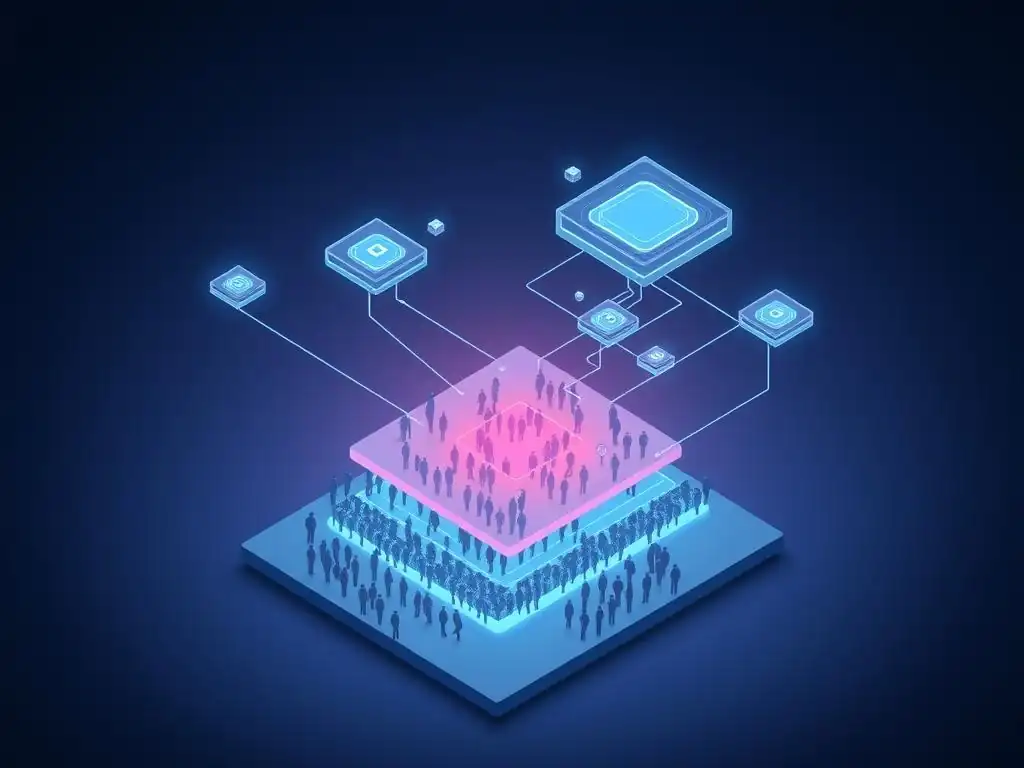
Increased Transaction Throughput: Handling a High Volume of Transactions
The most prominent benefit of Layer-2 scaling solutions is their ability to dramatically increase transaction throughput compared to Layer-1 blockchains. By offloading transaction processing from the main chain, Layer-2 solutions can handle significantly higher volumes of transactions per second (TPS).
For instance, while Ethereum 1.0 could process around 15-20 TPS, Layer-2 solutions like rollups and state channels can potentially increase this throughput to thousands of TPS, approaching or even exceeding the transaction processing capabilities of traditional payment networks. This increased throughput is crucial for supporting mainstream adoption of blockchain technology and enabling applications that require high transaction volumes, such as decentralized social media platforms, high-frequency trading DEXs, and mass-market blockchain games.
The specific increase in transaction throughput varies depending on the type of Layer-2 solution employed. State channels are highly effective for increasing throughput for a limited number of participants engaged in frequent transactions. Sidechains offer scalability by providing independent blockchains with customized parameters. Rollups, particularly ZK-Rollups, are designed to achieve very high throughput by batching transactions and utilizing cryptographic proofs of validity. This enhanced capacity to process a high volume of transactions makes blockchain technology more viable for a wider range of real-world applications and use cases, moving it closer to fulfilling its potential as a global, scalable infrastructure.
Reduced Transaction Fees: Lowering the Cost of Blockchain Usage
Layer-2 solutions also significantly reduce transaction fees, making blockchain technology more accessible and affordable for users. High transaction fees on Layer-1 blockchains, especially during periods of network congestion, can be a major barrier to entry, particularly for smaller transactions and users in developing economies. By processing transactions off-chain, Layer-2 solutions minimize the gas costs associated with on-chain computation and data storage, resulting in substantially lower transaction fees.
For example, transactions on Layer-2 solutions like rollups can often be orders of magnitude cheaper than equivalent transactions on the Ethereum main chain. This reduction in fees makes blockchain technology more practical for everyday use cases, such as micropayments, small-value transfers, and frequent interactions with decentralized applications. Lower fees also encourage greater participation in the blockchain ecosystem, allowing more users and developers to build and utilize blockchain-based applications without being burdened by prohibitive transaction costs. This cost-effectiveness is essential for driving broader adoption and making blockchain technology truly inclusive and accessible to a global audience.
Enhanced Scalability: Adapting to Growing Network Demands
Scalability, in the broader sense, refers to the ability of a blockchain network to adapt and grow to meet increasing demands without compromising performance or security. Layer-2 solutions are designed to enhance the overall scalability of blockchain networks, enabling them to accommodate a growing number of users, transactions, and applications. By distributing transaction processing across multiple layers, Layer-2 solutions alleviate congestion on the main chain, ensuring that the network can handle increased activity without experiencing significant slowdowns or cost increases.
This enhanced scalability is crucial for the long-term viability and success of blockchain technology. As more users and applications onboard to blockchain networks, the demand for transaction processing capacity will continue to grow. Layer-2 solutions provide a flexible and adaptable framework for meeting these growing demands, allowing blockchain networks to scale effectively and sustainably.
Furthermore, the modular nature of Layer-2 solutions allows for continuous innovation and improvement, enabling blockchain networks to evolve and adapt to future scalability challenges and emerging use cases. This adaptability and resilience are key to ensuring that blockchain technology can scale to meet the needs of a global, decentralized future.
Improved Privacy: Enhanced Transaction Privacy Options
While not always the primary focus, some Layer-2 solutions can also offer improved transaction privacy compared to transacting directly on Layer-1 blockchains. Certain Layer-2 architectures, particularly those utilizing ZK-Rollups, can incorporate privacy-enhancing technologies that obscure transaction details on the main chain while still maintaining transaction validity and security. ZK-Rollups, with their use of zero-knowledge proofs, can enable private transactions where only the validity of the transaction is publicly verifiable, but the transaction details, such as the sender, receiver, and amount, can be kept private.
This enhanced privacy can be beneficial for various use cases, particularly in financial applications where users may prefer to keep their transaction details confidential. While Layer-1 blockchains like Bitcoin and Ethereum are pseudonymous, transaction history is still publicly auditable. Layer-2 solutions offering privacy features can provide an additional layer of privacy for users who require it.
It's important to note that the level of privacy offered varies across different Layer-2 solutions, and some solutions may prioritize scalability and cost reduction over privacy enhancements. However, the potential for incorporating privacy features into Layer-2 architectures is a significant advantage, expanding the applicability of blockchain technology to privacy-sensitive use cases.
Challenges and Limitations of Layer-2 Technology
Complexity of Implementation: Technical Hurdles in Developing Layer-2 Solutions
Despite their numerous benefits, Layer-2 solutions also present several challenges and limitations. One significant hurdle is the complexity of implementation and development. Building robust and secure Layer-2 solutions requires advanced cryptographic techniques, sophisticated engineering, and a deep understanding of blockchain protocols. Developing and deploying Layer-2 solutions is often more technically demanding than building applications directly on Layer-1 blockchains.
For example, implementing ZK-Rollups requires expertise in zero-knowledge cryptography and complex proving systems. Developing secure state channel implementations requires careful design to prevent vulnerabilities and ensure proper channel management. The complexity of Layer-2 development can lead to longer development times, higher development costs, and a steeper learning curve for developers. Furthermore, the relative novelty of Layer-2 technologies means that there is less established tooling, documentation, and developer support compared to Layer-1 development, adding to the implementation challenges.
Data Availability Problems: Ensuring Data is Accessible When Needed
Data availability is a critical consideration for Layer-2 solutions, particularly those that rely on off-chain data storage or computation. Data availability refers to the guarantee that transaction data and state information are accessible and retrievable when needed, especially for dispute resolution and security purposes. If transaction data is not readily available, it can undermine the security and trust assumptions of Layer-2 systems.
Plasma, in its original design, faced data availability challenges, requiring users to actively monitor child chains and download transaction data to participate in fraud proofs. Rollups, while posting transaction data on-chain, still rely on the main chain's data availability guarantees. Ensuring data availability in Layer-2 solutions often involves implementing mechanisms for data redundancy, data replication, and data retrieval. Solutions like data availability sampling and data availability committees are being explored to address data availability concerns in Layer-2 systems. Maintaining robust data availability is crucial for the security and long-term viability of Layer-2 solutions.
Security Considerations: Potential Vulnerabilities and Mitigation Strategies
While Layer-2 solutions are designed to inherit the security of the Layer-1 blockchain, they also introduce their own set of security considerations and potential vulnerabilities. The security of Layer-2 solutions depends on the specific architecture and implementation details. For example, state channels rely on the honest behavior of channel participants and the security of the underlying smart contracts. Sidechains depend on their own consensus mechanisms and security assumptions. Rollups rely on the security of fraud proofs or validity proofs and the data availability of transaction data.
Potential security vulnerabilities in Layer-2 solutions can include smart contract vulnerabilities, fraud proof vulnerabilities, data availability attacks, and operator collusion. Mitigation strategies for these vulnerabilities involve rigorous security audits, formal verification of smart contracts, robust fraud proof mechanisms, data availability solutions, and decentralized operator sets. It's crucial to carefully analyze the security assumptions and potential risks of each Layer-2 solution and implement appropriate security measures to protect user funds and ensure the integrity of the system.
Liquidity Fragmentation: Challenges in Maintaining Liquidity Across Multiple Layers
Liquidity fragmentation is a potential challenge that can arise with the proliferation of Layer-2 solutions. As assets and users become distributed across multiple Layer-2 networks, liquidity can become fragmented, making it more difficult to execute large trades or efficiently transfer assets between different layers. If a significant portion of users and assets migrate to Layer-2, the liquidity available on the Layer-1 blockchain and across different Layer-2 solutions can become diluted.
Liquidity fragmentation can lead to increased slippage in decentralized exchanges and reduced capital efficiency. Addressing liquidity fragmentation requires solutions that facilitate cross-Layer-2 interoperability and asset transfers. Atomic swaps, cross-chain bridges, and liquidity aggregation protocols are being explored to mitigate liquidity fragmentation and enable seamless asset movement and trading across different Layer-2 networks. Maintaining sufficient liquidity across the entire blockchain ecosystem, including Layer-1 and Layer-2, is essential for the healthy functioning of decentralized finance and other blockchain applications.
Layer-2 Solution Comparisons
State Channels vs. Rollups: Comparing Approaches to Off-Chain Scaling
State channels and rollups represent two distinct approaches to Layer-2 scaling, each with its own strengths and weaknesses. State channels excel at enabling fast, low-cost transactions between a limited number of participants who engage in frequent interactions. They are particularly well-suited for payment applications and scenarios where direct peer-to-peer communication is beneficial. However, state channels are less effective for scaling general-purpose smart contracts or applications requiring broad participation, as they require participants to explicitly join and manage channels.
Rollups, on the other hand, are designed for scaling general-purpose smart contracts and can accommodate a larger number of users and applications. They achieve scalability by batching transactions and posting summarized transaction data on the main chain. Optimistic rollups offer greater flexibility in terms of smart contract compatibility but have longer finality times due to the challenge period.
ZK-Rollups provide faster finality and stronger security guarantees but are generally more complex to implement and may have limitations in terms of smart contract generality, although this is rapidly evolving. In essence, state channels are optimized for specific use cases involving frequent interactions between known parties, while rollups are designed for broader scalability of general-purpose blockchain applications.
Sidechains vs. Rollups: Understanding the Trade-offs Between Different Solutions
Sidechains and rollups offer different trade-offs in terms of security, scalability, and functionality. Sidechains provide independent blockchains connected to the main chain, offering a high degree of flexibility and customization. They can have their own consensus mechanisms, virtual machines, and feature sets, allowing for optimization for specific use cases.
However, sidechain security is often independent of the main chain and relies on its own set of validators, which may be less robust than the security of the main chain. Sidechains also require bridge mechanisms to transfer assets between the main chain and the sidechain, which can introduce additional complexity and potential security risks.
Rollups, in contrast, inherit the security of the main chain by posting transaction data and/or validity proofs on-chain. They offer a more direct path to scaling Ethereum and other Layer-1 blockchains without requiring users to trust a separate set of validators or bridge mechanisms to the same extent as sidechains. Rollups are generally considered to be more secure than sidechains in terms of inheriting Layer-1 security.
However, sidechains offer greater flexibility and customization, while rollups are more focused on providing a scalable execution layer directly anchored to the main chain. The choice between sidechains and rollups depends on the specific application requirements and priorities regarding security, flexibility, and scalability.
Plasma vs. Rollups: Distinguishing Features and Use Cases
Plasma and rollups are both Layer-2 scaling solutions that aim to enhance blockchain throughput by moving computation and transaction processing off-chain. However, they differ in their architectures, security models, and suitability for different use cases. Plasma, in its original form, relies on child chains and fraud proofs to ensure security. It aims to provide a framework for building scalable decentralized applications by allowing for the creation of numerous child chains tailored to specific application needs. However, Plasma has faced challenges related to data availability and complexity of implementation, and its adoption has been less widespread compared to rollups.
Rollups, particularly optimistic and ZK-Rollups, have gained significant traction as Layer-2 scaling solutions for Ethereum. Rollups are generally considered to be simpler to implement and offer stronger security guarantees than Plasma, especially in terms of data availability. Optimistic rollups provide compatibility with general-purpose smart contracts and are relatively easier to deploy.
ZK-Rollups offer faster finality and stronger security through validity proofs. While Plasma aimed to provide a more general framework for building scalable blockchain applications, rollups have emerged as a more practical and widely adopted approach for scaling existing Layer-1 blockchains like Ethereum, especially for use cases like DEXs, payments, and NFTs that benefit from Plasma blockchain scalability solutions, or rather, more broadly, Layer-2 scalability solutions.
The Future of Layer-2: Development and Adoption Trends
Ongoing Research and Development in Layer-2 Technology
Layer-2 technology is a rapidly evolving field with ongoing research and development focused on addressing current limitations and further enhancing scalability, security, and functionality. Researchers are actively working on improving the performance and efficiency of rollups, particularly ZK-Rollups, to support more complex smart contracts and reduce proving times. Advancements in zero-knowledge cryptography and proving systems are driving innovation in ZK-Rollup technology, making them increasingly practical and versatile.
Research is also focused on addressing data availability challenges in Layer-2 solutions, exploring techniques like data availability sampling and distributed data availability layers. Interoperability between different Layer-2 solutions and between Layer-2 and Layer-1 is another active area of research, aiming to reduce liquidity fragmentation and enable seamless asset transfers across different layers. Furthermore, developers are exploring hybrid Layer-2 architectures that combine the strengths of different approaches, such as combining state channels with rollups or sidechains with rollups, to optimize for specific use cases and achieve even greater scalability and efficiency.
Real-World Use Cases and Pilot Projects of Layer-2
Layer-2 solutions are moving beyond theoretical concepts and are increasingly being deployed in real-world use cases and pilot projects. Decentralized exchanges (DEXs) are early adopters of Layer-2, with several DEX platforms already utilizing rollups like StarkEx and zkSync to enhance their scalability and user experience. NFT marketplaces are also leveraging Layer-2 solutions, particularly ZK-Rollups, to enable gas-free NFT minting and trading. Payment processors are exploring state channels and rollups for enabling faster and cheaper payments and micropayments.
Gaming platforms are starting to integrate Layer-2 solutions to improve the performance and scalability of blockchain-based games. Supply chain management projects are investigating the use of Layer-2 to enhance the efficiency and scalability of blockchain-based tracking and provenance systems. As Layer-2 technology matures and becomes more user-friendly, we can expect to see wider adoption across various industries and use cases, driving the mainstream adoption of blockchain technology and unlocking its full potential.
The Role of Layer-2 in the Broader Blockchain Ecosystem
Layer-2 solutions are poised to play a crucial role in the broader blockchain ecosystem, serving as a key enabler of blockchain scalability and mass adoption. As Layer-1 blockchains continue to evolve and improve, Layer-2 solutions will likely become an integral part of the blockchain infrastructure, providing the necessary scaling layer for supporting a growing number of users, applications, and transactions. Layer-2 solutions are not intended to replace Layer-1 blockchains but rather to complement them, leveraging the security and decentralization of Layer-1 while providing the scalability and efficiency needed for real-world applications.
The future of the blockchain ecosystem is likely to be multi-layered, with Layer-1 blockchains providing the base layer of security and settlement, and Layer-2 solutions handling the bulk of transaction processing and application logic. This multi-layered architecture will enable blockchain networks to scale to meet the demands of a global, decentralized future, supporting a wide range of use cases and driving the continued growth and evolution of the blockchain ecosystem. Layer-2 technologies are not just a temporary fix but a fundamental architectural component for achieving scalable and sustainable blockchain networks.
Conclusion: Layer-2 as a Key Enabler of Blockchain Scalability
Layer-2 scaling solutions are essential for overcoming the inherent scalability limitations of Layer-1 blockchains and enabling the widespread adoption of blockchain technology. By offloading transaction processing from the main chain, Layer-2 solutions significantly increase transaction throughput, reduce transaction fees, and enhance the overall scalability of blockchain networks. Different Layer-2 solutions, such as state channels, sidechains, rollups, and Plasma, offer diverse approaches to scaling, each with its own set of trade-offs and suitability for different use cases.
While Layer-2 technologies present certain challenges, ongoing research and development are continuously improving their performance, security, and usability. Real-world deployments and pilot projects are demonstrating the practical benefits of Layer-2 solutions across various industries and applications, including decentralized finance, gaming, NFTs, and supply chain management.
Layer-2 solutions are not just a technological advancement but a fundamental architectural component that will shape the future of the blockchain ecosystem, paving the way for scalable, efficient, and accessible blockchain networks capable of supporting a global, decentralized future. Understanding and embracing Layer-2 is crucial for anyone seeking to navigate and contribute to the evolving landscape of blockchain technology and its transformative potential.
Frequently Asked Questions
What is Plasma and how does it relate to blockchain scalability?
Plasma is a blockchain scaling solution that aims to increase transaction throughput by creating child blockchains (or "chains") that operate independently of the main chain. This offloads transaction processing from the main chain, improving scalability.
How does Plasma achieve higher transaction speeds compared to the main blockchain?
Plasma chains handle the majority of transaction processing off-chain, only committing summaries (e.g., Merkle roots) to the main blockchain. This reduces congestion on the main chain and allows for faster transaction confirmation times within the Plasma chains.
What are the key components of a Plasma framework?
The key components include the root chain (the main blockchain), child chains (Plasma chains), operators who manage the child chains, and fraud proofs to ensure the integrity of transactions and data.
What are some potential use cases for Plasma beyond cryptocurrency transactions?
Plasma can be applied to various scenarios requiring high transaction throughput and low costs, such as supply chain management, micro-payments, data storage, and decentralized applications (dApps).
What are some of the limitations or challenges associated with implementing Plasma solutions?
Plasma implementations can be complex to develop and maintain, requiring careful design to prevent vulnerabilities. Ensuring data availability and addressing exit game complexities are also significant challenges.
Okay, here's a final reflection designed for your article "Understanding Plasma: A Comprehensive Guide to Scalable Blockchain Frameworks," optimized for the keyword "Plasma blockchain scalability solutions," and following the structure you provided:
Final Reflection: Embracing the Promise of Scalable Blockchains
The journey through Plasma's architecture and its potential solutions for blockchain scalability culminates in a crucial realization: the future of decentralized applications hinges on efficient and adaptable frameworks. While challenges remain, the core principles of Plasma – off-chain computation and on-chain verification – offer a compelling vision for a blockchain ecosystem capable of handling mass adoption. Understanding these solutions is no longer a theoretical exercise; it's a necessity for anyone involved in building the next generation of decentralized applications.
The exploration of Plasma's intricacies has deeply influenced the way we perceive the limitations and possibilities within the blockchain space. The ongoing quest for scalability is not just a technical hurdle, but a fundamental requirement for realizing the true potential of decentralized systems. It's about empowering individuals, fostering innovation, and creating a more equitable digital landscape. As Vitalik Buterin aptly stated: The Internet of Money should not cost 5 cents per transaction.
This quote encapsulates the urgency and importance of finding scalable solutions like Plasma to make blockchain technology accessible to everyone.
Now, as you step away from this comprehensive guide, consider the role you can play in shaping the future of blockchain scalability. Reflect on the challenges and opportunities presented by Plasma, and ask yourself: how can you contribute to the development and adoption of solutions that will unlock the full potential of decentralized technologies? The future of blockchain is not predetermined; it is being built, brick by brick, by individuals like you who are willing to understand, innovate, and contribute. Embrace the challenge, and let's build a more scalable and accessible future together.
Unlock the Potential: Start Building with Plasma Today!
Thank you for exploring the world of Plasma with us! We hope this guide has provided you with a clear understanding of how this powerful framework can transform blockchain scalability. Now, it's time to take action!
Here are some ways to deepen your knowledge of Plasma:
- Build a simple Plasma chain: Experiment with open-source Plasma implementations by creating a basic chain. This hands-on approach helps you grasp the core mechanics and solidify your understanding.
- Explore advanced Plasma variations: Read research papers on concepts like Plasma Cash and Plasma Debit to understand how each addresses different use cases.
- Share your ideas with the blockchain community: What innovative applications of Plasma do you see? Discuss your thoughts and challenges in the comments below!
Are you ready to help shape the future of scalable blockchain applications with Plasma?
Leave a Reply