
Beyond Tracking: Blockchain's Deeper Dive into Logistics Transparency

Welcome to Blockchain Trends, your compass in the rapidly evolving world of decentralized technology. Beyond the hype of cryptocurrencies, lies a revolution reshaping industries. Today, we delve into the tangible impact of blockchain on supply chains, specifically exploring how blockchain logistics transparency benefits businesses. But what exactly are these benefits and how profound is the transformation? Read on to discover how this technology is redefining trust and efficiency in the world of logistics.
- Beyond Tracking: Blockchain's Deeper Dive into Logistics Transparency
- Unveiling Blockchain Logistics Transparency Benefits for Businesses
- Key Features of Blockchain for Logistics Transparency
- Real-World Applications of Blockchain in Logistics Transparency
- Overcoming Challenges to Blockchain Adoption in Logistics
- The Future of Blockchain and Logistics Transparency
- Measuring the ROI of Blockchain Logistics Transparency
- Conclusion: Embracing Blockchain for a More Transparent and Efficient Logistics Ecosystem
-
Frequently Asked Questions
- What are the main Blockchain logistics transparency benefits businesses are experiencing?
- How does blockchain enhance transparency in logistics beyond simple tracking?
- What role does DeFi play in fostering Blockchain logistics transparency benefits businesses?
- What regulatory hurdles might businesses face when implementing Blockchain logistics transparency solutions?
- How will the future of decentralized systems impact Blockchain logistics transparency benefits businesses?
- Final Reflection: Embracing the Transparent Future of Logistics
- Unlock the Future of Logistics: Start Building Trust Today!
Beyond Tracking: Blockchain's Deeper Dive into Logistics Transparency
Challenges in Traditional Logistics Systems: A Lack of Visibility
Traditional logistics systems are often plagued by fragmentation and a lack of real-time, end-to-end visibility. Information is typically siloed within different stakeholders' systems – manufacturers, carriers, freight forwarders, customs, and distributors – leading to data inconsistencies and delays. Paper-based processes and manual data entry remain common, creating opportunities for errors and making it difficult to track goods accurately across multiple handoffs and geographical borders. This opaque environment hinders efficient decision-making and proactive problem-solving.
The lack of a single source of truth in conventional logistics results in significant inefficiencies and costs. Discrepancies in paperwork can lead to customs delays, demurrage charges, and disputes over shipment status or condition. Without clear visibility into the entire supply chain journey, businesses struggle to optimize inventory levels, predict delivery times accurately, and respond quickly to disruptions. This inherent opacity erodes trust among trading partners and limits the potential for collaborative optimization.
How Blockchain Technology Addresses Logistics Pain Points
Blockchain technology fundamentally addresses these challenges by providing a shared, immutable ledger accessible to all authorized participants in the logistics network. Every transaction or event related to a shipment – from origin to destination – can be recorded chronologically and transparently on the blockchain. This creates a single, trustworthy source of information that eliminates data silos and provides real-time, end-to-end visibility across the entire supply chain, a core aspect of the Blockchain logistics transparency benefits businesses.
Furthermore, blockchain enables the use of smart contracts, self-executing agreements where the terms are directly written into code. These contracts can automate various logistics processes, such as triggering payments upon verified delivery or automatically updating inventory records when goods reach a specific location. By automating manual steps and enforcing predefined rules based on verifiable data, blockchain significantly reduces administrative overhead, minimizes errors, and builds trust by ensuring that all parties adhere to agreed-upon conditions, enhancing the overall Blockchain logistics transparency benefits businesses.
Unveiling Blockchain Logistics Transparency Benefits for Businesses
Enhanced Supply Chain Visibility with Blockchain
One of the most significant Blockchain logistics transparency benefits businesses experience is the dramatic improvement in supply chain visibility. By recording every step of a product's journey on a distributed ledger, stakeholders gain access to a comprehensive and shared view of the supply chain in near real-time. This includes details such as the origin of raw materials, manufacturing dates, shipment details, location tracking, customs clearance status, and final delivery confirmation.
This enhanced visibility allows businesses to move beyond fragmented data and gain true end-to-end insight. For example, a retailer can track goods from the factory floor, through various carriers and distribution centers, right up to the store shelf. This level of granular information empowers better inventory management, more accurate forecasting, and the ability to identify and address potential delays or issues proactively before they impact delivery schedules, contributing substantially to the Blockchain logistics transparency benefits businesses.
Improved Traceability and Accountability in Logistics Operations
Blockchain provides an unparalleled level of traceability, creating an immutable audit trail for every product or shipment. Each time a product changes hands, moves location, or undergoes a status change (e.g., inspection, packaging), that event can be recorded on the blockchain with a timestamp and associated details. This makes it possible to trace the history of an item or batch back to its origin swiftly and with high confidence.
This robust traceability directly leads to improved accountability. Since every interaction with the product or shipment is logged on the tamper-proof ledger, it becomes clear which party was responsible at any given point in time. This reduces disputes related to damage, loss, or delays, as the blockchain record serves as undeniable evidence of handling and movement. The enhanced accountability fosters a culture of responsibility among supply chain partners, further solidifying the Blockchain logistics transparency benefits businesses.
Reduced Fraud and Counterfeiting Through Blockchain's Immutability
The immutable nature of blockchain records is a powerful deterrent against fraud and counterfeiting in logistics. Once data about a product's authenticity, origin, or chain of custody is added to the blockchain, it cannot be altered or deleted without the change being immediately visible to all network participants. This makes it extremely difficult for malicious actors to introduce counterfeit goods or falsify shipment documentation.
By assigning unique digital identities to products and linking them to blockchain records at the point of manufacture or origin, companies can create a verifiable history that proves authenticity. Downstream partners, customs officials, and even consumers can potentially verify the product's legitimacy by scanning a code linked to the blockchain entry. This capability is particularly valuable in industries like pharmaceuticals, luxury goods, and electronics, where counterfeiting is a significant problem, offering substantial financial and reputational Blockchain logistics transparency benefits businesses.
Streamlined Processes and Increased Efficiency in Supply Chains
Blockchain's ability to provide a shared, trusted ledger and enable smart contracts significantly streamlines logistics processes. Instead of relying on manual checks, emails, and phone calls to verify shipment status or trigger actions, smart contracts can automatically execute based on verified data recorded on the blockchain. For instance, a smart contract could automatically release payment to a carrier once the blockchain confirms goods have been delivered to the specified location and condition requirements (e.g., temperature) are met.
This automation reduces the need for intermediaries, accelerates transaction times, and minimizes administrative complexities. Processes like freight auditing, claims processing, and customs documentation can become faster and less prone to human error. By removing friction and improving the flow of information and assets, blockchain contributes to substantial efficiency gains and cost reductions across the supply chain, highlighting key Blockchain logistics transparency benefits businesses.
Key Features of Blockchain for Logistics Transparency
Immutable Records: Ensuring Data Integrity in Logistics
The core principle behind blockchain's suitability for logistics transparency is its immutability. Once a transaction or data point (like a shipment milestone, location update, or temperature reading from an IoT sensor) is validated and added to a block on the chain, it is cryptographically linked to the previous block. This creates a permanent, unalterable record of that event. Any attempt to tamper with past data would break the cryptographic link and be immediately detectable by the network participants.
This feature is critical in logistics because it guarantees the integrity of supply chain data. Businesses can trust that the information recorded on the blockchain – concerning product origin, handling history, location, and timing – is accurate and has not been manipulated. This foundational trust in the data is essential for enabling the various Blockchain logistics transparency benefits businesses rely on, such as improved traceability and reduced disputes.
Smart Contracts: Automating Logistics Processes and Agreements
Smart contracts are self-executing pieces of code stored on the blockchain that automatically run when predefined conditions are met. In logistics, these conditions can be tied to real-world events verified by data on the blockchain or via trusted external data sources (oracles). For example, a smart contract could be programmed to automatically release payment to a freight carrier when the blockchain record confirms that the goods have been successfully delivered to the destination port and signed for by the authorized recipient.
These automated agreements eliminate the need for manual verification and intervention in many steps, speeding up processes like invoicing, payment, and claims processing. They reduce the risk of human error and ensure that contractual obligations are met based on verifiable data. By automating these critical workflows, smart contracts significantly enhance efficiency and reliability, contributing directly to the operational Blockchain logistics transparency benefits businesses.
Decentralized Network: Promoting Collaboration and Trust Among Stakeholders
A blockchain network is decentralized, meaning the ledger is not stored in a single location or controlled by a single entity. Instead, copies of the ledger are distributed and maintained across multiple nodes or participants in the network (e.g., manufacturers, logistics providers, customs, distributors, banks). This distributed architecture ensures that no single party has exclusive control over the data or the ability to unilaterally alter it.
This decentralized nature fosters collaboration and trust among potentially competing or geographically dispersed stakeholders who may not have established trust relationships. All authorized parties have access to the same, transparent, and verifiable data, creating a level playing field and reducing the need for intermediaries to act as trusted third parties. This shared, transparent view of the supply chain is fundamental to realizing the full scope of Blockchain logistics transparency benefits businesses.
Real-World Applications of Blockchain in Logistics Transparency
Tracking and Tracing Goods Across the Supply Chain
A primary application of blockchain in logistics is enabling granular, real-time tracking and tracing of goods. Companies are implementing blockchain solutions to record key events throughout a product's journey. This includes milestones like the completion of manufacturing, goods leaving the factory, loading onto a vessel or truck, passing through customs, arriving at a distribution center, and final delivery to the customer.
Each event is time-stamped and associated with a unique product or shipment identifier, creating a detailed, immutable history accessible to authorized parties. This allows businesses to pinpoint the exact location and status of goods at any moment, identify potential delays or issues quickly, and provide customers with accurate, up-to-date information. This capability is a foundational element of the Blockchain logistics transparency benefits businesses seek.
Verifying Product Authenticity and Origin
Blockchain is increasingly used to combat the pervasive issue of counterfeit goods and verify the legitimate origin of products. By creating a digital identity for each product, often linked via unique identifiers like serial numbers, QR codes, or RFID tags, and recording its manufacturing details and initial ownership on the blockchain, companies establish a verifiable point of origin.
As the product moves through the supply chain, each legitimate transfer of ownership or significant handling event is added to its blockchain record. This creates a tamper-proof history that proves the product's authenticity and journey. Consumers and partners can scan the product's identifier and check its history on the blockchain, providing confidence in its legitimacy, which is a crucial aspect of the Blockchain logistics transparency benefits businesses in industries prone to fakes.
Managing Inventory and Optimizing Logistics Operations
While not solely an inventory management system, blockchain significantly enhances inventory accuracy and visibility across the entire supply chain ecosystem, beyond just the warehouse. By providing real-time, verifiable data on the movement and location of goods, blockchain offers a single, accurate source of information regarding stock levels at various points – in transit, at ports, in temporary storage, or at distribution centers.
This improved data accuracy enables better inventory planning, reducing instances of stockouts or overstocking. Furthermore, the transparent data flow can be leveraged to analyze logistics performance, identify bottlenecks, and optimize routes, carriers, and warehousing strategies based on reliable, shared information. Utilizing this verifiable data for operational decisions is another key area where Blockchain logistics transparency benefits businesses are realized.
Maersk and IBM's TradeLens Platform: Streamlining Global Trade
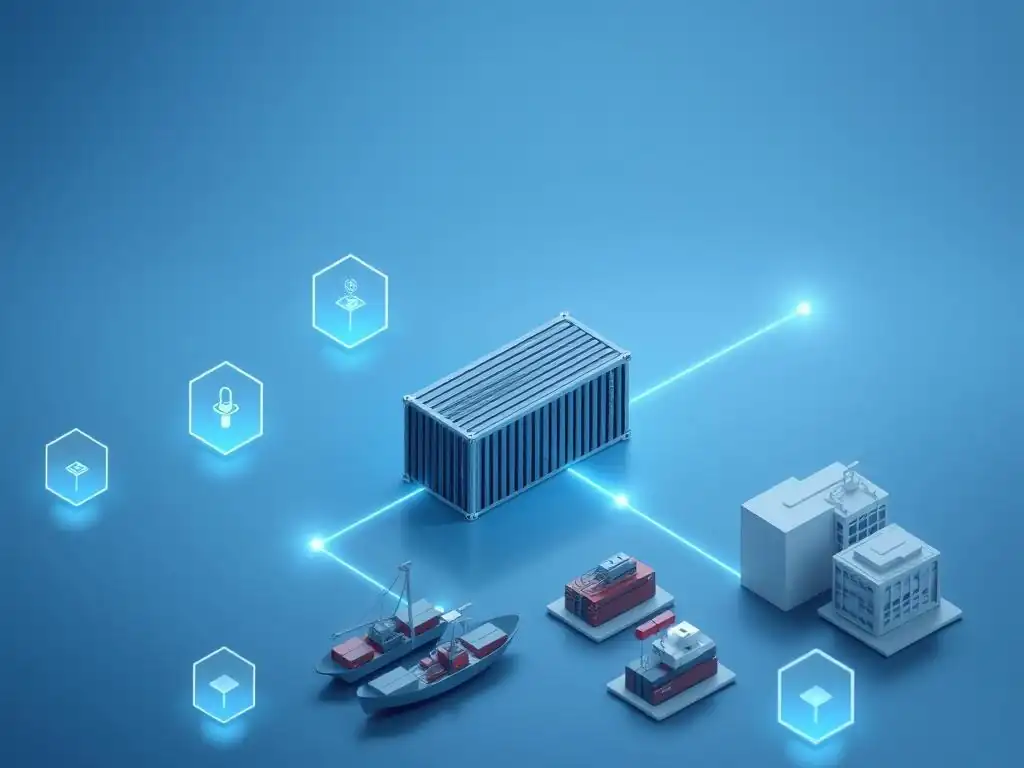
A prominent real-world example is TradeLens, a blockchain-enabled platform developed by Maersk and IBM. Launched to address the inefficiencies and lack of transparency in global container shipping, TradeLens connects shippers, ocean carriers, freight forwarders, ports and terminals, inland transportation, and customs authorities on a single, shared platform.
The platform utilizes blockchain to provide a secure and immutable record of shipping transactions, documents, and events. By digitizing and sharing information transparently among authorized parties, TradeLens aims to reduce the significant amount of paperwork, manual processes, and delays inherent in international shipping. The platform has processed millions of events weekly, demonstrating the potential to streamline complex global logistics workflows and deliver tangible Blockchain logistics transparency benefits businesses involved in international trade.
Walmart's Blockchain Initiative: Enhancing Food Safety and Traceability
Walmart has been a pioneer in using blockchain for supply chain transparency, particularly focusing on food safety. Following a series of foodborne illness outbreaks, Walmart mandated that its suppliers of leafy green vegetables implement blockchain-based traceability systems based on Hyperledger Fabric.
This initiative dramatically improved the speed at which food items could be traced back to their farm of origin. Before blockchain, tracing a contaminated food item could take days or even weeks using traditional methods. With their blockchain solution, Walmart demonstrated the ability to trace food from the store back to the source farm in mere seconds. This rapid traceability is vital for quickly identifying the source of contamination during outbreaks, enabling faster recalls, potentially saving lives, and significantly illustrating the public health and operational Blockchain logistics transparency benefits businesses.
Overcoming Challenges to Blockchain Adoption in Logistics
Scalability Issues and Potential Solutions
One challenge facing the widespread adoption of blockchain in global logistics is scalability. Traditional logistics generates an enormous volume of transactions and data points daily, from individual package scans to container movements. Some blockchain networks, particularly public ones, have faced limitations in processing such high throughput efficiently and cost-effectively compared to established centralized databases.
However, significant progress is being made to address these scalability concerns. This includes the development of more efficient consensus mechanisms, the implementation of Layer 2 scaling solutions that process transactions off-chain before settling them on the main chain, and the increasing use of permissioned or enterprise blockchains (like Hyperledger Fabric or R3 Corda) designed specifically for high transaction volumes and private data sharing among known participants, offering viable solutions for delivering Blockchain logistics transparency benefits businesses at scale.
Interoperability with Existing Logistics Systems
Integrating blockchain solutions with the complex web of legacy IT systems currently used across the logistics industry presents another significant hurdle. Most logistics companies rely on existing Enterprise Resource Planning (ERP), Warehouse Management Systems (WMS), Transportation Management Systems (TMS), and various proprietary software solutions that are often not designed to easily connect with decentralized ledger technology.
Achieving seamless data flow between blockchain platforms and these disparate legacy systems requires robust integration strategies. This involves developing APIs (Application Programming Interfaces), middleware, and data connectors that can translate and synchronize data between the blockchain and existing databases. Establishing industry-wide standards for data formats and communication protocols is also crucial to ensure interoperability across different companies and even different blockchain networks, paving the way for broader Blockchain logistics transparency benefits businesses.
Regulatory Uncertainty and Compliance Considerations
The regulatory landscape surrounding blockchain technology is still evolving globally, creating uncertainty for businesses operating in logistics. Issues such as data ownership, the legal standing of smart contracts across different jurisdictions, cross-border data transfer regulations, and compliance with existing trade and customs laws need careful consideration. Different countries may have varying approaches to blockchain governance and data privacy (like GDPR in Europe).
Businesses adopting blockchain in logistics must navigate this complex legal environment. This involves working closely with legal and compliance experts to ensure their blockchain implementation adheres to all relevant national and international regulations. Participation in industry consortia and pilot programs can also help shape future standards and provide clarity on best practices, mitigating risks and ensuring that the pursuit of Blockchain logistics transparency benefits businesses does not lead to unforeseen legal complications.
The Future of Blockchain and Logistics Transparency
Emerging Trends in Blockchain Logistics
The future of blockchain in logistics transparency is being shaped by several emerging trends. One significant development is the convergence of blockchain with the Internet of Things (IoT). IoT devices like sensors can collect real-time data on a shipment's location, temperature, humidity, or shock exposure, and this data can be immutably recorded on the blockchain, providing unprecedented visibility into the condition and environment of goods in transit.
Another trend is the integration of Artificial Intelligence (AI) and machine learning with blockchain data. AI can analyze the vast amounts of transparent, verifiable data collected on the blockchain to identify patterns, predict potential disruptions, optimize routes, and improve forecasting. Furthermore, there's growing interest in using blockchain for sustainable logistics, tracking carbon footprints, and verifying ethical sourcing, expanding the scope of Blockchain logistics transparency benefits businesses.
The Role of Blockchain in Building More Resilient Supply Chains
Recent global events have highlighted the critical need for more resilient supply chains. Blockchain-enabled transparency plays a vital role in achieving this. By providing a shared, real-time view of the entire supply chain, businesses can identify vulnerabilities and bottlenecks more quickly than with traditional, fragmented systems.
During disruptions, access to accurate, verifiable information on the location and status of inventory, alternative sourcing options, and logistical capacity allows companies to react faster and make more informed decisions. Blockchain's immutable record also helps in validating insurance claims and managing force majeure events. This enhanced visibility and data integrity directly contribute to building supply chains that are more adaptable, responsive, and resilient in the face of unforeseen challenges, a crucial aspect of the Blockchain logistics transparency benefits businesses seek in volatile markets.
Blockchain's Impact on the Future of Global Trade
Blockchain has the potential to fundamentally transform global trade by reducing complexity, increasing efficiency, and building trust among international trading partners. By creating a single, shared source of truth for trade documentation (like bills of lading, customs forms, and certificates of origin) and automating processes through smart contracts, blockchain can significantly reduce processing times and costs associated with cross-border transactions.
This streamlining effect can lower barriers to entry for small and medium-sized enterprises (SMEs) looking to participate in international trade. Furthermore, the enhanced transparency and security provided by blockchain can facilitate trade finance by giving banks and financiers greater confidence in the underlying transactions and assets being financed. Ultimately, blockchain is poised to make global trade faster, cheaper, more secure, and more inclusive, delivering widespread Blockchain logistics transparency benefits businesses across the international arena.
Measuring the ROI of Blockchain Logistics Transparency
Quantifiable Benefits of Blockchain Implementation
Measuring the Return on Investment (ROI) for blockchain logistics transparency initiatives requires identifying and quantifying the benefits achieved. These can include reductions in administrative costs associated with processing paperwork and managing disputes, decreases in financial losses due to fraud, counterfeiting, or cargo theft, and improvements in operational efficiency leading to lower transportation or warehousing costs.
Specific quantifiable benefits might include a measurable percentage reduction in the time spent on freight auditing or claims processing, a decrease in the number of lost or delayed shipments, or an improvement in inventory turnover rates directly linked to better visibility. Documenting these improvements against pre-implementation baselines provides concrete evidence of the Blockchain logistics transparency benefits businesses are gaining.
Key Performance Indicators (KPIs) for Logistics Transparency
To effectively measure the impact of blockchain on logistics transparency, businesses should define and track relevant Key Performance Indicators (KPIs). Examples of such KPIs include the average time to trace a product from origin to destination, the percentage of shipments with complete and verifiable data on the blockchain, the rate of discrepancies between physical inventory and recorded inventory, the average time taken to resolve supply chain disputes, or the perfect order rate (orders delivered complete, on time, at the right location, and without damage).
Monitoring these KPIs before and after implementing blockchain provides objective data on how transparency has improved and the subsequent impact on operational performance. Setting clear targets for these KPIs helps align the blockchain initiative with overall business objectives, ensuring that the focus remains on achieving tangible Blockchain logistics transparency benefits businesses.
Cost Savings, Efficiency Gains, and Risk Reduction Assessment
A comprehensive ROI assessment of blockchain in logistics transparency should encompass cost savings, efficiency gains, and risk reduction. Cost savings are realized through reduced manual effort, decreased error rates, lower demurrage or detention fees (due to faster customs clearance), and potentially reduced insurance premiums as supply chain risk decreases.
Efficiency gains stem from accelerated processes, optimized resource utilization, and improved decision-making enabled by real-time, accurate data. Risk reduction is achieved by mitigating fraud, enhancing security, ensuring compliance, improving food and product safety (as seen with Walmart), and building a more resilient supply chain capable of weathering disruptions. Evaluating the impact across these three dimensions provides a holistic view of the value proposition and the significant Blockchain logistics transparency benefits businesses can derive from embracing this technology.
Conclusion: Embracing Blockchain for a More Transparent and Efficient Logistics Ecosystem
Frequently Asked Questions
What are the main Blockchain logistics transparency benefits businesses are experiencing?
The primary benefits include enhanced supply chain visibility, leading to improved operational efficiency, and ultimately, reduced costs due to better tracking and management.
How does blockchain enhance transparency in logistics beyond simple tracking?
Blockchain provides an immutable record of each transaction, guaranteeing data integrity and enabling real-time access to information for all authorized participants.
What role does DeFi play in fostering Blockchain logistics transparency benefits businesses?
While not directly involved in tracking, DeFi can facilitate secure and transparent payment processing within the supply chain, improving trust and efficiency in financial transactions.
What regulatory hurdles might businesses face when implementing Blockchain logistics transparency solutions?
Businesses must navigate data privacy regulations, such as GDPR, and ensure compliance with industry-specific standards to avoid legal issues with their blockchain implementations.
How will the future of decentralized systems impact Blockchain logistics transparency benefits businesses?
The growth of decentralized systems will likely lead to more interoperable blockchain networks, allowing for seamless data sharing and greater transparency across various supply chains and organizations.
Final Reflection: Embracing the Transparent Future of Logistics
The journey through blockchain's potential in logistics, as explored in this article, reveals that it's more than just a tracking tool; it's a catalyst for fundamental shifts in trust and efficiency. The benefits of blockchain logistics transparency for businesses, from enhanced security to streamlined operations, are not theoretical possibilities; they are tangible advantages being realized today, reshaping supply chains and fostering a new era of accountability.
The impact of this technology extends far beyond the balance sheet. It's about building a more ethical and sustainable global trade network, where consumers can be confident in the origin and integrity of the products they purchase. This shift towards radical transparency is not just a trend; it's a reflection of our growing demand for authenticity and responsibility. Transparency is not about exposing secrets, it's about building trust.
- Unknown
As we look ahead, let us not simply observe the evolution of blockchain in logistics, but actively participate in shaping its future. Consider how you, as a business leader, a consumer, or a technology enthusiast, can champion the adoption of these transparent practices. Embrace the power of blockchain to build a more trustworthy and efficient world, one transaction at a time.
Unlock the Future of Logistics: Start Building Trust Today!
Thanks for exploring how blockchain is revolutionizing logistics transparency! Now that you've gained insights into its potential, it's time to put that knowledge into action and contribute to a more trustworthy supply chain.
Here's how you can take the next step:
- Deepen your understanding: Visit blockchaintrends.org and search for "logistics case studies" to explore real-world implementations and learn from others' experiences. This will give you concrete examples of how blockchain is solving problems in the field.
- Share your insights: Discuss the article's key takeaways with your colleagues or connections on social media using the hashtag #BlockchainLogistics. Help spread awareness about the benefits of blockchain in supply chain management.
- Think creatively: Brainstorm potential applications of blockchain in your own industry or organization. What challenges could it solve, and how could it enhance transparency and efficiency?
Ready to start exploring how blockchain can reshape the future of your supply chain?
Leave a Reply