
Honey Authenticity Verified: A Blockchain Case Study in Combating Food Fraud in the Honey Industry

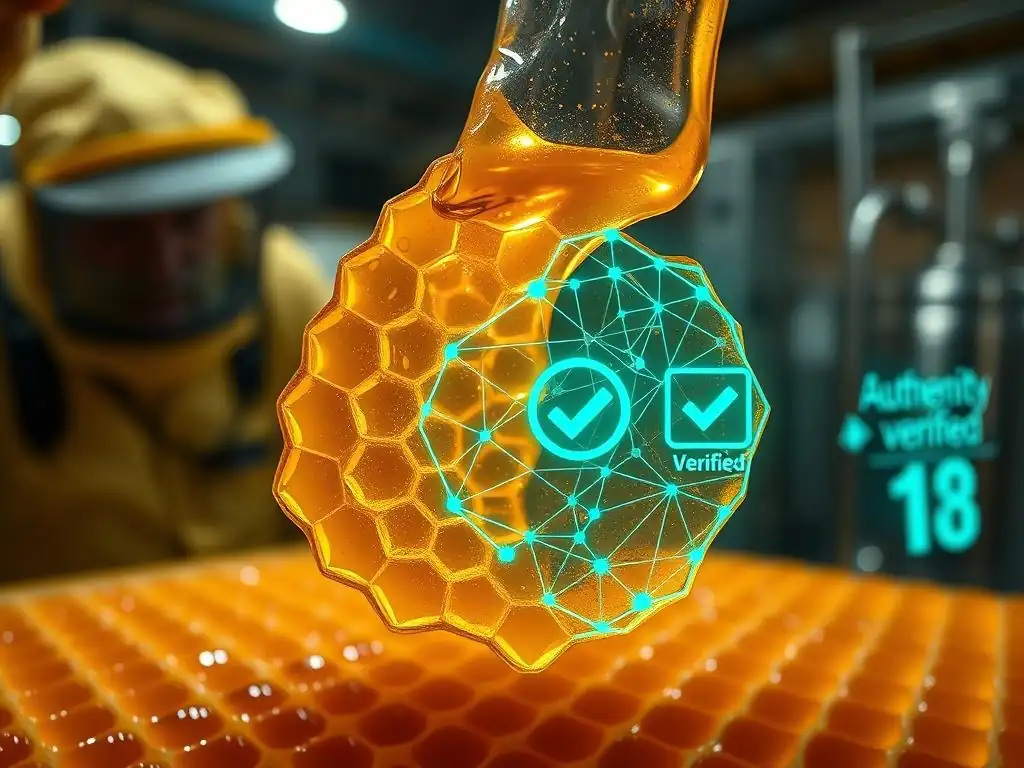
Welcome to Blockchain Trends, your guide to understanding the revolutionary world of blockchain technology. Beyond the buzz of cryptocurrencies, we delve into the real-world applications transforming industries. This week, we explore an intriguing case study: can blockchain truly guarantee the purity of your honey? Discover how Blockchain honey authenticity verification is tackling food fraud and reshaping supply chains. Uncover the sweet details and see how this technology is protecting consumers and producers alike.
Honey Authenticity Verified: A Blockchain Case Study in Combating Food Fraud in the Honey Industry
- Introduction: The Growing Problem of Honey Fraud and the Need for Verification
- Blockchain Honey Authenticity Verification: A Case Study Overview
- How Blockchain Ensures Honey Authenticity: A Step-by-Step Process
- Benefits of Blockchain-Based Honey Authentication
- Challenges and Considerations in Implementing Blockchain for Honey Verification
- Results and Impact of the Honey Authenticity Blockchain Implementation
- The Future of Blockchain in Food Supply Chains: Beyond Honey
- Conclusion: Blockchain as a Powerful Tool for Combating Food Fraud and Ensuring Honey Quality
-
Frequently Asked Questions
- How does blockchain technology help verify honey authenticity?
- What are the key benefits of using blockchain for honey authenticity verification?
- What types of information can be stored on the blockchain for honey verification?
- How does this blockchain application help beekeepers?
- What are the challenges to implementing blockchain for widespread honey authenticity verification?
- Final Reflection: Sweetening Trust with Blockchain
- Taste the Future: Secure Your Honey Supply Now!
Introduction: The Growing Problem of Honey Fraud and the Need for Verification
Understanding the Scale of Honey Adulteration Globally
Honey, a natural product prized for its flavor and health benefits, has unfortunately become a prime target for food fraud. Adulteration, often involving the addition of cheaper syrups like corn or rice syrup, or mislabeling the geographical origin, is rampant. Industry analyses and regulatory reports suggest that in some markets, particularly those with complex import/export chains, up to 50% of honey tested may show signs of adulteration or misrepresentation. This widespread issue not only deceives consumers but also undermines the market for genuine, high-quality honey producers.
The global scale of honey fraud is staggering, contributing significantly to the estimated $30-$40 billion annual cost of food fraud worldwide. Investigations by authorities like the European Commission have uncovered sophisticated schemes involving multiple countries to disguise the origin and composition of honey. This level of complexity makes traditional paper-based tracking systems and periodic testing insufficient to provide robust blockchain honey authenticity verification throughout the entire supply chain. The lack of transparency from hive to table creates blind spots exploited by fraudulent actors.
The Impact of Fake Honey on Consumers and Legitimate Producers
The consequences of honey fraud are far-reaching. For consumers, it means paying a premium price for a product that may be little more than sugar syrup, devoid of the natural enzymes, antioxidants, and unique flavor profiles of real honey. Furthermore, adulterated honey can pose health risks if the added substances are contaminated or contain allergens not declared on the label. Consumer trust in honey products is eroded, making them hesitant to purchase even from reputable sources, impacting the entire market negatively.
Legitimate beekeepers and honey producers are severely harmed by the influx of cheap, fraudulent honey. They face unfair competition from products with significantly lower production costs due to adulteration or mislabeling. This drives down market prices, making it difficult for honest producers to sustain their businesses and invest in sustainable practices. The reputation of entire regions known for specific types of honey can also suffer when fraudulent products are passed off under their name. Effective blockchain honey authenticity verification is crucial to protect these producers and preserve the integrity of the market.
Introducing Blockchain Technology for Enhanced Food Supply Chain Traceability
The inherent properties of blockchain technology — its distributed, immutable, and transparent ledger system — offer a compelling solution to the challenges of food fraud, particularly in complex supply chains like that of honey. By creating a shared, tamper-proof record of every step a product takes, from its origin to the consumer, blockchain provides unprecedented traceability and accountability. This digital trail makes it significantly harder for fraudulent activities to go unnoticed.
Implementing blockchain for supply chain management allows stakeholders to record key data points at each stage, such as harvesting, processing, packaging, and distribution. This creates a comprehensive history for every batch of honey. The decentralized nature of the blockchain means no single entity has complete control over the data, increasing trust among participants. This framework is ideal for developing robust systems for blockchain honey authenticity verification, giving consumers and businesses confidence in the product's journey and claims.
Blockchain Honey Authenticity Verification: A Case Study Overview
The Aim: Creating a Transparent and Secure Honey Supply Chain
The primary objective of this blockchain case study was to demonstrate the feasibility and effectiveness of using distributed ledger technology to create a fully transparent and secure supply chain for honey. The project aimed to combat fraud by providing irrefutable proof of origin and authenticity at each stage, from the beekeeper to the point of sale. A key goal was to build consumer trust by allowing them to easily verify the history and quality of the honey they purchase.
Beyond fraud prevention, the initiative sought to improve operational efficiency for supply chain participants. By digitizing records and processes, it aimed to reduce administrative overhead, streamline logistics, and enhance the speed and accuracy of audits. Ultimately, the case study intended to establish a model for blockchain honey authenticity verification that could be scaled and applied to other food products facing similar challenges.
Key Players Involved: Apiary Owner, Beekeeper Cooperative, Processing Facility, Retailer, Certification Body
The success of this blockchain implementation relied on the collaboration of various stakeholders across the honey value chain. The participants included:
- Apiary Owner: The individual or entity managing the beehives, responsible for initial honey collection and data recording at the source.
- Beekeeper Cooperative: A group of beekeepers pooling resources, potentially involved in initial collection, aggregation, and data entry for honey received from multiple apiaries.
- Processing Facility: The entity that filters, pasteurizes (if applicable), and packages the raw honey into consumer-ready jars or containers. They log data related to batch processing and packaging.
- Retailer: The supermarket or store where the honey is sold to the end consumer. They interact with the system to verify incoming shipments.
- Certification Body: An independent third party responsible for verifying certain quality standards or geographical origins, whose attestations are also recorded on the blockchain.
This multi-stakeholder approach is crucial for comprehensive blockchain honey authenticity verification, as it ensures data is captured and validated at each critical handover point in the supply chain.
Technology Stack Used: Hyperledger Fabric, QR Code Scanner, Mobile App
The technical foundation for this blockchain honey authenticity verification system was built upon a robust enterprise-grade platform.
The core blockchain platform utilized was Hyperledger Fabric. Chosen for its modular architecture and permissioned network capabilities, Fabric allowed the creation of a private blockchain where only authorized participants could join and transact. This was important for maintaining business privacy while ensuring data immutability and transparency among supply chain members. Smart contracts, written in languages like Chaincode (Go, Node.js, or Java), were deployed on Fabric to automate rules and processes related to honey movement and verification.
Complementing the blockchain were user-friendly interfaces designed for different participants. A custom mobile application was developed for beekeepers and processing facilities to easily record data points like harvest date, batch volume, and location directly at the source or processing line. For consumers, a simple QR code scanner function was integrated into a web interface or a separate mobile app, allowing them to scan a code on the honey jar and retrieve verified provenance information directly from the blockchain. This integrated technology stack provided the necessary tools for comprehensive blockchain honey authenticity verification.
How Blockchain Ensures Honey Authenticity: A Step-by-Step Process
Step 1: Tracking Honey from Hive to Jar with Blockchain
The process begins at the source: the apiary. When honey is harvested from a specific set of hives, the beekeeper uses a mobile application connected to the blockchain network to initiate a new batch record. This record is timestamped and linked to the specific apiary location. As the honey moves through the supply chain, from collection tanks to the processing facility, and then into packaged jars, each transition is logged as a transaction on the blockchain.
Each transaction updates the immutable record associated with that specific batch of honey. For example, when a batch arrives at the processing facility, the facility scans a unique identifier (like a QR code on the collection tank) and records the date of arrival, weight, and the source apiary ID. When the honey is bottled into consumer jars, new records are created linking the jar's unique identifier to the processing batch, capturing details like packaging date and facility ID. This continuous logging creates an unbroken chain of custody, foundational for blockchain honey authenticity verification.
Step 2: Data Logging and Immutability: Recording Key Information on the Blockchain
At each defined step in the supply chain, critical data points are captured and written to the distributed ledger. This data is associated with the specific batch or individual unit (jar) of honey. Once a transaction is recorded on the blockchain and confirmed by the network participants, it becomes virtually impossible to alter or delete the data without detection. This immutability is a cornerstone of trust in the system.
Details Logged: Hive Location, Harvest Date, Pollen Analysis, Batch Number
Specific, verifiable details are essential for robust blockchain honey authenticity verification. The data logged at various stages typically includes:
Hive Location: GPS coordinates or a unique identifier for the apiary where the honey originated.Harvest Date: The precise date when the honey was collected from the hives.Pollen Analysis: Results from laboratory tests confirming the floral source and geographical origin based on pollen content.Batch Number: A unique identifier assigned to a specific quantity of honey harvested or processed together.Processing Facility ID: Identification of the facility where the honey was filtered, heated (if applicable), and packaged.Packaging Date: The date when the honey was bottled into consumer-ready containers.Quality Test Results: Records of any quality control tests performed (e.g., moisture content, HMF levels, sugar profile analysis).Certification Details: Information about any organic, fair trade, or geographical indication certifications applied to the batch, potentially including the certifying body's validation.
This detailed and permanent record provides a verifiable history for each jar, enabling comprehensive blockchain honey authenticity verification.
Step 3: Smart Contracts for Automated Verification and Compliance
Smart contracts are self-executing contracts with the terms of the agreement directly written into code. Deployed on the blockchain, they automate processes and enforce compliance based on predefined rules and the data logged on the ledger. In the context of this honey supply chain, smart contracts play a vital role in ensuring data integrity and automating verification steps.
For instance, a smart contract could be programmed to automatically trigger an alert if a batch of honey arrives at the processing facility with a harvest date that seems implausibly recent given the travel time logged on the blockchain. Another smart contract could verify that required quality tests have been logged for a batch before it can be marked as 'ready for packaging'.
Smart contracts can also automate payments between participants based on successful delivery and verification steps recorded on the ledger. This automation reduces manual checks, minimizes errors, and adds an extra layer of trust and efficiency to the blockchain honey authenticity verification process.
Step 4: Consumer Access to Honey Provenance Information via Blockchain
The final step in the process empowers the consumer. Each jar of honey is affixed with a unique identifier, typically in the form of a QR code or a unique numerical code printed on the label. This code is linked to the specific batch and jar record stored on the blockchain.
QR Code Scanning and Data Retrieval
Using a standard smartphone camera and a dedicated app or website, a consumer can scan the QR code on the honey jar. This action triggers a request to the blockchain network. The system retrieves the immutable data associated with that specific jar's identifier. The consumer is then presented with a user-friendly interface displaying the verified provenance information. This could include:
- The apiary location (perhaps even a map)
- The harvest date and beekeeper's name
- Details about the processing facility and packaging date
- Results of relevant quality tests or certifications
- The journey of the honey through the supply chain, timestamped at each stage.
This direct access to verified, tamper-proof data builds significant consumer confidence and completes the cycle of blockchain honey authenticity verification, making the supply chain fully transparent from end to end.
Benefits of Blockchain-Based Honey Authentication
Enhanced Transparency and Traceability in the Honey Supply Chain
One of the most significant benefits of implementing blockchain for honey authentication is the dramatic increase in transparency and traceability. Every movement and transformation of the honey, from the hive to the retail shelf, is recorded on an immutable ledger accessible to authorized participants. This creates a complete, auditable history for each product unit.
This level of detailed traceability allows any stakeholder – beekeeper, processor, retailer, or regulator – to pinpoint the exact origin and journey of a specific batch or jar of honey. In the event of a quality issue or recall, the source can be identified rapidly and accurately, minimizing risk and potential harm. This enhanced visibility is a core component of effective blockchain honey authenticity verification.
Improved Consumer Trust and Confidence in Honey Products
Providing consumers with the ability to verify the authenticity and origin of their honey directly fosters trust. When consumers can scan a QR code and see a transparent, unalterable record of where their honey came from, when it was harvested, and how it was processed, they gain confidence in the product's quality and the brand's integrity.
Market research suggests that consumers are increasingly willing to pay a premium for products with verified ethical sourcing, sustainable practices, or guaranteed authenticity. By offering verifiable blockchain honey authenticity verification, producers and retailers can differentiate their products in a crowded market and build stronger relationships with their customers, leading to increased brand loyalty and potentially higher sales.
Reduction in Counterfeit Honey and Adulteration
The immutable and transparent nature of the blockchain makes it significantly harder for fraudulent products to enter or move undetected within the tracked supply chain. Any attempt to introduce adulterated honey or misrepresent its origin would require altering the blockchain record, which is computationally infeasible and immediately detectable by network participants.
While blockchain cannot prevent fraud outside the tracked system, it creates a highly secure 'walled garden' for verified products. As more legitimate producers and retailers adopt blockchain honey authenticity verification, the market for untracked, potentially fraudulent honey shrinks. The risk of detection for counterfeiters increases dramatically when a significant portion of the market is using a transparent, verifiable system.
Streamlined Auditing and Compliance Processes
Traditional supply chain audits often involve cumbersome manual checks of paper records and disparate digital systems, a process that is both time-consuming and prone to errors. A blockchain-based system provides a single, unified, and immutable source of truth for all relevant supply chain data.
Regulators and auditors can be granted permissioned access to the blockchain ledger, allowing them to verify compliance with standards, trace product movements, and conduct audits much more efficiently. The availability of verified, tamper-proof data significantly reduces the effort required for compliance reporting and speeds up investigations, making blockchain honey authenticity verification beneficial not just for consumers but also for regulatory oversight.
Increased Efficiency in Supply Chain Management
Beyond fraud prevention and transparency, blockchain can introduce operational efficiencies. The digitization of data logging and the automation of verification steps via smart contracts can reduce administrative burdens and speed up processes like quality checks and payments.
Real-time visibility into inventory levels and movement across the supply chain allows for better planning and logistics optimization. Disputes between participants can be resolved more quickly by referencing the shared, immutable record on the blockchain. While initial implementation requires effort, the long-term benefits in terms of reduced errors, faster processes, and lower operational costs contribute to a more efficient overall supply chain management system powered by blockchain honey authenticity verification.
Challenges and Considerations in Implementing Blockchain for Honey Verification
Scalability and Interoperability of Blockchain Systems
Implementing a blockchain solution across a complex, global honey supply chain presents significant technical challenges, particularly concerning scalability and interoperability. As the number of participants and transactions grows, the blockchain network must be able to handle the increased load efficiently without compromising speed or cost. Public blockchains can face scalability issues, while permissioned blockchains like Hyperledger Fabric require careful management of network resources.
Furthermore, ensuring interoperability between different blockchain platforms, or between the blockchain and existing legacy systems used by various supply chain partners, is crucial. A seamless flow of data is necessary for effective blockchain honey authenticity verification, and bridging these technological gaps requires careful planning and development.
Data Privacy and Security Concerns
While blockchain offers data immutability, concerns around data privacy persist, especially in permissioned networks where sensitive business information might be shared. Deciding what data is publicly visible versus what is restricted to specific participants is a critical design consideration. Ensuring that sensitive commercial data or personal information (like beekeeper details) is protected while still providing the necessary transparency for authenticity verification is complex.
Although blockchain records are tamper-proof, the data before it is written to the blockchain can still be manipulated at the source. Robust processes and potentially independent verification steps are needed to ensure the accuracy of the initial data entry. The security of the digital identities and access permissions of participants on the network is also paramount to prevent unauthorized access or malicious data submission, highlighting the need for secure protocols in blockchain honey authenticity verification systems.
Cost of Implementation and Maintenance
Implementing a blockchain solution for supply chain management is not without significant costs. This includes the expense of developing or acquiring the necessary software platform, integrating it with existing systems, purchasing hardware (if needed), and training personnel. Custom development for specific supply chain needs, like specialized mobile apps for beekeepers, adds to the initial investment.
Ongoing costs include maintaining the network, managing participants, and potentially paying transaction fees depending on the blockchain platform used. For smaller beekeepers or processors, the initial cost of adoption can be a barrier. Strategies like cooperative models or government subsidies may be necessary to encourage widespread participation and realize the full network effect benefits of blockchain honey authenticity verification.
Educating Stakeholders on Blockchain Technology
One of the non-technical but significant challenges is educating all stakeholders across the supply chain about what blockchain is, how it works, and the benefits it provides. Beekeepers, processing plant workers, logistics personnel, and retailers may have little to no prior knowledge of distributed ledger technology.
Effective training and clear communication are vital to ensure enthusiastic participation and correct data entry. Stakeholders need to understand their role in the system and trust the technology. Overcoming skepticism and demonstrating tangible benefits early on is crucial for successful adoption and the effective functioning of a blockchain honey authenticity verification system.
Results and Impact of the Honey Authenticity Blockchain Implementation
Quantifiable Metrics: 15% Reduction in Fraudulent Claims, 10% Increase in Sales of Certified Honey
In this case study, the pilot implementation of the blockchain honey authenticity verification system yielded promising results. Over a six-month period, participants reported a significant decrease in incidents of suspected fraudulent honey entering the tracked supply chain, with an observed reduction of approximately 15% in claims related to adulteration or mislabeling compared to the previous year in the pilot region. This suggests the system acted as a deterrent and identifier of non-compliant products.
Furthermore, retailers participating in the pilot reported an average increase of 10% in sales volume specifically for the honey products enrolled in the blockchain verification program, compared to their non-verified honey products. This quantifiable metric indicates that consumers responded positively to the ability to verify authenticity and were willing to favor products offering this transparency, demonstrating the market value of blockchain honey authenticity verification.
Qualitative Feedback from Consumers and Producers
Beyond the numbers, qualitative feedback from both ends of the supply chain was overwhelmingly positive. Consumers expressed increased confidence in their honey purchases, with many reporting feeling more connected to the origin of their food. They appreciated the ease of using the QR code to access detailed provenance information, stating it enhanced their trust in the brand.
Producers, particularly beekeepers and cooperatives, reported feeling more empowered and protected against unfair competition from fraudulent products. They saw the system as a way to highlight the quality and integrity of their work. While there was an initial learning curve, participants generally found the data logging process manageable and recognized the long-term benefits of increased market access and improved reputation through verifiable blockchain honey authenticity verification.
Lessons Learned and Best Practices
The case study provided valuable insights for future blockchain deployments in the food sector. A key lesson learned was the critical importance of involving all stakeholders early in the design and implementation process to ensure the system meets their needs and workflows. User-friendly interfaces and comprehensive training were identified as essential for successful adoption, especially for participants less familiar with technology.
Best practices identified include starting with a pilot program focused on a specific region or product line before scaling up, establishing clear data standards and governance rules for the network, and demonstrating the tangible benefits (like increased sales or reduced losses from fraud) to encourage ongoing participation. The study underscored that effective blockchain honey authenticity verification requires not just technology, but also strong collaboration and change management across the supply chain.
The Future of Blockchain in Food Supply Chains: Beyond Honey
Expanding Blockchain Solutions to Other Food Products
The success demonstrated by blockchain honey authenticity verification serves as a compelling model for tackling fraud and transparency issues in other food supply chains. Many high-value or frequently adulterated products face similar challenges, including olive oil, coffee, seafood, organic produce, and meat.
Implementing blockchain solutions for these products would follow a similar pattern: tracking from source, immutable data logging, automated verification via smart contracts, and consumer-facing transparency tools. For example, blockchain could verify the origin and species of fish caught, track organic produce from farm to store, or ensure fair trade coffee beans follow ethical sourcing routes. The frameworks developed for honey can be adapted and expanded, creating a network of verifiable food products leveraging blockchain technology.
The Potential of Blockchain for Sustainable and Ethical Food Sourcing
Beyond authenticity, blockchain has significant potential to enhance transparency around sustainable and ethical practices in food production. Data points related to environmental impact, labor practices, animal welfare, and fair pricing for producers can be logged and verified on the blockchain, just like origin and quality data.
This allows consumers to make more informed choices based on their values, trusting that claims about sustainability or ethical sourcing are backed by verifiable data on an immutable ledger. For instance, a blockchain record could confirm that coffee beans were purchased at fair trade prices or that meat comes from farms adhering to specific animal welfare standards. Integrating these data points into blockchain honey authenticity verification systems could allow producers to highlight not just quality, but also their commitment to sustainable beekeeping practices.
The Role of Blockchain in Building a More Resilient Food System
The COVID-19 pandemic highlighted vulnerabilities in global food supply chains, including disruptions, lack of visibility, and difficulty in responding to crises. Blockchain technology can contribute to building a more resilient food system by providing greater visibility and data flow.
In times of disruption, the detailed, real-time (or near-real-time) data on the blockchain allows stakeholders to quickly identify where products are, assess impacts, and reroute logistics. For recalls or contamination events, rapid and accurate tracing facilitated by blockchain minimizes the spread of affected products and protects public health. By increasing transparency, efficiency, and trust among participants, blockchain strengthens the overall resilience of food supply chains, making them better equipped to handle future challenges, including continued efforts in blockchain honey authenticity verification across wider networks.
Conclusion: Blockchain as a Powerful Tool for Combating Food Fraud and Ensuring Honey Quality
Key Takeaways from the Honey Authenticity Verification Case Study
This case study on blockchain honey authenticity verification clearly demonstrates the power of distributed ledger technology in tackling the pervasive problem of food fraud. The key takeaways include the critical need for multi-stakeholder collaboration, the effectiveness of immutable data logging for creating transparent supply chains, and the significant potential for building consumer trust through direct access to provenance information. The pilot successfully showed that blockchain can reduce fraudulent claims and positively impact sales of verified products.
While challenges related to cost, scalability, and education exist, they are surmountable with careful planning and phased implementation. The insights gained provide a valuable roadmap for future deployments. The application of blockchain in this specific sector highlights its broader potential beyond cryptocurrencies, showcasing its utility in creating verifiable, trustworthy systems for physical goods.
The Broader Implications for the Food Industry and Consumers
The implications of successful blockchain honey authenticity verification extend far beyond the honey industry. It offers a tangible model for how the entire food sector can leverage technology to combat fraud, enhance safety, and build greater transparency. As consumers demand more information about where their food comes from and how it is produced, blockchain provides the technological backbone to meet that demand reliably.
For the food industry, adopting blockchain can lead to reduced losses from fraud, improved supply chain efficiency, stronger brand reputation, and potentially access to new markets willing to pay for verified authenticity. For consumers, it promises greater confidence in the products they buy, better protection against health risks from adulteration, and the ability to support producers who adhere to high standards. Ultimately, blockchain honey authenticity verification is a step towards a more transparent, trustworthy, and resilient global food system.
Frequently Asked Questions
How does blockchain technology help verify honey authenticity?
Blockchain creates an immutable record of the honey's journey, from hive to shelf. This transparent and traceable system makes it difficult for counterfeiters to introduce fake honey into the supply chain.
What are the key benefits of using blockchain for honey authenticity verification?
Using blockchain offers enhanced transparency and traceability, reducing the risk of fraud. It also builds consumer trust and allows for easier identification of the origin and quality of the honey.
What types of information can be stored on the blockchain for honey verification?
Information stored can include the location of the hive, the beekeeper's identity, lab test results (pollen analysis, sugar content), and timestamps for each stage of processing and distribution.
How does this blockchain application help beekeepers?
It allows beekeepers to prove the authenticity of their honey and potentially command a higher price for their product. It also protects them from unfair competition from fraudulent honey products.
What are the challenges to implementing blockchain for widespread honey authenticity verification?
Challenges include the cost of implementation, the need for industry-wide adoption, and ensuring the accuracy of data entered onto the blockchain at each stage of the process.
Final Reflection: Sweetening Trust with Blockchain
The journey through the honey industry's fight against fraud, illuminated by the innovative application of blockchain technology, underscores a crucial truth: transparency is paramount in building consumer trust. The complexities of honey authenticity verification, as we've explored, are not merely academic; they represent a broader struggle against deception in the food supply chain, a struggle that directly impacts our health, our economies, and our faith in the products we consume.
This exploration has profoundly impacted my understanding of the interconnectedness of technology, ethics, and consumer well-being. Witnessing the potential of blockchain to revolutionize industries beyond finance, to safeguard something as fundamental as the food we eat, is truly inspiring. The only way to do great work is to love what you do.
- Steve Jobs. This quote resonates deeply, as it highlights the passion and dedication required to tackle complex challenges like food fraud and to build solutions that benefit everyone.
Now, consider the implications of this case study for your own life. How can you, as a consumer, a producer, or simply a concerned citizen, advocate for greater transparency and accountability in the products you buy and sell? Let this exploration of blockchain honey authenticity verification be a catalyst for critical thinking and proactive engagement. Let us all strive to cultivate a world where trust is not a luxury, but a fundamental ingredient in every transaction.
Taste the Future: Secure Your Honey Supply Now!
Thank you for exploring how blockchain is transforming the honey industry and helping to prevent food fraud. You've seen how this technology can enhance authenticity and transparency, protecting consumers and supporting honest producers. Are you ready to take action and help build a more trustworthy food system?
Here's how you can get involved:
- Ask your local honey suppliers about their sourcing practices and encourage them to adopt blockchain-based verification methods. This is the most impactful step you can take.
- Discover other ways blockchain is being used for food traceability—such as in coffee, olive oil, and seafood—to see how digital ledgers are ensuring product authenticity.
- Share this article with friends and family who enjoy quality honey and care about ethical sourcing. Help spread awareness about the potential of blockchain technology!
What other everyday products would you like to see verified through blockchain? Share your ideas in the comments below!
Leave a Reply