
Scaling Ethereum: Exploring the Power of Layer2 Networks


Welcome to Blockchain Trends, your gateway to understanding the revolutionary power of distributed ledger technology. Beyond the buzzwords, we delve into the real-world applications shaping our future. Curious about how Ethereum can handle the growing demands of decentralized applications? Dive into our exploration of Layer 2 Ethereum scaling and discover how these innovative solutions are unlocking the true potential of the network. The future of decentralized systems is being built today – let's explore it together!
Scaling Ethereum: Exploring the Power of Layer 2 Networks
- Introduction to Ethereum Scalability Challenges
- Layer 2 Scaling Solutions: A Deep Dive
- Types of Layer 2 Ethereum Scaling Solutions
- Comparing Different Layer 2 Scaling Approaches
- Use Cases of Layer 2 Ethereum Scaling
- Challenges and Considerations for Layer 2 Adoption
- The Impact of Layer 2 on the Ethereum Ecosystem
- Conclusion: Layer 2 Networks as the Key to Ethereum's Future
-
Frequently Asked Questions
- What are Layer 2 networks, and why are they important for Ethereum?
- How do Layer 2 solutions improve Ethereum's transaction speed and cost?
- What are some examples of popular Layer 2 scaling solutions for Ethereum?
- How does Layer 2 Ethereum scaling impact the development and adoption of DeFi applications?
- What are the potential future trends and challenges for Layer 2 Ethereum scaling?
- Final Reflection: The Future Forged in Layers
- Unlock Ethereum's Full Potential: Take Action Now!
Introduction to Ethereum Scalability Challenges
Understanding the Ethereum Blockchain Bottleneck
The Ethereum blockchain, while revolutionary in its inception as a platform for decentralized applications (dApps), has faced significant challenges in scaling to meet the demands of a growing ecosystem. At its core, Ethereum's original architecture, based on a Proof-of-Work (PoW) consensus mechanism, inherently limits its transaction processing capacity. During periods of high network activity, such as the peaks of DeFi and NFT booms, the Ethereum mainnet has demonstrated a throughput of approximately 15-30 transactions per second (TPS).
This limited capacity leads to network congestion, causing transaction processing times to increase dramatically and, more notably, gas fees to skyrocket. For instance, during peak NFT minting periods, average gas fees have been known to exceed $100 per transaction, rendering many everyday use cases economically unviable and hindering broader adoption.
This bottleneck is fundamentally rooted in the way Ethereum's mainnet processes transactions. Every transaction is validated and processed by every node in the network, ensuring security and decentralization but at the cost of speed and efficiency. This design, while crucial for maintaining the integrity and security of the blockchain, becomes a limiting factor as the number of users and applications on Ethereum increases.
The transition to Proof-of-Stake (PoS) with the Merge is a significant step towards improving energy efficiency and laying the groundwork for future scalability upgrades, but it doesn't directly address the immediate throughput limitations that Layer 2 solutions are designed to overcome. Therefore, despite ongoing improvements to the core protocol, the inherent architectural constraints of the base layer necessitate the exploration and adoption of secondary scaling solutions to realize Ethereum's vision of a globally accessible and scalable decentralized platform.
The Need for Layer 2 Scaling Solutions on Ethereum
The escalating gas fees and constrained transaction throughput on the Ethereum mainnet directly impede its usability and accessibility, especially for smaller users and emerging applications. Imagine a micro-transaction based application, like a decentralized social media platform or a pay-per-article service, attempting to operate directly on the Ethereum mainnet. The cost of each transaction, potentially exceeding the value of the transaction itself during peak times, would make such applications completely impractical. This economic barrier to entry effectively excludes a vast segment of potential users and limits the types of applications that can viably be built on Ethereum.
Moreover, the success and growth of the decentralized finance (DeFi) and non-fungible token (NFT) ecosystems have further exacerbated the scalability issue. The increasing popularity of DeFi protocols and NFT marketplaces has led to periods of intense network congestion, pushing gas fees to unsustainable levels and slowing down transaction confirmations. For example, during the height of DeFi summer in 2020 and 2021, and again with NFT frenzies, users experienced significant delays and high costs for even simple transactions, such as token swaps or NFT mints.
This congestion not only degrades the user experience but also creates uncertainty and unpredictability in transaction costs. Layer 2 scaling solutions emerge as a critical necessity to alleviate these pressures, offering a pathway to drastically reduce gas fees, increase transaction speed, and enable Ethereum to handle a significantly larger volume of transactions, paving the way for mainstream adoption and a broader range of use cases.
Layer 2 Ethereum Scaling: A Definition
Layer 2 Ethereum scaling refers to a suite of technologies and protocols built on top of the Ethereum mainnet (Layer 1) to enhance its transaction processing capacity and reduce costs, without compromising its core security and decentralization principles. These Layer 2 solutions operate as separate networks that handle transactions off-chain, meaning they process transactions away from the main Ethereum blockchain.
Crucially, they inherit the security of the underlying Layer 1 by periodically anchoring or submitting transaction data or proofs back to the Ethereum mainnet. This anchoring process ensures that Layer 2 transactions are ultimately secured by the robust consensus and security mechanisms of Ethereum itself.
In essence, Layer 2 solutions provide an efficient 'express lane' for transactions, processing them faster and cheaper than directly on the mainnet. Think of it as building additional roads alongside a congested highway to increase traffic flow.
These solutions are designed to be compatible with the Ethereum Virtual Machine (EVM), allowing developers to migrate or build dApps on Layer 2 with minimal modifications, leveraging existing Ethereum infrastructure and tooling. The core idea behind Layer 2 Ethereum scaling is to offload the computational burden of transaction processing from the mainnet, while still benefiting from its security and finality, ultimately enabling Ethereum to scale to meet the demands of a global user base and a diverse range of applications, effectively realizing the vision of a scalable and accessible decentralized web.
Layer 2 Scaling Solutions: A Deep Dive
What are Layer 2 Networks?
Layer 2 networks are essentially secondary frameworks or protocols that operate in conjunction with the Ethereum mainnet (Layer 1) to enhance its scalability. They are designed to handle a significant portion of transaction processing off-chain, thereby reducing the load on the main Ethereum network. While Layer 1, the Ethereum mainnet, is responsible for maintaining consensus, data availability, and overall security, Layer 2 networks focus on optimizing transaction throughput and reducing transaction costs. These networks are not independent blockchains in the traditional sense; instead, they are built to interact with and ultimately derive security from the underlying Ethereum Layer 1.
Layer 2 solutions achieve scalability by employing various techniques to process transactions outside of the main Ethereum chain. This can involve methods like batching multiple transactions together and submitting them to Layer 1 as a single transaction, or using fraud proofs or validity proofs to ensure the integrity of off-chain computations. The key characteristic of Layer 2 networks is their reliance on Layer 1 for security and data availability.
This means that even though transactions are processed off-chain, the security of these transactions is ultimately guaranteed by the robust and decentralized nature of the Ethereum mainnet. Layer 2 solutions essentially leverage the security and decentralization of Ethereum Layer 1 while providing a more scalable and cost-effective environment for users and applications.
How Layer 2 Solutions Enhance Ethereum's Performance
Layer 2 solutions drastically improve Ethereum's performance primarily by shifting transaction processing and computation away from the congested Layer 1 mainnet. Instead of every transaction being processed and validated by every node on the Ethereum network, Layer 2 solutions handle these processes off-chain. This off-chain processing significantly reduces the computational burden on the mainnet, allowing it to focus on its core functions of security and data availability. Different Layer 2 solutions employ various mechanisms to achieve this, but the underlying principle remains the same: to minimize the interaction with Layer 1 for transaction processing and maximize efficiency.
For instance, rollups, a prominent type of Layer 2 solution, bundle hundreds or even thousands of transactions into a single batch and submit this batch to the Ethereum mainnet as one transaction. This drastically reduces the gas cost per transaction as the cost of submitting the batch is shared across all the transactions within it. Furthermore, by processing transactions off-chain, Layer 2 networks can achieve significantly higher transaction throughput compared to the Ethereum mainnet.
Some Layer 2 solutions, like ZK-rollups, can potentially reach thousands of transactions per second, a substantial leap from Ethereum's mainnet capacity. This combination of reduced gas fees and increased transaction speed makes Layer 2 solutions crucial for enabling Ethereum to support a wider range of applications and onboard a larger user base, effectively overcoming the performance limitations of the base layer.
Key Benefits of Implementing Layer 2 Scaling
Implementing Layer 2 scaling solutions on Ethereum offers a multitude of benefits, primarily centered around improved user experience, reduced costs, and enhanced capabilities for developers and applications. One of the most significant benefits is the drastic reduction in gas fees. By processing transactions off-chain and batching them onto Layer 1, Layer 2 solutions can lower transaction costs by orders of magnitude.
Users who previously faced prohibitively expensive gas fees on the mainnet, especially for smaller transactions, can now participate in the Ethereum ecosystem more affordably through Layer 2. For example, simple token swaps or NFT mints that might cost tens or even hundreds of dollars on Layer 1 can often be executed for mere cents on Layer 2 networks.
Another key benefit is the substantial increase in transaction speed and throughput. Layer 2 networks can process transactions much faster than the Ethereum mainnet, leading to quicker confirmation times and a smoother user experience. This improved performance is crucial for applications requiring fast transaction finality, such as decentralized exchanges (DEXs), gaming platforms, and real-time payment systems.
Furthermore, Layer 2 scaling unlocks new possibilities for application development on Ethereum. The reduced costs and increased throughput enable the creation of applications that were previously impractical or economically infeasible on the mainnet, such as micro-transaction based services, high-frequency trading platforms, and mass-adoption consumer applications. By addressing the scalability bottleneck, Layer 2 solutions are essential for realizing Ethereum's full potential as a global platform for decentralized applications and driving wider adoption of blockchain technology.
Types of Layer 2 Ethereum Scaling Solutions
Rollups: Optimistic vs. Zero-Knowledge (ZK)
Rollups are a dominant category of Layer 2 Ethereum scaling solutions, designed to bundle or "roll up" numerous transactions into a single transaction on the Ethereum mainnet. This batching technique significantly reduces gas costs and increases transaction throughput. There are two main types of rollups: Optimistic Rollups and Zero-Knowledge (ZK) Rollups, each employing distinct mechanisms to ensure the validity of off-chain transactions and inherit security from Layer 1.
Optimistic Rollups operate under the assumption that transactions are valid by default, hence the term "optimistic." They post transaction data to the Ethereum mainnet and allow a challenge period, typically 7 days, during which anyone can submit a "fraud proof" if they believe a transaction within the rollup is invalid. If a fraud proof is successfully submitted, the rollup state is rolled back, and the fraudulent transaction is penalized. This system relies on the possibility of fraud proofs to maintain security.
In contrast, ZK-Rollups use cryptographic techniques called zero-knowledge proofs to ensure transaction validity. For each batch of transactions, a ZK-rollup generates a validity proof, cryptographically demonstrating that all transactions in the batch are valid before submitting the state root to the Ethereum mainnet. This validity proof provides cryptographic certainty of transaction correctness, eliminating the need for a challenge period.
Optimistic Rollups: Arbitrum
Arbitrum is a leading example of an Optimistic Rollup solution for Ethereum scaling, developed by Offchain Labs. It aims to provide a highly compatible and scalable environment for running Ethereum dApps with significantly lower gas fees and faster transaction speeds compared to the mainnet. Arbitrum achieves this by processing transactions off-chain and leveraging fraud proofs to ensure the integrity of the rollup state.
Its compatibility with the Ethereum Virtual Machine (EVM) is a key feature, allowing developers to easily migrate their existing Ethereum smart contracts to Arbitrum with minimal code changes. This ease of migration has contributed to the rapid growth of the Arbitrum ecosystem.
One of the notable aspects of Arbitrum is its use of "interactive fraud proofs." When a fraud is suspected, Arbitrum doesn't simply revert the entire batch of transactions. Instead, it engages in a multi-round dispute resolution process on the Ethereum mainnet, pinpointing the exact point of fraud. This interactive approach is more efficient and cost-effective than traditional fraud proofs.
As of late 2023, Arbitrum has become one of the most popular Layer 2 networks, hosting a vibrant ecosystem of DeFi protocols, NFT marketplaces, and other dApps. For example, prominent DeFi platforms like Uniswap and SushiSwap have deployed versions of their protocols on Arbitrum, allowing users to trade with significantly lower gas fees. Arbitrum's success highlights the effectiveness of Optimistic Rollups in providing a scalable and user-friendly Layer 2 experience on Ethereum.
ZK-Rollups: StarkNet
StarkNet, developed by StarkWare, is a prominent example of a ZK-Rollup solution for Ethereum scaling. It utilizes Zero-Knowledge Succinct Non-Interactive Argument of Knowledge (zk-SNARKs) or Zero-Knowledge Scalable Transparent Argument of Knowledge (zk-STARKs) to generate validity proofs for batches of off-chain transactions. These proofs cryptographically guarantee the correctness of the transactions within the rollup, providing a high level of security and eliminating the need for a lengthy dispute period like in Optimistic Rollups. StarkNet is designed to offer significantly higher transaction throughput and lower gas fees compared to the Ethereum mainnet while maintaining strong security guarantees.
A key characteristic of StarkNet is its focus on scalability and its potential for handling complex computations off-chain. By leveraging STARK proofs, StarkNet can achieve impressive scalability, potentially reaching thousands of transactions per second. Furthermore, StarkNet uses Cairo, a Turing-complete programming language specifically designed for STARK-based ZK-Rollups, which allows for more complex and computationally intensive dApps to be built and deployed on Layer 2.
While ZK-Rollups like StarkNet are generally considered more complex to develop and deploy compared to Optimistic Rollups, they offer advantages in terms of security and potential scalability. Projects like dYdX, a decentralized exchange focusing on derivatives trading, have adopted StarkWare's ZK-rollup technology, demonstrating the applicability of ZK-Rollups for high-performance and security-sensitive applications within the Ethereum ecosystem.
Sidechains: Expanding Ethereum's Ecosystem
Sidechains represent another approach to Ethereum scaling, operating as independent blockchains that run parallel to the Ethereum mainnet. They are designed to be interoperable with Ethereum, allowing for the transfer of assets and data between the mainchain and the sidechain. Unlike rollups, which derive their security directly from Ethereum Layer 1, sidechains typically have their own consensus mechanisms and validators, making them independent blockchains. This independence offers flexibility in terms of customization and optimization for specific use cases but also introduces different security considerations compared to rollups.
Sidechains aim to provide scalability by processing transactions on their own network, reducing the load on the Ethereum mainnet. They often employ different consensus mechanisms, such as Proof-of-Stake (PoS) or Delegated Proof-of-Stake (DPoS), which can offer faster transaction speeds and lower costs compared to Ethereum's original Proof-of-Work. However, because sidechains have their own security models, users need to trust the security of the sidechain itself, in addition to Ethereum.
The bridge connecting the sidechain to Ethereum is a critical component, ensuring secure and efficient asset transfers between the two networks. Sidechains offer a valuable avenue for scaling Ethereum, particularly for applications that require specific customizations or prioritize high throughput over absolute Layer 1 security.
Polygon and Its Functionality
Polygon, formerly known as Matic Network, is a prominent example of a sidechain solution for Ethereum scaling. It's designed to be a multi-chain scaling solution, offering a framework for building and connecting Ethereum-compatible blockchain networks. Polygon effectively functions as a sidechain to Ethereum, providing a platform for deploying dApps with significantly lower transaction fees and faster confirmation times compared to the mainnet. It utilizes a Proof-of-Stake (PoS) consensus mechanism and a network of validators to secure its blockchain.
Polygon's functionality extends beyond a single sidechain; it envisions itself as an internet of blockchains for Ethereum. It offers various scaling solutions, including the Polygon PoS chain (its primary sidechain), Polygon Hermez (a ZK-rollup), Polygon Miden (a Stark-based rollup), and Polygon Zero (a Plonky2-based ZK-rollup), demonstrating a commitment to providing a diverse range of scaling options. The Polygon PoS chain is EVM-compatible, allowing for easy migration of Ethereum dApps.
It has gained significant traction, hosting a wide array of DeFi, NFT, and gaming applications. For instance, popular DeFi protocols like Aave and Curve have deployed on Polygon, offering users access to their services with significantly reduced gas fees. Polygon's success underscores the viability of sidechains as a scaling strategy, providing a more affordable and faster environment for Ethereum-based applications while maintaining interoperability with the mainnet.
State Channels: Enabling Off-Chain Transactions
State channels represent a different paradigm in Layer 2 scaling, focusing on enabling direct, off-chain transactions between participants, with only the channel opening and closing transactions being recorded on the Ethereum mainnet. They are particularly well-suited for applications involving frequent interactions between a fixed set of participants, such as payment channels or gaming applications requiring rapid, low-cost transactions. State channels work by establishing a multi-signature contract on the Ethereum mainnet.
Participants deposit funds into this contract, effectively "opening" the channel. Once the channel is open, participants can transact directly with each other off-chain, exchanging signed messages to update the state of the channel.
The key advantage of state channels is that transactions within the channel are virtually instant and incur minimal fees, as they do not require on-chain processing for each interaction. Only when participants decide to finalize their interactions, or if there is a dispute, do they interact with the Ethereum mainnet again to "close" the channel.
At closing, the final state of the channel is recorded on-chain, and funds are distributed according to the agreed-upon terms. State channels are highly efficient for specific use cases but are generally less versatile than rollups or sidechains for general-purpose dApp scaling, as they require participants to be known and involved in the channel setup.
How State Channels Improve Transaction Speed
State channels achieve significant improvements in transaction speed by moving the vast majority of transaction processing off the Ethereum mainnet. Once a state channel is established on-chain, all subsequent transactions between participants occur directly between them, without requiring validation or confirmation from the broader Ethereum network. These off-chain transactions are essentially instantaneous, limited only by the speed of communication between the participants. This near-instantaneous transaction speed contrasts sharply with the block times and potential congestion delays experienced on the Ethereum mainnet.
Because transactions within a state channel are not broadcast to the entire Ethereum network and do not need to be included in blocks, they bypass the typical transaction processing pipeline of Layer 1. This eliminates the latency associated with block confirmation times, which can range from seconds to minutes on the Ethereum mainnet, depending on network congestion.
Furthermore, state channels enable a high volume of transactions to occur within a short timeframe, as the throughput is no longer limited by the block time or network capacity of the mainnet. This makes state channels particularly suitable for applications requiring real-time interactions and micro-transactions, where speed is paramount, such as online gaming, micropayment systems, and applications involving frequent data exchanges between known parties.
Plasma: A Framework for Off-Chain Computation
Plasma is a Layer 2 scaling framework that enables the creation of "child chains" that are anchored to the Ethereum mainnet. It is designed to offload computation and transaction processing from the mainnet, while still leveraging Ethereum's security and data availability. Plasma chains operate as independent blockchains, but they are linked to the Ethereum mainnet through a smart contract. This smart contract acts as a root contract, holding the Merkle root of the Plasma chain's state and facilitating the withdrawal of assets back to the mainnet.
The core idea behind Plasma is to create a hierarchical structure of blockchains, where child chains handle the bulk of transaction processing, and the Ethereum mainnet acts as the root of trust and finality. Plasma chains can be customized to optimize for specific use cases, potentially using different consensus mechanisms and data availability schemes. However, one of the key complexities and limitations of Plasma is the "data availability problem."
To ensure security, all transaction data must be available, even if the Plasma chain operator becomes malicious or unavailable. Ensuring data availability in Plasma architectures has proven to be technically challenging, and this complexity, along with the emergence of more versatile solutions like rollups, has led to a decrease in the popularity of Plasma as a primary scaling solution compared to rollups and sidechains.
Explanation of Plasma and its Limitations
Plasma operates by creating child chains that periodically commit their state to the Ethereum mainnet. These child chains can process transactions independently and at a higher throughput than the mainnet. Security in Plasma is maintained through fraud proofs and data availability guarantees. Users can challenge invalid transactions or state transitions on the child chain by submitting fraud proofs to the Ethereum mainnet.
If a fraud proof is successful, the child chain state can be rolled back to a valid state. However, ensuring data availability for Plasma chains is crucial for the fraud proof mechanism to work effectively. If transaction data is not available, users cannot construct fraud proofs, and the security of the Plasma chain can be compromised.
The "data availability problem" is a significant limitation of Plasma. Ensuring that all transaction data is publicly and permanently available, even if the Plasma chain operator is malicious or goes offline, is technically complex and adds overhead. Various Plasma implementations have attempted to address this challenge through different data availability schemes, but no single solution has emerged as universally adopted or completely satisfactory.
Furthermore, Plasma architectures can be complex to implement and require careful design to ensure security and usability. Compared to the relative simplicity and versatility of rollups, Plasma has become less favored as a primary Layer 2 scaling solution. While Plasma pioneered the concept of off-chain computation anchored to Ethereum, the emergence of rollups, particularly Optimistic and ZK-Rollups, has provided more practical and widely adopted approaches to scaling Ethereum in recent years.
Comparing Different Layer 2 Scaling Approaches
Optimistic Rollups vs. ZK-Rollups: A Comparative Analysis
Optimistic Rollups and ZK-Rollups, while both being prominent Layer 2 scaling solutions for Ethereum, differ significantly in their mechanisms, trade-offs, and suitability for various applications. Optimistic Rollups, like Arbitrum, are generally simpler to implement and EVM-compatible, making them easier for developers to adopt. They rely on fraud proofs and a challenge period for security, which introduces a withdrawal delay, typically around 7 days.
This delay is a trade-off for their relative simplicity and EVM compatibility. Optimistic Rollups are well-suited for general-purpose dApps and DeFi applications where EVM compatibility and ease of development are prioritized, and a withdrawal delay is acceptable.
ZK-Rollups, such as StarkNet, employ zero-knowledge proofs to guarantee transaction validity cryptographically. This provides stronger security guarantees and faster withdrawals compared to Optimistic Rollups, as there is no need for a challenge period. However, ZK-Rollups are generally more complex to implement and may have limitations in EVM compatibility, although advancements are being made in this area.
Generating zero-knowledge proofs can also be computationally intensive, although this is constantly improving with advancements in ZK-proof technology. ZK-Rollups are particularly well-suited for applications requiring high security, fast withdrawals, and potentially higher transaction throughput, such as exchanges, payment systems, and applications prioritizing privacy. The choice between Optimistic and ZK-Rollups often depends on the specific requirements of the application, balancing factors like development complexity, security needs, withdrawal speed, and EVM compatibility.
Sidechains vs. Plasma: Understanding the Trade-offs
Sidechains and Plasma represent alternative approaches to Layer 2 scaling, each with distinct trade-offs in terms of security, decentralization, and complexity. Sidechains, like Polygon, are independent blockchains interoperable with Ethereum. They offer flexibility in terms of consensus mechanisms and customization, potentially achieving high throughput and low fees. However, sidechains typically have their own security models, separate from Ethereum's Layer 1 security.
Users must trust the security of the sidechain's validators and consensus mechanism. This independent security model can be seen as a trade-off for increased flexibility and performance. Sidechains are suitable for applications that prioritize high throughput, customization, and potentially lower security requirements compared to inheriting full Layer 1 security.
Plasma, on the other hand, aims to inherit the security of the Ethereum mainnet more directly by anchoring child chains to Layer 1. Plasma chains are designed to offload computation and transaction processing while relying on Ethereum for data availability and dispute resolution. However, Plasma architectures can be complex to implement, and ensuring data availability has proven to be a significant challenge.
While Plasma aims for stronger security guarantees than sidechains by being more closely tied to Layer 1, the complexity and data availability issues have limited its widespread adoption compared to sidechains and rollups. Sidechains offer a more straightforward approach to scaling with trade-offs in security decentralization, while Plasma aims for stronger security but faces greater technical complexity and limitations.
Selecting the Right Layer 2 Solution for Your Needs (Security, Cost, and Development Complexity)
Choosing the appropriate Layer 2 scaling solution for a specific application or project requires careful consideration of several factors, primarily security, cost, and development complexity. Security is a paramount concern. If inheriting the strongest possible security from Ethereum Layer 1 is crucial, then rollups, particularly ZK-Rollups, are often favored due to their cryptographic guarantees or fraud proof mechanisms anchored to the mainnet.
Optimistic Rollups offer a good balance of security and EVM compatibility, while ZK-Rollups provide potentially stronger security but may have higher development complexity and EVM compatibility limitations. Sidechains offer a different security model, relying on their own validators and consensus mechanisms, which may be suitable for applications with less stringent security requirements or where customization and performance are prioritized.
Cost is another significant factor. Layer 2 solutions are designed to reduce transaction costs compared to the Ethereum mainnet, but different solutions have varying cost structures. Optimistic Rollups and sidechains generally offer lower transaction fees than ZK-Rollups due to the computational overhead of generating zero-knowledge proofs. However, ZK-Rollups may become more cost-effective as ZK-proof technology advances and computational costs decrease.
Development complexity is also a crucial consideration. Optimistic Rollups and sidechains are generally easier to develop for due to their EVM compatibility and simpler architectures. ZK-Rollups can be more complex to develop for, requiring specialized expertise in ZK-proof cryptography and potentially using non-EVM compatible programming languages. Therefore, selecting the right Layer 2 solution involves carefully weighing these trade-offs based on the specific needs and priorities of the application, considering security requirements, budget constraints, development resources, and desired performance characteristics.
Use Cases of Layer 2 Ethereum Scaling
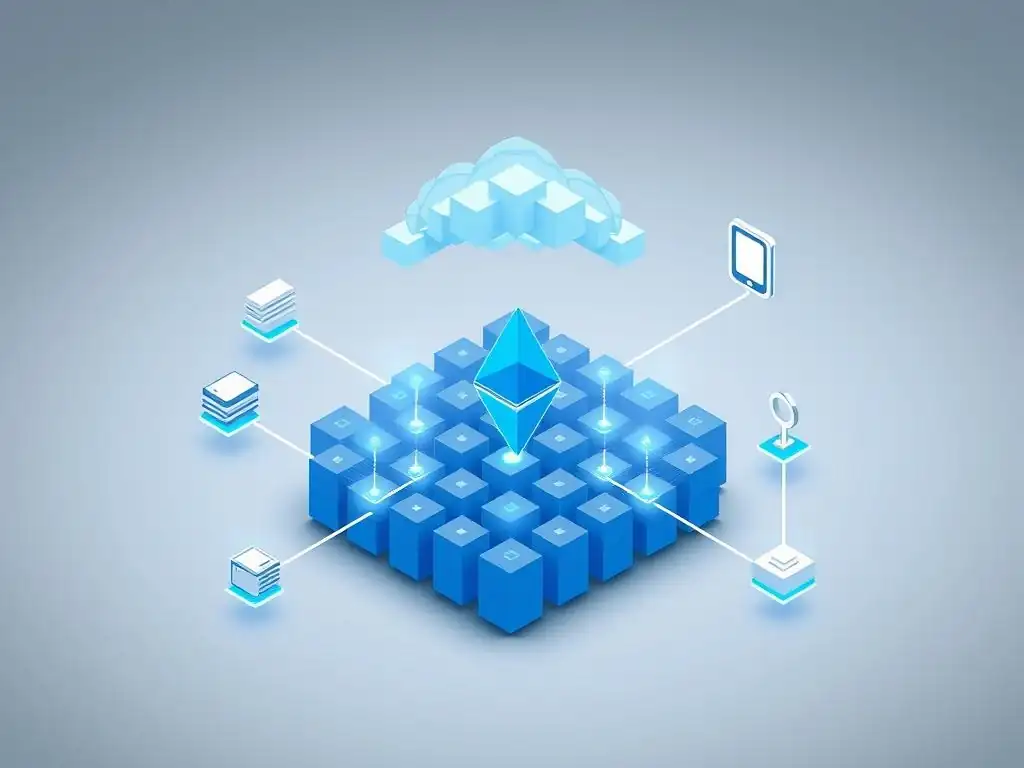
DeFi Applications on Layer 2: Aave on Optimism
Decentralized Finance (DeFi) applications are among the most prominent use cases benefiting significantly from Layer 2 Ethereum scaling solutions. The high gas fees and limited throughput of the Ethereum mainnet have posed a significant barrier to entry for many users in DeFi, especially for smaller transactions and frequent interactions with protocols. Layer 2 solutions, particularly Optimistic Rollups and sidechains, have emerged as vital infrastructure for making DeFi more accessible and cost-effective. Aave, a leading decentralized lending and borrowing protocol, is a prime example of a major DeFi platform leveraging Layer 2 scaling to enhance user experience and expand accessibility.
Aave has deployed its protocol on Optimism, an Optimistic Rollup network. This deployment allows users to interact with Aave's lending and borrowing services with significantly lower gas fees and faster transaction confirmations compared to using Aave directly on the Ethereum mainnet. For instance, simple actions like depositing or withdrawing assets, borrowing or repaying loans, or participating in governance, which could cost several dollars or even tens of dollars on the mainnet, can be executed for fractions of a cent on Optimism.
This dramatic reduction in gas fees makes DeFi protocols like Aave accessible to a much wider range of users, including those with smaller portfolios or those engaging in frequent DeFi activities. The success of Aave on Optimism highlights the transformative impact of Layer 2 scaling in democratizing access to DeFi and enabling wider adoption of decentralized financial services.
Gaming and NFTs on Layer 2: Immutable X
Gaming and Non-Fungible Tokens (NFTs) are another set of use cases that are particularly well-suited for and are rapidly adopting Layer 2 Ethereum scaling solutions. The high transaction frequency and low value transactions often associated with gaming and NFT marketplaces make them highly sensitive to gas fees on the Ethereum mainnet. Layer 2 solutions, especially ZK-Rollups and specialized sidechains, offer the necessary scalability and cost-effectiveness to support the demands of these applications. Immutable X is a prominent Layer 2 solution specifically designed for NFTs and gaming on Ethereum, showcasing the potential of Layer 2 to revolutionize these sectors.
Immutable X is a ZK-Rollup built using StarkWare's technology, focused on providing gas-free NFT minting and trading. It addresses the key challenges of NFTs on Ethereum mainnet, namely high gas fees for minting, trading, and transferring NFTs, and slow transaction speeds. Immutable X enables users to mint and trade NFTs with zero gas fees and instant transaction confirmation.
This dramatically improves the user experience for NFT creators and collectors, making NFTs more accessible and appealing to a broader audience. Furthermore, Immutable X provides a scalable platform for blockchain gaming, allowing for complex game mechanics and high volumes of in-game asset transactions without being constrained by mainnet limitations. Games like Gods Unchained and Guild of Guardians are built on Immutable X, demonstrating the platform's capability to support demanding gaming applications and NFT ecosystems, pushing the boundaries of what's possible with blockchain-based gaming and digital collectibles.
Enterprise Applications of Layer 2 Ethereum
While DeFi, gaming, and NFTs are early and highly visible adopters of Layer 2 Ethereum scaling, enterprise applications are also increasingly recognizing the potential benefits of Layer 2 for making Ethereum viable for enterprise use cases. Enterprises often require high transaction throughput, low and predictable transaction costs, and robust security for their blockchain-based applications. Layer 2 solutions address these critical requirements, making Ethereum a more attractive platform for enterprise adoption. Applications such as supply chain management, identity management, and enterprise data management can benefit from the scalability and cost-effectiveness offered by Layer 2 networks.
For example, in supply chain management, tracking goods across complex networks can involve a high volume of transactions. Using Layer 2 solutions can significantly reduce the cost of recording each step in the supply chain on the blockchain, making it economically feasible for enterprises to implement transparent and auditable supply chain tracking systems.
Similarly, in identity management, verifying and managing digital identities can involve frequent interactions with the blockchain. Layer 2 can reduce the gas costs associated with identity verification and management, making decentralized identity solutions more practical for enterprise deployment.
Furthermore, Layer 2 solutions can enhance the privacy and security of enterprise data by enabling off-chain computation and data storage while still leveraging the security of the Ethereum mainnet for critical operations. As Layer 2 technology matures and enterprise-grade features are developed, the adoption of Layer 2 for enterprise applications on Ethereum is expected to grow, unlocking new opportunities for businesses to leverage the benefits of blockchain technology.
Challenges and Considerations for Layer 2 Adoption
Security Considerations for Layer 2 Networks
While Layer 2 Ethereum scaling solutions offer significant benefits in terms of scalability and cost reduction, it's crucial to acknowledge and address the security considerations associated with their adoption. Different Layer 2 solutions employ varying security mechanisms and assumptions, and understanding these nuances is essential for users and developers.
Optimistic Rollups, for instance, rely on fraud proofs and a challenge period for security, which introduces a time delay for withdrawals and assumes that there will always be at least one honest participant monitoring the rollup for fraud. ZK-Rollups offer stronger cryptographic security through validity proofs, but their implementation and auditability are complex and require specialized expertise.
Sidechains, with their independent security models, introduce a different set of security considerations. The security of a sidechain depends on the strength of its own consensus mechanism and the integrity of its validators. Users need to assess the security of the specific sidechain they are using and understand the trust assumptions involved. Furthermore, bridges connecting Layer 2 networks to the Ethereum mainnet are critical infrastructure and also potential points of vulnerability.
The security of these bridges is paramount to ensure the safe transfer of assets between Layer 1 and Layer 2. Users and developers should carefully evaluate the security architecture of each Layer 2 solution, understand the underlying security assumptions, and be aware of potential risks before adopting and using Layer 2 networks. Ongoing audits, community scrutiny, and advancements in Layer 2 security technologies are crucial for fostering trust and ensuring the long-term security of the Layer 2 ecosystem.
Interoperability Between Layer 2 Solutions
Interoperability between different Layer 2 solutions is an emerging challenge and a critical factor for the future growth and usability of the Ethereum ecosystem. As various Layer 2 networks gain adoption, the need for seamless communication and asset transfer between them becomes increasingly important. Currently, transferring assets between different Layer 2 networks often involves bridging back to the Ethereum mainnet and then bridging to the target Layer 2 network, which can be time-consuming and incur additional gas costs. This lack of direct interoperability creates fragmentation within the Layer 2 ecosystem and hinders the user experience.
Developing efficient and secure interoperability solutions between Layer 2 networks is an active area of research and development. Cross-Layer 2 bridges and communication protocols are being explored to enable direct asset transfers and data exchange between different Layer 2 networks without necessarily going through the Layer 1 mainnet. Solutions like "atomic cross-rollup swaps" and standardized messaging protocols are being investigated to facilitate seamless interactions between different Layer 2 environments.
Improving Layer 2 interoperability is crucial for creating a more unified and user-friendly Ethereum ecosystem, where users can easily move assets and interact with applications across different Layer 2 networks without friction. Overcoming the interoperability challenge will unlock the full potential of Layer 2 scaling and contribute to a more connected and efficient decentralized web.
The Future of Layer 2 Ethereum Scaling: Roadmap and Predictions
The future of Layer 2 Ethereum scaling is dynamic and promising, with ongoing developments and advancements continually shaping the landscape. The roadmap for Layer 2 involves continuous improvements in performance, security, and user experience across various Layer 2 solutions. Optimistic Rollups are expected to further optimize their fraud proof mechanisms and reduce withdrawal times. ZK-Rollups are anticipated to become more EVM-compatible and computationally efficient, making them more accessible to developers and cost-effective for users. Advancements in ZK-proof technology, such as recursive proofs and hardware acceleration, will play a crucial role in enhancing the performance and scalability of ZK-Rollups.
Beyond specific rollup technologies, the broader Layer 2 ecosystem is likely to see further innovation in areas like data availability solutions, interoperability protocols, and developer tooling. Solutions for decentralized data availability, such as data availability sampling, are being explored to enhance the security and efficiency of rollups. Standardized bridging protocols and cross-Layer 2 communication mechanisms are expected to improve interoperability and create a more connected Layer 2 ecosystem.
Furthermore, improved developer tooling and infrastructure will make it easier for developers to build and deploy applications on Layer 2 networks. Predictions for the future of Layer 2 Ethereum scaling are optimistic, with Layer 2 expected to become the primary environment for most Ethereum transactions and dApp activity in the coming years. As Layer 2 solutions mature and adoption grows, they are poised to play a pivotal role in realizing Ethereum's vision of a globally scalable and accessible decentralized platform.
The Impact of Layer 2 on the Ethereum Ecosystem
Reduced Gas Fees and Increased Transaction Throughput
The most immediate and impactful effect of Layer 2 Ethereum scaling is the dramatic reduction in gas fees and the substantial increase in transaction throughput. By offloading transaction processing from the congested Ethereum mainnet, Layer 2 solutions have successfully lowered transaction costs by orders of magnitude.
Users who previously faced prohibitively high gas fees for even simple transactions on Layer 1 now experience significantly more affordable and predictable transaction costs on Layer 2 networks. This reduction in gas fees makes Ethereum accessible to a wider range of users, including those with smaller portfolios or those engaging in frequent on-chain activities.
Alongside reduced fees, Layer 2 solutions deliver a significant boost in transaction throughput. Layer 2 networks can process transactions much faster than the Ethereum mainnet, leading to quicker confirmation times and a smoother user experience. This increased throughput is crucial for supporting applications that require high transaction volumes, such as gaming, social media platforms, and high-frequency trading systems.
The combination of reduced gas fees and increased transaction throughput directly addresses the scalability bottleneck that has hindered Ethereum's mass adoption, paving the way for a more user-friendly and accessible decentralized web. These improvements are fundamental to unlocking Ethereum's potential to become a truly global and widely used platform for decentralized applications and digital assets.
Enabling New Applications and Use Cases on Ethereum
The scalability unlocked by Layer 2 solutions is not just about improving the performance of existing applications; it also enables entirely new categories of applications and use cases on Ethereum that were previously impractical or economically infeasible on the mainnet. With significantly reduced gas fees and increased transaction throughput, Layer 2 opens the door for micro-transaction based applications, such as decentralized social media platforms, pay-per-use services, and micropayment systems. These types of applications, which require frequent and low-value transactions, were simply not viable on the high-fee environment of the Ethereum mainnet.
Furthermore, Layer 2 makes complex and computationally intensive applications more feasible on Ethereum. Gaming applications with intricate in-game economies and frequent asset transactions, high-frequency DeFi trading platforms, and applications requiring real-time data processing can now be built and deployed on Layer 2 networks.
The enhanced scalability of Layer 2 also makes Ethereum more attractive for enterprise adoption, enabling businesses to leverage blockchain technology for a wider range of use cases, such as supply chain management, identity verification, and data management, without being constrained by mainnet limitations. By breaking down the scalability barrier, Layer 2 solutions are fostering innovation and expanding the possibilities of what can be built and achieved on the Ethereum platform, driving the evolution of the decentralized web.
The Role of Layer 2 in Ethereum's Long-Term Scalability
Layer 2 scaling solutions are not merely a temporary fix for Ethereum's scalability challenges; they are a fundamental and integral part of Ethereum's long-term scalability strategy. While Ethereum's mainnet continues to evolve and improve, particularly with the ongoing transition to Proof-of-Stake and future sharding upgrades, Layer 2 is positioned as the primary scaling solution for the foreseeable future. Layer 2 networks provide a complementary scaling approach that works in conjunction with Layer 1 improvements to achieve the necessary throughput and cost-effectiveness for mass adoption.
Ethereum's roadmap envisions a multi-layered scaling strategy, where Layer 1 focuses on security, decentralization, and data availability, while Layer 2 handles the bulk of transaction processing and computation. This layered approach allows Ethereum to scale horizontally, by adding more Layer 2 networks, without compromising the core principles of the mainnet.
Layer 2 is not seen as a replacement for Layer 1 but rather as an essential extension, working in synergy to create a robust and scalable Ethereum ecosystem. As Layer 2 technologies mature and adoption grows, they are expected to play a crucial role in enabling Ethereum to scale to meet the demands of a global user base and become the foundation for a truly decentralized and accessible internet, ensuring Ethereum's long-term viability and leadership in the blockchain space.
Conclusion: Layer 2 Networks as the Key to Ethereum's Future
The Promising Future of Ethereum Scalability with Layer 2
Layer 2 networks are unequivocally the key to unlocking Ethereum's scalability potential and realizing its vision of becoming a global platform for decentralized applications. These solutions have already demonstrated their effectiveness in drastically reducing gas fees and increasing transaction throughput, addressing the critical bottlenecks that have hindered Ethereum's wider adoption. The ongoing development and innovation within the Layer 2 ecosystem, encompassing Optimistic Rollups, ZK-Rollups, sidechains, and state channels, promise even greater scalability and user experience improvements in the future.
The widespread adoption of Layer 2 is transforming the Ethereum landscape, making DeFi, NFTs, gaming, and a broader range of applications more accessible and economically viable. As Layer 2 technologies mature and interoperability between different solutions improves, the Ethereum ecosystem is poised to become more unified, efficient, and user-friendly. The future of Ethereum scalability is inextricably linked to the continued growth and advancement of Layer 2 networks. These solutions are not just a temporary workaround; they are a fundamental architectural component of Ethereum's long-term strategy, ensuring its ability to scale to meet the demands of a global decentralized web.
The Convergence of Layer 2 Solutions and Ethereum's Mainnet
The future of Ethereum scalability is not just about Layer 2 operating in isolation; it's about the increasing convergence and synergy between Layer 2 solutions and the Ethereum mainnet. As Layer 2 networks mature, they are becoming more deeply integrated with the Ethereum ecosystem, leveraging its security and data availability while contributing to its overall scalability and functionality. Advancements in data availability solutions, cross-Layer 2 interoperability, and account abstraction are further blurring the lines between Layer 1 and Layer 2, creating a more seamless and unified Ethereum experience.
In the long term, technologies like sharding on the Ethereum mainnet are expected to complement Layer 2 scaling, further enhancing the overall capacity of the Ethereum network. Sharding will improve the base layer's throughput, while Layer 2 will continue to provide efficient off-chain transaction processing and cost optimization.
This synergistic approach, combining Layer 1 improvements with Layer 2 innovations, represents the path towards achieving truly massive scalability for Ethereum. The convergence of Layer 2 solutions and the Ethereum mainnet is not just a technical evolution; it's a strategic direction that positions Ethereum to become the foundational infrastructure for a decentralized future, capable of supporting a vast ecosystem of applications and billions of users worldwide.
Frequently Asked Questions
What are Layer 2 networks, and why are they important for Ethereum?
Layer 2 networks are scaling solutions that operate on top of the Ethereum blockchain. They are important because they address Ethereum's scalability limitations by processing transactions off-chain, reducing congestion and fees.
How do Layer 2 solutions improve Ethereum's transaction speed and cost?
Layer 2 solutions achieve faster speeds and lower costs by batching transactions and processing them off the main Ethereum chain. This reduces the burden on the main chain, allowing for quicker and cheaper transactions.
What are some examples of popular Layer 2 scaling solutions for Ethereum?
Examples include Optimistic Rollups, zk-Rollups, and Validium. Each offers a different approach to off-chain processing and data verification, providing various tradeoffs in terms of security and scalability.
How does Layer 2 Ethereum scaling impact the development and adoption of DeFi applications?
Layer 2 scaling enables DeFi applications to become more accessible and user-friendly by reducing transaction fees and improving speed. This fosters broader adoption and allows for more complex and innovative DeFi protocols.
What are the potential future trends and challenges for Layer 2 Ethereum scaling?
Future trends include increased adoption of Layer 2 solutions and further innovation in scaling technologies. Challenges include ensuring cross-chain interoperability and maintaining security and decentralization as Layer 2 ecosystems grow.
Final Reflection: The Future Forged in Layers
The journey through the landscape of Layer 2 Ethereum scaling solutions reveals not just technical ingenuity, but a fundamental shift in how we approach blockchain technology. The promise of a scalable, accessible, and decentralized Ethereum is no longer a distant dream, but a tangible reality being actively built upon. The innovations discussed, from rollups to sidechains, represent a collective effort to overcome the limitations of the base layer and unlock the true potential of decentralized applications for a global audience.
This exploration highlights how crucial Layer 2 solutions are to the continued evolution and adoption of blockchain technology. The ability to transact quickly and affordably on Ethereum, without sacrificing security or decentralization, is paramount to its long-term success. This isn't just about faster transactions; it's about empowering individuals and communities with the tools they need to participate in a more equitable and transparent financial system. The future of Ethereum is multi-chain, and Layer 2s are the key to unlocking that future.
- Vitalik Buterin
As we stand at the cusp of this new era, consider the implications of a truly scalable Ethereum. How will this technology reshape industries, empower creators, and redefine the very nature of trust? Embrace the possibilities, explore the potential, and contribute to the ongoing evolution of Layer 2 solutions. The future of Ethereum, and indeed the future of decentralized technology, is being forged in these layers.
Unlock Ethereum's Full Potential: Take Action Now!
Thanks for exploring the world of Layer 2 scaling solutions! We hope you've gained a solid understanding of how these innovations are transforming Ethereum. Now, it's time to put that knowledge into practice.
Here are a few ways to deepen your understanding and become part of the Layer 2 revolution:
- Try it out: Deploy a smart contract on a Layer 2 test network.: Experience the speed and cost savings firsthand! This is your primary call to action!
- Join the conversation: Share this article with friends interested in blockchain and start a discussion about the future of Ethereum scaling.
- Explore further: Research a Layer 2 project that interests you—look into their technology, team, and roadmap. You might discover the next big breakthrough!
Which Layer 2 solution are you most excited to explore, and why? Share your thoughts in the comments below!
Leave a Reply