
Geopolitics and Blockchain Security: The Emerging Landscape of Cyber Warfare


Welcome to Blockchain Trends, your guide to understanding the revolutionary power of blockchain technology.
Delve into the complex interplay of technology and global politics in our latest article. Are you ready to explore the blockchain cybersecurity geopolitical landscape? Discover how this emerging landscape is shaping cyber warfare and what it means for the future of decentralized systems. Uncover the hidden vulnerabilities and potential defenses within the blockchain framework in an era defined by increasing geopolitical tensions. Read on to understand the risks and opportunities ahead...
- Geopolitics and Blockchain Security: Navigating the Emerging Cyber Warfare Landscape
- Blockchain's Vulnerability in the Geopolitical Arena: Key Challenges
- Blockchain as a Tool in Geopolitical Strategy: Defensive and Offensive Applications
- The Future of Blockchain Cybersecurity in the Geopolitical Landscape
- Mitigating Geopolitical Risks to Blockchain: Strategies for Enhanced Security
- Conclusion: Navigating the Complex Blockchain Cybersecurity Geopolitical Landscape
-
Frequently Asked Questions
- What role does blockchain play in the cybersecurity geopolitical landscape?
- How can blockchain technology be leveraged to defend against cyber warfare?
- What are the key regulatory challenges surrounding blockchain in the context of geopolitical security?
- How might the geopolitical landscape influence the development and adoption of blockchain cybersecurity solutions?
- Beyond cryptocurrency, what other applications of blockchain are relevant to the blockchain cybersecurity geopolitical landscape?
- Final Reflection: Navigating the Blockchain Cybersecurity Geopolitical Landscape
- Fortify Your Future: Secure Your Blockchain Knowledge Now!
Understanding the Intersection: Blockchain Cybersecurity and Geopolitical Tensions
The convergence of blockchain technology and geopolitics represents a fascinating yet increasingly critical domain, particularly in the realm of cybersecurity. Blockchain, initially conceived as a decentralized and secure ledger system for cryptocurrencies, is now recognized for its broader applications, including enhancing data security, supply chain transparency, and digital identity management.
However, its inherent attributes of decentralization and immutability, while strengths, also present unique challenges in a world increasingly characterized by geopolitical tensions and state-sponsored cyber activities. The immutable nature of blockchain records, for instance, can be both a boon for transparency and a potential vulnerability if exploited for malicious purposes within a geopolitical context.
Geopolitical tensions, driven by competition for resources, influence, and technological supremacy, are increasingly manifesting in cyberspace. Cyber warfare, espionage, and information operations are now integral components of statecraft, and blockchain technology, being a foundational element of the evolving digital infrastructure, is not immune to these pressures. In fact, its growing importance makes it a potentially attractive target and a tool in the geopolitical arena.
Understanding this intersection is crucial for navigating the complex landscape of blockchain cybersecurity, where technological vulnerabilities are intertwined with strategic geopolitical considerations. The stakes are high, as the security and integrity of blockchain systems can have significant implications for national security, economic stability, and global power dynamics.
The Rising Stakes: Geopolitical Conflicts Spill Over into Blockchain Security
The escalating geopolitical landscape is directly impacting blockchain security, transforming it from a primarily technical concern to a strategic imperative. Nation-states are increasingly recognizing the potential of blockchain technology, both as a tool and a target in their geopolitical strategies. This recognition elevates the stakes significantly, as cyberattacks against blockchain infrastructure can now be seen not just as criminal acts, but as potential acts of geopolitical aggression. The decentralized nature of blockchain, while designed to enhance resilience, also introduces new complexities when considering state-sponsored attacks, which are typically well-resourced, coordinated, and persistent.
Consider the increasing sophistication of Advanced Persistent Threats (APTs), often attributed to state-sponsored actors. These groups have demonstrated the capability to infiltrate complex systems, remain undetected for extended periods, and exfiltrate sensitive information or disrupt critical infrastructure. When these capabilities are directed towards blockchain networks, the potential consequences can be far-reaching.
For example, a successful attack on a major blockchain platform could undermine trust in the technology, disrupt financial systems, or even be used to manipulate public opinion through disinformation campaigns embedded in immutable blockchain records. The geopolitical dimension adds a layer of complexity beyond traditional cybersecurity threats, demanding a more strategic and internationally coordinated approach to blockchain security.
State-Sponsored Actors and Blockchain Attacks: An Increasing Threat
The specter of state-sponsored actors engaging in blockchain attacks is no longer hypothetical; it is a growing and demonstrable threat. Intelligence agencies and cybersecurity firms have increasingly reported on the involvement of nation-states in cyber operations targeting various sectors, and blockchain is becoming a focal point. These actors possess significant resources, advanced cyber weaponry, and the political motivation to target blockchain networks for strategic gains. Their objectives can range from financial gain through cryptocurrency theft to more insidious goals like disrupting adversary economies, stealing intellectual property related to blockchain innovations, or undermining trust in decentralized technologies.
For instance, reports have linked North Korea's Lazarus Group to several large-scale cryptocurrency heists, allegedly to fund the nation's weapons programs. While these attacks are primarily financially motivated, they demonstrate the capability of state-affiliated groups to penetrate blockchain security measures. Furthermore, state-sponsored actors might be interested in exploiting blockchain vulnerabilities not just for financial gain, but also for intelligence gathering.
Analyzing blockchain transaction patterns, network infrastructure, and consensus mechanisms could provide valuable insights into the activities of other nations or organizations, giving them a strategic advantage in the geopolitical arena. This threat necessitates a proactive and adaptive approach to blockchain cybersecurity, recognizing the unique characteristics and motivations of state-sponsored adversaries.
Nation-State Interests in Exploiting Blockchain Vulnerabilities
Nation-state interests in exploiting blockchain vulnerabilities are multifaceted and driven by a range of geopolitical objectives. Beyond financial gain, these interests encompass strategic advantages in information warfare, economic coercion, and technological dominance. Exploiting vulnerabilities in blockchain technology can offer states a powerful tool to exert influence and project power in the digital domain. The immutable and transparent nature of blockchains, ironically, can be turned into a weapon if manipulated or compromised.
Consider the potential for using blockchain vulnerabilities to conduct disinformation campaigns. By injecting false or misleading information into a blockchain, state-sponsored actors could create a seemingly immutable record of propaganda, which could be difficult to refute or remove. This could be particularly potent in influencing public opinion or undermining trust in legitimate information sources.
Furthermore, nation-states might seek to exploit blockchain weaknesses to disrupt the economic activities of adversaries. Attacks on blockchain-based financial systems, for example, could destabilize economies or undermine confidence in digital currencies. The geopolitical landscape thus amplifies the significance of even seemingly minor blockchain vulnerabilities, transforming them into potential instruments of statecraft.
Blockchain's Role in Espionage and Information Warfare
Blockchain's inherent properties, designed for transparency and security, ironically also present avenues for espionage and information warfare in the geopolitical context. The very features that make blockchain attractive for secure transactions and data management can be exploited for clandestine activities or manipulated for strategic information operations. The distributed ledger, designed to be transparent, can become a rich source of intelligence if transaction patterns and network activity are analyzed for espionage purposes.
For example, monitoring blockchain transactions could reveal patterns of financial flows related to illicit activities, sanctions evasion, or even state-sponsored operations. While blockchain is often lauded for pseudonymity, sophisticated analysis techniques can sometimes deanonymize participants and link transactions to real-world entities. In the realm of information warfare, blockchain could be used to disseminate propaganda or disinformation in a manner that is difficult to censor or trace.
The immutability of blockchain records means that once information is written, it is exceedingly difficult to remove or alter, making it a potentially powerful tool for spreading narratives, regardless of their veracity, within a geopolitical conflict. The dual-use nature of blockchain, offering both security and potential vulnerabilities for espionage and information warfare, demands careful consideration in the evolving geopolitical landscape.
Blockchain's Vulnerability in the Geopolitical Arena: Key Challenges
51% Attacks: A Geopolitical Tool for Blockchain Manipulation?
The theoretical vulnerability of 51% attacks, where a single entity or colluding group gains control of more than half of a blockchain network's mining power or staking power, takes on a heightened significance in the geopolitical arena. While traditionally considered a risk primarily for smaller cryptocurrencies, the potential for nation-states to orchestrate or sponsor such attacks on even larger blockchains cannot be discounted. A successful 51% attack could allow a state actor to manipulate transaction history, double-spend cryptocurrency, or even censor transactions, effectively disrupting the integrity and functionality of the targeted blockchain.
Imagine a scenario where a nation-state, possessing significant computing resources and strategic motivation, targets a blockchain underpinning a critical infrastructure or financial system in a rival nation. By launching a 51% attack, they could potentially disrupt operations, steal assets, or sow chaos and distrust. While the cost and technical complexity of executing a 51% attack on a major blockchain are substantial, the geopolitical rewards for a successful operation could be equally significant.
Furthermore, the mere threat of a state-sponsored 51% attack can be used as a tool of coercion or intimidation in international relations, highlighting the geopolitical dimension of this technical vulnerability. The possibility of 51% attacks becoming a geopolitical weapon demands increased vigilance and the development of robust countermeasures.
Regulatory Divergence: A Weak Link in Global Blockchain Security
Regulatory divergence across jurisdictions represents a significant weak link in global blockchain security, particularly when considering the geopolitical landscape. The lack of harmonized international standards and regulations for blockchain technology creates a fragmented and often inconsistent security environment. Different nations are adopting vastly different approaches to regulating cryptocurrencies, blockchain applications, and cybersecurity, leading to regulatory arbitrage and potential loopholes that state-sponsored actors or malicious groups can exploit.
For example, some countries may have lax cybersecurity regulations for blockchain businesses, while others may impose stringent requirements. This disparity allows malicious actors to potentially operate from jurisdictions with weaker regulations, making it more difficult to track and prosecute them internationally.
Furthermore, differing national laws on data privacy and cross-border data flows can complicate incident response and information sharing in the event of a blockchain security breach with geopolitical implications. The lack of global regulatory coherence creates friction and vulnerabilities that can be exploited in the geopolitical competition surrounding blockchain technology, hindering the development of a truly secure and resilient global blockchain ecosystem.
Supply Chain Attacks Targeting Blockchain Infrastructure
Supply chain attacks represent a significant and often underestimated threat to blockchain infrastructure, particularly within the geopolitical context. Blockchain technology relies on a complex ecosystem of hardware, software, and service providers, creating numerous potential points of vulnerability within the supply chain. Nation-states, with their advanced intelligence capabilities and resources, are increasingly adept at conducting sophisticated supply chain attacks, and blockchain infrastructure is not immune to this threat.
Compromising critical components within the blockchain supply chain, such as hardware wallets, mining equipment, or software libraries, could have cascading effects on the security and integrity of entire blockchain networks. Imagine a scenario where a state-sponsored actor compromises a major manufacturer of mining hardware, injecting backdoors or vulnerabilities into the equipment before it reaches end-users.
This could allow the attacker to gain covert control over a significant portion of the network's mining power, potentially facilitating 51% attacks or other malicious activities. The interconnected nature of global supply chains amplifies the risk, as vulnerabilities introduced in one part of the world can have far-reaching consequences for blockchain security globally, demanding a more holistic and geopolitically aware approach to supply chain security in the blockchain space.
The Impact of Sanctions on Blockchain Networks and Cybersecurity
Economic sanctions, a common tool in geopolitical statecraft, can have complex and often unintended consequences for blockchain networks and cybersecurity. While sanctions are intended to target specific nations or entities, their impact can ripple through the decentralized and borderless nature of blockchain technology, creating new vulnerabilities and challenges for blockchain security. Sanctions can disrupt legitimate blockchain activities, fragment the global blockchain ecosystem, and potentially incentivize the development of alternative, less secure systems outside of regulatory oversight.
For example, sanctions targeting specific cryptocurrency exchanges or blockchain service providers in a particular country might inadvertently push users towards less regulated or decentralized platforms, which may have weaker security measures. This could create new opportunities for illicit activities and increase the overall risk to the blockchain ecosystem.
Furthermore, sanctions can hinder international cooperation on blockchain cybersecurity, as they may restrict information sharing and collaboration between entities in sanctioned and non-sanctioned jurisdictions. The geopolitical use of sanctions in the blockchain space requires careful consideration of the potential cybersecurity implications and the unintended consequences for the overall security and stability of decentralized networks.
Blockchain as a Tool in Geopolitical Strategy: Defensive and Offensive Applications
Blockchain for Secure Communication and Data Sovereignty
Blockchain technology offers powerful tools for enhancing secure communication and promoting data sovereignty, both of which are increasingly critical in the geopolitical landscape. In an era of pervasive surveillance and cyber espionage, blockchain's cryptographic security and decentralized nature can provide resilient channels for secure communication, resistant to interception and manipulation. Furthermore, blockchain's immutable ledger can be leveraged to assert and protect data sovereignty, empowering nations and individuals to control their digital assets and information flows.
Governments and organizations are exploring blockchain-based solutions for secure messaging platforms, encrypted communication channels, and tamper-proof data storage to safeguard sensitive information from state-sponsored espionage or cyberattacks. For instance, Estonia, a pioneer in digital governance, has utilized blockchain technology for data integrity and security in its e-government systems.
Blockchain's decentralized architecture can also contribute to data sovereignty by enabling nations to establish independent digital infrastructure and reduce reliance on centralized, potentially foreign-controlled platforms. This is particularly relevant in the context of increasing geopolitical competition over digital infrastructure and data control, where blockchain can offer a pathway to greater autonomy and resilience.
Decentralized Autonomous Organizations (DAOs) and Geopolitical Influence
Decentralized Autonomous Organizations (DAOs), enabled by blockchain technology, are emerging as novel organizational structures with potential geopolitical influence. DAOs, governed by code and community consensus rather than traditional hierarchical structures, can operate across borders with greater autonomy and resilience. This decentralized nature presents both opportunities and challenges in the geopolitical landscape, as DAOs can be used to foster international collaboration, facilitate cross-border economic activity, or, conversely, be exploited for illicit purposes or to undermine national regulations.
Imagine a DAO established to promote international cooperation on climate change, funded by contributions from individuals and organizations worldwide, and governed transparently through blockchain-based voting mechanisms. Such a DAO could potentially exert geopolitical influence by mobilizing resources, coordinating action, and advocating for policy changes across national borders. However, the decentralized and often anonymous nature of DAOs also raises concerns about accountability and potential misuse.
Nation-states are grappling with how to regulate and interact with DAOs, particularly those that operate across jurisdictions and may challenge traditional notions of sovereignty and governance. The geopolitical implications of DAOs are still evolving, but their potential to reshape international relations and power dynamics is undeniable.
Blockchain-Based Identity Management in a Contested World
Blockchain-based identity management systems are gaining traction as a potential solution to enhance security and privacy in a contested digital world, where identity theft and digital surveillance are rampant. Traditional centralized identity systems are vulnerable to single points of failure and data breaches, whereas blockchain's decentralized and cryptographic approach offers a more resilient and user-centric model for digital identity. In the geopolitical context, blockchain-based identity management can empower individuals and nations to assert greater control over their digital identities and reduce reliance on potentially compromised or foreign-controlled identity infrastructure.
For example, blockchain-based self-sovereign identity (SSI) solutions allow individuals to own and control their digital identities, rather than relying on centralized authorities. This can enhance privacy and security, particularly for vulnerable populations or individuals operating in politically sensitive environments. Furthermore, nations are exploring blockchain-based digital identity systems to improve border security, streamline citizen services, and enhance national security. The development and deployment of blockchain-based identity solutions are becoming increasingly relevant in the geopolitical competition for digital sovereignty and control over identity infrastructure, as nations seek to establish secure and resilient digital identity ecosystems.
The Future of Blockchain Cybersecurity in the Geopolitical Landscape
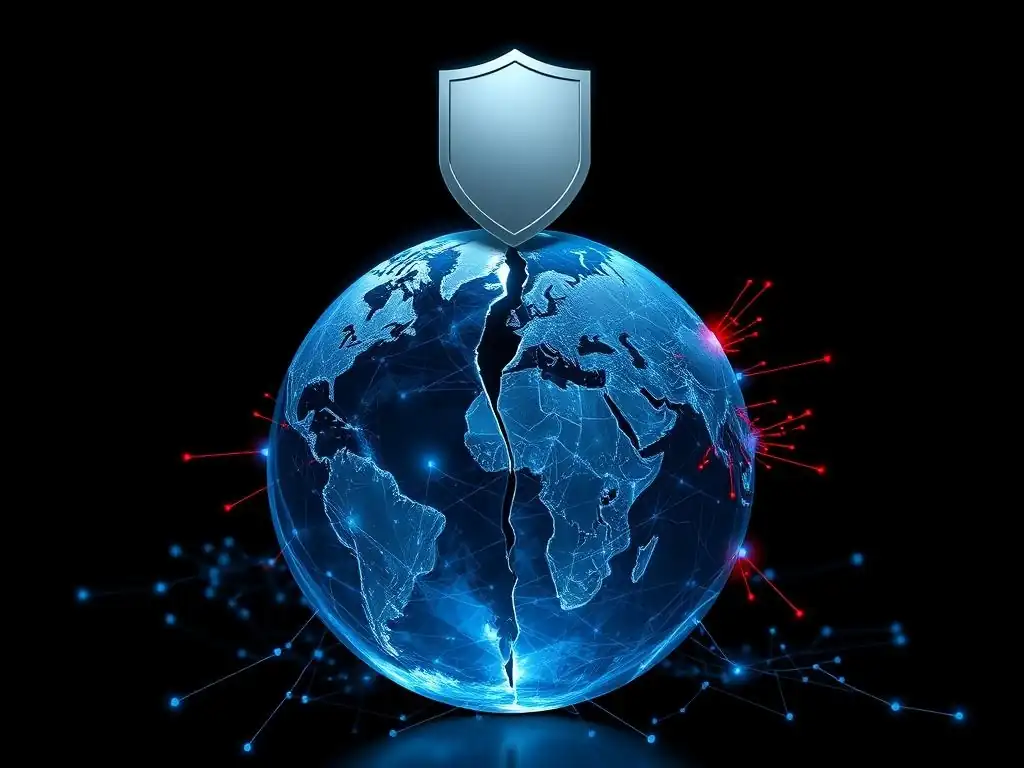
Building Resilient Blockchain Systems Against Geopolitical Threats
The future of blockchain cybersecurity in the geopolitical landscape hinges on building resilient systems capable of withstanding sophisticated, state-sponsored attacks and adapting to the evolving threat environment. Resilience, in this context, encompasses not only technical robustness but also geopolitical awareness and proactive security measures that anticipate and mitigate potential threats emanating from nation-state actors. Building resilient blockchain systems requires a multi-faceted approach, encompassing robust security protocols, decentralized architectures, international collaboration, and continuous adaptation to emerging threats.
This includes strengthening cryptographic algorithms, implementing advanced threat detection and incident response capabilities, and promoting decentralized governance models to reduce single points of failure. Furthermore, fostering a culture of security awareness within the blockchain community and engaging in proactive threat intelligence sharing are crucial for building resilience against geopolitical threats. The future of blockchain security is inextricably linked to its ability to adapt to the geopolitical realities of cyber warfare and to evolve in a manner that enhances its resilience against state-sponsored attacks and strategic manipulation.
Implementing Robust Security Protocols to Counter State-Sponsored Attacks
Implementing robust security protocols is paramount to countering the growing threat of state-sponsored attacks on blockchain systems. These protocols must go beyond traditional cybersecurity measures and address the specific characteristics and motivations of nation-state adversaries. This requires a layered security approach, encompassing cryptographic hardening, network segmentation, intrusion detection and prevention systems, and robust access control mechanisms.
For instance, employing post-quantum cryptography algorithms is becoming increasingly important to mitigate the future threat posed by quantum computing to current cryptographic standards. Furthermore, implementing zero-knowledge proofs and other privacy-enhancing technologies can reduce the attack surface and limit the information available to potential adversaries. Regular security audits, penetration testing, and vulnerability assessments are essential to identify and address weaknesses in blockchain systems before they can be exploited by state-sponsored actors. Proactive and adaptive security protocols are the cornerstone of building resilient blockchain systems capable of withstanding the sophisticated cyber capabilities of nation-states.
Strengthening International Cooperation on Blockchain Cybersecurity Standards
Strengthening international cooperation on blockchain cybersecurity standards is essential to create a more secure and resilient global blockchain ecosystem in the face of geopolitical threats. The borderless nature of blockchain technology necessitates a collaborative, international approach to security, as threats and vulnerabilities can easily transcend national boundaries. Harmonizing cybersecurity standards, promoting information sharing on threats and best practices, and establishing joint incident response mechanisms are crucial steps towards enhancing global blockchain security cooperation.
International organizations, industry consortia, and national governments must work together to develop and promote common cybersecurity standards for blockchain technologies. This includes establishing guidelines for secure development practices, vulnerability disclosure, and incident response. Facilitating information sharing on emerging threats, attack vectors, and mitigation strategies is also critical to improve collective awareness and preparedness. Furthermore, establishing mechanisms for cross-border collaboration in incident response and law enforcement is essential to effectively address transnational blockchain cybercrime and state-sponsored attacks. International cooperation is not merely desirable, but a necessity for securing the future of blockchain technology in the complex geopolitical landscape.
Geopolitical Implications of Quantum Computing on Blockchain Security
The advent of quantum computing poses significant geopolitical implications for blockchain security, as it threatens to break many of the cryptographic algorithms currently used to secure blockchain networks. Quantum computers, with their vastly superior computational power, could potentially render current encryption methods obsolete, creating a "quantum apocalypse" scenario for blockchain security. Nations that achieve quantum supremacy first could gain a significant strategic advantage, potentially capable of decrypting sensitive blockchain data, undermining cryptographic currencies, and even launching devastating cyberattacks.
This geopolitical dimension of quantum computing intensifies the race to develop quantum-resistant cryptography and transition blockchain systems to post-quantum algorithms. Nations are investing heavily in quantum computing research and development, both for offensive and defensive purposes. The development and deployment of quantum-resistant blockchain technologies are becoming a matter of national security, as the ability to secure blockchain networks against quantum attacks could have profound geopolitical implications. The transition to post-quantum cryptography is not just a technical challenge, but also a geopolitical imperative, demanding international collaboration and proactive measures to mitigate the potential risks.
Anticipating Geopolitical Impacts: The Evolution of Blockchain Vulnerabilities and Exploitation
Anticipating the geopolitical impacts of evolving blockchain vulnerabilities and exploitation techniques is crucial for proactive cybersecurity and strategic planning. As blockchain technology matures and its adoption expands, new vulnerabilities will inevitably emerge, and state-sponsored actors will continuously seek to exploit them for geopolitical gain. A proactive and forward-looking approach to blockchain cybersecurity requires anticipating these evolving threats and developing countermeasures before they can be effectively weaponized.
This involves continuous monitoring of the threat landscape, research and development of advanced security technologies, and proactive vulnerability assessments. Scenario planning and geopolitical risk analysis are essential tools for anticipating potential attack vectors and developing mitigation strategies. Furthermore, fostering collaboration between cybersecurity experts, policymakers, and intelligence agencies is crucial for understanding the geopolitical motivations behind blockchain attacks and developing effective responses. The future of blockchain security in the geopolitical landscape depends on our ability to anticipate and adapt to the evolving threat environment, proactively addressing vulnerabilities and mitigating the potential for geopolitical exploitation.
Mitigating Geopolitical Risks to Blockchain: Strategies for Enhanced Security
Diversifying Blockchain Infrastructure and Nodes Globally
Diversifying blockchain infrastructure and nodes globally is a crucial strategy for mitigating geopolitical risks and enhancing the resilience of blockchain networks. Concentrating blockchain infrastructure in a limited number of jurisdictions or under the control of a few entities creates single points of failure and potential targets for state-sponsored attacks or geopolitical manipulation. Distributing blockchain nodes and infrastructure geographically across diverse jurisdictions reduces the risk of systemic disruptions caused by localized events, geopolitical instability, or targeted cyberattacks.
Promoting decentralization at the infrastructure level, by encouraging the operation of nodes in geographically diverse locations and under diverse ownership, enhances the overall resilience of blockchain networks. This makes it more difficult for any single nation-state or actor to exert undue influence or control over the network. Furthermore, diversifying infrastructure can improve network performance and reduce latency, particularly for global blockchain applications. Geographical diversification of blockchain infrastructure is a fundamental strategy for mitigating geopolitical risks and building more robust and resilient decentralized systems.
Promoting Decentralization to Reduce Single Points of Failure
Promoting decentralization at all levels of blockchain systems is paramount to reduce single points of failure and enhance resilience against geopolitical risks. Decentralization is not merely a technical attribute; it is a strategic security imperative in the geopolitical landscape. Concentration of control or decision-making power within blockchain networks, whether in governance, consensus mechanisms, or infrastructure, creates vulnerabilities that can be exploited by state-sponsored actors or in geopolitical conflicts.
Enhancing decentralization in blockchain governance by promoting community-driven decision-making and reducing reliance on centralized authorities strengthens the resilience of networks against manipulation or coercion. Diversifying consensus mechanisms and avoiding concentration of mining or staking power in the hands of a few entities reduces the risk of 51% attacks or other forms of network control. Furthermore, decentralizing access to blockchain networks and promoting permissionless participation fosters a more robust and resilient ecosystem, less susceptible to censorship or geopolitical pressure. Decentralization, in its various forms, is the cornerstone of building geopolitically resilient blockchain systems.
Fostering Public-Private Partnerships for Threat Intelligence Sharing
Fostering public-private partnerships for threat intelligence sharing is a critical strategy for enhancing blockchain cybersecurity in the geopolitical landscape. Both public and private sector entities possess unique insights and capabilities in identifying, analyzing, and mitigating blockchain cybersecurity threats. Effective collaboration and information sharing between these sectors are essential to create a more comprehensive and proactive defense against state-sponsored attacks and other geopolitical risks.
Governments and intelligence agencies can provide valuable threat intelligence on state-sponsored actors, emerging attack vectors, and geopolitical trends affecting blockchain security. Private sector cybersecurity firms and blockchain companies possess technical expertise in vulnerability analysis, incident response, and threat detection technologies. Establishing formal and informal mechanisms for information sharing, joint threat exercises, and collaborative research can significantly enhance the collective cybersecurity posture of the blockchain ecosystem. Public-private partnerships are not just beneficial but essential for navigating the complex and evolving geopolitical landscape of blockchain cybersecurity.
Enhancing Anomaly Detection and Incident Response for Blockchain Networks
Enhancing anomaly detection and incident response capabilities for blockchain networks is crucial for mitigating geopolitical risks and minimizing the impact of successful attacks. Given the sophistication and persistence of state-sponsored actors, proactive threat detection and rapid incident response are essential to protect blockchain systems from compromise and disruption. Anomaly detection systems, leveraging artificial intelligence and machine learning, can identify unusual patterns and suspicious activities within blockchain networks, potentially indicating an ongoing attack or vulnerability exploitation.
Robust incident response plans and teams are necessary to effectively contain, mitigate, and recover from blockchain security incidents, particularly those with geopolitical implications. This includes establishing clear protocols for incident reporting, communication, and coordination, as well as developing forensic capabilities to investigate attacks and attribute them to their sources. Furthermore, sharing incident response best practices and lessons learned across the blockchain community is essential to improve collective preparedness and resilience. Investing in advanced anomaly detection and incident response capabilities is a critical component of a comprehensive blockchain cybersecurity strategy in the face of geopolitical threats.
Navigating the complex intersection of blockchain cybersecurity and geopolitics requires a multifaceted and adaptive approach. As blockchain technology becomes increasingly integrated into critical infrastructure and global systems, its security is no longer solely a technical concern but a strategic geopolitical imperative.
The emerging landscape of cyber warfare necessitates a shift towards proactive security measures, international cooperation, and a deep understanding of the geopolitical motivations driving blockchain-related threats. By embracing decentralization, fostering public-private partnerships, and continuously innovating in security protocols, we can strive to build resilient blockchain systems capable of withstanding the challenges of the evolving geopolitical landscape and ensuring the secure and beneficial development of this transformative technology.
Frequently Asked Questions
What role does blockchain play in the cybersecurity geopolitical landscape?
Blockchain offers immutable and transparent ledgers, which can enhance data integrity and traceability, making it harder for malicious actors to tamper with critical information. This is crucial in a world where nation-state cyberattacks are becoming increasingly common.
How can blockchain technology be leveraged to defend against cyber warfare?
Blockchain can be used to create secure communication channels, distributed denial-of-service (DDoS) mitigation systems, and identity management solutions. These applications can help defend against attacks and improve overall cyber resilience.
What are the key regulatory challenges surrounding blockchain in the context of geopolitical security?
Regulation needs to address the potential for blockchain to be used for illicit activities while also fostering innovation. Balancing security concerns with the need for decentralized governance is a significant challenge.
How might the geopolitical landscape influence the development and adoption of blockchain cybersecurity solutions?
Geopolitical tensions can drive investment in blockchain-based security solutions and lead to fragmentation of standards. National security interests could also lead to divergent technological paths in different regions.
Beyond cryptocurrency, what other applications of blockchain are relevant to the blockchain cybersecurity geopolitical landscape?
Secure supply chain management, digital identity verification, and secure voting systems are all examples of blockchain applications that can enhance security and trust in a world increasingly shaped by cyber conflicts and geopolitical rivalries.
The intricate dance between geopolitics and blockchain security, as explored throughout this article, is no longer a theoretical exercise but a critical reality shaping the future of cyber warfare. The vulnerabilities inherent in blockchain technology, coupled with the increasing sophistication of nation-state actors, demand immediate and comprehensive attention to safeguard digital assets and national security. Ignoring this emerging landscape is akin to navigating a minefield blindfolded.
This intersection of technology and international relations has profoundly influenced the cultural and social landscape, forcing us to reconsider the very definition of sovereignty and security in the digital age. The decentralized nature of blockchain, once hailed as its greatest strength, now presents a unique challenge in attributing responsibility and enforcing accountability in the face of cyberattacks. Security is always excessive until it's not enough.
This quote perfectly encapsulates the current state of blockchain cybersecurity; we must proactively invest in robust defenses before a catastrophic event forces our hand.
As you navigate this complex and evolving world, remember that understanding the geopolitical implications of blockchain security is not just the responsibility of governments and corporations. It is a shared responsibility that demands awareness, vigilance, and a commitment to fostering a more secure and resilient digital future. Consider how you can contribute to this effort, whether through education, advocacy, or simply by making informed choices about the technologies you use and support. The future of blockchain security, and indeed, the future of our interconnected world, depends on it.
Fortify Your Future: Secure Your Blockchain Knowledge Now!
Thank you for exploring the complex intersection of geopolitics and blockchain security. You now have a deeper understanding of the emerging cyber warfare landscape. Don't let this knowledge sit idle; it's time to take action and proactively safeguard your digital future!
Here are some ways to get started:
- Deepen your understanding of cryptography. Given the sophisticated nature of geopolitical cyber threats, a solid grasp of cryptographic principles is crucial. Consider exploring advanced courses or certifications.
- Participate in online forums and discussions about blockchain security threats. Sharing knowledge and perspectives is vital for collective defense.
- Share this article with your network. Help spread awareness about the evolving threats to blockchain security and foster informed discussions.
What immediate step will you take to bolster your understanding of blockchain security in light of these geopolitical threats? Share your plans in the comments below!
Leave a Reply