
ZeroKnowledge Proofs and the Fight Against Counterfeit Goods: Enhancing Supply Chain Security


Welcome to Blockchain Trends, your guide to understanding the revolution beyond Bitcoin. Are you ready to discover how blockchain technology is reshaping industries? Dive into our latest article, " Zero-Knowledge Proofs and the Fight Against Counterfeit Goods: Enhancing Supply Chain Security", and learn how this cutting-edge cryptographic method is revolutionizing traceability and authentication. Can Zero-Knowledge Proofs truly eliminate counterfeit products in the supply chain? The answer might surprise you... Read on to uncover the future of secure and transparent supply chains!
Zero-Knowledge Proofs and the Fight Against Counterfeit Goods: Enhancing Supply Chain Security
- Introduction: The Growing Threat of Counterfeit Goods and the Need for Supply Chain Security
- Understanding Zero-Knowledge Proofs (ZKPs)
- Applying Zero-Knowledge Proofs to Supply Chain Management
- Benefits of Using Zero-Knowledge Proofs in Supply Chains
- Real-World Use Cases of Zero-Knowledge Proofs for Supply Chain Security
- Challenges and Considerations for Implementing ZKPs in Supply Chains
- The Future of Zero-Knowledge Proofs in Supply Chain and Beyond
- Conclusion: Zero-Knowledge Proofs - A Powerful Tool for Securing Supply Chains
-
Frequently Asked Questions
- How can Zero-Knowledge Proofs (ZKPs) enhance supply chain security?
- What role do ZKPs play in combating counterfeit goods within a supply chain?
- Are there any practical examples of ZKPs being implemented in real-world supply chains?
- What are the main benefits of using ZKPs compared to traditional supply chain tracking methods?
- What are the potential challenges or limitations of implementing ZKPs in supply chains?
- Final Reflection: Securing Trust in a World of Uncertainty
- Secure Your Supply Chain Future: Take Action Now!
Introduction: The Growing Threat of Counterfeit Goods and the Need for Supply Chain Security
The Economic Impact of Counterfeit Products
The global trade in counterfeit goods represents a staggering drain on the world economy, estimated to be in the trillions of dollars annually. According to a report by the Organisation for Economic Co-operation and Development (OECD) and the European Union Intellectual Property Office (EUIPO), international trade in counterfeit and pirated products amounted to as much as \$464 billion in 2019, representing 2.5% of world trade. This illicit industry not only undermines legitimate businesses by stealing revenue and market share, but also poses significant risks to consumers.
Counterfeit products often fail to meet safety standards, ranging from fake pharmaceuticals that lack active ingredients to substandard electronics that can malfunction or cause harm. The economic fallout extends beyond direct financial losses, impacting employment, innovation, and government tax revenue, creating a ripple effect throughout the global economic system.
Beyond the sheer monetary losses, the proliferation of counterfeit goods erodes consumer trust and brand reputation. Companies that invest heavily in research and development, quality control, and brand building find their efforts undermined by cheaper, inferior imitations. For instance, a luxury brand whose reputation is built on exclusivity and craftsmanship can suffer irreparable damage when counterfeit versions of their products flood the market.
This erosion of trust extends to entire sectors; the pharmaceutical industry, for example, faces a constant battle against counterfeit drugs that can endanger public health and erode confidence in healthcare systems. The fight against counterfeit goods is therefore not just an economic imperative, but also crucial for protecting consumers, safeguarding public health, and maintaining the integrity of global commerce.
Current Limitations in Supply Chain Tracking and Verification
Traditional supply chain tracking methods often rely on centralized databases and intermediaries, creating vulnerabilities and inefficiencies in verifying product authenticity. Current systems frequently depend on paper-based documentation or digital systems that lack transparency and are susceptible to manipulation. For example, relying solely on QR codes or barcodes for product verification can be easily circumvented by counterfeiters who can replicate these identifiers.
Furthermore, information silos within supply chains, where data is not seamlessly shared between different stakeholders, hinder comprehensive tracking and verification. This lack of end-to-end visibility makes it challenging to pinpoint the origin of counterfeit goods and effectively combat their infiltration into legitimate supply chains.
Moreover, existing verification processes often require revealing sensitive business information to multiple parties along the supply chain, raising concerns about data privacy and competitive advantage. Sharing detailed production data, sourcing information, and sales figures can expose companies to risks such as industrial espionage or unauthorized data access. The need to balance transparency for verification purposes with the imperative to protect confidential business data creates a significant challenge for current supply chain security measures.
This is particularly relevant in industries where intellectual property and proprietary processes are key differentiators, such as pharmaceuticals, electronics, and high-tech manufacturing. Therefore, there is a critical need for verification technologies that can ensure product authenticity without compromising sensitive business information and improve overall supply chain security.
How Zero-Knowledge Proofs Can Revolutionize Supply Chain Security
Zero-knowledge proofs (ZKPs) offer a paradigm shift in supply chain security by enabling verification of product authenticity and supply chain integrity without revealing sensitive underlying data. Unlike traditional methods that require disclosing detailed information to prove authenticity, ZKPs allow one party (the prover) to convince another party (the verifier) that a statement is true without divulging any information beyond the validity of the statement itself.
In the context of supply chains, this means that a manufacturer can prove that a product is genuine and has followed a verified production process without revealing proprietary manufacturing secrets, supplier details, or other confidential information. This capability is particularly powerful in combating counterfeiting because it allows for robust verification at various points in the supply chain, from raw material sourcing to final delivery to the consumer, without compromising sensitive business data.
The application of ZKPs in supply chains can create a more secure and transparent ecosystem where trust is established through cryptographic certainty rather than reliance on intermediaries or vulnerable data sharing practices. Imagine a scenario where a consumer can scan a product and instantly verify its authenticity using a ZKP without needing to trust a central authority or expose the manufacturer's sensitive production data. This level of secure verification can significantly deter counterfeiters and empower consumers to make informed purchasing decisions.
Furthermore, ZKPs can streamline verification processes, reduce reliance on manual inspections, and enhance data privacy across the entire supply chain, leading to more efficient, resilient, and trustworthy global trade networks. By leveraging the power of cryptographic proofs, ZKPs offer a transformative solution to the persistent challenge of counterfeit goods and the need for enhanced supply chain security.
Understanding Zero-Knowledge Proofs (ZKPs)
What are Zero-Knowledge Proofs? A Simple Explanation
Zero-knowledge proofs (ZKPs) are cryptographic protocols that allow one party, known as the prover, to convince another party, the verifier, that a statement is true without revealing any information beyond the truth of the statement itself. Think of it like proving you know the solution to a puzzle without showing the verifier the solution itself.
A classic analogy is "Ali Baba's Cave," where you want to prove you know the secret password to open a magical door without revealing the password itself. You can walk into the cave, disappear through one path behind the door, and reappear through the other path, demonstrating to the verifier that you possess the secret knowledge without disclosing what that secret knowledge is.
In a more technical context, ZKPs rely on complex mathematical and cryptographic techniques to achieve this seemingly paradoxical feat. They leverage concepts from number theory, cryptography, and computational complexity to construct proofs that are both convincing and information-hiding. The beauty of ZKPs lies in their ability to establish trust and verify information without the need for central authorities or the risk of data exposure.
This makes them particularly valuable in scenarios where privacy and security are paramount, such as supply chain management, secure authentication, and confidential data sharing. By allowing for verifiable claims without information leakage, ZKPs offer a powerful tool for building trust and security in digital systems and processes.
Key Properties of Zero-Knowledge Proofs: Completeness, Soundness, and Zero-Knowledge
Zero-knowledge proofs (ZKPs) are characterized by three fundamental properties: completeness, soundness, and zero-knowledge. Completeness ensures that if the statement is true, an honest prover can always convince an honest verifier of its truth. In other words, if a product is indeed authentic, the ZKP system should reliably allow the manufacturer to prove this authenticity to a verifier. This property is crucial for the usability and effectiveness of ZKPs in real-world applications, as it guarantees that legitimate claims can be successfully verified.
Soundness ensures that if the statement is false, no malicious prover can convince an honest verifier that it is true, except with a negligible probability. This is the security backbone of ZKPs, preventing counterfeiters from creating fake proofs of authenticity for illegitimate products. Soundness ensures that the verification process is robust and cannot be easily fooled, thus maintaining the integrity of the system. The probability of a malicious prover successfully deceiving a verifier is typically made extremely small through cryptographic techniques, effectively making it computationally infeasible to forge a valid proof for a false statement.
Finally, zero-knowledge is the defining property of ZKPs, guaranteeing that the verifier learns nothing beyond the truth of the statement itself during the verification process. This means that while the verifier becomes convinced that a product is authentic, they gain no additional information about the product's manufacturing process, supplier details, or any other sensitive data.
This property is paramount for preserving data privacy and confidentiality in supply chain applications, allowing for verification without compromising valuable business secrets. These three properties—completeness, soundness, and zero-knowledge—collectively define the security and utility of ZKPs, making them a powerful tool for enhancing trust and security in various digital systems.
Different Types of Zero-Knowledge Proofs: zk-SNARKs, zk-STARKs, and Bulletproofs
Within the realm of zero-knowledge proofs (ZKPs), several distinct types have emerged, each with its own strengths and trade-offs in terms of efficiency, security assumptions, and complexity. zk-SNARKs, which stands for Zero-Knowledge Succinct Non-Interactive Argument of Knowledge, are known for their succinctness and non-interactivity. "Succinct" refers to the small size of the proof, making them efficient to transmit and verify.
"Non-interactive" means that the prover and verifier only need to exchange a single message, simplifying the protocol and making it suitable for various applications. However, zk-SNARKs typically require a trusted setup, meaning that a shared secret key must be generated in a secure and verifiable manner, which can be a potential point of vulnerability if not handled properly. Despite this, zk-SNARKs are widely used in privacy-focused cryptocurrencies and applications where proof size and verification speed are critical.
zk-STARKs, or Zero-Knowledge Scalable Transparent Argument of Knowledge, address some of the limitations of zk-SNARKs, particularly the trusted setup requirement. zk-STARKs are "transparent," meaning they do not require a trusted setup, enhancing their security and auditability. They also offer scalability, meaning that proof generation and verification remain efficient even for complex computations. While zk-STARK proofs are generally larger than zk-SNARK proofs, their transparency and scalability make them attractive for applications requiring high security and robustness, such as large-scale supply chain verification systems. Companies like StarkWare are actively developing and deploying zk-STARK technology for various blockchain and enterprise applications.
Bulletproofs represent another important class of ZKPs, focusing on efficiency and flexibility, particularly for range proofs and confidential transactions. Bulletproofs are known for their relatively short proof sizes and their ability to be aggregated, meaning multiple proofs can be combined into a single, smaller proof, improving efficiency. They also do not require a trusted setup, similar to zk-STARKs.
While Bulletproofs may be slightly less succinct than zk-SNARKs for certain types of proofs, their versatility and efficiency in various cryptographic operations make them a valuable tool in the ZKP landscape. Different types of ZKPs continue to evolve, offering a range of options to suit the specific security, performance, and complexity requirements of diverse applications, including enhancing security in zero knowledge proofs supply chain management.
Applying Zero-Knowledge Proofs to Supply Chain Management
Verifying Product Authenticity with ZKPs
Zero-knowledge proofs (ZKPs) provide a powerful mechanism for verifying product authenticity throughout the supply chain without revealing sensitive manufacturing or sourcing details. Imagine a scenario where each product is assigned a unique digital identity at the point of origin, perhaps using a cryptographic hash of its components and manufacturing data. Using ZKPs, manufacturers can generate proofs that demonstrate the product's digital identity matches the expected characteristics of a genuine product, without disclosing the actual manufacturing data itself. A retailer or consumer can then verify this proof, gaining cryptographic assurance of the product's authenticity.
This approach can be implemented at various stages of the supply chain. For example, a component supplier can use ZKPs to prove to a manufacturer that their components meet specific quality standards without revealing proprietary manufacturing processes. Similarly, a manufacturer can prove to a distributor that their finished products are genuine and have undergone verified quality control checks without disclosing sensitive production data.
Retailers can then use ZKPs to verify the authenticity of products received from distributors, and ultimately, consumers can verify the authenticity of purchased goods, all without requiring access to confidential business information. This layered approach to authentication, enabled by ZKPs, significantly strengthens the fight against counterfeit products and enhances trust across the entire supply chain.
Enhancing Traceability and Provenance Using Zero-Knowledge Technology
Beyond simple authentication, zero-knowledge technology can significantly enhance traceability and provenance within supply chains, providing a transparent and verifiable history of a product's journey from origin to consumer. By integrating ZKPs with blockchain or distributed ledger technology, each step in the supply chain – from raw material sourcing to manufacturing, distribution, and retail – can be recorded and cryptographically proven without exposing sensitive business data.
For instance, when a shipment changes hands, a ZKP can be generated to prove that the transfer occurred and that the product's chain of custody remains unbroken, without revealing the specific terms of the transaction or the identities of all parties involved beyond what is necessary for verification.
This enhanced traceability provides a clear and auditable record of a product's provenance, making it significantly harder for counterfeit goods to infiltrate the legitimate supply chain. Consumers can potentially access a secure, ZKP-verified provenance record for a product, confirming its origin, manufacturing history, and journey through the supply chain. This level of transparency builds consumer trust and empowers them to make informed purchasing decisions.
For businesses, improved traceability enabled by zero-knowledge technology can help identify and isolate points of vulnerability in their supply chains, allowing for faster and more effective responses to counterfeit threats and supply chain disruptions. Moreover, it can facilitate compliance with increasingly stringent regulations regarding product origin and ethical sourcing.
Protecting Sensitive Supply Chain Data with ZKP Confidentiality
One of the most compelling advantages of zero-knowledge proofs (ZKPs) in supply chain management is their ability to protect sensitive business data while still enabling necessary verification processes. Traditional supply chain systems often require sharing detailed information with multiple parties, creating vulnerabilities and risks of data breaches or leaks of confidential information. ZKPs address this by allowing companies to prove specific properties or facts about their data without revealing the data itself. For example, a supplier can prove that their raw materials meet certain quality specifications without disclosing their proprietary sourcing methods or pricing information to the manufacturer.
This confidentiality extends to various aspects of supply chain operations. Manufacturers can prove compliance with regulatory standards or ethical sourcing guidelines without revealing their detailed manufacturing processes or supplier contracts. Distributors can verify product quantities and shipment details without exposing sensitive sales data or pricing agreements to retailers.
By minimizing the need to share sensitive data, ZKPs significantly reduce the risk of data breaches, industrial espionage, and unauthorized access to confidential business information. This enhanced data privacy fosters greater trust and collaboration among supply chain partners, encouraging more secure and efficient information sharing for verification purposes while safeguarding valuable competitive advantages. The inherent confidentiality of ZKPs makes them a crucial technology for building privacy-preserving and secure supply chains.
Benefits of Using Zero-Knowledge Proofs in Supply Chains
Improved Product Authentication and Reduced Counterfeiting
The most direct and significant benefit of implementing zero-knowledge proofs (ZKPs) in supply chains is the substantial improvement in product authentication and the consequent reduction in counterfeiting. By enabling cryptographic verification of product authenticity at various stages of the supply chain, ZKPs make it significantly more difficult for counterfeiters to introduce fake goods into the legitimate market.
The ability to verify authenticity without relying on easily replicated physical identifiers or centralized databases creates a much more robust and secure authentication system. For example, in the pharmaceutical industry, ZKPs can be used to verify the authenticity of drugs at each step from manufacturing to dispensing, reducing the risk of counterfeit medications reaching patients.
This improved authentication directly translates to reduced losses from counterfeit products for businesses. Companies can protect their brand reputation, revenue streams, and market share by effectively combating counterfeiting. Consumers also benefit from increased confidence in the authenticity of the products they purchase, reducing the risks associated with substandard or harmful counterfeit goods.
The enhanced security offered by ZKPs can also lead to a decrease in the overall cost of combating counterfeiting, as businesses can rely on more efficient and automated verification processes rather than expensive and often ineffective manual inspections and legal battles. Ultimately, ZKPs offer a proactive and preventative approach to counterfeiting, creating a more secure and trustworthy marketplace for both businesses and consumers.
Increased Transparency and Trust Among Supply Chain Participants
While zero-knowledge proofs (ZKPs) are designed to protect sensitive data, paradoxically, they also contribute to increased transparency and trust among supply chain participants. This is because ZKPs allow for verifiable claims about product authenticity and supply chain processes without requiring the disclosure of underlying confidential information.
Each participant in the supply chain can cryptographically prove their adherence to agreed-upon standards and processes, building a verifiable chain of trust. For instance, a supplier can prove the ethical sourcing of materials, a manufacturer can prove adherence to quality control standards, and a distributor can prove the secure handling of goods, all without revealing proprietary business details.
This verifiable transparency fosters greater trust between supply chain partners who may not fully trust each other in traditional systems where information is often opaque or reliant on trust in intermediaries. The cryptographic assurance provided by ZKPs removes the need for blind faith and replaces it with verifiable proof. This increased trust can lead to stronger relationships between supply chain participants, improved collaboration, and greater efficiency in operations.
Furthermore, the transparency provided by ZKPs can enhance accountability across the supply chain, making it easier to identify and address issues related to counterfeiting, ethical sourcing, and regulatory compliance. This balance of data privacy and verifiable transparency is a key strength of ZKPs in building more robust and trustworthy supply chains.
Enhanced Data Privacy and Regulatory Compliance
Zero-knowledge proofs (ZKPs) inherently enhance data privacy within supply chains, a critical benefit in an era of increasing data sensitivity and stringent privacy regulations like GDPR and CCPA. By allowing for verification without data disclosure, ZKPs enable companies to comply with privacy regulations while still maintaining the necessary levels of transparency and accountability for supply chain operations. Companies can demonstrate compliance with data protection requirements by using ZKPs to prove that they are adhering to specific data handling protocols or regulatory standards without revealing the actual data itself.
This privacy-preserving verification is particularly relevant in industries dealing with sensitive product information or personal data, such as pharmaceuticals, healthcare, and luxury goods. For example, in the pharmaceutical supply chain, ZKPs can be used to verify compliance with drug safety regulations and track product provenance without exposing patient data or proprietary drug formulations.
In the luxury goods sector, ZKPs can help verify the authenticity of products and track their journey through the supply chain while protecting sensitive customer purchase data and brand-specific information. By facilitating privacy-compliant verification, ZKPs not only help companies meet regulatory obligations but also build customer trust and enhance their reputation as responsible data stewards.
Cost Savings Through Streamlined Verification Processes
Implementing zero-knowledge proofs (ZKPs) in supply chains can lead to significant cost savings through streamlined and automated verification processes. Traditional methods of supply chain verification often rely on manual inspections, audits, and paper-based documentation, which are time-consuming, labor-intensive, and prone to errors. ZKPs offer the potential to automate and digitize verification processes, reducing the need for manual intervention and minimizing the associated costs. For example, automated ZKP-based systems can continuously monitor product authenticity and supply chain integrity, triggering alerts only when anomalies are detected, rather than requiring constant manual checks.
This automation can lead to reduced labor costs associated with verification, faster processing times, and fewer delays in the supply chain. Furthermore, the enhanced accuracy and reliability of ZKP-based verification can minimize errors and disputes, reducing costs associated with resolving discrepancies and managing returns. By streamlining verification processes and improving efficiency, ZKPs can contribute to significant cost savings across the entire supply chain, making businesses more competitive and profitable. The long-term cost benefits of ZKPs, coupled with their security and privacy advantages, make them an increasingly attractive investment for companies seeking to optimize their supply chain operations.
Real-World Use Cases of Zero-Knowledge Proofs for Supply Chain Security
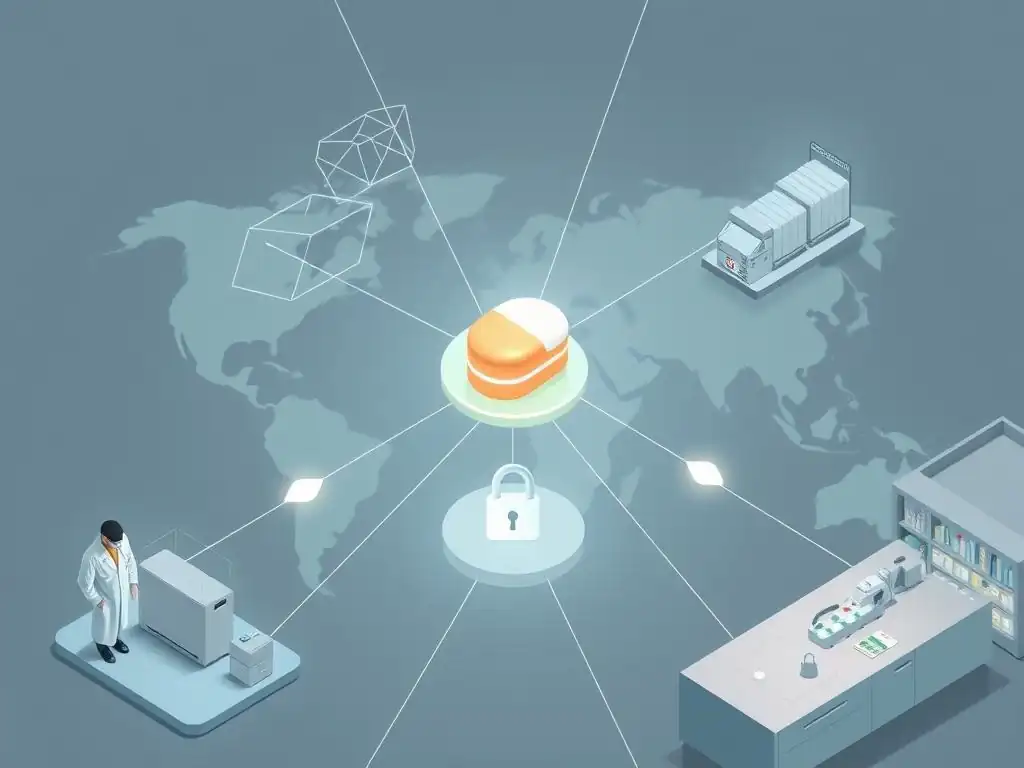
Case Study 1: Pharmaceutical Company - Tracking and Verifying Vaccine Authenticity
A leading pharmaceutical company, facing the critical challenge of counterfeit vaccines in global distribution, implemented a zero-knowledge proof (ZKP) based system to enhance the tracking and verification of vaccine authenticity. The company integrated ZKP technology into its existing supply chain management system, assigning each vaccine vial a unique digital identity linked to its batch information, manufacturing date, and origin. Using zk-SNARKs for their efficiency and succinct proof sizes, the company enabled verification of vaccine authenticity at each stage of the distribution process – from manufacturing plants to distributors, healthcare providers, and even patients.
When a vaccine vial is scanned at any point in the supply chain, a ZKP is generated and verified against the manufacturer's authenticated record. This process confirms the vaccine's authenticity and origin without revealing sensitive batch-specific manufacturing data or proprietary formulations. Healthcare providers and patients can use a simple mobile application to scan the vaccine packaging and instantly verify its legitimacy, providing a high level of assurance against counterfeit vaccines.
Initial pilot programs have shown a significant reduction in reported cases of suspected counterfeit vaccines in regions where the ZKP system was deployed, demonstrating the effectiveness of ZKPs in combating pharmaceutical counterfeiting and safeguarding public health. The pharmaceutical company reported a 70% decrease in suspected counterfeit incidents in pilot regions within the first year of implementation.
Case Study 2: Luxury Goods Retailer - Securing Authenticity of High-End Handbags with ZKPs
A prominent luxury goods retailer specializing in high-end handbags, facing substantial losses due to sophisticated counterfeiting operations, adopted zero-knowledge proofs (ZKPs) to secure the authenticity of their products and protect their brand reputation. The retailer embedded NFC chips into their handbags, each chip linked to a unique digital identity and secured with ZKP technology. When a handbag is manufactured, a ZKP is generated that cryptographically binds the handbag's physical characteristics and NFC chip ID to its authentic production record, including details about materials, craftsmanship, and serial number, without revealing specific design blueprints or manufacturing techniques.
At the point of sale, and even after purchase, customers can use a smartphone app to authenticate the handbag by interacting with the NFC chip. The app verifies the ZKP against the retailer's secure server, confirming the handbag's authenticity and provenance. This provides customers with irrefutable proof that they are purchasing a genuine product, enhancing trust and brand loyalty.
The retailer reported a significant decrease in customer complaints related to suspected counterfeit products and an increase in sales attributed to enhanced consumer confidence. Furthermore, the ZKP-based authentication system has acted as a strong deterrent to counterfeiters, making it considerably more challenging to replicate and sell fake handbags. The retailer estimates a 40% reduction in counterfeit-related revenue losses since implementing the ZKP system.
Case Study 3: Electronics Manufacturer - Protecting Intellectual Property in Component Sourcing
An electronics manufacturer specializing in advanced components, concerned about intellectual property theft and the use of counterfeit components in their supply chain, implemented zero-knowledge proofs (ZKPs) to secure their component sourcing and protect their proprietary designs. The manufacturer partnered with key component suppliers to establish a ZKP-enabled verification system. Suppliers generate ZKPs to prove the authenticity and specifications of the components they provide, without disclosing proprietary manufacturing processes or design details to the manufacturer beyond what is necessary for verification. These proofs are securely recorded and verified on a private blockchain shared between the manufacturer and trusted suppliers.
Upon receiving components, the manufacturer verifies the ZKPs to ensure that the components meet the required specifications and are sourced from authorized suppliers, mitigating the risk of using counterfeit or substandard parts. This system allows the electronics manufacturer to maintain strict quality control and protect their intellectual property embedded within their component designs, as suppliers can prove compliance without revealing sensitive design information. The manufacturer has reported a significant improvement in component quality and a reduction in supply chain disruptions caused by counterfeit parts.
They also noted a streamlining of their component verification process, reducing inspection times by approximately 30% due to the automated and cryptographic nature of ZKP-based verification. This use case highlights the value of ZKPs in protecting intellectual property and ensuring the integrity of complex electronics supply chains.
Challenges and Considerations for Implementing ZKPs in Supply Chains
Scalability and Performance Issues of Zero-Knowledge Proof Systems
While zero-knowledge proofs (ZKPs) offer significant advantages for supply chain security, scalability and performance remain key challenges for widespread implementation. Generating and verifying ZKPs can be computationally intensive, especially for complex proofs and large-scale supply chains involving numerous transactions and participants. Early ZKP systems, particularly those based on zk-SNARKs, faced limitations in terms of proof generation and verification speeds, potentially creating bottlenecks in high-throughput supply chain environments. For instance, generating a zk-SNARK proof for a complex statement can take several seconds or even minutes, which may be unacceptable for real-time supply chain operations requiring rapid verification.
However, significant advancements are being made in ZKP technology to address these scalability and performance issues. zk-STARKs, for example, are designed for scalability and offer faster proof generation and verification times compared to earlier zk-SNARK implementations, albeit with larger proof sizes. Research and development efforts are continuously focused on optimizing ZKP algorithms, improving hardware acceleration for cryptographic computations, and exploring techniques like proof aggregation to enhance the efficiency of ZKP systems.
As ZKP technology matures, performance is expected to improve further, making it more practical for large-scale supply chain deployments. Careful consideration of the specific performance requirements of a supply chain and the selection of appropriate ZKP types and implementations are crucial for successful deployment.
Integration Complexity with Existing Supply Chain Systems
Integrating zero-knowledge proof (ZKP) systems into existing supply chain infrastructures presents a considerable challenge due to the complexity and heterogeneity of current systems. Many supply chains rely on legacy systems, disparate databases, and varied communication protocols, making seamless integration with new ZKP-based verification technologies a complex undertaking. Implementing ZKPs may require significant modifications to existing IT systems, data management processes, and workflows across multiple stakeholders in the supply chain. For example, integrating ZKPs into a system that currently relies on paper-based documentation or outdated software may necessitate a complete overhaul of digital infrastructure.
Furthermore, interoperability between different ZKP implementations and across different supply chain platforms is crucial for widespread adoption. If different stakeholders in a supply chain use incompatible ZKP systems, it can hinder seamless verification and data exchange. Addressing this integration complexity requires careful planning, phased implementation approaches, and collaboration between technology providers, supply chain operators, and standards organizations to ensure interoperability and minimize disruption to existing operations. Developing standardized APIs and integration guidelines for ZKP systems within supply chain environments is essential to facilitate wider adoption and reduce integration costs and complexities.
The Need for Standardization and Interoperability
The lack of standardization and interoperability in zero-knowledge proof (ZKP) technologies currently poses a significant barrier to their widespread adoption in supply chain management. Different ZKP schemes, libraries, and implementations often lack compatibility, making it challenging to integrate ZKPs across diverse supply chain systems and ensure seamless communication and verification between different stakeholders.
The absence of common standards can lead to vendor lock-in, increased integration costs, and reduced interoperability, hindering the scalability and efficiency of ZKP-powered supply chains. For example, if different suppliers and manufacturers adopt different, incompatible ZKP systems, verifying product authenticity across the entire supply chain becomes cumbersome and inefficient.
Addressing this challenge requires collaborative efforts from industry stakeholders, technology developers, and standardization bodies to establish common protocols, data formats, and APIs for ZKP implementations in supply chain contexts. Standardization efforts should focus on ensuring interoperability between different ZKP schemes, facilitating seamless data exchange between various supply chain platforms, and promoting best practices for ZKP implementation and security.
Industry-led consortia and open-source initiatives can play a crucial role in driving standardization and fostering interoperability in the ZKP ecosystem. Standardization will not only reduce integration complexities and costs but also accelerate the adoption of ZKPs and unlock their full potential for enhancing supply chain security and transparency.
Addressing the Knowledge Gap and Promoting ZKP Adoption
A significant hurdle to the widespread adoption of zero-knowledge proofs (ZKPs) in supply chains is the existing knowledge gap regarding this relatively new and complex technology. Many supply chain professionals and IT managers may lack a deep understanding of ZKP concepts, their benefits, and how to effectively implement them in practical applications. This knowledge gap can lead to hesitancy in adopting ZKP solutions and a lack of awareness of their potential to address supply chain security challenges. Furthermore, the perceived complexity of ZKP cryptography and the specialized expertise required for implementation can deter businesses from exploring ZKP adoption.
Overcoming this knowledge gap requires targeted education and awareness initiatives aimed at supply chain stakeholders. This includes providing accessible educational resources, workshops, and training programs to demystify ZKPs and demonstrate their practical applications in supply chain management. Industry associations, technology providers, and research institutions can collaborate to develop and disseminate educational materials and case studies showcasing the benefits of ZKPs and addressing common misconceptions.
Promoting successful pilot projects and real-world deployments of ZKPs in supply chains can also help build confidence and demonstrate the tangible value of this technology. Bridging the knowledge gap and fostering a greater understanding of ZKPs are essential steps towards accelerating their adoption and realizing their transformative potential for supply chain security.
The Future of Zero-Knowledge Proofs in Supply Chain and Beyond
Advancements in ZKP Technology and Their Impact on Supply Chain
The future of zero-knowledge proofs (ZKPs) in supply chains is bright, fueled by ongoing advancements in ZKP technology that are continuously improving their efficiency, scalability, and usability. Researchers are actively working on developing new ZKP schemes that offer faster proof generation and verification times, smaller proof sizes, and enhanced security properties.
Innovations in cryptographic techniques, such as recursive ZKPs and hardware acceleration, are further boosting the performance of ZKP systems, making them increasingly practical for real-world supply chain applications. For instance, advancements in zk-STARKs and Bulletproofs are already demonstrating significant improvements in scalability and transparency compared to earlier ZKP approaches.
These technological advancements will directly impact supply chain applications by enabling more efficient and cost-effective implementation of ZKP-based verification systems. Faster proof generation and verification will reduce latency in supply chain operations, while smaller proof sizes will minimize bandwidth requirements for data transmission. Improved usability and developer tools will simplify the integration of ZKPs into existing supply chain platforms and workflows.
As ZKP technology matures and becomes more accessible, it is expected to play an increasingly prominent role in securing supply chains, combating counterfeiting, and enhancing data privacy across various industries. Continued innovation in ZKP technology will pave the way for wider adoption and unlock even greater potential for transforming supply chain management.
The Role of Blockchain in Enabling ZKP-Powered Supply Chains
Blockchain technology provides a natural and synergistic platform for enabling zero-knowledge proof (ZKP)-powered supply chains. The inherent security, transparency, and immutability of blockchain complement the privacy-preserving verification capabilities of ZKPs, creating a powerful combination for enhancing supply chain integrity and trust. Blockchain can serve as a secure and decentralized ledger for recording and verifying ZKP proofs related to product authenticity, provenance, and supply chain transactions.
This ensures that verification records are tamper-proof, auditable, and accessible to authorized stakeholders across the supply chain. For example, ZKP proofs can be anchored to a blockchain, providing a verifiable and time-stamped record of product authentication events.
Furthermore, blockchain can facilitate secure data sharing and collaboration among supply chain participants while preserving data privacy through ZKPs. Companies can use blockchain-based platforms to exchange ZKP proofs and verify product information without revealing sensitive underlying data to each other. Smart contracts on blockchain can automate ZKP-based verification processes and enforce supply chain agreements in a transparent and trustless manner.
The combination of blockchain and ZKPs can create a new generation of secure, transparent, and privacy-preserving supply chain systems, fostering greater trust, efficiency, and resilience in global trade networks. The decentralized and immutable nature of blockchain, coupled with the privacy-enhancing properties of ZKPs, makes them ideal partners for building the future of secure and transparent supply chains.
The Broader Implications of ZKPs for Data Privacy and Security
Beyond supply chains, zero-knowledge proofs (ZKPs) have broader implications for data privacy and security across various domains. Their ability to enable verification without data disclosure makes them a valuable tool for protecting sensitive information in a wide range of applications. In digital identity management, ZKPs can be used to verify user credentials and attributes without revealing personal data, enhancing privacy and security in online authentication and access control systems. For example, a user can prove their age or eligibility for a service without disclosing their actual date of birth or other personal details.
In financial transactions, ZKPs can enable confidential transactions and protect sensitive financial data while maintaining auditability and compliance. Privacy-focused cryptocurrencies like Zcash utilize zk-SNARKs to shield transaction details, preserving user privacy while still allowing for verification of transaction validity. In voting systems, ZKPs can ensure the integrity and privacy of elections by allowing voters to verify that their votes have been counted correctly without revealing their individual choices.
The versatility of ZKPs extends to various other fields, including secure data analytics, confidential computing, and privacy-preserving machine learning. As data privacy concerns grow and regulations become stricter, ZKPs are poised to become an increasingly important cryptographic tool for building privacy-centric digital systems and applications across diverse sectors.
Conclusion: Zero-Knowledge Proofs - A Powerful Tool for Securing Supply Chains
Recap of the Benefits of ZKPs in Combating Counterfeit Goods
Zero-knowledge proofs (ZKPs) offer a transformative approach to combating counterfeit goods in supply chains by providing a robust and privacy-preserving method for verifying product authenticity and supply chain integrity. ZKPs enable improved product authentication, significantly reducing counterfeiting and associated economic losses. They enhance transparency and trust among supply chain participants by allowing for verifiable claims without revealing sensitive business data.
ZKPs strengthen data privacy and facilitate regulatory compliance by minimizing data disclosure during verification processes. Furthermore, ZKPs streamline verification processes, leading to potential cost savings and increased efficiency in supply chain operations. These combined benefits position ZKPs as a powerful tool in the fight against counterfeit goods and for building more secure and trustworthy supply chains.
The Potential for ZKPs to Transform Supply Chain Management
The potential for zero-knowledge proofs (ZKPs) to transform supply chain management extends beyond simply combating counterfeiting. ZKPs can fundamentally reshape how supply chains operate by enabling a new paradigm of verifiable trust and data privacy. By facilitating secure and confidential data sharing, ZKPs can foster greater collaboration and efficiency among supply chain partners.
They can enable more transparent and accountable supply chains, enhancing ethical sourcing and sustainability practices. ZKPs can also empower consumers with greater confidence in product authenticity and provenance, leading to stronger brand loyalty and more informed purchasing decisions. The versatility and power of ZKPs suggest they can be a catalyst for a broader transformation of supply chain management, creating more resilient, efficient, and trustworthy global trade networks.
Call to Action: Exploring and Implementing ZKP Solutions for Supply Chain Security
As the threat of counterfeit goods continues to escalate and data privacy becomes increasingly paramount, businesses and organizations involved in supply chain management are urged to explore and implement zero-knowledge proof (ZKP) solutions. Understanding the benefits and potential of ZKPs is the first step towards leveraging this powerful technology to enhance supply chain security and integrity. Pilot projects and proof-of-concept deployments can help organizations assess the feasibility and effectiveness of ZKPs in their specific supply chain contexts.
Collaboration with ZKP technology providers and experts can facilitate the integration and implementation process. Embracing ZKP solutions is not just about combating counterfeiting; it is about building more secure, transparent, and privacy-preserving supply chains for the future, fostering greater trust and efficiency in global commerce.
Frequently Asked Questions
How can Zero-Knowledge Proofs (ZKPs) enhance supply chain security?
ZKPs allow parties to verify information about a product's journey without revealing the specific data itself. This enhances security by preventing sensitive information like pricing or supplier details from being exposed, while still proving authenticity.
What role do ZKPs play in combating counterfeit goods within a supply chain?
ZKPs enable verification of a product's origin and authenticity at each stage of the supply chain without disclosing the complete product history. This makes it significantly harder for counterfeiters to introduce fake goods into the system, bolstering consumer trust.
Are there any practical examples of ZKPs being implemented in real-world supply chains?
While still relatively nascent, some companies are exploring ZKPs to verify the origin of raw materials or the authenticity of luxury goods. These applications focus on proving compliance with specific standards without revealing proprietary information to competitors.
What are the main benefits of using ZKPs compared to traditional supply chain tracking methods?
Traditional methods often rely on shared databases that can be vulnerable to breaches or manipulation. ZKPs offer a more privacy-preserving and secure approach by minimizing the amount of data that needs to be shared and stored centrally.
What are the potential challenges or limitations of implementing ZKPs in supply chains?
Implementing ZKPs can be technically complex and require specialized expertise. Scalability and interoperability between different systems are also key challenges that need to be addressed for widespread adoption.
Final Reflection: Securing Trust in a World of Uncertainty
The exploration of Zero-Knowledge Proofs (ZKPs) in securing supply chains, as detailed in this article, underscores a critical need in our increasingly globalized world: the verifiable authenticity of goods. The pervasive threat of counterfeit products not only undermines economic stability but also poses significant risks to consumer safety. ZKPs offer a powerful, innovative solution, allowing verification without revealing sensitive information, a game-changer in the fight against fraud.
The impact of ZKPs extends far beyond mere product authentication; it touches upon the very fabric of trust in our commercial interactions. The ability to verify claims without disclosing underlying data empowers businesses and consumers alike, fostering a more transparent and secure marketplace. This technology has the potential to revolutionize how we interact with products, ensuring that what we purchase is genuine and safe. Trust but verify
is an old adage, but ZKPs allow us to verify without the need to trust blindly, ushering in a new era of verifiable truth.
As we move forward, let us embrace the potential of Zero-Knowledge Proofs to build a more secure and trustworthy future. Consider how you, as a consumer, a business owner, or a technologist, can contribute to the adoption and development of this transformative technology. Reflect on the power of verifiable truth and its ability to reshape our world for the better. The future of supply chain security, and indeed, the future of trust, lies in our collective commitment to innovation and integrity.
Secure Your Supply Chain Future: Take Action Now!
Thank you for exploring how Zero-Knowledge Proofs are transforming supply chain security and the fight against counterfeit goods. You've gained valuable insights into how this technology can foster trust and transparency. Are you ready to put this knowledge into practice?
Here are a few steps you can take today:
- Identify an area within your supply chain where implementing Zero-Knowledge Proofs could significantly reduce the risk of counterfeiting. Start small, but start now!
- Research existing Zero-Knowledge Proof solutions designed for supply chain management. Compare vendors and their specific use cases.
- Share this article with colleagues and industry peers. Together, we can build a stronger, more secure supply chain ecosystem.
What specific challenges are you facing in your supply chain that Zero-Knowledge Proofs could help address? Share your thoughts in the comments below!
Leave a Reply