
Comparison: Blockchain vs. Centralized Databases for IoT Data Management


Welcome to Blockchain Trends, your gateway to understanding the revolutionary impact of blockchain technology beyond the hype. Are you curious about how to securely and efficiently manage the explosion of data generated by the Internet of Things? In this article, we delve into a crucial comparison: Blockchain vs IoT data management using centralized databases. Discover which solution offers superior security, scalability, and transparency – and unlock the potential of a decentralized future. Read on to find out which technology reigns supreme and how it could transform your IoT initiatives!
Comparison: Blockchain vs. Centralized Databases for IoT Data Management
- Introduction: The Need for Secure IoT Data Management
- Blockchain vs. Centralized Databases: A Detailed Comparison for IoT
- Use Cases: Blockchain vs. Centralized Databases in IoT Applications
- Choosing the Right Approach: Blockchain or Centralized Databases for IoT Data
- Conclusion: The Future of IoT Data Management – A Decentralized Shift?
-
Frequently Asked Questions
- What are the key advantages of using blockchain over centralized databases for IoT data management?
- How does blockchain address the scalability challenges associated with massive IoT data streams?
- What are some potential use cases where blockchain-based IoT data management would be particularly beneficial?
- What are the main regulatory concerns surrounding the use of blockchain for IoT data?
- How does the cost of implementing a blockchain-based IoT data management system compare to that of a centralized database?
- Final Reflection: Embracing Decentralized Trust in a Connected World
- Empower Your IoT Future: Dive Deeper into Decentralization!
Introduction: The Need for Secure IoT Data Management
The Explosive Growth of IoT Devices and Data Streams
The Internet of Things (IoT) is no longer a futuristic concept; it is the present reality, rapidly expanding its reach into every facet of our lives. From smart homes and wearable devices to industrial sensors and connected vehicles, the number of IoT devices is exploding. Industry analysts predict that by 2025, there will be over 75 billion connected IoT devices globally, generating an unprecedented volume of data.
These devices continuously collect and transmit data, creating vast streams of information that hold immense potential for improving efficiency, automation, and decision-making across various sectors. This exponential growth, however, brings forth significant challenges, particularly concerning the management and security of the data these devices generate.
The sheer scale of IoT data is staggering. Imagine a smart factory with thousands of sensors monitoring every aspect of the production line, or a smart city with millions of sensors tracking traffic flow, environmental conditions, and energy consumption. Each of these devices generates data points, often multiple times per second. This constant influx of data demands robust and scalable infrastructure for storage, processing, and analysis.
Moreover, the value of IoT data is not merely in its volume but in its timely and accurate delivery. Real-time analytics and immediate responses are often crucial for IoT applications, such as predictive maintenance in industrial settings or autonomous driving systems. The challenge lies in managing this massive, continuous data flow effectively and securely.
Challenges in Traditional IoT Data Security
Traditional IoT data security architectures often rely on centralized databases, which, while mature and widely adopted, present inherent vulnerabilities in the context of the rapidly expanding and decentralized nature of IoT. A primary concern is the concentration of data in a single point of failure. If a centralized database is compromised through a cyberattack or system failure, vast amounts of sensitive IoT data can be exposed or lost. This risk is amplified in IoT ecosystems, where devices are often deployed in geographically dispersed locations and may be more vulnerable to physical tampering or network intrusions.
Furthermore, centralized systems can struggle to provide end-to-end security across the complex IoT landscape. Data often travels through multiple intermediaries, from the edge devices to the central server, creating numerous potential points of interception or manipulation. Securing each hop in this data journey becomes a complex and resource-intensive task.
Consider a smart agriculture scenario where sensor data from fields needs to travel through cellular networks and cloud infrastructure before reaching the central database. Each step represents a potential security gap that needs to be addressed. Moreover, managing access control and data integrity across a vast network of diverse IoT devices and stakeholders within a centralized framework becomes increasingly cumbersome and less transparent.
Why Choose Blockchain for IoT Data Management?
Blockchain technology emerges as a compelling alternative to centralized databases for managing IoT data, offering a paradigm shift in security, transparency, and decentralization. Blockchain's inherent characteristics, such as its distributed ledger system, cryptographic security, and immutability, directly address many of the security and scalability challenges associated with traditional centralized approaches in IoT. Instead of relying on a single point of control, blockchain distributes data and transaction records across a network of participants, making it significantly more resistant to single points of failure and cyberattacks.
The decentralized nature of blockchain aligns naturally with the distributed architecture of IoT networks. Each IoT device or node can potentially participate in the blockchain network, contributing to data validation and security. This distributed approach enhances resilience and reduces reliance on central authorities.
Furthermore, blockchain's cryptographic mechanisms, including hashing and digital signatures, ensure data integrity and authenticity. Once data is recorded on the blockchain, it becomes virtually tamper-proof, providing a robust audit trail and fostering trust in the data's origin and history. This is particularly crucial in IoT applications where data accuracy and provenance are paramount, such as in supply chain tracking or healthcare monitoring.
Blockchain vs. Centralized Databases: A Detailed Comparison for IoT
Data Security and Integrity: Blockchain's Advantage
Centralized Databases: Vulnerabilities and Single Points of Failure
Centralized databases, the cornerstone of traditional data management, are inherently vulnerable in the context of IoT due to their singular point of control and data storage. All data within a centralized system is concentrated in one location, making it an attractive target for cyberattacks. A successful breach can compromise vast amounts of sensitive IoT data, leading to severe consequences ranging from financial losses to privacy violations and even physical safety risks in critical infrastructure applications. For instance, a cyberattack on a centralized database controlling a smart grid could potentially disrupt power distribution to millions of homes and businesses.
Moreover, centralized databases are susceptible to internal threats as well. Malicious insiders or even unintentional errors by authorized personnel can lead to data manipulation or loss. Maintaining robust access controls and monitoring activities within a centralized system can be complex and costly, especially as the scale of IoT deployments grows.
Consider a smart building management system relying on a centralized database. A compromised administrator account could grant unauthorized access to building controls and sensor data, potentially leading to security breaches or operational disruptions. The reliance on a single entity to secure and maintain data integrity creates a significant point of vulnerability in centralized IoT data management.
Blockchain's Immutable and Tamper-Proof Data Storage
Blockchain technology offers a stark contrast to centralized databases in terms of data security and integrity, primarily due to its decentralized and immutable nature. Data in a blockchain is distributed across a network of nodes, rather than being stored in a single, vulnerable location. Each block of data is cryptographically linked to the previous block, forming a chain that is incredibly difficult to alter. Any attempt to tamper with data on a blockchain would require altering not just one block but all subsequent blocks across the majority of the network, a computationally infeasible task in a well-established blockchain.
This immutability ensures that once IoT data is recorded on a blockchain, it becomes a permanent and verifiable record, incapable of being retrospectively modified or deleted without detection. This feature is particularly valuable for IoT applications requiring high levels of data integrity and auditability, such as in supply chain provenance tracking or pharmaceutical monitoring. Imagine tracking the temperature of temperature-sensitive pharmaceuticals throughout their journey from manufacturing to delivery using IoT sensors and blockchain. The immutable record on the blockchain provides irrefutable proof of compliance with temperature control regulations, enhancing trust and accountability in the supply chain.
Cryptographic Security in Blockchain for IoT Data
Beyond immutability, blockchain leverages robust cryptographic techniques to secure IoT data. Hashing algorithms create unique fingerprints of data blocks, ensuring data integrity. Any alteration to the data, even a single bit change, would result in a completely different hash value, making tampering immediately detectable. Furthermore, blockchain employs asymmetric cryptography, using public and private key pairs, to secure transactions and control access to data. Digital signatures, generated using private keys, verify the authenticity and origin of data, ensuring that data originates from a legitimate source and has not been forged.
In the context of IoT, cryptographic security in blockchain can be used to secure device identities, authenticate data transmissions, and encrypt sensitive data at rest and in transit. For example, in a smart vehicle network, blockchain-based digital identities can be assigned to each vehicle, enabling secure communication and data sharing between vehicles and infrastructure. Cryptographic encryption can protect sensitive vehicle data, such as location and driving patterns, from unauthorized access. The combination of hashing, digital signatures, and encryption provides a layered security approach that significantly enhances the protection of IoT data compared to traditional centralized database security measures.
Scalability and Performance Considerations
Scaling Limitations of Blockchain in IoT Environments
While blockchain offers significant security advantages, scalability and performance remain critical considerations, especially in the context of the massive data volumes and real-time requirements of many IoT applications. Traditional blockchain architectures, particularly those employing proof-of-work consensus mechanisms, can face limitations in transaction throughput and latency.
Processing every IoT data point as a separate blockchain transaction can quickly overwhelm the network, leading to slow transaction confirmation times and increased costs. For instance, a high-frequency sensor network in a smart factory generating thousands of data points per second might struggle to be efficiently recorded on a public blockchain designed for lower transaction volumes.
Furthermore, the distributed nature of blockchain, while enhancing security, can also introduce overhead in terms of data replication and consensus mechanisms. Each node in the network needs to store a copy of the blockchain and participate in validating transactions, which can consume significant computational resources and network bandwidth. This can be particularly challenging in resource-constrained IoT environments where devices may have limited processing power, memory, and network connectivity. Therefore, directly applying traditional blockchain solutions to large-scale, high-throughput IoT applications may encounter scalability bottlenecks.
Centralized Databases: Handling High-Volume IoT Data
Centralized databases, in contrast to blockchain, are generally well-suited for handling high-volume data streams and providing low-latency data access, which are crucial for many IoT applications. They are designed for efficient data ingestion, storage, and retrieval, and can be optimized for specific performance requirements. Cloud-based centralized database services, in particular, offer elastic scalability, allowing them to dynamically adjust resources to accommodate fluctuating data loads. For example, a large-scale smart city deployment with millions of sensors can leverage cloud-based centralized databases to efficiently manage and process the massive influx of data generated by these sensors.
Centralized databases can also be optimized for real-time analytics and query processing, enabling timely insights from IoT data. Techniques such as data sharding, indexing, and caching can be employed to enhance performance and reduce latency. Furthermore, centralized systems offer mature tools and technologies for data management, analysis, and visualization, making it easier to build and deploy IoT applications rapidly. However, it's crucial to acknowledge that while centralized databases excel in scalability and performance, they do so at the cost of the security and decentralization benefits offered by blockchain.
Hybrid Solutions: Combining Blockchain and Centralized Systems for Scalability
To address the scalability limitations of blockchain in IoT while retaining its security advantages, hybrid solutions are emerging that combine the strengths of both blockchain and centralized databases. In a hybrid architecture, blockchain can be used for managing critical security aspects such as device identity, access control, and data integrity verification, while centralized databases handle the high-volume storage and processing of IoT data. This approach allows for selective application of blockchain technology where its security and transparency benefits are most critical, without burdening the blockchain network with the entire volume of IoT data.
For instance, in a supply chain tracking system, blockchain could be used to record key events such as product origin, ownership transfers, and critical temperature excursions, ensuring data integrity and provenance. The detailed sensor data, such as continuous temperature readings, could be stored in a scalable centralized database linked to the blockchain records. This hybrid approach leverages blockchain's security for critical data elements while utilizing the scalability and performance of centralized databases for bulk data management. Such hybrid architectures represent a pragmatic path forward for integrating blockchain into large-scale IoT deployments, balancing security, scalability, and performance requirements.
Data Privacy and Control
Blockchain's Role in Enhancing IoT Data Privacy
Data privacy is a paramount concern in the age of IoT, where devices collect vast amounts of personal and sensitive information. Blockchain technology can play a significant role in enhancing IoT data privacy by providing mechanisms for decentralized data control and selective data sharing. In traditional centralized systems, users often have limited control over their data, which is typically stored and managed by a central authority. Blockchain, with its decentralized and transparent nature, can empower users with greater control over their IoT data.
Through techniques like zero-knowledge proofs and homomorphic encryption, blockchain can enable privacy-preserving data processing and analysis in IoT environments. These cryptographic methods allow for computation on encrypted data without revealing the underlying data itself, enhancing data confidentiality and reducing privacy risks. Furthermore, blockchain-based decentralized identity management systems can give individuals more control over their digital identities and data access permissions in IoT ecosystems. This shift towards user-centric data control aligns with growing privacy regulations and consumer expectations for data protection.
Centralized Databases: Privacy Concerns and Regulatory Compliance
Centralized databases, while efficient for data management, raise significant privacy concerns, particularly in light of increasingly stringent data privacy regulations like GDPR and CCPA. The concentration of large volumes of personal data in a single location increases the risk of privacy breaches and unauthorized access. Organizations relying solely on centralized databases for IoT data management face the challenge of ensuring compliance with these regulations, which require robust data protection measures, transparent data processing practices, and user consent mechanisms.
Implementing and maintaining comprehensive privacy controls within a centralized database environment can be complex and costly. Data anonymization and pseudonymization techniques, access control mechanisms, and audit trails are essential to mitigate privacy risks. However, the inherent centralized nature of these systems still leaves them vulnerable to large-scale data breaches and potential misuse of data by the central authority. Organizations must invest heavily in security infrastructure, data governance policies, and compliance programs to address privacy concerns associated with centralized IoT data management.
Decentralized Identity Management using Blockchain for IoT Devices
Blockchain-based decentralized identity management (DID) offers a promising solution for enhancing data privacy and control in IoT environments. DID systems empower IoT devices and users with self-sovereign identities, meaning they control their own digital identities without relying on central authorities. Each device or user can have a unique, verifiable digital identity stored on the blockchain, enabling secure authentication and authorization in IoT networks. This decentralized approach reduces reliance on centralized identity providers and enhances user privacy.
In a blockchain-based DID system for IoT, devices can control access to their data and selectively share it with authorized parties. Users can grant granular permissions to applications and services, specifying what data can be accessed and for what purpose. This fine-grained access control enhances data privacy and reduces the risk of unauthorized data sharing.
Furthermore, DID systems can facilitate secure and privacy-preserving data exchange between IoT devices and users, fostering a more trustworthy and user-centric IoT ecosystem. The adoption of blockchain-based DID for IoT is gaining momentum as privacy regulations become stricter and users demand greater control over their data.
Cost Efficiency and Operational Overhead
Blockchain Implementation Costs for IoT Data Management
Implementing blockchain solutions for IoT data management involves upfront costs and ongoing operational expenses. Developing and deploying blockchain infrastructure, whether private or consortium-based, requires specialized expertise and resources. Smart contract development, blockchain network setup, and integration with existing IoT systems can contribute to initial implementation costs. Furthermore, transaction fees on public blockchains, although potentially decreasing, can become a significant cost factor for high-volume IoT data applications.
Operational overhead associated with blockchain includes managing blockchain nodes, maintaining network security, and handling smart contract updates. The energy consumption of certain blockchain consensus mechanisms, particularly proof-of-work, can also contribute to operational costs, although more energy-efficient alternatives like proof-of-stake are gaining traction. It is crucial to carefully evaluate the cost-benefit ratio of blockchain implementation for specific IoT use cases, considering the potential long-term benefits of enhanced security and trust against the initial and ongoing costs.
Centralized Database Infrastructure and Maintenance Costs
Centralized database infrastructure also entails significant costs, including hardware, software licenses, cloud service subscriptions, and ongoing maintenance. Scaling centralized database infrastructure to handle the massive data volumes of IoT deployments can lead to substantial capital expenditures and operational expenses. Maintaining data security, ensuring data availability, and managing database performance require skilled personnel and continuous investment in security measures and system upgrades.
Furthermore, centralized database systems can incur costs related to vendor lock-in, where organizations become dependent on specific database providers and their pricing structures. Data migration and system upgrades in centralized environments can also be complex and costly undertakings. While centralized databases may appear initially cost-effective for simple IoT applications, the long-term costs of scaling, securing, and maintaining these systems, especially in the face of evolving security threats and regulatory requirements, can be substantial.
Long-Term Cost Benefits of Blockchain in IoT
Despite potential upfront costs, blockchain can offer long-term cost benefits in IoT data management by reducing risks associated with data breaches, enhancing operational efficiency, and fostering trust and transparency. The enhanced security and immutability of blockchain can significantly mitigate the financial and reputational damage resulting from data breaches, which can be particularly costly in centralized systems. According to IBM's "Cost of a Data Breach Report 2022," the global average cost of a data breach reached \$4.35 million. Blockchain's robust security features can contribute to preventing such costly incidents.
Moreover, blockchain-enabled automation and streamlined processes can lead to operational efficiencies in IoT applications. Smart contracts can automate data exchange, access control, and transaction settlements, reducing manual intervention and administrative overhead. The transparency and auditability of blockchain can also simplify compliance processes and reduce the costs associated with regulatory audits. In the long run, the security, efficiency, and trust benefits of blockchain can outweigh the initial implementation costs, making it a cost-effective solution for certain IoT data management scenarios, particularly those requiring high levels of security and data integrity.
Trust and Transparency
Establishing Trust in IoT Networks with Blockchain
Trust is paramount in IoT networks, where devices and stakeholders often operate across diverse and potentially untrusted environments. Blockchain technology provides a foundation for establishing trust in IoT ecosystems by enabling transparent and verifiable data exchange and interactions. In centralized systems, trust is typically placed in a central authority, which can be a single point of failure and potential source of bias or manipulation. Blockchain's decentralized and distributed nature eliminates the need for a central trusted intermediary, distributing trust across the network participants.
By recording all transactions and data exchanges on a shared, immutable ledger, blockchain creates a transparent and auditable record of activities within the IoT network. This transparency enhances accountability and reduces the potential for fraud or malicious behavior. Participants in the network can independently verify the integrity and authenticity of data and transactions, fostering trust and confidence in the system. This trust is particularly crucial in IoT applications involving sensitive data or critical infrastructure, where data integrity and reliability are paramount.
Transparency and Auditability of IoT Data on Blockchain
Blockchain's inherent transparency and auditability are key advantages for IoT data management, offering significant improvements over traditional centralized systems. Every transaction and data record on a blockchain is publicly verifiable (in public and permissionless blockchains) or auditable by authorized participants (in private and consortium blockchains). This transparency allows stakeholders to track data provenance, verify data integrity, and audit system operations with ease. In contrast, centralized databases often lack transparency, with data access and audit logs controlled by the central authority.
The immutable nature of blockchain further enhances auditability by ensuring that records cannot be retrospectively altered or deleted without detection. This creates a robust audit trail that can be used to verify compliance, resolve disputes, and investigate security incidents. For example, in a supply chain application, blockchain's transparency allows consumers to track the journey of a product from origin to shelf, verifying its authenticity and ethical sourcing. Regulators can also leverage blockchain's auditability to monitor compliance with industry standards and regulations, enhancing accountability and trust throughout the IoT ecosystem.
Centralized Systems: Reliance on a Central Authority
Centralized systems, by their very nature, rely on a central authority to manage data, control access, and ensure system security. While this centralized approach can offer efficiency and control, it also introduces a single point of trust and potential vulnerability. Users and stakeholders must place their trust in the central authority to act honestly, maintain data integrity, and protect against security breaches. This reliance on a central authority can be a concern, particularly in scenarios where trust in the central entity is limited or where there is a risk of bias or manipulation.
Furthermore, the lack of transparency in centralized systems can hinder auditability and accountability. Data access logs and system operations are typically controlled by the central authority, making it difficult for external parties to independently verify data integrity or system behavior. This can erode trust, particularly in applications where transparency and accountability are critical, such as in government services or financial transactions. While centralized systems can be designed with security measures and governance policies, the inherent reliance on a central authority remains a fundamental limitation in terms of trust and transparency compared to decentralized blockchain solutions.
Use Cases: Blockchain vs. Centralized Databases in IoT Applications
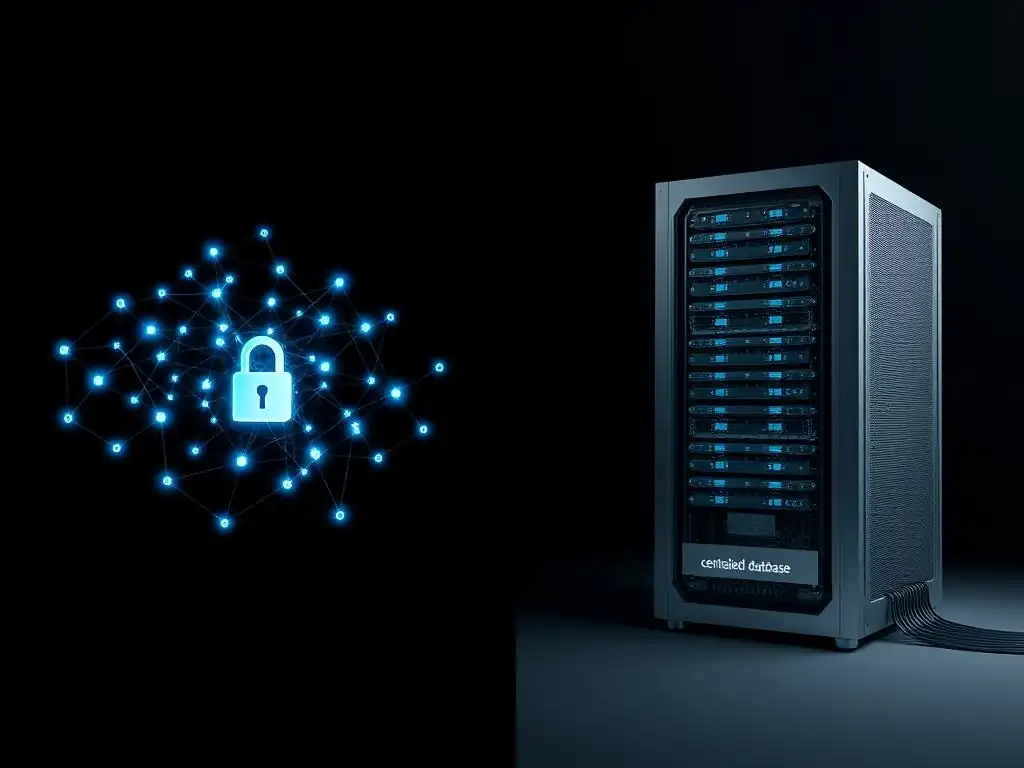
Supply Chain Management: Tracking and Tracing with Blockchain
Pharmaceutical Supply Chain: Ensuring Authenticity and Preventing Counterfeiting
The pharmaceutical supply chain is particularly vulnerable to counterfeiting and diversion, posing significant risks to patient safety and brand integrity. Blockchain offers a powerful solution for enhancing transparency and traceability in the pharmaceutical supply chain, ensuring the authenticity of drugs and preventing counterfeit medications from reaching patients. By recording each step of the pharmaceutical journey on a blockchain – from raw material sourcing and manufacturing to distribution and dispensing – a transparent and immutable record of provenance is created.
Imagine a scenario where each batch of medication is assigned a unique identifier and its journey is tracked on a blockchain using IoT sensors monitoring temperature, humidity, and location. Pharmacists and patients can then verify the authenticity of the medication by scanning a QR code and checking its provenance on the blockchain. This enhanced traceability not only combats counterfeiting but also improves recall efficiency and strengthens regulatory compliance. According to the World Health Organization, counterfeit drugs represent a multi-billion dollar global problem, and blockchain-based solutions are increasingly being explored to address this critical issue.
Centralized Databases: Traditional Supply Chain Tracking Systems
Traditional supply chain tracking systems often rely on centralized databases to manage logistics and inventory information. While these systems can provide visibility into supply chain operations, they typically suffer from limitations in transparency, interoperability, and security, especially when multiple stakeholders and complex supply chains are involved. Data silos and lack of real-time information sharing across different entities in the supply chain can hinder efficiency and responsiveness.
Centralized databases in supply chain management often rely on electronic data interchange (EDI) and proprietary systems, leading to interoperability challenges and data inconsistencies. Transparency is also limited as data is controlled by individual organizations, and there is no single, shared view of the entire supply chain. Furthermore, security vulnerabilities in centralized systems can expose sensitive supply chain data to cyberattacks or manipulation. While centralized databases have been the mainstay of supply chain management for decades, their limitations are becoming increasingly apparent in the face of growing demands for transparency, resilience, and security.
Smart Healthcare: Securing Patient Data with Blockchain
Remote Patient Monitoring: Secure Data Transmission and Access Control
Remote patient monitoring (RPM) leverages IoT devices to collect patient health data remotely, enabling proactive healthcare management and improved patient outcomes. However, the sensitive nature of patient data necessitates robust security and privacy measures. Blockchain can provide a secure and privacy-preserving infrastructure for RPM data management, ensuring data integrity, confidentiality, and patient control. By using blockchain for secure data transmission and access control, RPM systems can mitigate the risks of data breaches and unauthorized access.
Imagine wearable sensors continuously monitoring a patient's vital signs and transmitting this data to a blockchain-based platform. Smart contracts can be used to define access control policies, ensuring that only authorized healthcare providers and the patient themselves can access the data. The immutability of blockchain ensures the integrity of patient data, while cryptographic techniques protect data confidentiality. Blockchain-enhanced RPM systems can foster greater trust in remote healthcare and empower patients with more control over their health data.
Centralized Databases: Security Risks in Healthcare Data Management
Centralized databases are widely used in healthcare for managing patient records and medical information. However, the concentration of sensitive patient data in centralized systems makes them prime targets for cyberattacks and data breaches. Healthcare data breaches are becoming increasingly frequent and costly, compromising patient privacy and potentially disrupting healthcare services. According to a HIPAA Journal report, in 2022, there were 707 healthcare data breaches reported to the Department of Health and Human Services, impacting over 50 million patient records.
Centralized healthcare databases face security challenges ranging from ransomware attacks to insider threats and human error. The potential consequences of healthcare data breaches are severe, including identity theft, financial fraud, and damage to patient trust. While healthcare organizations invest heavily in security measures for centralized databases, the inherent vulnerabilities of these systems remain a significant concern. Blockchain offers a more decentralized and resilient alternative for securing sensitive healthcare data, reducing the risks associated with centralized data storage.
Smart Cities: Managing IoT Data with Decentralized Solutions
Energy Grid Management: Enhancing Security and Transparency in Energy Distribution
Smart cities rely heavily on IoT devices to optimize urban infrastructure and services, including energy grid management. Managing a smart energy grid involves collecting and processing vast amounts of data from smart meters, sensors, and grid infrastructure. Blockchain can enhance the security and transparency of smart energy grids by providing a decentralized platform for data exchange, transaction settlement, and grid management. A blockchain-based energy grid can improve resilience, reduce vulnerabilities to cyberattacks, and foster greater transparency in energy distribution and consumption.
Consider a peer-to-peer energy trading platform within a smart city, enabled by blockchain. Households with solar panels can directly trade excess energy with neighbors using smart contracts on a blockchain, bypassing traditional energy intermediaries. Smart meters record energy production and consumption data on the blockchain, ensuring transparent and verifiable transactions. This decentralized energy grid can enhance grid stability, promote renewable energy adoption, and empower consumers with greater control over their energy usage.
Centralized Databases: Data Silos in Smart City Implementations
Centralized databases often underpin smart city implementations, leading to data silos and fragmentation of urban data. Different city departments and service providers typically operate their own separate centralized databases, hindering data sharing and collaboration. These data silos limit the potential for holistic city-wide optimization and integrated services. For example, transportation data may be stored in one database, while environmental data is stored in another, making it difficult to gain a comprehensive understanding of urban dynamics and implement integrated solutions.
Furthermore, centralized databases in smart cities can create vendor lock-in and limit data portability. Switching between different vendors or integrating data from different systems can be complex and costly. The lack of interoperability and data sharing across centralized silos hinders the development of truly smart and integrated city services. Decentralized solutions like blockchain offer the potential to break down data silos, promote data sharing, and foster a more collaborative and integrated approach to smart city development.
Choosing the Right Approach: Blockchain or Centralized Databases for IoT Data
Factors to Consider When Selecting a Data Management System
Data Sensitivity and Security Requirements
The sensitivity of the IoT data and the security requirements of the application are paramount factors in choosing between blockchain and centralized databases. For applications handling highly sensitive data, such as personal health information, financial transactions, or critical infrastructure controls, blockchain's enhanced security and immutability offer significant advantages. If data integrity and tamper-proof records are crucial, blockchain is often the preferred choice. However, for applications with less sensitive data or lower security requirements, centralized databases may suffice, particularly if performance and cost are primary concerns.
It is essential to conduct a thorough risk assessment and data classification exercise to determine the appropriate level of security and data protection required for the specific IoT application. Applications involving critical infrastructure, such as power grids or transportation systems, often demand the highest levels of security and resilience, making blockchain a compelling option. Conversely, for less critical applications, such as simple environmental monitoring or smart lighting systems, centralized databases may be adequate.
Scalability and Performance Needs
Scalability and performance requirements are critical considerations, especially for large-scale, high-throughput IoT deployments. Centralized databases generally excel in handling massive data volumes and providing low-latency data access. For applications requiring real-time analytics and immediate responses, centralized databases may be more suitable, particularly when dealing with high-frequency data streams from numerous IoT devices. Blockchain, in its traditional forms, can face scalability limitations, although advancements in blockchain technologies, such as layer-2 solutions and sharding, are addressing these challenges.
For IoT applications with moderate data volumes and less stringent performance requirements, blockchain can be a viable option, especially if security and transparency are prioritized. Hybrid solutions, combining blockchain for critical security functions and centralized databases for bulk data storage and processing, can offer a balanced approach, addressing both scalability and security needs. The choice between blockchain and centralized databases should be guided by a careful evaluation of the specific scalability and performance demands of the IoT application.
Regulatory Compliance and Privacy Concerns
Regulatory compliance and data privacy concerns are increasingly important factors in data management system selection. For applications subject to stringent data privacy regulations like GDPR or HIPAA, blockchain's decentralized nature and privacy-enhancing features can be advantageous. Blockchain-based decentralized identity management and privacy-preserving techniques can help organizations meet regulatory requirements and enhance user data privacy. Centralized databases, while capable of implementing privacy controls, may face greater challenges in ensuring compliance and mitigating privacy risks due to their inherent centralized nature.
Organizations must carefully consider the regulatory landscape and privacy implications of their IoT applications when choosing between blockchain and centralized databases. If compliance with strict data privacy regulations is paramount, blockchain's privacy-enhancing features and decentralized control may make it a more attractive option. However, centralized databases can also be compliant if robust security measures, data governance policies, and user consent mechanisms are implemented effectively.
Budget and Resource Constraints
Budget and resource constraints are practical considerations that can influence the choice between blockchain and centralized databases. Implementing blockchain solutions can involve higher upfront costs and require specialized expertise compared to traditional centralized databases. Developing and deploying blockchain infrastructure, smart contracts, and integrations can be resource-intensive. Centralized databases, particularly cloud-based services, may offer lower initial costs and easier deployment, especially for organizations with limited blockchain expertise.
However, it is crucial to consider the long-term costs and benefits of both approaches. While blockchain may have higher upfront costs, its enhanced security and potential for operational efficiencies can lead to long-term cost savings by reducing data breach risks and streamlining processes. Centralized databases, while potentially lower in initial cost, can incur significant expenses for scaling, securing, and maintaining the infrastructure over time. A comprehensive cost-benefit analysis, considering both short-term and long-term factors, should guide the decision-making process, taking into account the organization's budget and resource limitations.
Hybrid Architectures: Combining the Strengths of Both
In many IoT applications, a hybrid architecture that combines the strengths of both blockchain and centralized databases can be the most pragmatic and effective approach. Hybrid solutions allow organizations to leverage blockchain for critical security functions, transparency, and trust, while utilizing centralized databases for high-volume data storage, processing, and performance. This approach offers a balanced solution that addresses both security and scalability concerns, maximizing the benefits of each technology.
In a hybrid architecture, blockchain can be used for managing device identities, access control, data integrity verification, and recording critical events, while centralized databases handle the bulk storage and real-time processing of IoT sensor data. This selective application of blockchain ensures that its security and transparency advantages are utilized where they are most needed, without burdening the blockchain network with the entire data load. Hybrid architectures represent a flexible and adaptable approach for integrating blockchain into diverse IoT applications, optimizing for both security and performance.
Conclusion: The Future of IoT Data Management – A Decentralized Shift?
Blockchain's Potential to Revolutionize IoT Data Security
Blockchain technology holds immense potential to revolutionize IoT data security by providing a decentralized, immutable, and transparent foundation for data management. Its inherent security features, such as cryptography, hashing, and distributed consensus, address many of the vulnerabilities associated with traditional centralized databases in IoT environments. Blockchain's ability to enhance data integrity, prevent tampering, and establish trust in data provenance makes it a compelling solution for securing sensitive IoT data and critical infrastructure.
As IoT deployments become increasingly complex and interconnected, the need for robust and decentralized security solutions will only intensify. Blockchain's capacity to distribute trust, reduce reliance on central authorities, and empower users with greater data control positions it as a transformative technology for the future of IoT data security. While challenges related to scalability and performance remain, ongoing advancements in blockchain technologies and hybrid architectures are paving the way for wider adoption of blockchain in IoT.
Overcoming the Challenges of Blockchain Adoption in IoT
Despite its potential, widespread adoption of blockchain in IoT faces challenges related to scalability, interoperability, and standardization. Scaling blockchain networks to handle the massive data volumes and high transaction rates of large-scale IoT deployments requires further innovation and optimization. Interoperability between different blockchain platforms and integration with existing IoT infrastructure are also crucial for seamless adoption. The lack of standardized protocols and frameworks for blockchain in IoT hinders interoperability and can create fragmentation in the ecosystem.
Addressing these challenges requires collaborative efforts from industry stakeholders, researchers, and standards organizations. Developing scalable blockchain solutions, promoting interoperability standards, and creating user-friendly tools and platforms are essential steps towards overcoming the barriers to blockchain adoption in IoT. As these challenges are addressed, the potential of blockchain to transform IoT data management will be increasingly realized.
The Evolution of IoT Data Management Strategies
The evolution of IoT data management strategies is moving towards a more decentralized, secure, and user-centric approach. Traditional centralized databases, while still relevant for certain IoT applications, are increasingly being complemented or replaced by decentralized technologies like blockchain, especially in scenarios demanding enhanced security, transparency, and data privacy. Hybrid architectures, combining the strengths of both blockchain and centralized systems, are emerging as a pragmatic path forward, allowing organizations to tailor data management solutions to specific IoT application requirements.
The future of IoT data management is likely to involve a diversified landscape, with different technologies and architectures coexisting and evolving. Blockchain is poised to play a significant role in this evolution, driving a shift towards more decentralized and trustworthy IoT ecosystems. As blockchain technology matures and adoption barriers are overcome, its transformative potential for securing and managing IoT data will continue to unfold, shaping the future of connected devices and intelligent systems.
Frequently Asked Questions
What are the key advantages of using blockchain over centralized databases for IoT data management?
Blockchain offers enhanced security through its decentralized and immutable nature, preventing tampering and ensuring data integrity. It also provides greater transparency and auditability compared to traditional centralized systems.
How does blockchain address the scalability challenges associated with massive IoT data streams?
While blockchain's inherent structure can present scalability hurdles, solutions like sharding and layer-2 scaling solutions are being developed to handle the high volume and velocity of IoT data.
What are some potential use cases where blockchain-based IoT data management would be particularly beneficial?
Supply chain management, healthcare data sharing, and smart city infrastructure are all areas where blockchain's security and transparency can significantly improve the reliability and trustworthiness of IoT data.
What are the main regulatory concerns surrounding the use of blockchain for IoT data?
Data privacy regulations like GDPR and CCPA pose challenges, requiring careful consideration of data storage, access, and anonymization to ensure compliance when using blockchain for IoT data.
How does the cost of implementing a blockchain-based IoT data management system compare to that of a centralized database?
Initially, setting up a blockchain system can be more expensive due to infrastructure and development costs. However, the long-term benefits of enhanced security and reduced reliance on intermediaries may offset these initial investments.
Final Reflection: Embracing Decentralized Trust in a Connected World
The exploration of Blockchain vs. IoT data management reveals a critical juncture in how we secure and utilize the vast streams of information generated by our increasingly connected devices. The inherent vulnerabilities of centralized systems, juxtaposed with the transparent and immutable nature of blockchain, highlight a fundamental shift towards decentralized trust. This isn't just a technological debate; it's a philosophical one about control, security, and the future of data ownership in a world saturated with sensors.
The promise of blockchain in IoT extends far beyond mere data storage; it offers a pathway to a more equitable and secure digital landscape, where individuals and organizations alike can participate with confidence. The potential to revolutionize supply chains, healthcare, and smart cities is immense, yet realizing this potential requires careful consideration of scalability, energy consumption, and regulatory frameworks. The future of IoT is not just about connecting devices, but about connecting them securely and transparently.
This quote encapsulates the core challenge and opportunity that blockchain presents.
As we stand on the cusp of a truly interconnected world, I invite you to reflect on the role you play in shaping its future. Consider how the principles of decentralization, transparency, and security can be applied not only to IoT data management but also to other aspects of your life and work. Let us strive to build a future where technology empowers us all, fostering trust and collaboration in a world increasingly reliant on data.
Empower Your IoT Future: Dive Deeper into Decentralization!
Thank you for exploring the possibilities of blockchain for IoT data management. We hope this comparison highlighted the benefits and challenges of both approaches. Now, let's put that knowledge into action!
Here's how you can further your understanding and impact:
- Start small, think big: Identify a specific IoT use case in your life or work where you could experiment with a blockchain-based solution. Even a simple proof-of-concept can provide valuable insights.
- Dive deeper: Read more articles about blockchain platforms suited for IoT applications.
- Share your insights: Share this article with your network and start a conversation about the future of IoT data.
What's one immediate change you can make in your approach to IoT data, based on what you've learned about blockchain's potential? Share your thoughts in the comments below!
Leave a Reply