
Blockchain Sharding and the Metaverse: Scaling Virtual Worlds for Mass Participation


Welcome to Blockchain Trends, your compass in the rapidly evolving world of decentralized technology. Delve into the transformative power of blockchain, extending far beyond the realm of cryptocurrencies. Prepare to explore the intricate landscape of DeFi, enterprise solutions, regulatory frameworks, and the exciting future of decentralized systems.
Intrigued by the possibilities? Our latest deep dive examines a critical challenge: how can we truly scale blockchain to support the burgeoning metaverse? Discover how blockchain sharding is emerging as a key solution for scaling metaverse applications, unlocking the potential for mass participation in virtual worlds. Join us as we unravel the complexities and potential of this game-changing technology – the future is decentralized, but how do we get there?
Blockchain Sharding and the Metaverse: Scaling Virtual Worlds for Mass Participation
- Introduction: The Metaverse's Need for Scalable Blockchain Solutions
- Understanding Blockchain Sharding: A Primer
- The Challenges of Scaling Metaverse Applications with Traditional Blockchains
- Blockchain Sharding as a Solution for Scaling Metaverse Infrastructure
- Real-World Examples and Use Cases of Blockchain Sharding in the Metaverse
- The Future of Blockchain Sharding and the Metaverse
- Conclusion: Sharding - A Key Enabler for Metaverse Growth
-
Frequently Asked Questions
- What is blockchain sharding and why is it relevant to the metaverse?
- How does blockchain sharding enable mass participation in metaverse applications?
- What are some of the challenges associated with implementing blockchain sharding in the metaverse?
- Beyond scaling, what other benefits does blockchain technology bring to metaverse applications?
- How are regulations impacting the development and adoption of blockchain-based metaverse applications?
- Final Reflection: Embracing Decentralized Futures
- Dive Deeper: Shape the Future of the Metaverse!
Introduction: The Metaverse's Need for Scalable Blockchain Solutions
The metaverse, a burgeoning universe of persistent, shared, 3D virtual worlds, promises to revolutionize how we interact, socialize, and transact digitally. Envision immersive experiences, from virtual concerts and collaborative workspaces to digital real estate and play-to-earn gaming. However, the realization of a truly expansive and massively adopted metaverse hinges critically on the underlying infrastructure's capacity to handle immense data loads and user interactions.
Traditional blockchain technologies, while foundational for many metaverse projects, often face limitations in scalability, posing a significant bottleneck to mainstream metaverse adoption. To unlock the metaverse's full potential and accommodate millions, if not billions, of concurrent users and transactions, innovative scaling solutions are paramount. Among these, blockchain sharding emerges as a promising architectural advancement poised to address the inherent scalability challenges and pave the way for truly immersive and widely accessible virtual worlds.
Understanding Blockchain Sharding: A Primer
What is Blockchain Sharding?
Blockchain sharding is a database partitioning technique borrowed from distributed databases, adapted to enhance the throughput and efficiency of blockchain networks. In essence, sharding divides a blockchain's operational responsibilities among multiple smaller groups of nodes, known as shards. Instead of every node in the network processing every single transaction, as is the case in traditional blockchains, each shard is responsible for processing only a fraction of the network's transactions and data.
This parallel processing dramatically increases the overall transaction processing capacity of the blockchain, akin to adding more lanes to a highway to alleviate traffic congestion. By distributing the workload, sharding enables blockchains to handle a significantly larger volume of transactions and data, without compromising security or decentralization.
Different Types of Blockchain Sharding
Blockchain sharding can be implemented in various forms, each with its own approach to partitioning the blockchain network. Three primary types of sharding architectures are commonly discussed and explored in the context of blockchain scalability.
- State Sharding
- Transaction Sharding
- Computational Sharding
State sharding involves partitioning the blockchain's state, which includes account balances and smart contract data, across different shards. Each shard maintains only a portion of the overall blockchain state, reducing the storage and processing burden on individual nodes. For example, Ethereum 2.0's sharding implementation primarily focuses on state sharding, aiming to divide the Ethereum network into 64 shards initially, each managing a subset of accounts and smart contracts. This drastically reduces the data each node needs to handle, improving efficiency.
Transaction sharding, also known as network sharding, focuses on dividing the transaction workload among different shards. Each shard is responsible for processing a subset of incoming transactions. Think of it as assigning different groups of transactions to different processing lanes. This method enhances transaction throughput by allowing parallel processing of transactions across shards. Zilliqa, a pioneering blockchain project, implements transaction sharding, demonstrating significant improvements in transaction speeds compared to non-sharded blockchains.
Computational sharding distributes the computational burden of transaction verification and smart contract execution across shards. Each shard performs computations for a subset of transactions or smart contracts, reducing the computational load on individual nodes. This is particularly relevant for complex smart contracts and metaverse applications that demand significant computational resources. While less commonly implemented in isolation, computational sharding can be combined with state or transaction sharding for a more comprehensive scaling solution.
The Challenges of Scaling Metaverse Applications with Traditional Blockchains
Limited Transaction Throughput in the Metaverse
Traditional blockchain architectures, such as those employed by early cryptocurrencies, often suffer from limited transaction throughput. Blockchains like Bitcoin, for instance, can process only around 7 transactions per second (TPS), while Ethereum, before its transition to Proof-of-Stake, hovered around 15-20 TPS. These figures are woefully inadequate for the demands of a bustling metaverse environment.
Imagine a virtual world with thousands of users simultaneously buying NFTs, trading virtual goods, interacting within decentralized applications, and participating in events. The sheer volume of transactions generated by such activities would quickly overwhelm these legacy blockchains, leading to network congestion and a degraded user experience. For example, during periods of high activity in popular NFT marketplaces built on Ethereum, transaction processing times can spike significantly, and users may experience delays in confirming their actions within the metaverse.
High Gas Fees and Congestion on Metaverse Platforms
The limited transaction throughput of traditional blockchains directly contributes to high gas fees and network congestion, particularly during peak metaverse activity. When transaction demand exceeds the network's capacity, users must compete by offering higher gas fees to prioritize their transactions. In metaverse platforms built on congested blockchains, this can translate to exorbitant costs for even simple actions, such as buying a virtual item or sending a message.
For instance, at times of high demand on the Ethereum network, gas fees for simple NFT transactions have surged to hundreds of dollars. Such high costs can create a significant barrier to entry for users, especially those engaging in micro-transactions or coming from regions with lower average incomes, hindering the widespread adoption of blockchain-based metaverse experiences.
Latency Issues and Poor User Experience in Virtual Worlds
Latency, the delay between an action and its effect, is a critical factor for user experience in real-time interactive environments like the metaverse. Traditional blockchains, with their sequential transaction processing and global consensus mechanisms, can introduce noticeable latency. In a fast-paced metaverse game or a live virtual event, delays in transaction confirmation can disrupt the flow of interaction and create a laggy, unresponsive experience.
For example, if a user attempts to purchase a virtual item in a metaverse game using a slow blockchain, the delay in confirming the transaction might interrupt the gameplay and detract from the immersive nature of the experience. For seamless and engaging metaverse experiences, low latency and near-instantaneous transaction processing are essential, requirements that traditional blockchains often struggle to meet at scale.
Blockchain Sharding as a Solution for Scaling Metaverse Infrastructure
How Sharding Improves Scalability for Metaverse Environments
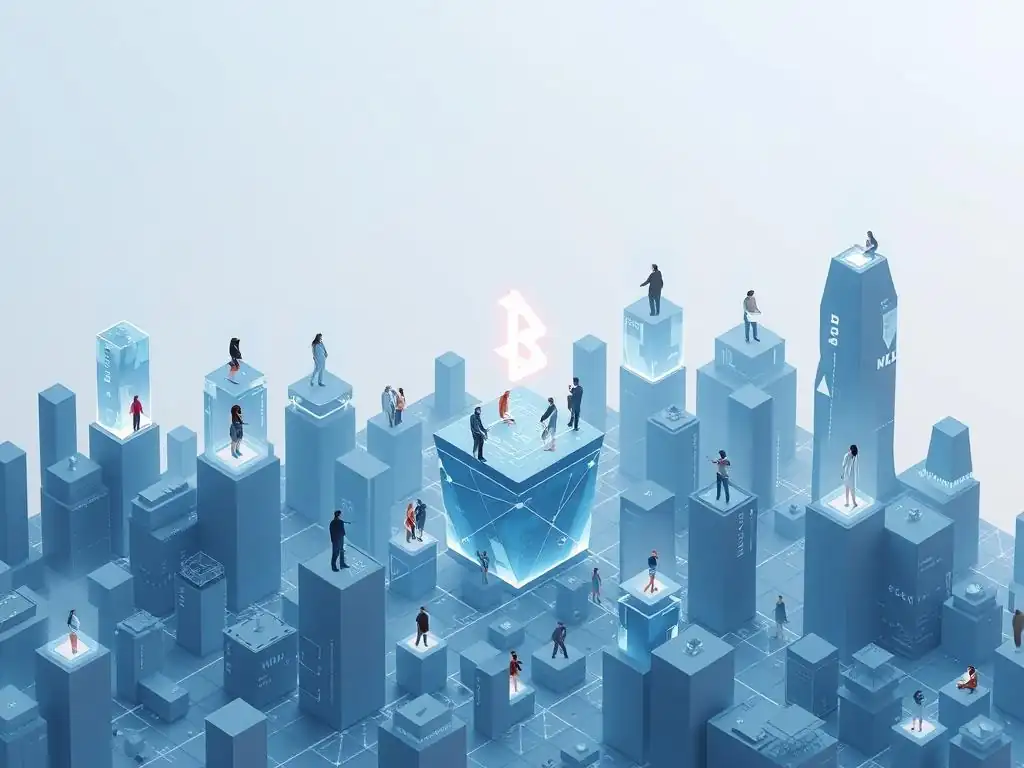
Blockchain sharding directly addresses the scalability bottlenecks of traditional blockchains, making it a compelling solution for supporting the massive scale required by metaverse environments. By partitioning the blockchain into shards, each capable of processing transactions concurrently, sharding significantly increases the overall transaction throughput. Instead of a single blockchain processing transactions sequentially, multiple shards operate in parallel, drastically enhancing the network's capacity to handle a high volume of transactions.
This parallel processing power is crucial for metaverse applications that demand the processing of thousands or even millions of transactions per second to support a large number of concurrent users and interactions. For example, a sharded blockchain could potentially handle the surge in transactions during a popular virtual concert in the metaverse, ensuring smooth and uninterrupted experiences for all participants.
Reduced Latency and Enhanced User Experience in the Metaverse with Sharding
The increased transaction throughput facilitated by sharding translates directly into reduced latency and a significantly improved user experience within metaverse platforms. With shards processing transactions in parallel, confirmation times are dramatically reduced, leading to faster response times for user actions within the virtual world.
This near-instantaneous transaction processing eliminates the lag and delays associated with congested, non-sharded blockchains, creating a smoother and more immersive metaverse experience. Imagine interacting with virtual objects, participating in real-time events, or trading digital assets in the metaverse without noticeable delays – sharding makes this level of responsiveness a tangible possibility, enhancing user engagement and satisfaction.
Cost-Effective Metaverse Transactions through Sharding
Blockchain sharding also contributes to more cost-effective transactions within the metaverse by mitigating network congestion and reducing gas fees. With increased transaction throughput, the competition for block space diminishes, leading to lower gas prices. This cost reduction is particularly beneficial for metaverse users who engage in frequent micro-transactions, such as buying virtual consumables, accessing pay-per-use metaverse experiences, or trading small-value NFTs.
Lower gas fees make blockchain-based metaverse platforms more accessible and affordable for a wider audience, fostering greater participation and economic activity within these virtual worlds. For instance, users might be more willing to engage in play-to-earn metaverse games if the transaction costs for in-game assets are minimal, encouraging broader adoption and a more vibrant metaverse economy.
Real-World Examples and Use Cases of Blockchain Sharding in the Metaverse
Imagine a massively multiplayer online role-playing game (MMORPG) set in a persistent metaverse world. Traditional blockchains would struggle to handle the sheer volume of in-game transactions: players buying items, trading resources, battling each other, and interacting with the game world. A sharded blockchain could revolutionize this scenario.
Each shard could manage a specific region or zone within the game world, processing all transactions occurring within that zone. For example, if the game world is divided into continents, each continent could be managed by a separate shard. This would allow for parallel processing of in-game actions across different zones, significantly increasing the game's capacity to support a large number of concurrent players without performance degradation.
Furthermore, players interacting within the same zone would experience faster transaction confirmations and lower latency, enhancing the overall gameplay experience. While fully sharded blockchain games are still emerging, projects like Zilliqa, with its transaction sharding, demonstrate the potential for handling high transaction volumes required by complex metaverse games.
NFT marketplaces are crucial components of the metaverse economy, enabling the trading of virtual land, avatars, digital art, and in-game assets. Popular NFT marketplaces built on non-sharded blockchains have often faced congestion and high gas fees during periods of peak demand, hindering trading activity. Blockchain sharding offers a scalable solution for metaverse NFT marketplaces.
By implementing sharding, these marketplaces can significantly increase their transaction processing capacity, allowing for faster NFT minting, buying, and selling, even during periods of high user activity. For instance, a sharded NFT marketplace could handle a large influx of users during a popular NFT drop without experiencing slowdowns or exorbitant gas fees.
This would ensure a smoother and more efficient trading experience for metaverse users, fostering greater liquidity and participation in the NFT market. While specific real-world examples of fully sharded NFT marketplaces are still evolving, the underlying technology is being actively explored and developed by various blockchain platforms.
Decentralized social experiences within the metaverse, such as virtual concerts, conferences, and social gatherings, require robust infrastructure to support real-time interactions and data exchange among a large number of participants. Traditional blockchains may struggle to handle the concurrent transactions and data flow generated by thousands of users interacting in a virtual social space. Blockchain sharding can provide the necessary scalability for these decentralized metaverse social experiences.
Sharding can enable the metaverse platform to handle a massive influx of users participating in a virtual event, ensuring smooth communication, real-time updates, and seamless interactions. For example, a virtual concert in a sharded metaverse could accommodate tens of thousands of attendees simultaneously, with each shard handling a subset of users and their interactions.
This would prevent network congestion and ensure a lag-free and immersive social experience for everyone involved. The development of sharded blockchain solutions is paving the way for increasingly large-scale and decentralized social interactions within the metaverse.
The Future of Blockchain Sharding and the Metaverse
Emerging Trends in Blockchain Sharding Technology for Virtual Worlds
The landscape of blockchain sharding is continuously evolving, with several emerging trends poised to further enhance its applicability to metaverse environments. One key trend is the development of more sophisticated and efficient sharding mechanisms, including advancements in cross-shard communication and data availability. Researchers and developers are exploring techniques to optimize how shards interact and exchange information, ensuring seamless interoperability and data consistency across the sharded network.
Another trend is the integration of sharding with other scaling solutions, such as layer-2 technologies, to create hybrid scaling approaches that combine the benefits of both on-chain and off-chain scaling. For example, combining sharding with rollups could further amplify transaction throughput and reduce latency for metaverse applications.
Furthermore, the development of "elastic sharding" – where the number of shards can dynamically adjust based on network demand – is gaining traction. This would allow metaverse platforms to scale their blockchain infrastructure in real-time, adapting to fluctuating user activity and transaction volumes.
Overcoming the Challenges of Implementing Sharding in Metaverse Platforms
While blockchain sharding holds immense promise for scaling metaverse applications, certain challenges need to be addressed for its widespread adoption. One significant challenge is the complexity of implementing and maintaining sharded blockchain networks. Ensuring data consistency, security, and efficient cross-shard communication in a sharded environment requires sophisticated engineering and protocol design. Another challenge is the potential for increased vulnerability if shards are not properly secured and decentralized.
Care must be taken to distribute nodes and validators across shards in a way that prevents malicious actors from gaining control of individual shards and compromising the network's integrity. Furthermore, the development of user-friendly tools and infrastructure for building and deploying metaverse applications on sharded blockchains is crucial for broader developer adoption. Ongoing research and development efforts are actively focused on tackling these challenges and making sharding a more practical and accessible scaling solution for metaverse platforms.
The Potential of a Massively Scalable Metaverse Powered by Blockchain Sharding
The convergence of blockchain sharding and metaverse technologies holds the transformative potential to unlock a truly massively scalable and decentralized metaverse. Sharding provides the fundamental infrastructure needed to support millions or even billions of concurrent users, transactions, and interactions within virtual worlds.
This scalability will enable the creation of richer, more immersive, and more populous metaverse experiences than currently possible. Imagine metaverse platforms hosting global-scale virtual events, persistent and dynamic virtual worlds with thriving economies, and seamless interoperability between different metaverse environments – all powered by the robust scalability of sharded blockchains.
By overcoming the limitations of traditional blockchain scalability, sharding paves the way for the metaverse to reach its full potential as a decentralized, open, and widely accessible digital realm. The future metaverse, empowered by blockchain sharding, promises to be a vibrant and expansive universe of interconnected virtual worlds, transforming how we live, work, and play in the digital age.
Conclusion: Sharding - A Key Enabler for Metaverse Growth
Blockchain sharding stands out as a critical scaling solution for realizing the vision of a massively adopted and truly immersive metaverse. By overcoming the inherent limitations of traditional blockchain architectures in terms of transaction throughput, latency, and cost, sharding unlocks the potential for metaverse platforms to accommodate vast numbers of users and complex interactions.
As blockchain technology continues to evolve and sharding implementations mature, its role as a key enabler for metaverse growth will only become more pronounced. The future of the metaverse, characterized by its scalability, decentralization, and vibrant user-driven economies, is inextricably linked to the advancement and adoption of blockchain sharding technologies.
Frequently Asked Questions
What is blockchain sharding and why is it relevant to the metaverse?
Blockchain sharding is a scaling solution that divides the blockchain into smaller, more manageable pieces called shards. This allows for parallel processing of transactions, drastically increasing throughput and enabling the metaverse to handle a large number of users.
How does blockchain sharding enable mass participation in metaverse applications?
By increasing transaction processing capacity, sharding allows more users to interact simultaneously within the metaverse. This is crucial for handling the complex interactions and vast user base envisioned for fully realized metaverse experiences, removing bottlenecks.
What are some of the challenges associated with implementing blockchain sharding in the metaverse?
Implementing sharding presents challenges such as data consistency across shards and the potential for cross-shard attacks. Ensuring secure and reliable communication between shards is essential for maintaining the integrity of the metaverse environment.
Beyond scaling, what other benefits does blockchain technology bring to metaverse applications?
Besides sharding and scaling, blockchain offers decentralization, transparency, and ownership of digital assets within the metaverse. This enables new economic models and user experiences built on trust and verifiable data.
How are regulations impacting the development and adoption of blockchain-based metaverse applications?
Regulations are still evolving, but they are increasingly focusing on issues like data privacy, digital asset security, and user protection within the metaverse. Clarity in regulatory frameworks is crucial for fostering innovation and responsible growth in this space.
Final Reflection: Embracing Decentralized Futures
The journey through blockchain sharding and its potential to revolutionize the metaverse underscores a critical truth: scalability is paramount for truly immersive and accessible virtual worlds. Without the capacity to handle mass participation, the metaverse remains a fragmented landscape, a collection of isolated experiences rather than a unified, interconnected reality. The advancements discussed here are not just technological leaps; they are the foundational building blocks for a future where digital interaction transcends current limitations.
The promise of a seamlessly integrated metaverse, powered by robust blockchain scaling solutions, continues to shape our perception of digital ownership and community. This exploration has reinforced my belief that decentralized technologies hold the key to unlocking unprecedented levels of creativity and collaboration online. The best way to predict the future is to create it.
- Peter Drucker. This quote resonates deeply, reminding us that the future of the metaverse is not predetermined, but rather a canvas upon which we can actively paint a more inclusive and dynamic digital world.
As we stand on the cusp of this transformative era, I invite you to consider the role you will play in shaping the metaverse. Will you be a passive observer, or an active participant in building a decentralized, scalable, and truly immersive virtual future? The potential is limitless, and the time to embrace this technological frontier is now. Let us work together to ensure that the metaverse becomes a space where everyone can thrive, connect, and create without limitations.
Dive Deeper: Shape the Future of the Metaverse!
Thank you for exploring how blockchain sharding is set to transform the Metaverse. With the potential for unprecedented scalability, you now have the knowledge to participate actively in this emerging frontier.
Are you ready to contribute to its evolution?
- Start building! Begin exploring development platforms like Unity or Unreal Engine and experiment with integrating sharded blockchain solutions to create scalable Metaverse experiences. This is your primary action!
- Join the conversation: Engage with online blockchain and Metaverse communities. Share your insights and connect with other innovators shaping the future of virtual worlds.
- Explore unconventional use cases: Brainstorm and document innovative applications of sharding in the Metaverse, focusing on areas such as decentralized governance, asset management, or identity verification.
What is the sharding-based Metaverse application you're most excited to see come to life? Share your thoughts below!
Leave a Reply