
Blockchain and Robotics: Automating the Future of Supply Chain Logistics

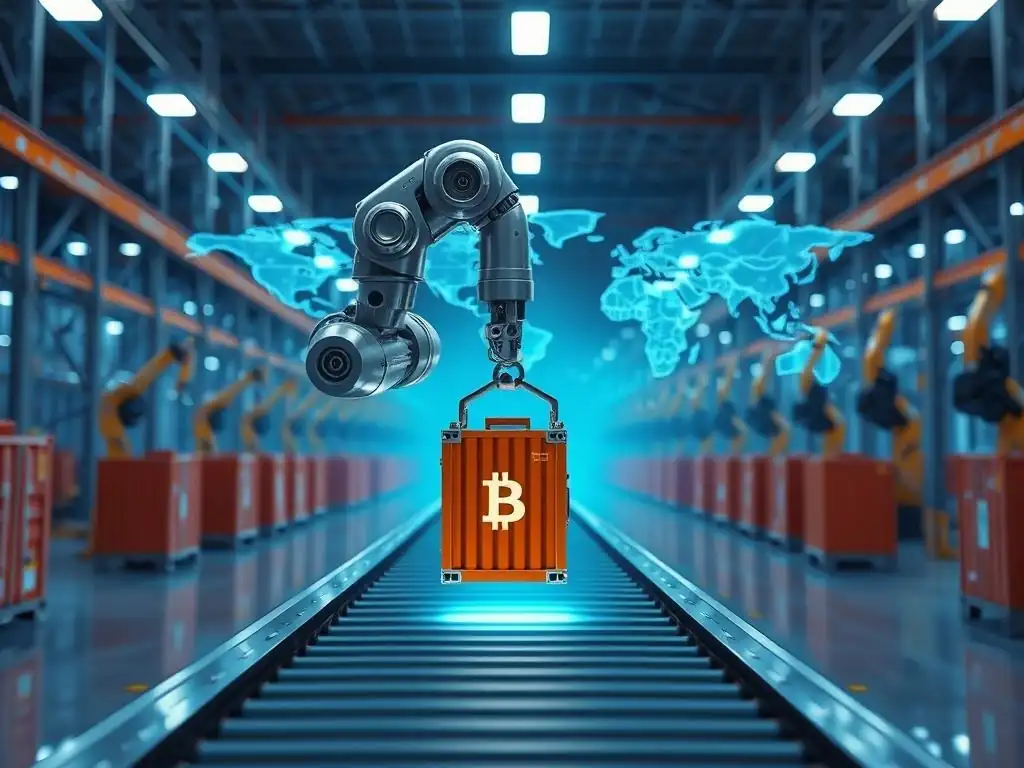
Welcome to Blockchain Trends, your compass in the ever-evolving world of decentralized technologies!
Dive deep into the transformative power of blockchain beyond the hype. Ever wondered how blockchain and robotics are converging to revolutionize industries? Our latest article explores the groundbreaking potential of blockchain supply chain automation logistics, uncovering how it's poised to reshape the future of efficiency and transparency. Intrigued? Discover the innovative solutions, challenges, and future possibilities that await – the journey begins now!
Blockchain and Robotics: Automating Supply Chain Logistics
- Introduction: The Convergence of Blockchain and Robotics
- Blockchain Technology for Supply Chain Transparency
- Robotics in Supply Chain Logistics: Optimizing Efficiency
- Blockchain and Robotics: A Synergistic Approach
- Use Cases: Real-World Applications of Blockchain and Robotics
- Addressing Challenges in Implementing Integrated Systems
- The Future of Automated Supply Chain Logistics
- Conclusion: Embracing Innovation in Supply Chain Logistics
-
Frequently Asked Questions
- How can blockchain technology improve supply chain efficiency?
- What role do robotics play in automating supply chain logistics using blockchain?
- What are the key benefits of using "Blockchain supply chain automation logistics"?
- What are some of the challenges in implementing "Blockchain supply chain automation logistics"?
- How does "Blockchain supply chain automation logistics" impact the future of decentralized systems?
- Final Reflection: Embracing the Decentralized Future of Logistics
- Unlock the Future: Take Control of Your Supply Chain Today!
Introduction: The Convergence of Blockchain and Robotics
The Complexities of Modern Supply Chain Management
Modern supply chains are intricate global networks involving numerous participants, from raw material suppliers and manufacturers to distributors, logistics providers, and end consumers. Managing these complex systems is fraught with challenges, including lack of transparency, inefficient processes, data silos, and vulnerability to fraud and errors.
A single product often crosses multiple borders and changes hands dozens of times, making it difficult to maintain accurate records, ensure timely delivery, and verify authenticity. For instance, a recent report estimated that global supply chain disruptions cost businesses an average of 18% of their earnings before interest, taxes, depreciation, and amortization (EBITDA) annually, highlighting the critical need for enhanced efficiency and resilience.
These complexities are further amplified by increasing customer demands for faster delivery, greater visibility into order status, and ethical sourcing. Traditional paper-based systems or fragmented digital platforms struggle to provide the real-time, end-to-end visibility required. This often results in delays, increased costs, and reduced customer satisfaction. The sheer volume of transactions and data generated within a typical supply chain—potentially involving millions of data points daily for a large enterprise—overwhelms legacy systems, making effective management and optimization incredibly difficult without innovative technological solutions.
Blockchain Technology for Enhanced Supply Chain Security
Blockchain technology offers a decentralized, immutable ledger that can significantly enhance security and trust within supply chains. By recording transactions in blocks linked chronologically and secured by cryptography, blockchain ensures that once data is entered, it cannot be altered or deleted without the consensus of the network participants.
This creates a single, shared, and trustworthy version of truth for all involved parties. For a pharmaceutical supply chain, for example, blockchain can provide an indisputable record of a drug's journey from manufacturing to dispensary, helping to combat counterfeiting, which the World Health Organization estimates accounts for up to 10% of medical products in low- and middle-income countries.
Beyond immutability, blockchain enables granular access control, allowing participants to share only the specific data points necessary for a given transaction or verification step. This selective transparency builds trust while protecting sensitive business information. The distributed nature of the ledger means there is no single point of failure, making the system more resilient to cyberattacks or system outages compared to centralized databases.
Implementing blockchain in supply chain operations can drastically reduce disputes over shipment status, ownership, and payment terms by providing a verifiable audit trail accessible to authorized parties. This foundational security and transparency pave the way for more automated and trustworthy processes.
Robotics and Automation in Logistics Operations
Robotics and automation have revolutionized logistics operations, particularly in warehouses and distribution centers. Automated systems, such as conveyor belts, automated storage and retrieval systems (AS/RS), and robotic arms, are widely used for tasks like sorting, picking, packing, and palletizing. These technologies significantly increase throughput, reduce labor costs, and improve accuracy compared to manual processes. A large e-commerce fulfillment center might use hundreds or even thousands of robots to manage millions of inventory items, processing tens of thousands of orders daily with high precision.
The evolution continues with the deployment of Automated Guided Vehicles (AGVs) and Autonomous Mobile Robots (AMRs) for transporting goods within facilities and even between buildings. These robots can navigate complex environments, avoid obstacles, and work collaboratively with human workers. The benefits are tangible: improved speed, reduced risk of workplace injuries, and the ability to operate 24/7.
While robotics excels at automating physical tasks, integrating these automated processes with the broader supply chain network and ensuring the integrity of the data they generate remains a challenge. This is where the convergence with blockchain becomes particularly compelling for advanced blockchain supply chain automation logistics.
Synergistic Benefits of Blockchain and Robotics Integration
The integration of blockchain and robotics creates powerful synergies, enabling unprecedented levels of automation, transparency, and security in supply chain logistics. Robotics can execute physical tasks efficiently, while blockchain can securely record the data generated by these actions, providing an unalterable audit trail. For example, a robotic arm picking an item could trigger a blockchain transaction recording the pick event, the item's serial number, the timestamp, and the robot's ID. This data is then immediately available to all relevant parties on the secure ledger.
This combined approach allows for automated workflows triggered by secure, verifiable data. Smart contracts on the blockchain can automatically initiate payments upon proof of delivery recorded by a robot, or trigger a restocking order when inventory levels, verified by automated warehouse systems, fall below a certain threshold. This level of blockchain supply chain automation logistics not only reduces manual intervention and associated errors but also accelerates processes and builds greater trust among supply chain partners. The fusion of automated physical execution and secure, transparent data management represents a significant leap forward in optimizing global logistics.
Blockchain Technology for Supply Chain Transparency
Blockchain Fundamentals: A Distributed Ledger Explained
At its core, blockchain is a type of distributed ledger technology (DLT) that records transactions across a network of computers. Unlike a traditional database stored in one location, the blockchain ledger is replicated and synchronized across all participating nodes. Each new transaction is bundled into a "block," which is then added to the chain using complex cryptographic algorithms. This process requires consensus among network participants, making it extremely difficult for any single party to alter the history of transactions. The result is a chronological, tamper-evident record accessible to all authorized members of the network.
This decentralized structure eliminates the need for a central authority to validate transactions, distributing trust across the network. For a supply chain, this means that manufacturers, logistics providers, distributors, and retailers can all access the same, verified data about a product's journey without relying on a single company's potentially biased or incomplete records. The transparency stems from this shared, immutable ledger, which provides a single source of truth regarding ownership, location, status, and condition of goods as they move through the chain. This fundamental shift from siloed databases to a shared, distributed ledger is key to unlocking enhanced transparency.
Enhanced Transparency and Security in Supply Chains
The inherent properties of blockchain—immutability, transparency (to authorized participants), and decentralization—directly address many of the security and transparency challenges in supply chains. Every movement, transfer of ownership, or change in condition (like temperature for cold chain goods) can be recorded on the blockchain. This creates a comprehensive, auditable history that is resistant to manipulation. If a dispute arises about when a shipment arrived or who was responsible for damage, the blockchain provides an objective, verifiable record that all parties can trust. This significantly reduces the potential for fraud and errors that plague traditional systems.
For example, tracking high-value goods like electronics or luxury items becomes far more secure. Each item can be assigned a unique digital identity on the blockchain, linked to its physical counterpart via serial numbers or QR codes. As the item moves, each handler's receipt and transfer of the item is recorded.
This creates a clear chain of custody that makes it virtually impossible for counterfeit goods to enter the legitimate supply chain undetected or for items to disappear without a trace. This enhanced security and transparency build confidence among partners and customers alike, supporting robust blockchain supply chain automation logistics processes.
Improved Product Traceability and Origin Verification
One of the most significant benefits of blockchain in supply chains is the dramatic improvement in product traceability. By recording every step of a product's journey on the distributed ledger, from raw material sourcing to final delivery, companies can achieve granular visibility into the provenance and handling of goods. This is particularly crucial for industries where authenticity, safety, or ethical sourcing are paramount, such as food and beverage, pharmaceuticals, and luxury goods. Consumers are increasingly demanding to know where their products come from and how they were produced, and blockchain provides the means to offer this information reliably.
Consider the food industry: in the event of a foodborne illness outbreak, tracing the source of contamination through traditional paper records or fragmented digital systems can take days or even weeks. Using a blockchain-based traceability system, investigators could potentially trace an affected product back to its origin farm within seconds or minutes, quickly identifying the source and containing the problem. Walmart, for instance, piloted a blockchain system for tracking mangoes, reducing the time needed to trace their origin from seven days to just two seconds. This level of rapid, verifiable traceability is transformative for safety, compliance, and brand reputation.
Data Integrity and Fraud Reduction in Logistics
Maintaining data integrity is a constant challenge in logistics, with data often being manually entered, duplicated across disparate systems, or subject to errors and deliberate manipulation. Blockchain fundamentally addresses this by ensuring that once data is recorded and validated by the network, it cannot be retrospectively altered. This immutability guarantees the integrity of the information regarding shipments, inventory levels, quality control checks, and compliance documentation. Any attempt to tamper with a record would be immediately evident to other network participants, effectively deterring fraudulent activities.
For freight logistics, this means that details like shipment weight, volume, pickup times, and delivery confirmations, when recorded on a blockchain, become indisputable facts shared among carrier, shipper, and receiver. This reduces disputes over billing and performance. In customs clearance, blockchain can securely store and share necessary documents like bills of lading and customs declarations, ensuring all parties are working with the same, verified information and reducing delays caused by paperwork discrepancies or fraud. The trust established by this data integrity is foundational for implementing widespread blockchain supply chain automation logistics.
Robotics in Supply Chain Logistics: Optimizing Efficiency
Robotics and Warehouse Automation Advancements
Warehouse automation has seen rapid advancements driven by sophisticated robotics. These systems are designed to perform repetitive, physically demanding, and time-sensitive tasks with high precision and speed. Modern automated warehouses utilize a combination of technologies, including automated storage and retrieval systems (AS/RS) that handle high-density storage and retrieval of goods, and robotic arms capable of complex manipulation like picking individual items from shelves or assembling orders. These systems can operate in environments unsuitable for humans, such as temperature-controlled storage for perishables or hazardous materials, further enhancing efficiency and safety.
The integration of these robotic systems is transforming traditional warehouses into highly efficient, data-driven fulfillment centers. For example, an AS/RS can retrieve a pallet from storage in minutes, compared to potentially longer times using manual forklifts, and significantly increase storage density. Robotic picking systems using vision and gripping technologies can fulfill orders with accuracy rates exceeding 99%, drastically reducing errors compared to manual picking. These advancements are crucial for meeting the demands of e-commerce, which requires rapid processing of high volumes of individual orders.
Automated Guided Vehicles (AGVs) and Autonomous Mobile Robots (AMRs) in Logistics
Automated Guided Vehicles (AGVs) and Autonomous Mobile Robots (AMRs) represent a significant leap in automating material transport within logistics facilities. AGVs follow predefined paths, typically marked by wires, magnetic strips, or sensors. They are effective for repetitive, fixed-route tasks like moving goods from receiving to storage or from storage to shipping docks. While limited by their fixed paths, AGVs provide reliable and consistent transport, often used in large-scale manufacturing or distribution centers. The global market for AGVs was valued at several billion USD in recent years, illustrating their widespread adoption.
AMRs are more sophisticated, using sensors, cameras, and onboard computing to navigate dynamically without fixed paths. They can map their environment, detect and avoid obstacles, and choose optimal routes in real-time. This flexibility makes AMRs ideal for dynamic warehouse environments where layouts change or where tasks require navigating around human workers or temporary obstructions. AMRs are increasingly used for tasks like transporting goods between different zones, assisting with inventory counts, and even collaborating with human pickers. Deploying AMRs can increase labor efficiency by 50% or more in certain warehouse operations by reducing travel time for human workers.
Robotics for Efficient Inventory Management and Order Processing
Robotics plays a critical role in optimizing two core logistics functions: inventory management and order processing. Automated systems can conduct frequent, even continuous, inventory checks, providing real-time, accurate data on stock levels. Drones equipped with cameras can quickly scan barcodes on high shelves, while AMRs can navigate aisles counting items. This level of automation drastically reduces the time and labor required for traditional cycle counting or physical inventories, improving inventory accuracy to potentially over 99.5%. Accurate inventory data is fundamental for efficient order fulfillment and minimizing stockouts or overstocking.
In order processing, robotics accelerates picking, packing, and sorting. Robotic pickers retrieve items from shelves, while automated systems pack them into boxes. High-speed sorting systems can process thousands of parcels per hour, directing them to the correct outbound lanes. This automation allows logistics operations to handle massive volumes of orders rapidly and accurately, which is essential for e-commerce speed and customer satisfaction. The integration of these robotic processes with data systems is key to achieving true blockchain supply chain automation logistics.
Minimizing Errors and Accelerating Operations with Robotics
A primary driver for adopting robotics in logistics is the significant reduction in errors and the acceleration of operational speed. Unlike human workers, robots do not get fatigued, make transcription errors, or misread labels (when properly calibrated). Automated picking systems, for example, can achieve error rates of less than 0.1%, a substantial improvement over typical manual picking error rates which can range from 1-3% or higher depending on the complexity of the task. Minimizing errors directly translates to reduced costs associated with returns, repacking, and customer service issues.
Furthermore, robots can operate continuously at consistent speeds, significantly increasing the overall throughput of a facility. Automated sorting systems can process packages several times faster than manual sorting. This increased speed is vital for meeting tight delivery deadlines and handling peak demand periods like holiday seasons. The combination of reduced errors and increased speed makes robotics an indispensable tool for optimizing the physical execution layer of modern supply chains, setting the stage for integration with secure data layers like blockchain for advanced blockchain supply chain automation logistics.
Blockchain and Robotics: A Synergistic Approach
Securing Robotic Operations Using Blockchain Technology
Integrating blockchain technology can significantly enhance the security and trustworthiness of data generated by robotic systems in logistics. Robots collect vast amounts of data on their operations: movement paths, task completion times, item specifics (serial numbers, conditions), sensor readings (temperature, humidity), and more. Ensuring the integrity and authenticity of this data is crucial, as it forms the basis for inventory records, billing, and performance analysis. By writing this data to a blockchain, it becomes immutable and verifiable.
For instance, an AMR transporting high-value goods could periodically record its GPS coordinates, speed, and the status of its cargo bay on a blockchain. This provides an unalterable log of the robot's activities and the cargo's location and condition. If the robot is equipped with sensors, their readings can also be timestamped and recorded.
This makes it much harder for data to be faked or altered, preventing scenarios like falsely reporting a delivery time or manipulating inventory counts. Furthermore, blockchain can be used to manage the identities and permissions of robots on the network, ensuring only authorized robots can access certain areas or perform specific tasks, adding a layer of cybersecurity to the automated fleet.
Smart Contracts for Automated Logistics Workflow
Smart contracts, self-executing contracts with the terms of the agreement directly written into code on the blockchain, are a powerful tool for automating logistics workflows based on verifiable data from robotic systems. These contracts automatically execute predetermined actions when specific conditions are met and verified by the blockchain ledger. For example, a smart contract could be programmed to release payment to a carrier upon receiving a blockchain-verified confirmation from a receiving robot that the goods have been unloaded and checked in at a distribution center.
Another application involves automated inventory management. A smart contract could monitor inventory levels recorded on the blockchain by warehouse robots. When the stock of a particular item, as verified by automated scans, drops below a predefined threshold, the smart contract could automatically trigger a purchase order to a supplier, also potentially managed through a blockchain-based procurement system. This level of automated workflow reduces manual intervention, speeds up processes, and minimizes the risk of delays or errors caused by human oversight. Smart contracts are central to achieving sophisticated blockchain supply chain automation logistics.
Real-Time Tracking and Monitoring with Integrated Systems
Combining the physical tracking capabilities of robotics and IoT devices with the secure, shared ledger of blockchain enables unprecedented real-time tracking and monitoring in supply chains. Robots and sensors attached to goods or transport units can continuously report data—like location, temperature, humidity, and shock—to the blockchain. This data is instantly accessible to all authorized network participants, providing a single, trustworthy source of real-time information.
Imagine a cold chain logistics scenario: a shipment of vaccines is transported in a temperature-controlled container monitored by IoT sensors. An AMR loads the container onto a truck. The AMR records the loading event and container ID on the blockchain. The sensors inside the container report temperature data every 15 minutes to the blockchain.
If the temperature deviates outside the acceptable range, the blockchain record immediately flags this event. A smart contract monitoring this data could automatically alert the logistics provider and potentially initiate a process to handle compromised goods, all based on verifiable, real-time data. This integrated approach ensures transparency and allows for proactive management of potential issues.
Cost Optimization and Efficiency Gains Through Automation
The synergistic application of blockchain and robotics leads to significant cost optimization and efficiency gains across the supply chain. Robotics automates physical tasks, reducing labor costs and increasing throughput. Blockchain automates data management and verification, reducing administrative overhead, minimizing disputes, and accelerating transaction settlements. The reduction in errors facilitated by both technologies saves costs associated with returns, rework, and lost inventory.
Furthermore, the enhanced transparency and real-time data provided by the integrated system allow for better forecasting, optimized routing, and more efficient resource allocation. For instance, accurate, real-time inventory data from robotic systems, secured on the blockchain, allows companies to reduce buffer stock, lowering warehousing costs. Automated customs documentation via blockchain speeds up clearance, reducing demurrage fees. A study by the World Economic Forum suggested that blockchain could reduce supply chain costs by 15-20%. When combined with the operational efficiencies provided by robotics, the potential for cost savings and performance improvement in blockchain supply chain automation logistics is substantial.
Use Cases: Real-World Applications of Blockchain and Robotics

Case Study 1: Securing Pharmaceutical Supply Chains with Blockchain and Robotics
Securing the pharmaceutical supply chain is critical to prevent the distribution of counterfeit or substandard drugs, which pose serious health risks. A potential application involves integrating blockchain for tracking and verification with robotics for handling and sorting. Pharmaceutical manufacturers could serialize each drug package and record its unique ID on a blockchain at the point of production. Automated robotic systems in the warehouse would handle sorting and packaging, with each movement and aggregation (e.g., into cases or pallets) recorded on the blockchain, linked to the individual unit IDs.
As the drugs move through the supply chain—to distributors, pharmacies, and hospitals—each transfer of custody is validated and recorded on the blockchain, potentially using automated scanning systems operated by robots or integrated with manual processes. At dispensing points, pharmacists or patients could verify the authenticity and history of a drug package by scanning its serial number, querying the blockchain. In fulfillment centers, robotic systems could pick and sort prescriptions, with the picking event and destination recorded on the blockchain.
This combined approach creates an immutable, transparent record from manufacturer to patient, significantly enhancing security and trust while automating physical handling. Early pilot programs in this sector have shown the potential for blockchain to improve traceability and compliance with regulations like the US Drug Supply Chain Security Act (DSCSA), while robotics handles the high-volume physical movements efficiently.
Case Study 2: Optimizing Cold Chain Logistics Using IoT, Blockchain, and Robotics
Maintaining precise temperature control is vital for transporting perishable goods like food, vaccines, and certain chemicals. Optimizing cold chain logistics requires reliable monitoring and efficient handling. This use case leverages IoT sensors for temperature tracking, blockchain for secure data recording, and robotics for automated handling. IoT sensors placed within temperature-controlled containers or vehicles continuously monitor conditions, reporting data to a blockchain ledger in real-time.
Automated Guided Vehicles (AGVs) or Autonomous Mobile Robots (AMRs) are used within warehouses and distribution centers to move temperature-sensitive goods quickly and efficiently, minimizing exposure to adverse conditions. When a robotic system loads a temperature-controlled container onto a truck, this event is recorded on the blockchain, linked to the container's ID and the start of its journey. Throughout transit, sensor data is streamed to the blockchain, providing an immutable history of temperature fluctuations.
If a critical temperature threshold is breached, a smart contract on the blockchain can automatically trigger alerts to relevant parties and record the incident permanently. Upon arrival, robotic systems might unload the container, with the receiving event and final temperature log recorded on the blockchain. This integration ensures that the condition of goods is transparently and immutably tracked, enabling rapid response to issues and providing verifiable proof of compliance, while robotics optimizes the physical flow.
Case Study 3: Enhancing E-commerce Fulfillment with Automated Warehouses and Blockchain
The rapid growth of e-commerce demands highly efficient and transparent fulfillment operations. Automated warehouses equipped with extensive robotics are the backbone of this efficiency, but integrating these operations with the broader supply chain and ensuring data integrity can be challenging. This use case demonstrates how blockchain can complement automated e-commerce fulfillment. Within a large e-commerce warehouse, fleets of AMRs retrieve items from storage, robotic arms pick and pack orders, and automated sorting systems prepare packages for shipping.
As each item is picked and packed by a robot, its unique ID (SKU, serial number) is scanned and recorded on a blockchain, linked to the specific order ID. The packing robot records the weight and dimensions of the final package on the blockchain. When the package is transferred to the shipping area by an AMR, this transfer is also logged.
The carrier pickup scan is recorded, initiating the transit phase on the blockchain. This creates a detailed, immutable record of the fulfillment process for every order. Customers and e-commerce platforms can potentially track the status of their order on the blockchain, gaining transparency into the fulfillment steps beyond just shipping.
Smart contracts could automate payments to carriers upon verified delivery recorded on the blockchain. This integration of automated physical processes with a secure, transparent ledger significantly enhances accuracy, speed, and trust in high-volume e-commerce logistics, showcasing powerful blockchain supply chain automation logistics.
Addressing Challenges in Implementing Integrated Systems
Data Security and Privacy in Automated Supply Chains
While blockchain enhances data security through immutability and cryptography, implementing integrated blockchain and robotics systems in supply chains raises specific data security and privacy challenges. Robotic systems collect sensitive operational data, and integrating this with a shared ledger requires careful consideration of what data is shared and with whom. Not all data generated by a robot's internal operations (e.g., detailed movement logs, sensor calibrations) needs to be on a public or consortium blockchain. Determining which data points are relevant for the shared supply chain record versus which should remain private within a company's internal system is crucial.
Furthermore, ensuring the security of the connection between robotic systems and the blockchain network is paramount. Robots and their control systems can be potential entry points for cyberattacks if not properly secured. Implementing robust authentication mechanisms for robotic devices interacting with the blockchain and using privacy-preserving techniques like zero-knowledge proofs or private channels on the ledger (e.g., on platforms like Hyperledger Fabric) can help mitigate these risks. Protecting sensitive business data and complying with regulations like GDPR or CCPA when handling personal information within the logistics process are ongoing concerns that require careful architectural design.
Interoperability Between Diverse Blockchain and Robotic Systems
A significant challenge in deploying integrated blockchain and robotics solutions is ensuring interoperability between diverse systems. The supply chain ecosystem involves numerous participants using different types of robotic hardware (from various vendors) and potentially different blockchain platforms (e.g., Ethereum, Hyperledger, VeChain). Getting these disparate systems to communicate effectively and exchange data seamlessly is complex. Data formats, communication protocols, and consensus mechanisms can vary widely, creating integration hurdles.
Developing industry standards for data exchange between automated logistics equipment and blockchain platforms is essential. Middleware solutions and APIs that can translate data between different systems are necessary in the short term. Consortiums and industry initiatives are working towards establishing these standards, but widespread adoption takes time. Without robust interoperability, the vision of a fully automated, transparent, and interconnected supply chain remains fragmented. Successful blockchain supply chain automation logistics depends heavily on the ability of these technologies to work together harmoniously.
Scalability of Blockchain and Robotics Solutions for Large Enterprises
Scaling blockchain and robotics solutions to meet the demands of large, global enterprises presents considerable challenges. Large corporations manage millions of shipments, billions of inventory items, and thousands of logistics assets daily. Robotic fleets in large warehouses can number in the hundreds or thousands. The volume of data generated by these operations, if all were to be recorded on a blockchain, would be immense. Public blockchains can face throughput limitations (transactions per second) and high transaction costs (gas fees) when handling such volumes, although enterprise-focused private or consortium blockchains offer better performance.
Similarly, managing and coordinating large fleets of robots requires sophisticated software and infrastructure. Ensuring that robotic systems can operate reliably and efficiently at scale, handling peak demand without bottlenecks, is an engineering challenge. The integration layer—connecting thousands of robots and sensors to a blockchain network capable of handling millions of transactions daily—requires robust, scalable architecture. Solutions involving off-chain data processing with on-chain verification or using layer-2 scaling solutions for blockchains are being explored to address these scalability concerns for widespread blockchain supply chain automation logistics.
Implementing emerging technologies like blockchain and robotics in logistics requires navigating a complex and often evolving regulatory landscape. Regulations related to data privacy (e.g., what operational data can be collected and stored), cross-border data flow, customs documentation, and the legal status of smart contracts are still being defined or interpreted in the context of these new technologies. The use of autonomous robots also brings regulatory considerations related to safety standards, workplace regulations, and potential impacts on labor.
Ensuring that integrated systems comply with regulations across multiple jurisdictions where a global supply chain operates is a significant undertaking. For example, the legal recognition and enforceability of smart contracts can vary by country. Data storage requirements might differ, impacting how blockchain data is managed. Companies must stay abreast of these evolving regulations and work closely with legal and compliance experts. Proactive engagement with regulatory bodies and participation in industry standards development can help shape a more favorable environment for the future of blockchain supply chain automation logistics.
The Future of Automated Supply Chain Logistics
Emerging Trends: AI-Powered Robotics and Blockchain Integration
The future of automated supply chain logistics will increasingly see the convergence of AI, advanced robotics, and blockchain technology. AI algorithms can enhance the capabilities of robots, enabling them to perform more complex tasks, make real-time decisions, and learn from their environment. AI can also be used to analyze the vast amounts of data collected by robots and recorded on the blockchain, identifying patterns, predicting potential disruptions, and optimizing routes or inventory levels with greater precision.
Integrating AI-powered robots with blockchain allows for intelligent automation where decisions made by AI (e.g., optimizing a picking path, rerouting a delivery) can be recorded on the immutable ledger, providing transparency and accountability for autonomous operations. For instance, an AI-driven AMR could decide to prioritize certain orders based on real-time traffic data and customer location, with the decision process and execution logged on the blockchain. This fusion of intelligent automation, secure data, and verifiable actions represents the next frontier in blockchain supply chain automation logistics.
Decentralized Autonomous Organizations (DAOs) and Supply Chain Management
Decentralized Autonomous Organizations (DAOs), which use blockchain-based smart contracts to automate governance and operations, could play a role in the future of supply chain management. A DAO could potentially manage a supply chain network where participants (suppliers, carriers, distributors) interact based on predefined rules encoded in smart contracts, without the need for a central coordinating entity. Payments, order fulfillment, and dispute resolution could all be automated through the DAO's smart contract logic, triggered by verifiable data on the blockchain, potentially from automated sources like robots and IoT sensors.
Imagine a logistics network managed by a DAO: a smart contract triggers an order based on blockchain-verified inventory levels from a robotic warehouse. Another smart contract auctions the delivery route to pre-approved carriers, with the winning bid and terms recorded.
An IoT sensor on the shipment reports location and condition data to the blockchain, triggering payments to the carrier via a smart contract upon blockchain-verified delivery confirmation from the recipient. This decentralized model, underpinned by blockchain and potentially utilizing automated data inputs from robotics, could lead to more resilient, efficient, and trustless supply chain ecosystems, representing a highly advanced form of blockchain supply chain automation logistics.
Predictive Analytics for Supply Chain Optimization
The combination of rich, verifiable data from blockchain and automated systems with the analytical power of AI and machine learning enables sophisticated predictive analytics for supply chain optimization. The immutable historical data on the blockchain, covering everything from production timestamps recorded by factory robots to delivery confirmations logged by recipient systems, provides a robust dataset for analysis. This can be combined with real-time data streams from robotic operations and IoT sensors.
Predictive models can use this data to forecast demand more accurately, anticipate potential disruptions (e.g., based on weather data and shipment location logs), optimize inventory levels across the network, and proactively identify potential quality issues based on sensor data trends. For example, analyzing temperature data from past cold chain shipments (recorded on the blockchain) alongside external weather patterns could help predict which routes are most likely to experience temperature excursions.
This data-driven foresight, powered by secure, verifiable blockchain data and collected by automated systems, allows supply chain managers to move from reactive problem-solving to proactive optimization, enhancing the overall efficiency and resilience of blockchain supply chain automation logistics.
Preparing for the Next Generation of Automated Supply Chains
Preparing for the next generation of automated supply chains requires a strategic approach encompassing technological adoption, talent development, and ecosystem collaboration. Companies need to invest in piloting and implementing integrated blockchain and robotics solutions, starting with specific use cases before scaling. This involves not just acquiring technology but also developing the necessary infrastructure to connect these systems securely and effectively.
Equally important is developing the workforce. The future of logistics will require professionals skilled in managing and maintaining complex automated systems, understanding blockchain technology, and leveraging data analytics. Training programs and upskilling initiatives are essential to bridge the talent gap.
Furthermore, fostering collaboration among supply chain partners is crucial. The full benefits of blockchain and robotics integration are realized when multiple parties participate in a shared, transparent network. Industry consortiums, technology providers, and logistics companies must work together to develop standards, share best practices, and build the interoperable platforms necessary for the widespread adoption of advanced blockchain supply chain automation logistics.
Conclusion: Embracing Innovation in Supply Chain Logistics
Transformative Impact of Blockchain and Robotics
The convergence of blockchain and robotics is poised to fundamentally transform supply chain logistics. Robotics automates the physical movement and handling of goods, driving efficiency and speed in operations like warehousing and fulfillment. Blockchain provides a secure, transparent, and immutable layer for managing the data generated by these operations, ensuring data integrity, improving traceability, and building trust among participants. Together, these technologies enable a level of automation and transparency previously unattainable, moving from fragmented, opaque processes to integrated, verifiable workflows.
This transformative impact is felt across various aspects of logistics: reduced operational costs through automation, minimized errors, accelerated delivery times, enhanced security against fraud and counterfeiting, and improved compliance with regulations. The ability to track goods with unprecedented granularity and verify their history and condition through a shared, trusted ledger empowers businesses and consumers alike. The synergy between automated physical execution and secure digital record-keeping is creating smarter, more resilient, and more efficient supply chains.
Key Considerations for Supply Chain Professionals
For supply chain professionals, embracing the future of automated logistics requires careful consideration and strategic planning. It's not simply about adopting technology but about rethinking processes, fostering collaboration, and managing organizational change. Key considerations include identifying specific pain points within the current supply chain that blockchain and robotics can address most effectively, such as improving cold chain monitoring or enhancing pharmaceutical traceability.
Furthermore, professionals must evaluate the technical feasibility and return on investment of implementing integrated solutions, potentially starting with pilot programs in controlled environments. Addressing challenges related to data security, system interoperability, and regulatory compliance requires expertise and careful planning. Building a team with the necessary skills in automation, data management, and blockchain technology is also crucial. Engaging with supply chain partners early in the process ensures buy-in and facilitates the development of collaborative, blockchain-enabled networks.
The Future of Blockchain-Enabled Robotic Logistics
The future of blockchain-enabled robotic logistics is one of increasing automation, intelligence, and interconnectedness. As AI capabilities advance and blockchain technology becomes more mature and scalable, we can expect even more sophisticated applications. Fully autonomous warehouses communicating seamlessly with autonomous delivery vehicles, all orchestrated and verified by smart contracts on a blockchain, is a plausible future scenario. Decentralized autonomous supply chain networks, managed by code rather than single entities, could emerge, offering greater resilience and fairness.
The journey towards this future requires continued innovation, standardization, and collaboration across industries. The potential benefits—including vastly improved efficiency, reduced costs, enhanced security, and greater sustainability—make the integration of blockchain and robotics a compelling path forward for supply chain logistics. By strategically adopting and integrating these powerful technologies, businesses can build the agile, transparent, and automated supply chains necessary to thrive in the digital age, truly realizing the potential of blockchain supply chain automation logistics.
Frequently Asked Questions
How can blockchain technology improve supply chain efficiency?
Blockchain provides a transparent and immutable record of transactions, allowing for real-time tracking of goods and materials throughout the supply chain, reducing delays and errors.
What role do robotics play in automating supply chain logistics using blockchain?
Robotics can automate physical tasks, such as warehousing and transportation, while blockchain ensures data integrity and security across these automated processes. This synergy enables end-to-end automation.
What are the key benefits of using "Blockchain supply chain automation logistics"?
It leads to increased transparency, reduced costs, and improved efficiency in the supply chain by leveraging the strengths of both blockchain and automation technologies.
What are some of the challenges in implementing "Blockchain supply chain automation logistics"?
Challenges include integrating existing systems, ensuring data privacy, and addressing regulatory uncertainties surrounding blockchain technology and its application in logistics.
How does "Blockchain supply chain automation logistics" impact the future of decentralized systems?
It demonstrates the potential of blockchain to create more resilient and efficient supply chains, fostering a decentralized ecosystem where data is shared securely and transparently among participants.
Final Reflection: Embracing the Decentralized Future of Logistics
The exploration of blockchain and robotics in supply chain logistics reveals a powerful synergy poised to revolutionize how goods move across the globe. The convergence of these technologies promises unprecedented transparency, efficiency, and security, fundamentally reshaping the landscape of global trade and commerce. This isn't just about incremental improvements; it's about building a more resilient and responsive system capable of adapting to the complexities of the modern world.
The impact of this technological shift extends far beyond mere cost savings. It touches upon the very fabric of trust and accountability within supply chains, empowering stakeholders with verifiable data and fostering greater collaboration. The potential for reduced fraud, improved traceability, and enhanced responsiveness to disruptions is immense. As the saying goes, The future is already here – it's just not evenly distributed.
This quote underscores the urgency for businesses to embrace these innovations and prepare for a future where blockchain-powered robotics are the norm, not the exception.
Now, consider the implications of this automated, transparent future for your own operations and your role within the global economy. How can you leverage the power of blockchain and robotics to build more resilient, efficient, and ethical supply chains? The future of logistics is being written today, and your active participation is essential to shaping a world where goods flow seamlessly, securely, and sustainably. Embrace the challenge, explore the possibilities, and contribute to building a decentralized future where trust and efficiency go hand in hand.
Unlock the Future: Take Control of Your Supply Chain Today!
Thank you for exploring how blockchain and robotics are revolutionizing supply chain logistics. Now that you understand the potential, it’s time to move from theory to action and become a pioneer in this transformative landscape.
Here's how to get started:
- Explore a specific area of your supply chain and identify where blockchain and robotics could eliminate bottlenecks or improve transparency.
- Join the Blockchain Trends forum to share your ideas and learn from other industry professionals who are already experimenting with these technologies.
- Consider attending a webinar focused on robotics or blockchain and invite a colleague.
What is one small change you can implement this week to start integrating blockchain or robotics into your supply chain processes? Share your plan in the comments below!
Leave a Reply