
Layer2 and Decentralization: Balancing Scalability with Core Principles


Welcome to Blockchain Trends, your go-to source for dissecting the real-world impact of blockchain technology. Beyond the hype, lies a powerful engine for innovation.
But how do we unlock its full potential without sacrificing its core values?
This week, we delve into blockchain scalability solutions decentralization benefits, specifically examining the crucial balance between achieving lightning-fast transactions and preserving the fundamental principles of decentralization in Layer 2 solutions. Discover how these advancements are shaping the future of DeFi, enterprise applications, and the entire decentralized ecosystem. Intrigued? Keep reading to explore the trade-offs and the innovative solutions emerging to tackle this critical challenge!
Layer2 and Decentralization: Balancing Scalability with Core Principles
- Understanding the Layer 2 Landscape and Decentralization in Blockchain
- The Benefits of Decentralization in Layer 2 Blockchain Solutions
- Challenges to Decentralization in Layer-2 Scaling Solutions
- Examining Different Layer-2 Approaches and Their Decentralization Levels
- Measuring Decentralization in Layer-2 Blockchain Solutions
- The Future of Decentralized Layer-2 Scaling Solutions
-
Frequently Asked Questions
- What are Layer-2 solutions and why are they important for blockchain technology?
- How do Layer-2 solutions impact the decentralization of a blockchain network?
- What are some common types of Layer-2 solutions being used today?
- What are the key benefits of using Layer-2 solutions over solely relying on Layer-1 improvements?
- How can regulations affect the development and adoption of Layer-2 solutions?
- Final Reflection: Embracing Decentralized Scalability
- Unleash Decentralization: Build the Future of Blockchain!
Understanding the Layer 2 Landscape and Decentralization in Blockchain
The Need for Blockchain Scalability Solutions: Addressing the Trilemma
Blockchain technology, since its inception with Bitcoin, has promised a decentralized and secure future for various applications, from finance to supply chain management. However, the inherent design of many first-generation blockchains faces a significant hurdle: scalability. The blockchain trilemma, coined by Vitalik Buterin, highlights this challenge, stating that a blockchain system can only achieve, at most, two out of three properties: decentralization, security, and scalability.
Early blockchains, prioritizing security and decentralization, often struggled with transaction throughput and speed. For instance, Bitcoin's network, while incredibly secure and decentralized, can only process around 7 transactions per second (TPS). Ethereum, while an improvement, still hovers around 15-30 TPS on its main chain, falling short of the demands of global-scale applications that require thousands of TPS, similar to traditional payment processors like Visa which handle thousands of transactions per second.
This limitation becomes a bottleneck for widespread adoption. Imagine a decentralized social media platform or a global decentralized exchange built directly on the Ethereum mainnet. The network would quickly become congested, leading to slow transaction confirmations and exorbitant gas fees, making the user experience impractical and costly. Therefore, the need for blockchain scalability solutions is paramount to unlock the true potential of decentralized technologies and make them viable for mass-market applications. Without addressing scalability, the promise of blockchain risks remaining confined to niche use cases, unable to compete with the performance and efficiency of centralized systems.
What are Layer-2 Scaling Solutions? A Decentralized Approach
Layer-2 scaling solutions represent a paradigm shift in blockchain architecture, offering a way to enhance transaction throughput and reduce costs without compromising the core tenets of decentralization and security. Instead of altering the base layer blockchain protocol (Layer-1), Layer-2 solutions operate on top of it.
They essentially offload a significant portion of transaction processing away from the main chain, handling transactions in a separate environment and then periodically anchoring a summary of these transactions back to the Layer-1 blockchain. This approach allows for significantly higher transaction speeds and lower fees because the main chain is only burdened with verifying aggregated batches of transactions rather than individual ones.
The crucial aspect of Layer-2 solutions, particularly in the context of "Blockchain scalability solutions decentralization benefits," is their commitment to maintaining, and in some cases even enhancing, decentralization. Unlike centralized scaling approaches, well-designed Layer-2 solutions leverage cryptographic techniques and smart contracts on the main chain to ensure that the security and decentralization properties of the base layer are extended to the Layer-2. This means users retain control of their assets and the system remains resistant to censorship and single points of failure.
Various types of Layer-2 solutions exist, each with its own approach to achieving scalability while preserving decentralization, including rollups, state channels, and sidechains. These solutions aim to strike a balance between performance gains and the fundamental principles of blockchain technology.
The Benefits of Decentralization in Layer 2 Blockchain Solutions
Enhanced Security and Trust Through Decentralized Layer 2
Decentralization is not merely a philosophical ideal in the context of Layer-2 blockchain solutions; it is a critical component that underpins enhanced security and trust. In a decentralized Layer-2 system, security is distributed across a network of participants rather than concentrated in the hands of a single entity. This distributed security model significantly reduces the attack surface and makes the system more resilient to malicious actors.
For example, in a decentralized rollup, multiple validators or sequencers might participate in processing transactions. If one validator becomes compromised, the others can continue to operate, ensuring the ongoing security and integrity of the Layer-2 network.
This inherent decentralization fosters greater trust among users. Users are not required to place their faith in a single intermediary or authority. Instead, trust is mathematically enforced through cryptographic proofs and consensus mechanisms that are transparent and verifiable by anyone.
Consider Optimistic Rollups, where transactions are assumed valid unless proven otherwise through fraud proofs. This mechanism relies on a decentralized network of watchers who can challenge invalid transactions, ensuring that the system remains honest and secure without requiring constant intervention from a central authority. This trust, built on cryptographic guarantees and distributed participation, is fundamental for the long-term viability and adoption of Layer-2 blockchain solutions.
Resistance to Censorship: Maintaining Decentralized Control on Layer 2
One of the core promises of blockchain technology is resistance to censorship, and decentralized Layer-2 solutions play a crucial role in upholding this principle as "Blockchain scalability solutions decentralization benefits." In a centralized system, a single entity can arbitrarily restrict access, censor transactions, or freeze accounts. Decentralized Layer-2 solutions, by their very nature, are designed to minimize or eliminate such centralized control points. This is particularly important in applications like decentralized finance (DeFi) and decentralized social media, where freedom from censorship is paramount.
For instance, consider a decentralized exchange (DEX) built on a Layer-2 rollup. In a well-designed decentralized rollup, no single entity can prevent users from trading or accessing their funds. The transaction processing and settlement are governed by smart contracts and consensus mechanisms distributed across the network. While sequencers play a role in ordering transactions in rollups, mechanisms like proposer election and forced transaction inclusion are implemented to mitigate sequencer censorship. This inherent resistance to censorship empowers users, promotes permissionless innovation, and ensures that Layer-2 networks remain open and accessible to everyone, regardless of their geographic location or political affiliation.
Increased Transparency and Auditability in Decentralized Layer 2 Systems
Decentralization in Layer-2 solutions directly contributes to increased transparency and auditability, both crucial aspects for user confidence and regulatory compliance. Because decentralized systems operate on open and distributed ledgers, all transaction data and network activity are publicly accessible and verifiable. This transparency contrasts sharply with traditional centralized systems, where data is often siloed and opaque, making it difficult to audit or verify claims.
In the context of Layer-2, the transparency of the underlying Layer-1 blockchain extends to the Layer-2 operations. For example, in rollups, transaction data is typically posted as calldata on the Layer-1, making it publicly available for anyone to inspect. Furthermore, the smart contracts governing the Layer-2 system are also publicly auditable, allowing independent parties to verify the logic and security of the system.
This inherent transparency and auditability are vital for building trust and accountability in Layer-2 solutions. Users can independently verify the state of the network, track transactions, and ensure that the system is operating as intended. This level of transparency is essential for fostering broader adoption and acceptance of blockchain technology, particularly in regulated industries where auditability is a key requirement.
Challenges to Decentralization in Layer-2 Scaling Solutions
Centralization Risks in Specific Layer-2 Architectures: Validium Implementations
While Layer-2 solutions generally strive for decentralization, certain architectures, particularly Validiums, present inherent centralization risks. Validiums, unlike rollups, do not necessarily post transaction data on the Layer-1 blockchain for data availability. Instead, they rely on a separate data availability committee or provider to store and make transaction data available. This reliance on an external data availability mechanism introduces potential centralization points. If the data availability committee is compromised or colludes, it could withhold transaction data, potentially leading to a loss of funds or system shutdown, even if the validity proofs ensure transaction correctness.
Furthermore, the number and identity of members in the data availability committee are crucial factors determining the level of decentralization in Validiums. If the committee is small and composed of known entities, it becomes a more attractive target for attacks or coercion. For example, a Validium might be secured by a data availability committee comprising only a handful of validators controlled by a single company.
This scenario significantly diminishes the decentralization benefits, as the system's security and availability then depend on the trustworthiness and resilience of this centralized committee. Therefore, while Validiums offer certain advantages in terms of scalability and cost-efficiency, their inherent reliance on external data availability necessitates careful consideration of decentralization trade-offs and the design of robust and decentralized data availability mechanisms.
Trade-offs Between Scalability and Decentralized Control
The pursuit of scalability in Layer-2 solutions often involves inherent trade-offs with decentralized control. Achieving extremely high transaction throughput and low latency may necessitate design choices that introduce certain levels of centralization. For instance, some Layer-2 solutions might employ centralized sequencers to order transactions for efficiency. While a centralized sequencer can significantly improve transaction processing speed, it also introduces a potential point of failure and censorship. If the sequencer is compromised or malicious, it could disrupt the network or manipulate transaction ordering.
Another example of this trade-off can be seen in the design of state channels. While state channels offer excellent scalability for specific use cases involving frequent interactions between a small number of participants, their inherent design relies on participants being online and responsive to maintain the channel's functionality. This requirement for active participation and coordination can be seen as a limitation in terms of decentralization compared to rollups, which are designed to be more resilient to individual participant unavailability.
Therefore, when evaluating Layer-2 solutions, it's crucial to understand the specific design choices and assess the balance between scalability gains and the degree of decentralized control retained. The ideal solution often involves finding an optimal point on this spectrum that aligns with the specific requirements and priorities of the application.
Data Availability Considerations for Decentralized Layer 2
Data availability is a critical, yet often underestimated, aspect of decentralization in Layer-2 scaling solutions. For a Layer-2 system to be truly decentralized and secure, transaction data must be readily and permanently available to all participants. This data availability ensures that anyone can independently verify the correctness of transactions, reconstruct the state of the Layer-2 network, and participate in dispute resolution mechanisms like fraud proofs in Optimistic Rollups. If transaction data is not available, the security assumptions of the Layer-2 system break down, and users could potentially lose their funds or be subject to fraudulent activities without recourse.
The challenge lies in ensuring data availability in a cost-effective and scalable manner. Storing all transaction data directly on the expensive Layer-1 blockchain can negate the scalability benefits of Layer-2. Therefore, various data availability solutions are being explored, ranging from on-chain data availability using calldata, as in rollups, to off-chain data availability committees, as in Validiums, and more novel approaches like data availability sampling. Each approach presents different trade-offs in terms of cost, scalability, and decentralization.
For instance, while on-chain data availability offers the highest level of security and decentralization, it can be more expensive. Off-chain data availability solutions, on the other hand, can be more scalable and cost-effective but may introduce centralization risks if not designed carefully. The choice of data availability solution is a crucial factor in determining the overall decentralization and security of a Layer-2 network.
Examining Different Layer-2 Approaches and Their Decentralization Levels
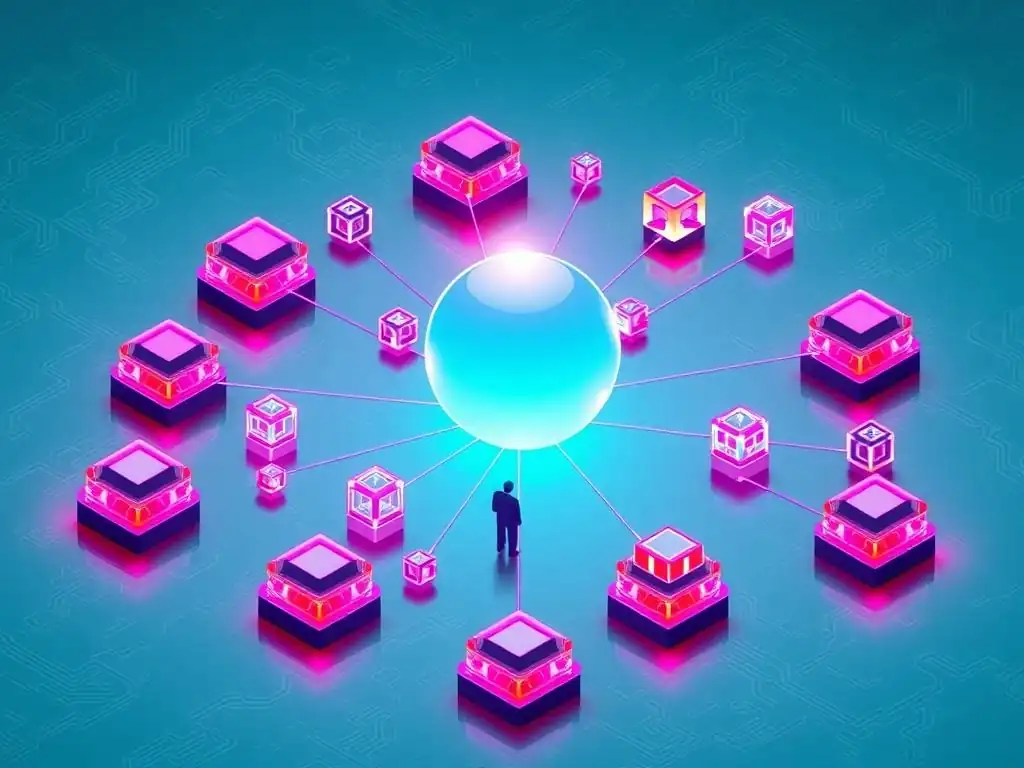
Rollups: A Deep Dive into Optimistic and ZK-Rollups
Rollups are widely considered among the most promising Layer-2 scaling solutions that prioritize decentralization while significantly improving scalability. They achieve this by "rolling up" or batching numerous Layer-2 transactions into a single transaction on the Layer-1 blockchain. This drastically reduces the transaction load on the main chain, leading to increased throughput and lower fees. Crucially, rollups inherit the security of the underlying Layer-1, as all transactions are ultimately anchored and verifiable on the main chain. There are two main types of rollups: Optimistic Rollups and Zero-Knowledge Rollups (ZK-Rollups), each with distinct mechanisms and decentralization characteristics.
Both Optimistic and ZK-Rollups aim to provide "Blockchain scalability solutions decentralization benefits," but they differ in how they ensure transaction validity and handle data availability. Optimistic Rollups assume transactions are valid by default and rely on a fraud-proof mechanism to challenge invalid transactions. ZK-Rollups, on the other hand, use zero-knowledge proofs to cryptographically prove the validity of transactions before they are committed to the Layer-1. These differences impact their decentralization profiles, performance characteristics, and suitability for different use cases.
Optimistic Rollups: Decentralization and Fraud Proof Mechanisms
Optimistic Rollups are designed with a strong emphasis on decentralization, leveraging fraud proofs to ensure the integrity of the Layer-2 network. In an Optimistic Rollup, a sequencer proposes batches of transactions to the Layer-1. These batches are initially assumed to be valid, hence "optimistic."
However, there is a challenge period, typically around 7 days, during which anyone can submit a fraud proof if they detect an invalid transaction within the batch. If a fraud proof is successfully submitted and verified on the Layer-1, the invalid transaction is reverted, and the sequencer may be penalized. This fraud-proof mechanism is a cornerstone of Optimistic Rollups' decentralization, as it allows anyone in the network to act as a validator and ensure the honesty of the sequencer.
This approach promotes decentralization by removing the need for a trusted set of validators. Anyone can potentially become a watcher and submit fraud proofs, creating a permissionless and censorship-resistant validation process. Examples of Optimistic Rollups include Arbitrum and Optimism, which are actively deployed and contribute significantly to Ethereum's Layer-2 ecosystem.
While Optimistic Rollups offer robust decentralization, the challenge period for fraud proofs introduces a withdrawal delay, typically lasting several days, which can be a consideration for users requiring faster withdrawals. Despite this, their strong decentralization properties and compatibility with the Ethereum Virtual Machine (EVM) have made them a popular choice for scaling general-purpose applications.
ZK-Rollups: Balancing Decentralization with Computational Complexity
ZK-Rollups utilize zero-knowledge proofs to achieve scalability while maintaining a high degree of security. Unlike Optimistic Rollups, ZK-Rollups generate cryptographic proofs, specifically succinct non-interactive arguments of knowledge (SNARKs) or similar technologies, to prove the validity of each batch of transactions before they are committed to the Layer-1. These proofs mathematically guarantee that the transactions are valid, eliminating the need for a challenge period and enabling faster finality compared to Optimistic Rollups. Examples of ZK-Rollups include zkSync and StarkNet.
However, the generation of zero-knowledge proofs is computationally intensive, which can introduce challenges to decentralization. Initially, ZK-Rollups often rely on centralized sequencers to handle proof generation, as this process requires specialized hardware and expertise. While the validity proofs themselves are trustless and verifiable, the centralization of the sequencer can be a concern.
Ongoing research and development efforts are focused on decentralizing ZK-Rollup sequencers and proof generation processes. Techniques like distributed proof generation and proposer election mechanisms are being explored to enhance the decentralization of ZK-Rollups without compromising their performance and security benefits. Despite the computational complexity, ZK-Rollups offer strong security guarantees and faster finality, making them particularly well-suited for applications that require high transaction throughput and rapid settlement, such as exchanges and payment systems.
State Channels: Decentralization and Limitations
State channels represent a Layer-2 scaling solution that focuses on enabling private and off-chain transactions between a small group of participants. They work by establishing a channel between participants on the Layer-1 blockchain, allowing them to conduct multiple transactions off-chain within the channel, and then settle the final state back on the main chain. This approach significantly reduces the number of transactions that need to be processed on the Layer-1, leading to substantial scalability gains for specific use cases. Examples include the Lightning Network for Bitcoin and Raiden Network for Ethereum.
In terms of decentralization, state channels offer a unique model. While the initial channel setup and final settlement occur on the Layer-1, the transactions within the channel are primarily peer-to-peer between the involved participants. This peer-to-peer nature can be seen as a form of decentralization, as it removes intermediaries for the transactions within the channel.
However, state channels also have limitations in terms of broader network decentralization. They are best suited for scenarios where there are frequent interactions between a relatively small and known set of participants. Scaling state channels to a large, open network can become complex due to routing and channel management challenges.
Furthermore, participants in state channels need to be online and responsive to maintain the channel's functionality. If a participant becomes unresponsive, it can lead to channel closure and potential disputes. Therefore, while state channels offer a decentralized approach for specific use cases, their applicability and decentralization benefits are constrained by their design and operational requirements.
Sidechains: Decentralization Trade-offs and Governance Models: Polygon
Sidechains are independent blockchains that run parallel to the main Layer-1 blockchain and are connected to it via a two-way bridge. They offer a way to scale blockchain applications by offloading transaction processing to a separate chain with potentially different consensus mechanisms and parameters optimized for higher throughput. Sidechains can be customized for specific use cases and can introduce new functionalities not available on the main chain. Polygon (formerly Matic Network) is a prominent example of a sidechain connected to Ethereum.
However, sidechains often involve significant decentralization trade-offs compared to rollups or state channels. The security of a sidechain typically relies on its own consensus mechanism and validator set, which may be smaller and less decentralized than the main Layer-1 blockchain. For instance, Polygon initially utilized a Proof-of-Stake (PoS) consensus mechanism with a relatively limited number of validators.
While Polygon has been progressively decentralizing its validator set and governance, sidechains, in general, require careful consideration of their security model and governance to ensure they maintain an acceptable level of decentralization. The governance model of a sidechain is also crucial, determining how upgrades and changes are implemented. A centralized governance model can lead to faster decision-making but also introduces risks of censorship or malicious control.
Therefore, while sidechains offer scalability and flexibility, their decentralization level is heavily dependent on their specific design, consensus mechanism, validator set size, and governance model. Projects like Polygon are actively working to enhance the decentralization of their sidechains through initiatives like increasing validator participation and implementing decentralized governance frameworks.
Measuring Decentralization in Layer-2 Blockchain Solutions
Key Metrics for Evaluating Decentralization: Number of Validators, Governance Token Distribution
Quantifying decentralization in Layer-2 blockchain solutions is essential for objectively assessing their security, censorship resistance, and overall robustness. While decentralization is a multi-faceted concept, several key metrics can provide valuable insights. One crucial metric is the number of validators or sequencers participating in the Layer-2 network. A higher number of independent validators generally indicates greater decentralization, as it reduces the risk of collusion or single points of failure. For instance, a Layer-2 network with hundreds of independent validators is inherently more decentralized than one with only a handful of validators controlled by a few entities.
Another important metric is the distribution of governance tokens, if applicable. Many Layer-2 projects utilize governance tokens to empower community participation in decision-making and upgrades. A widely distributed governance token, held by a diverse range of participants, promotes decentralized governance and reduces the influence of any single entity.
Metrics like the Gini coefficient or the Herfindahl-Hirschman Index (HHI) can be used to quantify the distribution of governance tokens. Furthermore, the geographical distribution of validators and token holders can also be a relevant indicator of decentralization, as a geographically diverse network is generally more resilient to regional disruptions or regulatory pressures. Analyzing these metrics provides a more concrete and data-driven approach to evaluating the decentralization of Layer-2 solutions beyond subjective assessments.
The Nakamoto Coefficient and Layer-2 Decentralization
The Nakamoto Coefficient is a widely recognized metric for measuring decentralization, particularly in blockchain networks. It quantifies the minimum number of entities that would need to collude to compromise the system. In the context of Layer-2 solutions, the Nakamoto Coefficient can be applied to various aspects, such as the validator set, sequencer set, or data availability committee, depending on the specific architecture of the Layer-2. A higher Nakamoto Coefficient indicates greater decentralization and resilience.
For example, if a Layer-2 rollup has a Nakamoto Coefficient of 50 for its validator set, it means that at least 50 independent validators would need to collude to control or compromise the network. This provides a more tangible and comparable measure of decentralization across different Layer-2 solutions.
Calculating the Nakamoto Coefficient involves identifying the key subsystems or components that contribute to the system's security and functionality and then determining the minimum number of entities required to exert undue influence over those components. While the Nakamoto Coefficient is a valuable tool, it's important to recognize that it is just one metric and should be considered alongside other qualitative and quantitative assessments of decentralization to gain a comprehensive understanding.
Tools and Techniques for Analyzing Decentralization in Layer-2 Networks
Analyzing decentralization in Layer-2 networks requires employing a range of tools and techniques to gather and interpret relevant data. Block explorers, which provide transparent access to blockchain data, are essential for examining transaction activity, validator participation, and token distribution on both the Layer-1 and Layer-2 networks. For instance, block explorers can be used to track the number of active validators in a Layer-2 sidechain or to analyze the distribution of governance tokens in a Layer-2 rollup.
Network analysis tools can be used to map the relationships and connections between different entities within the Layer-2 ecosystem, such as validators, sequencers, and token holders. This can help identify potential centralization points or clusters of influence. Furthermore, on-chain governance dashboards and voting platforms provide insights into community participation and decision-making processes in Layer-2 networks with decentralized governance mechanisms.
Analyzing voting participation rates, proposal outcomes, and the distribution of voting power can reveal the effectiveness of decentralized governance. In addition to these technical tools, qualitative analysis, such as reviewing project documentation, community discussions, and governance proposals, is also crucial for gaining a holistic understanding of the decentralization characteristics of Layer-2 solutions. Combining quantitative and qualitative analysis provides a more robust and nuanced assessment of decentralization in these complex systems.
The Future of Decentralized Layer-2 Scaling Solutions
Innovations Driving Decentralization in Layer 2: Decentralized Sequencers, Data Availability Committees
The future of Layer-2 scaling solutions is inextricably linked to ongoing innovations aimed at further enhancing decentralization. One critical area of innovation is the decentralization of sequencers. As mentioned earlier, sequencers, which are responsible for ordering transactions in rollups, can represent a centralization point if controlled by a single entity.
Decentralized sequencer solutions are actively being developed, exploring approaches like proposer election mechanisms, where multiple parties can take turns acting as the sequencer, and distributed sequencer networks, where sequencer responsibilities are shared among a distributed set of participants. These advancements aim to eliminate single sequencer failures and censorship risks, strengthening the decentralization of rollups.
Another crucial area of innovation focuses on decentralized data availability committees (DACs). While Validiums rely on DACs for data availability, ensuring the decentralization and reliability of these committees is paramount. Research is underway on developing more robust and decentralized DAC architectures, potentially utilizing techniques like data availability sampling and distributed storage networks.
These innovations aim to improve the security and decentralization of Validiums and other Layer-2 solutions that rely on off-chain data availability. Furthermore, advancements in zero-knowledge proof technology are also contributing to decentralization. Faster and more efficient proof generation techniques could reduce the computational barriers to entry for participating in ZK-Rollup networks, potentially enabling more decentralized proof generation and validation processes in the future.
The Role of Community Governance in Layer 2
Community governance is poised to play an increasingly vital role in the evolution and decentralization of Layer-2 scaling solutions. As Layer-2 networks mature and become more critical infrastructure, transitioning to decentralized governance models becomes essential for long-term sustainability and resilience. Governance tokens empower communities to participate in key decisions, such as protocol upgrades, parameter adjustments, and the allocation of network resources. Well-designed decentralized governance mechanisms can ensure that Layer-2 networks are governed in a transparent, inclusive, and community-driven manner, reducing reliance on centralized entities and fostering greater user ownership.
Different Layer-2 projects are experimenting with various governance models, ranging from simple token-weighted voting to more sophisticated decentralized autonomous organizations (DAOs) with delegated voting and liquid democracy mechanisms. The success of decentralized governance in Layer-2 will depend on factors like voter participation rates, the representativeness of governance token distribution, and the effectiveness of decision-making processes. Ongoing research and experimentation in decentralized governance will be crucial for shaping the future of Layer-2 and ensuring that these scaling solutions remain true to the core principles of decentralization and user empowerment.
Balancing Performance and Decentralization: The Path Forward
The path forward for Layer-2 scaling solutions lies in continuously striving to strike the optimal balance between performance and decentralization. While scalability is a primary objective, it should not come at the expense of sacrificing the fundamental decentralization benefits that underpin the security, censorship resistance, and trust of blockchain technology. The future will likely see a diverse landscape of Layer-2 solutions, each offering different trade-offs between performance and decentralization, catering to the varying needs of different applications and use cases.
Continued research and development are crucial for pushing the boundaries of both scalability and decentralization. Innovations in areas like zero-knowledge proofs, decentralized sequencing, data availability solutions, and decentralized governance are paving the way for Layer-2 networks that can achieve both high performance and robust decentralization. Ultimately, the success of Layer-2 scaling solutions in the long term will depend on their ability to deliver on the promise of "Blockchain scalability solutions decentralization benefits," enabling blockchain technology to reach its full potential and power a truly decentralized future.
Frequently Asked Questions
What are Layer-2 solutions and why are they important for blockchain technology?
Layer-2 solutions are off-chain scaling solutions that process transactions separately from the main blockchain (Layer-1). They are crucial for improving blockchain scalability by reducing congestion and increasing transaction throughput, addressing one of the biggest hurdles to wider adoption.
How do Layer-2 solutions impact the decentralization of a blockchain network?
While Layer-2 solutions offer scalability, they can sometimes introduce centralization risks. It's vital to choose solutions that preserve the core decentralization benefits of the underlying blockchain, such as maintaining open-source code and ensuring permissionless access.
What are some common types of Layer-2 solutions being used today?
Some popular Layer-2 solutions include state channels, sidechains, and rollups. Each approach has its own trade-offs in terms of security, complexity, and impact on decentralization.
What are the key benefits of using Layer-2 solutions over solely relying on Layer-1 improvements?
Layer-2 solutions often offer faster transaction speeds and lower fees compared to solely optimizing the main blockchain. They allow for more immediate improvements in scalability without requiring major upgrades to the underlying Layer-1 protocol.
How can regulations affect the development and adoption of Layer-2 solutions?
Regulations can significantly impact Layer-2 solutions by influencing their compliance requirements and legal status. Clear and supportive regulations are crucial for fostering innovation and ensuring the responsible development of decentralized systems.
Final Reflection: Embracing Decentralized Scalability
The exploration of Layer2 solutions and their impact on decentralization reveals a critical juncture for blockchain technology. The pursuit of blockchain scalability must not come at the expense of its foundational principles of decentralization and security. Understanding the trade-offs inherent in various Layer2 approaches is paramount to ensuring a future where blockchain remains a truly democratized and trustless system.
This delicate balance between scalability and decentralization profoundly influences the ongoing evolution of the digital landscape. The choices we make today in adopting and developing these solutions will dictate the level of control and autonomy individuals retain in the digital age. The beauty of blockchain lies in its ability to distribute power, not concentrate it. We must be vigilant in preserving this core tenet as we strive for greater efficiency.
This quote underscores the importance of prioritizing decentralized architectures, even when faced with the allure of centralized shortcuts.
As you navigate the ever-evolving world of blockchain, remember that the true power of this technology lies in its ability to empower individuals and foster trust through decentralization. Consider how you can contribute to a future where scalability and decentralization coexist harmoniously, ensuring that the benefits of blockchain are accessible to all, without sacrificing the core principles that make it so revolutionary.
Unleash Decentralization: Build the Future of Blockchain!
Thank you for exploring the world of Layer 2 solutions and their influence on decentralization. We hope this article has provided valuable insights into managing scalability challenges while maintaining core blockchain principles. Now, it's time to put that knowledge into practice!
Here are some ways to keep the momentum going:
- Try out Layer 2 protocols yourself: Review their documentation and experiment with their test networks to experience scalability improvements firsthand. This hands-on approach is the most effective way to learn.
- Share your insights: Discuss the advantages and disadvantages of different Layer 2 solutions with your community. Help raise awareness about the critical relationship between scalability and decentralization.
- Contribute ideas: Suggest topics for future research and analysis on our website. Your input is important to us.
Are you ready to be part of a more scalable and decentralized future? Which Layer 2 project interests you most, and why? Share your thoughts in the comments below!
Leave a Reply