
Beyond Security Breaches: Blockchain's Defenses for Logistics Data Protection

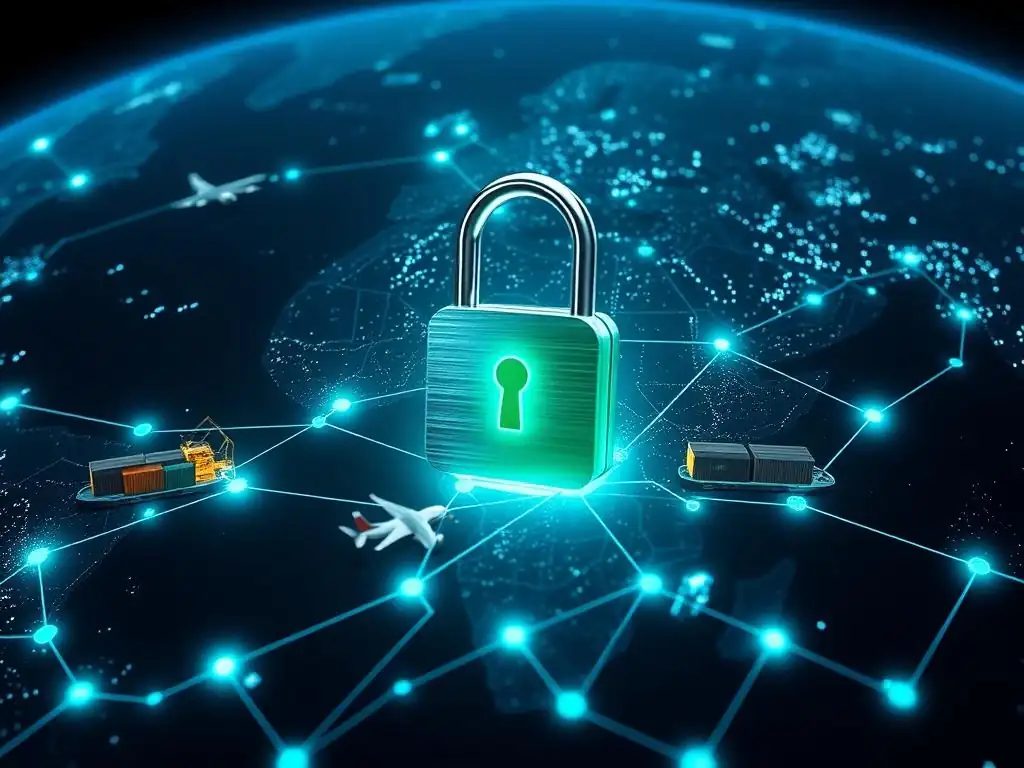
Welcome to Blockchain Trends, your trusted source for unraveling the real-world applications of blockchain technology. Beyond the hype of cryptocurrencies, we delve into the innovative solutions blockchain offers across various industries. Intrigued by the potential of secure and transparent supply chains? This month, we're tackling a critical aspect: Blockchain logistics data security. Explore how this revolutionary technology is forging impenetrable defenses against data breaches, streamlining operations, and building trust in the complex world of logistics. Discover the future of secure supply chains – the journey begins here.
- Beyond Security Breaches: Blockchain's Defenses for Logistics Data Protection
- Understanding the Security Challenges in Logistics
- Blockchain's Multi-Layered Security Approach for Logistics
- Blockchain Solutions for Specific Logistics Data Security Concerns
- Real-World Applications and Case Studies: Blockchain Logistics Data Security in Action
- Implementing Blockchain for Logistics Data Security: Key Considerations
- The Future of Blockchain and Logistics Data Protection
- Conclusion: Securing the Future of Logistics with Blockchain
-
Frequently Asked Questions
- How does blockchain enhance data security in logistics compared to traditional methods?
- What specific types of logistics data can blockchain effectively protect?
- In what ways can blockchain improve transparency in the logistics supply chain?
- How does blockchain address the challenge of data silos within the logistics industry?
- What are the regulatory considerations surrounding the use of blockchain for logistics data security?
- Final Reflection: Embracing Trust in a Decentralized Future
- Unleash Blockchain's Potential: Secure Your Logistics Today!
Beyond Security Breaches: Blockchain's Defenses for Logistics Data Protection
The Vulnerability of Traditional Logistics Systems
Modern logistics operations rely heavily on complex, interconnected digital systems that manage everything from inventory and warehousing to transportation and delivery. These systems often involve a multitude of stakeholders – manufacturers, carriers, distributors, customs agencies, and end customers – each maintaining their own databases and communication channels. This fragmentation creates significant vulnerabilities. Traditional centralized databases are prime targets for cyberattacks, as a single breach point can compromise vast amounts of sensitive information, including cargo details, customer data, financial transactions, and route information.
Furthermore, the reliance on manual data entry and disparate, often incompatible, legacy systems increases the risk of human error and data manipulation. A lack of real-time visibility and a single, trusted source of truth means that discrepancies can go unnoticed, leading to inefficiencies, disputes, and potential fraud. The inherent lack of transparency across traditional supply chains makes it difficult to verify the authenticity and integrity of data as it passes through multiple hands, leaving the door open for malicious actors to intercept or alter critical logistics information without immediate detection.
Why Blockchain is a Game Changer for Logistics Data Security
Blockchain technology offers a fundamentally different approach to managing data in logistics, moving away from vulnerable centralized silos towards a decentralized, distributed ledger. This inherent architecture eliminates the single points of failure that plague traditional systems. Every transaction or data point added to a blockchain is cryptographically secured, time-stamped, and linked to the previous one, forming an immutable chain. This makes it virtually impossible to alter historical data without consensus from the network participants, providing an unprecedented level of data integrity and auditability.
The distributed nature of blockchain means that copies of the ledger are held by multiple participants, making it highly resilient to attacks. Even if one node is compromised, the integrity of the overall network remains intact because the attacker would need to control a significant portion of the network to successfully tamper with data, a feat that becomes exponentially harder as the network grows.
This robust, tamper-evident system is precisely what is needed to build trust and enhance the security of sensitive logistics data across complex global supply chains, positioning blockchain as a critical tool for modern logistics data protection.
Understanding the Security Challenges in Logistics
Common Logistics Data Security Threats: A Detailed Overview
The logistics sector is a frequent target for cybercriminals due to the high value of goods transported and the critical nature of timely deliveries. One prevalent threat is ransomware, where attackers encrypt a company's data and demand payment for its release, crippling operations. In 2023, several major logistics firms reported significant disruptions due to such attacks, highlighting the financial and operational paralysis they can cause.
Another major concern is data breaches, where sensitive information like customer lists, shipping manifests, pricing strategies, and even intellectual property is stolen. These breaches can occur through phishing attacks targeting employees, exploiting vulnerabilities in legacy systems, or gaining unauthorized access to databases.
Data manipulation is also a significant risk, particularly in areas like tracking and tracing, or proof of delivery. Altering timestamps, locations, or quantities can facilitate theft, fraud, or cover up errors. Insider threats, whether malicious or accidental, also pose a risk, as employees with system access can potentially misuse or expose sensitive logistics data. Furthermore, the increasing reliance on IoT devices for tracking and monitoring introduces new attack vectors if these devices or their communication channels are not adequately secured. These varied threats underscore the urgent need for enhanced blockchain logistics data security measures.
The High Cost of Logistics Data Breaches: Financial and Reputational Impacts
The repercussions of a logistics data breach extend far beyond immediate operational disruption, incurring significant financial and reputational damage. Financially, companies face direct costs such as forensic investigation, data recovery, legal fees, and potential regulatory fines. For instance, under regulations like GDPR, breaches can lead to penalties up to 4% of global annual revenue.
IBM Security's 2023 Cost of a Data Breach Report indicated the global average cost of a data breach was $4.45 million, a figure that can be substantial for logistics companies. Business disruption is also a major financial hit, halting shipments, delaying deliveries, and potentially leading to contract penalties or lost revenue.
Beyond the immediate financial outlay, the damage to a company's reputation can be long-lasting and severe. A data breach erodes customer trust, particularly when sensitive personal or business information is compromised. This loss of trust can lead to customers taking their business elsewhere, impacting future revenue streams.
Partners and suppliers may also become hesitant to share data or collaborate, disrupting established supply chain relationships. Rebuilding a reputation after a significant security incident requires substantial investment in public relations and security upgrades. Implementing robust blockchain logistics data security measures is therefore not just a technical necessity but a critical business imperative to safeguard against these devastating costs.
Blockchain's Multi-Layered Security Approach for Logistics
Decentralization: Eliminating Single Points of Failure in Logistics
Traditional logistics systems often rely on centralized databases, creating a single, attractive target for cyberattacks. If this central server or database is compromised, the entire system can be incapacitated, leading to widespread disruption and data loss. Blockchain fundamentally changes this architecture through decentralization. Instead of one central authority holding all the data, the ledger is distributed across multiple nodes (computers) participating in the network. Each node typically holds a copy of the entire or a significant portion of the ledger.
This distributed nature means there is no single point of failure that an attacker can target to bring down the whole system or corrupt all the data simultaneously. To successfully compromise the data on a blockchain, an attacker would need to gain control over a majority of the network's nodes, a feat known as a 51% attack. In large, well-established blockchain networks, achieving this level of control is economically prohibitive and technically extremely challenging. This inherent resilience makes blockchain a far more secure foundation for managing critical logistics data compared to centralized alternatives, significantly enhancing blockchain logistics data security.
Cryptographic Hash Functions: Ensuring Data Integrity in Supply Chains
A cornerstone of blockchain's security is the use of cryptographic hash functions. These mathematical algorithms take an input (any piece of data, regardless of size – like a shipping manifest, temperature reading, or location update) and produce a fixed-size string of characters, known as a hash or digest. A key property of these functions is that they are deterministic: the same input will always produce the same hash. Crucially, they are also designed to be highly sensitive to input changes: even a tiny alteration in the original data will result in a completely different hash.
When data is added to a blockchain, it is hashed, and this hash is included in the block. Furthermore, each block contains the hash of the previous block, creating a chain. If someone were to tamper with the data in an earlier block, its hash would change.
Because the next block contains the original hash of the preceding block, this mismatch would immediately break the chain, signaling that the data has been altered. This cryptographic linkage provides a powerful mechanism to verify the integrity of logistics data recorded on the blockchain at any point in time, making any unauthorized modification instantly detectable and ensuring blockchain logistics data security.
Immutable Ledger Technology: Preventing Data Tampering in Logistics Operations
The combination of cryptographic hashing and the chaining of blocks creates an immutable ledger. Once a block of transactions or data is validated and added to the blockchain, it becomes incredibly difficult, if not practically impossible, to alter or delete the information it contains. Any attempt to change the data in a past block would change that block's hash.
Because the subsequent block contains the original hash of the altered block, the chain would be broken. To fix the chain, the attacker would need to re-calculate the hashes for that block and all subsequent blocks, and then get the majority of the network participants to agree that this new, altered chain is the correct one.
This immutability is profoundly valuable in logistics. It creates a permanent, auditable record of every step in the supply chain – from origin to destination. For example, a record of goods leaving a warehouse, changing custody during transit, or arriving at a port, once recorded on the blockchain, cannot be retroactively changed to hide losses, delays, or unauthorized stops. This transparency and tamper-evidence build trust among supply chain partners and significantly deter fraudulent activities or data manipulation that could otherwise obscure the truth about logistics operations, thereby enhancing blockchain logistics data security.
Smart Contracts: Automating Secure Logistics Processes and Access Control
Smart contracts are self-executing contracts with the terms of the agreement directly written into code. They run on the blockchain, automatically executing predefined actions when specific conditions are met. In logistics, smart contracts can automate a wide range of processes securely and transparently, such as triggering payment upon verified delivery, releasing goods from customs upon receiving necessary digital documentation, or updating inventory records based on sensor data. Because smart contracts reside on the blockchain, their execution is transparent and immutable, providing verifiable proof of actions taken.
Beyond process automation, smart contracts are crucial for managing access control to sensitive logistics data stored or referenced on the blockchain. Access permissions can be programmed into smart contracts, defining who can view, add, or update specific types of data (e.g., only customs officials can view specific declaration data, only the carrier can update location data for a specific shipment).
This granular control ensures that sensitive information is only accessible to authorized parties, reducing the risk of unauthorized viewing or modification. By automating secure interactions and managing permissions on the ledger, smart contracts bolster blockchain logistics data security and streamline operations.
Blockchain Solutions for Specific Logistics Data Security Concerns

Secure Tracking and Tracing of Goods with Blockchain
Accurate and secure tracking and tracing are fundamental to logistics, enabling companies to monitor the movement and status of goods throughout the supply chain. Traditional tracking systems often rely on disparate databases and manual updates, leading to delays, errors, and potential manipulation of location or status data. Blockchain provides a robust solution by creating an immutable, shared ledger where every transfer of custody, location update (potentially fed by IoT sensors), or status change is recorded as a transaction.
Each participant in the supply chain, from the initial manufacturer to the final recipient, can update the ledger with relevant information, and these updates are timestamped and cryptographically linked. This creates a transparent, end-to-end audit trail that cannot be tampered with retroactively. If a dispute arises regarding the location or condition of goods at a specific point in time, the blockchain provides an objective, verifiable record. This level of traceability significantly improves accountability, helps quickly identify points of delay or loss, and enhances overall blockchain logistics data security by ensuring the integrity of tracking information.
Preventing Counterfeiting with Blockchain-Based Authentication
Counterfeiting is a major problem in global logistics, leading to significant financial losses, safety risks (especially for pharmaceuticals and food), and damage to brand reputation. Traditional methods of authentication, such as holograms or serial numbers, can often be replicated or faked. Blockchain offers a powerful tool to combat counterfeiting by providing a secure, verifiable digital identity and history for products. This is typically achieved by assigning unique digital identifiers (like QR codes or NFC tags) to individual products or batches, which are linked to records stored on the blockchain.
When a product is manufactured, its details (origin, materials, production date) are recorded on the blockchain. As the product moves through the supply chain, each transfer of ownership or significant event (like customs clearance) can be recorded. Consumers or supply chain partners can scan the digital identifier on the product to access this immutable history on the blockchain, verifying its authenticity and origin. This makes it extremely difficult for counterfeit goods, which lack this verifiable blockchain history, to enter the legitimate supply chain undetected, significantly enhancing blockchain logistics data security related to product integrity.
Enhancing Data Privacy and Confidentiality in Logistics Networks
While blockchain is often associated with transparency, it can also be designed to enhance data privacy and confidentiality, which is crucial for competitive logistics businesses that handle sensitive information. Not all data needs to be public; in fact, much of it, like pricing agreements, specific cargo details for competitive shipments, or customer identities, must remain confidential between parties. Permissioned or private blockchains are particularly suited for logistics, allowing organizations to control who can join the network and what data they can access.
Within these networks, cryptographic techniques can further enhance privacy. Data can be encrypted before being stored on the blockchain, with decryption keys shared only among authorized participants. Techniques like zero-knowledge proofs allow one party to prove that a statement is true (e.g., "this shipment contains exactly 100 units") without revealing the underlying sensitive data itself (e.g., what the units are or who the sender/receiver is). This allows for verification and secure data sharing among necessary parties while keeping commercially sensitive information confidential, striking a balance between transparency and privacy essential for robust blockchain logistics data security.
Streamlining Compliance and Auditability through Blockchain
Logistics operations are subject to a complex web of regulations, including customs requirements, safety standards, environmental rules, and data privacy laws (like GDPR or CCPA). Demonstrating compliance often requires extensive documentation and tedious audits, which are prone to errors and can be time-consuming. Blockchain's immutable and transparent ledger significantly streamlines compliance and improves auditability by providing a single, verifiable source of truth for all recorded transactions and data points.
Every step in the supply chain process, every document shared, and every approval granted can be recorded on the blockchain. This creates a comprehensive, tamper-proof audit trail that regulators and auditors can access (with appropriate permissions). Instead of sifting through mountains of paper or disparate digital records, auditors can quickly verify the history and status of goods, payments, and documentation directly on the ledger. This reduces the burden of compliance, accelerates audits, and provides irrefutable evidence of adherence to regulations, strengthening blockchain logistics data security by ensuring regulatory integrity.
Real-World Applications and Case Studies: Blockchain Logistics Data Security in Action
Case Study 1: Maersk and IBM's TradeLens Platform Improves Traceability and Reduces Fraud
One of the most significant early implementations of blockchain in logistics is the TradeLens platform, a collaboration between shipping giant Maersk and IBM. Launched to digitize and streamline global supply chains, TradeLens utilizes a permissioned blockchain network to connect shippers, freight forwarders, ocean carriers, ports and terminals, inland transportation, and customs authorities. The platform focuses on improving the flow of supply chain information and enhancing transparency and security.
Before TradeLens, exchanging and verifying shipping documentation was a slow, manual, and fragmented process, taking days or even weeks, increasing the risk of errors, delays, and fraud. By providing a shared, immutable record of transactions and documents on the blockchain, TradeLens allows all authorized parties to access the same real-time information about a shipment's journey. This shared visibility reduces the reliance on potentially insecure email or fax exchanges, minimizes opportunities for document forgery, and creates a verifiable audit trail for every container movement and document approval.
While specific data on security breach reduction is proprietary, the platform's design inherently improves blockchain logistics data security by making data tampering detectable and reducing the number of handoffs where data could be compromised. Early reports indicated potential reductions in transit time and costs due to improved information flow and reduced disputes.
Case Study 2: Walmart Enhances Food Safety and Transparency in its Supply Chain Using Blockchain
Walmart, one of the world's largest retailers, implemented a blockchain solution to enhance the traceability and safety of its food supply chain, initially focusing on pork in China and later extending to leafy greens in the US. The driver for this initiative was the need for faster, more reliable traceability in the event of a foodborne illness outbreak. Traditional methods of tracing food from farm to store could take days or even weeks, making it difficult to quickly identify the source of contamination and contain the problem.
Working with IBM Food Trust, a blockchain-based platform, Walmart began recording data points about food products on the blockchain, including farm origin, processing dates, shipping information, and store destination. By scanning a product, participants could access this secure, immutable record. This drastically reduced the time required to trace a product back to its source. In a pilot test, the time to trace a package of mangoes from store back to farm was reduced from seven days to just seconds.
While primarily focused on safety and transparency, this initiative also significantly enhanced data security. By storing critical origin and journey data on an immutable ledger, it becomes exceptionally difficult to introduce fraudulent or misrepresented products into the supply chain. The secure, shared record enhances trust among suppliers and provides regulators with verifiable data, demonstrating the tangible benefits of blockchain logistics data security in critical areas like food safety.
Implementing Blockchain for Logistics Data Security: Key Considerations
Choosing the Right Blockchain Platform for Logistics Needs
Selecting the appropriate blockchain platform is a critical first step for organizations looking to enhance blockchain logistics data security. The choice typically depends on the specific requirements of the logistics application. Public blockchains, like Ethereum or Bitcoin, offer high decentralization and transparency but may not be suitable due to privacy concerns regarding sensitive business data and potentially high transaction costs and lower speeds for enterprise-scale operations.
Permissioned or private blockchains, such as Hyperledger Fabric or R3 Corda, are often preferred in logistics. These platforms allow organizations to control participation, granting access only to known and authorized entities (supply chain partners). They offer greater control over data visibility, allowing for granular permissions so only relevant parties can see specific information. They also generally provide higher transaction throughput and lower costs compared to public chains. Evaluating factors like scalability, consensus mechanism, smart contract capabilities, ease of integration, and the maturity of the platform's ecosystem is essential to find the best fit for securing logistics data.
Integrating Blockchain with Existing Logistics Systems
Integrating a new blockchain solution with existing legacy logistics systems is one of the most significant technical challenges. Logistics operations rely on a complex web of systems, including Enterprise Resource Planning (ERP), Warehouse Management Systems (WMS), Transportation Management Systems (TMS), and various tracking and sensor technologies. These systems often use outdated technologies and proprietary data formats, making seamless data exchange difficult.
Successful integration requires careful planning and the use of middleware or Application Programming Interfaces (APIs) to bridge the gap between the blockchain platform and existing IT infrastructure. Data mapping and transformation are necessary to ensure that information from legacy systems can be accurately recorded on the blockchain in a standardized format.
Furthermore, establishing data governance policies is crucial to determine which data should be stored on-chain versus off-chain (perhaps linked via hashes), balancing the need for immutability and transparency with performance and privacy requirements. Effective integration is key to unlocking the full potential of blockchain logistics data security without disrupting current operations.
Addressing Scalability Challenges in Blockchain Logistics
Scalability is a major consideration for blockchain adoption in logistics, a sector characterized by high transaction volumes, especially for global operations involving millions of shipments and data points daily. Early blockchain platforms, particularly public ones, faced limitations in processing speed and transaction capacity, which could lead to bottlenecks and high transaction fees (gas costs).
While private and permissioned blockchains generally offer better performance than public networks, scaling remains a challenge as more participants join and transaction volume increases. Solutions being developed and implemented include:
- Off-chain transactions: Handling a large volume of micro-transactions off the main chain and settling periodically on the blockchain.
- Sharding: Dividing the blockchain network into smaller segments (shards) that can process transactions in parallel.
- Layer 2 solutions: Protocols built on top of the main blockchain to handle transactions more efficiently.
- Optimized consensus mechanisms: Using consensus algorithms like Proof-of-Authority or Proof-of-Stake that are faster and more energy-efficient than Proof-of-Work.
Addressing these scalability issues is vital to ensure that blockchain platforms can handle the immense data flow of modern logistics networks while maintaining the speed and cost-efficiency required for real-world operations, thereby ensuring practical blockchain logistics data security.
Implementing blockchain for logistics data security requires careful consideration of the complex regulatory landscape. Logistics companies operate across multiple jurisdictions, each with its own set of laws governing data privacy, cross-border data flow, and record-keeping. Regulations like the General Data Protection Regulation (GDPR) in Europe, the California Consumer Privacy Act (CCPA) in the US, and various international trade compliance rules impose strict requirements on how personal and sensitive data is collected, processed, stored, and transferred.
Blockchain's immutability can pose challenges in the context of "right to erasure" principles found in regulations like GDPR. While core transaction data should be immutable, mechanisms must be in place to handle personal data appropriately, perhaps by storing it off-chain and linking it via a hash, or using encryption with revocable keys. Furthermore, determining legal liability and jurisdiction in a decentralized, cross-border blockchain network can be complex. Organizations must work closely with legal and compliance experts to design blockchain solutions that meet regulatory requirements, ensuring that efforts to enhance blockchain logistics data security do not inadvertently lead to non-compliance.
The Future of Blockchain and Logistics Data Protection
Emerging Trends in Blockchain Security for Supply Chains
The field of blockchain security is rapidly evolving, with several emerging trends poised to further enhance data protection in logistics supply chains. One significant trend is the increasing use of zero-knowledge proofs (ZKPs). As mentioned earlier, ZKPs allow parties to prove the validity of data or a transaction without revealing the underlying sensitive information. This is critical for logistics where partners need to verify compliance or data accuracy without exposing competitive details like pricing or customer lists. ZKPs can significantly improve privacy on shared ledgers while maintaining verifiability.
Another trend is the development of more sophisticated identity management solutions on the blockchain. Decentralized Identifiers (DIDs) and Verifiable Credentials (VCs) allow individuals and organizations to manage their digital identities and share verifiable proofs of attributes (like licenses, certifications, or shipment ownership) securely and privately. This can streamline processes like customs clearance and partner onboarding while reducing the risk of identity fraud.
Furthermore, homomorphic encryption, which allows computations to be performed on encrypted data without decrypting it, holds promise for enabling complex data analysis on logistics data stored on-chain while preserving confidentiality. These advancements signal a future where blockchain logistics data security is even more robust and privacy-preserving.
The Role of AI and IoT in Enhancing Blockchain Logistics Security
The convergence of blockchain with Artificial Intelligence (AI) and the Internet of Things (IoT) is set to create powerful synergies for enhancing logistics data security. IoT devices, such as sensors tracking temperature, humidity, or location, generate vast amounts of real-time data throughout the supply chain. Integrating these devices directly with blockchain networks ensures that sensor data is recorded in an immutable, verifiable manner from the point of origin, preventing tampering and providing a trusted source of truth for cargo conditions.
AI can play a crucial role in analyzing the large datasets collected on the blockchain. By applying machine learning algorithms to the immutable transaction history and sensor data, AI can detect anomalies that might indicate potential security threats, fraudulent activities, or operational issues more effectively than traditional methods. For example, AI could flag unusual delays, deviations from planned routes, or inconsistencies between reported status and sensor data. This AI-driven analysis, performed on secure blockchain data, allows for proactive identification and mitigation of security risks, adding an intelligent layer to blockchain logistics data security.
Predictions for the Adoption of Blockchain in Logistics Data Management
Industry predictions indicate a significant increase in the adoption of blockchain technology specifically for data management and security within the logistics sector over the next few years. Market reports from firms like Gartner and Forrester consistently highlight supply chain and logistics as key areas where blockchain is moving beyond pilots to production deployments. Factors driving this adoption include the increasing sophistication of cyber threats, regulatory pressures for greater transparency and traceability, and the growing recognition of blockchain's unique ability to build trust among disparate parties.
While widespread, fully integrated blockchain networks across the entire global supply chain may still be some years away, the use of blockchain for specific, high-value use cases like cold chain tracking, high-value goods monitoring, trade finance documentation, and anti-counterfeiting is expected to become more common. As the technology matures, integration challenges are addressed, and regulatory frameworks become clearer, the adoption rate is projected to accelerate.
Experts predict that within five to ten years, blockchain will be a foundational technology for managing secure and transparent data flows in a significant portion of global logistics operations, solidifying its role in blockchain logistics data security.
Conclusion: Securing the Future of Logistics with Blockchain
Blockchain's Potential to Revolutionize Logistics Data Security
The logistics industry faces inherent challenges in data security due to its fragmented nature, reliance on legacy systems, and the high volume of sensitive information exchanged across multiple parties. Traditional security measures, while necessary, often fall short in providing the end-to-end transparency, immutability, and decentralized trust required to fully protect logistics data from increasingly sophisticated threats. Blockchain technology, with its core properties of decentralization, cryptography, and immutability, offers a transformative approach to address these challenges head-on.
By creating a shared, tamper-proof, and transparent ledger, blockchain eliminates single points of failure, ensures data integrity, and provides an irrefutable audit trail for every transaction and data point in the supply chain. Smart contracts automate secure processes and manage access control, further reducing human error and malicious intervention. From secure tracking and anti-counterfeiting to enhancing privacy and streamlining compliance, blockchain provides a multi-layered defense that significantly strengthens blockchain logistics data security, building trust and resilience across complex networks.
Call to Action: Embrace Blockchain for a More Secure and Transparent Supply Chain
The evidence from pilot programs and early implementations clearly demonstrates the tangible benefits of blockchain for securing logistics data. Companies that have begun exploring or implementing blockchain solutions are already seeing improvements in traceability, reduction in fraud, and enhanced trust among supply chain partners. The threats to logistics data are real and growing, and relying solely on traditional security methods is no longer sufficient.
Embracing blockchain technology is not just about adopting a new technology; it's about fundamentally rethinking how data is managed, shared, and secured within the supply chain. It requires collaboration among partners, careful planning for integration, and a commitment to transparency and data governance. Organizations serious about protecting their valuable logistics data, mitigating risks, and building a more resilient future should actively investigate and pilot blockchain solutions tailored to their specific needs. The time to invest in robust blockchain logistics data security for a more secure and transparent supply chain future is now.
Frequently Asked Questions
How does blockchain enhance data security in logistics compared to traditional methods?
Blockchain provides immutable records and decentralized storage, making data tampering extremely difficult. This contrasts with traditional systems that rely on centralized databases and are more vulnerable to single points of failure.
What specific types of logistics data can blockchain effectively protect?
Blockchain can secure various types of logistics data, including shipment tracking information, proof of delivery, temperature control records, and customs documentation, ensuring data integrity and authenticity.
In what ways can blockchain improve transparency in the logistics supply chain?
By creating a shared, immutable ledger, blockchain offers all stakeholders a real-time view of the supply chain. This enhances transparency and trust, reducing disputes and improving efficiency.
How does blockchain address the challenge of data silos within the logistics industry?
Blockchain facilitates data sharing among different parties in the supply chain without compromising security. This eliminates data silos and promotes seamless collaboration and information flow.
What are the regulatory considerations surrounding the use of blockchain for logistics data security?
Regulations are still evolving, but companies must consider data privacy laws, industry-specific compliance standards, and international trade regulations when implementing blockchain solutions for logistics.
Final Reflection: Embracing Trust in a Decentralized Future
The exploration of blockchain's potential to revolutionize logistics data security culminates in a powerful realization: we are on the cusp of a new era of trust and transparency in global supply chains. The vulnerabilities exposed by traditional, centralized systems demand innovative solutions, and blockchain offers a compelling pathway towards mitigating risks and fostering greater accountability. The promise of immutable records and decentralized control is not just a technological advancement, but a fundamental shift in how we approach data integrity and security.
The impact of blockchain on logistics extends far beyond simply preventing security breaches. It's about building resilient ecosystems where collaboration and information sharing are incentivized, and where every stakeholder can have confidence in the authenticity and provenance of goods. This shift requires a change in mindset, embracing the principles of decentralization and transparency. The future of logistics is not just about moving goods faster and cheaper, but about building trust and resilience into the entire supply chain.
This quote encapsulates the profound potential of blockchain to reshape the industry.
As we move forward, let us not only focus on the technical implementation of blockchain solutions, but also on the ethical considerations and the human element. Consider how you, as a consumer, a business owner, or a policymaker, can contribute to building a more secure and transparent future for logistics. Embrace the potential of blockchain to unlock new levels of efficiency, security, and trust in the global supply chain, and become an active participant in shaping this decentralized future.
Unleash Blockchain's Potential: Secure Your Logistics Today!
Thank you for exploring how blockchain is revolutionizing data protection in logistics. You've now gained valuable insights into securing your supply chain against ever-growing threats. It's time to translate this knowledge into tangible action.
Here's how you can take the next step:
- Implement a proof-of-concept blockchain solution for tracking a critical logistics process. This is the most impactful action you can take right now to experience the security benefits firsthand.
- Explore collaborative opportunities within your industry to share insights on blockchain adoption and identify best practices. No one needs to reinvent the wheel!
- Share this article with colleagues and encourage them to join the conversation about blockchain's role in logistics security – expanding awareness is crucial for widespread adoption.
What specific logistical challenge are you most eager to solve with blockchain's powerful security features? Share your thoughts below!
Leave a Reply