
QuantumResistant Blockchain for IoT: Securing the Internet of Things in a Quantum Future


Welcome to Blockchain Trends, your compass in the ever-evolving landscape of decentralized innovation.
Dive into the transformative potential of blockchain beyond cryptocurrencies, as we explore its applications in DeFi, enterprise solutions, and the shifting regulatory landscape. But what happens when quantum computing enters the equation? Today, we delve into the critical intersection of cybersecurity and blockchain with a focus on quantumresistant blockchain IoT security, examining how to safeguard the Internet of Things from the looming threat of quantum attacks. Ready to unravel the future of secure, decentralized systems?
Quantum-Resistant Blockchain for IoT: Securing the Internet of Things in a Quantum Future
- Introduction: The Intersection of IoT, Blockchain, and Quantum Computing Threats
- Understanding the Quantum Threat to Blockchain-Based IoT Security
- Quantum-Resistant Cryptography: Building a Future-Proof Blockchain for IoT
- Quantum-Resistant Blockchain Architectures for IoT
- Case Studies: Quantum-Resistant Blockchain IoT Security in Action
- Challenges and Considerations for Implementing Quantum-Resistant Blockchain in IoT
- The Future of Quantum-Resistant Blockchain IoT Security
- Conclusion: Preparing for a Quantum-Safe Future of IoT with Blockchain
-
Frequently Asked Questions
- What is the primary threat to current blockchain-based IoT security that quantum computing poses?
- Why is quantum-resistant blockchain important for IoT devices?
- Beyond cryptography, what other aspects of blockchain technology are being adapted for enhanced IoT security?
- What are some examples of industries where quantum-resistant blockchain IoT security is particularly critical?
- What are the main challenges in implementing quantum-resistant blockchain solutions for IoT at scale?
- Final Reflection: Navigating the Quantum Frontier of IoT Security
- Fortify Your IoT Future: Step into Quantum-Proof Security!
Introduction: The Intersection of IoT, Blockchain, and Quantum Computing Threats
The Growing Vulnerability of IoT Devices
The Internet of Things (IoT) has exploded in recent years, connecting billions of devices ranging from smart home appliances and wearables to industrial sensors and critical infrastructure components. This interconnectedness, while offering unprecedented convenience and efficiency, has also dramatically expanded the attack surface for cyber threats. IoT devices are often characterized by limited processing power, memory, and energy resources, making them inherently vulnerable to exploitation.
Furthermore, many devices are deployed with weak default security settings, infrequent software updates, and a lack of robust security protocols, creating easy entry points for malicious actors. Reports indicate a significant surge in IoT-related cyberattacks, with studies showing a 700% year-over-year increase in IoT malware in certain sectors. This alarming trend underscores the urgent need for enhanced security measures to protect the ever-expanding IoT ecosystem.
The diverse nature of IoT devices and their applications further complicates security efforts. From smart refrigerators in homes to complex sensors in manufacturing plants, the sheer variety of devices and operating environments makes it challenging to implement uniform security solutions. Consider the healthcare sector, where connected medical devices, while improving patient care, also introduce critical vulnerabilities.
A breach in a hospital's IoT network could compromise patient data, disrupt operations, and even endanger lives. Similarly, in smart cities, compromised traffic management systems or energy grids could lead to widespread chaos and disruption. The decentralized and often geographically dispersed nature of IoT deployments also makes centralized security management difficult, necessitating innovative approaches to safeguard this increasingly critical infrastructure.
Blockchain's Role in Securing IoT Data
Blockchain technology, with its inherent characteristics of decentralization, immutability, and transparency, presents a compelling solution to address many of the security challenges plaguing the IoT landscape. By design, blockchain distributes data across a network of nodes, eliminating single points of failure and making it significantly more resistant to tampering and unauthorized access.
This distributed ledger system ensures data integrity, as any modification requires consensus from the network, making it exceptionally difficult for malicious actors to alter or delete records undetected. For IoT applications, this means sensor data, device identities, and transaction logs can be securely recorded and verified, creating an auditable and trustworthy trail of information.
Moreover, blockchain facilitates secure device authentication and access control within IoT networks. Using cryptographic keys and digital signatures, blockchain can establish a robust identity management system, ensuring that only authorized devices and users can access and interact with the network. This is particularly crucial in preventing device spoofing and unauthorized command execution.
Furthermore, smart contracts, self-executing agreements encoded on the blockchain, can automate security policies and responses to threats. For example, a smart contract could automatically isolate a compromised device upon detection of anomalous behavior, minimizing the potential damage and enhancing the overall resilience of the IoT network. The combination of these blockchain features offers a powerful framework for building more secure and trustworthy IoT ecosystems.
The Looming Quantum Threat: A New Era of Cybersecurity Risks
While blockchain offers significant security enhancements for IoT, a new and potentially disruptive threat is emerging on the horizon: quantum computing. Quantum computers, leveraging the principles of quantum mechanics, possess the potential to perform computations far beyond the capabilities of even the most powerful classical computers. This computational supremacy poses a profound challenge to current cryptographic algorithms that underpin much of modern cybersecurity, including those used in blockchain technology. Specifically, algorithms like RSA and ECC (Elliptic Curve Cryptography), widely used for encryption and digital signatures, are theoretically vulnerable to attacks from sufficiently powerful quantum computers.
The development of fault-tolerant quantum computers is not a matter of if, but when. While large-scale, practical quantum computers are still under development, significant progress is being made in both hardware and algorithms. Experts predict that within the next decade, or potentially sooner, quantum computers may reach a scale capable of breaking widely used public-key cryptography.
This "quantum apocalypse," as it's sometimes referred to, would have far-reaching implications for the security of digital infrastructure, including blockchain-based IoT systems. The urgency to prepare for this quantum threat is paramount, particularly for long-lived systems like IoT infrastructure that are expected to remain operational for many years and safeguard sensitive data over extended periods. Proactive measures, including the adoption of quantum-resistant cryptography, are essential to ensure the continued security and trustworthiness of IoT in a post-quantum world.
Understanding the Quantum Threat to Blockchain-Based IoT Security
How Quantum Computers Break Current Encryption Algorithms
Classical computers operate using bits, which can represent either 0 or 1. Quantum computers, however, utilize qubits, which can exist in a superposition of both 0 and 1 simultaneously. This, along with other quantum phenomena like entanglement, allows quantum computers to perform certain types of calculations exponentially faster than classical computers.
Two specific quantum algorithms, Shor's algorithm and Grover's algorithm, pose a direct threat to current cryptographic systems. Shor's algorithm, developed by Peter Shor in 1994, is designed to efficiently factor large numbers. Factoring large numbers is computationally intractable for classical computers, forming the basis of the RSA encryption algorithm, widely used for secure communication and digital signatures.
Similarly, Elliptic Curve Cryptography (ECC), another cornerstone of modern cryptography and frequently employed in blockchain and IoT security protocols, relies on the difficulty of solving the elliptic curve discrete logarithm problem. While Grover's algorithm is not as devastating as Shor's, it can still significantly speed up brute-force attacks against symmetric-key cryptography algorithms like AES (Advanced Encryption Standard) and hash functions, effectively reducing their security level.
Although Grover's algorithm only offers a quadratic speedup, this still necessitates increasing key sizes to maintain comparable security. The threat posed by Shor's algorithm, however, is more immediate and impactful as it directly undermines the foundational mathematical problems upon which RSA and ECC are built, rendering them vulnerable to quantum attacks.
The Specific Risks to IoT Networks Using Blockchain
For IoT networks leveraging blockchain for security, the quantum threat is particularly concerning because blockchain's security relies heavily on cryptographic algorithms that are vulnerable to quantum attacks. If a quantum computer can break the public-key cryptography used in a blockchain, it could compromise several critical aspects of IoT security. Firstly, digital signatures, used to verify transactions and device identities on the blockchain, could be forged.
This would allow malicious actors to impersonate legitimate devices, inject fraudulent data into the blockchain, or even take control of IoT devices within the network. Imagine a scenario where an attacker forges signatures to manipulate sensor data in a smart grid, leading to power outages or instability.
Secondly, the encryption used to secure sensitive data stored on or transmitted through the blockchain could be broken. While blockchain inherently offers transparency, in many IoT applications, data confidentiality is crucial. For example, in healthcare IoT, patient data transmitted through a blockchain network must be protected from unauthorized access. Quantum computers could potentially decrypt this data, exposing sensitive personal and medical information.
Furthermore, the consensus mechanisms in many blockchains, while designed to be robust, could also be targeted. If an attacker gains the ability to forge signatures and manipulate transactions, they could potentially disrupt the consensus process, leading to denial-of-service attacks or even manipulation of the blockchain ledger itself. The interconnected nature of IoT devices and their reliance on blockchain for security amplify the potential impact of a quantum attack, making quantum-resistant blockchain solutions a critical necessity for future IoT deployments.
The Timeline: When Will Quantum Computers Be a Real Threat?
Predicting the exact timeline for when quantum computers will pose a practical threat to current cryptography is challenging, but expert consensus suggests it is a matter of years, not decades. While large-scale, fault-tolerant quantum computers capable of breaking RSA and ECC are not yet available, significant progress is being made in the field.
Companies like Google, IBM, and Microsoft, along with numerous academic institutions and government-funded research programs, are actively developing quantum computing technologies. Estimates from organizations like the National Institute of Standards and Technology (NIST) and leading cybersecurity experts suggest that a cryptographically relevant quantum computer could emerge within the next 5 to 15 years.
It's crucial to understand that the threat is not binary – it's not as if quantum computers will suddenly become a threat overnight. The development will likely be incremental, with quantum computers gradually gaining computational power. Even before a quantum computer can break RSA-2048 (a commonly used key size for RSA), it might be able to break weaker cryptographic implementations or earlier generations of algorithms. Furthermore, the "harvest now, decrypt later" attack scenario is a significant concern.
Adversaries could be collecting encrypted data today, anticipating the future availability of quantum computers to decrypt it at a later time. This underscores the importance of proactive mitigation strategies, including transitioning to quantum-resistant cryptography now, to protect data and systems against future quantum threats. The long lifespan of many IoT deployments, often exceeding a decade, further emphasizes the urgency of adopting quantum-safe security measures.
Quantum-Resistant Cryptography: Building a Future-Proof Blockchain for IoT
What is Quantum-Resistant Cryptography (Post-Quantum Cryptography)?
Quantum-Resistant Cryptography (also known as Post-Quantum Cryptography or PQC) refers to a new generation of cryptographic algorithms designed to be secure against attacks from both classical and quantum computers. Unlike current widely used public-key cryptosystems like RSA and ECC, which are vulnerable to Shor's algorithm, PQC algorithms are based on mathematical problems that are believed to be computationally hard even for quantum computers.
The development and standardization of PQC algorithms are crucial for ensuring the long-term security of digital systems in the face of the emerging quantum threat. Recognizing the urgency, organizations like NIST have been actively leading the standardization effort for PQC algorithms.
NIST initiated a public competition in 2016 to solicit, evaluate, and standardize PQC algorithms. After multiple rounds of rigorous evaluation, NIST announced the first set of standardized PQC algorithms in 2022. These algorithms fall into several categories, each based on different mathematical problems believed to be quantum-resistant. The primary categories include lattice-based cryptography, hash-based cryptography, code-based cryptography, and multivariate cryptography. While multivariate cryptography was initially considered promising, its progress has been slower, and lattice-based, hash-based, and code-based approaches are currently considered the most mature and promising candidates for widespread adoption in post-quantum security solutions.
Lattice-Based Cryptography for Blockchain IoT
Lattice-based cryptography is a prominent category of PQC algorithms that relies on the hardness of problems related to lattices, which are regular arrangements of points in space. Specifically, problems like the Shortest Vector Problem (SVP) and the Learning With Errors (LWE) problem are believed to be computationally difficult for both classical and quantum computers. Algorithms like CRYSTALS-Kyber (for key encapsulation) and CRYSTALS-Dilithium (for digital signatures), standardized by NIST, are examples of lattice-based cryptographic schemes. These algorithms are gaining significant traction due to their strong security proofs, relatively good performance, and versatility.
For blockchain IoT applications, lattice-based cryptography offers several advantages. Firstly, lattice-based algorithms provide strong security guarantees against known quantum attacks. Secondly, they are generally considered to be computationally efficient compared to some other PQC candidates, making them suitable for resource-constrained IoT devices. Thirdly, lattice-based cryptography can be used for various cryptographic primitives, including key exchange, digital signatures, and encryption, making it a versatile choice for securing different aspects of blockchain-based IoT systems. The adoption of lattice-based algorithms in quantum-resistant blockchain protocols can significantly enhance the security and longevity of IoT deployments in a post-quantum era.
Hash-Based Cryptography: A Secure Alternative
Hash-based cryptography represents another important approach to quantum-resistant security, offering a different security foundation compared to lattice-based schemes. Hash-based signatures rely on the security of cryptographic hash functions, which are believed to be resistant to quantum attacks. Unlike algorithms like RSA and ECC, hash-based signatures do not rely on number-theoretic problems that are vulnerable to Shor's algorithm. The most well-known example of a hash-based signature scheme is the Merkle signature scheme, and more modern variants like SPHINCS+ (also standardized by NIST) offer improved performance and practicality.
Hash-based cryptography is particularly attractive for certain IoT applications due to its simplicity and strong security grounding. The security of hash-based signatures primarily relies on the collision resistance and preimage resistance properties of the underlying hash function, which are widely believed to be quantum-resistant. While hash-based signatures can have larger signature sizes compared to some other signature schemes, they offer a robust and well-understood security alternative. For blockchain IoT systems where signature size is not the primary constraint, hash-based cryptography provides a secure and reliable option for authentication and data integrity in a quantum-threatened environment.
Code-Based Cryptography for IoT Blockchain
Code-based cryptography leverages the mathematical theory of error-correcting codes to construct cryptographic algorithms that are believed to be resistant to quantum attacks. The McEliece cryptosystem, one of the earliest public-key cryptosystems, is a prominent example of code-based cryptography. It is based on the hardness of decoding a general linear code, a problem considered computationally difficult even for quantum computers. More recent code-based schemes, like the Classic McEliece algorithm standardized by NIST, offer improved efficiency and practicality while maintaining strong security properties.
Code-based cryptography has several compelling features for securing blockchain IoT systems. Firstly, the McEliece cryptosystem has been studied for decades, giving it a long history of security analysis. Secondly, code-based encryption algorithms often exhibit relatively fast encryption and decryption speeds, making them suitable for applications where performance is critical.
However, code-based cryptography typically results in larger key sizes compared to lattice-based or hash-based schemes, which can be a consideration for resource-constrained IoT devices. Despite the larger key sizes, the robust security and performance characteristics of code-based cryptography make it a valuable candidate for building quantum-resistant blockchain solutions for the Internet of Things.
Quantum-Resistant Blockchain Architectures for IoT
Implementing Quantum-Resistant Key Exchange Protocols
Securing key exchange is paramount in any cryptographic system, and blockchain-based IoT networks are no exception. Traditional key exchange protocols like Diffie-Hellman and ECDH (Elliptic Curve Diffie-Hellman) are vulnerable to quantum attacks. Therefore, transitioning to quantum-resistant key exchange protocols is crucial for establishing secure communication channels in a post-quantum world. Quantum-resistant key exchange algorithms, such as CRYSTALS-Kyber, a lattice-based algorithm standardized by NIST, provide a secure alternative. Implementing these algorithms in blockchain protocols and IoT devices ensures that the initial handshake and establishment of secure communication channels remain protected against quantum adversaries.
Integrating quantum-resistant key exchange protocols involves replacing existing vulnerable protocols within the blockchain and IoT device communication stacks. This may require software and potentially hardware updates in existing IoT deployments. For new IoT deployments, designing systems from the outset with quantum-resistant key exchange protocols is essential. Furthermore, hybrid approaches can be considered, where both classical and quantum-resistant key exchange protocols are used in parallel, providing a fallback mechanism and a smoother transition. The selection of a specific quantum-resistant key exchange protocol should consider factors like performance, key size, and the specific security requirements of the IoT application.
Securing Blockchain Consensus Mechanisms Against Quantum Attacks
Blockchain consensus mechanisms, which ensure agreement among network participants on the state of the ledger, are also potentially vulnerable to quantum attacks if they rely on vulnerable cryptography. For example, if the digital signatures used to validate blocks and transactions are compromised by quantum computers, the integrity and security of the consensus process could be undermined. Therefore, adopting quantum-resistant digital signature schemes is crucial for securing blockchain consensus. Algorithms like CRYSTALS-Dilithium and SPHINCS+, both standardized by NIST, offer quantum-resistant alternatives to traditional signature algorithms like ECDSA (Elliptic Curve Digital Signature Algorithm).
Implementing quantum-resistant signatures within blockchain consensus mechanisms involves modifying the consensus protocol to use these new algorithms for block and transaction verification. This may require updates to the blockchain software and potentially changes to the network's infrastructure. Furthermore, the performance implications of using quantum-resistant signatures must be considered, as some PQC algorithms may have different performance characteristics compared to classical algorithms. Optimizing the implementation and potentially adapting consensus mechanisms to accommodate these performance differences is important for maintaining the efficiency and scalability of quantum-resistant blockchain IoT networks.
Decentralized Identity Management (DID) with Quantum-Safe Security
Decentralized Identity Management (DID) offers a promising approach to managing digital identities in a secure and privacy-preserving manner, and blockchain is often used as the underlying infrastructure for DID systems. However, if the cryptographic foundations of DID systems are vulnerable to quantum attacks, the security and trustworthiness of these systems could be compromised. Therefore, integrating quantum-resistant cryptography into DID systems is essential for ensuring quantum-safe decentralized identities. This includes using quantum-resistant digital signatures for verifying DID ownership and control, as well as quantum-resistant encryption for protecting sensitive identity information.
Implementing quantum-safe DID solutions involves adopting quantum-resistant cryptographic algorithms throughout the DID architecture, from key generation and storage to signature creation and verification. This requires careful consideration of the specific DID standard or framework being used and ensuring compatibility with quantum-resistant cryptography. Furthermore, user-friendly key management solutions are crucial for widespread adoption of quantum-safe DIDs, especially in the context of IoT devices, where usability and ease of management are paramount. Quantum-resistant DIDs can provide a robust foundation for secure device authentication and access control in blockchain-based IoT ecosystems in the post-quantum era.
Data Integrity and Confidentiality in Quantum-Resistant IoT Blockchains
Ensuring data integrity and confidentiality are fundamental security requirements for IoT applications, especially those handling sensitive data. In quantum-resistant blockchain IoT systems, both data integrity and confidentiality must be protected against quantum threats. For data integrity, quantum-resistant digital signatures, as discussed previously, play a crucial role in ensuring that data stored on the blockchain has not been tampered with. For data confidentiality, quantum-resistant encryption algorithms are necessary to protect sensitive data from unauthorized access, even in the presence of quantum computers. Algorithms like CRYSTALS-Kyber can be used for quantum-resistant encryption and key encapsulation in blockchain-based IoT systems.
Implementing quantum-resistant data integrity and confidentiality measures involves integrating PQC algorithms into the data handling processes of the IoT system and the blockchain protocol. This may include encrypting sensitive data before storing it on the blockchain or using quantum-resistant encryption for secure communication channels between IoT devices and the blockchain network.
Furthermore, access control mechanisms should be strengthened with quantum-resistant cryptography to ensure that only authorized entities can access and decrypt sensitive data. A comprehensive approach to data security, incorporating both quantum-resistant integrity and confidentiality measures, is essential for building truly secure and trustworthy blockchain-based IoT solutions in the quantum future.
Case Studies: Quantum-Resistant Blockchain IoT Security in Action
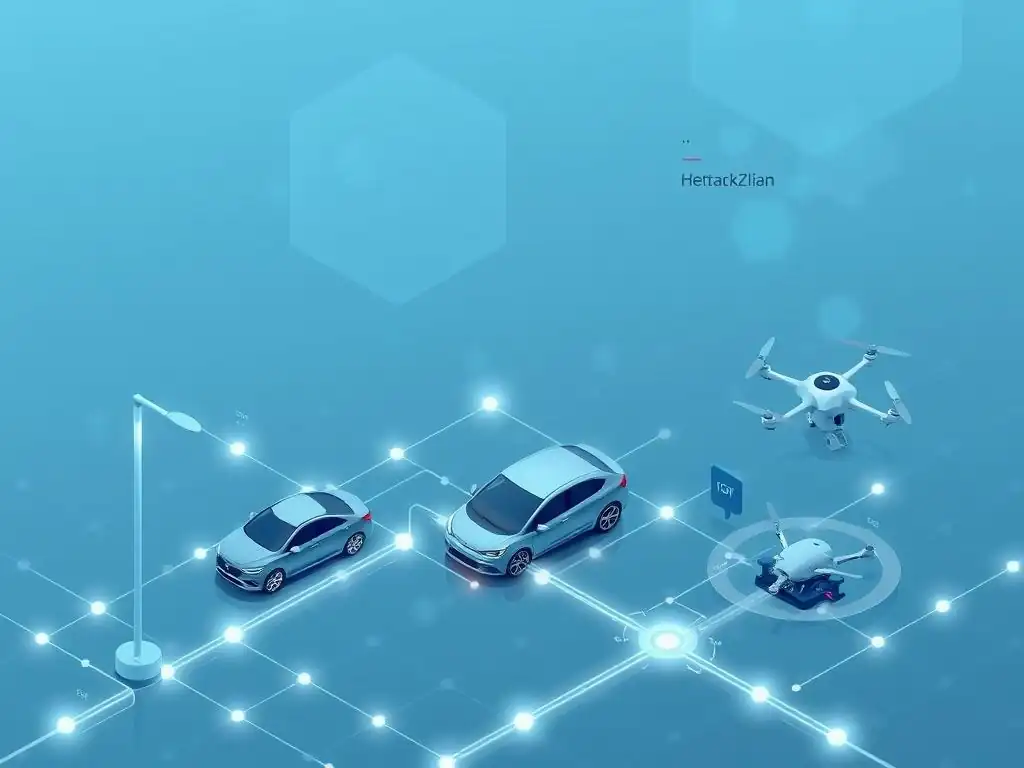
Example 1: Secure Supply Chain Management for IoT Devices
Supply chain management for IoT devices is a critical area where quantum-resistant blockchain can provide significant security enhancements. Consider the manufacturing and distribution process of smart sensors used in industrial automation. These sensors collect sensitive operational data, and ensuring their authenticity and integrity throughout the supply chain is paramount. Using a quantum-resistant blockchain, each sensor can be assigned a unique digital identity secured with quantum-resistant cryptography. As the sensor moves through the supply chain, from manufacturing to deployment, each step can be recorded on the blockchain using quantum-resistant signatures, creating an immutable and auditable record of provenance.
Furthermore, sensor data collected during operation can be securely transmitted and stored on the quantum-resistant blockchain. This ensures data integrity and prevents tampering, providing verifiable insights into sensor performance and supply chain conditions. For example, temperature sensors monitoring cold chain logistics for temperature-sensitive IoT components can record data on a quantum-resistant blockchain, ensuring tamper-proof records and preventing potential breaches in quality control.
In case of disputes or quality issues, the blockchain provides irrefutable evidence, enhancing trust and accountability throughout the IoT device supply chain. Quantum-resistant blockchain, therefore, enables a more secure and transparent supply chain, reducing risks of counterfeiting, tampering, and data manipulation for IoT devices.
Example 2: Protecting Healthcare Data in IoT Medical Devices
The healthcare sector is increasingly adopting IoT medical devices for remote patient monitoring, diagnostics, and treatment. These devices generate highly sensitive patient data, making robust security and data privacy paramount. Quantum-resistant blockchain offers a compelling solution for securing healthcare data in IoT medical devices. Imagine wearable health trackers, implantable devices, and remote monitoring systems that collect and transmit patient vital signs, medical history, and treatment information. Using a quantum-resistant blockchain, this data can be securely stored and shared among authorized healthcare providers, patients, and researchers, while ensuring data integrity and confidentiality against quantum threats.
Patient data can be encrypted using quantum-resistant encryption before being stored on the blockchain. Access to this data can be controlled through quantum-resistant Decentralized Identity Management (DID), ensuring that only authorized individuals with valid quantum-resistant credentials can access and decrypt patient records. For example, a doctor needing to access a patient's data from a wearable device would require quantum-resistant authentication and authorization through the DID system.
Smart contracts on the quantum-resistant blockchain can automate data sharing agreements and enforce privacy policies, ensuring compliance with regulations like HIPAA and GDPR. By leveraging quantum-resistant blockchain, healthcare providers can build more secure and trustworthy IoT medical device ecosystems, protecting patient privacy and enhancing the quality of care in a quantum-threatened world.
Example 3: Securing Smart City Infrastructure with Quantum-Proof Blockchain
Smart city infrastructure, encompassing interconnected systems for traffic management, energy grids, public safety, and environmental monitoring, relies heavily on IoT devices. Securing this critical infrastructure against cyber threats, including potential quantum attacks, is of utmost importance. Quantum-resistant blockchain can be instrumental in building resilient and secure smart city IoT systems. Consider a smart city's traffic management system, where traffic sensors, cameras, and control systems are interconnected via an IoT network. A quantum-resistant blockchain can secure the communication and data exchange between these devices, ensuring the integrity and authenticity of traffic data.
Traffic sensor data, control commands for traffic lights, and even data from autonomous vehicles can be recorded on a quantum-resistant blockchain, creating an auditable and tamper-proof record of traffic flow and system operations. This prevents malicious actors from manipulating traffic data or disrupting traffic flow, which could lead to accidents or congestion. Furthermore, quantum-resistant Decentralized Identity Management (DID) can be used to authenticate and authorize devices and systems within the smart city infrastructure, preventing unauthorized access and control.
For example, only authorized traffic management personnel with quantum-resistant credentials can modify traffic light schedules or access sensitive traffic data stored on the blockchain. By implementing quantum-resistant blockchain, smart cities can build more secure and reliable IoT infrastructure, enhancing public safety and operational efficiency in the face of both classical and quantum cybersecurity threats.
Challenges and Considerations for Implementing Quantum-Resistant Blockchain in IoT
Computational Overhead and Performance Impact
Implementing quantum-resistant cryptography in blockchain IoT systems introduces computational overhead and can impact performance. PQC algorithms, while designed for security, often have different performance characteristics compared to classical algorithms like RSA and ECC. Some PQC algorithms may require more computational resources for key generation, encryption, decryption, and signature operations. This computational overhead can be a significant concern for resource-constrained IoT devices, which often have limited processing power, memory, and battery life. Careful consideration of the performance implications is crucial when selecting and implementing PQC algorithms in IoT deployments.
Performance testing and optimization are essential steps in deploying quantum-resistant blockchain IoT systems. Profiling PQC algorithms on target IoT device platforms is necessary to understand their performance characteristics in real-world scenarios. Algorithm selection should be based on a trade-off between security level and performance requirements, considering the specific constraints of the IoT application. Furthermore, hardware acceleration for PQC algorithms can be explored to mitigate the performance impact. Specialized hardware modules or coprocessors designed to accelerate PQC computations can significantly improve performance and reduce the burden on the main processor of IoT devices.
Standardization and Interoperability Challenges
Standardization and interoperability are critical challenges in the widespread adoption of quantum-resistant blockchain IoT security. While NIST has standardized the first set of PQC algorithms, the process of standardization is ongoing, and the ecosystem is still evolving. Ensuring interoperability between different PQC implementations and blockchain platforms is essential for seamless integration and wider adoption. Lack of standardization and interoperability can create fragmentation and hinder the development of a cohesive quantum-resistant blockchain IoT ecosystem.
Industry collaboration and open standards initiatives are crucial for addressing standardization and interoperability challenges. Organizations like the Internet Engineering Task Force (IETF) and the World Wide Web Consortium (W3C) play a vital role in developing and promoting open standards for PQC algorithms and their integration into communication protocols and blockchain technologies. Furthermore, interoperability testing and certification programs can help ensure that different PQC implementations and blockchain platforms can work together seamlessly. Promoting open-source PQC libraries and tools can also facilitate interoperability and accelerate the adoption of quantum-resistant blockchain IoT security solutions.
Cost Considerations for Upgrading IoT Infrastructure
Upgrading existing IoT infrastructure to incorporate quantum-resistant blockchain security involves cost considerations that need to be carefully evaluated. Retrofitting existing IoT devices with PQC algorithms may require software updates, firmware upgrades, or even hardware replacements in some cases. These upgrades can incur costs related to software development, deployment, and device maintenance. For large-scale IoT deployments, the cumulative cost of upgrading numerous devices can be substantial. Furthermore, the initial cost of deploying new quantum-resistant blockchain IoT systems may be higher compared to traditional solutions due to the complexity and novelty of PQC technologies.
A phased approach to upgrading IoT infrastructure can help manage cost considerations. Prioritizing critical IoT systems and devices for quantum-resistance upgrades based on risk assessment and business impact can optimize resource allocation. Exploring software-based PQC implementations where possible can reduce the need for hardware replacements, minimizing upgrade costs. Furthermore, leveraging cloud-based PQC services and blockchain platforms can reduce the upfront investment in infrastructure and expertise. Cost-benefit analysis and careful planning are essential for effectively managing the financial implications of transitioning to quantum-resistant blockchain IoT security.
Skills Gap and Training Requirements for Developers
A significant challenge in implementing quantum-resistant blockchain IoT security is the skills gap and training requirements for developers. PQC algorithms and their integration into blockchain and IoT systems require specialized knowledge and expertise. Many developers currently lack familiarity with PQC concepts and implementation techniques. Addressing this skills gap is crucial for accelerating the adoption of quantum-resistant blockchain IoT security solutions. Training and education programs are needed to equip developers with the necessary skills to design, develop, and deploy quantum-resistant blockchain IoT systems.
Universities, industry consortia, and online learning platforms can play a vital role in providing training and educational resources on PQC and quantum-resistant blockchain technologies. Hands-on workshops, online courses, and developer documentation can help bridge the skills gap and empower developers to effectively utilize PQC algorithms. Furthermore, promoting open-source PQC libraries and providing developer-friendly tools can lower the barrier to entry and facilitate the adoption of quantum-resistant cryptography in blockchain IoT development. Addressing the skills gap through targeted training and education initiatives is essential for fostering a skilled workforce capable of building and maintaining quantum-safe IoT ecosystems.
The Future of Quantum-Resistant Blockchain IoT Security
Emerging Trends in Post-Quantum Cryptography
The field of Post-Quantum Cryptography is rapidly evolving, with ongoing research and development leading to emerging trends and advancements. One prominent trend is the exploration of new PQC algorithms and cryptographic primitives beyond the initial set standardized by NIST. Researchers are actively investigating alternative PQC approaches, such as isogeny-based cryptography and multivariate cryptography, which may offer different security and performance trade-offs. The ongoing NIST PQC standardization process itself is expected to continue, with future rounds potentially standardizing additional algorithms or refining existing ones.
Another emerging trend is the development of hybrid cryptographic systems that combine classical and quantum-resistant algorithms. Hybrid approaches can provide a smoother transition to PQC, allowing systems to maintain compatibility with existing infrastructure while gradually incorporating quantum-resistant security. Furthermore, research is focusing on optimizing PQC algorithms for resource-constrained environments, such as IoT devices, to minimize computational overhead and improve performance.
The development of lightweight PQC algorithms and hardware acceleration techniques are crucial for enabling the widespread deployment of quantum-resistant security in IoT ecosystems. The future of PQC will likely see a diversification of algorithms, optimization for specific applications, and the integration of PQC into broader security architectures.
The Role of AI in Enhancing Quantum-Resistant Blockchain IoT Security
Artificial Intelligence (AI) and Machine Learning (ML) are increasingly playing a role in cybersecurity, and they can also contribute to enhancing quantum-resistant blockchain IoT security. AI and ML techniques can be used for threat detection and anomaly detection in quantum-resistant blockchain IoT networks. By analyzing network traffic, system logs, and device behavior, AI algorithms can identify potential security breaches or malicious activities that might evade traditional security measures. Furthermore, AI can be used to optimize PQC algorithm selection and parameter tuning based on the specific security requirements and performance constraints of IoT applications.
AI can also assist in key management and distribution in quantum-resistant blockchain IoT systems. Secure key generation, storage, and distribution are critical aspects of PQC deployment. AI-powered key management systems can automate and optimize these processes, enhancing security and reducing human error. Moreover, AI can be used for risk assessment and vulnerability analysis in quantum-resistant blockchain IoT deployments. By analyzing system architectures, cryptographic implementations, and potential attack vectors, AI algorithms can identify vulnerabilities and recommend mitigation strategies. The integration of AI and ML into quantum-resistant blockchain IoT security can lead to more intelligent, adaptive, and robust security solutions.
The Importance of Collaboration and Open-Source Development
Collaboration and open-source development are essential for accelerating the adoption and ensuring the long-term success of quantum-resistant blockchain IoT security. The development and standardization of PQC algorithms are inherently collaborative efforts, involving researchers, cryptographers, and cybersecurity experts from around the world. Continued collaboration among academia, industry, and government is crucial for advancing PQC research, developing robust standards, and promoting best practices for PQC implementation. Open-source PQC libraries, tools, and blockchain platforms play a vital role in fostering innovation, transparency, and accessibility in the PQC ecosystem.
Open-source development enables broader community participation in PQC algorithm review, testing, and optimization, enhancing the security and reliability of these algorithms. Open-source PQC implementations can also facilitate interoperability and reduce vendor lock-in, promoting wider adoption across different blockchain and IoT platforms. Furthermore, open-source educational resources and training materials can help bridge the skills gap and empower developers to contribute to the quantum-resistant blockchain IoT security ecosystem. Encouraging collaboration, supporting open-source initiatives, and fostering a vibrant PQC community are essential for building a secure and quantum-safe future for the Internet of Things.
Conclusion: Preparing for a Quantum-Safe Future of IoT with Blockchain
Key Takeaways: Quantum-Resistant Blockchain IoT Security
Quantum-resistant blockchain is not merely a futuristic concept but a critical necessity for securing the Internet of Things in the face of the looming quantum computing threat. Current cryptographic algorithms, which underpin much of blockchain and IoT security, are vulnerable to quantum attacks, potentially compromising data integrity, confidentiality, and device authentication. Quantum-Resistant Cryptography (PQC) offers a solution by providing algorithms designed to be secure against both classical and quantum computers. Lattice-based, hash-based, and code-based cryptography are promising PQC approaches suitable for securing blockchain IoT systems.
Implementing quantum-resistant blockchain architectures involves adopting PQC algorithms for key exchange, digital signatures, encryption, and Decentralized Identity Management (DID). Real-world case studies in supply chain management, healthcare, and smart cities demonstrate the practical applications of quantum-resistant blockchain in securing diverse IoT ecosystems. Challenges in implementation include computational overhead, standardization, cost considerations, and the skills gap, but these can be addressed through careful planning, phased upgrades, and targeted training initiatives.
Emerging trends in PQC, the role of AI, and the importance of collaboration and open-source development are shaping the future of quantum-resistant blockchain IoT security. Proactive preparation and investment in PQC are essential for ensuring a quantum-safe future for the Internet of Things.
Call to Action: Investing in Post-Quantum Security Solutions for IoT
The time to act on quantum-resistant security for IoT is now. Waiting until quantum computers become a practical threat is a risky strategy, given the long lifespan of IoT deployments and the "harvest now, decrypt later" attack scenario. Organizations and individuals involved in developing, deploying, and using IoT systems should prioritize investing in post-quantum security solutions. This includes assessing the quantum vulnerability of existing IoT infrastructure, planning for PQC upgrades, and allocating resources for research, development, and deployment of quantum-resistant blockchain technologies.
Investing in training and education to build a skilled workforce capable of implementing PQC is also crucial. Collaboration with industry partners, participation in standardization efforts, and support for open-source PQC initiatives are essential for accelerating the transition to a quantum-safe IoT ecosystem.
By taking proactive steps today, we can ensure the continued security, trustworthiness, and resilience of the Internet of Things in a quantum future, unlocking its full potential while mitigating the emerging quantum cybersecurity risks. Embracing quantum-resistant blockchain IoT security is not just a technical upgrade; it is a strategic imperative for safeguarding the future of interconnected devices and the vast amount of data they generate and process.
Frequently Asked Questions
What is the primary threat to current blockchain-based IoT security that quantum computing poses?
The primary threat is that quantum computers could potentially break the cryptographic algorithms currently used to secure blockchain transactions and IoT devices, rendering them vulnerable to attack.
Why is quantum-resistant blockchain important for IoT devices?
IoT devices often have long lifespans and are deployed in critical infrastructure. Using a quantum-resistant blockchain helps ensure the long-term security and integrity of the data and operations of these devices against future quantum threats.
Beyond cryptography, what other aspects of blockchain technology are being adapted for enhanced IoT security?
Beyond cryptography, researchers are exploring decentralized identity management, secure data sharing protocols, and immutable audit trails within blockchain to improve IoT security posture.
What are some examples of industries where quantum-resistant blockchain IoT security is particularly critical?
This is particularly critical in industries like healthcare, supply chain management, and autonomous vehicles, where data integrity and security are paramount and the consequences of a breach are severe.
What are the main challenges in implementing quantum-resistant blockchain solutions for IoT at scale?
The main challenges include the computational overhead of quantum-resistant algorithms, the limited resources of many IoT devices, and the need for standardized protocols to ensure interoperability and widespread adoption.
The convergence of Quantum Computing and the Internet of Things presents both unprecedented opportunities and daunting challenges. The urgent need for Quantumresistant blockchain IoT security is no longer a futuristic concern but a present-day imperative, as the potential for quantum attacks to cripple our interconnected world grows ever closer. Ignoring this threat would be a catastrophic oversight, jeopardizing the very foundations of trust and security upon which our digital infrastructure relies.
The implications of this technological race extend far beyond mere data protection; they touch upon the core principles of autonomy, privacy, and control in an increasingly digitized society. The development and deployment of quantum-resistant blockchain solutions are not just technical advancements, but ethical necessities. They represent our commitment to safeguarding the future of the IoT and ensuring that its benefits are accessible to all, not just the privileged few. The best way to predict the future is to create it.
- Peter Drucker. This quote encapsulates the proactive approach we must adopt in securing the IoT against quantum threats.
Therefore, let us not be passive observers in this unfolding technological drama. Let us actively engage in the development, deployment, and advocacy for quantum-resistant blockchain solutions. Consider the role you can play, whether as a researcher, developer, policymaker, or simply an informed citizen. The future of the Internet of Things, and indeed the security of our digital world, depends on our collective commitment to embracing and mastering this quantum frontier.
Fortify Your IoT Future: Step into Quantum-Proof Security!
Thank you for exploring the potential of quantum-resistant blockchain technology for IoT. You now have a clearer understanding of the challenges involved and the innovative solutions available to protect our connected devices from future quantum threats. Are you ready to take the next step and ensure your projects are prepared for the evolving landscape?
Here’s how you can enhance your IoT security today:
- Investigate the latest quantum-resistant algorithms and examine how they can be implemented within existing blockchain platforms. Explore open-source repositories for practical examples and hands-on experience.
- Share this article with colleagues and members of your professional network involved in IoT and blockchain development. Engaging in conversations fosters collaboration and drives innovation toward quantum resilience.
- Contribute to the development of libraries or tools designed to make IoT devices quantum-resistant. Even small efforts can significantly advance the field and help secure our connected future.
Which quantum-resistant technique interests you the most, and how do you plan to apply it to your IoT projects? Share your thoughts in the comments below!
Leave a Reply