
State Channels: Enhancing User Experience in Decentralized Applications


Welcome to Blockchain Trends, your go-to source for understanding the real impact of blockchain technology. Dive into a world beyond cryptocurrencies, where we explore DeFi, enterprise solutions, and the regulatory landscape shaping the future. Ever wondered how to overcome the UX challenges that plague decentralized apps? Our latest deep dive, "State Channels: Enhancing User Experience in Decentralized Applications," unpacks exactly how to improve decentralized app user experience and unlock the true potential of this revolutionary technology. Curious to learn more about the secret to seamless and scalable dApps? Keep reading…
- State Channels: Revolutionizing Decentralized App User Experience
- What are State Channels? A Deep Dive
- Benefits of State Channels for dApp User Experience
- Use Cases of State Channels in Decentralized Applications
- State Channels vs. Other Layer-2 Scaling Solutions
- Implementing State Channels: Technical Considerations
- Challenges and Limitations of State Channels
- The Future of State Channels and dApp User Experience
- Conclusion: State Channels - A Key to Unlocking a Better dApp User Experience
-
Frequently Asked Questions
- What are state channels and how do they improve the decentralized app user experience?
- How do state channels differ from traditional on-chain transactions in terms of user experience?
- What are some common use cases where state channels can significantly enhance the decentralized app user experience?
- What are the potential drawbacks or limitations of using state channels for improving the decentralized app user experience?
- How do state channels contribute to the broader adoption of decentralized applications by improving the decentralized app user experience?
- Final Reflection: Empowering Decentralized App User Experience
- Unlock the Power of State Channels: Supercharge Your dApp Experience!
State Channels: Revolutionizing Decentralized App User Experience
Understanding the Limitations of Traditional Decentralized Applications (dApps)
Traditional decentralized applications (dApps), while promising in their vision of transparency and user empowerment, often struggle with user experience, particularly when compared to their centralized counterparts. One of the primary bottlenecks is transaction processing speed on the blockchain. Most blockchains, especially those employing proof-of-work consensus mechanisms like early iterations of Ethereum, have inherent limitations on the number of transactions they can process per second.
For instance, early Ethereum could handle around 15 transactions per second (TPS). This limited throughput leads to slow transaction confirmation times, often ranging from minutes to even hours during periods of high network congestion. Users accustomed to the near-instantaneous responses of web2 applications find this latency frustrating and detrimental to the overall user experience.
Furthermore, each transaction on a blockchain typically incurs a transaction fee, often referred to as "gas" on Ethereum. These fees can fluctuate significantly based on network demand. During peak usage, gas prices can skyrocket, making even simple interactions with dApps prohibitively expensive for users, especially for frequent or micro-transactions.
Consider a simple social media dApp where users might want to "like" or "upvote" content frequently. If each like requires an on-chain transaction with a substantial fee, the cost quickly becomes unsustainable and discourages user engagement. This economic friction significantly hinders the potential for widespread adoption of dApps, especially in use cases requiring high transaction frequency and low individual transaction value.
The Need for Improved User Experience in dApps
The success of any technology, including blockchain and dApps, hinges on user adoption. For dApps to truly compete with and potentially replace centralized applications, they must offer a comparable, if not superior, user experience. Slow transaction speeds and high fees, as highlighted earlier, are major impediments to achieving this goal. Users expect responsiveness and efficiency.
Imagine trying to play a real-time strategy game on a blockchain where every move and interaction takes several minutes to register and confirm. This would be an unplayable and deeply frustrating experience. The current limitations of on-chain transaction processing directly impact the feasibility of building dApps for many use cases that demand real-time interactions or high transaction volumes.
Improving the user experience in dApps is not merely about aesthetics or convenience; it's about unlocking the full potential of decentralized technology. A seamless and efficient user experience is crucial for attracting a broader user base beyond just blockchain enthusiasts. It's about making dApps accessible and appealing to everyday users who are accustomed to the speed and efficiency of centralized applications.
This necessitates exploring and implementing scaling solutions that can address the inherent limitations of base-layer blockchains without compromising on the core principles of decentralization and security. Solutions that enhance the decentralized app user experience are critical for the long-term growth and mainstream adoption of the decentralized web.
What are State Channels? A Deep Dive
Defining State Channels: Off-Chain Transactions for Enhanced Scalability
State channels are a Layer-2 scaling solution designed to enhance the scalability and user experience of decentralized applications by enabling transactions to occur off the main blockchain. In essence, they create a private communication channel between participants, allowing them to conduct multiple transactions without immediately broadcasting each one to the entire blockchain network.
This "off-chain" approach significantly reduces the load on the main chain, leading to faster transaction speeds and lower fees for users. Think of state channels as establishing a temporary, dedicated side-chain for specific interactions, while still maintaining the security and finality of the main blockchain for crucial aspects like channel setup and dispute resolution.
The core idea behind state channels is to minimize on-chain interactions by moving the bulk of transactional activity off-chain. Only the initial channel opening and final channel closing transactions are recorded on the main blockchain. All intermediate transactions within the channel are conducted privately and efficiently between the participants.
This selective use of the main chain for critical events, while offloading frequent interactions, dramatically improves transaction throughput and reduces congestion on the primary blockchain. State channels are particularly well-suited for applications that involve frequent interactions between a relatively small group of participants, such as payment applications, gaming, and certain types of decentralized exchanges.
How State Channels Work: A Simplified Explanation
Imagine two friends, Alice and Bob, want to play a series of chess games and bet cryptocurrency on each game. Using a state channel, they would first "open" a channel by depositing cryptocurrency into a smart contract on the main blockchain. This smart contract acts as a mutually agreed upon escrow.
Once the channel is open, Alice and Bob can play multiple chess games and exchange bets off-chain. For each game, they update the state of their channel, essentially signing messages that reflect the current balance of funds. These signed messages represent agreements between Alice and Bob and do not need to be immediately broadcast to the blockchain.
After playing several games, when Alice and Bob are finished, they "close" the channel. To close the channel, they submit the final agreed-upon state (the latest signed message reflecting their final balances) to the smart contract on the blockchain. The smart contract verifies the signatures and distributes the funds according to the final state.
Critically, only two transactions are recorded on the main blockchain: the channel opening and the channel closing. All the chess games and bets exchanged in between happen instantly and without incurring on-chain transaction fees. This simplified example illustrates the fundamental principle of state channels: moving interactions off-chain to achieve speed and efficiency, while leveraging the security of the main chain for critical stages.
Key Components of a State Channel
State channels are built upon a few fundamental components that work together to enable their functionality. These components ensure both the efficiency of off-chain transactions and the security and finality provided by the underlying blockchain.
The On-Chain Contract: Establishing the Foundation
The on-chain smart contract is the bedrock of any state channel. This contract is deployed on the main blockchain and serves several crucial functions. Firstly, it acts as an escrow for funds deposited by participants when opening a channel.
These funds are locked within the contract and can only be accessed according to the rules defined in the contract and agreed upon by the channel participants. Secondly, the smart contract defines the rules and logic for the state channel, including how states are updated, how disputes are resolved, and how the channel is closed. Thirdly, it provides a mechanism for dispute resolution.
If participants disagree on the final state of the channel, they can submit evidence to the smart contract, which will then enforce the agreed-upon rules to resolve the dispute fairly and automatically. The on-chain contract ensures that even though most transactions occur off-chain, the system remains trustless and secure, relying on the immutable logic of the blockchain.
Off-Chain Transactions: Speed and Efficiency
The core innovation of state channels lies in their ability to facilitate transactions off-chain. Once a channel is opened and funded via the on-chain contract, participants can exchange messages and update the channel's state directly between themselves, without involving the main blockchain for each transaction. These off-chain transactions are typically implemented using signed messages. Each participant cryptographically signs messages reflecting the updated state of the channel (e.g., updated balances, game moves, etc.).
These signed messages serve as proof of agreement between the participants regarding the current state. Because these transactions are not broadcast to the entire blockchain network, they are incredibly fast, often near-instantaneous. Furthermore, since they bypass the main chain's transaction processing mechanism, they incur minimal to no transaction fees, significantly reducing the cost of interactions within the dApp.
The Settlement Process: Finalizing the State
The settlement process marks the conclusion of a state channel's lifecycle. When participants have completed their interactions within the channel, they initiate the channel closure. This typically involves one or both participants submitting the latest mutually agreed-upon state (the most recent signed message) to the on-chain smart contract. The smart contract verifies the signatures on the submitted state to ensure its validity and that it represents the agreement of all participants.
Upon successful verification, the smart contract executes the final settlement, distributing the funds held in escrow according to the final state. This settlement transaction is recorded on the main blockchain, providing finality and immutability to the channel's outcome. In the event of disputes, the settlement process also involves the smart contract's dispute resolution mechanism, ensuring a fair and automated resolution based on the agreed-upon rules and submitted evidence.
Benefits of State Channels for dApp User Experience
State channels offer a compelling set of advantages that directly translate to a significantly improved user experience for decentralized applications. These benefits address key limitations of traditional dApps and pave the way for more user-friendly and scalable decentralized solutions.
Significantly Faster Transaction Speeds: Instant Interactions
One of the most impactful benefits of state channels is the dramatic increase in transaction speed. By moving transactions off-chain, state channels circumvent the inherent latency of blockchain transaction processing. Instead of waiting for block confirmations, which can take minutes or even longer on some blockchains, transactions within a state channel are near-instantaneous. This is because participants communicate and update state directly with each other, without needing to broadcast each transaction to the entire network.
This speed improvement is crucial for applications requiring real-time interactions, such as online gaming, fast-paced trading platforms, and applications involving frequent micro-transactions. Imagine a decentralized game where actions are instantly reflected, creating a smooth and engaging gaming experience, similar to traditional online games. This level of responsiveness, enabled by state channels, is a game-changer for decentralized app user experience.
Reduced Transaction Fees: Making dApps More Affordable
State channels drastically reduce transaction fees associated with using decentralized applications. Since the majority of transactions occur off-chain, users avoid paying the "gas" fees typically required for on-chain transactions. Only the channel opening and closing transactions incur fees on the main blockchain. For applications involving numerous interactions or micro-transactions, this fee reduction is substantial.
Consider a micropayment application built using state channels. Users can send and receive numerous small payments with virtually no transaction fees, making it economically viable for use cases like content monetization, tipping, or pay-per-use services. This affordability opens up new possibilities for dApp use cases that were previously impractical due to high transaction costs, making decentralized app user experience more accessible and appealing.
Enhanced Scalability: Handling Increased User Demand
State channels contribute significantly to the scalability of decentralized applications. By offloading a large volume of transactions from the main blockchain, they reduce network congestion and increase the overall transaction throughput of the system. A single state channel can handle a high volume of transactions between its participants without burdening the main chain. Moreover, multiple state channels can operate concurrently, further amplifying the scalability benefits.
This scalability allows dApps to handle a larger number of users and transactions without experiencing performance degradation. As decentralized applications gain popularity and user bases grow, the scalability offered by state channels becomes increasingly crucial for maintaining a smooth and responsive user experience. This ability to scale is essential for the widespread adoption of dApps and the realization of the decentralized web's potential.
Improved User Responsiveness: A Smoother dApp Experience
The combined benefits of faster transaction speeds and reduced fees translate directly to a significantly improved user responsiveness and overall smoother dApp experience. Users experience near-instantaneous interactions, eliminating the frustrating delays often associated with traditional dApps. The lower transaction fees also remove economic friction, encouraging more frequent and natural interactions within the application.
This enhanced responsiveness creates a user experience that is much closer to that of familiar centralized applications, making dApps more accessible and appealing to a broader audience. A smoother, more responsive dApp experience is not just a matter of convenience; it is a key factor in driving user adoption and making decentralized technology a viable alternative to centralized systems. By addressing the user experience bottleneck, state channels play a vital role in making decentralized app user experience competitive and compelling.
Use Cases of State Channels in Decentralized Applications
The unique characteristics of state channels – fast transactions, low fees, and enhanced scalability – make them particularly well-suited for a variety of decentralized application use cases where user experience is paramount.
Gaming Applications: Real-Time Gameplay and Microtransactions
Decentralized gaming is a prime example of where state channels can revolutionize the user experience. Traditional blockchain games often suffer from slow transaction speeds, making real-time gameplay challenging. State channels enable instant in-game actions and interactions, making fast-paced games like strategy games, action games, and virtual worlds feasible on the blockchain. Players can perform actions, trade in-game items, and engage in combat with near-instantaneous feedback, similar to centralized online games.
Furthermore, state channels facilitate seamless microtransactions within games. Players can buy and sell virtual assets, in-game currency, or cosmetic items with minimal fees and instant confirmation. This enables new monetization models for game developers and enhances the player experience by allowing for fluid and affordable in-game economies. For instance, imagine a decentralized online RPG where players can trade items and battle in real-time, all secured by blockchain but with the responsiveness of a traditional game, powered by state channels.
Payment Channels: Efficient and Scalable Micro-Payments
Payment channels, a specific type of state channel, are designed for efficient and scalable micro-payments. They are ideal for scenarios requiring frequent, low-value transactions, such as streaming services, content monetization, or pay-per-use applications. Traditional on-chain micro-payments are often impractical due to high transaction fees that can exceed the value of the payment itself.
Payment channels eliminate this barrier by enabling numerous micro-payments to occur off-chain with minimal fees. Users can open a payment channel with a service provider and make multiple small payments over time, only settling the final balance on-chain when the channel is closed. This makes micro-payments economically viable and practical for a wide range of applications.
For example, consider a decentralized content platform where users pay per article or per minute of video streamed. Payment channels make this model feasible by providing a low-cost and efficient way to handle these frequent micro-transactions, enhancing the decentralized app user experience for both content consumers and creators.
Decentralized Exchanges (DEXs): Faster Trading and Order Matching
Decentralized Exchanges (DEXs) can significantly benefit from state channels, particularly in improving trading speed and order matching efficiency. Traditional on-chain DEXs can be slow and expensive, especially during periods of high network congestion, impacting the trading experience. State channels can enable faster order placement, cancellation, and execution by handling order book updates and trade settlements off-chain. Traders can interact with the DEX with lower latency and reduced transaction fees, resulting in a trading experience closer to that of centralized exchanges.
Furthermore, state channels can facilitate more complex trading strategies that require frequent order updates and adjustments. For instance, high-frequency trading or arbitrage opportunities, which are difficult to execute on traditional on-chain DEXs, become more feasible with the speed and efficiency offered by state channels. This improvement in speed and efficiency enhances the decentralized app user experience for traders on DEXs, making them more competitive with centralized alternatives.
Prediction Markets: Enabling Low-Latency Outcome Resolution
Prediction markets built on blockchains can leverage state channels to enable faster outcome resolution and payout processing. In traditional on-chain prediction markets, waiting for block confirmations for each bet placement and outcome resolution can be time-consuming, impacting the user experience, especially for events with rapid outcomes. State channels can facilitate near-instantaneous bet placements and faster outcome resolution by handling these processes off-chain.
Users can place bets and receive payouts quickly, improving the overall responsiveness and dynamism of prediction markets. This speed improvement is crucial for prediction markets focused on real-time events or fast-paced scenarios. For example, consider a prediction market on the outcome of a live sports game.
State channels can enable users to place bets throughout the game and receive payouts shortly after the game concludes, providing a more engaging and timely user experience compared to slower on-chain alternatives. This enhanced speed and efficiency, enabled by state channels, improves the decentralized app user experience in prediction markets and makes them more appealing to users accustomed to the speed of traditional betting platforms.
State Channels vs. Other Layer-2 Scaling Solutions
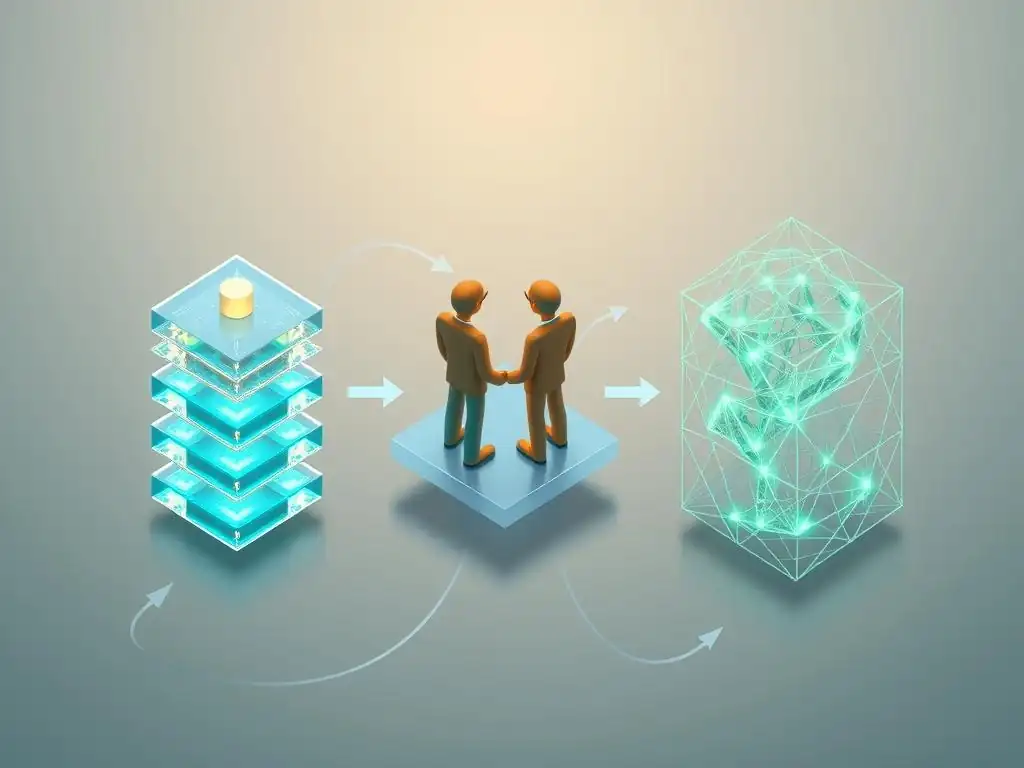
While state channels are a powerful Layer-2 scaling solution, they are not the only approach. Understanding how they compare to other prominent Layer-2 solutions like Plasma and Rollups is crucial for choosing the right solution for specific dApp needs and optimizing decentralized app user experience.
State Channels vs. Plasma: A Comparison of Approaches
State channels and Plasma are both Layer-2 scaling solutions, but they employ different approaches. State channels focus on private, off-chain interactions between a limited number of participants, secured by an on-chain contract. They are ideal for applications with frequent interactions between known parties. Plasma, on the other hand, is a more general-purpose scaling solution that aims to create "child chains" that are anchored to the main blockchain.
Plasma chains can handle a wider range of transactions and participants than state channels. However, Plasma often involves more complex on-chain interactions for data availability and fraud proofs. In terms of user experience, state channels generally offer faster transaction speeds and lower latency for applications they are suited for, as they minimize on-chain interactions to channel opening and closing. Plasma, while scalable, might still have slightly higher latency compared to state channels due to the need for data availability and potential fraud proof challenges on the main chain.
Choosing between state channels and Plasma depends on the specific dApp requirements. For applications requiring high-frequency interactions between known users, state channels often provide a superior decentralized app user experience. For more general-purpose scaling needs and a larger number of participants, Plasma might be a more suitable option, albeit with potentially slightly higher latency.
State Channels vs. Rollups: Evaluating Trade-offs
Rollups are another prominent Layer-2 scaling solution that, like state channels and Plasma, aims to improve scalability and user experience. Rollups process transactions off-chain but, unlike state channels, they post transaction data (or a compressed version of it) back to the main chain. This "rollup" of transactions allows for higher throughput while still benefiting from the security of the main chain. There are two main types of rollups: Optimistic Rollups and Zero-Knowledge (ZK) Rollups.
Optimistic Rollups assume transactions are valid unless proven otherwise, relying on fraud proofs to challenge invalid transactions. ZK-Rollups use cryptographic proofs (zero-knowledge proofs) to ensure transaction validity without needing fraud proofs. State channels and rollups differ significantly in their approach. State channels prioritize speed and low fees for specific interactions between known participants, while rollups aim for more general-purpose scalability applicable to a wider range of applications.
Rollups generally offer higher throughput than state channels and can handle a larger number of participants, but they might have slightly higher latency compared to state channels, especially ZK-Rollups due to the computational overhead of generating ZK-proofs. For decentralized app user experience, state channels excel in scenarios requiring near-instantaneous interactions and minimal fees for specific use cases. Rollups offer a more general scaling solution with a good balance of scalability and security, suitable for a broader range of dApps but potentially with slightly higher latency compared to state channels in their optimal use cases.
Choosing the Right Layer-2 Solution for Your dApp
Selecting the appropriate Layer-2 scaling solution is crucial for optimizing the decentralized app user experience and achieving the desired performance and scalability. State channels, Plasma, and Rollups each have their strengths and weaknesses, making them suitable for different types of dApps. For dApps that involve frequent interactions between a relatively small and known set of users, such as payment applications, gaming, and certain types of DEXs, state channels are often an excellent choice.
They offer the lowest latency and minimal fees for these specific use cases, providing a superior decentralized app user experience. For applications requiring more general-purpose scalability and handling a larger number of users and transaction types, Rollups or Plasma might be more appropriate. Rollups, especially Optimistic Rollups, offer a good balance of scalability, security, and relatively lower implementation complexity.
Plasma can also handle a wider range of transactions but might involve more complex data availability and fraud proof mechanisms. The choice ultimately depends on a careful evaluation of the dApp's specific requirements, including the expected transaction volume, user interaction patterns, security needs, and desired user experience. Understanding the trade-offs between these Layer-2 solutions is essential for developers aiming to build scalable and user-friendly decentralized applications.
Implementing State Channels: Technical Considerations
Implementing state channels effectively requires careful consideration of various technical aspects, from smart contract design to client-side integration and security protocols. A solid understanding of these considerations is crucial for building robust and user-friendly dApps utilizing state channels.
Smart Contract Development: Designing the On-Chain Logic
Developing the on-chain smart contract for a state channel is a critical step. The contract must be meticulously designed to handle channel opening, state updates, dispute resolution, and channel closing securely and efficiently. Key aspects of smart contract development include defining the state channel's logic, such as the rules for state transitions, validation of signatures, and the dispute resolution mechanism.
The contract should also manage fund deposits and withdrawals securely, ensuring that funds are locked in escrow during the channel's lifespan and correctly distributed upon settlement. Furthermore, gas optimization is crucial for the on-chain contract to minimize transaction fees for channel opening and closing.
Smart contract developers need expertise in blockchain programming languages like Solidity (for Ethereum) and a deep understanding of state channel concepts to build secure and efficient on-chain contracts that form the foundation of a robust state channel implementation. Thorough testing and auditing of the smart contract are essential to prevent vulnerabilities and ensure the integrity of the state channel system.
Client-Side Integration: Connecting to the State Channel
Client-side integration is equally important for providing a seamless decentralized app user experience with state channels. The client application, whether a web app, mobile app, or desktop application, needs to interact with the on-chain smart contract to initiate channel opening and closing. Crucially, it must also handle off-chain communication with other channel participants to exchange signed state updates.
This typically involves implementing protocols for message signing, verification, and secure peer-to-peer communication. Developers need to choose appropriate libraries and frameworks for client-side blockchain interaction and state channel management. User interface (UI) and user experience (UX) design are also critical aspects of client-side integration.
The application should abstract away the complexities of state channels from the user, providing a simple and intuitive interface for interacting with the dApp, even though the underlying technology is leveraging off-chain transactions. A well-designed client-side integration is essential for making state channels accessible and user-friendly for a broader audience.
Security Considerations: Protecting Against Attacks
Security is paramount when implementing state channels. While state channels enhance scalability, they also introduce new security considerations that developers must address. One potential vulnerability is collusion between participants. If a majority of participants in a multi-party state channel collude, they might attempt to defraud other participants.
Robust channel protocols and smart contract logic are needed to mitigate collusion risks. Another consideration is denial-of-service (DoS) attacks. Attackers might attempt to flood a state channel with invalid state updates or disrupt off-chain communication channels.
Implementing rate limiting, input validation, and secure communication protocols can help mitigate DoS risks. Furthermore, the on-chain smart contract itself must be thoroughly audited and tested to prevent vulnerabilities that could be exploited to steal funds or disrupt channel operations. Security best practices, including secure coding principles, formal verification, and regular security audits, are essential throughout the state channel implementation process to ensure the safety of user funds and the integrity of the dApp.
Challenges and Limitations of State Channels
Despite their numerous benefits, state channels are not a silver bullet and come with their own set of challenges and limitations that need to be considered when evaluating their suitability for a particular decentralized application and aiming for optimal decentralized app user experience.
Complexity of Implementation: Requiring Specialized Expertise
Implementing state channels can be significantly more complex than developing traditional on-chain dApps or even some other Layer-2 solutions. It requires specialized expertise in smart contract development, off-chain communication protocols, cryptography, and security best practices. Developers need a deep understanding of state channel mechanics and the underlying blockchain platform.
Building robust and secure state channel implementations demands a higher level of technical sophistication compared to simpler dApp development. This complexity can increase development time, costs, and the potential for errors if not handled carefully. Finding developers with the necessary skillset and experience in state channel development can also be a challenge, potentially hindering the widespread adoption of this technology despite its user experience benefits.
Upfront Capital Lockup: Initial Funding Requirements
State channels typically require participants to lock up capital upfront when opening a channel. This initial funding is deposited into the on-chain smart contract and acts as collateral for transactions within the channel. This capital lockup can be a barrier to entry for some users, especially those with limited capital or those hesitant to lock up their funds for extended periods.
The amount of capital required to open a channel depends on the anticipated transaction volume and value within the channel. While this locked capital provides security and ensures the integrity of the state channel, it also represents an opportunity cost for users, as these funds are not available for other purposes while locked in the channel. This upfront capital requirement can limit the accessibility of state channels for certain user segments and use cases, impacting the overall decentralized app user experience for those sensitive to capital lockup.
Limited Computational Capabilities: Suitable for Specific Use Cases
State channels are primarily designed for facilitating transactions and state updates, but they have limited computational capabilities for complex computations or smart contract logic within the off-chain channel itself. While state channels can efficiently handle frequent transactions and state changes, they are not well-suited for applications requiring extensive off-chain computations or complex smart contract execution within the channel. The primary focus of state channels is on improving transaction throughput and reducing fees, not on off-chain computation.
Applications requiring heavy computation or complex smart contract logic might be better suited for other scaling solutions or a hybrid approach. This limitation restricts the types of dApps that can effectively leverage state channels. They are most effective for use cases focused on payments, simple state updates, or interactions that do not demand significant off-chain computational power.
Potential for Channel Congestion: Managing High Transaction Volume
While state channels improve scalability compared to on-chain transactions, individual channels can still experience congestion if the transaction volume within a single channel becomes excessively high. Each state channel has a limited capacity, and if the number of transactions within a channel exceeds this capacity, it can lead to delays and reduced responsiveness, negating some of the user experience benefits. This potential for channel congestion needs to be considered when designing dApps using state channels, especially for applications expecting very high transaction volumes within individual channels.
Strategies for managing channel congestion might include dynamic channel resizing, load balancing across multiple channels, or alternative scaling solutions for extremely high-throughput scenarios. Careful planning and monitoring of channel capacity are essential to ensure a consistently smooth decentralized app user experience, even under high transaction load conditions.
The Future of State Channels and dApp User Experience
State channel technology is continuously evolving, with ongoing development and innovations pushing the boundaries of its capabilities and solidifying its role in enhancing decentralized app user experience and the broader blockchain ecosystem.
Ongoing Development and Innovations in State Channel Technology
Research and development in state channel technology are actively ongoing, focusing on addressing current limitations and expanding its functionalities. Innovations include advancements in multi-party state channels to accommodate more participants in a single channel efficiently. Researchers are also exploring more sophisticated dispute resolution mechanisms to handle complex scenarios and reduce on-chain dispute resolution overhead.
Furthermore, interoperability between different state channel implementations and across different blockchain platforms is an area of active development. Improvements in channel management, such as dynamic channel resizing and automated channel creation and closure, are also being explored to enhance efficiency and user convenience. These ongoing developments aim to make state channels more robust, versatile, and easier to implement, further improving the decentralized app user experience and broadening their applicability across various dApp use cases.
The Role of State Channels in the Broader Blockchain Ecosystem
State channels are poised to play an increasingly significant role in the broader blockchain ecosystem as Layer-2 scaling solutions become essential for mainstream adoption. As dApps strive to offer user experiences comparable to centralized applications, technologies like state channels will be crucial for overcoming scalability limitations and enhancing responsiveness. State channels are particularly well-positioned to support use cases requiring frequent interactions and low-value transactions, such as micro-payments, gaming, and certain types of decentralized finance (DeFi) applications.
Their ability to offload transaction processing from the main chain contributes to overall network scalability and reduces congestion, benefiting the entire blockchain ecosystem. As the blockchain space matures and user expectations rise, state channels, alongside other Layer-2 solutions, will become indispensable components of a scalable and user-friendly decentralized web.
State Channels: Paving the Way for Mass Adoption of Decentralized Applications
By addressing the critical user experience challenges of slow transaction speeds and high fees, state channels are directly contributing to paving the way for mass adoption of decentralized applications. They enable dApps to offer near-instantaneous interactions and minimal transaction costs, making them more competitive with centralized alternatives in terms of user experience. This improved user experience is crucial for attracting a broader user base beyond just blockchain enthusiasts and early adopters.
As state channel technology matures and becomes more readily available and easier to implement, we can expect to see wider adoption of state channels in various dApp categories. This increased adoption will lead to a more user-friendly decentralized web, accelerating the transition towards a future where decentralized applications are seamlessly integrated into everyday digital experiences, driven by the enhanced decentralized app user experience made possible by state channels.
Conclusion: State Channels - A Key to Unlocking a Better dApp User Experience
State channels represent a significant advancement in Layer-2 scaling solutions, offering a powerful approach to enhance the user experience of decentralized applications. By enabling fast, low-fee, and scalable off-chain transactions, they directly address the critical limitations of traditional on-chain dApps. While challenges and limitations exist, ongoing development and innovation are continuously expanding the capabilities and usability of state channels.
As the blockchain ecosystem evolves, state channels are poised to play a pivotal role in unlocking a better decentralized app user experience and driving the mass adoption of decentralized technologies. Their ability to provide a smoother, more responsive, and cost-effective dApp experience makes them a key technology in bridging the gap between the promise of decentralization and the user expectations of the modern digital world.
Frequently Asked Questions
What are state channels and how do they improve the decentralized app user experience?
State channels are a scaling solution that enables transactions to occur off-chain, significantly reducing latency and transaction fees. This leads to a smoother and faster user experience compared to on-chain transactions.
How do state channels differ from traditional on-chain transactions in terms of user experience?
Traditional on-chain transactions require every interaction to be validated by the entire blockchain network, leading to delays. State channels bypass this process, allowing for near-instantaneous transactions and a more responsive user interface.
What are some common use cases where state channels can significantly enhance the decentralized app user experience?
State channels are particularly useful in applications requiring frequent and fast interactions, such as online gaming, micro-payments, and real-time data streaming, resulting in a much better decentralized app user experience.
What are the potential drawbacks or limitations of using state channels for improving the decentralized app user experience?
State channels typically require users to lock up funds within the channel and rely on participants remaining honest. Complex channel management and potential security vulnerabilities are also considerations.
How do state channels contribute to the broader adoption of decentralized applications by improving the decentralized app user experience?
By addressing the scalability limitations of blockchain, state channels make dApps more user-friendly and accessible. This enhanced decentralized app user experience is crucial for attracting a wider user base and driving adoption.
Final Reflection: Empowering Decentralized App User Experience
The exploration of state channels reveals a powerful truth: improving decentralized app user experience is not just a technical challenge, but a fundamental requirement for widespread adoption. The limitations of on-chain transactions, from latency to cost, have long hindered the potential of decentralized applications. State channels offer a viable solution, enabling faster, cheaper, and more seamless interactions, ultimately paving the way for a more user-friendly decentralized future.
This pursuit of a better user experience profoundly impacts the cultural landscape surrounding blockchain technology. It shifts the focus from purely technical innovation to practical application and user-centric design, acknowledging that technology's true value lies in its accessibility and ease of use. The best user interface is no interface.
This quote, often attributed to design principles, resonates deeply here, highlighting the goal of making decentralized applications feel intuitive and effortless, hiding the underlying complexity and empowering users to interact seamlessly with the blockchain.
Now, consider the implications of this enhanced user experience in your own life. How can you, as a developer, a user, or simply an interested observer, contribute to this evolution? Embrace the principles of user-centric design, advocate for solutions like state channels, and demand a more intuitive and accessible decentralized future. The power to shape this future lies in our collective commitment to prioritizing the user experience, ensuring that decentralized applications become a truly empowering force for all.
Unlock the Power of State Channels: Supercharge Your dApp Experience!
Thank you for exploring how state channels are transforming decentralized applications. We hope you've gained valuable insights into how this technology can enable faster, more seamless user experiences. Now, it's time to take action!
Here’s what you can do next:
- Experiment with deploying a simple state channel on a test network. Getting hands-on experience will deepen your understanding and reveal the true potential of this technology.
- Share your thoughts on the future of state channels in the comments below. Let’s discuss the challenges and opportunities this innovation offers!
- Spread the word by sharing this article with your network to help others discover the benefits of state channels. Together, we can build a better decentralized future!
Is there a specific dApp you believe could benefit most from implementing state channels? Let us know in the comments!
Leave a Reply