
Blockchain Security Audit Reporting for Stakeholders: Communicating Security Posture Effectively


Welcome to Blockchain Trends, your premier source for understanding the revolutionary impact of blockchain technology. Are you a stakeholder struggling to decipher the complexities of blockchain security audit reporting? Uncover how to effectively communicate your security posture and build trust within the decentralized ecosystem. Dive in to explore the crucial elements of clear and concise reporting, and discover how it can safeguard your blockchain initiatives. The future of blockchain is secure, but only with transparent and insightful communication – let's unlock it together!
Blockchain Security Audit Reporting for Stakeholders: Communicating Security Posture Effectively
- Understanding the Importance of Blockchain Security Audit Reporting for Stakeholders
- Key Elements of an Effective Blockchain Security Audit Report
- Structuring Your Blockchain Security Audit Report for Maximum Impact
- Tailoring Your Blockchain Security Audit Report to Different Stakeholders
- Best Practices for Writing a Clear and Concise Blockchain Security Audit Report
- Tools and Technologies for Generating and Sharing Blockchain Security Audit Reports
- Case Studies: Examples of Effective Blockchain Security Audit Reporting
- Future Trends in Blockchain Security Audit Reporting
- Measuring the Effectiveness of Your Blockchain Security Audit Reporting
- Enhancing Stakeholder Engagement Through Transparent Security Reporting
- Conclusion: The Value of Proactive and Transparent Blockchain Security Audit Reporting for Stakeholders
-
Frequently Asked Questions
- How can blockchain security audit reports be made more accessible to non-technical stakeholders?
- What are the key elements that should be included in a blockchain security audit report for stakeholders?
- Why is transparent communication about blockchain security audits important for building trust with stakeholders?
- How often should blockchain security audits be conducted, and how should the findings be reported to stakeholders?
- What role do stakeholders play in the blockchain security audit process and the subsequent reporting?
- Final Reflection: Bridging Trust Through Transparency
- Unlock Deeper Insights: Transform Audit Reports into Action!
Understanding the Importance of Blockchain Security Audit Reporting for Stakeholders
Why Clear Communication of Security Posture Matters in Blockchain
In the rapidly evolving landscape of blockchain technology, security is paramount. Unlike traditional systems, blockchain's decentralized and immutable nature introduces unique security challenges. Clear communication of security posture through audit reports is crucial because it provides stakeholders with a transparent view of the risks and vulnerabilities inherent in blockchain projects.
A lack of clarity can lead to misunderstandings, erode trust, and ultimately hinder adoption. For instance, the infamous DAO hack in 2016, which resulted in the theft of approximately $50 million in Ether, underscored the devastating consequences of poorly understood smart contract vulnerabilities. If stakeholders had been better informed about the security posture of the DAO through comprehensive and understandable reporting, the incident, or at least its impact, might have been mitigated.
Effective communication about security posture is not just about disclosing vulnerabilities; it's about building confidence and fostering informed decision-making. Stakeholders, ranging from investors and users to regulators and partners, need to understand the security measures in place, the potential risks that remain, and the ongoing efforts to maintain a robust security environment. Consider a DeFi protocol aiming to attract users and institutional investment.
A well-structured and easily digestible security audit report demonstrating proactive security measures and transparent risk management is essential to instill confidence and encourage participation. Without clear communication, stakeholders may perceive blockchain projects as inherently risky and avoid engagement, regardless of the underlying technological innovation.
The Role of Audit Reports in Building Stakeholder Trust
Blockchain security audit reports serve as a cornerstone for building trust among stakeholders. In an ecosystem often characterized by pseudonymity and complex technical details, these reports offer an independent and objective assessment of a blockchain system's security. Trust is especially critical in blockchain, where immutability means that security breaches can have lasting and irreversible consequences.
A comprehensive audit report, conducted by a reputable third-party security firm, acts as a validation of a project's security claims and demonstrates a commitment to proactive risk management. For example, numerous DeFi platforms now prominently feature links to their security audit reports on their websites, understanding that this transparency is a key factor in attracting and retaining users.
Furthermore, audit reports facilitate informed decision-making by stakeholders. Investors can use these reports to evaluate the security risks associated with a project before committing capital. Users can assess the safety of interacting with a decentralized application (dApp) or protocol. Regulators can leverage audit findings to understand the security landscape of blockchain technologies and formulate appropriate guidelines.
Imagine a venture capital firm evaluating two competing blockchain projects. Project A provides a detailed security audit report outlining identified vulnerabilities and remediation steps, while Project B offers only vague assurances about security. The availability of a clear audit report in Project A significantly enhances its credibility and attractiveness for investment, showcasing the direct impact of transparent security reporting on stakeholder trust and engagement.
Key Elements of an Effective Blockchain Security Audit Report
Defining the Scope and Objectives of the Blockchain Security Audit
Before diving into the specifics of a blockchain security audit report, it's crucial to understand the scope and objectives of the audit itself. The scope defines the boundaries of the assessment, clearly outlining which components of the blockchain system are being examined. This could range from specific smart contracts to the entire consensus mechanism or network infrastructure.
For instance, an audit scope might be limited to the smart contracts governing a new token launch on Ethereum, or it could encompass a broader assessment of a Layer-2 scaling solution's security architecture. Clearly defining the scope prevents misunderstandings and ensures that the audit focuses on the most critical aspects of the system.
The objectives of the audit dictate what the audit aims to achieve. Common objectives include identifying vulnerabilities, assessing compliance with security best practices, evaluating the effectiveness of existing security controls, and providing recommendations for improvement. For example, the objective of a smart contract audit might be to identify vulnerabilities such as reentrancy attacks, integer overflows, or gas optimization issues.
Alternatively, an audit of a permissioned blockchain used by a consortium of banks might focus on assessing compliance with industry security standards like ISO 27001 or SOC 2. Clearly stated objectives provide direction for the audit process and ensure that the report addresses the specific concerns and requirements of stakeholders.
Identifying Key Stakeholders and Their Information Needs
Effective blockchain security audit reporting necessitates a clear understanding of the intended audience – the stakeholders. Stakeholders in a blockchain project can be diverse, ranging from technical teams and developers to business executives, investors, users, and regulatory bodies. Each group has distinct information needs and levels of technical understanding. For example, developers require detailed technical findings, including code snippets and specific vulnerability descriptions, to effectively remediate issues. Business executives, on the other hand, might be more interested in a high-level overview of the overall security posture, the business risks associated with vulnerabilities, and the strategic recommendations for improvement.
Understanding these varied needs is crucial for tailoring the audit report to maximize its impact and effectiveness. An audit report intended for a non-technical audience should prioritize clear, concise language, avoid technical jargon, and focus on the business implications of security findings. Conversely, a report intended for a technical audience should delve into the technical details, providing sufficient information for developers to understand and address the identified vulnerabilities.
Consider a scenario where a DeFi protocol is audited. The report should include a section specifically tailored for the development team with detailed technical findings, and a separate executive summary for investors and users that focuses on the overall risk level and the platform's commitment to security. Failing to address the specific information needs of different stakeholder groups can render the audit report ineffective, regardless of the technical rigor of the audit itself.
Structuring Your Blockchain Security Audit Report for Maximum Impact
Executive Summary: Highlighting Key Findings and Recommendations
The executive summary is arguably the most critical section of a blockchain security audit report, especially for stakeholders who may not have the time or technical expertise to delve into the full report. This section should provide a concise overview of the audit's scope, methodology, key findings, and actionable recommendations. It should be written in clear, non-technical language and highlight the most critical security issues and their potential business impact. Think of it as a "too long; didn't read" version for busy executives and non-technical stakeholders.
For instance, an executive summary might begin with a statement like: "This report summarizes the security audit of [Project Name]'s smart contracts. The audit identified [Number] high-severity, [Number] medium-severity, and [Number] low-severity vulnerabilities. The overall security posture is assessed as [Risk Level - e.g., Moderate], with key recommendations including [List of 2-3 key recommendations]."
A well-crafted executive summary should immediately capture the reader's attention and provide them with a clear understanding of the project's security status and the necessary next steps. It should highlight both positive findings, such as strong security controls in place, and areas requiring immediate attention. For example, if an audit identifies a critical vulnerability that could lead to significant financial loss, this should be prominently featured in the executive summary.
Conversely, if the audit also reveals robust security practices in other areas, these strengths should also be acknowledged to provide a balanced and comprehensive overview. The executive summary serves as the first impression of the audit report and plays a crucial role in shaping stakeholder perception of the project's security posture.
Detailed Findings: Presenting Technical Details Clearly and Concisely
Following the executive summary, the "Detailed Findings" section provides the technical depth necessary for developers and security professionals to understand and address the identified vulnerabilities. This section should present each finding in a structured and organized manner, typically categorized by severity level (e.g., Critical, High, Medium, Low).
For each finding, the report should include a clear description of the vulnerability, its potential impact, the location in the codebase (e.g., specific smart contract and line number), and detailed steps to reproduce the vulnerability, if applicable. For instance, a detailed finding might describe a reentrancy vulnerability in a specific smart contract function, explaining how an attacker could exploit it to drain funds, and pinpointing the vulnerable code snippet.
Clarity and conciseness are paramount in this section. While technical detail is essential, it should be presented in a manner that is easily understandable by technical stakeholders. Avoid overly complex jargon and ensure that each finding is explained logically and systematically. Code snippets, where relevant, should be clearly formatted and highlighted to draw attention to the vulnerable code.
Furthermore, consider using diagrams or flowcharts to illustrate complex vulnerabilities or attack vectors. For example, when describing a complex vulnerability like a consensus mechanism flaw, a diagram illustrating the attack flow can significantly enhance understanding. The goal of the "Detailed Findings" section is to equip technical stakeholders with all the necessary information to effectively remediate the identified security issues.
Risk Assessment and Mitigation Strategies: Addressing Potential Vulnerabilities
A crucial component of a blockchain security audit report is the risk assessment, which evaluates the potential impact and likelihood of each identified vulnerability being exploited. This section goes beyond simply listing vulnerabilities; it contextualizes them within a risk management framework.
Risk assessment typically involves assigning a risk level (e.g., Critical, High, Medium, Low) to each finding based on factors such as the potential financial loss, reputational damage, or disruption of service that could result from exploitation. For example, a vulnerability that allows an attacker to steal user funds would be rated as a higher risk than a vulnerability that could lead to a denial-of-service attack with limited financial impact.
Furthermore, the report should propose mitigation strategies for each identified vulnerability. These strategies should be practical, actionable, and tailored to the specific context of the blockchain project. Mitigation strategies can range from code fixes and architectural changes to implementing additional security controls or modifying operational procedures.
For instance, for a reentrancy vulnerability, the mitigation strategy might involve implementing checks-effects-interactions pattern or using reentrancy guards. For a vulnerability in a consensus mechanism, the mitigation might require modifying the consensus algorithm or implementing additional validation steps. Providing clear and actionable mitigation strategies demonstrates the audit's value beyond simply identifying problems; it offers practical solutions to improve the project's security posture.
Remediation Status and Progress Tracking: Demonstrating Continuous Improvement
An effective blockchain security audit report should not be a one-off event but rather part of an ongoing security process. The "Remediation Status and Progress Tracking" section provides stakeholders with an update on the progress of addressing the vulnerabilities identified in previous audits. This section should clearly outline the status of each finding – whether it has been remediated, is in progress, or is yet to be addressed.
For findings that have been remediated, the report should ideally include evidence of successful remediation, such as re-testing results or updated code references. This demonstrates a commitment to continuous security improvement and provides stakeholders with confidence that security is being taken seriously.
Regular updates on remediation progress are essential for maintaining stakeholder trust and transparency. Consider a scenario where a blockchain project undergoes regular security audits. Subsequent audit reports should always include a section tracking the remediation status of findings from previous reports.
This demonstrates a proactive approach to security and allows stakeholders to see tangible progress over time. Furthermore, if certain vulnerabilities are not being remediated, the report should explain the reasons why, whether it's due to technical challenges, resource constraints, or a conscious risk acceptance decision. Transparency about remediation progress, even when challenges exist, is crucial for building long-term trust and fostering a culture of continuous security improvement.
Tailoring Your Blockchain Security Audit Report to Different Stakeholders
Communicating Security Risks to Non-Technical Stakeholders
Communicating technical security risks effectively to non-technical stakeholders, such as business executives, investors, and general users, requires a different approach than communicating with developers. The key is to translate technical jargon into business-relevant language, focusing on the potential business impact of security vulnerabilities rather than the technical details.
Instead of explaining complex cryptographic concepts or smart contract code vulnerabilities, the report should focus on the potential financial losses, reputational damage, regulatory fines, or disruption of services that could result from security breaches. For example, instead of saying "a reentrancy vulnerability in the withdrawal function," the report could state "a critical vulnerability that could allow attackers to steal user funds, potentially leading to significant financial losses and damage to user trust."
Visualizations, such as charts and graphs, can be particularly effective in conveying security risks to non-technical audiences. For instance, a risk matrix showing the likelihood and impact of different vulnerabilities can provide a quick and intuitive understanding of the overall risk landscape. Similarly, a chart showing the trend of security vulnerabilities over time can illustrate the project's progress in improving its security posture.
Furthermore, using analogies and real-world examples can help non-technical stakeholders grasp complex security concepts. For example, comparing a smart contract vulnerability to a loophole in a traditional financial contract can make the concept more relatable. The goal is to communicate security risks in a way that is understandable, relevant, and actionable for non-technical stakeholders, enabling them to make informed decisions about the project.
Providing Technical Details for Developers and Security Professionals
In contrast to non-technical stakeholders, developers and security professionals require detailed technical information to effectively address security vulnerabilities. For this audience, the audit report should delve into the technical specifics of each finding, providing sufficient information to understand, reproduce, and remediate the issues. This includes detailed descriptions of the vulnerabilities, code snippets showing the vulnerable code, steps to reproduce the vulnerability (if applicable), and technical recommendations for remediation. For instance, when describing a smart contract vulnerability, the report should include the specific smart contract address, function name, line numbers, and code snippets illustrating the vulnerability.
Furthermore, the report should adhere to established security frameworks and standards, such as the OWASP Top Ten or the Smart Contract Weakness Classification and Test Cases (SWC Registry). Referencing these standards provides a common language and context for technical stakeholders and facilitates communication and collaboration. The report should also clearly differentiate between different types of vulnerabilities, such as logical errors, cryptographic weaknesses, or gas optimization issues. Providing this level of technical detail ensures that developers and security professionals have all the necessary information to effectively address the identified vulnerabilities and improve the overall security of the blockchain system.
Meeting Regulatory Compliance Requirements with Your Audit Report
In an increasingly regulated blockchain landscape, security audit reports play a crucial role in demonstrating regulatory compliance. Depending on the jurisdiction and the nature of the blockchain project, various regulations may require security audits or specific security measures. For instance, regulations related to data privacy (like GDPR) or financial services may mandate security assessments and reporting. A well-structured security audit report can serve as evidence of due diligence and proactive risk management, demonstrating compliance with these regulatory requirements.
To ensure regulatory relevance, the audit report should explicitly address the relevant regulatory frameworks and standards. This might involve mapping audit findings to specific regulatory requirements or including a dedicated section on compliance. For example, if a blockchain project is subject to GDPR, the audit report should address how the project protects personal data and complies with GDPR security requirements.
Similarly, for financial applications, the report should address compliance with relevant financial regulations, such as KYC/AML requirements or security standards for financial institutions. By explicitly addressing regulatory compliance, the audit report becomes a valuable tool for demonstrating accountability and building trust with regulators, in addition to other stakeholders.
Best Practices for Writing a Clear and Concise Blockchain Security Audit Report
Avoiding Technical Jargon and Using Plain Language
One of the most critical best practices for writing effective blockchain security audit reports is to avoid excessive technical jargon and prioritize plain language. While technical accuracy is essential, the report should be understandable to a broad audience, including non-technical stakeholders. Overuse of technical terms can create confusion, alienate readers, and ultimately diminish the report's impact.
Instead of using highly specialized terminology, opt for clear and concise language that conveys the meaning effectively to a wider audience. For instance, instead of saying "the system is vulnerable to a race condition attack due to insufficient mutex implementation," the report could state "the system is vulnerable to an attack where attackers can manipulate the order of operations to gain unauthorized access because of a flaw in how concurrent processes are managed."
When technical terms are unavoidable, ensure they are clearly defined or explained in a glossary or appendix. Consider using analogies or metaphors to simplify complex technical concepts. For example, explaining a cryptographic hash function as a "digital fingerprint" can be more easily understood by a non-technical audience than a detailed mathematical explanation.
Furthermore, ask someone unfamiliar with blockchain technology to review a draft of the report and provide feedback on its clarity and readability. This can help identify areas where technical jargon needs to be simplified or explained more effectively. Prioritizing plain language ensures that the audit report is accessible and impactful for all stakeholders, regardless of their technical background.
Visualizing Data and Trends for Easier Understanding
Visualizations are powerful tools for enhancing the clarity and understanding of blockchain security audit reports. Presenting data and trends visually can make complex information more digestible and engaging, especially for non-technical stakeholders. Charts, graphs, and diagrams can effectively communicate key findings, risk assessments, and remediation progress. For instance, a bar chart can be used to illustrate the distribution of vulnerabilities by severity level, or a line graph can show the trend of vulnerability counts over multiple audits. A risk matrix can visually represent the likelihood and impact of different vulnerabilities, providing a quick overview of the overall risk landscape.
Furthermore, diagrams can be used to illustrate complex system architectures, attack vectors, or vulnerability details. For example, a flowchart can depict the steps of a complex attack scenario, or a diagram can illustrate the architecture of a blockchain network and highlight the location of identified vulnerabilities. When using visualizations, ensure they are clearly labeled, easy to understand, and directly relevant to the information being conveyed.
Avoid overly complex or cluttered visualizations that can confuse rather than clarify. The strategic use of visualizations can significantly enhance the readability and impact of blockchain security audit reports, making them more accessible and informative for all stakeholders.
Including Actionable Recommendations and Next Steps
A blockchain security audit report is not truly effective unless it includes actionable recommendations and clear next steps. Simply identifying vulnerabilities is not enough; the report should guide stakeholders on how to address these vulnerabilities and improve their overall security posture. Recommendations should be specific, practical, and prioritized based on the severity of the identified risks and the project's business objectives.
For each significant vulnerability, the report should provide clear and actionable recommendations for remediation, outlining the steps that need to be taken to fix the issue. For example, a recommendation might state: "Implement input validation on the 'transfer' function to prevent integer overflows."
Furthermore, the report should outline the next steps that stakeholders should take after receiving the audit report. This might include prioritizing remediation efforts, assigning responsibility for addressing specific vulnerabilities, establishing a timeline for remediation, and scheduling follow-up audits to verify the effectiveness of remediation efforts. A well-defined set of actionable recommendations and next steps transforms the audit report from a static document into a roadmap for security improvement. It demonstrates the audit's value beyond simply identifying problems; it provides practical guidance for enhancing the project's security and building a more resilient blockchain system.
Tools and Technologies for Generating and Sharing Blockchain Security Audit Reports
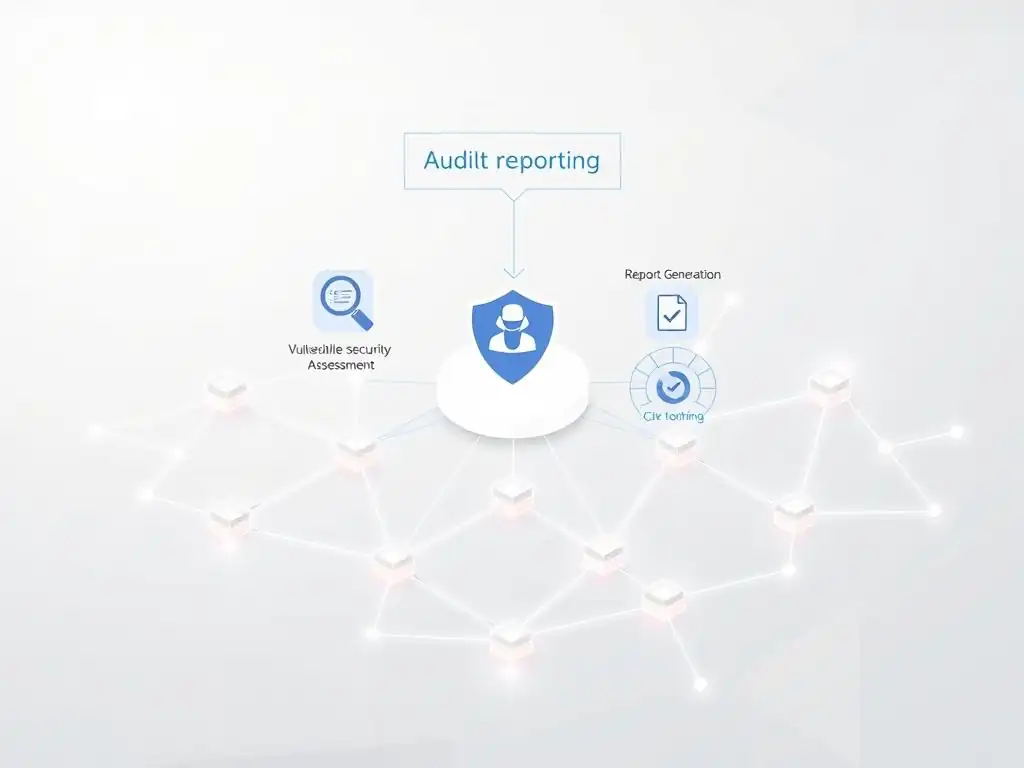
Static Analysis Tools
Static analysis tools are automated software applications that analyze source code without actually executing it. In the context of blockchain security audits, these tools are invaluable for identifying potential vulnerabilities in smart contracts and other blockchain components. They can detect a wide range of common security flaws, such as reentrancy vulnerabilities, integer overflows, gas optimization issues, and violations of coding best practices.
Popular static analysis tools for smart contracts include Slither, Mythril, and Securify. These tools parse the source code, typically written in Solidity or Vyper, and apply a set of predefined rules and patterns to identify potential security weaknesses.
Static analysis tools are particularly effective at quickly scanning large codebases and identifying common vulnerabilities that might be missed during manual code reviews. They can also help enforce coding standards and best practices, contributing to improved code quality and reduced security risks. However, it's important to note that static analysis tools are not a silver bullet.
They may produce false positives (flagging issues that are not actually vulnerabilities) and false negatives (missing real vulnerabilities). Therefore, static analysis should be used as a complement to, rather than a replacement for, manual security reviews and other testing methodologies. The output from static analysis tools often forms a valuable input to blockchain security audit reports, providing a structured and automated way to identify potential security concerns.
Dynamic Analysis Tools
Dynamic analysis tools, in contrast to static analysis, analyze software by executing it in a controlled environment. In blockchain security auditing, dynamic analysis is used to observe the behavior of smart contracts and blockchain systems during runtime, identifying vulnerabilities that may not be apparent from static code analysis alone.
This can involve techniques like fuzzing, which automatically generates a large number of test inputs to try and trigger unexpected behavior or crashes, and symbolic execution, which explores all possible execution paths of a program to identify potential vulnerabilities. Tools like Echidna and Foundry's Fuzzing capabilities are examples of dynamic analysis tools used in smart contract auditing.
Dynamic analysis is particularly effective at identifying vulnerabilities related to runtime behavior, such as gas exhaustion attacks, denial-of-service vulnerabilities, and logical flaws that only manifest under specific execution conditions. It can also help validate the effectiveness of security controls and identify vulnerabilities that are difficult to detect through static analysis alone. Similar to static analysis, dynamic analysis is not a complete solution on its own.
It requires careful setup, configuration, and interpretation of results. However, when used in conjunction with other security testing methodologies, dynamic analysis tools significantly enhance the depth and coverage of blockchain security audits, providing valuable insights that can be incorporated into audit reports.
Security Information and Event Management (SIEM) Systems
Security Information and Event Management (SIEM) systems play a crucial role in the ongoing monitoring and security management of blockchain systems, and their data can be valuable for generating security audit reports, particularly for operational security aspects. SIEM systems collect and analyze security logs and events from various sources across a blockchain network, such as nodes, applications, and infrastructure components.
They provide real-time visibility into security events, detect anomalies and suspicious activity, and generate alerts for potential security incidents. While not directly used to audit smart contract code, SIEM systems are essential for monitoring the operational security of blockchain deployments and identifying security incidents in real-time.
Data from SIEM systems can be used to generate reports on security events, incident trends, and overall security posture over time. These reports can be included as part of broader blockchain security audit reports, particularly for enterprise blockchain deployments where operational security is a critical concern. For example, a SIEM system might detect and report on unusual access patterns to a private blockchain network, potential denial-of-service attacks, or unauthorized modifications to system configurations.
These operational security insights complement the findings from code audits and penetration testing, providing a more holistic view of the blockchain system's security posture. SIEM systems are becoming increasingly important in blockchain security, and their data is valuable for generating comprehensive and informative security audit reports.
Secure Report Sharing Platforms
Securely sharing sensitive blockchain security audit reports is paramount to maintain confidentiality and prevent unauthorized access to potentially vulnerable information. Using secure report sharing platforms is a best practice to ensure that audit reports are only accessible to authorized stakeholders. These platforms typically offer features such as encryption, access controls, audit logs, and secure authentication mechanisms to protect sensitive information. Instead of relying on email or unsecured file sharing methods, organizations should utilize dedicated platforms designed for secure document sharing and collaboration.
Several types of secure report sharing platforms are available, ranging from enterprise-grade document management systems to specialized security collaboration platforms. These platforms often allow for granular access controls, enabling organizations to specify exactly who can view, download, or modify audit reports. Encryption ensures that reports are protected both in transit and at rest, minimizing the risk of data breaches.
Audit logs provide a record of who accessed the report and when, enhancing accountability and traceability. Using secure report sharing platforms demonstrates a commitment to data security and confidentiality, which is especially important when dealing with sensitive security audit findings. Choosing a platform that meets the specific security requirements of the blockchain project and its stakeholders is crucial for responsible and secure audit report sharing.
Case Studies: Examples of Effective Blockchain Security Audit Reporting
Case Study: Reporting on a Smart Contract Audit for a DeFi Protocol
Consider a case study of a security audit report for a decentralized finance (DeFi) protocol. The DeFi protocol, let's call it "LendingPlatform," aims to provide lending and borrowing services using smart contracts on the Ethereum blockchain. Before launching to the public, LendingPlatform commissioned a security audit of its core smart contracts.
The audit report began with an executive summary that clearly stated the audit's scope (core lending smart contracts), methodology (static analysis, dynamic analysis, manual code review), and overall security assessment (Moderate Risk, with specific areas requiring attention). The summary highlighted key findings, including a medium-severity reentrancy vulnerability in the withdrawal function and several gas optimization opportunities. It also commended the team on their clear code and generally robust architecture.
The "Detailed Findings" section provided in-depth technical descriptions of each vulnerability, including code snippets, attack scenarios, and severity ratings. For the reentrancy vulnerability, the report detailed the exact lines of code affected, explained how an attacker could exploit it to potentially drain funds, and provided a clear remediation recommendation: implementing the checks-effects-interactions pattern. The "Risk Assessment and Mitigation Strategies" section assigned risk scores to each finding and offered practical mitigation steps for developers.
The report concluded with actionable recommendations, including prioritizing the remediation of the reentrancy vulnerability and conducting a follow-up audit after remediation. LendingPlatform publicly released a summary of the audit findings and confirmed they were actively working on remediation, demonstrating transparency and commitment to security, which positively impacted user confidence and platform adoption.
Case Study: Reporting on a Consensus Mechanism Audit for a Private Blockchain
Another case study involves a security audit report for a private blockchain used by a consortium of healthcare providers for secure data sharing. This private blockchain utilized a custom consensus mechanism designed for performance and privacy within the consortium.
The audit focused specifically on the security of this custom consensus mechanism, assessing its resilience to various attack vectors, such as Byzantine fault tolerance, Sybil attacks, and denial-of-service attacks. The audit report's executive summary highlighted the critical importance of the consensus mechanism for the overall security of the private blockchain and summarized the audit's findings, stating that the consensus mechanism demonstrated good resilience to common attacks but identified potential areas for improvement related to network partitioning scenarios.
The "Detailed Findings" section delved into the technical details of the consensus mechanism, analyzing its cryptographic protocols, message exchange patterns, and fault tolerance properties. It described potential attack scenarios and evaluated the mechanism's effectiveness in mitigating these threats. For example, the report analyzed the mechanism's behavior under network partitioning, where some nodes might become isolated from the rest of the network, and recommended enhancements to ensure continued operation and data consistency in such scenarios.
The "Risk Assessment and Mitigation Strategies" section provided recommendations for strengthening the consensus mechanism's resilience to network partitioning and improving its overall robustness. The consortium used the audit report to guide further development and testing of their consensus mechanism, enhancing the security and reliability of their private blockchain for sensitive healthcare data sharing.
Future Trends in Blockchain Security Audit Reporting
The Impact of Automation and AI on Audit Reporting
The future of blockchain security audit reporting is likely to be significantly shaped by advancements in automation and artificial intelligence (AI). AI-powered static analysis tools are becoming increasingly sophisticated, capable of identifying more complex vulnerabilities and reducing false positives. Machine learning algorithms can be trained to recognize patterns and anomalies in code, improving the accuracy and efficiency of automated vulnerability detection. This increased automation can lead to faster and more cost-effective security audits, making them more accessible to a wider range of blockchain projects.
AI can also assist in generating more insightful and actionable audit reports. AI-powered tools can analyze audit findings, prioritize vulnerabilities based on risk and impact, and even generate automated remediation recommendations. Natural Language Processing (NLP) can be used to automatically summarize audit findings, generate executive summaries, and tailor reports to different stakeholder audiences.
While AI will not replace human security experts entirely, it will augment their capabilities, enabling them to focus on more complex and nuanced security challenges, while AI handles routine tasks and automates report generation. The integration of AI and automation into blockchain security auditing promises to enhance the efficiency, accuracy, and accessibility of security audit reporting in the future.
The Growing Importance of Continuous Monitoring and Real-Time Reporting
Traditional security audits are often point-in-time assessments, providing a snapshot of a system's security posture at a specific moment. However, the dynamic and evolving nature of blockchain systems necessitates a shift towards continuous security monitoring and real-time reporting. Blockchain networks and applications are constantly being updated and modified, introducing new code and potential vulnerabilities. Continuous monitoring using SIEM systems and other security tools allows for the ongoing detection of security events and anomalies, providing real-time visibility into the security posture of the system.
Real-time security reporting enables faster incident response and proactive risk mitigation. Instead of waiting for periodic audit reports, stakeholders can receive immediate alerts about potential security issues, allowing them to take timely action to prevent or minimize damage. Dashboards and real-time reporting tools can provide a continuous view of key security metrics and KPIs, allowing stakeholders to track security posture over time and identify trends. The future of blockchain security audit reporting will likely involve a greater emphasis on continuous monitoring and real-time reporting, complementing traditional periodic audits and providing a more dynamic and responsive approach to security management.
Measuring the Effectiveness of Your Blockchain Security Audit Reporting
Tracking Key Metrics and KPIs
Measuring the effectiveness of blockchain security audit reporting is crucial to ensure that it is achieving its intended goals of improving security posture and enhancing stakeholder trust. Tracking key metrics and Key Performance Indicators (KPIs) can provide valuable insights into the impact and effectiveness of audit reporting efforts. One key metric is the number and severity of vulnerabilities identified in audits over time.
A decreasing trend in the number of high-severity vulnerabilities identified in subsequent audits can indicate improved code quality and security practices. Another important metric is the time taken to remediate identified vulnerabilities. Shorter remediation times demonstrate a proactive and responsive approach to security management.
Other relevant KPIs include stakeholder engagement with audit reports, measured by metrics such as report downloads, views, and feedback received. Positive feedback from stakeholders and increased engagement can indicate that the reports are clear, informative, and meeting their needs. Furthermore, tracking security incidents and breaches over time can provide a broader measure of the overall effectiveness of the security program, including audit reporting.
While security incidents are not solely determined by audit reporting, a decrease in successful attacks can suggest that security measures, including proactive auditing and reporting, are contributing to improved security outcomes. Regularly tracking and analyzing these metrics and KPIs allows organizations to assess the effectiveness of their blockchain security audit reporting efforts and identify areas for improvement.
Gathering Feedback from Stakeholders
In addition to tracking quantitative metrics, gathering qualitative feedback from stakeholders is essential for understanding the effectiveness of blockchain security audit reporting. Stakeholder feedback can provide valuable insights into the clarity, usefulness, and impact of audit reports from their perspectives. Surveys, interviews, and feedback forms can be used to collect stakeholder opinions on various aspects of the audit reporting process, such as the readability of reports, the relevance of findings, the clarity of recommendations, and the overall value of the reports.
Feedback should be gathered from diverse stakeholder groups, including technical teams, business executives, investors, and users, as each group may have different perspectives and information needs. Analyzing stakeholder feedback can identify areas where the audit reporting process can be improved, such as simplifying technical language, enhancing visualizations, or providing more actionable recommendations.
For example, if stakeholders consistently report that the technical details in the reports are too complex, this feedback can inform efforts to simplify the language or provide more context and explanations. Actively soliciting and incorporating stakeholder feedback ensures that blockchain security audit reporting is continuously improving and effectively meeting the needs of its intended audience.
Enhancing Stakeholder Engagement Through Transparent Security Reporting
Building a Culture of Security Awareness
Transparent blockchain security reporting is a powerful tool for building a culture of security awareness within an organization and among its stakeholders. Openly sharing security audit findings, even when vulnerabilities are identified, demonstrates a commitment to transparency and proactive risk management. This transparency can foster a culture where security is not seen as an afterthought but rather as an integral part of the project's development and operation. When stakeholders are informed about security risks and the measures being taken to address them, they become more aware of the importance of security and more likely to engage in secure practices.
Transparent reporting can also help educate stakeholders about blockchain security best practices and common vulnerabilities. By publicly sharing audit reports (or summaries thereof, while protecting sensitive details), organizations can contribute to the broader blockchain security community and raise awareness about important security considerations. This can lead to a more informed and security-conscious ecosystem overall. Furthermore, involving stakeholders in the security reporting process, such as soliciting feedback and sharing remediation progress updates, can further enhance security awareness and foster a collaborative approach to security.
Fostering Collaboration Between Security Teams and Stakeholders
Transparent blockchain security audit reporting can significantly foster collaboration between security teams and other stakeholders. Audit reports serve as a common communication platform, providing a shared understanding of the project's security posture and the identified risks. By clearly communicating security findings and recommendations, audit reports facilitate productive discussions between security teams and development teams, business executives, and other stakeholders. This collaboration is essential for effective vulnerability remediation and overall security improvement.
When stakeholders are well-informed about security risks and the rationale behind security recommendations, they are more likely to support and prioritize security initiatives. Transparent reporting can also help build trust and understanding between security teams and other departments, breaking down silos and fostering a more collaborative security culture. For example, sharing audit reports with business executives can help them understand the business implications of security vulnerabilities and justify investments in security resources. Open communication and collaboration, facilitated by transparent security audit reporting, are essential for building robust and resilient blockchain systems and fostering a strong security culture within organizations.
Conclusion: The Value of Proactive and Transparent Blockchain Security Audit Reporting for Stakeholders
Proactive and transparent blockchain security audit reporting is not merely a technical exercise but a strategic imperative for building trust, fostering collaboration, and ensuring the long-term success of blockchain projects. By effectively communicating security posture to stakeholders, organizations can build confidence in their systems, facilitate informed decision-making, and cultivate a culture of security awareness. Comprehensive, clear, and actionable audit reports, tailored to different stakeholder audiences, are essential tools for navigating the complex security landscape of blockchain technology. As the blockchain ecosystem continues to mature and adoption expands, the value of proactive and transparent security audit reporting will only become more pronounced, solidifying its role as a cornerstone of responsible and secure blockchain development and deployment.
Frequently Asked Questions
How can blockchain security audit reports be made more accessible to non-technical stakeholders?
Reports should use plain language summaries and visual aids to explain complex technical findings. Focus on the business impact rather than technical jargon.
What are the key elements that should be included in a blockchain security audit report for stakeholders?
The report must include a clear executive summary, outlining the overall risk assessment, identified vulnerabilities, and recommended remediation steps. It should also detail the scope of the audit.
Why is transparent communication about blockchain security audits important for building trust with stakeholders?
Transparency demonstrates a commitment to security, building stakeholder confidence in the blockchain system's robustness. It allows for informed decision-making and fosters a culture of accountability.
How often should blockchain security audits be conducted, and how should the findings be reported to stakeholders?
The frequency depends on the system's complexity and criticality, but at least annually is recommended. Findings should be reported promptly via formal reports and presentations.
What role do stakeholders play in the blockchain security audit process and the subsequent reporting?
Stakeholders should provide input on audit scope, understand the implications of audit findings, and support the implementation of remediation measures to improve security posture.
Final Reflection: Bridging Trust Through Transparency
The complexities of blockchain technology often obscure the vital role of security audits in fostering trust and adoption. Effective blockchain security audit reporting for stakeholders is no longer a luxury, but a necessity for the continued growth and legitimacy of decentralized systems. By demystifying the audit process and presenting findings in a clear, concise, and actionable manner, we empower stakeholders to make informed decisions and contribute to a more secure blockchain ecosystem.
The impact of transparent security reporting extends far beyond technical compliance. It shapes perceptions, builds confidence, and ultimately influences the cultural acceptance of blockchain solutions. My hope is that this article serves as a catalyst for a shift towards greater accountability and openness within the blockchain community, fostering a culture where security is not just a checkbox, but a shared responsibility. Security is always excessive until it's not enough.
- Robbie Sinclair
As you navigate the evolving landscape of blockchain technology, remember the power of clear communication and the importance of prioritizing security. Let this exploration of blockchain security audit reporting for stakeholders inspire you to champion transparency, demand accountability, and actively contribute to building a more secure and trustworthy future for decentralized systems. The responsibility lies with each of us to ensure that blockchain fulfills its promise of a more equitable and secure world.
Unlock Deeper Insights: Transform Audit Reports into Action!
Thank you for exploring the intricacies of blockchain security audit reporting. You now possess valuable knowledge to better understand and communicate the security posture of blockchain projects. It's time to apply that knowledge.
Here's how you can take the next step:
- Prioritize Clarity: Advocate for clearer, more accessible security audit reports within your blockchain initiatives. Make sure stakeholders at all levels understand the potential risks and mitigation strategies.
- Explore Further: Review real-world examples of impactful security audit reports and identify best practices for effective communication.
- Share your insights and concerns! Engage with other stakeholders to discuss the challenges and opportunities in security audit reporting.
What specific actions will you take to enhance the clarity of blockchain security audit reports in your current projects or future efforts?
Leave a Reply