
Building Smarter Cities: Case Studies of Blockchain & IoT in Urban Environments


Welcome to Blockchain Trends, your gateway to understanding the revolutionary world of blockchain technology beyond the hype! Are you ready to discover how blockchain is reshaping industries and societies?
In this article, we delve into the fascinating realm of blockchain smart city applications. Imagine a future where urban environments are optimized through secure, transparent, and decentralized systems. What if IoT devices could communicate seamlessly and securely, powered by the immutability of the blockchain? Join us as we explore real-world case studies and uncover the potential of this powerful combination. The future of urban living is being built, one block at a time. Intrigued? Read on to discover more.
Building Smarter Cities: Case Studies of Blockchain & IoT in Urban Environments
- Introduction: The Convergence of Blockchain and IoT for Smart Cities
- Blockchain Smart City Applications: Real-World Case Studies
- Exploring the Benefits of Blockchain-Enabled Smart Cities
- Challenges and Considerations for Implementing Blockchain IoT Solutions in Urban Areas
- The Future of Smart Cities: Blockchain and IoT Synergies
- Conclusion: Realizing the Potential of Blockchain Smart City Applications
-
Frequently Asked Questions
- What are some key Blockchain smart city applications being explored in urban environments?
- How does blockchain enhance security in smart city infrastructure?
- What role does IoT (Internet of Things) play in conjunction with blockchain in smart city development?
- What are the potential benefits of using blockchain for citizen engagement and governance in a smart city?
- What are the main regulatory challenges facing the implementation of Blockchain smart city applications?
- Final Reflection: Embracing Decentralized Urban Futures
- Unleash the Future of Your City!
Introduction: The Convergence of Blockchain and IoT for Smart Cities
Understanding the Potential of Blockchain and IoT Integration
The Internet of Things (IoT) and blockchain technology are emerging as powerful forces in shaping the future of urban environments. IoT, with its network of interconnected devices, generates vast amounts of data from sensors embedded in everything from traffic lights to waste bins. This data, however, often resides in silos, vulnerable to security breaches and lacking transparency.
Blockchain, on the other hand, offers a decentralized, secure, and transparent ledger system. Integrating these two technologies creates a synergistic effect, allowing for secure data management from IoT devices and enabling new levels of efficiency and trust in urban systems. This convergence unlocks the potential for smart cities to operate more seamlessly, sustainably, and responsively to the needs of their citizens.
The combination of IoT and blockchain can revolutionize how cities collect, manage, and utilize data. Imagine a city where real-time data from environmental sensors, traffic cameras, and public transportation systems is securely recorded and shared on a blockchain. This data can be used to optimize traffic flow, predict infrastructure failures, and even personalize public services. Blockchain's immutable nature ensures data integrity, while its decentralized structure eliminates single points of failure and control. This integration is not just about technological advancement; it’s about building urban ecosystems that are more resilient, efficient, and citizen-centric, paving the way for truly smarter cities.
Why Smart Cities Need Decentralized and Secure Solutions
Traditional centralized systems in smart cities are often plagued by vulnerabilities. Storing all city data in a single database creates a honeypot for cyberattacks and raises concerns about data privacy and control. Furthermore, centralized systems can be inefficient, leading to data silos and hindering seamless data sharing between different city departments and stakeholders. Decentralization, enabled by blockchain, offers a compelling alternative. By distributing data across a network of nodes, blockchain significantly reduces the risk of data breaches and single points of failure.
Moreover, the need for trust and transparency in smart city operations is paramount. Citizens need to be confident that their data is secure and that city services are being delivered fairly and efficiently. Blockchain's inherent transparency and immutability provide this trust. Every transaction or data entry on a blockchain is recorded permanently and auditable by authorized parties. This fosters accountability and reduces the potential for corruption and mismanagement in urban governance. For smart cities striving for citizen empowerment and efficient service delivery, decentralized and secure solutions are not just desirable, but essential.
Blockchain Smart City Applications: Real-World Case Studies
Case Study 1: Dubai - Blockchain for Government Services
Problem: Inefficient and Centralized Government Processes
Dubai, a city known for its ambition and technological innovation, faced challenges common to many rapidly developing urban centers: bureaucratic inefficiencies and paper-intensive processes within its government services. Traditional systems for land registry, business licensing, and other essential services were often slow, fragmented, and lacked transparency. These inefficiencies not only hampered economic growth but also created frustrations for citizens and businesses interacting with government agencies. The need for a more streamlined, transparent, and efficient system was evident to support Dubai’s vision of becoming a leading smart city.
The existing centralized databases for government services were also vulnerable to data manipulation and single points of failure. Verifying the authenticity of documents and tracking their provenance was a cumbersome process, often requiring manual checks and physical paperwork. This not only slowed down processes but also increased the risk of errors and fraud. Dubai recognized the potential of blockchain technology to address these systemic issues and transform its government operations into a more efficient and citizen-centric model.
Solution: Implementing Blockchain for Land Registry and Business Licensing
In response to these challenges, Dubai embarked on an ambitious initiative to leverage blockchain technology to transform its government services. A key focus area was land registry, a traditionally complex and paper-heavy process. Dubai Land Department implemented a blockchain-based system to record and manage land ownership and transactions. This system provided a single, immutable record of land titles, eliminating the need for multiple paper documents and manual verification processes. Similarly, Dubai Economy adopted blockchain for business licensing, streamlining the process for companies to register and operate in the city.
This implementation involved creating a permissioned blockchain network where government entities and authorized stakeholders could participate. Smart contracts were utilized to automate processes and ensure compliance with regulations. For example, in the land registry system, smart contracts automatically update ownership records upon completion of a transaction, ensuring real-time and accurate information. The focus was on creating a user-friendly platform that simplified interactions with government services for both citizens and businesses, while simultaneously enhancing security and transparency.
Results: Increased Efficiency, Transparency, and Reduced Paperwork
The implementation of blockchain in Dubai's government services yielded significant positive results. The land registry system saw a substantial reduction in processing time for land transactions, from weeks to mere days, and in some cases, even hours. The blockchain-based business licensing platform drastically reduced the paperwork and bureaucratic hurdles for businesses, making it easier and faster to obtain necessary permits and licenses. These improvements translated directly into increased efficiency for government operations and significant time and cost savings for citizens and businesses.
Beyond efficiency gains, blockchain also enhanced transparency and trust in government processes. The immutable nature of the blockchain ledger provided an auditable and verifiable record of all transactions, reducing the potential for fraud and corruption. Citizens gained greater confidence in the integrity of government records and processes. Dubai's initiative serves as a compelling example of how blockchain can be successfully deployed at a city-wide scale to modernize government services, improve citizen experience, and build a more transparent and efficient urban ecosystem.
Case Study 2: Amsterdam - IoT and Blockchain for Smart Energy Management
Problem: Balancing Energy Demand and Supply in a Sustainable Way
Amsterdam, a city committed to sustainability, faced the challenge of optimizing its energy grid to accommodate increasing demand while promoting renewable energy sources. Traditional energy grids are often centralized and inflexible, struggling to efficiently manage fluctuating energy supply from renewable sources like solar and wind, and respond dynamically to localized demand peaks. Balancing energy demand and supply, particularly with the integration of distributed renewable energy generation, became a critical priority for Amsterdam to achieve its sustainability goals and ensure a stable and efficient energy system.
Furthermore, the existing energy infrastructure lacked transparency and citizen participation. Consumers had limited visibility into energy pricing and consumption patterns, and lacked the ability to actively participate in the energy market. There was a growing need for a more decentralized and transparent energy system that could empower citizens to become prosumers, generating and trading their own renewable energy, and contributing to a more resilient and sustainable energy ecosystem for the city.
Solution: Utilizing IoT Sensors and Blockchain for Peer-to-Peer Energy Trading
To address these challenges, Amsterdam piloted a peer-to-peer (P2P) energy trading platform using IoT sensors and blockchain technology. This innovative project involved installing smart meters and IoT sensors in homes and businesses across specific neighborhoods. These sensors continuously monitored energy production from rooftop solar panels and energy consumption within households. This real-time data was then securely recorded and shared on a blockchain platform, creating a transparent and auditable record of energy transactions.
The blockchain platform facilitated direct energy trading between prosumers (those who both produce and consume energy) and consumers within the local energy grid. Smart contracts automated the energy trading process, matching supply and demand based on pre-defined rules and pricing algorithms. This decentralized approach bypassed traditional energy intermediaries, allowing for more efficient and cost-effective energy trading, and incentivizing the adoption of renewable energy sources by enabling prosumers to directly monetize their excess energy generation.
Results: Reduced Grid Congestion and Increased Renewable Energy Consumption
The Amsterdam P2P energy trading pilot demonstrated promising results. By enabling local energy trading and optimizing energy distribution, the project helped reduce grid congestion, particularly during peak demand periods. The decentralized nature of the system allowed for more efficient utilization of locally generated renewable energy, reducing reliance on the centralized grid and fossil fuel-based power plants. This directly contributed to Amsterdam's sustainability goals by promoting cleaner energy consumption.
Furthermore, the project empowered citizens to become active participants in the energy market. Prosumers were able to earn revenue by selling their surplus renewable energy directly to their neighbors, creating a financial incentive for investing in solar panels and other renewable energy technologies. Consumers benefited from access to potentially cheaper and greener energy. The Amsterdam case study illustrates the potential of blockchain and IoT to create more resilient, sustainable, and citizen-centric energy systems in urban environments, fostering a transition towards a decentralized and renewable energy future.
Case Study 3: Zug - Blockchain-Based Digital Identity
Problem: Lack of Secure and Convenient Digital Identity Solutions
Zug, Switzerland, often referred to as "Crypto Valley," recognized the growing need for secure and convenient digital identity solutions for its residents. Traditional identity systems often rely on physical documents and centralized databases, which can be cumbersome, insecure, and prone to fraud. Residents faced challenges in proving their identity online and accessing digital services efficiently. The lack of a robust digital identity solution hindered the development of seamless and citizen-friendly digital services within the city of Zug.
Existing identity systems also raised privacy concerns. Centralized databases storing personal information are vulnerable to data breaches and misuse. Citizens lacked control over their personal data and how it was being used by various service providers. Zug aimed to create a digital identity system that was not only convenient and secure but also prioritized user privacy and data sovereignty, empowering citizens to control their own digital identities.
Solution: Implementing a Blockchain-Based Digital Identity System for Residents
In response, Zug launched a blockchain-based digital identity system, known as the "Zug ID," for its residents. This system leverages blockchain technology to create a self-sovereign identity solution, giving citizens control over their personal data. Residents can register for a Zug ID through a secure mobile application, which verifies their identity and creates a digital identity on the blockchain. This digital identity is then stored securely on the resident's mobile device and can be used to authenticate their identity for various online and offline services within the city.
The Zug ID system utilizes a permissioned blockchain, ensuring that only authorized entities can participate in the network and validate identities. The system prioritizes privacy by minimizing the amount of personal data stored on the blockchain itself. Instead of storing sensitive information directly on the blockchain, it uses cryptographic techniques to verify identity without revealing personal details unnecessarily. This approach allows residents to prove their identity securely and conveniently, while maintaining control over their personal data.
Results: Streamlined Access to Public Services and Enhanced Security
The implementation of the Zug ID system has streamlined access to public services for residents. With their digital identity, residents can easily access online services offered by the city administration, such as online voting, library services, and resident permits. The need for physical documents and in-person verification is significantly reduced, making it more convenient for citizens to interact with city services. This improved accessibility enhances citizen engagement and satisfaction with public services.
Furthermore, the blockchain-based system enhances security and reduces the risk of identity fraud. The cryptographic security of blockchain technology makes it significantly more difficult to forge or tamper with digital identities compared to traditional paper-based or centralized digital systems. The self-sovereign nature of the Zug ID also empowers residents to control their own digital identities and reduces the risk of data breaches associated with centralized identity databases. Zug's digital identity initiative demonstrates how blockchain can be used to create secure, convenient, and privacy-preserving digital identity solutions for smart cities, fostering a more digitally inclusive and citizen-centric urban environment.
Exploring the Benefits of Blockchain-Enabled Smart Cities
Increased Transparency and Accountability in Urban Governance
Blockchain technology offers a powerful tool for enhancing transparency and accountability in urban governance. By recording city operations and transactions on an immutable and auditable blockchain ledger, governments can increase public trust and reduce the potential for corruption. For instance, municipal budgets, public procurement processes, and the allocation of resources can be recorded on a blockchain, making them publicly accessible and verifiable. This transparency fosters citizen engagement and allows for greater scrutiny of government actions.
Smart contracts, which are self-executing agreements written in code and stored on the blockchain, can further automate and enforce rules and regulations in urban governance. For example, building permits, environmental compliance, and public service delivery can be governed by smart contracts, ensuring that processes are followed consistently and transparently. This automation reduces bureaucratic discretion and increases accountability, creating a more fair and efficient system of urban governance. The inherent transparency and automation capabilities of blockchain can fundamentally reshape the relationship between citizens and their government, fostering greater trust and accountability.
Improved Data Security and Privacy for Citizens
In an increasingly data-driven world, data security and privacy are paramount concerns for smart cities. Blockchain technology offers robust solutions to address these concerns. The decentralized and cryptographic nature of blockchain makes it inherently more secure than traditional centralized databases, which are vulnerable to single points of failure and cyberattacks. By distributing data across a network of nodes and using encryption to protect data integrity, blockchain significantly reduces the risk of data breaches and unauthorized access.
Furthermore, blockchain can enable privacy-preserving data sharing and management in smart cities. Techniques like zero-knowledge proofs and homomorphic encryption, when combined with blockchain, allow for data to be shared and analyzed without revealing the underlying sensitive information. This is particularly important in areas like healthcare, transportation, and personal data management in smart city contexts. Blockchain can empower citizens with greater control over their personal data and ensure that data is used responsibly and ethically in urban environments, fostering a more privacy-conscious and secure smart city ecosystem.
Enhanced Efficiency and Cost Savings in City Operations
The integration of blockchain and IoT can lead to significant efficiency gains and cost savings in various city operations. By automating processes, streamlining workflows, and reducing reliance on manual paperwork, blockchain can optimize resource allocation and improve the efficiency of city services. For example, smart contracts can automate payments for public services, manage traffic flow based on real-time data, and optimize waste management routes, leading to significant cost reductions and improved service delivery.
Supply chain management for city infrastructure and public services can also be significantly enhanced through blockchain. Tracking materials, equipment, and assets on a blockchain ensures transparency and accountability throughout the supply chain, reducing fraud, waste, and delays. This is particularly relevant for large-scale infrastructure projects and the efficient management of city assets. The combined power of blockchain and IoT enables smart cities to operate more efficiently, optimize resource utilization, and deliver better services to citizens at a lower cost.
Challenges and Considerations for Implementing Blockchain IoT Solutions in Urban Areas
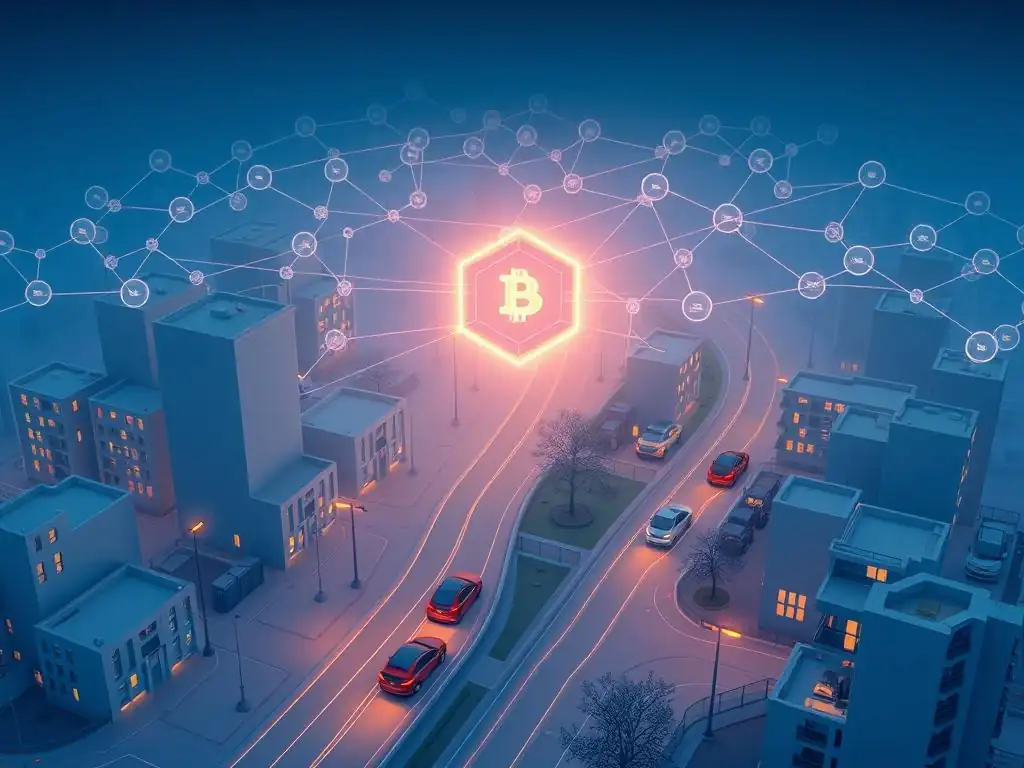
Scalability and Interoperability Challenges
Implementing blockchain and IoT solutions in large-scale urban environments presents significant scalability challenges. Blockchain networks need to be able to handle the massive amounts of data generated by IoT devices and the high transaction volumes required for city-wide applications. Current blockchain technologies may face limitations in terms of transaction throughput and data storage capacity, hindering their ability to scale to meet the demands of a smart city.
Interoperability is another critical challenge. Different blockchain platforms and IoT systems may use different protocols and standards, making it difficult to integrate them seamlessly. Ensuring interoperability between various blockchain and IoT solutions is essential for creating a cohesive and integrated smart city ecosystem. Addressing these scalability and interoperability challenges requires ongoing research and development in blockchain and IoT technologies, as well as the development of common standards and protocols to facilitate seamless integration.
Regulatory and Legal Hurdles
The implementation of blockchain and IoT solutions in smart cities also faces regulatory and legal hurdles. Existing legal frameworks may not be fully equipped to address the unique challenges posed by these technologies, such as data privacy, smart contract legality, and cross-border data flows. Regulators need to adapt existing regulations and develop new frameworks to govern the use of blockchain and IoT in urban environments, ensuring compliance with legal requirements and protecting citizen rights.
Data privacy regulations, such as GDPR in Europe, pose specific challenges for blockchain-based systems. While blockchain offers enhanced security, ensuring compliance with data privacy regulations requires careful consideration of data storage, access control, and data deletion mechanisms. Navigating these regulatory and legal hurdles requires close collaboration between technology developers, policymakers, and legal experts to create a clear and supportive regulatory environment for blockchain and IoT innovation in smart cities.
Public Adoption and Education
Successful implementation of blockchain and IoT solutions in smart cities depends heavily on public adoption and education. Citizens need to understand the benefits of these technologies and trust that they are being used to improve their lives and enhance city services. Addressing public concerns about data privacy, security, and the potential impact on jobs is crucial for gaining public acceptance and fostering widespread adoption.
Public education and awareness campaigns are essential to demystify blockchain and IoT technologies and highlight their potential benefits for smart cities. Engaging citizens in the design and implementation of these solutions, and providing transparent information about how their data is being used, can build trust and encourage public participation. Overcoming the challenges of public adoption and education requires a concerted effort from government agencies, technology providers, and community organizations to communicate effectively and build public trust in blockchain and IoT technologies for smart cities.
The Future of Smart Cities: Blockchain and IoT Synergies
Emerging Trends in Blockchain and IoT for Urban Development
Several emerging trends are shaping the future of blockchain and IoT applications in urban development. One key trend is the increasing focus on decentralized identity solutions, empowering citizens with greater control over their personal data and enabling secure and privacy-preserving digital interactions within smart cities. Self-sovereign identity (SSI) solutions, leveraging blockchain technology, are gaining momentum as a foundation for citizen-centric digital services.
Another trend is the growth of decentralized autonomous organizations (DAOs) in urban governance. DAOs, governed by smart contracts and blockchain-based voting mechanisms, offer the potential for more transparent and participatory urban governance models. DAOs can be used to manage community resources, allocate budgets, and make collective decisions in a decentralized and democratic manner. The convergence of blockchain and IoT is also driving innovation in areas like smart mobility, supply chain management, and circular economy initiatives within urban environments.
Predictions for the Evolution of Smart City Technologies
The future of smart city technologies powered by blockchain and IoT is predicted to be characterized by greater decentralization, automation, and citizen empowerment. We can expect to see a shift away from centralized, siloed systems towards more interconnected and interoperable urban ecosystems, where data flows seamlessly and securely between different city departments and stakeholders. Artificial intelligence (AI) and machine learning (ML) will increasingly be integrated with blockchain and IoT to enable more intelligent and autonomous smart city operations.
Smart contracts will play a more prominent role in automating urban processes, from traffic management and energy distribution to public service delivery and urban planning. The use of blockchain for digital twins of cities, creating virtual representations of urban environments, will enable better simulation, planning, and optimization of city operations. Citizen participation and engagement will be further enhanced through blockchain-based platforms for voting, feedback collection, and community governance, creating more inclusive and responsive smart cities.
The Role of Decentralized Technologies in Creating Sustainable and Resilient Cities
Decentralized technologies, particularly blockchain and IoT, are poised to play a critical role in creating sustainable and resilient cities of the future. Decentralized energy grids, enabled by blockchain and IoT, can promote the adoption of renewable energy sources and enhance energy efficiency, contributing to climate change mitigation efforts. Blockchain-based supply chain management can improve the traceability and transparency of resource flows, supporting circular economy initiatives and reducing waste in urban environments.
Decentralized and resilient infrastructure, managed through blockchain and IoT, can enhance the ability of cities to withstand shocks and disruptions, such as natural disasters and pandemics. By distributing data and control, decentralized systems are less vulnerable to single points of failure and can recover more quickly from disruptions. The synergies between blockchain and IoT offer a pathway towards building more sustainable, resilient, and citizen-centric urban environments that are better equipped to address the challenges of the 21st century.
Conclusion: Realizing the Potential of Blockchain Smart City Applications
Blockchain smart city applications are rapidly moving from theoretical concepts to real-world deployments, demonstrating the transformative potential of this technology in conjunction with IoT. From Dubai's blockchain-based government services to Amsterdam's P2P energy trading and Zug's digital identity system, case studies around the globe highlight the tangible benefits of leveraging blockchain to build smarter, more efficient, and citizen-centric urban environments. While challenges related to scalability, interoperability, regulation, and public adoption remain, the ongoing advancements in blockchain and IoT technologies, coupled with increasing government and industry interest, suggest a promising future for blockchain smart city applications.
Realizing the full potential of blockchain smart city applications requires a collaborative approach involving governments, technology providers, researchers, and citizens. Addressing the existing challenges through innovation, standardization, and supportive regulatory frameworks is crucial for unlocking the widespread adoption of these technologies. As cities continue to grapple with the complexities of urbanization, the synergistic power of blockchain and IoT offers a compelling pathway towards creating more sustainable, resilient, and liveable urban environments for generations to come. The journey towards truly smart cities is ongoing, and blockchain smart city applications are poised to be a key driver of this transformative evolution.
Frequently Asked Questions
What are some key Blockchain smart city applications being explored in urban environments?
Many initiatives focus on supply chain management for resources, secure data sharing between city departments, and enhanced citizen engagement through decentralized platforms.
How does blockchain enhance security in smart city infrastructure?
Blockchain's immutable ledger and cryptographic security make it difficult to tamper with data, ensuring the integrity of critical city systems and reducing vulnerabilities.
What role does IoT (Internet of Things) play in conjunction with blockchain in smart city development?
IoT devices gather data, which is then secured and managed on a blockchain, enabling automated processes and real-time monitoring of city services like traffic and energy consumption.
What are the potential benefits of using blockchain for citizen engagement and governance in a smart city?
Blockchain can facilitate transparent voting systems, secure digital identities, and direct citizen participation in decision-making, fostering trust and accountability.
What are the main regulatory challenges facing the implementation of Blockchain smart city applications?
Current regulatory frameworks often lag behind technological advancements, creating uncertainty around data privacy, legal liabilities, and the overall governance of decentralized systems.
Final Reflection: Embracing Decentralized Urban Futures
The exploration of blockchain and IoT integration in urban environments reveals a potent synergy, showcasing how these technologies can redefine city management and citizen engagement. The potential for enhanced transparency, security, and efficiency in urban services is no longer a futuristic fantasy, but a tangible reality being shaped by innovative blockchain smart city applications. From streamlined supply chains to decentralized energy grids, the case studies presented demonstrate the transformative power of these technologies to create more resilient and responsive urban ecosystems.
The ongoing evolution of blockchain and IoT is profoundly impacting the cultural and social fabric of our cities. The promise of increased citizen participation and data ownership is particularly compelling, fostering a sense of collective responsibility and empowerment. This shift towards decentralized governance and data management is not merely a technological advancement; it represents a fundamental reimagining of the relationship between citizens and their city. The city of the future is not just a smart city, but a city that empowers its citizens to shape their own destiny.
As we stand on the cusp of a new era of urban innovation, let us embrace the potential of blockchain and IoT to build smarter, more equitable, and more sustainable cities. Consider how you, as a citizen, entrepreneur, or policymaker, can contribute to this transformation. Reflect on the possibilities presented in this article and ask yourself: How can I leverage these technologies to create a better future for my community and the world? The future of our cities is not predetermined; it is a future we build together, one block at a time.
Unleash the Future of Your City!
Thank you for exploring the exciting potential of blockchain and IoT in transforming urban landscapes. We hope you gained valuable insights into how these technologies are shaping smarter, more efficient cities. Now it’s time to take action!
Here are some steps you can take to further explore how blockchain and IoT can enhance urban development:
- Advocate for the implementation of a pilot blockchain-based energy microgrid in your community. This practical step can help build a more sustainable and resilient city.
- Share this article with your network and start a conversation about the role of decentralized technology in creating better urban environments. Your voice can make a difference!
- Investigate local government initiatives related to smart city technologies and look for opportunities to introduce or support blockchain integration. Consider proposing a collaboration with relevant organizations.
What innovative blockchain solution would you like to see in your city to improve residents' quality of life? Share your ideas in the comments below!
Leave a Reply