
Blockchain for Supply Chain Finance: Revolutionizing Payments and Working Capital


Welcome to Blockchain Trends, your go-to source for understanding the revolutionary power of blockchain technology. Beyond the hype, discover how blockchain is transforming industries.
Is blockchain supply chain finance payments the key to unlocking unprecedented efficiency and access to working capital? Dive into this article to explore how this innovative application is reshaping global trade and creating a more transparent, secure, and efficient future. What if we told you that supply chain bottlenecks and payment delays could become a thing of the past? Read on to find out how.
Blockchain for Supply Chain Finance: Revolutionizing Payments and Working Capital
- Introduction: The Convergence of Blockchain and Supply Chain Finance
- Understanding Supply Chain Finance (SCF) Challenges
- Blockchain's Solution: Enhancing Supply Chain Finance Payments
- Key Benefits of Blockchain-Based Supply Chain Finance Payments
- Use Cases: Blockchain in Action for Supply Chain Finance
- Implementing Blockchain for Supply Chain Finance: Key Considerations
- The Future of Blockchain in Supply Chain Finance Payments
- Addressing Common Concerns About Blockchain Adoption in SCF
- Conclusion: Blockchain's Transformative Potential for SCF Payments
-
Frequently Asked Questions
- What is the core benefit of using blockchain for supply chain finance payments?
- How does blockchain improve access to working capital for suppliers in a supply chain?
- What role does smart contracts play in blockchain-based supply chain finance?
- How does blockchain address the issue of fraud and counterfeiting in supply chains?
- What are some potential challenges to the widespread adoption of blockchain for supply chain finance payments?
- Final Reflection: Embracing Transparency in Supply Chain Finance
- Unveil the Future: Transform Your Supply Chain Today!
Introduction: The Convergence of Blockchain and Supply Chain Finance
Supply chain finance (SCF) is a set of financial solutions that optimizes cash flow for businesses involved in a supply chain. Traditionally, SCF involves banks or other financial institutions offering financing to suppliers based on invoices approved by the buyer. While beneficial, the existing models often suffer from significant inefficiencies, lack of transparency, and delays, directly impacting the working capital of participating businesses, particularly small and medium-sized enterprises (SMEs). The advent of blockchain technology presents a compelling opportunity to address these long-standing challenges.
Blockchain, a distributed and immutable ledger technology, offers inherent characteristics such as transparency, security, and automation potential through smart contracts. These features align closely with the needs of modern supply chains, which are becoming increasingly complex and globalized. By integrating blockchain into SCF processes, businesses can reimagine how payments are made, invoices are validated, and financing is accessed, potentially unlocking substantial value and efficiency gains across the entire value chain. This convergence promises a significant evolution in how global trade is financed and managed.
The Growing Need for Efficiency in Supply Chain Payments
The global supply chain finance market is vast, estimated to be worth trillions of dollars annually. Yet, despite its scale, the payment processes within these chains remain notoriously inefficient. Manual handling of invoices, reliance on paper documentation, lengthy verification procedures, and disparate legacy systems contribute to significant delays and errors. These inefficiencies not only inflate operational costs but also create uncertainty regarding payment timelines.
For businesses operating within these supply chains, especially suppliers, predictable and timely payments are crucial for maintaining healthy cash flow and managing working capital effectively. Delays can lead to cash crunches, limit their ability to invest in growth, and even threaten their viability.
The current system often puts suppliers at a disadvantage, forcing them to wait extended periods (sometimes 60, 90, or even 120 days) after delivering goods or services before receiving payment, or forcing them to resort to costly traditional financing options like factoring. The demand for a more streamlined, faster, and reliable method for blockchain supply chain finance payments is therefore growing urgently.
Blockchain's Promise in Transforming Traditional Finance
Blockchain technology holds the potential to fundamentally transform traditional financial processes, including those within supply chain finance. At its core, blockchain provides a shared, tamper-evident record of transactions that is accessible to all authorized participants. This eliminates the need for intermediaries to verify every step, reducing friction and increasing speed.
In the context of blockchain supply chain finance payments, this means that once goods are shipped, received, or validated according to pre-defined conditions, the corresponding payment or financing trigger can be automated via smart contracts. This removes manual processing steps and reduces the risk of disputes over transaction status.
Furthermore, the transparency of the ledger allows all parties – buyer, supplier, and financier – to have a single, consistent view of the transaction status, from purchase order to invoice approval and payment, fostering trust and reducing the need for constant reconciliation. This shared, real-time visibility is a significant upgrade from fragmented, opaque traditional systems.
Understanding Supply Chain Finance (SCF) Challenges
Supply chain finance, while designed to bridge working capital gaps, faces significant hurdles in its traditional implementation. These challenges stem from the inherent complexities of global supply chains and the limitations of existing financial infrastructure. Addressing these issues is paramount for unlocking greater economic value and ensuring equitable participation for all businesses, regardless of size.
The multi-party nature of supply chains, involving buyers, suppliers, logistics providers, and financial institutions across different geographies and regulatory environments, complicates financial transactions. Each party often uses its own systems and processes, leading to data silos and interoperability issues. This fragmentation makes it difficult to achieve end-to-end visibility and control over the financial flow associated with the physical movement of goods, hindering efficient blockchain supply chain finance payments.
Inefficiencies in Existing SCF Models
Traditional supply chain finance models are often hampered by manual, paper-based processes that are slow, error-prone, and costly. The lifecycle of an invoice, from issuance to approval and eventual payment or financing, can involve numerous steps requiring human intervention and physical document handling. This leads to significant delays in payment cycles, directly impacting suppliers' cash flow. For example, a report might indicate that processing a single invoice traditionally can cost a company upwards of $15-$20 and take several weeks.
Furthermore, the lack of a single, shared source of truth about transactions means that reconciliation between parties is complex and time-consuming. Discrepancies between purchase orders, goods received notes, and invoices are common, leading to disputes and further payment delays. This inefficiency not only increases operational costs for buyers and suppliers but also makes it difficult for financiers to quickly and confidently assess the validity of an invoice for financing, thereby limiting the speed and accessibility of funding within the supply chain finance ecosystem.
The Impact of Delayed Payments on Working Capital
Delayed payments represent a major challenge for businesses operating within supply chains, particularly for small and medium-sized enterprises (SMEs) that often have limited cash reserves. When payment terms are extended (e.g., 90 days), suppliers essentially provide interest-free credit to their buyers during that period. This ties up a significant portion of the supplier's working capital, the funds needed for day-to-day operations, purchasing raw materials, paying employees, and investing in growth.
Studies and surveys consistently show that late payments are a leading cause of cash flow problems and business failures among SMEs. For instance, a survey might reveal that a significant percentage of small businesses spend considerable time chasing late payments, diverting resources from core activities. This precarious financial position can hinder innovation, reduce competitiveness, and make it difficult for SMEs to scale or even sustain operations, underscoring the critical need for more reliable and faster blockchain supply chain finance payments.
Lack of Transparency and Traceability in Traditional SCF
A fundamental weakness of traditional supply chain finance is the lack of transparency and traceability throughout the transaction lifecycle. Information about purchase orders, shipments, goods receipt, and invoice status is often siloed within the systems of individual parties. This makes it difficult for any single participant, including potential financiers, to gain a complete and trustworthy view of the entire transaction history associated with an invoice.
This opacity creates uncertainty and increases the risk of fraud, such as double financing of the same invoice. Financiers must rely on manual verification processes and the creditworthiness of the buyer, rather than having direct visibility into the underlying physical transaction and its associated documentation. This lack of verifiable data makes it harder for suppliers to leverage their trade receivables as an asset for financing, especially for smaller suppliers without strong credit histories, thereby limiting the potential for efficient blockchain supply chain finance payments.
Blockchain's Solution: Enhancing Supply Chain Finance Payments
Blockchain technology offers a powerful set of capabilities that directly address the fundamental challenges plaguing traditional supply chain finance. By providing a decentralized, immutable, and transparent ledger, blockchain can create a more efficient, secure, and accessible ecosystem for managing financial flows within complex supply chains. This technological shift promises to redefine how businesses interact financially, moving towards a more automated and trustworthy environment.
The core innovation lies in creating a shared, distributed database of transactions that all authorized participants can access and verify in real-time. This eliminates the need for multiple, disparate systems and the manual reconciliation required to sync them. The result is a single source of truth for the supply chain and its associated financial transactions, paving the way for streamlined processes and improved confidence among all parties involved in blockchain supply chain finance payments.
How Blockchain Streamlines SCF Processes
Blockchain streamlines supply chain finance processes primarily by digitizing and automating transaction workflows. Purchase orders, invoices, goods received notes, and other relevant documents can be represented as digital assets or data points on the blockchain. Once these events are recorded and validated by the relevant parties (e.g., buyer confirming goods receipt), the information is immutably stored and accessible to all permissioned network members.
The use of smart contracts is central to this streamlining. Smart contracts are self-executing contracts with the terms of the agreement directly written into code. In SCF, a smart contract could be programmed to automatically trigger payment or initiate a financing request once specific conditions are met, such as the buyer's approval of an invoice recorded on the ledger. This eliminates manual steps like chasing approvals or submitting financing applications, drastically reducing processing time from weeks to potentially just days or even hours, enabling faster blockchain supply chain finance payments.
Improved Transparency and Traceability with Blockchain Technology
Blockchain inherently provides a high degree of transparency and traceability for all recorded transactions. Every step of the supply chain process, from the initial purchase order to the final payment, can be logged on the distributed ledger. Because the ledger is shared among participants and immutable (meaning records cannot be altered retroactively without detection), it creates an auditable history of every transaction.
This shared, transparent record means that all parties involved in the supply chain – including buyers, suppliers, logistics providers, and financial institutions – can access the same, up-to-date information about the status of goods and associated financial obligations. Financiers, for example, can verify the authenticity and status of an invoice by checking its history on the blockchain, reducing the risk of fraud and increasing their confidence in providing financing. This enhanced visibility builds trust and facilitates smoother interactions throughout the network, significantly improving the reliability of blockchain supply chain finance payments.
Reducing Payment Delays and Optimizing Working Capital Through Blockchain
By automating processes via smart contracts and providing real-time transparency on transaction status, blockchain significantly reduces the potential for payment delays that plague traditional SCF. Once the conditions for payment are met and verified on the blockchain (e.g., goods received and invoice approved), the smart contract can automatically initiate the payment process, eliminating manual steps and reducing the time spent waiting for approvals or reconciliation.
Faster and more predictable payments directly contribute to optimizing working capital for suppliers. With quicker access to cash flow, suppliers are less reliant on expensive short-term financing and have more funds available for operations, investment, and growth. Additionally, the verifiable transaction history on the blockchain can make suppliers' invoices more attractive to financiers, potentially allowing them to access financing at more favorable terms or enabling new models like dynamic discounting, where buyers can pay early in exchange for a discount, benefiting both parties and enhancing the overall efficiency of blockchain supply chain finance payments.
Key Benefits of Blockchain-Based Supply Chain Finance Payments
Implementing blockchain technology in supply chain finance offers a multitude of advantages over traditional methods. These benefits span enhanced security, cost reduction, process automation, and improved access to capital, fundamentally reshaping the operational and financial landscape for businesses involved in global trade. The shift towards blockchain supply chain finance payments is driven by the promise of creating a more robust, efficient, and equitable ecosystem.
The combined effect of these benefits is a more resilient and competitive supply chain. By mitigating risks, reducing costs, and freeing up capital, businesses can focus on their core competencies, foster stronger relationships with their trading partners, and respond more agilely to market demands. This technological evolution is not just about incremental improvements; it's about enabling a paradigm shift in how supply chains are financed and managed.
Enhanced Security and Reduced Fraud in SCF Transactions
Blockchain's distributed and cryptographic nature provides enhanced security for supply chain finance transactions compared to centralized systems. Each transaction is cryptographically sealed and linked to the previous one, forming a chain that is extremely difficult to tamper with. Any attempt to alter a record would be immediately detectable by other participants on the network.
This immutability significantly reduces the risk of fraudulent activities common in traditional SCF, such as submitting fake invoices or double-financing the same receivable with multiple financiers. With a shared, verifiable ledger, all parties have access to the same authentic transaction history, making it nearly impossible to deceive financiers or trading partners about the status or validity of an invoice or purchase order. This built-in security and auditability instill greater confidence in the integrity of blockchain supply chain finance payments.
Lower Transaction Costs and Increased Efficiency
Automating processes and reducing reliance on intermediaries through blockchain can lead to significant reductions in transaction costs within supply chain finance. Eliminating manual data entry, reconciliation efforts, and paper-based documentation reduces administrative overhead. For instance, a study might estimate that digitalizing and automating SCF processes can reduce processing costs by 10-30% or more.
Furthermore, the speed and efficiency gained through automated validation and payment triggers via smart contracts mean that the overall transaction lifecycle is shortened. This frees up resources that were previously spent on managing delays, chasing payments, or resolving disputes. Lower operational costs and faster processing contribute directly to the bottom line for both buyers and suppliers, making blockchain supply chain finance payments a more economically attractive option.
Automated Processes and Smart Contracts in Supply Chain Finance
Smart contracts are a cornerstone of blockchain's potential in SCF, enabling the automation of complex, multi-party agreements. These self-executing contracts can be programmed to automatically trigger actions, such as releasing payment or initiating a financing request, when specific conditions are met and verified on the blockchain ledger. For example, a smart contract could automatically initiate payment to a supplier's digital wallet once the buyer confirms receipt of goods on the platform.
This automation removes manual steps and reduces the need for human intervention in routine transaction processing. It minimizes the risk of errors, speeds up execution, and ensures that agreements are enforced exactly as programmed. The ability to automate conditional payments and financing based on real-world events recorded on the ledger is a game-changer for efficiency and reliability in blockchain supply chain finance payments.
Greater Access to Financing for SMEs in the Supply Chain
One of the most significant benefits of blockchain in SCF is its potential to democratize access to financing, particularly for small and medium-sized enterprises (SMEs). In traditional SCF, financing often relies heavily on the creditworthiness of the buyer or requires suppliers to have established banking relationships and credit histories. This can exclude many smaller suppliers from accessing needed working capital.
By recording verifiable transaction data on a transparent and immutable ledger, blockchain creates a digital footprint of a supplier's performance and the authenticity of their receivables. This makes it easier for financiers to assess the risk associated with financing a particular invoice or supplier, even if the supplier is small or located in an emerging market. The ability to tokenize assets like approved invoices on the blockchain could also open up new avenues for financing from a wider pool of investors, providing SMEs with greater flexibility and potentially more favorable terms for their blockchain supply chain finance payments.
Use Cases: Blockchain in Action for Supply Chain Finance
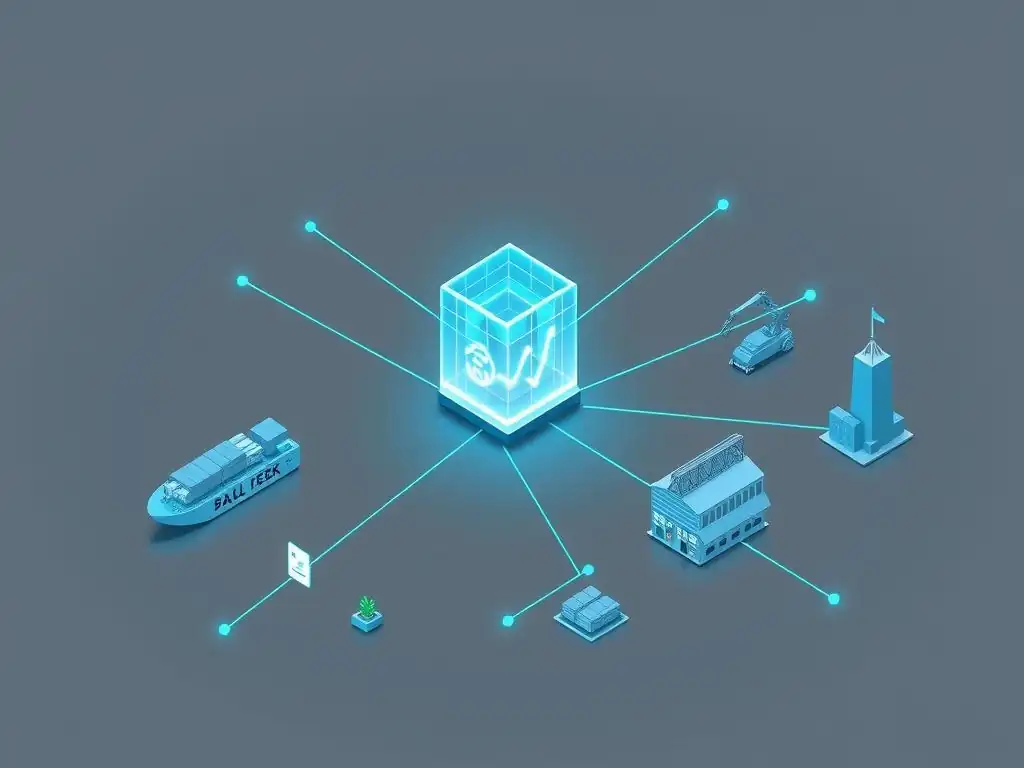
While the full potential of blockchain in supply chain finance is still unfolding, several pioneering initiatives and projects demonstrate the technology's transformative capabilities. These real-world examples, though sometimes focused on broader supply chain visibility or traceability, lay the groundwork for integrated blockchain supply chain finance payments by creating trusted, shared data layers. Examining these cases provides insight into the practical application and benefits of blockchain in enhancing supply chain operations and related financial processes.
These early adopters highlight how a shared, immutable ledger can improve transparency, reduce manual processes, and build trust among supply chain partners. While not all focused explicitly on payment execution, they showcase the critical prerequisite of creating a verifiable digital trail of goods and documents, which is essential for automating and securing financial transactions based on those events.
Maersk and TradeLens: Streamlining Global Trade
Maersk, a global shipping giant, partnered with IBM to develop TradeLens, a blockchain-based platform aimed at digitizing and streamlining global container logistics. While primarily focused on tracking shipments and documentation, TradeLens creates a shared, immutable record of cargo movements, customs releases, and other key events across the supply chain involving multiple parties like carriers, ports, customs authorities, and logistics providers.
This enhanced visibility and verifiable data flow are crucial for supply chain finance. Financiers can potentially use the real-time, trusted data on TradeLens to verify the physical movement and status of goods tied to an invoice, increasing their confidence in providing financing against those goods or the associated receivables. Although direct payment rails are still evolving within such platforms, the foundation of shared, trustworthy data significantly enhances the potential for efficient and secure blockchain supply chain finance payments linked to physical trade flows.
Walmart's Food Traceability Initiative: Enhancing Food Safety
Walmart's initiative to track leafy green vegetables using blockchain, also in collaboration with IBM, is a prominent example of improving supply chain traceability. The project demonstrated the ability to trace the origin of produce from farm to store in seconds using a blockchain ledger, a process that previously took days or even weeks with traditional methods.
While the primary driver was food safety and recall efficiency, this level of rapid, verifiable traceability has direct implications for supply chain finance. The ability to instantly confirm the provenance and journey of goods provides a high degree of confidence in the underlying assets being financed. This data could be used by financiers to assess risk or structure financing deals based on the verified movement of specific batches of products, potentially enabling more granular and secure blockchain supply chain finance payments tied to product traceability data.
De Beers' Tracr Platform: Tracking Diamonds from Mine to Retail
De Beers, a leading diamond company, developed the Tracr platform, a blockchain-based system to track diamonds throughout their value chain, from mine to retailer. The platform assigns a unique digital identifier to each diamond and records its journey and characteristics on the distributed ledger, providing immutable proof of origin and ownership.
For the diamond industry, where provenance and authenticity are paramount, Tracr builds trust and reduces the risk of undisclosed synthetics or conflict diamonds entering the supply chain. From a finance perspective, this verifiable history enhances the confidence of financiers providing loans or insurance against diamond inventories. The ability to track high-value assets on a blockchain provides a secure and transparent basis for financing, demonstrating how asset traceability can underpin more secure and verifiable blockchain supply chain finance payments and related financial services.
Implementing Blockchain for Supply Chain Finance: Key Considerations
Adopting blockchain technology for supply chain finance payments is not without its complexities. While the potential benefits are significant, successful implementation requires careful planning and consideration of various technical, operational, and regulatory factors. Organizations must navigate challenges related to platform selection, integration with existing systems, legal and compliance issues, and data security.
A phased approach, starting with pilot programs focusing on specific use cases or segments of the supply chain, can help organizations gain experience and refine their strategy before a broader rollout. Collaboration among supply chain partners is also crucial, as the network effect is key to realizing the full benefits of a shared ledger technology for blockchain supply chain finance payments.
Choosing the Right Blockchain Platform for SCF Payments
Selecting the appropriate blockchain platform is a critical first step. Different platforms offer varying features, consensus mechanisms, levels of privacy, and scalability. Options include public blockchains (like Ethereum, though often less suitable for enterprise SCF due to privacy and cost concerns), private blockchains (controlled by a single entity), or consortium blockchains (governed by a group of participants, often preferred for multi-party SCF networks).
Factors to consider include the required level of data privacy and access control, the volume and speed of transactions the platform can handle (scalability), the cost of transactions, ease of integration, and the availability of developer support and ecosystem partners. For blockchain supply chain finance payments involving multiple companies, a consortium model often strikes the right balance between transparency among known parties and necessary privacy from the wider public internet. Platforms like Hyperledger Fabric or R3 Corda are examples often explored for enterprise supply chain use cases.
Integrating Blockchain with Existing Supply Chain Systems
One of the major technical challenges is integrating the new blockchain platform with existing legacy systems that manage ERP (Enterprise Resource Planning), WMS (Warehouse Management Systems), TMS (Transportation Management Systems), and traditional financial software. These systems are often complex, disparate, and not designed to easily share data with a decentralized ledger.
Successful integration requires robust APIs (Application Programming Interfaces) and middleware to ensure seamless data flow between the legacy systems and the blockchain. This allows relevant data, such as purchase order details, shipment updates, or goods receipt confirmations, to be accurately and automatically recorded on the blockchain, triggering subsequent actions like initiating blockchain supply chain finance payments via smart contracts. Poor integration can lead to data inconsistencies, undermining the trustworthiness of the blockchain record.
Addressing Regulatory and Compliance Issues in Blockchain SCF
Implementing blockchain for supply chain finance payments across different jurisdictions raises complex regulatory and compliance questions. These include issues related to data privacy (e.g., GDPR requirements), cross-border payment regulations, Know Your Customer (KYC) and Anti-Money Laundering (AML) rules, and the legal status of smart contracts in enforcing financial agreements.
Organizations must ensure that their blockchain solution complies with all relevant laws and regulations in the regions where they operate. This may involve designing the platform to handle sensitive data appropriately, potentially using off-chain storage for private information while recording hashes on-chain, or implementing robust identity verification processes for network participants. Navigating this evolving legal landscape requires careful consideration and potentially engaging with legal and regulatory experts familiar with blockchain technology.
Data Privacy and Security in Blockchain-Based SCF Solutions
While blockchain offers enhanced security through immutability, data privacy remains a key concern, especially in sensitive financial transactions within a supply chain. Not all information is suitable for being fully transparent to every network participant. For instance, a supplier might not want competitors on the network to see their specific pricing agreements with a buyer.
Designing a blockchain solution for SCF requires implementing appropriate privacy mechanisms. This could involve using permissioned ledgers where participation and data access are restricted to known entities, employing techniques like zero-knowledge proofs to verify information without revealing the underlying data, or storing sensitive data off-chain while using the blockchain to verify data integrity. Ensuring robust cryptographic security and access controls is paramount to protect sensitive business information while leveraging the transparency benefits for blockchain supply chain finance payments.
The Future of Blockchain in Supply Chain Finance Payments
The trajectory for blockchain adoption in supply chain finance points towards increasing integration, innovation, and the potential for new financial models. As the technology matures and implementation challenges are overcome, blockchain is poised to become a foundational layer for managing financial flows within complex global value chains. The focus is shifting from simply tracking goods to enabling sophisticated, automated financial transactions.
The future landscape of blockchain supply chain finance payments will likely involve greater interoperability between different platforms, closer ties with emerging decentralized finance (DeFi) protocols, and widespread adoption across various industries. This evolution promises to unlock significant efficiencies and create new opportunities for businesses of all sizes.
The Rise of Decentralized Finance (DeFi) in Supply Chains
One potential future development is the integration of decentralized finance (DeFi) principles and protocols into supply chain finance. DeFi aims to recreate traditional financial services using blockchain technology, removing intermediaries like banks. In SCF, this could mean tokenizing assets like invoices or purchase orders, allowing them to be easily traded or used as collateral on decentralized lending platforms.
This could provide suppliers with alternative, potentially faster and cheaper, ways to access financing directly from a global pool of liquidity providers on a blockchain network, rather than relying solely on traditional banks or the buyer's SCF program. While still in early stages and facing regulatory uncertainties, the convergence of blockchain supply chain finance payments with DeFi could significantly expand access to capital and introduce more flexible financing options for supply chain participants.
Blockchain as a Catalyst for Innovation in SCF
Beyond simply improving existing processes, blockchain acts as a catalyst for entirely new forms of innovation in supply chain finance. The ability to have a trusted, shared record of physical and financial transactions opens the door to novel financing structures and business models. For example, dynamic discounting based on real-time performance data recorded on the blockchain could become more widespread.
New financial products could emerge, such as tokenized trade finance assets that are easier to invest in or trade. The increased transparency and data availability could also facilitate better risk assessment, potentially leading to more tailored and affordable insurance products for supply chain risks. Blockchain's inherent capabilities encourage a rethinking of traditional SCF paradigms, fostering continuous innovation in blockchain supply chain finance payments and related services.
Predictions for the Adoption of Blockchain in Supply Chain Finance
Market predictions generally indicate a significant growth trajectory for blockchain in supply chain management and finance. While specific figures vary, reports often project the global blockchain in supply chain market to reach billions of dollars in the coming years, with a substantial portion related to finance and payments. For instance, some estimates suggest a compound annual growth rate (CAGR) of over 50% for this market segment.
Factors driving this adoption include increasing awareness of blockchain's benefits, successful pilot programs demonstrating tangible results, growing industry collaboration on consortium networks, and increasing pressure to improve efficiency and resilience in global supply chains. While challenges remain, the demonstrated value proposition for enhancing transparency, speed, and security in blockchain supply chain finance payments is expected to drive broader implementation across various industries.
Addressing Common Concerns About Blockchain Adoption in SCF
Despite the compelling benefits, several concerns are frequently raised regarding the widespread adoption of blockchain in supply chain finance. These include technical limitations like scalability, the challenge of achieving interoperability between different blockchain networks, and the human element of resistance to change and the need for collaboration among diverse stakeholders. Addressing these concerns is vital for successful implementation and realizing the full potential of blockchain supply chain finance payments.
Overcoming these hurdles requires not only technological solutions but also strong governance frameworks, industry standards, and effective change management strategies. Collaboration among supply chain partners, technology providers, and financial institutions is essential to build trust and a shared vision for a blockchain-enabled future.
Scalability Challenges and Potential Solutions
One of the primary technical concerns with blockchain, particularly public blockchains, has been scalability – the ability to handle a high volume of transactions quickly and efficiently. Traditional supply chains generate a massive amount of data and transactions daily, and a blockchain platform must be able to process these without becoming slow or prohibitively expensive.
While some early blockchains faced significant scalability issues (e.g., limited transactions per second), newer generation platforms and layer-two solutions are specifically designed to address this. Enterprise-focused consortium blockchains often use more efficient consensus mechanisms and can process thousands of transactions per second. Techniques like sharding, off-chain transactions for high-volume data, and optimized data structures are being developed and implemented to ensure that blockchain networks can handle the demands of complex blockchain supply chain finance payments at scale.
The Role of Interoperability in a Blockchain-Enabled Supply Chain
As multiple blockchain networks or platforms emerge within different companies or industries, ensuring interoperability between them becomes crucial. A supply chain often involves participants using different systems, and the inability of these separate blockchain networks to communicate and exchange data seamlessly would create new silos, negating some of the benefits of blockchain.
Standards and protocols for cross-chain communication and data exchange are under development. Solutions like interchain bridges, standardized APIs, and common data models are necessary to allow information (such as proof of shipment on one network triggering a payment on another) to flow smoothly across different blockchain implementations. Achieving true interoperability is key to creating a truly connected and efficient ecosystem for blockchain supply chain finance payments across diverse networks.
Overcoming Resistance to Change and Fostering Collaboration
Implementing blockchain in supply chain finance requires significant changes to existing processes, workflows, and business relationships. This can naturally lead to resistance from individuals and organizations comfortable with traditional methods. Furthermore, the success of a blockchain network relies heavily on collaboration and trust among participating companies, who may historically have viewed each other with caution.
Effective change management, clear communication about the benefits, and comprehensive training are essential to address internal resistance. Fostering collaboration among supply chain partners requires establishing clear governance models for the network, defining rules for participation and data sharing, and building a shared understanding of the mutual value created by the platform. Demonstrating tangible benefits through pilot projects can help build confidence and encourage broader adoption of blockchain supply chain finance payments.
Conclusion: Blockchain's Transformative Potential for SCF Payments
Blockchain technology offers a powerful solution to many of the long-standing inefficiencies and challenges in traditional supply chain finance. By providing a shared, immutable, and transparent ledger, blockchain can significantly enhance security, reduce costs, accelerate processes, and improve access to financing for businesses across the supply chain. The move towards blockchain supply chain finance payments is not just a technological upgrade but a fundamental shift towards a more connected, efficient, and trustworthy global trade ecosystem.
While implementation requires careful consideration of technical, regulatory, and collaborative challenges, the demonstrated benefits and ongoing developments in the technology underscore its potential to revolutionize SCF. As adoption grows and interoperability improves, blockchain is set to become an indispensable tool for managing the complex financial flows that underpin global commerce.
Blockchain: A Key Enabler for a More Efficient and Transparent Supply Chain
Blockchain's core characteristics make it an ideal technology for building more efficient and transparent supply chains. The ability to create a single, shared source of truth for transactions reduces ambiguity, minimizes disputes, and streamlines operations from procurement through to payment. This transparency extends beyond just tracking goods; it provides visibility into the associated financial obligations and status.
By enabling real-time tracking of goods and documents on an immutable ledger, blockchain creates the necessary foundation for automating financial triggers. This interconnectedness between the physical supply chain and its financial counterpart ensures that blockchain supply chain finance payments are based on verified, real-world events, leading to greater accuracy and reliability compared to systems reliant on manual data entry and reconciliation.
Optimizing Working Capital and Driving Growth with Blockchain Finance Solutions
Ultimately, the successful implementation of blockchain in supply chain finance leads to significant improvements in working capital management for all participants, especially suppliers. Faster, more predictable payments improve cash flow, reducing the need for costly short-term financing and freeing up capital that can be reinvested in the business.
Furthermore, the enhanced transparency and verifiable data make it easier for suppliers to access financing against their receivables, potentially at better terms, thereby further optimizing their working capital. By reducing financial friction and increasing liquidity within the supply chain, blockchain finance solutions empower businesses to operate more efficiently, manage risks more effectively, and invest in growth, driving overall economic prosperity within the network through streamlined blockchain supply chain finance payments.
Frequently Asked Questions
What is the core benefit of using blockchain for supply chain finance payments?
The core benefit is increased transparency and efficiency, leading to reduced risks and costs for all parties involved. This is achieved through immutable record-keeping and automated processes.
How does blockchain improve access to working capital for suppliers in a supply chain?
Blockchain facilitates faster and more secure payments, reducing the need for traditional financing methods. This improves cash flow and provides suppliers with better access to working capital.
What role does smart contracts play in blockchain-based supply chain finance?
Smart contracts automate payment terms and conditions, ensuring that payments are released automatically upon fulfillment of pre-defined criteria. This reduces payment delays and disputes.
How does blockchain address the issue of fraud and counterfeiting in supply chains?
Blockchain's immutable ledger provides a tamper-proof record of product origin and ownership, making it difficult to introduce counterfeit goods into the supply chain and reducing the risk of fraud.
What are some potential challenges to the widespread adoption of blockchain for supply chain finance payments?
Challenges include lack of standardization, regulatory uncertainties, and the need for interoperability between different blockchain platforms and existing financial systems. Overcoming these is crucial for widespread adoption.
Final Reflection: Embracing Transparency in Supply Chain Finance
The preceding exploration of blockchain's potential in supply chain finance underscores its transformative power in revolutionizing payments and working capital. While the technology is still maturing, its capacity to foster transparency, security, and efficiency within complex supply chains is undeniably relevant in today's interconnected global economy. The promise of streamlined transactions and improved access to financing for businesses of all sizes is a compelling vision for the future of trade.
The impact of blockchain on supply chain finance extends beyond mere technological advancement; it signals a fundamental shift towards greater trust and collaboration within the ecosystem. This shift resonates deeply, as it addresses the long-standing challenges of information asymmetry and financial exclusion that have historically plagued supply chains. The beauty of blockchain is not just that it is a database, but that it is a database that everyone can trust.
This quote encapsulates the essence of blockchain's potential to build a more equitable and efficient financial landscape for all participants.
As we conclude this exploration, consider the implications of blockchain's rise in supply chain finance for your own organization and the broader business community. How can you leverage this technology to foster greater transparency, build stronger relationships with your partners, and unlock new opportunities for growth? The future of supply chain finance is being written today, and your active participation will shape its trajectory. Embrace the potential of blockchain to create a more resilient, inclusive, and prosperous global trade ecosystem.
Unveil the Future: Transform Your Supply Chain Today!
Thank you for exploring the potential of blockchain to revolutionize supply chain finance. We hope you've gained valuable insights into how this technology can enhance payments and working capital. Now, it's time to take action and discover the opportunities for yourself!
Here’s how you can get started:
- Start a Proof-of-Concept: Don’t just discuss blockchain—try it out with a small-scale project. Select a specific aspect of your supply chain finance process and develop a proof-of-concept using a permissioned blockchain to see its benefits firsthand.
- Share and Discuss: Share this article with your colleagues and network to inspire conversations about blockchain's role in supply chain finance. Use the hashtag #BlockchainSupplyChain on LinkedIn and Twitter.
- Innovative Thinking: Identify a pain point in your current supply chain payment process. Then, brainstorm a few unconventional blockchain applications that could address it. Sometimes, wild ideas lead to breakthrough solutions.
What is the biggest challenge preventing you from exploring blockchain solutions in your supply chain finance operations, and how might a small pilot project help overcome it?
Leave a Reply