
The Ultimate Guide to Layer2 Scaling: Types, Benefits, and Challenges


Welcome to Blockchain Trends, your compass in the rapidly evolving world of decentralized technology!
Ever wondered how blockchain can truly revolutionize industries beyond just Bitcoin? We delve into the transformative potential of blockchain, exploring everything from DeFi innovations to enterprise applications and the ever-shifting regulatory landscape.
In this article, we tackle a crucial challenge facing blockchain adoption: scalability. Get ready to dive deep into Layer 2 scaling solutions, uncovering the different approaches, their benefits, and the challenges they present. Are these solutions the key to unlocking blockchain's full potential? Let's find out!
The Ultimate Guide to Layer2 Scaling: Types, Benefits, and Challenges
- Introduction to Layer 2 Scaling Solutions
- Types of Layer 2 Scaling Solutions
-
Benefits of Implementing Layer 2 Solutions
- Increased Transaction Throughput: Boosting Blockchain Capacity
- Reduced Transaction Fees: Making Blockchain More Affordable
- Enhanced User Experience: Faster Confirmations and Improved Usability
- Improved Scalability for Decentralized Applications (dApps)
- Addressing the Blockchain Trilemma: Balancing Scalability, Security, and Decentralization
-
Challenges and Considerations for Layer 2 Adoption
- Complexity of Implementation: Technical Hurdles for Developers
- Security Risks: Potential Vulnerabilities in Layer 2 Protocols
- Liquidity Fragmentation: Challenges with Cross-Layer Asset Transfers
- Data Availability Issues: Ensuring Data Integrity and Accessibility
- Interoperability Challenges: Connecting Different Layer 2 Solutions
- Layer 2 Scaling Solutions: Use Cases and Real-World Examples
- The Future of Layer 2 Scaling
- Choosing the Right Layer 2 Solution for Your Needs
- Conclusion: Layer 2 Scaling Solutions: Key to Blockchain's Future
-
Frequently Asked Questions
- What exactly are Layer 2 scaling solutions, and why are they important for blockchain technology?
- What are some of the main types of Layer 2 scaling solutions available today?
- What are the primary benefits of using Layer 2 scaling solutions compared to Layer 1 solutions?
- What are some of the challenges associated with implementing and using Layer 2 scaling solutions?
- How might Layer 2 scaling solutions impact the future of decentralized finance (DeFi) and enterprise blockchain applications?
- Final Reflection: Embracing the Layer 2 Revolution
- Unleash the Power of Scalable Blockchain!
Introduction to Layer 2 Scaling Solutions
Understanding Blockchain Scalability Issues
Blockchain technology, while revolutionary, faces a significant hurdle: scalability. First-generation blockchains like Bitcoin and Ethereum, designed with security and decentralization as core principles, were not initially built to handle the transaction volumes required for mainstream adoption. Bitcoin, for example, can process around 7 transactions per second (TPS), while Ethereum, before its major upgrades, hovered around 15-25 TPS.
This limited throughput leads to network congestion, especially during peak demand. Imagine a popular NFT drop or a surge in DeFi activity; the network becomes clogged, resulting in slow transaction confirmations and soaring transaction fees, often referred to as "gas fees" on Ethereum. This bottleneck severely restricts the usability and broader application of blockchain technology, hindering its potential to become a truly global and accessible infrastructure.
The scalability problem isn't just about speed; it's also about cost. High transaction fees make microtransactions economically unviable and exclude users with limited capital from participating in blockchain networks. For instance, during periods of high network activity on Ethereum, simple token swaps on decentralized exchanges (DEXs) could cost upwards of $50 or even $100. These exorbitant fees create a barrier to entry, limiting blockchain's accessibility and hindering its promise of financial inclusion. Therefore, solving the scalability challenge is paramount for blockchain to move beyond niche applications and become a foundational technology for various industries and everyday use cases.
What are Layer 2 Solutions and Why are They Needed?
Layer 2 solutions emerge as a direct response to the inherent scalability limitations of Layer 1 blockchains. Think of Layer 1 as the main highway – secure and foundational, but prone to traffic jams during rush hour. Layer 2 solutions, in contrast, are like efficient parallel roads or express lanes built on top of the main highway.
They aim to offload a significant portion of transaction processing away from the main blockchain (Layer 1), thereby reducing congestion and improving overall throughput. These solutions are designed to inherit the security of the underlying Layer 1 blockchain while providing faster and cheaper transactions.
The necessity for Layer 2 arises from the fundamental trade-offs in blockchain design, often referred to as the "blockchain trilemma": scalability, security, and decentralization. Optimizing for one aspect often comes at the expense of others. Layer 1 blockchains prioritized security and decentralization, which inherently limited their scalability.
Layer 2 solutions offer a way to circumvent this trilemma by enhancing scalability without compromising the core security and decentralization principles of the underlying Layer 1. By processing transactions off-chain and only leveraging the Layer 1 for crucial functions like settlement and dispute resolution, Layer 2 solutions unlock the potential for blockchain to handle a much larger volume of transactions, making it practical for widespread use.
Layer 2 Scaling: A Definition
Layer 2 scaling refers to a suite of protocols and techniques built on top of an existing blockchain (Layer 1) to increase its transaction throughput and efficiency. These solutions enable faster and cheaper transactions without altering the base Layer 1 protocol itself. Essentially, Layer 2 solutions act as secondary frameworks that handle the bulk of transaction processing off-chain, while still benefiting from the security and consensus mechanisms of the main Layer 1 blockchain. This is achieved through various methods, including but not limited to, state channels, rollups, sidechains, and Plasma.
In simpler terms, Layer 2 scaling solutions enhance the capacity of a blockchain network by creating efficient "express lanes" for transactions. These express lanes operate independently but remain anchored to the main blockchain for security and finality.
By processing transactions off the main chain and periodically reporting back to Layer 1 for verification or settlement, Layer 2 solutions significantly reduce the load on the primary blockchain, leading to improved scalability and a better user experience. The overarching goal of Layer 2 is to make blockchain technology more accessible, affordable, and capable of handling the demands of a global user base.
Types of Layer 2 Scaling Solutions
State Channels: A Deep Dive
State channels represent one of the earliest and most intuitive Layer 2 scaling solutions. They facilitate direct, off-chain communication and transaction execution between participants, bypassing the main blockchain for the majority of interactions. Think of them as temporary, private side agreements formed between users who want to transact frequently with each other. These channels are established by locking up funds on the Layer 1 blockchain, creating a multi-signature wallet that requires the consent of all participants to move funds.
Once a state channel is open, participants can conduct numerous transactions directly with each other, updating the channel's state off-chain without broadcasting each transaction to the main blockchain. These off-chain transactions are instant and incur minimal fees, as they don't require Layer 1 gas. Only the opening and closing transactions of the channel are recorded on the Layer 1 blockchain.
This drastically reduces the burden on the main chain, allowing for high-frequency, low-cost interactions between channel participants. Examples of state channel implementations include the Lightning Network for Bitcoin and Raiden Network for Ethereum, primarily focused on enabling faster and cheaper payments.
How State Channels Work
The operational mechanism of state channels involves a few key steps. First, participants wanting to transact frequently together agree to open a channel. This involves depositing funds into a multi-signature smart contract on the Layer 1 blockchain. This smart contract acts as the anchor for the state channel, securing the funds and defining the initial state of the channel. Once the channel is open, participants can exchange signed transaction updates off-chain. These updates represent changes in the balance of funds within the channel.
Crucially, each update is signed by all participants, ensuring mutual agreement and accountability. Participants can transact as many times as needed off-chain, with each transaction being virtually instantaneous and fee-less. To close the channel, any participant can submit the latest agreed-upon state to the Layer 1 blockchain. The smart contract then verifies the signatures and distributes the funds according to the final state. In case of disputes or disagreements, mechanisms are in place to ensure fair resolution based on the signed transaction history within the channel, leveraging the security and immutability of the Layer 1 blockchain.
Advantages of State Channels
State channels offer several compelling advantages for specific use cases. Firstly, they provide instant transaction finality for participants within the channel. Since transactions occur directly between parties off-chain, confirmations are immediate, unlike waiting for block confirmations on Layer 1. Secondly, state channels boast extremely low transaction fees, approaching zero in most cases. This is because the majority of transactions are processed off-chain, avoiding the gas costs associated with Layer 1. This makes them ideal for micropayments and high-frequency trading scenarios.
Furthermore, state channels enhance privacy for participants. Only the channel opening and closing transactions are publicly recorded on the Layer 1 blockchain. The numerous transactions occurring within the channel remain private between the participants, offering a degree of confidentiality not typically available with on-chain transactions. Finally, state channels can significantly reduce congestion on the main blockchain. By offloading a substantial volume of transactions, they free up Layer 1 resources, contributing to overall network scalability and efficiency.
Limitations of State Channels
Despite their benefits, state channels also come with certain limitations that restrict their applicability across all scaling scenarios. A primary limitation is liquidity lock-up. To participate in a state channel, users need to lock up funds in the channel's smart contract. This capital is unavailable for other uses while the channel is open, potentially creating liquidity constraints, especially for long-lived channels or when users participate in multiple channels simultaneously.
Another significant limitation is limited network effects. State channels are typically designed for two or a small group of participants who expect to transact frequently with each other. They are not inherently well-suited for scenarios involving interactions with a large, open network of users.
Furthermore, channel management and complexity can be a hurdle. Setting up, managing, and closing channels requires a certain level of technical understanding and coordination between participants. Dispute resolution mechanisms, while present, can become complex if participants disagree on the channel's final state. Lastly, state channels generally require anticipation of counterparty interactions. Users need to know who they will be transacting with beforehand to establish a channel, making them less adaptable to spontaneous or random interactions within a broader decentralized ecosystem.
Rollups: Optimistic and Zero-Knowledge
Rollups represent a more generalized and powerful Layer 2 scaling solution compared to state channels. They operate by "rolling up" or bundling multiple transactions into a single transaction on the Layer 1 blockchain. This aggregation drastically reduces the amount of data and computation that the main chain needs to process, significantly increasing throughput and lowering transaction costs. There are two primary types of rollups: Optimistic Rollups and Zero-Knowledge Rollups (zk-Rollups), each with distinct mechanisms and trade-offs.
The core principle of rollups is to execute transactions off-chain, in a Layer 2 environment, and then periodically submit a summary of these transactions, along with a proof of their validity, to the Layer 1 blockchain. This approach leverages the security and data availability of Layer 1 while achieving much higher transaction processing capacity in Layer 2. Rollups are considered a more versatile scaling solution than state channels as they can handle a wider range of smart contract functionalities and support broader network participation.
Optimistic Rollups Explained
Optimistic Rollups, as the name suggests, operate on an "optimistic" assumption: transactions are presumed to be valid unless proven otherwise. They execute transactions off-chain and post the transaction data, along with the new state root, to the Layer 1 blockchain. Crucially, Optimistic Rollups do not initially submit proof of the validity of these transactions. Instead, they rely on a fraud-proof mechanism to ensure accuracy. This "optimistic" approach allows for faster and cheaper transaction processing because the computationally intensive task of generating validity proofs is avoided in the normal course of operation.
After a batch of transactions is rolled up and posted to Layer 1, there is a designated "challenge period," typically lasting several days. During this period, anyone can challenge the validity of the transactions in the rollup by submitting a fraud proof. If a fraud is successfully proven, the rollup is rolled back to the correct state, and the fraudulent actor is penalized.
This challenge period is a critical component of Optimistic Rollups, ensuring that the system remains secure and honest despite the initial lack of validity proofs. Popular examples of Optimistic Rollups include Arbitrum and Optimism, which are actively used to scale Ethereum applications.
Fraud Proofs in Optimistic Rollups
Fraud proofs are the cornerstone of the security model in Optimistic Rollups. They are cryptographic proofs that demonstrate the incorrect execution of a transaction within a rollup batch. When a challenger suspects that a transaction in a rollup is fraudulent, they can initiate a fraud-proof process. This process involves re-executing the disputed transaction on the Layer 1 blockchain, using the transaction data and state root submitted by the rollup operator.
If the re-execution on Layer 1 produces a different result than the result claimed by the rollup operator, the fraud proof is considered successful. The Layer 1 smart contract then recognizes the fraud, reverts the rollup state to the point before the fraudulent transaction, and penalizes the operator who submitted the invalid state. The challenger, in turn, may be rewarded for identifying and proving the fraud.
This incentive mechanism encourages network participants to actively monitor rollups and ensure the integrity of the system. The fraud-proof mechanism relies on the underlying Layer 1 blockchain as the ultimate arbiter of truth, ensuring that Optimistic Rollups inherit the security of the main chain.
Zero-Knowledge Rollups (zk-Rollups) Explained
Zero-Knowledge Rollups (zk-Rollups) take a different approach to validation compared to Optimistic Rollups. Instead of assuming validity and relying on fraud proofs, zk-Rollups generate cryptographic validity proofs for each batch of transactions processed off-chain. These validity proofs, based on zero-knowledge succinct non-interactive arguments of knowledge (zk-SNARKs) or zk-STARKs technology, mathematically prove that the transactions in the rollup batch were executed correctly and that the resulting new state is valid.
When a zk-Rollup operator submits a batch of transactions to Layer 1, they also include a validity proof. The Layer 1 smart contract then verifies this proof. Crucially, verifying a validity proof is computationally much cheaper than re-executing all the transactions in the batch.
If the validity proof is accepted, the Layer 1 smart contract automatically accepts the state transition, knowing with cryptographic certainty that the rollup transactions were valid. This approach eliminates the need for a challenge period, resulting in faster finality compared to Optimistic Rollups. Examples of zk-Rollups include zkSync and StarkNet, which are gaining traction for scaling various Ethereum applications.
Validity Proofs in zk-Rollups
Validity proofs in zk-Rollups are sophisticated cryptographic constructs that provide succinct and verifiable evidence of correct computation. They leverage advanced mathematical techniques, particularly zero-knowledge proofs, to demonstrate that a computation was performed accurately without revealing any details about the computation itself. In the context of zk-Rollups, a validity proof demonstrates that the batch of transactions processed off-chain was executed according to the protocol's rules and that the resulting state transition is valid.
These proofs are generated by the zk-Rollup operator after processing a batch of transactions. The proof is then submitted to the Layer 1 blockchain along with the transaction data and the new state root. The Layer 1 smart contract contains a verifier algorithm that efficiently checks the validity proof.
The key advantage of validity proofs is their succinctness and fast verification. A validity proof can be significantly smaller than the data required to re-execute the transactions, and the verification process is computationally lightweight, making it efficient for Layer 1 to verify the correctness of a large batch of off-chain transactions. This cryptographic assurance of validity is what gives zk-Rollups their strong security properties and faster finality compared to Optimistic Rollups.
Comparing Optimistic and zk-Rollups
Optimistic Rollups and zk-Rollups represent the two dominant approaches within the broader category of rollup-based Layer 2 scaling solutions. While both aim to improve scalability by processing transactions off-chain and anchoring to Layer 1, they differ significantly in their validation mechanisms and resulting properties. Optimistic Rollups are simpler to implement as they leverage existing smart contract technology and rely on fraud proofs for security.
They generally have lower computational overhead for transaction processing, but they introduce a withdrawal delay due to the challenge period. This delay, typically around 7 days, is necessary to allow time for potential fraud proofs to be submitted and verified.
zk-Rollups, on the other hand, are more complex to implement due to the advanced cryptography required for generating validity proofs. They have a higher computational overhead for generating proofs, but they offer faster finality as transactions are considered final once the validity proof is verified on Layer 1. zk-Rollups also generally offer stronger security guarantees as they rely on cryptographic proofs of validity rather than economic incentives and challenge periods. Choosing between Optimistic and zk-Rollups often involves a trade-off between implementation complexity, computational cost, withdrawal times, and security requirements, depending on the specific application and use case.
Sidechains: Independent Blockchains for Scaling
Sidechains are another prominent Layer 2 scaling solution that takes a different architectural approach compared to rollups and state channels. Instead of being directly layered on top of the main blockchain, sidechains are independent blockchains that run parallel to the Layer 1 chain. They are connected to the main chain through a two-way bridge, allowing for the transfer of assets and data between the main chain and the sidechain. Think of sidechains as separate, but interoperable, blockchains that can handle transactions and computations independently, offloading the burden from the main chain.
Sidechains can have their own consensus mechanisms, block parameters, and even virtual machines, allowing for greater customization and optimization for specific use cases. This independence provides flexibility in design and allows sidechains to experiment with different technologies and features that might not be feasible or desirable on the main Layer 1 blockchain. However, this independence also means that sidechains do not inherently inherit the security of the main chain and must establish their own security model.
Sidechain Architecture and Functionality
The architecture of a sidechain revolves around its independent blockchain structure and its connection to the main Layer 1 chain via a two-way bridge. This bridge is crucial for enabling the transfer of assets and data between the two chains. When a user wants to move assets from the main chain to a sidechain, they typically "lock" their assets in a smart contract on the main chain. An equivalent representation of these assets is then "minted" or created on the sidechain. This process is often referred to as "pegging-in."
Once assets are on the sidechain, users can transact with them using the sidechain's own consensus mechanism and transaction processing rules, which are typically faster and cheaper than on the main chain. To move assets back to the main chain ("pegging-out"), the process is reversed. Assets are "burned" or destroyed on the sidechain, and the equivalent assets are unlocked on the main chain based on proof from the sidechain that the burn event occurred.
This two-way peg mechanism allows sidechains to function as scaling solutions by handling a significant volume of transactions and computations off the main chain, while still allowing users to interact with assets originating from the main chain. Examples of sidechains include Polygon (formerly Matic Network) and Skale Network.
Security Considerations for Sidechains
Security is a paramount consideration for sidechains, as they do not inherently inherit the security of the main Layer 1 blockchain. Sidechains are responsible for establishing their own security model, which typically involves their own consensus mechanism and validator set. The security of a sidechain is therefore dependent on the robustness of its chosen consensus mechanism and the degree of decentralization of its validator set. A sidechain with a smaller validator set or a less robust consensus mechanism may be more vulnerable to attacks compared to the main chain.
Furthermore, the two-way bridge connecting the sidechain to the main chain represents a critical security point. Vulnerabilities in the bridge mechanism can potentially lead to the theft of assets locked in the bridge. Therefore, robust bridge design and security audits are essential for sidechain deployments. Users should be aware of the specific security model and consensus mechanism of a sidechain before entrusting significant assets to it. While sidechains offer scalability benefits, it is crucial to carefully evaluate their security properties and understand the associated risks.
Examples of Popular Sidechains
Several sidechain projects have gained significant traction in the blockchain ecosystem, demonstrating the practical application of this scaling approach. Polygon (MATIC) is one of the most prominent examples. It provides a framework for building and connecting Ethereum-compatible blockchain networks. Polygon uses a Proof-of-Stake (PoS) consensus mechanism and offers faster and cheaper transactions compared to the Ethereum mainnet. It has become a popular platform for deploying decentralized applications (dApps) and DeFi protocols seeking scalability.
Skale Network is another example of a sidechain network focused on providing elastic scalability for Ethereum dApps. Skale offers a network of interconnected sidechains, allowing dApps to deploy their own dedicated sidechains with customizable performance and security characteristics. Liquid Network is a Bitcoin sidechain focused on enabling faster and more confidential Bitcoin transactions, particularly for exchanges and traders. These examples illustrate the diversity of sidechain implementations and their potential to address various scaling needs across different blockchain ecosystems.
Plasma: A Framework for Off-Chain Transactions
Plasma is a Layer 2 scaling framework that aims to enable scalable and cost-effective transactions by creating "child chains" that are anchored to the main Layer 1 blockchain. Plasma is conceptually similar to sidechains but with a stronger emphasis on data availability and security inheritance from the main chain. The core idea behind Plasma is to create a hierarchical structure of blockchains, where child chains handle the majority of transaction processing while relying on the root chain (Layer 1) for security and dispute resolution.
Plasma utilizes fraud proofs, similar to Optimistic Rollups, to ensure the integrity of transactions processed on child chains. However, Plasma's design is more complex and has faced challenges in implementation compared to other Layer 2 solutions. While the original Plasma framework has evolved and seen variations like Plasma Cash and Plasma MVP, it remains a significant concept in the history of Layer 2 scaling research and development.
Plasma Chains and Their Structure
Plasma chains are designed as child blockchains that are cryptographically linked to a root chain (typically the main Layer 1 blockchain). Each Plasma chain operates independently and can have its own set of rules and transaction processing mechanisms. The key feature of Plasma is its data availability guarantee. Plasma aims to ensure that all transaction data for a child chain is always available, even if the child chain operator becomes malicious or goes offline. This data availability is crucial for the fraud-proof mechanism to function effectively.
Plasma typically uses Merkle trees to represent the state of the child chain and to commit to the state on the root chain periodically. Users can exit from a Plasma chain by submitting a "proof of custody" to the root chain, demonstrating their ownership of assets on the child chain. If a user detects fraudulent activity on the child chain, they can initiate a challenge process on the root chain using fraud proofs. The root chain acts as the ultimate arbitrator, resolving disputes and enforcing the correct state of the Plasma chain.
The Challenges of Plasma Implementations
Despite its innovative approach, Plasma has faced significant challenges in practical implementations, which have limited its widespread adoption. One of the major challenges is the complexity of data availability and ensuring that all transaction data is always accessible. Implementing robust data availability mechanisms in Plasma can be technically demanding and resource-intensive. Another challenge is the complexity of exit mechanisms, particularly in handling complex transaction types and ensuring smooth user exits from Plasma chains.
Furthermore, Plasma implementations have often faced scalability limitations in practice, not achieving the theoretical throughput gains initially envisioned. The development and maintenance of Plasma protocols are also complex and require specialized expertise. Due to these challenges, other Layer 2 solutions like rollups and sidechains have gained more prominence and practical adoption in the blockchain scaling landscape, while Plasma development has seen a relative slowdown.
Validium: Data Availability and Security
Validium is a Layer 2 scaling solution that shares similarities with zk-Rollups in its use of validity proofs but differs in its approach to data availability. Like zk-Rollups, Validium uses zero-knowledge validity proofs to ensure the correctness of off-chain transactions. However, unlike zk-Rollups, Validium does not store transaction data on the Layer 1 blockchain. Instead, transaction data is held by a data availability committee or a third party.
This distinction in data availability has significant implications for both scalability and security. By offloading transaction data storage from Layer 1, Validium can achieve even higher scalability than zk-Rollups in certain scenarios. However, it also introduces a different security trade-off related to data availability and trust assumptions.
Exploring Validium's Data Availability Model
Validium's data availability model is a key differentiator from zk-Rollups. In Validium, transaction data is not posted on the Layer 1 blockchain. Instead, it is typically entrusted to a data availability committee (DAC). This DAC is a group of independent entities responsible for storing the transaction data and making it available upon request. The DAC is usually incentivized or contractually obligated to maintain data availability.
Alternatively, in some Validium implementations, data availability might be managed by a single entity, such as the Validium operator itself. However, relying on a single entity introduces a higher degree of centralization risk. Regardless of the specific data availability mechanism, Validium's core principle is to separate transaction data storage from the Layer 1 blockchain, focusing Layer 1 solely on verifying validity proofs and settling state transitions. This approach can significantly reduce Layer 1 gas costs associated with data posting, enhancing scalability.
Use Cases for Validium
Validium is particularly well-suited for applications where extremely high transaction throughput and low costs are paramount, and where a degree of trust in a data availability committee or operator is acceptable. Enterprise applications are a potential use case for Validium. For instance, supply chain management systems or internal enterprise blockchains that require high transaction volumes but may operate within a more permissioned or controlled environment could benefit from Validium's scalability.
Gaming applications that involve a large number of microtransactions and require fast confirmations could also be a suitable use case. Validium's ability to achieve high throughput and low fees can make blockchain-based gaming experiences more seamless and cost-effective. However, it's important to carefully consider the security trade-offs associated with data availability when evaluating Validium for specific use cases, especially in scenarios where strong decentralization and censorship resistance are critical.
Benefits of Implementing Layer 2 Solutions
Increased Transaction Throughput: Boosting Blockchain Capacity
One of the most significant benefits of Layer 2 scaling solutions is the substantial increase in transaction throughput they provide to blockchain networks. By offloading transaction processing from the congested Layer 1 blockchain, Layer 2 solutions drastically enhance the number of transactions that can be processed per second (TPS). For instance, Ethereum, which historically processed around 15-25 TPS, can potentially achieve thousands of TPS through Layer 2 solutions like rollups. Optimistic Rollups, such as Arbitrum and Optimism, have already demonstrated the capability to handle hundreds to thousands of TPS, significantly surpassing Layer 1's capacity.
zk-Rollups, with their efficient validity proofs, can also achieve similarly high throughput, often exceeding Optimistic Rollup capacities in certain benchmarks. Sidechains, being independent blockchains, can also be designed to handle a high volume of transactions based on their specific consensus mechanisms and block parameters. This enhanced throughput is crucial for enabling blockchain to support mainstream applications that demand high transaction volumes, such as payment processing, social media platforms, and high-frequency trading in decentralized exchanges.
Reduced Transaction Fees: Making Blockchain More Affordable
Layer 2 solutions directly address the issue of high transaction fees, often referred to as "gas fees," that plague Layer 1 blockchains during periods of network congestion. By processing transactions off-chain, Layer 2 solutions minimize the gas costs associated with Layer 1 transactions. In Optimistic Rollups, transaction fees can be significantly reduced, often by a factor of 10 to 100 compared to Layer 1. For example, a simple token swap on a DEX using Layer 1 Ethereum might cost upwards of $50 during peak times, while the same transaction on an Optimistic Rollup could cost just cents.
zk-Rollups also offer substantial fee reductions, often achieving even lower fees than Optimistic Rollups for certain types of transactions due to their more efficient data posting mechanisms. State channels, by enabling direct off-chain transactions, can effectively reduce transaction fees to near zero within the channel. Sidechains, with their independent fee structures, can also offer significantly lower fees compared to the main chain. This drastic reduction in transaction fees makes blockchain technology more accessible and affordable for everyday users, enabling use cases like micropayments, affordable DeFi participation, and cost-effective NFT trading.
Enhanced User Experience: Faster Confirmations and Improved Usability
Layer 2 solutions contribute significantly to enhancing the user experience of blockchain applications. Faster transaction confirmations are a key improvement. On Layer 1 blockchains, users often have to wait minutes or even longer for transaction confirmations, especially during periods of network congestion. Layer 2 solutions, particularly state channels and zk-Rollups, offer much faster transaction finality, often achieving near-instant confirmations. Optimistic Rollups, while having a withdrawal delay, still provide faster transaction processing within the rollup compared to Layer 1.
This speed improvement leads to a more seamless and responsive user experience, making blockchain applications feel more like traditional web applications. Furthermore, the reduced transaction fees enabled by Layer 2 solutions also contribute to a better user experience by lowering the economic barriers to entry and making blockchain interactions more affordable. Combined, faster confirmations and lower fees significantly improve the usability and appeal of blockchain technology for a broader user base.
Improved Scalability for Decentralized Applications (dApps)
Layer 2 scaling solutions are essential for enabling the scalability of decentralized applications (dApps). Many dApps, particularly in sectors like DeFi and gaming, require high transaction throughput and low latency to provide a competitive user experience. Layer 1 blockchains, in their base form, often lack the scalability to support these demanding applications. Layer 2 solutions provide dApps with the necessary infrastructure to scale their operations and handle a large number of users and transactions.
Optimistic Rollups and zk-Rollups are particularly well-suited for scaling general-purpose dApps, including DeFi protocols, NFT marketplaces, and decentralized social media platforms. Sidechains offer dApps the flexibility to deploy their own dedicated blockchains with customized performance characteristics. By leveraging Layer 2 solutions, dApp developers can build more robust, responsive, and user-friendly applications that can reach a wider audience and compete with traditional centralized alternatives.
Addressing the Blockchain Trilemma: Balancing Scalability, Security, and Decentralization
Layer 2 scaling solutions play a crucial role in addressing the blockchain trilemma – the inherent trade-off between scalability, security, and decentralization. While Layer 1 blockchains often prioritize security and decentralization, leading to scalability limitations, Layer 2 solutions offer a path to enhance scalability without fundamentally compromising the core principles of security and decentralization.
Layer 2 solutions inherit the security of the underlying Layer 1 blockchain. Rollups, for example, rely on Layer 1 for data availability and dispute resolution, ensuring that the security of the rollup is anchored to the main chain. State channels and Plasma also utilize Layer 1 for channel opening, closing, and dispute settlement.
While sidechains have their own security models, they still aim to interoperate with and benefit from the broader blockchain ecosystem. By strategically layering scaling solutions on top of secure and decentralized Layer 1 blockchains, the blockchain ecosystem can strive to achieve a better balance between scalability, security, and decentralization, moving closer to realizing the full potential of blockchain technology.
Challenges and Considerations for Layer 2 Adoption
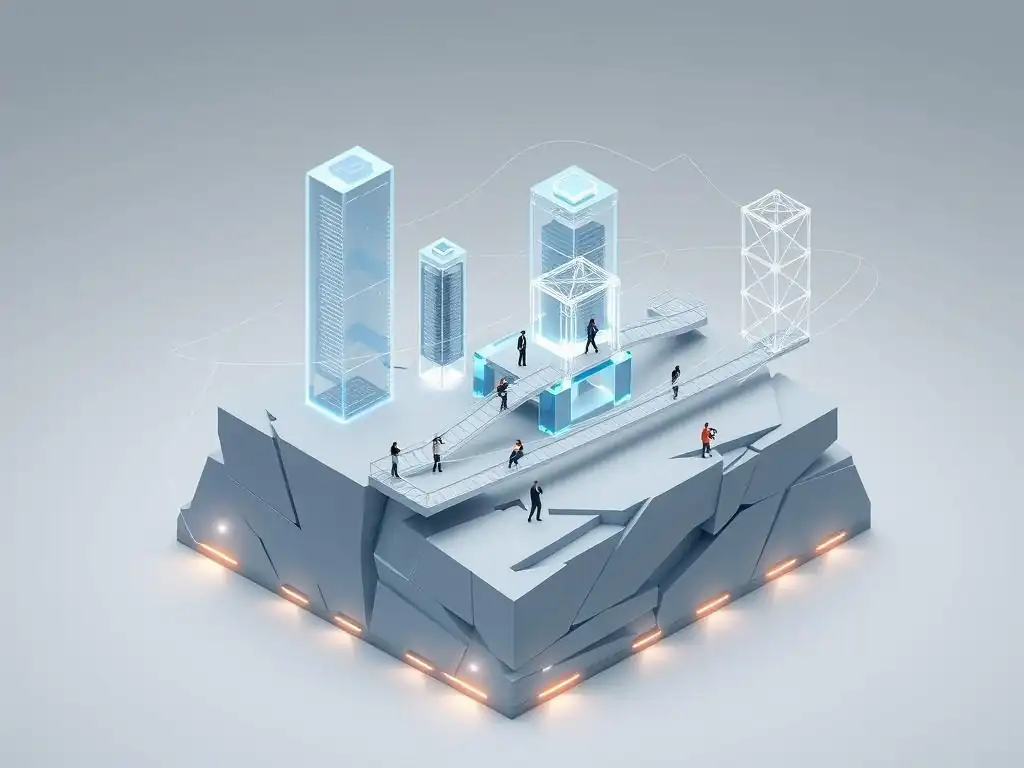
Complexity of Implementation: Technical Hurdles for Developers
While Layer 2 solutions offer significant benefits, their implementation can introduce technical complexities for developers. Integrating Layer 2 solutions into existing dApps or building new applications on Layer 2 often requires specialized knowledge and development expertise. Each type of Layer 2 solution – state channels, rollups, sidechains, etc. – has its own unique architecture, protocols, and development tools. Developers need to learn these specific technologies and adapt their application logic accordingly.
For instance, developing for rollups might involve understanding smart contract deployment on Layer 2, bridging assets between Layer 1 and Layer 2, and handling asynchronous communication between layers. State channel development requires managing channel state, handling channel lifecycle events, and implementing dispute resolution mechanisms. Sidechain development involves working with different blockchain architectures and bridge protocols. This added layer of technical complexity can increase the development time and cost for dApps adopting Layer 2 solutions, and may present a barrier to entry for some developers.
Security Risks: Potential Vulnerabilities in Layer 2 Protocols
Although Layer 2 solutions are designed to enhance scalability while inheriting security from Layer 1, they are not without their own security risks. Layer 2 protocols are often newer and more complex than Layer 1 protocols, and may be subject to vulnerabilities that are not yet fully understood or discovered. Smart contracts on Layer 2, especially those involved in bridges and rollup sequencers, can be targets for exploits. For example, bridge vulnerabilities have been a recurring issue in the blockchain space, leading to significant losses in some cases.
Optimistic Rollups rely on fraud proofs and challenge periods, which introduce a potential attack vector if the challenge period is too short or if the fraud-proof mechanism is flawed. zk-Rollups, while relying on cryptographic validity proofs, also depend on the correctness and security of the underlying cryptographic assumptions and implementations. Sidechains, with their independent security models, are susceptible to attacks if their consensus mechanisms are weak or if their validator sets are not sufficiently decentralized. Thorough security audits and ongoing monitoring are crucial for mitigating security risks associated with Layer 2 solutions.
Liquidity Fragmentation: Challenges with Cross-Layer Asset Transfers
The adoption of Layer 2 solutions can lead to liquidity fragmentation across different layers. As assets are moved from Layer 1 to various Layer 2 networks, liquidity can become分散, making it less efficient to trade and move assets across the entire blockchain ecosystem. For example, if a user holds assets on both Layer 1 Ethereum and an Optimistic Rollup, transferring assets between these layers might involve delays and fees. This fragmentation can complicate user experience and reduce the overall network effect of the blockchain ecosystem.
Bridging solutions are designed to address this liquidity fragmentation by facilitating asset transfers between layers. However, bridges themselves can introduce complexities and potential security risks. Furthermore, the efficiency and speed of cross-layer asset transfers can vary depending on the specific Layer 2 solution and bridge implementation. Addressing liquidity fragmentation and ensuring seamless cross-layer asset movement is an ongoing challenge for the Layer 2 ecosystem.
Data Availability Issues: Ensuring Data Integrity and Accessibility
Data availability is a critical consideration for Layer 2 solutions, particularly for rollups and Validium. Rollups rely on data availability to ensure that transaction data is accessible for fraud proofs or validity proof verification. If transaction data is not available, it can compromise the security and integrity of the Layer 2 solution. Optimistic Rollups post transaction data on Layer 1, ensuring data availability but incurring Layer 1 gas costs for data storage.
zk-Rollups also typically post transaction data on Layer 1, although they can optimize data posting through techniques like data compression. Validium, in contrast, offloads data availability to a data availability committee or a third party, which can improve scalability but introduces a different set of trust assumptions and potential risks if the DAC fails to maintain data availability. Ensuring robust and reliable data availability mechanisms is essential for the security and long-term viability of Layer 2 solutions.
Interoperability Challenges: Connecting Different Layer 2 Solutions
As the Layer 2 ecosystem matures, interoperability between different Layer 2 solutions becomes increasingly important. Currently, many Layer 2 solutions operate in isolation, making it challenging to seamlessly transfer assets or data between different Layer 2 networks. For example, moving assets directly from an Optimistic Rollup to a zk-Rollup might not be straightforward and could require multiple bridging steps or complex cross-layer protocols.
Lack of interoperability can hinder the user experience and limit the potential for composability and network effects across different Layer 2 solutions. Developing standards and protocols for Layer 2 interoperability is an ongoing area of research and development. Solutions like cross-rollup bridges and generic messaging protocols are being explored to enable smoother communication and asset transfers between different Layer 2 networks, fostering a more interconnected and unified Layer 2 ecosystem.
Layer 2 Scaling Solutions: Use Cases and Real-World Examples
Layer 2 in Decentralized Finance (DeFi)
Layer 2 scaling solutions are proving to be instrumental in unlocking the full potential of Decentralized Finance (DeFi). DeFi applications, such as decentralized exchanges (DEXs), lending platforms, and yield aggregators, often require high transaction throughput and low fees to provide a competitive user experience. Layer 1 blockchains, with their inherent scalability limitations, have often struggled to meet these demands, leading to network congestion and high gas fees that hinder DeFi adoption. Layer 2 solutions offer a powerful solution to these challenges, enabling DeFi protocols to scale and become more accessible to a wider audience.
By migrating DeFi transactions and computations to Layer 2, protocols can significantly reduce transaction costs and increase transaction speeds, making DeFi more affordable and efficient for users. This scalability boost is crucial for supporting the growth of DeFi and enabling more complex and sophisticated financial applications on blockchain.
Scaling DeFi Protocols with Layer 2
Layer 2 solutions, particularly rollups and sidechains, are actively being used to scale various DeFi protocols. Decentralized exchanges (DEXs) are a prime example. DEXs built on Layer 1 Ethereum often suffer from high gas fees, especially during periods of high trading volume, making frequent trading prohibitively expensive for many users. Layer 2 DEXs, built on Optimistic Rollups or zk-Rollups, offer significantly lower trading fees and faster transaction execution, attracting more users and trading volume.
Lending and borrowing platforms can also benefit from Layer 2 scaling. Lower transaction fees make it more cost-effective for users to deposit collateral, borrow assets, and manage their loan positions. Yield aggregators and other DeFi strategies that involve frequent transactions can also become more efficient and profitable with Layer 2's reduced fees. By leveraging Layer 2, DeFi protocols can overcome scalability bottlenecks and provide a more user-friendly and cost-effective experience, driving further adoption and innovation in the DeFi space.
Examples of DeFi Projects Utilizing Layer 2
Numerous DeFi projects are already actively utilizing Layer 2 scaling solutions to enhance their performance and user experience. Uniswap V3, a leading decentralized exchange, has deployed on Optimistic Rollups like Optimism and Arbitrum, offering users significantly lower trading fees and faster transactions compared to trading on Layer 1 Ethereum. dYdX, a decentralized derivatives exchange, has adopted StarkWare's zk-Rollup technology to achieve high-performance and low-fee trading for perpetual contracts.
Loopring, another DEX platform, is built on zk-Rollups, providing fast and low-cost trading for spot markets. Polygon, as a sidechain, has become a popular platform for deploying various DeFi protocols, including Aave and SushiSwap, offering users a lower-fee alternative to Ethereum Layer 1. These examples demonstrate the growing adoption of Layer 2 solutions within the DeFi ecosystem and their impact on improving scalability and user accessibility.
Layer 2 for NFT Marketplaces
Non-Fungible Tokens (NFTs) have gained immense popularity, but trading NFTs on Layer 1 blockchains, particularly Ethereum, can be expensive due to high gas fees. Minting, buying, and selling NFTs often involve multiple on-chain transactions, each incurring gas costs. During periods of high network activity, gas fees for NFT transactions can become prohibitively expensive, especially for lower-value NFTs or for frequent traders. Layer 2 scaling solutions offer a way to address these challenges and make NFT trading more affordable and accessible.
By migrating NFT marketplaces and NFT transactions to Layer 2, platforms can significantly reduce gas fees associated with minting, buying, selling, and transferring NFTs. This fee reduction can unlock new use cases for NFTs, making them more practical for applications beyond high-value collectibles, such as in-game assets, digital art for broader audiences, and micropayments for digital content.
Improving NFT Trading Efficiency with Layer 2
Layer 2 solutions enhance NFT trading efficiency in several ways. Firstly, reduced gas fees make NFT transactions more affordable for both buyers and sellers, encouraging greater participation in NFT marketplaces. Secondly, faster transaction confirmations on Layer 2 platforms improve the trading experience, making NFT marketplaces more responsive and user-friendly. Users no longer have to wait extended periods for NFT transactions to confirm, leading to a smoother and more efficient trading process.
Optimistic Rollups and zk-Rollups are well-suited for scaling NFT marketplaces, providing both lower fees and faster transaction speeds. Sidechains can also offer a viable platform for NFT marketplaces, particularly for platforms seeking greater customization and control over their infrastructure. By leveraging Layer 2, NFT marketplaces can overcome the scalability limitations of Layer 1 and provide a more accessible and cost-effective trading environment for NFTs.
Lowering Gas Fees for NFT Transactions
The most direct benefit of Layer 2 for NFT marketplaces is the significant reduction in gas fees for NFT transactions. On Layer 1 Ethereum, minting an NFT can cost tens or even hundreds of dollars in gas fees, depending on network congestion. Selling or transferring NFTs also incurs gas costs. Layer 2 NFT marketplaces, built on rollups or sidechains, can reduce these gas fees dramatically, often to just cents per transaction.
For example, minting an NFT on a Layer 2 platform like Immutable X (built on StarkWare's zk-Rollup) can be significantly cheaper than minting on Layer 1 Ethereum. Similarly, trading NFTs on Layer 2 marketplaces like Zora (utilizing Optimistic Rollups) offers much lower gas fees compared to trading on Layer 1 platforms like OpenSea. This drastic reduction in gas fees makes NFT transactions accessible to a wider range of users and opens up new possibilities for NFT use cases that were previously economically infeasible due to high transaction costs.
Layer 2 in Enterprise Blockchain Applications
Enterprise blockchain applications often require high transaction throughput, low latency, and cost-effectiveness to be practical for real-world business operations. Layer 1 blockchains, in their base form, may not meet these enterprise-grade requirements. Layer 2 scaling solutions provide a pathway to enhance the scalability and efficiency of blockchain for enterprise use cases, making it more viable for businesses to adopt and integrate blockchain technology into their operations.
Layer 2 solutions can enable enterprises to build scalable blockchain applications for various use cases, including supply chain management, digital identity, asset tracking, and secure data sharing. By leveraging Layer 2, enterprises can overcome the scalability limitations of Layer 1 and deploy blockchain solutions that can handle the transaction volumes and performance demands of large-scale business operations.
Enhancing Supply Chain Management with Layer 2
Supply chain management is a promising area for enterprise blockchain adoption, and Layer 2 solutions can play a crucial role in enhancing the scalability and efficiency of blockchain-based supply chain systems. Supply chains often involve a large number of transactions and data exchanges between various participants, including manufacturers, distributors, retailers, and logistics providers. Layer 1 blockchains may struggle to handle the transaction volume and speed required for real-time supply chain tracking and management.
Layer 2 solutions can enable supply chain applications to process a high volume of transactions at low cost and with faster confirmation times. For example, tracking goods across a complex supply chain can involve numerous transactions related to product provenance, ownership transfer, and shipment updates. Layer 2 solutions can make these transactions more efficient and cost-effective, enabling real-time visibility and traceability throughout the supply chain. Sidechains, with their customizable performance characteristics, can also be tailored to meet the specific needs of enterprise supply chain applications.
Enabling Scalable Blockchain Solutions for Businesses
Layer 2 solutions empower businesses to build scalable blockchain solutions for a wide range of applications beyond supply chain management. Digital identity management systems can benefit from Layer 2's scalability to handle a large number of identity verifications and credential management operations. Asset tracking and tokenization platforms can leverage Layer 2 to efficiently manage and track a large volume of assets, from physical goods to financial instruments. Secure data sharing and collaboration platforms can utilize Layer 2 to enable secure and scalable data exchange between business partners while maintaining data integrity and provenance.
Layer 2 solutions make blockchain technology more practical and cost-effective for enterprise adoption, enabling businesses to explore and implement blockchain-based solutions for various operational and strategic needs. By overcoming scalability bottlenecks, Layer 2 solutions pave the way for wider enterprise adoption of blockchain technology and its integration into mainstream business processes.
The Future of Layer 2 Scaling
The Evolution of Layer 2 Technology
Layer 2 scaling technology is in a state of rapid evolution and innovation. The field is constantly evolving with new research, development, and practical implementations. Optimistic Rollups and zk-Rollups are becoming increasingly mature and are seeing wider adoption across various blockchain ecosystems. Ongoing research is focused on improving the performance, security, and usability of these rollup technologies. For example, advancements in zero-knowledge proof systems are leading to more efficient and versatile zk-Rollup implementations.
State channels and Plasma, while facing certain limitations, continue to be explored and refined for specific use cases. Sidechain technology is also evolving with improvements in bridge security and interoperability. Hybrid Layer 2 solutions that combine different scaling techniques are also emerging, aiming to leverage the strengths of various approaches. The future of Layer 2 scaling is likely to involve continued innovation, diversification, and integration of different scaling technologies to meet the evolving needs of the blockchain ecosystem.
Layer 2 and the Transition to Web3
Layer 2 scaling solutions are considered a critical component in the transition to Web3, the next iteration of the internet envisioned as decentralized, user-owned, and built on blockchain technology. Web3 applications, such as decentralized social media, metaverse platforms, and play-to-earn games, often require high scalability to support a large number of users and interactions. Layer 1 blockchains, in their current form, may not be sufficient to power the ambitious vision of Web3.
Layer 2 solutions provide the necessary scalability infrastructure to enable Web3 applications to reach mass adoption. By offering faster transaction speeds, lower fees, and improved user experience, Layer 2 solutions make blockchain technology more accessible and usable for Web3 applications. They empower developers to build more complex and interactive decentralized applications that can compete with traditional centralized web platforms. The success of Web3 is intrinsically linked to the continued development and adoption of robust and scalable Layer 2 solutions.
The Role of Layer 2 in Achieving Mass Adoption of Blockchain
Layer 2 scaling solutions are widely regarded as essential for achieving mass adoption of blockchain technology. Scalability has been a persistent barrier to mainstream blockchain adoption. The limitations of Layer 1 blockchains in terms of transaction throughput and fees have hindered the usability and practicality of blockchain for everyday applications. Layer 2 solutions directly address these limitations, paving the way for wider adoption of blockchain across various industries and user segments.
By making blockchain transactions faster, cheaper, and more user-friendly, Layer 2 solutions remove key obstacles to mass adoption. They enable blockchain technology to become more accessible and appealing to a broader audience, including both individual users and enterprises. As Layer 2 solutions mature and become more widely integrated into the blockchain ecosystem, they are expected to play a pivotal role in driving the next wave of blockchain adoption and realizing the transformative potential of this technology on a global scale.
Choosing the Right Layer 2 Solution for Your Needs
Evaluating Your Scalability Requirements
Choosing the right Layer 2 solution depends heavily on the specific scalability requirements of your application or use case. Different Layer 2 solutions offer varying levels of scalability, performance characteristics, and trade-offs. If your application requires extremely high transaction throughput and near-instant finality, zk-Rollups or Validium might be more suitable options. For applications where a slight delay in finality is acceptable and ease of development is prioritized, Optimistic Rollups could be a better choice.
State channels are well-suited for scenarios involving frequent interactions between a limited number of participants, such as micropayments or gaming within a closed group. Sidechains offer greater flexibility and customization but require more effort to set up and manage. Consider the expected transaction volume, latency requirements, and the complexity of your application when evaluating different Layer 2 solutions. Benchmarking and performance testing can also help in assessing the suitability of different Layer 2 solutions for your specific needs.
Assessing Security Trade-offs
Security is a paramount consideration when choosing a Layer 2 solution. Different Layer 2 solutions have different security models and trade-offs. Optimistic Rollups rely on fraud proofs and challenge periods, which introduce a potential withdrawal delay. zk-Rollups offer stronger cryptographic security through validity proofs but can be more complex to implement and may have higher computational overhead. Validium offloads data availability, introducing a different set of trust assumptions. Sidechains have their own independent security models, which may vary depending on the specific sidechain implementation.
Carefully evaluate the security model of each Layer 2 solution and understand the associated risks and trade-offs. Consider the value of assets being managed on Layer 2 and the criticality of security for your application. Review security audits and assess the maturity and track record of the Layer 2 protocol. Choose a Layer 2 solution that aligns with your security requirements and risk tolerance.
Considering the Developer Ecosystem and Community Support
The developer ecosystem and community support surrounding a Layer 2 solution are important factors to consider. A robust developer ecosystem provides tools, libraries, documentation, and community resources that can facilitate the development and integration of Layer 2 solutions. Active community support ensures ongoing maintenance, updates, and improvements to the Layer 2 protocol. A larger and more active community also increases the likelihood of finding developers with expertise in the specific Layer 2 technology.
Consider the availability of developer documentation, tutorials, and example code for the Layer 2 solution you are evaluating. Assess the size and activity of the developer community and the level of support provided by the project team or community. Choose a Layer 2 solution with a strong developer ecosystem and active community support to ensure a smoother development experience and long-term sustainability of your application.
Conclusion: Layer 2 Scaling Solutions: Key to Blockchain's Future
Recap of Layer 2 Benefits and Challenges
Layer 2 scaling solutions are crucial for overcoming the inherent scalability limitations of Layer 1 blockchains and unlocking the full potential of blockchain technology. They offer significant benefits, including increased transaction throughput, reduced transaction fees, enhanced user experience, and improved scalability for dApps. Layer 2 solutions address the blockchain trilemma by balancing scalability, security, and decentralization.
However, Layer 2 adoption also presents challenges. Complexity of implementation, potential security risks, liquidity fragmentation, data availability issues, and interoperability challenges are important considerations. Choosing the right Layer 2 solution requires careful evaluation of scalability requirements, security trade-offs, and the developer ecosystem.
The Path Forward for Blockchain Scalability
Layer 2 scaling solutions represent the most promising path forward for achieving blockchain scalability and enabling mass adoption. Continued innovation and development in Layer 2 technologies, particularly rollups, are expected to drive significant improvements in blockchain performance and usability. Addressing the challenges associated with Layer 2 adoption, such as interoperability and security, will be crucial for realizing the full potential of Layer 2 scaling.
As Layer 2 solutions mature and become more widely adopted, they are poised to transform the blockchain landscape, enabling a new era of scalable, affordable, and user-friendly blockchain applications. Layer 2 scaling is not just an incremental improvement; it is a fundamental step towards realizing the vision of a truly global, decentralized, and accessible blockchain-powered future.
Frequently Asked Questions
What exactly are Layer 2 scaling solutions, and why are they important for blockchain technology?
Layer 2 scaling solutions are off-chain mechanisms designed to improve the speed and efficiency of blockchain transactions. They are important because they address scalability limitations inherent in many blockchain networks, allowing for faster and cheaper transactions.
What are some of the main types of Layer 2 scaling solutions available today?
The main types include State Channels, Rollups (Optimistic and Zero-Knowledge), and Sidechains. Each has its own trade-offs regarding security, complexity, and transaction throughput.
What are the primary benefits of using Layer 2 scaling solutions compared to Layer 1 solutions?
Layer 2 solutions primarily offer increased transaction speed and reduced transaction fees without requiring fundamental changes to the underlying blockchain. This avoids potentially disruptive Layer 1 hard forks.
What are some of the challenges associated with implementing and using Layer 2 scaling solutions?
Challenges include increased complexity for developers, potential security vulnerabilities if not implemented correctly, and issues with interoperability between different Layer 2 solutions.
How might Layer 2 scaling solutions impact the future of decentralized finance (DeFi) and enterprise blockchain applications?
Layer 2 solutions can enable broader adoption of DeFi by making transactions more affordable and faster. They also allow enterprises to build more scalable blockchain applications without sacrificing security or decentralization, fostering innovation in supply chain management and other areas.
Final Reflection: Embracing the Layer 2 Revolution
The exploration of Layer 2 scaling solutions reveals more than just technical advancements; it underscores the urgent need for a scalable and accessible blockchain future. As the demand for decentralized applications and transactions continues to surge, the limitations of Layer 1 networks become increasingly apparent. Layer 2 solutions are not merely optimizations; they are fundamental building blocks for a future where blockchain technology can truly reach its full potential, impacting industries and individuals worldwide.
The evolution of Layer 2 scaling has profoundly shaped the trajectory of blockchain development, fostering innovation and pushing the boundaries of what's possible. Witnessing this transformation has solidified my belief in the power of collaborative problem-solving within the crypto space. This journey is far from over, and the challenges we face today will undoubtedly pave the way for even more ingenious solutions tomorrow. The future of blockchain is not just about building better blockchains, but about building better ecosystems.
- Vitalik Buterin
Now, as you navigate the ever-evolving landscape of blockchain technology, consider how you can contribute to this revolution. Reflect on the potential of Layer 2 scaling to unlock new possibilities in your own field, and explore how you can leverage these solutions to build a more decentralized, efficient, and accessible future for all. The power to shape this future lies within each of us.
Unleash the Power of Scalable Blockchain!
Thank you for exploring the world of Layer 2 scaling! We hope this guide has clarified how these solutions are transforming the future of blockchain technology. Now, it's time to turn knowledge into action.
Consider taking the following steps to deepen your understanding of Layer 2 solutions:
- Research a specific Layer 2 project, such as Optimism, Arbitrum, or zkSync, to learn about its architecture and real-world applications. This will be your primary focus!
- Join conversations on social media or blockchain forums to discuss the advantages and challenges of various Layer 2 approaches. Share your insights!
- Explore emerging Layer 2 solutions that address niche needs within different blockchain ecosystems. You might discover the next breakthrough innovation!
Which Layer 2 scaling solution excites you the most, and why? Share your thoughts in the comments below!
Leave a Reply