
When to Use Blockchain for IoT Data Management: Use Case Analysis


Welcome to Blockchain Trends, your guide to understanding the revolutionary world of blockchain technology beyond the hype. Intrigued by the possibilities of securing your Internet of Things (IoT) data? Dive into our exploration of Blockchain IoT data security and discover practical use cases where blockchain unlocks unparalleled protection and efficiency. Uncover the secrets to leveraging this powerful combination and see how it can transform your data management strategy.
When to Use Blockchain for IoT Data Management: Use Case Analysis
- Understanding the Convergence of Blockchain and IoT for Data Security
- Key Considerations for Implementing Blockchain in IoT Data Systems
-
Use Cases Where Blockchain Excels in IoT Data Management
- Energy Grids: Enhancing Security and Transparency in Energy Distribution with Blockchain IoT
- Automotive Industry: Securing Vehicle Data and Enabling Autonomous Driving with Blockchain-Enabled IoT Devices
- Agriculture: Leveraging Blockchain for Secure and Traceable Food Supply Chains with IoT Data Collection
- Scenarios Where Blockchain Might Not Be the Best Fit for IoT Data
- Challenges and Limitations of Blockchain-Based IoT Data Management
- Future Trends in Blockchain and IoT Data Security
- Conclusion: Making Informed Decisions About Blockchain for IoT Data Management
-
Frequently Asked Questions
- What are the primary benefits of using blockchain for IoT data management?
- How does blockchain enhance IoT data security compared to traditional methods?
- What are some key use cases where blockchain excels in IoT data management?
- What are the main challenges involved in implementing blockchain for IoT data management?
- How does blockchain address the issue of data trust in IoT networks?
- Final Reflection: Securing Tomorrow's Connected World
- Fortify Your IoT Data: Start Building with Blockchain Today!
Understanding the Convergence of Blockchain and IoT for Data Security
The Growing Need for Secure IoT Data Management
The Internet of Things (IoT) has exploded, connecting billions of devices across industries, from smart homes to industrial automation. This proliferation of connected devices generates an unprecedented volume of data, offering immense opportunities for enhanced efficiency, predictive maintenance, and improved decision-making. However, this interconnected ecosystem also presents significant security challenges.
Traditional centralized data management systems are increasingly vulnerable to cyberattacks, data breaches, and manipulation, making Blockchain IoT data security a paramount concern. Consider the Mirai botnet attack in 2016, which leveraged vulnerabilities in IoT devices like security cameras to launch large-scale DDoS attacks. This event highlighted the inherent weaknesses in securing a vast network of diverse devices, underscoring the critical need for more robust and decentralized security solutions for IoT data.
As IoT deployments become more pervasive in critical infrastructure and sensitive applications, the consequences of data breaches and system compromises become even more severe. Imagine a smart city grid being compromised, leading to widespread power outages, or a connected healthcare system being hacked, exposing sensitive patient data. The sheer scale and complexity of IoT networks make them attractive targets for malicious actors.
The need for robust blockchain IoT data security solutions is not just about protecting data; it's about ensuring the reliability, safety, and trustworthiness of the entire IoT ecosystem. This necessitates exploring innovative approaches like blockchain to fortify IoT data management against evolving threats.
How Blockchain Enhances IoT Data Integrity and Security
Blockchain technology offers a compelling paradigm shift in how IoT data can be managed and secured. At its core, blockchain is a decentralized, immutable ledger that records transactions across a distributed network of computers. This inherent decentralization eliminates single points of failure, making the system significantly more resilient to attacks compared to centralized databases. Furthermore, the cryptographic hashing and consensus mechanisms employed by blockchain ensure data integrity and prevent tampering. Once data is recorded on the blockchain, it becomes virtually impossible to alter or delete, providing an auditable and trustworthy record of IoT data.
For IoT applications, this translates to enhanced blockchain IoT data security through several key mechanisms. Firstly, data immutability ensures that sensor readings and device logs cannot be manipulated retroactively, establishing a reliable chain of custody for critical information. Secondly, decentralization distributes the risk, making it far more difficult for attackers to compromise the entire system.
For instance, in a supply chain scenario, temperature data from IoT sensors monitoring sensitive goods can be securely recorded on a blockchain, providing verifiable proof of proper handling throughout the journey. This enhanced data integrity and security are crucial for building trust and transparency in IoT ecosystems, paving the way for wider adoption and innovative applications.
Key Considerations for Implementing Blockchain in IoT Data Systems
Evaluating the Suitability of Blockchain for Your IoT Project
Before diving into blockchain implementation for IoT data management, it's crucial to assess whether this technology is truly the right fit for your specific project. Blockchain is not a universal solution, and its complexities and resource requirements necessitate careful evaluation. A key factor is the level of security required. If your IoT application deals with highly sensitive data, such as personal health information or critical infrastructure controls, and requires robust blockchain IoT data security, then blockchain's decentralized and immutable nature might be highly beneficial. However, for less sensitive applications, simpler and more traditional security measures might suffice.
Another critical aspect is the degree of trust and transparency needed within your IoT ecosystem. If your system involves multiple stakeholders who need to independently verify data integrity and provenance, blockchain's transparent and auditable ledger can be invaluable. Consider a consortium of manufacturers sharing production data from IoT-enabled machines.
Blockchain can provide a shared, tamper-proof record of machine performance, fostering trust and enabling collaborative optimization. Conversely, if your IoT system operates within a closed and trusted environment, the overhead of blockchain's decentralized consensus might be unnecessary. Therefore, a thorough evaluation of security needs, trust requirements, and the specific use case is paramount to determine the suitability of blockchain for your IoT project and ensure effective blockchain IoT data security.
Assessing Scalability and Performance Requirements for Blockchain IoT Solutions
Scalability and performance are paramount considerations when contemplating blockchain for IoT data management. IoT networks often involve a massive number of devices generating data at high frequencies. Traditional blockchain technologies, particularly those relying on proof-of-work consensus mechanisms, can struggle to handle such high throughput and low latency requirements. For example, public blockchains like Bitcoin and Ethereum, while highly secure, are not designed for the real-time data streams generated by thousands or millions of IoT sensors. Therefore, understanding the scalability and performance limitations of different blockchain platforms is crucial for successful blockchain IoT data security implementation in IoT.
Private or consortium blockchains, which offer more control over network participation and consensus mechanisms, can potentially offer better scalability and performance for IoT applications. Furthermore, advancements in blockchain technologies, such as layer-2 scaling solutions and sharding, are actively being developed to address these limitations. For instance, sidechains or state channels can offload transaction processing from the main blockchain, improving throughput for IoT data transactions.
When evaluating blockchain solutions for IoT, it’s essential to consider the expected data volume, transaction frequency, and latency requirements of your IoT system. Choosing a blockchain platform that can scale to meet these demands while maintaining the desired level of blockchain IoT data security is critical for the long-term viability of the solution.
Cost-Benefit Analysis: Blockchain Implementation for IoT Data Security
Implementing blockchain for blockchain IoT data security involves significant costs that must be carefully weighed against the potential benefits. These costs are not limited to just the blockchain platform itself but encompass infrastructure setup, development, integration, and ongoing maintenance. Setting up and managing a blockchain network, even a private one, requires specialized expertise and resources. Integrating blockchain with existing IoT infrastructure and applications can also be complex and time-consuming, requiring custom development and potentially significant upfront investment.
However, the benefits of enhanced blockchain IoT data security can be substantial, particularly in scenarios where data integrity, transparency, and trust are paramount. Reduced risks of data breaches, fraud, and manipulation can translate to significant cost savings in the long run, especially in industries with stringent regulatory requirements or high stakes. For example, in pharmaceutical supply chains, blockchain-based tracking of temperature-sensitive drugs can prevent the distribution of compromised medication, mitigating potentially catastrophic financial and reputational damage.
Furthermore, the increased transparency and trust fostered by blockchain can unlock new business models and revenue streams, such as data monetization and premium services built on verifiable data provenance. A comprehensive cost-benefit analysis, considering both the tangible and intangible benefits of enhanced blockchain IoT data security, is essential to justify the investment in blockchain for IoT data management.
Use Cases Where Blockchain Excels in IoT Data Management
Energy Grids: Enhancing Security and Transparency in Energy Distribution with Blockchain IoT
Energy grids are becoming increasingly complex and decentralized with the integration of renewable energy sources and smart meters. This complexity introduces new vulnerabilities and challenges in managing energy distribution, ensuring grid stability, and preventing fraud. Blockchain and IoT together offer a powerful solution to enhance security and transparency in energy grids. By combining IoT sensors to monitor energy flow and consumption with blockchain to secure and record this data, energy providers can create a more resilient, efficient, and transparent energy ecosystem. This synergy is particularly relevant in addressing the growing concerns around blockchain IoT data security within critical infrastructure.
Tracking Energy Consumption and Preventing Fraud using Blockchain and IoT
Smart meters, as IoT devices, collect granular data on energy consumption, providing valuable insights for both consumers and energy providers. However, the data generated by these meters is susceptible to manipulation, potentially leading to billing inaccuracies and energy theft. By integrating smart meters with blockchain, energy consumption data can be securely recorded on an immutable ledger.
This ensures data integrity and provides an auditable trail of energy transactions, making it significantly harder to tamper with meter readings or engage in energy fraud. For instance, in a pilot project in Brooklyn, New York, a microgrid platform used blockchain to track energy trading between neighbors with solar panels. This system not only secured the transaction data but also fostered transparency and trust within the local energy community, demonstrating the practical benefits of blockchain IoT data security in energy distribution.
Automotive Industry: Securing Vehicle Data and Enabling Autonomous Driving with Blockchain-Enabled IoT Devices
The automotive industry is undergoing a massive transformation driven by connected and autonomous vehicles. Modern vehicles are essentially IoT devices on wheels, equipped with a multitude of sensors generating vast amounts of data related to vehicle performance, driver behavior, and the surrounding environment. Securing this data is crucial for safety, privacy, and the development of reliable autonomous driving systems. Blockchain offers a robust mechanism to enhance blockchain IoT data security in the automotive industry, ensuring data integrity and building trust in connected vehicle ecosystems.
Ensuring Data Integrity and Security in Connected Vehicles with Blockchain in Automotive IoT
Connected vehicles generate sensitive data that needs to be protected from unauthorized access and manipulation. This data includes everything from location information and driving patterns to diagnostic data and potentially even personal information about the occupants. Blockchain can be used to secure the communication channels between vehicles, cloud platforms, and other stakeholders. Furthermore, blockchain’s immutability can ensure the integrity of vehicle data logs, which is crucial for accident investigations and regulatory compliance.
Consider the case of vehicle-to-vehicle (V2V) communication for autonomous driving. Blockchain can provide a secure and verifiable platform for vehicles to exchange critical information, ensuring that autonomous driving decisions are based on trustworthy data. This enhanced blockchain IoT data security is paramount for building safe and reliable autonomous vehicle systems.
Agriculture: Leveraging Blockchain for Secure and Traceable Food Supply Chains with IoT Data Collection
The agriculture industry is increasingly adopting IoT technologies to improve efficiency, optimize resource utilization, and enhance food safety. IoT sensors are deployed across farms to monitor soil conditions, weather patterns, crop health, and livestock conditions. However, the data collected by these sensors needs to be securely managed and integrated into the food supply chain to ensure traceability and transparency. Blockchain can play a vital role in securing agricultural IoT data and enabling transparent and verifiable food supply chains, enhancing blockchain IoT data security in the agricultural sector.
Managing and Securing Data from IoT Sensors in Agricultural Environments
In agriculture, IoT sensors generate data that is critical for optimizing farming practices and ensuring the quality and safety of food products. For example, temperature and humidity sensors monitoring storage conditions for perishable goods are essential for preventing spoilage. Blockchain can be used to securely record data from these sensors, providing an immutable record of storage conditions throughout the supply chain. This enhances transparency and allows consumers to verify the provenance and quality of food products.
Consider the use case of tracking organic produce. By recording sensor data and certifications on a blockchain, consumers can be assured of the authenticity of organic claims and the integrity of the food they are purchasing. This application of blockchain IoT data security in agriculture can build trust and improve transparency in the food industry.
Scenarios Where Blockchain Might Not Be the Best Fit for IoT Data
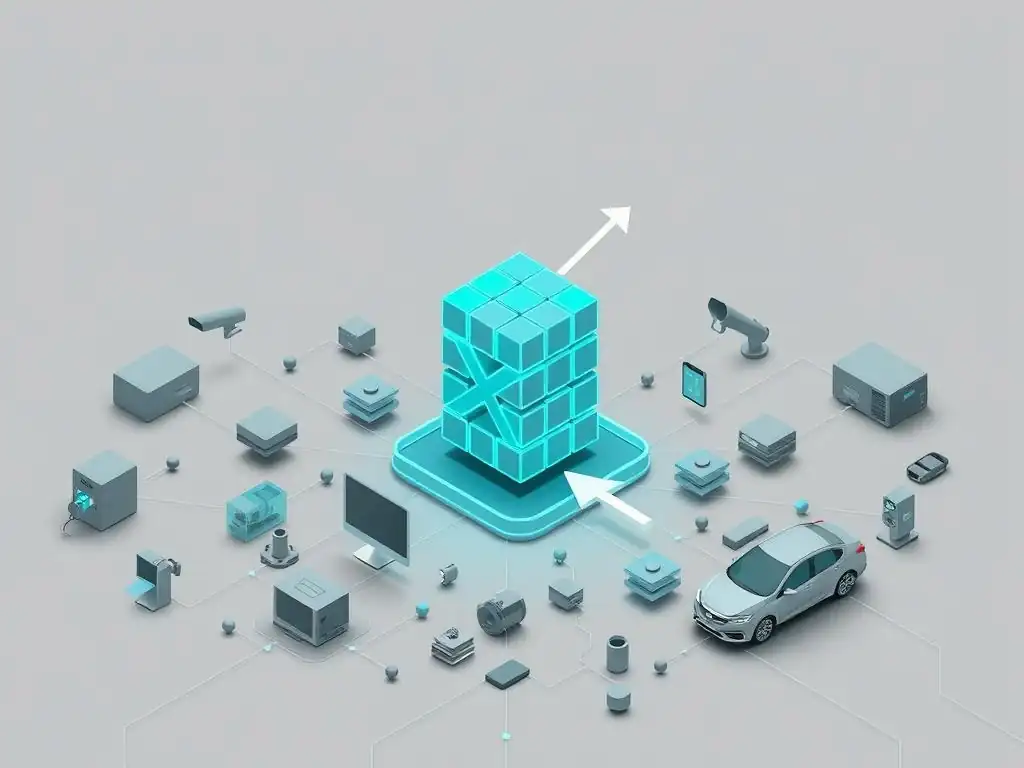
Situations with Low Security Requirements
While blockchain offers robust blockchain IoT data security, it is not always necessary or the most efficient solution. In scenarios where the security requirements are relatively low and the data sensitivity is minimal, the complexity and overhead of blockchain implementation might outweigh the benefits.
For example, consider a simple IoT application monitoring temperature in a non-critical environment, such as a personal weather station. If the data collected is primarily for personal use and the consequences of data tampering are negligible, then traditional security measures like basic encryption and access controls might be sufficient and more cost-effective than implementing a full-fledged blockchain solution.
In such low-security scenarios, the computational resources and energy consumption associated with blockchain, even private or consortium blockchains, could be considered overkill. Furthermore, the development and maintenance of blockchain-based systems require specialized expertise, which can add to the overall cost and complexity. Therefore, it’s crucial to assess the actual security risks and data sensitivity of your IoT application. If the potential harm from data breaches or manipulation is minimal, simpler and less resource-intensive security solutions should be considered before opting for blockchain IoT data security.
High-Throughput, Low-Latency IoT Data Applications
Blockchain, in its current form, often faces challenges in handling high-throughput and low-latency data streams, which are common in many IoT applications. For instance, industrial IoT systems monitoring high-speed machinery or real-time control systems often generate massive volumes of data that require near-instantaneous processing. Traditional blockchain platforms, with their inherent latency due to consensus mechanisms and block creation times, might not be suitable for these applications. While advancements are being made in scaling blockchain technologies, current limitations can make blockchain IoT data security impractical for real-time, high-throughput IoT scenarios.
Consider a factory automation system with thousands of sensors collecting data from production lines at millisecond intervals. Storing every sensor reading directly on a blockchain would likely overwhelm the network and introduce unacceptable delays. In such cases, alternative approaches, such as edge computing for initial data processing and aggregation before selectively recording key data points on the blockchain, might be necessary. Furthermore, exploring more scalable blockchain architectures or layer-2 solutions is crucial for addressing the performance limitations in high-throughput, low-latency blockchain IoT data security applications.
Limited Resources and Infrastructure for Blockchain Implementation
Implementing and maintaining a blockchain-based IoT data management system requires a certain level of technical infrastructure and resources. This includes the computational power to run blockchain nodes, storage capacity for the blockchain ledger, and the expertise to develop, deploy, and manage the system. For organizations with limited resources or in environments with constrained infrastructure, deploying and managing a blockchain solution for blockchain IoT data security might be challenging or even infeasible. This is particularly relevant in remote or resource-scarce locations where IoT deployments are often needed.
Consider deploying IoT sensors in remote agricultural fields or in developing regions with limited access to reliable internet connectivity and computational infrastructure. Setting up and maintaining blockchain nodes in such environments could be prohibitively expensive and complex. In these situations, alternative approaches, such as centralized or federated data management systems with robust security protocols, might be more practical and cost-effective. Therefore, the availability of resources and infrastructure must be carefully considered when evaluating the feasibility of blockchain IoT data security for specific IoT deployments.
Challenges and Limitations of Blockchain-Based IoT Data Management
Scalability Issues and Potential Bottlenecks
Scalability remains a significant challenge for widespread adoption of blockchain in IoT data management. As IoT networks grow exponentially, the volume of data and transactions generated can quickly overwhelm traditional blockchain platforms. The inherent limitations of blockchain consensus mechanisms, block sizes, and transaction processing speeds can create bottlenecks, hindering the performance and efficiency of blockchain IoT data security solutions. While advancements are being made in blockchain scalability, these limitations are still a critical consideration.
For example, a smart city with millions of connected devices generating continuous data streams would require a blockchain platform capable of handling an immense transaction load without compromising performance. Traditional public blockchains like Ethereum, even with scaling solutions, may still struggle to meet these demands cost-effectively. Private or consortium blockchains offer better control over scalability, but they still require careful architecture and optimization to avoid bottlenecks. Addressing scalability issues is paramount for realizing the full potential of blockchain IoT data security in large-scale IoT deployments.
Interoperability Challenges between Different Blockchain and IoT Platforms
The IoT landscape is characterized by a vast array of devices, communication protocols, and data formats. Similarly, the blockchain ecosystem comprises numerous platforms with varying architectures, consensus mechanisms, and functionalities. Interoperability challenges between different blockchain and IoT platforms pose a significant hurdle for seamless integration and widespread adoption of blockchain IoT data security. Lack of standardization and compatibility can lead to fragmented solutions and hinder data sharing and collaboration across different IoT and blockchain networks.
Imagine a scenario where different manufacturers deploy IoT devices using various communication protocols, and different stakeholders utilize different blockchain platforms for data management. Integrating these disparate systems to achieve a unified and interoperable blockchain IoT data security solution can be extremely complex and costly. Efforts are underway to develop interoperability standards and protocols for blockchain and IoT, but these challenges remain a significant barrier to overcome for realizing the full potential of this technology convergence.
Regulatory and Compliance Considerations for Blockchain IoT Applications
The regulatory landscape surrounding blockchain and IoT technologies is still evolving, creating uncertainties and challenges for organizations implementing blockchain IoT data security solutions. Data privacy regulations, such as GDPR and CCPA, impose strict requirements on data collection, storage, and processing, which must be carefully considered when using blockchain for IoT data management. Blockchain's immutability, while beneficial for security, can also present challenges in complying with data erasure requests under privacy regulations.
Furthermore, industry-specific regulations and compliance requirements, such as those in healthcare and finance, can impose additional constraints on the use of blockchain and IoT technologies. Navigating this complex regulatory landscape requires careful legal analysis and compliance planning to ensure that blockchain IoT data security solutions adhere to all applicable regulations. As regulations evolve, continuous monitoring and adaptation are crucial for maintaining compliance and avoiding legal risks in blockchain-based IoT deployments.
Future Trends in Blockchain and IoT Data Security
Advancements in Scalable Blockchain Technologies for IoT
The future of blockchain IoT data security hinges on advancements in scalable blockchain technologies that can effectively handle the massive data volumes and high transaction rates generated by IoT devices. Research and development efforts are focused on various scaling solutions, including layer-2 protocols, sharding, sidechains, and directed acyclic graph (DAG) based blockchains. These advancements aim to improve transaction throughput, reduce latency, and lower transaction costs, making blockchain more practical and efficient for large-scale IoT deployments.
Layer-2 solutions like state channels and rollups offer promising approaches to offload transaction processing from the main blockchain, significantly enhancing scalability. Sharding techniques aim to partition the blockchain into smaller, manageable shards, allowing for parallel transaction processing. DAG-based blockchains, which eliminate the need for sequential block creation, offer inherently higher throughput potential. These ongoing advancements in scalable blockchain technologies are crucial for unlocking the full potential of blockchain IoT data security in diverse and demanding IoT applications.
Integration of AI and Machine Learning with Blockchain IoT Solutions
The convergence of Artificial Intelligence (AI) and Machine Learning (ML) with blockchain IoT solutions represents a powerful trend in enhancing blockchain IoT data security and unlocking new functionalities. AI and ML can be leveraged to analyze the vast amounts of IoT data secured by blockchain, enabling intelligent threat detection, anomaly detection, and predictive security measures. Furthermore, AI-powered agents can automate security responses and proactively mitigate risks in IoT ecosystems.
For example, ML algorithms can be trained to identify patterns of malicious activity in IoT network traffic recorded on a blockchain, enabling early detection and prevention of cyberattacks. AI can also be used to optimize blockchain network performance, improve consensus mechanisms, and enhance smart contract security. The integration of AI and ML with blockchain IoT data security is paving the way for more intelligent, adaptive, and resilient IoT ecosystems, capable of proactively responding to evolving security threats.
The Role of Decentralized Identifiers (DIDs) in Securing IoT Devices
Decentralized Identifiers (DIDs) are emerging as a crucial technology for enhancing blockchain IoT data security by providing secure and self-sovereign identities for IoT devices. DIDs are verifiable digital identities that are not controlled by any central authority, empowering device owners with greater control over their digital identities and data. When integrated with blockchain, DIDs can enable secure device authentication, authorization, and data access management in IoT ecosystems.
Using DIDs, IoT devices can securely identify themselves, verify the identities of other devices and users, and establish secure communication channels. This decentralized identity framework enhances privacy and security by eliminating reliance on centralized identity providers and reducing the risk of single points of failure. DIDs are playing an increasingly important role in building more secure, private, and user-centric blockchain IoT data security solutions, fostering greater trust and control in the IoT landscape.
Conclusion: Making Informed Decisions About Blockchain for IoT Data Management
Summarizing the Benefits and Drawbacks of Blockchain in IoT
Blockchain offers compelling benefits for enhancing blockchain IoT data security, particularly in scenarios demanding high levels of data integrity, transparency, and trust. Its decentralized and immutable nature makes it resilient to attacks and tampering, providing a secure foundation for managing sensitive IoT data. Use cases in energy grids, automotive, and agriculture demonstrate the practical applications and value proposition of blockchain in securing IoT data and enabling new levels of transparency and traceability.
However, blockchain is not a panacea, and its implementation in IoT comes with challenges and limitations. Scalability issues, interoperability hurdles, and regulatory uncertainties need careful consideration. Furthermore, the cost and complexity of blockchain implementation may not be justified for all IoT applications, especially those with low security requirements or high-performance demands. A balanced assessment of the benefits and drawbacks is crucial for making informed decisions about leveraging blockchain for IoT data management.
Implementing a Proof of Concept for Blockchain in Your IoT Data Strategy
For organizations considering blockchain IoT data security, implementing a proof of concept (PoC) is a crucial step. A PoC allows for testing and validating the feasibility, performance, and value proposition of blockchain in a specific IoT use case before committing to full-scale deployment. A well-designed PoC should focus on addressing specific security challenges, demonstrating the benefits of blockchain in a real-world scenario, and identifying potential implementation challenges.
Starting with a small-scale PoC allows for iterative learning, risk mitigation, and cost-effective experimentation. The PoC should involve key stakeholders, including technical teams, business users, and security experts, to ensure alignment and gather valuable feedback. The results of the PoC will provide valuable insights for making informed decisions about the strategic adoption of blockchain for blockchain IoT data security and guide the development of a robust and effective IoT data management strategy.
Frequently Asked Questions
What are the primary benefits of using blockchain for IoT data management?
Blockchain offers enhanced data security through its immutable nature, improved data integrity with distributed consensus, and increased transparency for audit trails in IoT systems.
How does blockchain enhance IoT data security compared to traditional methods?
Blockchain's cryptographic hashing and decentralized structure make it significantly harder to tamper with data compared to centralized databases, boosting data security and trust.
What are some key use cases where blockchain excels in IoT data management?
Supply chain tracking, smart contracts for automated device interactions, and secure data sharing between devices are prime examples where blockchain enhances IoT data security and efficiency.
What are the main challenges involved in implementing blockchain for IoT data management?
Scalability limitations, high transaction costs (depending on the blockchain), and the complexity of integrating blockchain with existing IoT infrastructure can be significant hurdles.
How does blockchain address the issue of data trust in IoT networks?
By providing a tamper-proof and auditable record of all data transactions, blockchain establishes a higher level of data trust and accountability among IoT devices and stakeholders.
Final Reflection: Securing Tomorrow's Connected World
The exploration of blockchain's role in IoT data management underscores a critical need: establishing trust and security in an increasingly interconnected world. As we've seen through various use cases, blockchain offers a compelling solution to the vulnerabilities inherent in centralized IoT systems, promising enhanced data integrity, transparency, and control. The potential for blockchain to revolutionize how we manage and secure IoT data is not just theoretical; it's a practical imperative for building a future where connected devices can operate safely and reliably.
The integration of blockchain into IoT is not merely a technological advancement; it represents a fundamental shift in how we perceive and interact with data. This shift demands a deeper understanding of the ethical and societal implications of data ownership and security. Data is the new oil, but unlike oil, it's a resource that can be shared and used without being depleted.
This quote highlights the potential of blockchain to unlock the true value of IoT data while safeguarding its integrity and ensuring equitable access. The ongoing evolution of this technology will undoubtedly shape the future of data management, impacting everything from supply chains to healthcare.
Now, as you consider the possibilities presented by blockchain for IoT data security, I invite you to reflect on your own role in shaping this future. How can you contribute to the responsible development and implementation of these technologies? What steps can you take to advocate for data privacy and security in your own sphere of influence? The future of our connected world depends on our collective commitment to building secure, transparent, and trustworthy systems. Let us embrace the potential of blockchain to create a more secure and equitable future for all.
Fortify Your IoT Data: Start Building with Blockchain Today!
Thank you for exploring the intersection of blockchain and IoT data management. We hope you've gained valuable insights into when this technology can enhance your projects. Now, it's time to apply that knowledge.
To get started, consider identifying key IoT use cases where data integrity, security, and transparency are critical. Investigate blockchain frameworks tailored for IoT applications, such as IOTA or Helium, to simplify your development process. Sharing this article with colleagues can also inspire discussions about the potential of blockchain in IoT and encourage collaborative innovation.
What IoT challenges are you most eager to solve with blockchain technology? Share your thoughts in the comments below!
Leave a Reply