
Unlocking the Potential of DIDs: Decentralized Identifiers and Security

Welcome to Blockchain Trends, your compass in the rapidly evolving world of decentralized technology.
Dive deep into the future with us as we explore how blockchain is revolutionizing industries far beyond cryptocurrencies. Are you ready to discover the groundbreaking security benefits offered by Decentralized Identifiers (DIDs)? Unlock the potential and understand how DIDs are reshaping identity management and cybersecurity in the age of blockchain. Let's begin!
Unlocking the Potential of DIDs: Decentralized Identifiers and Security
- Introduction to Decentralized Identifiers (DIDs)
- Understanding the Core Principles of DIDs
- Decentralized Identifiers Security Benefits: A Detailed Look
- Exploring the Technical Architecture of DIDs
- Use Cases for Decentralized Identifiers (DIDs)
- Implementing DIDs: Challenges and Considerations
- The Future of Decentralized Identity and DIDs
- Conclusion: Embracing the Power of Decentralized Identity for a More Secure Future
-
Frequently Asked Questions
- What are Decentralized Identifiers (DIDs) and why are they important?
- How do Decentralized Identifiers enhance security compared to traditional identity systems?
- What are the key security benefits of using DIDs in decentralized applications (dApps)?
- How does blockchain technology contribute to the security of Decentralized Identifiers?
- What are some potential challenges or risks associated with the security of Decentralized Identifiers?
- Final Reflection: Embracing the Secure Future with Decentralized Identity
- Unlock Your Decentralized Future: Claim Your Digital Identity Now!
Introduction to Decentralized Identifiers (DIDs)
What are Decentralized Identifiers (DIDs)? A Concise Explanation
Decentralized Identifiers, or DIDs, are a revolutionary concept in the realm of digital identity. Imagine having a digital identity that is entirely under your control, independent of any central authority like governments or corporations. That's precisely what DIDs offer.
In essence, a DID is a new type of identifier that enables verifiable, decentralized digital identity. Unlike traditional usernames or email addresses controlled by service providers, DIDs are owned and managed by the entity they identify, whether that's an individual, organization, or even a device. This self-sovereign nature is a fundamental shift, placing the power of identity management back into the hands of the user.
Think of DIDs as similar to website URLs, but instead of pointing to a website, they point to a DID document. This document contains public keys, service endpoints, and other crucial information that allows for secure interactions and verifications. DIDs are designed to be globally unique and resolvable, meaning they can be used and verified across different systems and platforms without relying on centralized intermediaries. This inherent decentralization is what sets DIDs apart and makes them a cornerstone of secure and privacy-respecting digital interactions in the evolving Web3 landscape.
The Growing Need for Secure Digital Identity in the Web3 Era
The transition to Web3, characterized by decentralization, user empowerment, and data ownership, highlights the critical need for robust and secure digital identity solutions. Traditional identity systems, heavily reliant on centralized providers, are proving to be increasingly vulnerable to breaches and privacy violations. Data breaches are rampant, with estimates suggesting billions of records compromised globally in recent years. For example, in 2021 alone, data breaches exposed over 5.9 billion records according to Risk Based Security, underscoring the fragility of centralized identity infrastructure. Furthermore, users lack control over their personal data, often unknowingly surrendering vast amounts of information to corporations.
Web3 demands a paradigm shift towards user-centric identity. In this new era, individuals should have full control over their digital identities, deciding what information to share, with whom, and for how long. This is where DIDs become indispensable. They offer a foundation for self-sovereign identity, enabling individuals to manage their digital presence securely and privately. As we move towards a more decentralized and interconnected digital world, the need for secure digital identity solutions like DIDs is not just growing; it's becoming absolutely essential to ensure user trust and foster a truly empowering Web3 experience.
Decentralized Identity Security Solutions: An Overview
Decentralized Identity Security Solutions are emerging as a vital response to the security and privacy shortcomings of traditional identity management systems. At the heart of these solutions are Decentralized Identifiers (DIDs), which serve as the building blocks for self-sovereign identity. Beyond just identifiers, the ecosystem encompasses a range of technologies and protocols designed to empower individuals with greater control and security over their digital lives. These solutions leverage blockchain and Distributed Ledger Technology (DLT) to create tamper-proof and transparent identity systems, reducing reliance on centralized authorities.
Consider the landscape of digital interactions today: users constantly juggle multiple usernames and passwords, often managed by various platforms. Decentralized Identity Security Solutions aim to simplify this complexity while enhancing security. By adopting DIDs and related technologies like Verifiable Credentials, users can present proofs of their identity and attributes without revealing unnecessary personal information. This approach not only strengthens security against identity theft and fraud but also promotes user privacy by minimizing data exposure. The move towards decentralized identity represents a significant step towards a more secure, private, and user-centric digital future.
Understanding the Core Principles of DIDs
Key Characteristics of Decentralized Identifiers
Decentralized Identifiers are defined by several key characteristics that distinguish them from traditional identifiers and underpin their security benefits. Firstly, decentralization is paramount. DIDs are not controlled by any single organization or authority, ensuring resilience against single points of failure and censorship. Secondly, DIDs are self-sovereign, meaning the entity identified by the DID has ultimate control over it. This ownership is a fundamental departure from traditional systems where identity is often managed by service providers. Thirdly, DIDs are globally unique, ensuring that each identifier is distinct and can be reliably referenced across different systems.
Furthermore, DIDs are designed for verifiability. Through cryptographic mechanisms, anyone can verify the authenticity and integrity of a DID and its associated information, typically stored in a DID Document. This verifiability is crucial for establishing trust in digital interactions. Finally, DIDs are built to be persistent, meaning they are designed to last and remain resolvable over long periods, contributing to the stability and reliability of decentralized identity systems. These core characteristics collectively contribute to the robust security and user empowerment offered by DIDs.
How DIDs Differ from Traditional Identity Systems
The fundamental difference between DIDs and traditional identity systems lies in the locus of control and the underlying architecture. Traditional systems, like those using usernames and passwords managed by websites or OAuth provided by large platforms like Google or Facebook, are inherently centralized. This means a single entity controls the identity, data, and access. Users are dependent on these providers, and security breaches or provider outages can directly impact their digital identities and access to services. Data is often siloed and user privacy is often secondary to the platform's interests.
In contrast, DIDs operate on a decentralized model. Users possess and control their DIDs, and the associated identity data is not centrally stored. Instead, information is often distributed and verifiable through decentralized networks. This shift empowers users with self-sovereignty, giving them agency over their digital identities and data. DIDs promote interoperability, allowing for identity portability across different platforms without vendor lock-in. Moreover, the cryptographic foundations of DIDs enhance security and privacy, mitigating risks associated with centralized vulnerabilities and data exploitation common in traditional identity systems.
The Role of Decentralized Ledger Technology (DLT) in DID Implementation
Decentralized Ledger Technology (DLT), particularly blockchain, plays a crucial role in the implementation and operation of Decentralized Identifiers. While DIDs themselves are identifiers, they need a robust and secure infrastructure to manage their registration, resolution, and associated metadata. DLT provides this infrastructure by offering a tamper-proof, transparent, and auditable record of DID operations. Specifically, DLT is often used to host DID registries, which act as public directories where DID Documents can be located and verified.
The immutability of blockchain ensures that once a DID and its associated information are registered, they cannot be altered or deleted without the consent of the DID controller, enhancing the security and integrity of the identity system. The decentralized nature of DLT also eliminates single points of failure, making the DID infrastructure more resilient and reliable.
Furthermore, the cryptographic principles inherent in DLT align perfectly with the security requirements of DIDs, enabling secure key management, digital signatures, and verifiable data exchange. While DIDs can be implemented without blockchain, DLT provides a particularly well-suited foundation for building scalable, secure, and trustworthy decentralized identity solutions.
Decentralized Identifiers Security Benefits: A Detailed Look
Enhanced Privacy and Data Control with DIDs
One of the most significant Decentralized Identifiers security benefits is the enhanced privacy and data control they offer to users. Traditional identity systems often require users to share excessive personal information, creating honeypots of sensitive data vulnerable to breaches. With DIDs, users gain granular control over what information they share and with whom. Because DIDs are self-sovereign, individuals decide what attributes to associate with their DID and how these attributes are used in interactions. This minimizes data exposure and reduces the risk of privacy violations.
Consider a scenario where a user needs to prove their age to access age-restricted content. With traditional systems, they might have to provide their full date of birth. Using DIDs and Verifiable Credentials, they can selectively disclose only the fact that they are over a certain age, without revealing their precise birth date. This principle of minimal disclosure is a core tenet of privacy by design and is readily facilitated by DIDs. By putting users in control of their data and enabling selective disclosure, DIDs fundamentally enhance privacy compared to traditional, data-centric identity models.
Improved Security Against Identity Theft and Fraud
Decentralized Identifiers offer a significant improvement in security against identity theft and fraud, another key Decentralized Identifiers security benefit. Traditional identity systems, reliant on usernames and passwords, are susceptible to phishing, credential stuffing, and database breaches, leading to widespread identity theft. DIDs, leveraging cryptographic keys and decentralized infrastructure, mitigate many of these risks. Since DIDs are not centrally stored and controlled, there is no single point of failure for attackers to exploit on a massive scale.
Furthermore, the use of public-key cryptography in DIDs enables stronger authentication mechanisms than passwords. Digital signatures and zero-knowledge proofs can be used to verify identity without revealing sensitive credentials, making it significantly harder for malicious actors to impersonate users. For example, instead of relying on a password that can be stolen or guessed, a user can cryptographically prove control of their DID using their private key, offering a much more secure authentication process. This enhanced security architecture makes DIDs a powerful tool in combating identity theft and fraudulent activities in the digital realm.
Increased Transparency and Auditability in Identity Management
Increased transparency and auditability in identity management represent another crucial Decentralized Identifiers security benefit. Traditional identity systems often operate in opaque silos, making it difficult to track data flows or verify the integrity of identity processes. DIDs, especially when implemented using DLT, offer a more transparent and auditable approach. The use of a decentralized ledger provides a publicly verifiable record of DID creation, updates, and interactions, enhancing accountability and trust.
For instance, in applications requiring compliance and regulatory oversight, the audit trail provided by DLT-based DID systems can be invaluable. Organizations can demonstrate adherence to data privacy regulations and verify the provenance of identity information. Moreover, the transparency of DID operations can foster greater trust among users, as they can have increased visibility into how their identity information is being managed and used. This enhanced transparency and auditability not only bolster security but also contribute to building more trustworthy and accountable digital identity ecosystems.
Exploring the Technical Architecture of DIDs
DID Methods and Registries: A Technical Breakdown
The technical architecture of DIDs involves several key components, including DID Methods and Registries. A DID Method defines the specific rules and processes for creating, resolving, updating, and deactivating DIDs on a particular DLT or decentralized system. Each DID Method is identified by a unique prefix that appears at the beginning of a DID. For example, the did:example method is often used for illustrative purposes, while did:web utilizes existing web infrastructure, and did:peer is designed for peer-to-peer interactions without reliance on a public ledger. Different DID Methods offer varying trade-offs in terms of decentralization, performance, and functionality.
DID Registries are the systems used to store and manage DID Documents. While some DID Methods, like did:web, might not require a dedicated registry, many rely on DLT-based registries for enhanced security and decentralization. These registries act as public directories where DID Documents can be published and resolved. The choice of DID Method and Registry is crucial and depends on the specific use case requirements. For example, applications requiring high levels of security and auditability might favor DLT-based methods and registries, while others prioritizing simplicity or interoperability with existing web infrastructure might opt for different approaches.
Verifiable Credentials and Their Relationship to DIDs
Verifiable Credentials (VCs) are an integral part of the decentralized identity ecosystem and are closely related to DIDs. A Verifiable Credential is a digitally signed, tamper-proof credential that represents a set of claims about an individual, organization, or entity. Think of them as digital versions of physical credentials like driver's licenses or diplomas. However, unlike physical credentials, VCs are designed to be cryptographically verifiable and selectively disclosable, enhancing both security and privacy.
The relationship between VCs and DIDs is fundamental. DIDs provide the identity foundation for issuing and verifying VCs. An issuer, identified by a DID, can issue a VC to a holder, also identified by a DID.
The VC is digitally signed by the issuer's private key, which is associated with their DID. Verifiers can then use the issuer's DID to retrieve their public key and cryptographically verify the authenticity and integrity of the VC. This interconnected system of DIDs and VCs enables secure and privacy-preserving exchange of verifiable information in a decentralized manner, forming a cornerstone of decentralized identity solutions.
The DID Document: Structure and Functionality
The DID Document is a core component of the DID architecture. It is a JSON-LD document that contains crucial information associated with a DID, enabling secure interactions and verifications. Think of the DID Document as the public profile of a DID, containing the necessary public keys, service endpoints, and other metadata required to interact with the entity identified by the DID. The structure and functionality of the DID Document are standardized by the W3C Decentralized Identifiers specification, ensuring interoperability across different DID implementations.
A DID Document typically includes: verificationMethod sections, which specify public keys that can be used for cryptographic operations like signing and verification; service endpoints, which define communication channels for interacting with the DID subject; and authentication sections, which indicate how the DID subject can be authenticated. When a DID is resolved, its corresponding DID Document is retrieved from the DID Registry. This document then provides the necessary information for verifiers to securely interact with the DID subject, verify credentials, establish secure communication channels, and perform other identity-related operations. The DID Document is therefore central to the functionality and security of the entire DID ecosystem.
Use Cases for Decentralized Identifiers (DIDs)
DIDs in Supply Chain Management: Ensuring Product Authenticity
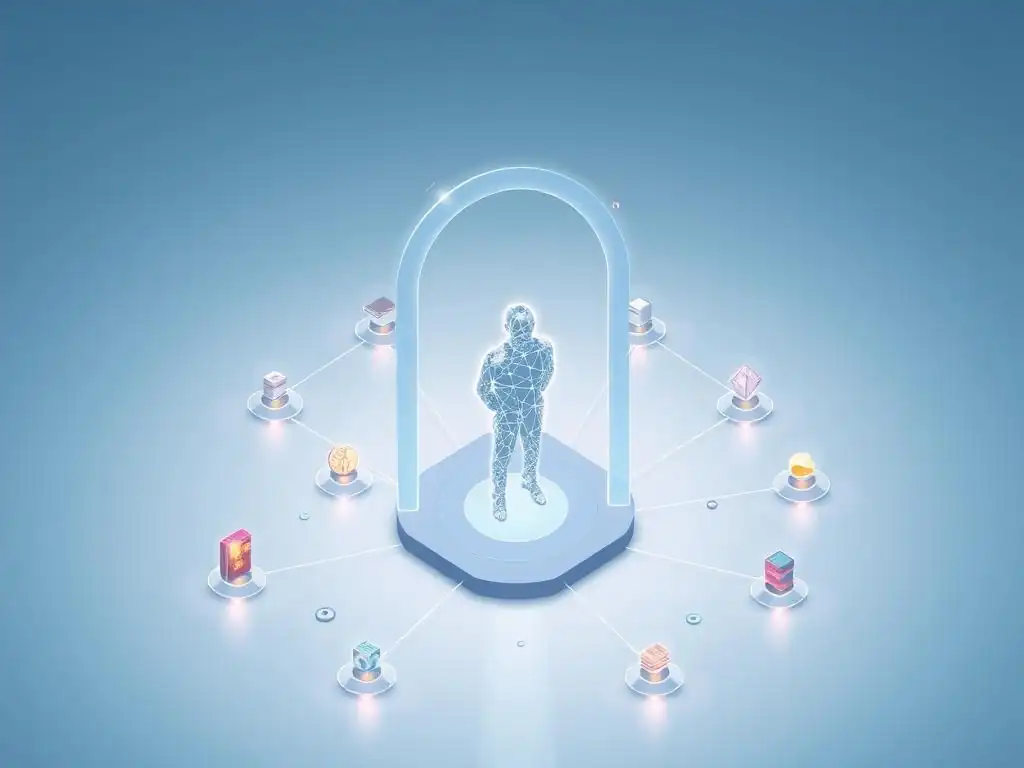
In supply chain management, DIDs offer a powerful solution for ensuring product authenticity and traceability, addressing critical issues like counterfeiting and grey market goods. By assigning DIDs to products, organizations, and locations within the supply chain, it becomes possible to create a transparent and verifiable record of a product's journey from origin to consumer. For example, a manufacturer can assign a DID to each product batch, and as the product moves through distributors, retailers, and finally to the consumer, each step can be recorded and cryptographically signed using the respective DIDs involved.
This application of DIDs enhances supply chain security and transparency. Consumers can verify the authenticity of a product by checking its DID against the distributed ledger, ensuring they are purchasing genuine goods and not counterfeits. Supply chain stakeholders can track products in real-time, improving efficiency and accountability. Industry estimates suggest that counterfeiting costs the global economy hundreds of billions of dollars annually. DIDs provide a tangible tool to combat this issue, fostering trust and integrity in supply chains across various sectors, from pharmaceuticals to luxury goods.
DIDs in Healthcare: Secure and Patient-Controlled Medical Records
DIDs hold immense potential in healthcare, particularly for creating secure and patient-controlled medical records. Currently, patient medical data is often fragmented across different healthcare providers, leading to inefficiencies and privacy concerns. DIDs can empower patients to own and control their medical identities and data, enabling seamless and secure sharing of information with authorized healthcare professionals. Imagine a patient receiving a DID upon registering with a healthcare system. This DID becomes their persistent digital identity for all medical interactions.
Using VCs issued by healthcare providers and linked to the patient's DID, medical records, prescriptions, and test results can be securely stored and shared. Patients can grant specific access permissions to doctors or specialists, ensuring data privacy and control. This patient-centric approach can streamline healthcare processes, reduce medical errors due to incomplete information, and enhance patient engagement in their own care.
Studies have shown that improved data interoperability in healthcare could save billions of dollars annually and significantly improve patient outcomes. DIDs offer a pathway to realizing this potential by establishing a secure and patient-empowering foundation for digital health records.
DIDs in Government: Streamlining Citizen Services
Governments worldwide are exploring DIDs to streamline citizen services and enhance the security and efficiency of public administration. Traditional government identity systems are often fragmented, paper-based, and prone to inefficiencies and fraud. DIDs can provide citizens with a secure and portable digital identity that can be used to access various government services online, from voting and tax filing to social benefits and permits. For example, a national digital identity system based on DIDs could eliminate the need for physical ID cards and reduce identity fraud in government processes.
By issuing DIDs to citizens, governments can create more efficient and user-friendly public services. Citizens can manage their own identity data and selectively share verifiable credentials with government agencies as needed, enhancing privacy and data control. This can simplify bureaucratic processes, reduce administrative costs, and improve citizen satisfaction with government services. Countries like Estonia and Switzerland are already piloting or implementing decentralized identity solutions for government services, demonstrating the growing recognition of the benefits of DIDs in the public sector.
DIDs in Education: Verifiable Credentials for Educational Attainment
The education sector is another area where DIDs and Verifiable Credentials can revolutionize how educational attainment is recorded, verified, and shared. Traditionally, diplomas and transcripts are paper-based, easily forged, and cumbersome to verify. VCs issued by educational institutions and linked to students' DIDs can provide tamper-proof and easily verifiable records of degrees, certifications, and skills. Imagine a university issuing a VC diploma to a graduate's DID upon completion of their degree.
This digital diploma can then be shared by the graduate with potential employers, professional licensing bodies, or further education institutions. Verifiers can cryptographically verify the authenticity of the VC directly with the issuing university, eliminating the need for manual verification processes and reducing the risk of fraudulent credentials.
This application of DIDs and VCs can streamline credential verification, enhance the portability of educational qualifications, and empower individuals to control and manage their educational records securely and efficiently. Organizations like the IMS Global Learning Consortium are actively promoting the adoption of VCs in education to realize these benefits on a global scale.
Implementing DIDs: Challenges and Considerations
Interoperability Issues and Standardization Efforts
While DIDs offer numerous benefits, their widespread adoption faces challenges, particularly concerning interoperability. Currently, various DID Methods and implementations exist, potentially leading to fragmentation and hindering seamless cross-system interactions. If different DID systems are not interoperable, the potential for universal digital identity and seamless data exchange is limited. For example, a DID created using one method might not be recognized or resolvable by a system using a different method.
Recognizing this challenge, standardization bodies like the W3C are actively working on DID specifications and protocols to promote interoperability. The W3C Decentralized Identifiers (DIDs) specification provides a common framework for DID syntax, resolution, and DID Documents. Ongoing efforts are focused on defining common data models for Verifiable Credentials and developing interoperability profiles to ensure that DIDs and VCs can be seamlessly exchanged and verified across different platforms and systems. Achieving broad interoperability through these standardization efforts is crucial for realizing the full potential of decentralized identity.
Scalability and Performance Challenges
Scalability and performance are important considerations for the widespread adoption of DIDs, especially when implemented using DLT. Some DLT platforms may face limitations in transaction throughput and latency, which could impact the performance of DID operations, particularly in high-volume scenarios. For example, if millions of DIDs need to be created or resolved simultaneously, the underlying DLT infrastructure must be able to handle this load efficiently.
However, various strategies are being explored to address these challenges. Layer-2 scaling solutions for blockchain, such as rollups and state channels, can significantly improve transaction throughput and reduce latency. Alternative DID Methods, like did:web or did:peer, offer different scalability trade-offs by leveraging existing web infrastructure or peer-to-peer networks instead of solely relying on public blockchains. Furthermore, advancements in DLT technology itself are continuously improving scalability and performance. Addressing these scalability and performance challenges is crucial to ensure that DID solutions can meet the demands of large-scale deployments and real-world applications.
User Experience Considerations for DID Adoption
User experience (UX) is a critical factor in the successful adoption of any technology, and DIDs are no exception. For mainstream adoption, DIDs need to be user-friendly and intuitive, even for individuals who are not technically savvy. The complexity of cryptographic keys, DID Documents, and decentralized systems can be daunting for average users. If using DIDs is perceived as too complex or cumbersome, adoption rates will likely remain limited.
Therefore, significant efforts are needed to improve the user experience of DID solutions. This includes developing user-friendly wallets and applications that abstract away the underlying technical complexities, providing clear and understandable interfaces for managing DIDs and VCs, and offering robust user support and educational resources. Simplifying key management, streamlining DID creation and recovery processes, and ensuring seamless integration with existing applications are all crucial steps towards making DIDs accessible and user-friendly for a wider audience. Focusing on UX will be key to driving mainstream adoption of decentralized identity.
The Future of Decentralized Identity and DIDs
Emerging Trends in DID Technology
Several emerging trends are shaping the future of DID technology and decentralized identity. One notable trend is the increasing focus on privacy-enhancing technologies (PETs) integrated with DIDs. Zero-knowledge proofs, secure multi-party computation, and homomorphic encryption are being explored to enable even more privacy-preserving identity interactions. For example, zero-knowledge proofs can allow users to prove attributes about themselves without revealing the underlying data, further enhancing privacy and data minimization.
Another trend is the development of more user-centric DID management tools. Wallets and applications are becoming more sophisticated, offering features like key recovery, DID delegation, and seamless integration with various services. Advancements in DID Methods and Registries are also ongoing, with new methods emerging that offer improved scalability, privacy, or specific functionalities tailored to different use cases. Furthermore, the convergence of DIDs with other decentralized technologies, such as decentralized storage and decentralized computation, is opening up new possibilities for building comprehensive decentralized ecosystems.
The Impact of DIDs on the Broader Web3 Ecosystem
DIDs are poised to have a profound impact on the broader Web3 ecosystem. As the foundational layer for self-sovereign identity, DIDs can unlock a more user-centric, secure, and interoperable Web3 experience. By empowering users with control over their digital identities and data, DIDs can foster greater trust and participation in decentralized applications and services. They can enable seamless onboarding to Web3 platforms, facilitate secure data sharing, and reduce reliance on centralized intermediaries.
In decentralized finance (DeFi), DIDs can play a crucial role in Know Your Customer (KYC) and Anti-Money Laundering (AML) compliance while preserving user privacy. In decentralized social media, DIDs can empower users to control their online identities and data, fostering a more equitable and censorship-resistant digital environment. Across various Web3 domains, DIDs are expected to become a core building block, enabling a more decentralized, user-empowering, and secure internet. Industry analysts predict that decentralized identity solutions will be a critical component of the future Web3 infrastructure.
Predictions for DID Adoption in the Coming Years
Predictions for DID adoption in the coming years are optimistic, with increasing momentum across various sectors. Industry experts forecast significant growth in the adoption of decentralized identity solutions, driven by growing concerns about data privacy, security breaches, and the need for user empowerment in the digital age. Organizations like the Decentralized Identity Foundation (DIF) are playing a key role in promoting DID adoption and fostering collaboration across the ecosystem.
We can expect to see increased adoption of DIDs in enterprise applications, government services, healthcare, finance, and various other sectors. Pilot projects and early deployments are already underway, demonstrating the practical benefits of DIDs. As standardization efforts mature, user experience improves, and the Web3 ecosystem continues to evolve, DID adoption is expected to accelerate. Within the next 3-5 years, decentralized identity could move from a niche concept to a mainstream technology, fundamentally transforming how we manage and interact with digital identities online.
Conclusion: Embracing the Power of Decentralized Identity for a More Secure Future
Recap of Decentralized Identifiers Security Benefits
Decentralized Identifiers offer a compelling array of Decentralized Identifiers security benefits that address critical shortcomings in traditional identity systems. They enhance privacy by enabling data minimization and user control, improve security against identity theft and fraud through cryptographic mechanisms and decentralized infrastructure, and increase transparency and auditability in identity management through the use of DLT. These benefits collectively contribute to a more secure, private, and user-empowering digital identity landscape.
DIDs represent a paradigm shift from centralized, provider-centric identity models to decentralized, user-centric approaches. By placing control of identity back into the hands of individuals, DIDs empower users and foster greater trust in digital interactions. The security advantages of DIDs are not merely theoretical; they are tangible and address real-world challenges in identity management.
The Importance of DIDs for Web3 and Beyond
The importance of DIDs extends far beyond just security; they are foundational for the evolution of Web3 and the future of the internet. DIDs are essential for realizing the vision of a decentralized, user-owned, and user-controlled Web3. They provide the identity layer necessary for building decentralized applications, services, and ecosystems that empower individuals and communities, rather than large corporations. DIDs are not just about securing identities; they are about enabling a more equitable and open digital future.
As we move towards a more interconnected and decentralized world, the need for self-sovereign identity solutions like DIDs will only intensify. They are crucial for fostering trust, enabling secure data exchange, and empowering individuals in the digital age. The potential impact of DIDs spans across industries and sectors, promising to transform how we interact online and manage our digital lives.
Call to Action: Exploring DID Implementations
The time to explore and embrace DID implementations is now. For developers, businesses, and organizations, understanding and adopting DIDs is crucial for building secure, privacy-preserving, and user-centric solutions for the Web3 era and beyond. Start by researching different DID Methods and Registries, experimenting with DID wallets and Verifiable Credential technologies, and considering how DIDs can be integrated into existing systems and workflows.
For individuals, learning about DIDs and advocating for their adoption is a step towards reclaiming control over your digital identity and supporting a more secure and empowering internet. Engage with the decentralized identity community, explore DID-enabled applications, and demand privacy and security-focused identity solutions. By collectively embracing the power of decentralized identity, we can pave the way for a more secure, private, and user-centric digital future for all.
Frequently Asked Questions
What are Decentralized Identifiers (DIDs) and why are they important?
DIDs are self-sovereign digital identities that aren't controlled by any central authority. They offer individuals and organizations greater control over their personal data and how it's shared, leading to enhanced privacy.
How do Decentralized Identifiers enhance security compared to traditional identity systems?
DIDs leverage blockchain technology to create cryptographically secure identifiers. This reduces the risk of centralized data breaches and unauthorized access, as no single entity holds all the identity information.
What are the key security benefits of using DIDs in decentralized applications (dApps)?
DIDs allow users to verify their identity and access dApps without relying on third-party providers. This eliminates single points of failure and enhances user privacy by minimizing data sharing.
How does blockchain technology contribute to the security of Decentralized Identifiers?
The immutable and distributed nature of blockchain provides a secure and transparent record of DID creation, updates, and revocation. This makes it difficult for attackers to tamper with or falsify identity information.
What are some potential challenges or risks associated with the security of Decentralized Identifiers?
While DIDs offer enhanced security, potential challenges include key management and recovery, as well as the need for robust protocols to prevent Sybil attacks and ensure DID resolution integrity.
Final Reflection: Embracing the Secure Future with Decentralized Identity
The journey through the landscape of Decentralized Identifiers (DIDs) reveals a powerful truth: true digital autonomy hinges on secure and verifiable identity. As we navigate an increasingly interconnected world, the vulnerabilities of centralized identity systems become ever more apparent. The promise of DIDs, therefore, isn't just a technological advancement; it's a paradigm shift towards a more secure and equitable digital future.
The potential of DIDs to reshape our interactions online is profound. The ability to control our own data, to prove our identity without relying on intermediaries, and to participate in a trustless ecosystem is not just a theoretical ideal, but a tangible goal within reach. This resonates deeply with the growing desire for privacy and control in a world where data breaches and identity theft are commonplace. As the saying goes: Give me liberty, or give me death.
While perhaps dramatic, this sentiment reflects the fundamental human desire for self-determination, which DIDs aim to empower in the digital realm.
Now, as you consider the security benefits of Decentralized Identifiers, I urge you to reflect on your own digital footprint. How much of your personal information is controlled by others? What steps can you take to reclaim ownership and enhance your security? The future of identity is decentralized, and it's up to each of us to embrace this change and contribute to a more secure and empowering digital world.
Unlock Your Decentralized Future: Claim Your Digital Identity Now!
Thanks for delving into the world of Decentralized Identifiers (DIDs) and their security implications. You've now got a solid understanding of how DIDs can revolutionize online identity. Ready to take the next step and embrace the power of self-sovereign identity?
Here's how you can start:
- Explore setting up your own DID using a free, open-source wallet like Spruce ID or Cheqd. This is your first step towards owning your digital identity!
- Join the conversations! Engage in online forums and communities dedicated to DIDs and verifiable credentials. Share your learnings and connect with fellow enthusiasts.
- Think about how you can implement DID concepts in your field. Could your organization benefit from more secure and user-controlled identity management?
What's the first concrete action you'll take this week to begin utilizing DIDs in your personal or professional life? Share your plans in the comments below!
Leave a Reply