
From Linear to Networked: Blockchain and the Transformation of Supply Chain Models

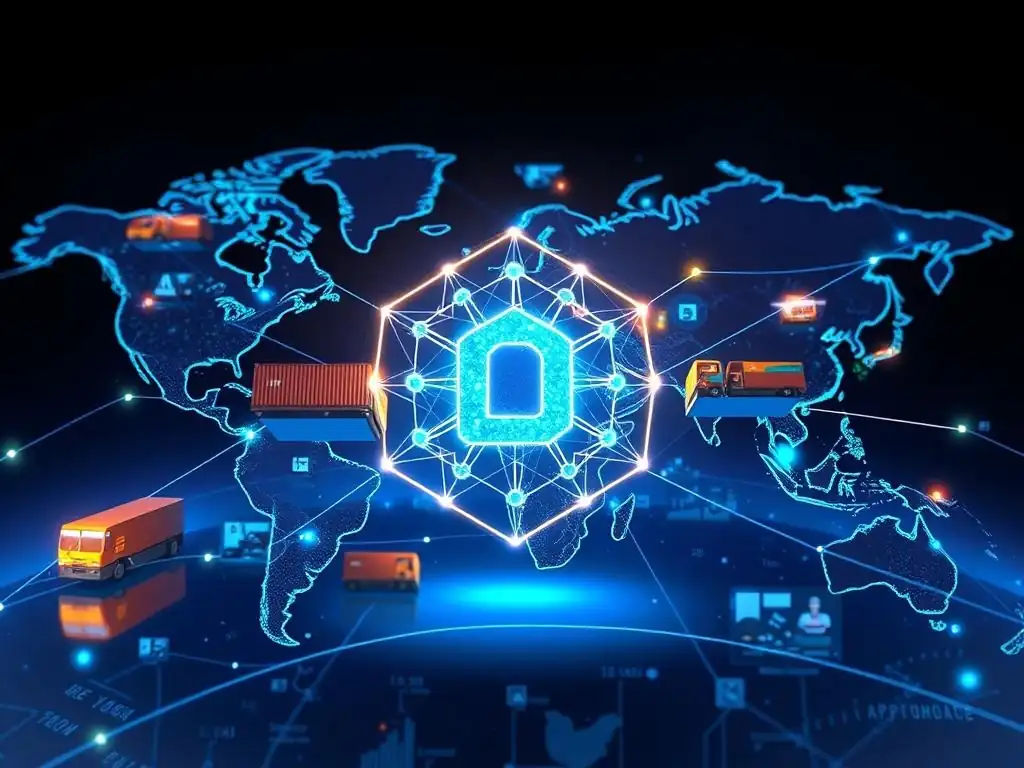
Welcome to Blockchain Trends, your compass in the rapidly evolving world of decentralized technologies. Prepare to journey beyond the hype and uncover the real transformative power of blockchain. Intrigued by how this revolutionary technology is reshaping industries? Dive into our analysis of Blockchain supply chain transformation strategies and discover how linear models are giving way to a more efficient, transparent, and resilient future. The possibilities are vast – are you ready to explore them with us?
From Linear to Networked: Blockchain and the Transformation of Supply Chain Models
- Introduction: Revolutionizing Supply Chains with Blockchain Technology
- Understanding the Core Concepts: Blockchain and Supply Chain Synergies
- Blockchain Supply Chain Transformation Strategies: A Deep Dive
- Use Cases: Real-World Examples of Blockchain in Supply Chain
- Overcoming Challenges in Blockchain Supply Chain Adoption
- The Future of Blockchain in Supply Chain: Trends and Predictions
- Conclusion: Embracing Blockchain for Supply Chain Innovation
-
Frequently Asked Questions
- What are the key benefits of using blockchain for supply chain management?
- How can blockchain help combat counterfeit goods in the supply chain?
- What role does DeFi (Decentralized Finance) play in blockchain-based supply chains?
- What are some of the regulatory challenges facing the adoption of blockchain in supply chains?
- What are some practical blockchain supply chain transformation strategies businesses can implement?
- Final Reflection: Embracing the Decentralized Future
- Revolutionize Your Supply Chain: Embrace the Blockchain Advantage!
Introduction: Revolutionizing Supply Chains with Blockchain Technology
The Inherent Limitations of Traditional Linear Supply Chains
Traditional supply chain models operate in a linear, sequential fashion, moving goods and information step-by-step from raw material suppliers through manufacturers, distributors, and retailers to the end consumer. This structure, while functional for centuries, suffers from significant inherent limitations. Information silos are prevalent, with each participant maintaining their own separate ledger and data systems, leading to a lack of real-time visibility across the entire chain. This fragmentation makes it difficult to track goods accurately, identify bottlenecks, and respond quickly to disruptions or changes in demand.
Furthermore, the reliance on intermediaries and manual processes introduces inefficiencies, increased costs, and potential points of failure or fraud. For example, reconciling discrepancies between different parties' records can be time-consuming and expensive. A study by the World Economic Forum estimated that inefficiencies in global supply chains cost the world economy billions annually, largely due to poor data quality, lack of transparency, and slow communication between participants. The linear model fundamentally struggles with trust, requiring extensive contractual agreements and audits to ensure compliance and verify transactions, adding layers of complexity and delay.
Blockchain's Promise: A Networked and Transparent Future
Blockchain technology offers a compelling alternative to the traditional linear model by proposing a shift towards a networked, decentralized structure. At its core, blockchain is a distributed ledger shared across a network of participants, where transactions are recorded chronologically and immutably. This shared, single source of truth eliminates information silos and provides unprecedented transparency and visibility into supply chain activities. Every authorized participant can access the same, up-to-date data ledger, fostering trust and reducing the need for intermediaries to verify information.
This transformation enables a fundamental shift from a reactive, sequential process to a proactive, interconnected ecosystem. With blockchain, tracking the provenance of goods becomes significantly easier and more reliable.
For instance, a product's journey from origin to destination, including details about its manufacturing, handling, and transportation, can be logged on the blockchain, creating a tamper-proof history accessible to relevant parties. This enhanced traceability is crucial for everything from proving the authenticity of luxury goods to ensuring the safety of food and pharmaceuticals, promising reductions in waste, fraud, and administrative overhead, potentially leading to efficiency gains estimated to be in the range of 10-20% in certain supply chain operations.
Understanding the Core Concepts: Blockchain and Supply Chain Synergies
What is Blockchain? A Decentralized Ledger Explained
Blockchain is fundamentally a type of distributed ledger technology (DLT) that records transactions across many computers or nodes. Unlike a traditional database stored in one location, the blockchain ledger is replicated and synchronized across all participants in the network. Transactions are grouped into blocks, which are then cryptographically linked together in a chain, creating an immutable and chronological record. Once a block is added to the chain, it is extremely difficult and computationally intensive to alter or remove the data it contains without the consensus of the majority of the network participants.
This decentralized and distributed nature is what gives blockchain its key properties: transparency (transactions are visible to network participants), immutability (records cannot be easily altered), and security (cryptography protects the data). There are different types of blockchains, including public (like Bitcoin or Ethereum), private (controlled by a single entity), and consortium (governed by a group of organizations). For enterprise supply chain applications, consortium or private blockchains are often preferred to balance the need for controlled access and privacy with the benefits of a shared, immutable ledger.
Supply Chain Management: Key Processes and Challenges
Supply chain management encompasses the oversight of materials, information, and finances as they move in a process from supplier to manufacturer to wholesaler to retailer to consumer. Key processes include sourcing raw materials, manufacturing products, managing inventory, handling logistics and transportation, tracking shipments, processing payments, and managing returns. Effective supply chain management aims to optimize these flows to maximize customer value and achieve a sustainable competitive advantage.
However, supply chains face numerous challenges. Lack of visibility across disparate systems is a major hurdle, making it hard to pinpoint where goods are at any given moment or identify root causes of delays. Inefficient communication and data sharing between different parties lead to errors, disputes, and administrative costs. Counterfeiting and fraud are persistent issues, particularly for high-value or sensitive goods. Ensuring compliance with regulations and ethical sourcing standards across a global network is also complex. Furthermore, managing risks from disruptions, whether natural disasters or geopolitical events, requires agility and resilient processes that are often lacking in traditional models.
How Blockchain Addresses Supply Chain Pain Points: Enhanced Transparency, Traceability, and Efficiency
Blockchain technology directly targets many of the core pain points in traditional supply chain management by providing a shared, tamper-evident record of transactions and events. Enhanced transparency is achieved because all authorized participants can view the same ledger, providing a single source of truth regarding product movements, ownership changes, and process milestones. This eliminates the need to reconcile conflicting data from multiple systems.
Traceability is significantly improved as each step a product takes along the supply chain can be recorded on the blockchain, creating a digital history from origin to destination. This makes it easy to track the provenance of goods, verify authenticity, and quickly identify affected products in case of recalls or quality issues. For example, tracking a batch of produce from farm to table becomes a verifiable, step-by-step record.
The inherent immutability of the blockchain ensures that this history cannot be tampered with. These capabilities contribute to greater efficiency by reducing manual processes, speeding up verification, and enabling faster dispute resolution, ultimately contributing to blockchain supply chain transformation strategies that deliver tangible benefits.
Blockchain Supply Chain Transformation Strategies: A Deep Dive
Implementing Blockchain for Enhanced Traceability
One of the most impactful blockchain supply chain transformation strategies involves leveraging the technology purely for enhanced traceability. This strategy focuses on creating an immutable, shared record of a product's journey through the supply chain. Each time a product changes hands, location, or status (e.g., packaged, shipped, received), a transaction is recorded on the blockchain. This builds a comprehensive digital history accessible to relevant parties.
Implementing this requires defining the key events and data points that need to be tracked for specific goods, such as origin, manufacturing date, batch number, handling conditions (e.g., temperature), transportation routes, and ownership transfers. Participants in the supply chain network (suppliers, manufacturers, logistics providers, distributors, retailers) would then need to record these events on the shared ledger, often using interfaces integrated with their existing systems or via manual input for less automated processes.
Companies like De Beers, using their Tracr platform, have implemented blockchain traceability to track diamonds from mine to retailer, ensuring their authenticity and ethical sourcing. This level of granular, verifiable tracking provides consumers with confidence and helps businesses manage recalls more effectively, potentially reducing the cost and scope of recalls by identifying only the affected products.
Smart Contracts: Automating Supply Chain Processes
Smart contracts are self-executing contracts with the terms of the agreement directly written into lines of code. These contracts reside on a blockchain and automatically execute when predefined conditions are met, without the need for intermediaries. Integrating smart contracts is a powerful element of blockchain supply chain transformation strategies, enabling the automation of various processes based on real-time data recorded on the ledger.
For instance, a smart contract could be programmed to automatically trigger payment to a supplier as soon as a shipment is verified as received at a distribution center, based on data logged on the blockchain by the receiving party. Another example involves automating insurance payouts for perishable goods if temperature sensors (integrated via IoT) record temperatures outside the acceptable range during transit, with the sensor data being recorded on the blockchain and triggering the smart contract.
This automation reduces delays, minimizes human error, eliminates the need for manual invoice processing and approvals, and improves cash flow, potentially reducing administrative costs associated with settlements by a significant margin, perhaps 25-50% in specific use cases.
Improving Transparency and Visibility with Blockchain
A core benefit and strategy for blockchain adoption in supply chains is the dramatic improvement in transparency and visibility. By providing a shared, single version of the truth across the network, blockchain breaks down the traditional data silos that plague linear supply chains. All authorized participants can see the same real-time data about the location, status, and history of goods, as well as relevant documentation and transactions.
This enhanced visibility allows companies to gain deeper insights into their supply chain operations, identify inefficiencies, and respond more proactively to disruptions. For example, a manufacturer can see potential delays in raw material shipments reported by their supplier and logistics provider on the blockchain, allowing them to adjust production schedules in advance. Retailers can verify the authenticity and journey of products they receive.
This level of shared, verifiable information builds trust among network participants and enables better collaboration. While quantifying the exact financial return on improved visibility is complex, industry reports consistently highlight it as a primary driver for exploring blockchain supply chain transformation strategies, citing benefits like reduced inventory costs due to better forecasting and fewer expedited shipments.
Secure Data Sharing and Collaboration Across the Supply Chain
Blockchain facilitates secure and selective data sharing among supply chain partners, fostering unprecedented levels of collaboration. In traditional models, sharing sensitive business data (like pricing, customer lists, or proprietary processes) with partners is often risky, leading companies to keep information private, even when sharing would improve efficiency. Blockchain allows participants to share specific, relevant data points on a need-to-know basis, recorded immutably on the ledger, without exposing their entire database.
Using cryptographic techniques and permissioned networks (like consortium blockchains), companies can control which parties have access to which types of data. For example, a regulator might have access to data about compliance certifications recorded on the blockchain, while a logistics provider only sees shipping details, and a retailer sees provenance and authenticity data.
This secure, selective sharing builds a collaborative environment based on verified, trustable data. Companies like Walmart have pioneered this approach in food traceability, requiring suppliers to use a blockchain solution to improve recall times from days or weeks down to seconds, demonstrating the power of secure, collaborative data sharing as a key blockchain supply chain transformation strategy.
Use Cases: Real-World Examples of Blockchain in Supply Chain
Tracking Pharmaceuticals: Ensuring Authenticity and Safety
The pharmaceutical supply chain is particularly vulnerable to counterfeiting, which poses significant health risks. Blockchain offers a powerful solution by creating an immutable record for each drug package, tracking its journey from manufacturing plant through distributors and pharmacies to the patient. Companies are exploring blockchain implementation to comply with regulations like the US Drug Supply Chain Security Act (DSCSA), which mandates electronic, interoperable systems for tracing prescription drugs.
For instance, projects like MediLedger have brought together major pharmaceutical companies to pilot blockchain networks for verifying product authenticity and tracking returns. By scanning a unique identifier on each drug package at different points in the supply chain, the transaction is recorded on the blockchain. This allows any authorized party, including pharmacists and potentially even patients, to verify the drug's legitimacy and history by checking the blockchain record, significantly reducing the risk of counterfeit drugs entering the supply chain.
Food Supply Chain Transparency: From Farm to Table
Consumers increasingly demand transparency about where their food comes from, how it was produced, and its journey to their plate. Blockchain provides the infrastructure to build a transparent food supply chain, linking farmers, processors, distributors, and retailers. This allows for rapid identification of the source of contamination in case of foodborne illness outbreaks and assures consumers about the origin and quality of their food.
Walmart's implementation of blockchain for tracking leafy greens is a widely cited example. Before blockchain, tracing the origin of contaminated produce could take days or even weeks, requiring manual investigation across numerous paper records and databases. With their blockchain solution, Walmart demonstrated that they could trace a package of mangoes back to its farm in just seconds. This capability dramatically improves food safety response times, minimizes the scope of recalls, and builds consumer trust by providing verifiable provenance data.
Streamlining Logistics and Shipping with Blockchain
Logistics and shipping involve complex interactions between carriers, freight forwarders, customs brokers, and ports, often relying on extensive paperwork and manual processes. Blockchain can streamline these operations by providing a shared, digital ledger for tracking shipments, managing documentation, and automating processes through smart contracts.
Maersk, the world's largest container shipping company, partnered with IBM to create TradeLens, a blockchain platform aimed at improving global trade. TradeLens provides a single, shared view of transaction data across the shipping ecosystem, including details about cargo, documents, and events.
By enabling participants to upload, share, and collaborate on shipping documents on the blockchain, the platform aims to reduce administrative costs, speed up customs clearance, and improve the visibility of cargo movements across borders. While adoption across the entire industry is still ongoing, the platform has demonstrated the potential to cut down on the time and expense associated with traditional shipping processes.
Combating Counterfeiting with Blockchain-Based Solutions
Counterfeiting is a multi-billion dollar problem affecting various industries, from luxury goods and apparel to electronics and automotive parts. Blockchain provides a powerful tool to combat counterfeiting by creating a secure, verifiable digital identity and history for physical products.
Companies are implementing blockchain solutions where each genuine product is assigned a unique digital token or identifier recorded on the blockchain at the point of manufacturing. When the product moves through the supply chain, subsequent transactions (like distribution or sale) are linked to this identifier on the ledger.
Consumers or retailers can then scan a QR code or NFC tag on the product to check its history on the blockchain and verify its authenticity. LVMH, Prada, and Cartier are collaborating on the Aura blockchain consortium to offer consumers verifiable proof of authenticity for luxury goods, demonstrating how blockchain supply chain transformation strategies are directly addressing brand protection and consumer trust issues.
Overcoming Challenges in Blockchain Supply Chain Adoption
Scalability Issues and Potential Solutions
One significant challenge facing blockchain supply chain transformation is scalability. Public blockchains like Bitcoin and Ethereum currently process a limited number of transactions per second, which is insufficient for the high volume of transactions generated by large, complex supply chains. Enterprise-level supply chains can involve millions of transactions daily across numerous participants.
Potential solutions to scalability include using private or consortium blockchains, which can be designed to handle higher transaction throughput within a controlled network of known participants. Layer 2 scaling solutions, which process transactions off the main blockchain and periodically settle them on-chain, are also being developed and implemented.
Furthermore, advancements in blockchain technology itself, such as sharding or new consensus mechanisms, aim to increase the capacity of future networks. Careful design of the blockchain solution, focusing on recording only essential, high-value transactions on-chain while managing other data off-chain, is also a practical strategy to address scalability limitations in current blockchain supply chain implementations.
Data Privacy and Security Considerations
While blockchain is known for its security and immutability, data privacy remains a key concern, especially in supply chains involving sensitive information. In a transparent ledger, how can companies protect proprietary data like pricing, customer details, or trade secrets from competitors or unauthorized parties within the network? Furthermore, ensuring the security of the data before it is recorded on the blockchain and managing access controls are crucial.
Permissioned blockchains offer a primary solution by allowing network administrators to define who can join the network, who can see specific types of data, and who can write transactions. Techniques like zero-knowledge proofs (ZKPs) allow parties to prove that a statement is true (e.g., "this shipment complies with regulations") without revealing the underlying sensitive data that proves it.
Data encryption, both in transit and at rest (though data on the immutable ledger itself is typically not encrypted in a way that prevents authorized viewing), and secure off-chain data storage linked to blockchain transactions are also vital components of a secure blockchain supply chain strategy.
Interoperability with Existing Systems
Integrating a new blockchain platform with the myriad of existing legacy systems used across disparate supply chain partners (e.g., ERP systems, WMS, TMS, IoT devices) is a significant technical and operational hurdle. Most companies are not going to rip and replace their entire IT infrastructure to adopt blockchain. The blockchain solution needs to seamlessly communicate and exchange data with these diverse systems to be effective.
Developing robust APIs (Application Programming Interfaces) and middleware is essential to bridge the gap between existing enterprise systems and the blockchain ledger. Industry standards for data formats and communication protocols are also needed to facilitate interoperability between different blockchain networks or between blockchain and traditional systems. Focusing blockchain implementation on specific, high-value processes initially, rather than attempting a full-scale overhaul, can make the integration challenge more manageable and demonstrate value before wider adoption.
Regulatory Landscape and Compliance
The regulatory landscape surrounding blockchain technology is still evolving globally, creating uncertainty for businesses implementing blockchain supply chain transformation strategies. Issues like data ownership, legal enforceability of smart contracts, cross-border data flow regulations (e.g., GDPR), and compliance with industry-specific mandates (like pharmaceutical traceability laws) need careful consideration.
Companies must navigate this complex environment by ensuring their blockchain solutions comply with current regulations and are flexible enough to adapt to future changes. Engaging with legal and compliance experts is crucial. Participation in industry consortia and pilot programs can also help shape future standards and regulatory clarity. While the lack of definitive global standards can be a challenge, aligning blockchain implementation with existing compliance requirements, such as tracking specific data points mandated by regulators, can also serve as a strong driver for adoption.
The Future of Blockchain in Supply Chain: Trends and Predictions
The Rise of Decentralized Supply Chain Finance (DeFi)
A significant future trend is the integration of decentralized finance (DeFi) principles and applications within supply chains. DeFi leverages blockchain and smart contracts to provide financial services like lending, borrowing, and payments without traditional financial intermediaries. In a blockchain-enabled supply chain, this could mean automated, instant payments to suppliers via stablecoins upon delivery verification by a smart contract, or accessing trade finance based on verifiable supply chain data recorded on the ledger.
This convergence of blockchain and finance can dramatically improve liquidity, reduce transaction costs, and provide access to financing for smaller suppliers who might struggle with traditional systems. Supply chain finance solutions built on blockchain can tokenize assets (like invoices or purchase orders), making them easily tradable or usable as collateral on DeFi platforms. This shift towards decentralized finance within the supply chain ecosystem promises faster, cheaper, and more accessible financial flows, fundamentally altering traditional payment and financing models.
Integration with IoT and AI for Advanced Supply Chain Optimization
The true power of blockchain in supply chains is amplified when integrated with other emerging technologies like the Internet of Things (IoT) and Artificial Intelligence (AI). IoT devices (sensors, GPS trackers) can automatically collect real-time data about product location, temperature, humidity, or shock during transit and securely record this data onto the blockchain ledger. This provides an objective, tamper-evident record of conditions throughout the supply chain journey.
AI algorithms can then analyze this rich, verifiable data from the blockchain and IoT devices to optimize routes, predict potential delays or quality issues (e.g., based on temperature fluctuations), manage inventory levels more effectively, and automate decision-making processes via smart contracts. For example, AI could analyze historical blockchain data on shipping routes and weather patterns to recommend the most resilient path, triggering a smart contract for booking the transport. This synergy between blockchain's trust and transparency, IoT's real-time data collection, and AI's analytical power represents the next frontier in advanced supply chain optimization and resilience.
Blockchain as a Catalyst for Sustainable Supply Chain Practices
Consumers and regulators are increasingly demanding sustainable and ethically sourced products. Blockchain technology can act as a powerful catalyst for enabling and verifying sustainable supply chain practices. By creating an immutable record of provenance, sourcing, and production processes, blockchain makes it possible to track materials from their origin to the final product and verify claims related to ethical labor, environmental impact, and sustainable sourcing.
For instance, blockchain can track conflict minerals to ensure they are not entering the supply chain, or verify that wood products come from sustainably managed forests. Certifications (like organic or fair trade) can be recorded on the blockchain, making them easily verifiable by all parties.
This level of transparency holds participants accountable for their environmental and social impact and allows consumers to make informed choices based on verifiable data. The ability to audit and verify sustainable practices transparently makes blockchain an essential tool for companies committed to building truly sustainable and responsible supply chains, aligning business goals with global sustainability objectives.
The Evolution of Supply Chain Networks: Towards a More Resilient and Efficient Future
The long-term vision for blockchain in supply chain is the evolution from fragmented, linear chains to interconnected, resilient, and highly efficient networks. In this future state, multiple participants across various industries might share common blockchain infrastructure or interoperable networks to manage complex, multi-party transactions and data flows. This creates a more dynamic and responsive ecosystem capable of adapting quickly to changing conditions.
This networked future, facilitated by blockchain supply chain transformation strategies, implies greater collaboration, standardized processes, and automated interactions between diverse entities. Resiliency is enhanced because the distributed nature of blockchain reduces single points of failure associated with centralized systems. Efficiency is boosted through real-time visibility, automation via smart contracts, and faster, more secure data exchange. While achieving this fully networked vision requires overcoming significant challenges in interoperability and widespread adoption, the foundational capabilities provided by blockchain technology lay the groundwork for a fundamentally more robust and effective global supply chain system.
Conclusion: Embracing Blockchain for Supply Chain Innovation
Key Takeaways: Blockchain's Transformative Potential
Blockchain technology is not merely an incremental improvement for supply chains; it represents a fundamental shift from traditional, linear, and often opaque processes to networked, transparent, and highly efficient systems. The core benefits — enhanced transparency, improved traceability, increased security, and automation through smart contracts — directly address the most persistent pain points in global supply chain management, such as lack of visibility, inefficiencies, and vulnerability to fraud and counterfeiting.
The real-world use cases, from tracking pharmaceuticals and food to streamlining logistics and combating counterfeiting, demonstrate the tangible value that blockchain can deliver today. While challenges related to scalability, privacy, interoperability, and regulation require careful consideration and ongoing development, the potential for significant cost savings, risk reduction, and improved customer trust makes blockchain a compelling technology for supply chain innovation. Embracing these blockchain supply chain transformation strategies is becoming essential for businesses seeking to build more resilient, efficient, and trustworthy operations in an increasingly complex global market.
Call to Action: Exploring Blockchain Supply Chain Transformation Strategies for Your Business
The evidence suggests that blockchain is poised to reshape supply chains. For businesses looking to stay competitive and build operations fit for the future, exploring blockchain supply chain transformation strategies is a critical step. Start by identifying specific pain points within your current supply chain that blockchain is uniquely positioned to solve, such as improving traceability for high-value goods or automating complex payment processes with specific partners.
Consider piloting blockchain solutions in collaboration with key supply chain partners to test the technology's feasibility and measure its impact in a controlled environment. Engage with technology providers and industry consortia specializing in blockchain for supply chain to learn from existing implementations and best practices. Developing a clear understanding of the potential benefits, challenges, and required infrastructure is essential. By strategically adopting blockchain, businesses can unlock new levels of efficiency, transparency, and trust, paving the way for a more resilient and innovative supply chain future.
Frequently Asked Questions
What are the key benefits of using blockchain for supply chain management?
Blockchain offers several key benefits, including enhanced transparency and traceability, improved efficiency and reduced costs, and increased security and trust across the supply chain network.
How can blockchain help combat counterfeit goods in the supply chain?
Blockchain creates an immutable record of a product's journey, making it easier to verify its authenticity and provenance. This traceability feature helps consumers and businesses identify and prevent the sale of counterfeit items.
What role does DeFi (Decentralized Finance) play in blockchain-based supply chains?
DeFi can streamline supply chain financing by enabling faster and more transparent payments, reducing reliance on traditional intermediaries. This can improve cash flow for suppliers and create more efficient funding mechanisms.
What are some of the regulatory challenges facing the adoption of blockchain in supply chains?
Regulatory uncertainty surrounding data privacy, cross-border transactions, and smart contract legality can hinder widespread adoption. Establishing clear and consistent legal frameworks is crucial.
What are some practical blockchain supply chain transformation strategies businesses can implement?
Start with pilot projects to test blockchain solutions in specific areas. Focus on data standardization and interoperability to ensure seamless integration with existing systems, and prioritize collaboration with key stakeholders in the supply chain.
Final Reflection: Embracing the Decentralized Future
The journey from linear, opaque supply chains to interconnected, transparent networks facilitated by blockchain is no longer a futuristic fantasy, but a present-day reality. The potential for blockchain to revolutionize supply chain models is undeniable, offering unprecedented levels of efficiency, security, and trust. This transformation is not merely about technological upgrades; it represents a fundamental shift in how we perceive and manage the flow of goods and information across the globe.
This shift profoundly impacts the cultural and social landscape, demanding a re-evaluation of traditional business practices and fostering a new era of collaboration and accountability. The ability to trace a product's journey from origin to consumer with immutable accuracy is a powerful tool for combating fraud, ensuring ethical sourcing, and building consumer confidence. The blockchain is to trust as the internet is to information.
– Don Tapscott, author and blockchain expert. This quote perfectly encapsulates the transformative power of blockchain in establishing trust in complex systems.
As we stand at the cusp of this decentralized future, let us embrace the opportunities that blockchain presents. Consider how you, as a consumer, a business owner, or a policymaker, can contribute to building more resilient, transparent, and ethical supply chains. The future of commerce is networked, and the power to shape that future lies in our collective willingness to explore, innovate, and implement these transformative strategies.
Revolutionize Your Supply Chain: Embrace the Blockchain Advantage!
Thank you for exploring how blockchain technology can transform supply chain operations. We hope this has given you a clearer understanding of how to shift from traditional, linear models to more dynamic, networked systems. Now, it’s time to take action.
Are you ready to lead this change?
- Identify a key bottleneck in your current supply chain and consider how blockchain’s transparency and security features could help address it. Taking this first step is essential!
- Research existing blockchain-based supply chain platforms to find the one that best fits your industry and specific requirements.
- Share this article with colleagues or industry peers to start a conversation about the potential of blockchain in your organization.
What challenges do you foresee in implementing blockchain within your supply chain? What innovative solutions might you explore to overcome these obstacles? Share your thoughts in the comments below!
Leave a Reply