
Smart Agriculture Revolution: Blockchain & IoT for a More Sustainable Food Future

Welcome to Blockchain Trends, your compass in the rapidly evolving world of decentralized technologies!
Ever wondered how blockchain can extend beyond finance and into the very food on your table? Dive into our latest article to uncover the groundbreaking blockchain farming sustainability benefits, where we explore how the fusion of blockchain and IoT is revolutionizing agriculture, fostering transparency, and cultivating a more sustainable future. Discover the innovative solutions and real-world applications that are transforming the way we grow, track, and consume food – and how you can be a part of this exciting change!
Smart Agriculture Revolution: Blockchain & IoT for a More Sustainable Food Future
- Introduction: The Convergence of Blockchain, IoT, and Sustainable Agriculture
- Understanding the Core Technologies
- Blockchain & IoT Use Cases in Agriculture: Driving Sustainability
- Blockchain Farming Sustainability Benefits: A Detailed Analysis
- Challenges and Opportunities in Implementing Blockchain & IoT in Agriculture
- Real-World Examples: Blockchain and IoT Success Stories in Agriculture
- The Future of Sustainable Agriculture: Blockchain, IoT, and Beyond
- Conclusion: Building a More Sustainable Food Future with Blockchain and IoT
-
Frequently Asked Questions
- What are the primary ways blockchain and IoT technologies are being used to improve sustainability in farming?
- How can blockchain technology specifically contribute to reducing food waste in agricultural practices?
- What are the potential benefits of using blockchain for farmers in terms of accessing markets and securing fair prices?
- What are the regulatory challenges and considerations surrounding the implementation of blockchain in agriculture?
- How does the combination of blockchain and IoT contribute to creating a more resilient and transparent food system?
- Final Reflection: Cultivating a Connected Future
- Ignite Your Sustainable Food Future Now!
Introduction: The Convergence of Blockchain, IoT, and Sustainable Agriculture
The Urgent Need for Sustainable Farming Practices
Modern agriculture faces unprecedented challenges. The global population is projected to reach nearly 10 billion by 2050, demanding a significant increase in food production. Simultaneously, current agricultural practices are major contributors to environmental degradation, including greenhouse gas emissions, deforestation, water pollution, and biodiversity loss.
According to the Food and Agriculture Organization of the United Nations (FAO), agriculture accounts for approximately 24% of global greenhouse gas emissions. This necessitates a paradigm shift towards sustainable farming practices that can enhance productivity while minimizing environmental impact and ensuring long-term food security. The need for sustainable agriculture is not just an environmental imperative but also an economic and social one, crucial for the well-being of future generations.
Unsustainable agricultural methods also lead to significant economic losses. Soil degradation, for example, reduces crop yields and necessitates increased use of fertilizers and pesticides, further impacting the environment and farmer profitability. Water scarcity, exacerbated by inefficient irrigation techniques, poses a severe threat to agricultural productivity in many regions.
Moreover, food waste along the supply chain, estimated by the FAO to be around one-third of all food produced globally, represents a massive squandering of resources and contributes to greenhouse gas emissions from landfills. Therefore, adopting sustainable practices is not merely about environmental responsibility but also about enhancing the efficiency, resilience, and economic viability of the agricultural sector in the long run.
How Blockchain and IoT Are Transforming Agriculture
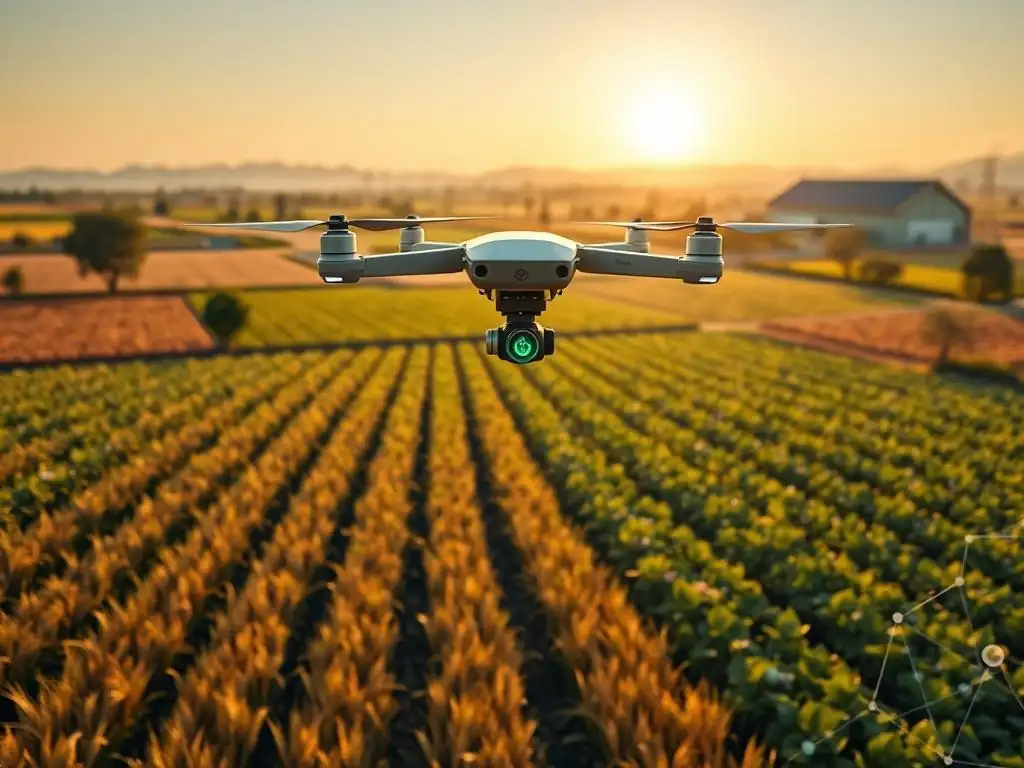
The integration of blockchain and the Internet of Things (IoT) presents a powerful synergy to revolutionize agricultural practices and drive sustainability. IoT devices, such as sensors and drones, can collect real-time data across the agricultural value chain, from soil conditions and weather patterns to crop health and livestock monitoring. This data provides granular insights into farm operations, enabling precision agriculture and optimized resource management.
Blockchain technology complements IoT by providing a secure, transparent, and immutable platform for managing and sharing this data. This combination creates a robust ecosystem for enhancing traceability, efficiency, and sustainability across the entire food supply chain, from farm to consumer.
Blockchain’s distributed ledger technology offers a unique solution to address trust and transparency issues prevalent in the agricultural sector. By recording every transaction and data point on a decentralized and tamper-proof ledger, blockchain ensures the integrity and authenticity of information. This is particularly crucial in areas such as food provenance, quality assurance, and fair trade verification.
Furthermore, smart contracts, self-executing agreements coded on the blockchain, can automate processes, streamline transactions, and enhance accountability among stakeholders in the agricultural supply chain. Ultimately, the convergence of blockchain and IoT is paving the way for a more transparent, efficient, and sustainable agricultural future.
Understanding the Core Technologies
Blockchain Technology: Enhancing Transparency and Traceability in Agriculture
Blockchain technology, at its core, is a decentralized and distributed digital ledger that records transactions across many computers. This decentralized nature makes it inherently secure and transparent, as no single entity controls the information, and all participants have access to an immutable record of transactions. In the context of agriculture, blockchain's key strength lies in its ability to enhance traceability and transparency throughout the complex food supply chain.
Imagine a head of lettuce, for instance. With blockchain, every step of its journey, from seed to supermarket shelf, can be recorded: planting date, fertilizer application, harvest date, transportation conditions, processing details, and retail information.
This granular level of traceability offers numerous benefits for the agricultural sector. Firstly, it significantly enhances food safety by enabling rapid and accurate tracking of products in case of contamination or recalls. For example, if a foodborne illness outbreak occurs, blockchain can quickly pinpoint the source of contamination, limiting the scope of the recall and preventing further spread.
Secondly, blockchain fosters trust and transparency among consumers, who increasingly demand to know the origin and journey of their food. By providing verifiable information about the product's history and characteristics, blockchain empowers consumers to make informed purchasing decisions and builds confidence in the food system. This enhanced transparency also benefits producers by allowing them to differentiate their products based on quality, sustainability, and ethical sourcing, potentially commanding premium prices and fostering stronger brand loyalty.
IoT Sensors and Data Analytics: Enabling Precision Farming
The Internet of Things (IoT) in agriculture refers to the network of physical objects – sensors, actuators, and other devices – embedded with electronics, software, and network connectivity, which enables these objects to collect and exchange data. In farming, IoT devices play a crucial role in enabling precision agriculture, a management strategy that uses digital tools to monitor and optimize crop production inputs, such as water, fertilizers, and pesticides.
IoT sensors can be deployed across fields to monitor various environmental parameters in real-time, including soil moisture, temperature, humidity, light intensity, and nutrient levels. Weather stations equipped with IoT connectivity provide hyperlocal weather data, crucial for irrigation scheduling and pest management.
The vast amounts of data collected by IoT devices are then processed and analyzed using advanced data analytics techniques. This data-driven approach empowers farmers with actionable insights to make informed decisions, leading to increased efficiency and resource optimization. For example, soil moisture sensors can trigger automated irrigation systems only when and where needed, reducing water consumption and preventing over-irrigation.
Similarly, data on nutrient levels can guide precise fertilizer application, minimizing nutrient runoff and its associated environmental pollution. Furthermore, drones equipped with multispectral cameras can capture high-resolution images of crops, enabling early detection of plant diseases, pest infestations, or nutrient deficiencies, allowing for timely and targeted interventions. This precision and data-driven approach not only enhances productivity but also significantly contributes to the sustainability of agricultural practices.
Blockchain & IoT Use Cases in Agriculture: Driving Sustainability
Enhancing Supply Chain Traceability with Blockchain in Farming
Tracking Produce from Farm to Table: Ensuring Food Safety
Blockchain's ability to provide immutable and transparent records is revolutionizing food traceability from farm to table. Traditional food supply chains often involve multiple intermediaries, each adding complexity and opacity to the process. This fragmented system makes it challenging to track products accurately and efficiently, especially in the event of food safety incidents.
Blockchain offers a solution by creating a shared, tamper-proof ledger that records every transaction and movement of agricultural products throughout the supply chain. From the farm, through processing facilities, distribution centers, and finally to retail outlets, every stakeholder can contribute data to the blockchain, creating a comprehensive and verifiable audit trail.
This enhanced traceability has profound implications for food safety. In the event of a foodborne illness outbreak, blockchain allows for rapid identification of the contaminated product's origin and distribution path. For instance, Walmart's use of blockchain to track mangoes reduced traceability time from days to seconds, significantly accelerating recall processes and mitigating potential health risks.
This speed and accuracy are critical in minimizing the impact of food safety incidents, protecting consumers, and preserving brand reputation. Furthermore, blockchain-based traceability empowers consumers with greater transparency, allowing them to scan a QR code on product packaging and access detailed information about its origin, production methods, and journey through the supply chain, fostering trust and informed purchasing decisions.
Preventing Food Fraud and Counterfeiting
Food fraud and counterfeiting are significant global problems, costing the food industry billions of dollars annually and posing serious risks to consumer health. From mislabeling and adulteration to the substitution of inferior ingredients, fraudulent practices undermine consumer trust and distort market competition. Blockchain technology offers a powerful tool to combat food fraud by providing verifiable proof of product authenticity and origin. By recording critical product information on an immutable ledger, blockchain makes it extremely difficult for fraudsters to tamper with or falsify data.
Consider the case of olive oil, a product frequently targeted by counterfeiters. Blockchain can be used to track olive oil from the olive grove to the bottle, recording details such as olive variety, harvest date, pressing method, and origin certification. This verifiable chain of custody provides consumers with assurance that they are purchasing genuine, high-quality olive oil.
Similarly, blockchain can be applied to verify the authenticity of organic products, geographical indications (GIs) like Parmigiano-Reggiano cheese, and fair trade certifications, protecting both consumers and producers from fraudulent practices. By enhancing transparency and accountability, blockchain helps to build a more trustworthy and resilient food system, reducing economic losses from fraud and safeguarding consumer health.
Optimizing Resource Management with IoT in Agriculture
Smart Irrigation Systems: Reducing Water Consumption
Water scarcity is a growing global challenge, and agriculture is a major consumer of freshwater resources, accounting for approximately 70% of global freshwater withdrawals. Traditional irrigation methods are often inefficient, leading to significant water wastage through over-irrigation and runoff. Smart irrigation systems, powered by IoT sensors and data analytics, offer a sustainable solution to optimize water usage in agriculture. These systems utilize soil moisture sensors, weather data, and plant evapotranspiration models to determine the precise water needs of crops, delivering water only when and where it is needed, in the right amounts.
IoT-enabled smart irrigation systems can significantly reduce water consumption in agriculture. Studies have shown that precision irrigation technologies can reduce water usage by 20% to 50% compared to traditional flood or sprinkler irrigation methods, while maintaining or even increasing crop yields. For example, in California, almond growers using soil moisture sensors and drip irrigation have achieved water savings of up to 30%.
Beyond water conservation, smart irrigation systems also contribute to improved crop health and reduced fertilizer runoff. By preventing over-watering, these systems minimize waterlogging and root diseases, while also reducing the leaching of fertilizers into groundwater, mitigating water pollution. The adoption of smart irrigation technologies is crucial for promoting water-efficient and sustainable agricultural practices, especially in water-stressed regions.
Precision Fertilization: Minimizing Environmental Impact
Excessive and inefficient use of fertilizers is a major environmental concern in modern agriculture. Nitrogen and phosphorus fertilizers, while essential for crop growth, can contribute to water pollution, air pollution, and greenhouse gas emissions when applied in excess or improperly managed. Nutrient runoff from agricultural fields contaminates water bodies, leading to eutrophication and harming aquatic ecosystems. Furthermore, the production and application of nitrogen fertilizers are energy-intensive processes, contributing to greenhouse gas emissions. Precision fertilization, enabled by IoT sensors and data analytics, offers a sustainable approach to optimize fertilizer application, minimizing environmental impact while ensuring optimal crop nutrition.
Precision fertilization systems utilize soil nutrient sensors, plant tissue analysis, and GPS-guided variable rate applicators to deliver fertilizers precisely where and when needed, in the right amounts. IoT sensors monitor soil nutrient levels in real-time, providing farmers with accurate data on nutrient availability. This data, combined with crop growth models and yield maps, allows for site-specific fertilizer application, tailoring nutrient inputs to the specific needs of different areas within a field.
Studies have demonstrated that precision fertilization techniques can reduce fertilizer use by 10% to 30% without compromising crop yields, leading to significant cost savings for farmers and reduced environmental pollution. By minimizing nutrient runoff and optimizing fertilizer use efficiency, precision fertilization contributes to more sustainable and environmentally friendly agricultural practices.
Improving Farm Efficiency and Productivity through Data-Driven Insights
Predictive Analytics for Crop Yield Optimization
Predictive analytics, powered by machine learning algorithms and vast datasets collected through IoT devices, is transforming crop yield optimization in agriculture. Traditional farming practices often rely on historical data and generalized recommendations, which may not account for the specific conditions and variability within individual fields. Predictive analytics leverages real-time data on weather patterns, soil conditions, crop health, and historical yield data to forecast future yields and identify optimal management strategies. These insights empower farmers to make proactive decisions to maximize productivity and minimize risks.
For instance, predictive models can forecast potential pest outbreaks or disease risks based on weather patterns and historical data, allowing farmers to implement preventative measures in a timely manner, reducing crop losses and pesticide use. Similarly, yield prediction models can help farmers optimize planting density, irrigation schedules, and fertilizer application rates to maximize yields under specific environmental conditions.
Companies like Farmers Edge and The Climate Corporation utilize predictive analytics platforms to provide farmers with data-driven recommendations for crop management, resulting in significant yield improvements and increased profitability. By harnessing the power of data and machine learning, predictive analytics is enabling a more proactive, efficient, and resilient approach to crop production.
Smart Livestock Management: Enhancing Animal Welfare
IoT technologies are not only transforming crop farming but also revolutionizing livestock management, with significant benefits for animal welfare, productivity, and sustainability. Smart livestock management systems utilize wearable sensors, environmental sensors, and automated monitoring systems to track animal health, behavior, and environmental conditions in real-time. These systems provide farmers with valuable insights to improve animal welfare, optimize feeding and breeding practices, and enhance overall farm efficiency.
Wearable sensors, such as smart collars and ear tags, can monitor animal activity levels, body temperature, heart rate, and rumination patterns, providing early warnings of potential health issues or stress. Automated feeding systems can deliver precise feed rations based on individual animal needs and growth stages, optimizing feed efficiency and reducing feed waste. Environmental sensors monitor temperature, humidity, and air quality in livestock housing, ensuring optimal living conditions for animals and minimizing disease risks.
Companies like Allflex Livestock Intelligence and CowManager offer comprehensive smart livestock management solutions that empower farmers to improve animal health and welfare, increase productivity, and reduce the environmental footprint of livestock farming. By promoting proactive animal care and optimized resource management, IoT-enabled smart livestock management contributes to more sustainable and ethical animal agriculture.
Blockchain Farming Sustainability Benefits: A Detailed Analysis
Reducing Food Waste and Losses with Transparent Supply Chains
One of the most significant sustainability benefits of blockchain in farming is its potential to drastically reduce food waste and losses throughout the supply chain. As mentioned earlier, approximately one-third of all food produced globally is wasted or lost, contributing significantly to greenhouse gas emissions and resource depletion.
A major contributing factor to food waste is the lack of transparency and traceability in traditional food supply chains, making it difficult to track products, manage inventory effectively, and identify points of spoilage or inefficiency. Blockchain's ability to create transparent and immutable records of product journeys offers a powerful solution to address this challenge.
By providing real-time visibility into product location, condition, and expiration dates, blockchain enables better inventory management and reduces spoilage due to overstocking or delayed transportation. For perishable goods, such as fruits and vegetables, blockchain can track temperature and humidity conditions throughout the cold chain, ensuring product quality and extending shelf life. Furthermore, blockchain-enabled traceability can help identify bottlenecks and inefficiencies in the supply chain, allowing for targeted interventions to reduce waste.
For example, if blockchain data reveals consistent delays at a particular point in the distribution network, logistics can be optimized to minimize transit time and prevent spoilage. By reducing food waste and losses, blockchain contributes to a more resource-efficient and sustainable food system, minimizing environmental impact and improving food security.
Promoting Fair Trade Practices and Empowering Farmers
Blockchain technology can play a crucial role in promoting fair trade practices and empowering farmers, particularly smallholder farmers in developing countries. Traditional agricultural supply chains often involve complex networks of intermediaries, leading to reduced price transparency and unfair trading conditions for farmers. Farmers may receive a small fraction of the final retail price, while bearing the majority of the risks and labor. Blockchain's decentralized and transparent nature can help to create more direct and equitable relationships between farmers and consumers, increasing farmer incomes and promoting fair trade.
Blockchain can facilitate direct transactions between farmers and buyers, bypassing intermediaries and reducing transaction costs. Smart contracts can automate payments to farmers upon verification of product delivery and quality, ensuring timely and secure payments. Furthermore, blockchain can be used to verify fair trade certifications and ethical sourcing claims, providing consumers with assurance that they are supporting farmers who adhere to fair labor practices and environmental standards.
Platforms like Fairtrade International are exploring the use of blockchain to enhance transparency and traceability in fair trade supply chains, empowering farmers and building trust with consumers. By promoting fair trade practices and increasing farmer incomes, blockchain contributes to a more socially just and sustainable agricultural system.
Enhancing Food Security and Resilience to Climate Change
In an era of increasing climate change and global uncertainties, enhancing food security and building resilient agricultural systems are paramount. Climate change is already impacting agricultural productivity through extreme weather events, changing rainfall patterns, and increased pest and disease pressure. Blockchain and IoT technologies can contribute to building more resilient and climate-smart agricultural systems by improving data-driven decision-making, optimizing resource management, and enhancing supply chain transparency.
IoT sensors provide real-time data on weather conditions, soil moisture, and crop health, enabling farmers to adapt to changing environmental conditions and implement climate-smart agricultural practices. Predictive analytics can forecast climate risks and help farmers make informed decisions on crop selection, planting dates, and irrigation strategies to mitigate climate impacts. Blockchain-enabled traceability can enhance supply chain resilience by providing visibility into potential disruptions and facilitating rapid response in case of emergencies, such as natural disasters or disease outbreaks.
Furthermore, blockchain can support decentralized and localized food systems, reducing reliance on long and complex supply chains that are vulnerable to disruptions. By enhancing data-driven decision-making, optimizing resource management, and building more resilient supply chains, blockchain and IoT contribute to strengthening food security and adapting agriculture to the challenges of climate change.
Challenges and Opportunities in Implementing Blockchain & IoT in Agriculture

Overcoming Technical Barriers and Infrastructure Limitations
Despite the immense potential of blockchain and IoT in agriculture, several technical barriers and infrastructure limitations need to be addressed for widespread adoption. One significant challenge is the lack of digital infrastructure in many rural agricultural regions, particularly in developing countries. Reliable internet connectivity, affordable IoT devices, and access to technical expertise are essential prerequisites for implementing these technologies effectively. Many farms, especially smallholder farms, may lack the financial resources and technical capacity to invest in and manage complex blockchain and IoT systems.
Addressing these challenges requires collaborative efforts from governments, technology providers, and agricultural organizations. Governments can play a crucial role in investing in rural digital infrastructure, providing subsidies and incentives for technology adoption, and developing digital literacy programs for farmers. Technology providers need to develop affordable and user-friendly blockchain and IoT solutions that are tailored to the specific needs of the agricultural sector. Furthermore, fostering public-private partnerships and promoting knowledge sharing and capacity building are essential to overcome technical barriers and accelerate the adoption of these technologies in agriculture.
Addressing Data Privacy and Security Concerns
The increasing reliance on data in agriculture raises important concerns about data privacy and security. IoT devices collect vast amounts of data about farm operations, including sensitive information about crop yields, farming practices, and farmer incomes. Ensuring the privacy and security of this data is crucial to build trust and encourage data sharing among stakeholders in the agricultural ecosystem. Blockchain technology, while enhancing transparency, also needs to be implemented in a way that protects data privacy and complies with relevant regulations.
Addressing data privacy and security concerns requires robust data governance frameworks, secure data storage and transmission protocols, and clear guidelines on data ownership and usage. Farmers need to have control over their data and be assured that their data will be used responsibly and ethically. Blockchain solutions can incorporate privacy-preserving techniques, such as data encryption and access controls, to protect sensitive information while maintaining transparency and traceability. Furthermore, promoting data literacy and awareness among farmers and other stakeholders is essential to foster a culture of data security and responsible data management in agriculture.
Fostering Collaboration and Standardization within the Agricultural Ecosystem
The successful implementation of blockchain and IoT in agriculture requires fostering collaboration and standardization across the diverse and fragmented agricultural ecosystem. The agricultural sector involves a wide range of stakeholders, including farmers, processors, distributors, retailers, and consumers, each with their own unique needs and priorities. Lack of interoperability and standardization can hinder data sharing and integration across different systems and platforms, limiting the full potential of these technologies.
Promoting collaboration and standardization requires industry-wide efforts to develop common data standards, protocols, and interoperability frameworks for blockchain and IoT systems in agriculture. Industry consortia, standards organizations, and government agencies can play a leading role in facilitating these efforts. Furthermore, fostering open communication and collaboration among stakeholders is essential to build trust, align incentives, and ensure that technology solutions are developed and implemented in a way that benefits the entire agricultural ecosystem. Standardization and interoperability will enable seamless data sharing and integration, unlocking the full potential of blockchain and IoT to drive sustainability and efficiency in agriculture.
Real-World Examples: Blockchain and IoT Success Stories in Agriculture
Blockchain Traceability in the Coffee Industry: The Farmer Connect Platform
The coffee industry, known for its complex and often opaque supply chains, has embraced blockchain technology to enhance traceability and transparency. The Farmer Connect platform is a notable example of a blockchain-based solution transforming the coffee supply chain. This platform allows consumers to scan a QR code on coffee packaging and trace the coffee beans back to their origin, accessing information about the farmer, cooperative, roasting process, and journey of the beans. This enhanced transparency builds trust with consumers and empowers them to make informed purchasing decisions, supporting ethical and sustainable coffee production.
Farmer Connect utilizes IBM Food Trust, a blockchain platform, to securely record and share data across the coffee supply chain. The platform connects coffee farmers, roasters, retailers, and consumers, creating a transparent and verifiable record of every transaction and movement of coffee beans. By providing direct access to information about the origin and journey of their coffee, Farmer Connect enables consumers to connect with the farmers who grew their beans and understand the impact of their purchase.
This initiative not only enhances transparency but also aims to improve farmer livelihoods by providing them with greater visibility and access to the market. The success of Farmer Connect demonstrates the potential of blockchain to transform complex agricultural supply chains and promote transparency and sustainability.
IoT-Enabled Smart Farm in the Netherlands: Lely's Automated Dairy Farming
The Netherlands, a global leader in agricultural technology, is home to numerous examples of successful IoT implementation in farming. Lely, a Dutch agricultural technology company, has pioneered automated dairy farming systems that utilize IoT sensors, robotics, and data analytics to enhance efficiency, animal welfare, and sustainability. Lely's automated milking systems, robotic feeders, and sensor-equipped barns collect vast amounts of data on cow health, milk production, and environmental conditions. This data is analyzed to optimize feeding regimes, breeding schedules, and animal health management, resulting in increased milk yields, improved animal welfare, and reduced labor costs.
Lely's Astronaut milking robot, for example, uses laser technology and sensors to automatically milk cows multiple times a day, based on individual cow needs and milk production patterns. The system monitors milk quality, cow health, and milking efficiency, providing farmers with real-time data and alerts. Lely's Vector automatic feeding system delivers precise feed rations to cows multiple times a day, optimizing feed intake and reducing feed waste.
These IoT-enabled systems not only enhance farm efficiency and productivity but also contribute to improved animal welfare by allowing cows to move freely, milk themselves when they want, and receive individualized care. Lely's success story exemplifies the transformative potential of IoT technologies to create smart and sustainable farms.
The Future of Sustainable Agriculture: Blockchain, IoT, and Beyond
Emerging Technologies and Innovations in AgriTech
The future of sustainable agriculture is being shaped by a wave of emerging technologies and innovations in AgriTech, building upon the foundation of blockchain and IoT. Artificial intelligence (AI) and machine learning are increasingly being integrated with IoT and blockchain to enhance data analytics, automate decision-making, and optimize agricultural processes. AI-powered image recognition and computer vision are being used for crop monitoring, disease detection, and automated harvesting. Robotics and automation are further transforming farm operations, reducing labor requirements and improving efficiency.
Vertical farming, controlled environment agriculture, and precision fermentation are emerging as innovative approaches to food production that can significantly reduce environmental impact and enhance food security. These technologies enable food production in urban areas, minimizing transportation distances and reducing reliance on traditional agriculture. Furthermore, advancements in biotechnology and gene editing are offering new opportunities to develop climate-resilient crops and improve resource use efficiency in agriculture. The convergence of these emerging technologies with blockchain and IoT is paving the way for a more sustainable, resilient, and efficient food future.
Policy Recommendations for Promoting Blockchain and IoT Adoption in Agriculture
To fully realize the potential of blockchain and IoT for sustainable agriculture, supportive policies and regulatory frameworks are essential. Governments and policymakers can play a crucial role in creating an enabling environment for technology adoption, fostering innovation, and addressing potential risks. Policy recommendations for promoting blockchain and IoT adoption in agriculture include:
- Investing in rural digital infrastructure: Expanding broadband internet access and mobile network coverage in rural areas is crucial to enable the deployment of IoT and blockchain technologies.
- Providing financial incentives and subsidies: Offering grants, loans, and tax breaks to farmers and AgriTech companies can incentivize technology adoption and reduce financial barriers.
- Developing data governance frameworks and regulations: Establishing clear guidelines on data privacy, security, ownership, and usage is essential to build trust and encourage data sharing in the agricultural sector.
- Supporting research and development: Investing in research and development of AgriTech solutions tailored to the specific needs of sustainable agriculture is crucial for fostering innovation.
- Promoting digital literacy and skills training: Providing training programs for farmers and agricultural workers to develop the skills needed to operate and manage blockchain and IoT technologies is essential for successful adoption.
- Fostering international collaboration and standardization: Promoting collaboration among countries and organizations to develop common standards and interoperability frameworks for AgriTech solutions is crucial for global adoption and impact.
By implementing these policy recommendations, governments can create a conducive environment for blockchain and IoT adoption, accelerating the transition towards a more sustainable and resilient agricultural future.
Conclusion: Building a More Sustainable Food Future with Blockchain and IoT
Key Takeaways: The Power of Technology for Sustainable Agriculture
The convergence of blockchain and IoT technologies holds immense potential to revolutionize agriculture and build a more sustainable food future. Blockchain enhances transparency and traceability throughout the food supply chain, improving food safety, combating fraud, and empowering consumers. IoT enables precision agriculture, optimizing resource management, increasing farm efficiency, and enhancing animal welfare. The combined power of these technologies drives sustainability by reducing food waste, minimizing environmental impact, promoting fair trade practices, and enhancing food security and resilience to climate change.
While challenges remain in terms of infrastructure limitations, data privacy concerns, and the need for collaboration and standardization, the real-world examples and emerging innovations demonstrate the transformative potential of blockchain and IoT in agriculture. By embracing these technologies and addressing the associated challenges, we can unlock a new era of sustainable and efficient food production, ensuring food security for a growing global population while protecting our planet.
Call to Action: Embracing Innovation for a Greener Food System
The journey towards a sustainable food future requires a collective effort from all stakeholders in the agricultural ecosystem – farmers, technology providers, policymakers, researchers, and consumers. Embracing innovation, investing in AgriTech solutions, and fostering collaboration are crucial steps in this journey. Farmers are encouraged to explore and adopt blockchain and IoT technologies to enhance their operations and contribute to sustainability. Technology providers are challenged to develop affordable, user-friendly, and scalable solutions tailored to the needs of the agricultural sector.
Policymakers are urged to create supportive policies and regulatory frameworks to accelerate technology adoption and promote sustainable agricultural practices. Consumers are empowered to demand transparency and sustainability in their food choices, supporting businesses and initiatives that are driving positive change. By working together and embracing innovation, we can build a greener, more resilient, and equitable food system for generations to come.
Frequently Asked Questions
What are the primary ways blockchain and IoT technologies are being used to improve sustainability in farming?
Blockchain and IoT are enhancing traceability and transparency in the food supply chain. This allows for better monitoring of environmental impact and ensures accountability.
How can blockchain technology specifically contribute to reducing food waste in agricultural practices?
Blockchain can optimize supply chain management by providing real-time data on demand and inventory. This reduces spoilage through efficient distribution and logistics.
What are the potential benefits of using blockchain for farmers in terms of accessing markets and securing fair prices?
Blockchain enables direct farmer-to-consumer transactions, bypassing intermediaries. This improves profit margins for farmers and ensures fair compensation.
What are the regulatory challenges and considerations surrounding the implementation of blockchain in agriculture?
Regulatory uncertainty around data privacy and security standards can hinder adoption. Standardization and interoperability are crucial for widespread implementation.
How does the combination of blockchain and IoT contribute to creating a more resilient and transparent food system?
IoT provides real-time data on crop conditions, while blockchain ensures data integrity and immutability. This promotes consumer trust and resilience against disruptions.
Final Reflection: Cultivating a Connected Future
The promise of blockchain farming sustainability benefits is no longer a distant aspiration; it's a tangible force reshaping our agricultural landscape. From enhancing traceability to optimizing resource allocation, the convergence of blockchain and IoT is proving to be a powerful catalyst for a more sustainable and resilient food system, addressing critical challenges in transparency, efficiency, and environmental impact.
This technological revolution has profoundly impacted the cultural and social perception of agriculture. We are witnessing a shift from viewing farming as a traditional practice to recognizing it as a data-driven, technologically advanced industry. This transformation is crucial for attracting the next generation of farmers and ensuring food security for a growing global population. The future of agriculture is not just about growing food; it's about growing it sustainably, ethically, and transparently, and technology is the key to unlocking that potential.
As we stand on the cusp of this new era, let us embrace the opportunities presented by blockchain and IoT to build a more sustainable and equitable food future. Consider how you, as a consumer, a policymaker, or an innovator, can contribute to this transformation. Reflect on the power of technology to connect us to our food sources and empower us to make informed choices that benefit both the planet and future generations.
Ignite Your Sustainable Food Future Now!
Thank you for exploring how blockchain and IoT are transforming agriculture. We hope this article has inspired you to envision a more transparent and sustainable food system. Are you ready to make a difference?
Here’s how you can contribute:
- Investigate local initiatives that leverage blockchain and IoT to promote sustainable farming practices and see how they support environmental responsibility.
- Share this article with your network to raise awareness about the innovative role of blockchain and IoT in agriculture. Let’s start the conversation!
- Discover practical ways to incorporate these technologies into your daily life. For example, seek out produce verified by blockchain at your local farmers market or grocery store, and ask food suppliers for greater transparency.
What specific actions will you take this week to support the integration of blockchain and IoT for a more sustainable food future? Share your ideas in the comments below!
Leave a Reply