
What is Blockchain for IoT Data Management? A Beginner's Guide


Welcome to Blockchain Trends, your guide to understanding the revolutionary potential of blockchain technology.
Ever wondered how to secure the vast amounts of data generated by the Internet of Things? Dive into our exploration of Blockchain IoT data security and discover how this powerful combination is transforming industries. Unlock the secrets to building robust, decentralized systems and learn why blockchain could be the key to unlocking the true potential of connected devices. Intrigued? Let's begin...
What is Blockchain for IoT Data Management? A Beginner's Guide
- Introduction to Blockchain and IoT Data Management
- The Challenges of Traditional IoT Data Management
- Blockchain Technology Explained for IoT Applications
- Blockchain IoT Data Security: Addressing the Core Issues
- Use Cases of Blockchain for IoT Data Management
- Benefits of Using Blockchain for IoT Data
- Implementing Blockchain Solutions for IoT Data Management
- Challenges and Considerations for Blockchain IoT Adoption
- The Future of Blockchain in IoT Data Management
- Conclusion: Securing the Future of IoT with Blockchain Technology
-
Frequently Asked Questions
- What is the core benefit of using blockchain for IoT data security?
- How does blockchain help with data management in IoT networks?
- What are some potential enterprise applications of blockchain in IoT?
- What are the key regulatory challenges surrounding blockchain and IoT data security?
- How does blockchain improve IoT data security compared to traditional methods?
- Final Reflection: Securing the Future of IoT with Blockchain
- Ignite Your IoT Journey: Secure Your Data Now!
Introduction to Blockchain and IoT Data Management
Understanding the Convergence of Blockchain and IoT
The Internet of Things (IoT) has exploded in recent years, connecting billions of devices from smart home appliances to industrial sensors. This interconnectedness generates vast amounts of data, offering unprecedented opportunities for automation, efficiency, and insights. However, managing and securing this data deluge presents significant challenges.
Blockchain technology, initially conceived as the backbone of cryptocurrencies, emerges as a powerful solution to address these challenges. Its inherent properties of decentralization, security, and immutability offer a compelling framework for enhancing IoT data management, particularly in areas demanding robust security and data integrity. The convergence of Blockchain and IoT is not just a technological trend; it's a strategic evolution towards building more secure, reliable, and transparent IoT ecosystems.
The integration of blockchain with IoT signifies a paradigm shift in how we approach data management in interconnected environments. Traditional IoT systems often rely on centralized architectures, which are vulnerable to single points of failure and security breaches. Blockchain, with its distributed ledger system, offers a decentralized alternative, distributing data and control across a network.
This distribution inherently enhances security and resilience, making it significantly harder for malicious actors to compromise the entire system. The synergy between blockchain and IoT aims to leverage the strengths of both technologies, creating a more robust and trustworthy infrastructure for the rapidly expanding world of connected devices and the immense data they generate.
Why IoT Data Management Needs Blockchain Solutions
The sheer volume of data generated by IoT devices is staggering. Estimates suggest that by 2025, the world will have over 75 billion connected IoT devices, generating 79.4 zettabytes of data annually. Managing this massive influx of data efficiently and securely is a monumental task.
Traditional centralized data management systems often struggle to scale to meet these demands, leading to bottlenecks, data silos, and increased vulnerabilities. Blockchain offers a scalable and distributed framework capable of handling the high data throughput of IoT networks. Its decentralized nature allows for data to be distributed and processed across multiple nodes, alleviating pressure on centralized servers and enhancing overall system performance and resilience.
Beyond scalability, the need for enhanced security in IoT data management is paramount. IoT devices, often designed with limited processing power and security features, are prime targets for cyberattacks. A study by Kaspersky revealed a threefold increase in IoT-based cyberattacks in the first half of 2021 compared to the same period in 2020, highlighting the escalating threat landscape.
Blockchain's cryptographic security and tamper-proof nature offer a robust defense mechanism for IoT data. By securing data at its source and ensuring its integrity throughout its lifecycle, blockchain provides a crucial layer of protection against data breaches, manipulation, and unauthorized access, addressing a critical vulnerability in current IoT infrastructures.
The Growing Importance of Secure IoT Data
In an increasingly interconnected world, the security of IoT data is no longer just a technical concern; it's a business imperative and a matter of public safety. Consider the implications of compromised data from smart city infrastructure, healthcare devices, or industrial control systems.
A successful cyberattack could lead to disruptions of essential services, privacy breaches of sensitive personal information, or even physical harm. The Ponemon Institute's 2020 Cost of a Data Breach Report estimated the average cost of a data breach at \$3.86 million globally, with IoT-related breaches often incurring even higher costs due to their potential impact on critical infrastructure and operations.
The increasing regulatory landscape further underscores the importance of secure IoT data management. Regulations like GDPR (General Data Protection Regulation) and CCPA (California Consumer Privacy Act) mandate stringent data protection measures and impose significant penalties for non-compliance. Organizations deploying IoT solutions must ensure they adhere to these regulations to avoid legal repercussions and maintain customer trust.
Blockchain's inherent security and transparency features can significantly aid in achieving regulatory compliance by providing auditable and secure data management practices. By implementing blockchain-based solutions, businesses can demonstrate their commitment to data security and privacy, building trust with customers and stakeholders in an increasingly data-sensitive world.
The Challenges of Traditional IoT Data Management
Security Vulnerabilities in Current IoT Systems
Traditional IoT systems, often built upon centralized architectures, are inherently vulnerable to a range of security threats. A key weakness lies in the reliance on central servers as single points of failure. If a central server is compromised, the entire network and all connected devices can become vulnerable. Furthermore, many IoT devices themselves are designed with limited security features due to cost and performance constraints. A study by Forescout Research Labs found that 57% of IoT devices are vulnerable to medium or high-severity attacks, illustrating the pervasive security gaps in the IoT ecosystem.
Another significant vulnerability stems from the diverse and often fragmented nature of IoT device manufacturers and communication protocols. This heterogeneity makes it challenging to implement uniform security measures across the entire IoT landscape. Many legacy IoT devices lack robust authentication mechanisms, encryption, and regular security updates, making them easy targets for hackers. The lack of standardized security protocols and the proliferation of vulnerable devices create a complex and porous security perimeter, leaving traditional IoT systems exposed to data breaches, denial-of-service attacks, and device hijacking, highlighting the urgent need for more robust security solutions.
Scalability Issues with Centralized IoT Data Storage
As the number of connected IoT devices continues to grow exponentially, traditional centralized data storage solutions are facing significant scalability challenges. Centralized servers can become bottlenecks, struggling to handle the massive influx of data generated by billions of devices in real-time. This can lead to latency issues, data loss, and system failures, particularly during peak usage periods. A report by Cisco predicts that global IoT connections will reach 29.3 billion by 2023, further exacerbating the scalability limitations of centralized systems.
Maintaining and upgrading centralized infrastructure to cope with this exponential data growth is also incredibly expensive. Organizations are forced to invest heavily in server capacity, bandwidth, and IT personnel to manage ever-increasing data volumes. Furthermore, centralized systems are often geographically constrained, making it challenging to efficiently manage and process data from globally distributed IoT deployments. These scalability limitations not only hinder the performance and reliability of IoT systems but also significantly increase operational costs, making centralized approaches less viable for large-scale IoT deployments.
Data Integrity and Trust Concerns in IoT Networks
In many IoT applications, particularly those in critical sectors like healthcare or supply chain management, data integrity and trust are paramount. Traditional centralized IoT systems often struggle to guarantee the authenticity and immutability of data. Data stored in central databases is susceptible to manipulation, whether intentional or accidental. A report by IBM found that data breaches cost companies an average of \$4.24 million in 2021, and data manipulation can lead to even more significant financial and reputational damage.
The lack of transparency in centralized systems also undermines trust in IoT data. Users and stakeholders often have limited visibility into how data is collected, processed, and stored, raising concerns about data privacy and security. In scenarios where multiple parties are involved in data sharing, such as in supply chains or smart grids, the absence of a trusted and auditable data trail can lead to disputes and inefficiencies. The inability to verify data provenance and integrity in traditional IoT systems erodes trust and hinders the adoption of IoT technologies in applications where data reliability is crucial.
Blockchain Technology Explained for IoT Applications
What is Blockchain? A Simplified Explanation
At its core, a blockchain is a distributed, immutable ledger that records transactions in blocks that are linked together chronologically and cryptographically. Imagine a digital notebook shared among many participants, where each new entry (transaction) is verified by the majority of participants before being permanently written into the notebook. This "notebook" is distributed across a network of computers, making it decentralized and resistant to tampering. Each block contains a set of validated transactions and a cryptographic hash of the previous block, forming a chain of blocks – hence the name "blockchain."
This chain structure, combined with cryptographic techniques, ensures that once a transaction is recorded on the blockchain, it cannot be altered or deleted. Any attempt to modify a past block would require changing all subsequent blocks, which is computationally infeasible due to the cryptographic hashing and consensus mechanisms employed. This inherent immutability and transparency are key features that make blockchain technology so compelling for applications requiring secure and trustworthy data management, especially in the context of IoT.
Key Features of Blockchain: Immutability, Transparency, Security
Blockchain technology possesses several key features that make it particularly well-suited for addressing the challenges of IoT data management, especially regarding blockchain IoT data security. Immutability is a cornerstone feature; once data is recorded on the blockchain, it cannot be altered or deleted. This ensures the integrity and reliability of IoT data over time, providing a permanent and auditable record of events and transactions.
Transparency is another critical aspect. While not all blockchains are fully public, the distributed nature of the ledger means that data is typically visible to a network of participants, enhancing accountability and reducing the risk of hidden manipulations.
Security is inherently built into blockchain through cryptographic hashing and consensus mechanisms. Cryptographic hashes ensure data integrity by creating unique fingerprints for each block, making it tamper-evident. Consensus mechanisms, such as Proof-of-Work or Proof-of-Stake, require network participants to agree on the validity of new transactions before they are added to the blockchain, preventing fraudulent or invalid data from being recorded. These combined features of immutability, transparency, and security provide a robust foundation for building secure and trustworthy IoT applications, directly addressing concerns around blockchain IoT data security.
How Blockchain Ensures Data Integrity and Authenticity
Blockchain's architecture is specifically designed to ensure data integrity and authenticity, crucial elements for blockchain IoT data security. The cryptographic hashing process plays a pivotal role in maintaining data integrity. Every block in the blockchain contains a hash of the previous block, creating a cryptographic link in the chain. If any data within a block is tampered with, the hash of that block will change, breaking the chain and immediately revealing the alteration. This cryptographic linkage makes it virtually impossible to modify historical data without detection.
Furthermore, blockchain's distributed nature and consensus mechanisms enhance data authenticity. In a typical blockchain network, multiple nodes (computers) maintain copies of the ledger. When a new transaction is proposed, it must be validated by a majority of these nodes through a consensus process before being added to the blockchain. This consensus mechanism ensures that only valid and authentic transactions are recorded, preventing fraudulent data from entering the system. By combining cryptographic hashing and distributed consensus, blockchain provides a robust and verifiable mechanism for ensuring the integrity and authenticity of IoT data, strengthening blockchain IoT data security.
Blockchain IoT Data Security: Addressing the Core Issues
Enhanced Security for IoT Devices and Data
Integrating blockchain with IoT significantly enhances security for both devices and the data they generate, directly addressing blockchain IoT data security concerns. By leveraging blockchain's cryptographic capabilities, sensitive data transmitted by IoT devices can be encrypted and securely stored on the distributed ledger. This end-to-end encryption from device to blockchain significantly reduces the risk of data interception and unauthorized access compared to traditional centralized systems. Moreover, blockchain can facilitate secure device authentication and identity management. Each IoT device can be assigned a unique digital identity on the blockchain, enabling secure and verifiable communication within the network.
Blockchain's decentralized nature also mitigates the risk of single points of failure that are prevalent in centralized IoT systems. Compromising a single node in a blockchain network does not compromise the entire system, as the data is distributed across multiple nodes. This distributed architecture makes blockchain-based IoT solutions far more resilient to cyberattacks and data breaches. By enhancing data encryption, securing device identities, and distributing data storage, blockchain offers a comprehensive approach to strengthening blockchain IoT data security and building more robust IoT ecosystems.
Decentralized Data Storage for Increased Resilience
Decentralized data storage is a key advantage of using blockchain for IoT data management, contributing significantly to enhanced resilience and blockchain IoT data security. Unlike traditional centralized systems where all data is stored in a single location, blockchain distributes data across a network of nodes. This distribution eliminates the single point of failure vulnerability inherent in centralized systems. If one node fails or is attacked, the data remains accessible and secure on other nodes in the network. This inherent redundancy makes blockchain-based IoT systems far more resilient to outages and cyberattacks.
Furthermore, decentralized data storage can improve data availability and accessibility, especially in geographically dispersed IoT deployments. Data can be stored closer to the source, reducing latency and improving response times. By distributing data across multiple nodes, blockchain also reduces the risk of data loss due to hardware failures or natural disasters. This enhanced resilience and data availability are critical for IoT applications in critical infrastructure, healthcare, and industrial automation, where continuous operation and data integrity are paramount for blockchain IoT data security.
Improved Data Privacy and Control with Blockchain
Blockchain technology can empower users with greater data privacy and control over their IoT data, a crucial aspect of blockchain IoT data security and user empowerment. In traditional centralized IoT systems, user data is often collected and controlled by a central authority, raising concerns about data privacy and potential misuse. Blockchain can enable users to have more granular control over their data by leveraging features like data encryption and access permissions managed on the blockchain. Users can decide who has access to their data and for what purpose, enhancing data privacy and compliance with regulations like GDPR.
Furthermore, blockchain can facilitate secure and transparent data sharing in IoT ecosystems while preserving user privacy. Data can be shared selectively with authorized parties, and access can be revoked as needed. The immutable audit trail provided by blockchain ensures transparency and accountability in data usage, building trust between users and IoT service providers. By empowering users with greater control over their data and enhancing transparency in data handling, blockchain promotes a more privacy-centric approach to IoT data management and strengthens blockchain IoT data security from a user perspective.
Use Cases of Blockchain for IoT Data Management
Supply Chain Management with Blockchain and IoT
In supply chain management, the combination of blockchain and IoT offers transformative potential for enhancing transparency, traceability, and efficiency. IoT sensors attached to goods and shipments can continuously monitor location, temperature, humidity, and other critical parameters throughout the supply chain. This real-time data, securely recorded on a blockchain, provides an immutable and transparent record of the product's journey from origin to consumer.
This enhanced visibility helps to combat counterfeiting, reduce delays, and improve overall supply chain efficiency. For example, in the pharmaceutical industry, blockchain-IoT solutions can ensure the integrity of temperature-sensitive medications by tracking their storage conditions throughout the supply chain, preventing spoilage and ensuring patient safety.
Furthermore, blockchain can streamline supply chain processes by automating transactions and reducing paperwork. Smart contracts on the blockchain can automatically trigger payments and update inventory records based on IoT sensor data, eliminating manual processes and reducing the risk of errors. This automation can significantly improve efficiency and reduce costs for businesses involved in complex supply chains. By providing a secure and transparent platform for data sharing and transaction management, blockchain and IoT are revolutionizing supply chain management, enhancing trust and efficiency across the entire ecosystem.
Smart Cities and Secure IoT Data Collection
Smart cities rely heavily on IoT devices to collect and manage data for various urban services, including traffic management, waste disposal, and public safety. However, the vast amounts of sensitive data collected by these devices raise significant security and privacy concerns. Blockchain can provide a secure and decentralized infrastructure for managing smart city IoT data, enhancing blockchain IoT data security and citizen trust.
By securing data at its source and ensuring its integrity on the blockchain, smart cities can build more resilient and trustworthy urban infrastructures. For example, blockchain can secure data from smart meters, ensuring accurate and tamper-proof billing for utilities and preventing energy theft.
Moreover, blockchain can facilitate secure data sharing between different smart city stakeholders, such as government agencies, private companies, and citizens, while protecting data privacy. Citizens can have greater control over their data and decide how it is used, fostering a more citizen-centric approach to smart city development. By leveraging blockchain for secure data management, smart cities can enhance the efficiency and security of urban services while building trust with their citizens, making blockchain IoT data security a cornerstone of smart city initiatives.
Healthcare Applications: Protecting Patient Data with Blockchain
The healthcare sector is increasingly adopting IoT devices for remote patient monitoring, wearable health trackers, and connected medical devices. These devices generate sensitive patient data that requires the highest levels of security and privacy. Blockchain offers a secure and compliant solution for managing healthcare IoT data, ensuring blockchain IoT data security and patient confidentiality.
By securely storing patient data on a blockchain, healthcare providers can protect it from unauthorized access and data breaches, complying with stringent regulations like HIPAA (Health Insurance Portability and Accountability Act). For instance, patient data from wearable devices can be securely recorded on a blockchain, giving patients control over their health information and allowing them to share it securely with their healthcare providers.
Blockchain can also improve data interoperability and sharing within the healthcare ecosystem. Patient data can be securely shared between different healthcare providers with patient consent, facilitating better care coordination and reducing medical errors. Furthermore, blockchain can enhance the integrity and provenance of medical data, ensuring that medical records are accurate and tamper-proof. By providing a secure, private, and interoperable platform for healthcare IoT data management, blockchain is transforming healthcare delivery and enhancing patient safety and trust, with blockchain IoT data security at its core.
Energy Management and Decentralized Energy Grids
The energy sector is undergoing a transformation towards decentralized and renewable energy grids, with IoT devices playing a crucial role in monitoring and managing energy production and consumption. Blockchain can facilitate secure and efficient management of data in decentralized energy grids, promoting blockchain IoT data security and grid stability.
Smart meters and other IoT sensors collect data on energy consumption and production, which can be securely recorded on a blockchain to ensure accurate billing and grid management. Blockchain can also enable peer-to-peer energy trading, allowing consumers to buy and sell energy directly with each other in a transparent and secure manner.
Moreover, blockchain can enhance the security and resilience of energy grids by decentralizing data and control. Decentralized energy grids are less vulnerable to large-scale outages and cyberattacks compared to traditional centralized grids. Blockchain can also improve the traceability of renewable energy certificates, ensuring the authenticity and provenance of green energy. By providing a secure, transparent, and decentralized platform for energy data management, blockchain is facilitating the transition to more sustainable and resilient energy systems, with blockchain IoT data security being a critical enabler.
Benefits of Using Blockchain for IoT Data
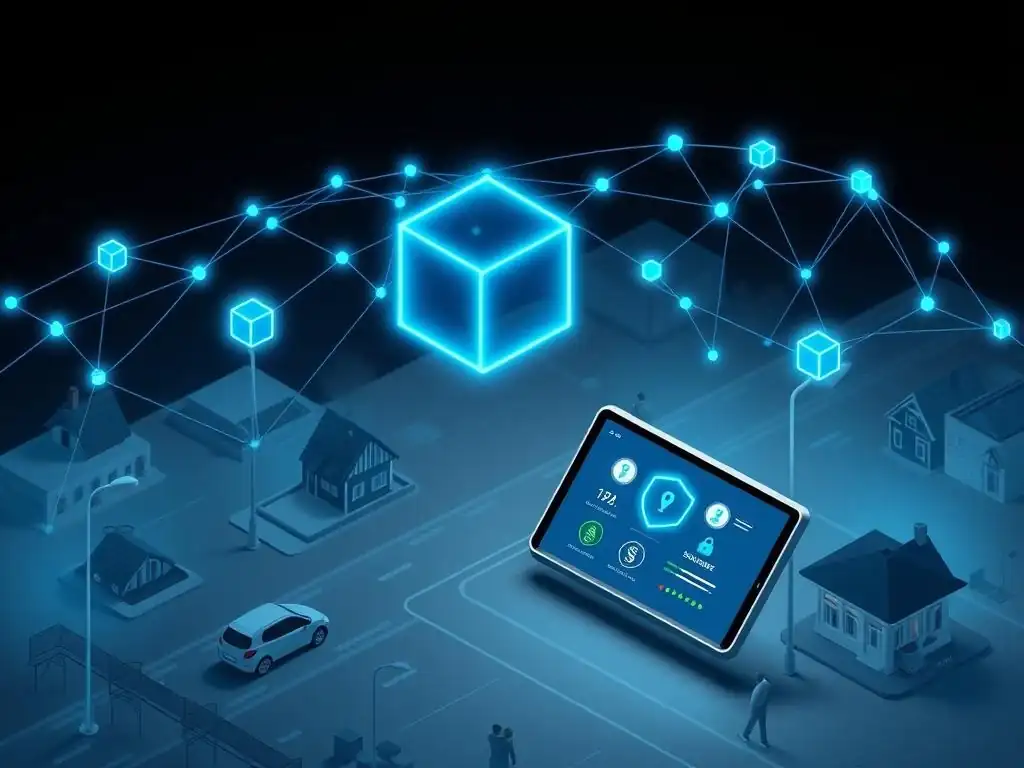
Improved Security and Data Integrity
The primary benefit of using blockchain for IoT data management is the significant improvement in security and data integrity. As discussed, blockchain's inherent features – decentralization, cryptography, and immutability – provide a robust defense against cyber threats and data manipulation. By securing IoT data on a blockchain, organizations can mitigate the risks of data breaches, unauthorized access, and data tampering, strengthening blockchain IoT data security substantially. The cryptographic hashing and consensus mechanisms ensure that data remains unaltered and verifiable, providing a trusted foundation for IoT applications.
This enhanced security and data integrity are particularly crucial for IoT applications in sensitive sectors like healthcare, finance, and critical infrastructure, where data breaches can have severe consequences. Blockchain's tamper-proof nature also ensures data provenance and authenticity, which is essential for regulatory compliance and building trust with stakeholders. By prioritizing security and data integrity, blockchain enables the development of more robust and trustworthy IoT solutions, making blockchain IoT data security a key driver for adoption.
Enhanced Transparency and Traceability
Blockchain's transparent and traceable nature offers significant benefits for IoT data management, particularly in applications requiring auditability and accountability. All transactions recorded on a blockchain are transparent and auditable, providing a clear and verifiable record of data provenance and changes over time. This transparency enhances trust among stakeholders and facilitates accountability, especially in complex IoT ecosystems involving multiple parties. For example, in supply chain management, blockchain provides end-to-end traceability of products, allowing consumers and businesses to verify the origin and authenticity of goods.
Furthermore, blockchain's immutable audit trail simplifies compliance with regulations and standards. Organizations can easily demonstrate adherence to data security and privacy regulations by providing auditable records of data handling processes on the blockchain. This enhanced transparency and traceability not only improve operational efficiency but also build trust and confidence in IoT systems, making blockchain IoT data security and transparency complementary benefits.
Reduced Costs Through Decentralization
While initial implementation costs may be involved, in the long run, blockchain can contribute to reduced operational costs for IoT data management through decentralization. By eliminating the need for centralized intermediaries and infrastructure, blockchain can streamline processes and reduce overhead. Decentralized systems can also be more efficient and scalable, reducing the need for costly infrastructure upgrades as IoT networks grow. For example, in peer-to-peer energy trading, blockchain can eliminate the need for centralized energy brokers, reducing transaction fees and enabling more efficient energy markets.
Moreover, blockchain's enhanced security can lead to cost savings by reducing the risk and impact of data breaches and cyberattacks. The cost of data breaches can be substantial, including financial losses, reputational damage, and regulatory fines. By strengthening blockchain IoT data security, blockchain can help organizations avoid these costly incidents and build more resilient and cost-effective IoT systems.
Scalability for Growing IoT Networks
Blockchain, particularly certain types of blockchains like sidechains or sharded blockchains, offers improved scalability compared to traditional centralized systems, making it well-suited for managing data from growing IoT networks. While traditional blockchains can face scalability limitations, ongoing research and development are addressing these challenges. Techniques like sharding, which divides the blockchain into smaller, manageable shards, and sidechains, which allow for off-chain transaction processing, are enhancing blockchain's scalability to handle the high data throughput of large-scale IoT deployments.
Furthermore, the decentralized nature of blockchain can contribute to scalability by distributing processing and storage across a network of nodes, rather than relying on centralized servers. This distributed architecture can handle increasing data volumes more efficiently and effectively. As IoT networks continue to expand, blockchain's scalability advantages become increasingly important for ensuring the reliable and efficient management of massive amounts of IoT data, with blockchain IoT data security maintained even at scale.
Implementing Blockchain Solutions for IoT Data Management
Choosing the Right Blockchain Platform for IoT
Selecting the appropriate blockchain platform is crucial for successful implementation of blockchain-based IoT solutions. Several blockchain platforms are available, each with its own strengths and weaknesses, particularly in the context of blockchain IoT data security. Factors to consider when choosing a platform include scalability, security features, transaction speed, energy consumption, and development tools. For IoT applications, platforms that offer high scalability and low transaction costs are often preferred.
Private or consortium blockchains may be more suitable for enterprise IoT applications where data privacy and control are paramount. These permissioned blockchains offer greater control over network participants and data access compared to public blockchains. Platforms like Hyperledger Fabric and R3 Corda are popular choices for enterprise blockchain deployments. For applications requiring greater transparency and decentralization, public blockchains like Ethereum or newer, more scalable platforms might be considered. Careful evaluation of platform characteristics and alignment with specific IoT application requirements is essential for selecting the optimal blockchain platform for blockchain IoT data security and overall performance.
Developing Blockchain-Based IoT Applications
Developing blockchain-based IoT applications requires a different approach compared to traditional IoT development. It involves integrating blockchain functionalities with IoT devices and platforms, requiring expertise in both blockchain and IoT technologies. Developers need to consider how to securely integrate IoT devices with the blockchain, how to manage device identities and access permissions on the blockchain, and how to design smart contracts to automate IoT processes. Secure coding practices are paramount to ensure blockchain IoT data security and prevent vulnerabilities in the application.
Developing blockchain-based IoT applications often involves using specialized SDKs (Software Development Kits) and APIs (Application Programming Interfaces) provided by blockchain platforms. These tools simplify the integration process and provide developers with pre-built functionalities for interacting with the blockchain. Furthermore, testing and auditing are crucial steps in the development lifecycle to ensure the security and reliability of blockchain-based IoT applications, particularly concerning blockchain IoT data security.
Integrating Blockchain with Existing IoT Infrastructure
Integrating blockchain with existing IoT infrastructure can be complex, depending on the architecture of the current IoT system. Retrofitting blockchain into legacy IoT systems may require significant modifications and upgrades. A phased approach to integration is often recommended, starting with pilot projects to test and validate the blockchain integration before full-scale deployment. Interoperability is a key consideration when integrating blockchain with existing IoT devices and platforms, especially when dealing with heterogeneous IoT environments.
Standardized APIs and protocols can facilitate interoperability and simplify the integration process. Middleware solutions can also be used to bridge the gap between legacy IoT systems and blockchain networks. Careful planning and a well-defined integration strategy are essential for successfully incorporating blockchain into existing IoT infrastructure while ensuring blockchain IoT data security and minimal disruption to existing operations.
Challenges and Considerations for Blockchain IoT Adoption
Scalability Limitations of Blockchain
While blockchain offers scalability advantages compared to centralized systems in certain aspects, scalability limitations remain a significant challenge for widespread blockchain IoT adoption. Traditional blockchain architectures, particularly Proof-of-Work based blockchains, can suffer from limited transaction throughput and high latency, which may not be suitable for high-volume, real-time IoT applications. While newer blockchain platforms and scalability solutions are emerging, scalability remains a key consideration and potential bottleneck for large-scale IoT deployments.
Ongoing research and development efforts are focused on addressing blockchain scalability challenges through techniques like sharding, sidechains, state channels, and layer-2 solutions. These advancements aim to improve transaction throughput and reduce latency, making blockchain more viable for demanding IoT applications. However, scalability remains an evolving area, and careful consideration of scalability requirements is crucial when evaluating blockchain for specific IoT use cases, especially concerning blockchain IoT data security at scale.
Interoperability Issues Between Different Blockchains and IoT Devices
Interoperability is another significant challenge for blockchain IoT adoption. The IoT landscape is characterized by a diverse range of devices, communication protocols, and data formats. Similarly, various blockchain platforms exist, each with its own standards and protocols. Ensuring seamless interoperability between different blockchains and IoT devices is crucial for creating interconnected and scalable IoT ecosystems. Lack of interoperability can lead to data silos, fragmented systems, and hinder the widespread adoption of blockchain in IoT.
Efforts are underway to develop interoperability standards and protocols for both blockchain and IoT technologies. Cross-chain communication protocols and blockchain bridges are being developed to enable data and value transfer between different blockchains. Standardized APIs and data formats for IoT devices can also improve interoperability and simplify integration with blockchain networks. Addressing interoperability challenges is essential for realizing the full potential of blockchain in IoT and fostering a more connected and collaborative IoT ecosystem, while maintaining blockchain IoT data security across different platforms.
Regulatory and Compliance Considerations
Regulatory and compliance considerations are crucial for blockchain IoT adoption, particularly in regulated industries like healthcare, finance, and energy. The regulatory landscape for blockchain and IoT technologies is still evolving, and organizations need to navigate complex and often unclear legal frameworks. Data privacy regulations like GDPR and CCPA have significant implications for blockchain-based IoT solutions, requiring careful consideration of data protection and user consent. Industry-specific regulations, such as HIPAA in healthcare and PCI DSS in finance, also need to be addressed when deploying blockchain IoT solutions in these sectors.
Ensuring compliance with relevant regulations requires careful planning and implementation of blockchain IoT solutions. Organizations need to consider data governance, data security, and data privacy aspects from the outset. Working with legal experts and compliance professionals is essential to navigate the regulatory landscape and ensure that blockchain IoT deployments meet all applicable requirements. Addressing regulatory and compliance considerations proactively is crucial for fostering trust and enabling the responsible adoption of blockchain in IoT, with blockchain IoT data security as a key compliance component.
The Future of Blockchain in IoT Data Management
Emerging Trends in Blockchain IoT Integration
Several emerging trends are shaping the future of blockchain IoT integration. One key trend is the increasing adoption of edge computing in conjunction with blockchain for IoT data management. Edge computing involves processing data closer to the source, at the edge of the network, rather than sending all data to a centralized cloud. Combining edge computing with blockchain can enhance efficiency, reduce latency, and improve data privacy in IoT applications. Edge devices can pre-process and filter data before securely recording relevant information on the blockchain, reducing bandwidth requirements and improving real-time responsiveness.
Another trend is the development of more scalable and energy-efficient blockchain platforms specifically designed for IoT applications. Proof-of-Stake consensus mechanisms and other energy-efficient blockchain technologies are gaining traction, addressing concerns about the environmental impact of traditional Proof-of-Work blockchains. Furthermore, the development of industry-specific blockchain IoT solutions tailored to the unique needs of different sectors, such as healthcare, supply chain, and manufacturing, is accelerating. These emerging trends indicate a growing maturity and diversification of blockchain IoT integration, further enhancing blockchain IoT data security and application versatility.
The Role of Blockchain in Edge Computing for IoT
Blockchain and edge computing are increasingly seen as complementary technologies for IoT data management. Edge computing brings data processing and storage closer to IoT devices, reducing latency and bandwidth requirements. Blockchain can enhance the security and trust of edge-processed data by providing a secure and auditable ledger for recording and verifying data integrity. Combining edge computing with blockchain can create a powerful and efficient architecture for managing IoT data, particularly in applications requiring real-time processing and enhanced security.
In edge-blockchain architectures, edge devices can perform initial data processing and filtering, and then securely transmit relevant data summaries or aggregated data to the blockchain. This approach reduces the amount of data that needs to be stored on the blockchain, improving scalability and efficiency. Blockchain can also be used to manage device identities and access permissions at the edge, enhancing blockchain IoT data security and control in distributed IoT environments. The synergy between edge computing and blockchain is expected to drive innovation in various IoT applications, enabling more intelligent, secure, and responsive IoT systems.
Predictions for the Growth of Blockchain-Based IoT Solutions
The market for blockchain-based IoT solutions is poised for significant growth in the coming years. Market research reports project substantial growth in this sector, driven by the increasing need for secure and scalable IoT data management solutions. Factors driving this growth include the rising number of connected IoT devices, the escalating threat of cyberattacks on IoT systems, and the growing recognition of blockchain's benefits for enhancing blockchain IoT data security, data integrity, and transparency. Industries with stringent security and compliance requirements, such as healthcare, supply chain, and finance, are expected to be early adopters of blockchain IoT solutions.
As blockchain technology matures and scalability solutions improve, wider adoption across various industries is anticipated. The development of user-friendly blockchain platforms and tools will also facilitate easier integration and deployment of blockchain-based IoT applications. While challenges remain, the long-term outlook for blockchain in IoT data management is positive, with blockchain expected to play an increasingly crucial role in securing and enabling the future of interconnected devices and data, with blockchain IoT data security being a key driver for this growth.
Conclusion: Securing the Future of IoT with Blockchain Technology
Recap of Blockchain's Benefits for IoT Data Security
Blockchain technology offers a compelling solution for addressing the critical challenges of IoT data management, particularly in enhancing blockchain IoT data security. Its decentralized, immutable, and transparent nature provides a robust framework for securing IoT devices and data, improving data integrity, and fostering trust in IoT ecosystems. Blockchain's key benefits for IoT data security include enhanced protection against cyberattacks, decentralized data storage for increased resilience, improved data privacy and control, and enhanced transparency and traceability.
By leveraging these benefits, organizations can build more secure, reliable, and trustworthy IoT solutions across various industries. From securing supply chains and smart cities to protecting patient data in healthcare and managing decentralized energy grids, blockchain is proving its value as a foundational technology for the future of IoT, with blockchain IoT data security as a central pillar.
Call to Action: Explore the Potential of Blockchain for Your IoT Projects
The convergence of blockchain and IoT presents a transformative opportunity to build more secure, efficient, and trustworthy interconnected systems. As the number of connected devices continues to grow, the need for robust blockchain IoT data security solutions will become even more critical. We encourage businesses and developers to explore the potential of blockchain technology for their IoT projects.
By embracing blockchain, you can unlock new levels of security, transparency, and efficiency in your IoT deployments, paving the way for a more secure and connected future. Investigating and implementing blockchain solutions is not just a technological upgrade; it's a strategic move towards building resilient, future-proof IoT ecosystems that prioritize data security and user trust.
Frequently Asked Questions
What is the core benefit of using blockchain for IoT data security?
The core benefit is enhanced data integrity and security. Blockchain ensures that IoT data is tamper-proof and auditable, preventing unauthorized modifications due to its decentralized and immutable nature.
How does blockchain help with data management in IoT networks?
Blockchain provides a distributed ledger for managing IoT data. This ensures that data is consistently recorded across multiple devices, leading to better data traceability and accountability.
What are some potential enterprise applications of blockchain in IoT?
Supply chain management is a key area. Blockchain enables secure tracking of goods and assets, enhancing transparency and reducing fraud. Other areas include smart contracts for automated agreements and secure device management.
What are the key regulatory challenges surrounding blockchain and IoT data security?
Regulation is still evolving. Key challenges include data privacy compliance (like GDPR), cross-border data transfer regulations, and the need for clear legal frameworks for smart contracts.
How does blockchain improve IoT data security compared to traditional methods?
Traditional methods often rely on centralized servers, making them vulnerable to single points of failure. Blockchain offers decentralized security, distributing the risk and making it significantly harder for attackers to compromise the entire system through tamper-proof records.
Final Reflection: Securing the Future of IoT with Blockchain
The exploration of blockchain's potential in securing IoT data management reveals a critical intersection of technology and trust, a necessity more pressing than ever in our increasingly connected world. The promise of decentralized, immutable data records offers a powerful antidote to the vulnerabilities plaguing traditional IoT systems, where centralized control points are prime targets for malicious actors. This isn't just about theoretical security; it's about building a foundation for a future where smart devices can operate safely and reliably, empowering individuals and organizations alike.
The integration of blockchain and IoT is not merely a technological advancement; it represents a paradigm shift in how we perceive and manage data ownership and integrity. Witnessing the evolution of this technology firsthand has underscored the profound impact it will have on industries ranging from healthcare to supply chain management. The future of IoT is not just about connecting devices; it's about securing the data they generate and ensuring its integrity. Blockchain offers a powerful solution to this challenge.
This quote encapsulates the essence of the ongoing revolution, highlighting the importance of secure and transparent data management in the age of interconnected devices.
As we conclude this exploration, consider the implications of blockchain's potential for IoT data security in your own life and work. How can you leverage this technology to build more secure and trustworthy systems? What role can you play in shaping a future where data is not only accessible but also protected? Embrace the challenge of understanding and implementing blockchain solutions, and contribute to a future where the vast potential of IoT is unlocked without compromising security or privacy. The future of secure IoT is in our hands, waiting to be built.
Ignite Your IoT Journey: Secure Your Data Now!
Thank you for exploring the fascinating world of blockchain and IoT data management! We hope this guide has highlighted the potential of this powerful combination. Now, it's time to take the next step and put this knowledge into action.
Here are a few ways you can get started:
- Dive deeper! Begin exploring IoT devices that support blockchain integration to gain hands-on experience with how it works.
- Share this article on your favorite social media platform to help others discover the benefits of blockchain for IoT data management.
- Join the conversation! Let us know in the comments which industry you think will benefit most from blockchain-secured IoT data.
What innovative IoT applications are you envisioning with blockchain technology at its core? We're excited to hear your thoughts!
Leave a Reply