
State Channels: Addressing the Trilemma of Scalability, Security, and Decentralization


Welcome to Blockchain Trends, your go-to resource for understanding the real impact of blockchain technology. Beyond the hype, we delve into the practical applications and future possibilities of this revolutionary technology. Ever wondered how to solve the blockchain trilemma? Today, we unpack the intricacies of blockchain state channels and how they're being used to address the critical challenges of scalability, security, and decentralization. Discover how this innovative solution is shaping the future of blockchain. Intrigued? Dive in to learn more!
State Channels: Addressing the Blockchain Scalability Trilemma
- Introduction to State Channels and Blockchain Scalability
- How State Channels Enhance Scalability
- Security Considerations in State Channel Implementations
- Decentralization Aspects of State Channels
- State Channels vs. Other Layer-2 Scaling Solutions
- Real-World Applications of State Channels
- Challenges and Limitations of State Channels
- The Future of State Channels and Blockchain Scalability
- Conclusion: State Channels as a Key Component of Blockchain Scalability
-
Frequently Asked Questions
- What are blockchain state channels, and how do they work?
- How do state channels improve the scalability of blockchain networks?
- What role do state channels play in balancing the blockchain trilemma (scalability, security, and decentralization)?
- What are some potential use cases for blockchain state channels beyond simple payments?
- What are the key challenges and limitations associated with implementing state channels?
- Final Reflection: Embracing Scalable Trust
- Unlock the Potential: Start Channeling Your Blockchain Future!
Introduction to State Channels and Blockchain Scalability
Understanding the Blockchain Scalability Trilemma
The blockchain scalability trilemma, a concept popularized by Vitalik Buterin, posits that achieving scalability, security, and decentralization simultaneously in a blockchain system is incredibly challenging. Traditional blockchain designs often force a trade-off, where improving one aspect necessitates sacrificing another. For instance, increasing transaction throughput (scalability) might compromise decentralization by requiring more centralized infrastructure or weaken security by simplifying consensus mechanisms. This trilemma is a fundamental hurdle for widespread blockchain adoption, as applications require robust security, a decentralized nature to ensure trustlessness, and the capacity to handle a large volume of transactions efficiently.
Consider Bitcoin, the first cryptocurrency, which prioritizes security and decentralization. Its design, however, results in a relatively low transaction throughput, typically processing around 7 transactions per second (TPS). Ethereum, while aiming for greater flexibility and programmability, also faces scalability challenges. The base layer of these blockchains, designed for security and decentralization, struggles to handle transaction volumes comparable to centralized payment processors like Visa, which can process thousands of TPS. This limitation hinders the ability of blockchain technology to support mainstream applications requiring high transaction volumes and low latency.
The Need for Scalable Blockchain Solutions
The demand for scalable blockchain solutions arises directly from the limitations of base layer blockchains in handling real-world transaction volumes. Imagine a decentralized social media platform or a global supply chain management system built on a blockchain. If each user action or supply chain event requires an on-chain transaction, the base layer blockchain would quickly become congested, leading to slow transaction times and soaring transaction fees. This congestion not only degrades user experience but also makes blockchain applications economically unviable for many use cases.
Furthermore, the growth of decentralized finance (DeFi) and the increasing interest in non-fungible tokens (NFTs) have further amplified the need for scalability. DeFi platforms, with their complex smart contracts and frequent transactions, often contribute significantly to network congestion, as seen on Ethereum during periods of high DeFi activity. Similarly, NFT marketplaces can experience surges in demand, leading to gas fee wars and network bottlenecks. Scalable blockchain solutions are, therefore, crucial to unlock the full potential of blockchain technology and enable its widespread adoption across various industries and applications by ensuring efficient and cost-effective transaction processing.
State Channels: An Overview of Layer-2 Scaling
State channels represent a prominent Layer-2 scaling solution designed to enhance blockchain scalability without compromising security or decentralization. Layer-2 solutions, in general, operate on top of the base layer blockchain, handling transactions off-chain and only interacting with the main chain for specific purposes, such as channel establishment, closure, and dispute resolution. State channels, specifically, involve creating direct, off-chain communication pathways between participants who intend to transact frequently. These channels allow participants to conduct multiple transactions between themselves without broadcasting each transaction to the entire blockchain network.
The core concept of state channels involves "locking up" a certain amount of cryptocurrency on the main chain through a smart contract. This initial on-chain transaction establishes the channel. Once the channel is open, participants can exchange signed messages representing transactions off-chain, updating the state of their channel balance.
These off-chain transactions are fast, low-cost, and do not contribute to main chain congestion. Only when participants decide to close the channel, or in case of a dispute, do they interact with the main chain again to settle the final state of the channel and release the locked funds. This mechanism significantly reduces the load on the main blockchain, allowing it to focus on security and decentralization while state channels handle high-frequency, low-value transactions efficiently.
How State Channels Enhance Scalability
Off-Chain Transactions: Reducing On-Chain Congestion
The primary mechanism through which state channels enhance scalability is by moving the majority of transaction processing off the main blockchain. Instead of every transaction being recorded and verified by the entire network, state channels enable participants to conduct numerous transactions directly between themselves, without requiring immediate on-chain confirmation. This drastically reduces the burden on the main chain, alleviating congestion and allowing it to process essential transactions more efficiently. By processing transactions off-chain, state channels effectively create "express lanes" for frequent interactions, while the main chain acts as the ultimate settlement layer and arbitrator.
Imagine a scenario with two users frequently exchanging payments. Without state channels, each payment would require a separate on-chain transaction, consuming block space and contributing to network congestion. With state channels, these users can open a channel once, conduct hundreds or even thousands of transactions within the channel off-chain, and only interact with the main chain twice – once to open the channel and once to close it.
This off-chain transaction processing is crucial for achieving scalability, as it allows blockchains to handle a significantly higher volume of transactions than would be possible with purely on-chain processing. This approach is analogous to using private payment channels in real-world financial systems to handle high-frequency transactions efficiently.
Increased Transaction Speed and Throughput
By processing transactions off-chain, state channels inherently lead to a dramatic increase in transaction speed and throughput. On-chain transactions on blockchains like Bitcoin and Ethereum can take minutes or even hours to confirm, especially during periods of high network activity. This delay is due to the time required for block creation, propagation across the network, and confirmation through consensus mechanisms. In contrast, transactions within a state channel are nearly instantaneous. Since transactions are exchanged directly between participants, confirmation times are reduced to the latency of communication between them, which is typically measured in milliseconds.
This near-instant transaction finality is a significant advantage for applications requiring rapid interactions, such as real-time gaming, micropayments, and high-frequency trading platforms. The increased transaction throughput enabled by state channels allows blockchain systems to handle a much larger volume of transactions per second compared to their base layer capabilities.
For example, the Raiden Network, a state channel implementation on Ethereum, aims to achieve millions of transactions per second within channels, a stark contrast to Ethereum's base layer throughput of around 15 TPS. This substantial improvement in speed and throughput makes blockchain technology viable for a wider range of applications that demand real-time performance.
Lower Transaction Fees: Economic Benefits
Another significant benefit of state channels is the reduction in transaction fees. On-chain transactions on public blockchains typically incur transaction fees, often referred to as "gas" on Ethereum, which users pay to incentivize miners or validators to process their transactions. These fees can fluctuate significantly depending on network congestion and can become prohibitively expensive during peak times. State channel transactions, being processed off-chain, circumvent these on-chain transaction fees. Participants primarily incur fees only for opening and closing channels on the main chain, and these are one-time costs amortized over numerous off-chain transactions.
The economic benefits of lower transaction fees are particularly relevant for micropayments and applications involving frequent, low-value transactions. For instance, paying a small fee for each microtransaction in a content streaming service or a pay-per-use application would be impractical and costly. State channels enable these use cases by facilitating virtually free off-chain transactions. The reduced fee structure also makes blockchain technology more accessible to users who are sensitive to transaction costs, fostering broader adoption and enabling new business models that were previously economically infeasible due to high on-chain fees.
Security Considerations in State Channel Implementations
Ensuring Security in Off-Chain Interactions
While state channels offer significant scalability benefits, security remains paramount. Ensuring the security of off-chain interactions is crucial to prevent fraud and maintain the integrity of the system. State channels rely on cryptographic techniques, specifically digital signatures and hashlocks, to secure off-chain transactions. Each transaction within a channel is cryptographically signed by the sender, ensuring authenticity and non-repudiation. Hashlocks, a cryptographic mechanism, are often used to ensure atomic swaps and conditional payments within channels, further enhancing security.
Furthermore, the initial on-chain transaction that opens a state channel plays a vital role in establishing the security framework. This transaction typically involves a smart contract that defines the rules of the channel and holds the funds locked within it. The security of this smart contract is critical, as vulnerabilities in the contract could potentially lead to fund losses or channel manipulation.
Rigorous auditing and formal verification of state channel smart contracts are essential security measures. While off-chain transactions are fast and cost-effective, the security of the entire system ultimately relies on the underlying blockchain's security and the robust design of the state channel protocol and its smart contracts.
Dispute Resolution Mechanisms: On-Chain Enforcement
Despite the focus on off-chain transactions, state channels are designed to leverage the security of the underlying blockchain for dispute resolution. In the event of disagreement or malicious behavior by one of the channel participants, the dispute is escalated to the main chain for resolution. State channel protocols incorporate dispute resolution mechanisms that allow participants to submit evidence of the channel's state to the on-chain smart contract. This evidence typically consists of signed transaction states and cryptographic proofs.
The on-chain smart contract then acts as an impartial arbitrator, verifying the submitted evidence and enforcing the correct channel state. Dispute resolution mechanisms often involve challenge periods, where participants have a window of time to present evidence and contest claims.
If a participant attempts to cheat or broadcast an outdated channel state, the other participant can use the latest signed state to claim the correct balance, often with penalties imposed on the malicious actor. This on-chain enforcement mechanism ensures that even though most transactions occur off-chain, the ultimate security and fairness are guaranteed by the underlying blockchain's consensus and immutability.
Security Audits and Best Practices
Given the complexities of state channel implementations and the critical importance of security, rigorous security audits and adherence to best practices are essential. State channel protocols and their smart contracts should undergo thorough security audits by independent experts to identify and mitigate potential vulnerabilities. Audits should focus on code reviews, formal verification, and penetration testing to ensure robustness against various attack vectors, including replay attacks, denial-of-service attacks, and smart contract exploits.
Best practices in state channel development include employing secure coding practices, using well-established cryptographic libraries, and implementing robust error handling and exception management. Regular updates and maintenance of state channel software are also crucial to address newly discovered vulnerabilities and adapt to evolving security landscapes. Furthermore, clear and comprehensive documentation, along with community involvement and peer review, contribute significantly to enhancing the overall security and reliability of state channel implementations. Prioritizing security through audits and best practices is paramount for building trust and ensuring the long-term viability of state channel solutions.
Decentralization Aspects of State Channels
Maintaining Decentralization While Scaling
A key advantage of state channels, compared to some other scaling solutions, is their ability to maintain a high degree of decentralization while enhancing scalability. State channels do not require introducing centralized intermediaries or trusted third parties to process transactions. Participants interact directly with each other within channels, and the underlying blockchain remains the decentralized foundation for security and dispute resolution. This decentralized nature is crucial for preserving the core principles of blockchain technology and ensuring trustlessness and censorship resistance.
Unlike centralized exchanges or federated sidechains, state channels do not concentrate control in the hands of a few entities. The channel participants themselves manage their interactions, and the blockchain network acts as a decentralized judge in case of disputes. This decentralized architecture minimizes single points of failure and reduces the risk of censorship or manipulation. By scaling transaction throughput without sacrificing decentralization, state channels offer a compelling approach to addressing the scalability trilemma.
Balancing Centralization Risks
While state channels inherently maintain a high degree of decentralization, potential centralization risks can emerge in specific implementations or usage patterns. For instance, if a small number of large entities dominate the state channel network, controlling a significant portion of channel liquidity, this could lead to a form of centralization. Similarly, if state channel routing and management become overly complex and require specialized infrastructure, this could create barriers to entry and favor centralized service providers.
To mitigate these potential centralization risks, it is essential to design state channel networks to be as permissionless and open as possible. Encouraging diverse participation, promoting open-source implementations, and developing user-friendly channel management tools are crucial steps. Furthermore, research into decentralized channel routing and liquidity management techniques can help ensure that state channel networks remain truly decentralized and resistant to concentration of power. Continuous monitoring and proactive measures are necessary to safeguard the decentralized nature of state channel solutions as they scale and evolve.
State Channels and Decentralized Applications
State channels are particularly well-suited for enhancing the scalability of decentralized applications (dApps) that require frequent, low-value transactions. For dApps like decentralized games, micropayment platforms, or social media applications, processing every user interaction on-chain would be prohibitively expensive and slow. State channels provide a solution by enabling users to interact with dApps within off-chain channels, enjoying fast and low-cost transactions while still benefiting from the security and decentralization of the underlying blockchain.
For example, a decentralized game could use state channels to handle in-game transactions, such as item purchases, player-to-player trades, and reward distribution. These transactions can occur instantly and with minimal fees within channels, providing a seamless user experience. Only critical events, such as major game state changes or dispute resolutions, would need to be recorded on the main chain. By integrating state channels, dApps can achieve the scalability necessary to support a large number of users and complex functionalities without compromising their decentralized nature or user experience.
State Channels vs. Other Layer-2 Scaling Solutions
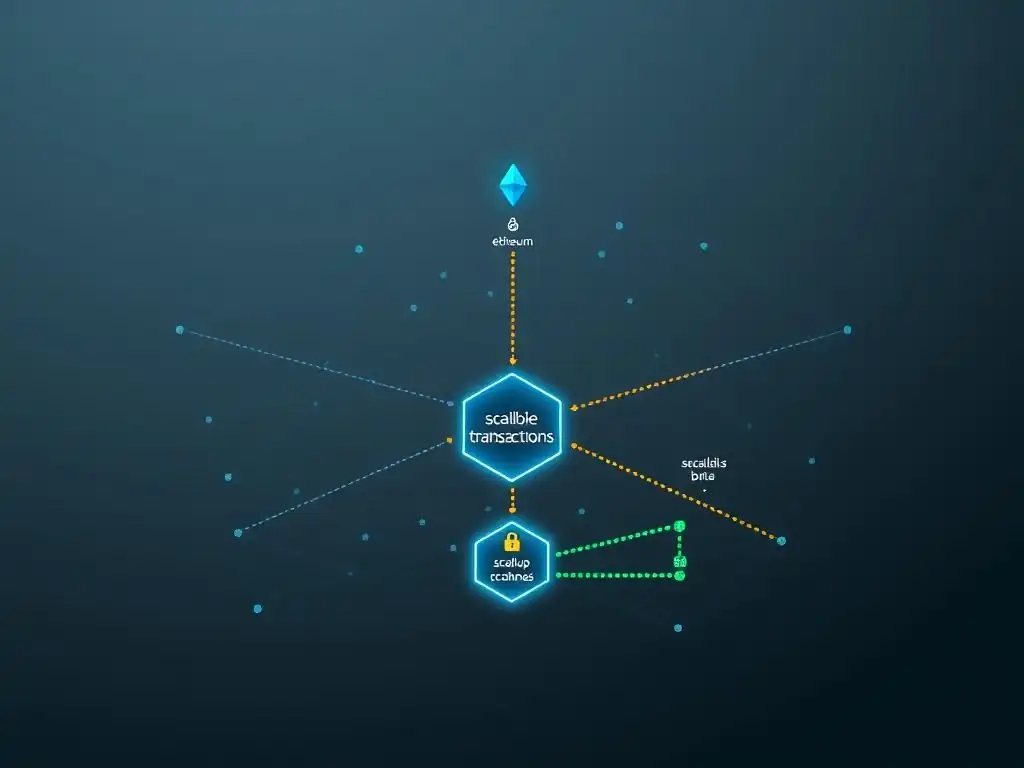
State Channels vs. Plasma: A Comparison
State channels and Plasma are both Layer-2 scaling solutions, but they employ different approaches and have distinct trade-offs. State channels focus on off-chain transactions between specific participants within established channels, while Plasma aims to create "child chains" that are anchored to the main chain and inherit its security. Plasma chains process transactions in blocks, similar to the main chain, but with potentially higher throughput and lower fees.
One key difference is in data availability. State channels do not require publishing all transaction data on-chain, as only channel opening and closing transactions interact with the main chain. Plasma, on the other hand, requires data availability for all Plasma chain transactions to ensure security. This data availability requirement can be a scalability bottleneck for Plasma. State channels are generally better suited for applications with frequent interactions between known participants, such as micropayments and gaming, while Plasma might be more suitable for applications requiring more general-purpose scalability and potentially higher transaction volumes per block, like decentralized exchanges.
State Channels vs. Rollups: Exploring Trade-offs
Rollups are another prominent Layer-2 scaling solution, categorized into Optimistic Rollups and Zero-Knowledge (ZK) Rollups. Rollups, unlike state channels, process transactions off-chain in batches and then post compressed transaction data to the main chain. This approach significantly increases throughput while still leveraging the main chain's security for data availability and transaction verification. Optimistic Rollups assume transactions are valid unless challenged, while ZK-Rollups use cryptographic proofs to ensure transaction validity.
Rollups generally offer higher throughput potential than state channels for a broader range of applications, as they are not limited to pairwise interactions within channels. However, state channels can offer lower latency for individual transactions within channels and may be simpler to implement for specific use cases. Rollups, particularly ZK-Rollups, often require more complex cryptographic constructions and computational overhead. Choosing between state channels and rollups depends on the specific application requirements, considering factors like transaction frequency, latency sensitivity, and the desired level of scalability and complexity.
Choosing the Right Layer-2 Solution
Selecting the appropriate Layer-2 scaling solution depends heavily on the specific needs and characteristics of the application. State channels are a strong choice for applications involving frequent interactions between a relatively fixed set of participants, where low latency and minimal transaction fees are crucial. Examples include micropayment systems, real-time gaming, and certain enterprise applications involving bilateral agreements. Plasma, while less widely adopted currently, might be considered for applications requiring higher throughput per block and more general-purpose scalability than state channels can offer, but data availability concerns remain a significant factor.
Rollups, particularly Optimistic and ZK-Rollups, are gaining traction as versatile Layer-2 solutions suitable for a broader range of applications, including DeFi and general-purpose dApps. Rollups offer a good balance of scalability, security, and general applicability, but they may introduce some latency compared to state channels for individual transactions. The optimal Layer-2 solution is not one-size-fits-all; careful evaluation of application requirements, security considerations, and implementation complexity is essential when making this choice.
Real-World Applications of State Channels
State Channels in Micropayments and Gaming
State channels are particularly well-suited for micropayment systems and blockchain gaming, where frequent, low-value transactions are common. In micropayments, users might make numerous small payments for content access, streaming services, or pay-per-use applications. Processing each micropayment on-chain would be prohibitively expensive due to transaction fees. State channels enable cost-effective micropayments by allowing users to open channels with service providers and conduct numerous microtransactions off-chain with minimal fees.
In blockchain gaming, state channels can facilitate in-game transactions, such as item purchases, player-to-player trading, and reward distribution, without incurring high on-chain fees or experiencing slow confirmation times. This enhances the user experience by enabling instant transactions and reducing the economic barriers to entry for players. Several blockchain gaming projects and micropayment platforms are exploring or implementing state channel solutions to improve scalability and user experience.
State Channels for Enterprise Solutions
Beyond micropayments and gaming, state channels can also be valuable for certain enterprise blockchain applications. Consider scenarios involving bilateral agreements or frequent interactions between specific business partners. State channels can facilitate secure and efficient data exchange, payment processing, and contract execution between these partners without overloading the main chain. For example, in supply chain management, state channels could be used for secure and fast communication and payment settlements between suppliers and manufacturers.
Enterprises can leverage state channels to streamline business processes, reduce transaction costs, and improve efficiency in scenarios where frequent interactions occur within defined partnerships. While state channels might not be suitable for all enterprise blockchain use cases, they offer a valuable scaling solution for specific applications requiring bilateral or multi-party interactions with high transaction frequency.
Raiden Network: A Case Study
The Raiden Network is a prominent example of a state channel implementation on the Ethereum blockchain. It aims to provide fast, low-cost, and scalable payments for Ethereum-based applications. Raiden Network allows users to open payment channels with each other and conduct numerous off-chain transactions, settling only the net balances on the Ethereum main chain. It utilizes a network of interconnected payment channels to enable payments between users who do not have direct channels with each other, leveraging routing algorithms to find efficient payment paths.
While Raiden Network has faced challenges in adoption and development, it serves as a valuable case study for understanding the potential and complexities of state channel implementations. It demonstrates the technical feasibility of building state channel networks and highlights the challenges associated with channel management, liquidity provisioning, and network routing. Raiden Network's ongoing development and community efforts contribute to the broader understanding and advancement of state channel technology.
Challenges and Limitations of State Channels
Implementation Complexity
Despite their potential benefits, state channels are not without challenges and limitations. One significant challenge is the complexity of implementation. Developing robust and secure state channel protocols and smart contracts requires specialized expertise in cryptography, distributed systems, and smart contract programming. Implementing efficient channel management, dispute resolution mechanisms, and routing algorithms adds further complexity. This implementation complexity can be a barrier to entry for developers and projects seeking to adopt state channel solutions.
Furthermore, integrating state channels into existing blockchain applications can require significant architectural changes and code modifications. Ensuring interoperability between different state channel implementations and with the underlying blockchain also presents technical challenges. Simplifying state channel development through user-friendly libraries, developer tools, and standardized protocols is crucial for wider adoption and overcoming the implementation complexity barrier.
Channel Management and Liquidity
Effective channel management and liquidity provisioning are critical for the usability and efficiency of state channel networks. Users need to manage their channels, open and close channels as needed, and ensure sufficient liquidity within channels to facilitate transactions. Channel management can become complex, especially in networks with numerous channels and participants. Liquidity management is also a challenge, as funds are locked up within channels, and insufficient liquidity can limit transaction capacity and routing efficiency.
Balancing liquidity across the network and ensuring efficient channel routing are ongoing research areas in state channel technology. Developing automated channel management tools, liquidity rebalancing mechanisms, and efficient routing algorithms are essential to address these challenges and improve the user experience of state channel networks. Striking a balance between channel liquidity, transaction capacity, and user convenience is crucial for practical state channel deployments.
Potential for Channel Congestion
While state channels alleviate congestion on the main blockchain, they can potentially experience congestion within channels themselves. If a channel becomes heavily used, transaction processing within that specific channel could become slow or inefficient. Channel congestion can occur if the channel capacity is limited or if the participants within the channel generate a very high volume of transactions. This potential for channel-level congestion needs to be addressed in state channel design and implementation.
Strategies to mitigate channel congestion include increasing channel capacity, implementing flow control mechanisms, and optimizing transaction processing within channels. Dynamic channel resizing and adaptive routing algorithms can also help distribute transaction load across the network and prevent congestion in specific channels. Monitoring channel utilization and proactively addressing potential congestion points are important aspects of managing and optimizing state channel networks.
The Future of State Channels and Blockchain Scalability
Innovations in State Channel Technology
The field of state channel technology is continuously evolving, with ongoing research and development focused on addressing current limitations and enhancing capabilities. Innovations in state channel technology include advancements in channel routing algorithms, aiming for more efficient and scalable payment paths across networks. Researchers are also exploring techniques for improving channel liquidity management, such as automated liquidity rebalancing and cross-channel liquidity sharing.
Furthermore, there is ongoing work on enhancing the privacy of state channel transactions through integration with privacy-preserving technologies like zero-knowledge proofs and secure multi-party computation. Improving the usability and developer experience of state channel implementations is also a key area of innovation, with efforts focused on simplifying channel management, providing user-friendly tools, and standardizing protocols. These ongoing innovations are paving the way for more robust, scalable, and user-friendly state channel solutions in the future.
The Role of State Channels in a Multi-Chain Ecosystem
As the blockchain ecosystem evolves towards a multi-chain future, state channels are likely to play a crucial role in enabling interoperability and cross-chain transactions. State channels can be adapted to facilitate communication and value transfer between different blockchains, acting as bridges between disparate blockchain networks. Inter-chain state channels could enable users to seamlessly transact across multiple blockchains without requiring centralized exchanges or intermediaries.
Research is underway to develop protocols for cross-chain state channels, exploring techniques for atomic cross-chain swaps and secure communication between different blockchain platforms. The ability of state channels to facilitate interoperability in a multi-chain ecosystem could be a significant driver for their adoption and contribute to a more interconnected and decentralized blockchain landscape. State channels could become a key component of a future internet of blockchains.
Research Directions: Interoperability and Privacy
Key research directions in state channel technology focus on enhancing interoperability and privacy. Interoperability research aims to develop seamless and secure ways for state channels to operate across different blockchain platforms, enabling cross-chain transactions and communication. This includes exploring standardized protocols for inter-chain state channel communication and atomic swap mechanisms for cross-chain value transfer.
Privacy research focuses on integrating privacy-enhancing technologies into state channels to protect user transaction data and enhance confidentiality. This includes exploring the use of zero-knowledge proofs, secure multi-party computation, and other privacy-preserving techniques within state channel protocols. Advancements in interoperability and privacy will be crucial for realizing the full potential of state channels and fostering their widespread adoption in diverse applications and blockchain ecosystems.
Conclusion: State Channels as a Key Component of Blockchain Scalability
Addressing the Blockchain Scalability Trilemma
State channels offer a compelling approach to addressing the blockchain scalability trilemma by enhancing transaction throughput and reducing fees without fundamentally compromising security or decentralization. By moving a significant portion of transaction processing off-chain, state channels alleviate congestion on the main blockchain, enabling it to focus on its core functions of security and consensus. The use of cryptographic techniques and on-chain dispute resolution mechanisms ensures that security is maintained even with off-chain interactions. Furthermore, the decentralized nature of state channels preserves the trustless and censorship-resistant properties of blockchain technology.
While state channels are not a silver bullet solution for all scalability challenges, they represent a valuable tool in the arsenal of Layer-2 scaling solutions. For specific use cases involving frequent, low-value transactions and interactions between defined participants, state channels offer a highly effective and efficient scaling mechanism. Their ability to balance scalability, security, and decentralization makes them a significant contributor to the advancement of blockchain technology.
The Continued Importance of Layer-2 Solutions
Layer-2 scaling solutions, including state channels, Plasma, and rollups, are essential for the continued growth and adoption of blockchain technology. Base layer blockchains, while crucial for security and decentralization, often face inherent scalability limitations. Layer-2 solutions provide a necessary complement, enabling blockchain systems to handle the transaction volumes and performance requirements of real-world applications without sacrificing their core principles.
As blockchain technology matures and adoption expands, the importance of Layer-2 scaling solutions will only increase. These solutions are critical for unlocking the full potential of blockchain and enabling its widespread use across various industries and applications. Continued innovation and development in Layer-2 scaling technologies are crucial for building a scalable, secure, and decentralized blockchain future.
Final Thoughts on the Future of State Channels
State channels, despite facing challenges and limitations, hold significant promise as a valuable Layer-2 scaling solution. Ongoing research and development are addressing existing challenges and enhancing their capabilities, particularly in areas like interoperability, privacy, and usability.
As the blockchain ecosystem evolves and diversifies, state channels are poised to play a crucial role in enabling scalable and efficient blockchain applications, particularly in micropayments, gaming, enterprise solutions, and potentially as a key component of a multi-chain future. Their ability to address the scalability trilemma while maintaining decentralization makes them a vital technology for the continued advancement and mainstream adoption of blockchain technology.
Frequently Asked Questions
What are blockchain state channels, and how do they work?
State channels are a layer-two scaling solution that allows participants to conduct transactions off-chain, without broadcasting every transaction to the main blockchain. This reduces congestion and improves transaction speed.
How do state channels improve the scalability of blockchain networks?
By moving a significant portion of transaction activity off the main chain, state channels drastically reduce the load on the blockchain. This allows for higher transaction throughput and lower fees.
What role do state channels play in balancing the blockchain trilemma (scalability, security, and decentralization)?
State channels primarily address scalability without significantly compromising security or decentralization. They achieve this by leveraging the security of the main chain for dispute resolution.
What are some potential use cases for blockchain state channels beyond simple payments?
Beyond payments, state channels can be used for complex smart contract interactions, gaming applications requiring fast transactions, and microtransactions where on-chain fees would be prohibitive.
What are the key challenges and limitations associated with implementing state channels?
Challenges include the need for participant cooperation to open and close channels, potential complexity in managing channel states, and the requirement for pre-funded channels.
Final Reflection: Embracing Scalable Trust
The journey through the intricacies of state channels reveals a powerful truth: blockchain scalability need not come at the expense of security and decentralization. While the trilemma has long haunted the blockchain space, state channels offer a compelling pathway towards a future where transactions are both rapid and reliably secure, all while maintaining the core principles of a decentralized ecosystem. This is not merely a technical solution; it's a philosophical shift towards efficient trust.
The ongoing influence of state channels is undeniable, even if its full potential remains untapped. It represents a fundamental shift in how we perceive blockchain transactions, moving away from the monolithic, on-chain model towards a more nuanced, layered approach. This evolution is crucial for the widespread adoption of blockchain technology, enabling it to handle the demands of real-world applications without sacrificing its inherent advantages. The beauty of state channels lies in their ability to create a microcosm of trust, allowing participants to interact freely and efficiently while retaining the ultimate security of the underlying blockchain.
As we conclude this exploration, consider the implications of scalable trust in your own life. How can you apply the principles of efficient communication and secure collaboration, as exemplified by state channels, to your interactions and endeavors? The future of blockchain, and indeed the future of decentralized systems, hinges on our ability to embrace innovative solutions like state channels. Let us strive to understand, support, and contribute to this evolution, building a more scalable, secure, and decentralized world for all.
Unlock the Potential: Start Channeling Your Blockchain Future!
Thank you for exploring the world of State Channels! You've learned how they can address some of the key challenges in blockchain technology. Are you ready to apply this knowledge?
Here’s how to take the next step:
- Explore existing State Channel implementations on platforms like GitHub. Contribute to open-source projects or customize them to develop innovative solutions. This is your primary action!
- Test integrating state channels into your upcoming blockchain projects or decentralized applications to see how they improve scalability.
- Share this article with fellow blockchain enthusiasts and spark a discussion about how state channels can shape the future of decentralized applications.
What real-world problem do you think State Channels are best equipped to solve, and how can we work together to promote their adoption? Share your thoughts below!
Leave a Reply