
Blockchain for Agriculture Supply Chains: Improving Food Safety and Farmer Empowerment


Welcome to Blockchain Trends, your guide to understanding the revolutionary power of blockchain beyond the hype.
Imagine a world where food safety is guaranteed and farmers are empowered. Our latest deep dive explores just that, focusing on how blockchain traceability food supply is transforming agriculture. Discover how this innovative technology is improving transparency, building trust, and revolutionizing the way we track our food from farm to fork. Are you ready to unlock the potential of blockchain in securing our food systems and empowering the backbone of our agriculture? Let's explore.
Blockchain for Agriculture Supply Chains: Enhancing Transparency and Farmer Livelihoods
- Introduction: The Demand for Transparency in Agriculture
- Understanding Blockchain Technology in Supply Chain Management
- Blockchain-Enabled Food Traceability: A Deep Dive
- Improving Food Safety with Blockchain Technology
- Empowering Farmers with Blockchain Solutions
- Case Studies: Blockchain in Agricultural Supply Chains
- Overcoming Barriers to Blockchain Adoption in Agriculture
- The Future of Blockchain in Agricultural Supply Chains
- Conclusion: Transforming Agriculture with Blockchain
-
Frequently Asked Questions
- How does blockchain improve food safety in agricultural supply chains?
- What role does blockchain play in empowering farmers within the agricultural sector?
- What are the main challenges in implementing blockchain for agricultural supply chains?
- Beyond food safety, what other benefits does blockchain offer to the agricultural industry?
- How is blockchain traceability helping to combat food fraud in agricultural supply chains?
- Final Reflection: Cultivating Trust Through Transparency
Introduction: The Demand for Transparency in Agriculture
The Complexities of Modern Agricultural Supply Chains
Modern agricultural supply chains are notoriously intricate, spanning multiple geographic regions, intermediaries, and logistical steps from farm to fork. A single tomato, for instance, might pass through the hands of the farmer, a local collector, a regional distributor, a processing facility, a packaging plant, a national wholesaler, and finally, the retailer before reaching a consumer's plate. This lengthy journey involves numerous transactions, handoffs, and data points, often recorded on disparate, incompatible systems, or even paper ledgers. The lack of a unified, transparent system makes it exceedingly difficult to track the origin, journey, and condition of food products effectively.
This complexity contributes significantly to challenges such as foodborne illness outbreaks, food fraud, inefficiencies leading to waste, and unfair practices affecting farmers. When a safety issue arises, tracing the source through traditional methods can take days or even weeks, exacerbating the problem and causing widespread economic damage. Similarly, opaque pricing mechanisms and delayed payments within these complex networks often leave farmers, the primary producers, with disproportionately small margins compared to other players in the chain. The inherent opaqueness makes it hard to verify claims about product origin, organic status, or fair labor practices, eroding consumer trust.
Blockchain as a Solution for Transparency and Farmer Empowerment
Blockchain technology offers a compelling solution to the inherent opaqueness and fragmentation of agricultural supply chains by providing a decentralized, immutable, and transparent ledger for recording transactions and data. By creating a shared, single source of truth accessible to authorized participants, blockchain can track products from their initial point of production on the farm through every step of processing, packaging, distribution, and sale. This blockchain traceability food supply capability means that information about a product's journey, including handling conditions, certifications, and ownership changes, is recorded securely and cannot be tampered with retrospectively.
The implementation of blockchain in food supply chains addresses key pain points. For consumers, it offers verifiable information about the food they purchase, enhancing trust and safety. For businesses, it streamlines operations, reduces administrative overhead, and allows for rapid identification of contamination sources during recalls.
Crucially, for farmers, blockchain can provide direct access to market information, ensure fair and timely payments through smart contracts, and offer a verifiable record of their produce's quality and origin, potentially leading to better pricing and stronger negotiating power. This transformative potential makes blockchain a powerful tool for enhancing transparency and empowering stakeholders across the agricultural ecosystem.
Understanding Blockchain Technology in Supply Chain Management
Blockchain Explained: Structure and Functionality
At its core, a blockchain is a distributed ledger technology (DLT) that records transactions across a network of computers. Unlike traditional databases, which are typically centralized and controlled by a single entity, a blockchain is decentralized, meaning copies of the ledger are maintained by multiple participants (nodes) in the network.
Transactions are grouped into "blocks," and each new block is linked to the previous one using cryptographic hash functions, forming a chain of blocks – hence, "blockchain." Once a block is added to the chain and verified by the network participants through a consensus mechanism (like Proof of Work or Proof of Stake), the data within it is considered immutable; altering it would require altering all subsequent blocks, which is computationally infeasible.
The functionality of blockchain for supply chain management stems from these core principles. Each event in the supply chain – a product leaving the farm, arriving at a warehouse, undergoing quality inspection, being shipped, or changing ownership – can be recorded as a transaction on the blockchain. Each transaction is timestamped and cryptographically secured.
Participants in the network (farmers, processors, distributors, retailers, regulators, consumers) can access the shared ledger according to their permission levels, providing a transparent and verifiable history of the product. This shared, tamper-proof record eliminates the need for multiple, often conflicting, private databases and significantly improves the reliability of supply chain data.
Key Advantages of Blockchain in Supply Chain Management
Improved Transparency and Traceability
One of the most significant advantages of using blockchain in supply chains is the dramatic improvement in transparency and traceability. By recording every step of a product's journey on a shared, immutable ledger, all authorized parties gain access to a comprehensive and verifiable history. This allows for precise blockchain traceability food supply, enabling stakeholders to know exactly where a product came from, where it has been, and who has handled it at any given point. This level of visibility is unprecedented in traditional systems and is vital for verifying ethical sourcing, organic certifications, and fair trade practices.
The enhanced traceability means that companies can pinpoint the source of issues, such as a contaminated batch of produce, within minutes or seconds, compared to days or weeks with manual or legacy systems. This rapid identification is critical for containing outbreaks, minimizing the scope of recalls, and protecting public health. Furthermore, consumers can often access this traceability information directly, perhaps by scanning a QR code on the product packaging, allowing them to make more informed purchasing decisions based on provenance and production details.
Enhanced Efficiency and Reduced Costs
Blockchain technology can significantly enhance supply chain efficiency by streamlining processes and reducing administrative overhead. The shared, digital ledger eliminates the need for extensive paperwork and manual data entry, reducing errors and delays. Smart contracts, automated agreements written into code and executed on the blockchain when predefined conditions are met, can automate various transactions and processes, such as payments upon delivery or quality verification, further speeding up operations.
Reducing intermediaries and automating processes can also lead to substantial cost savings. Less time spent on manual data reconciliation, dispute resolution, and tracking means lower operational expenses. Furthermore, improved traceability and visibility can help reduce waste by enabling better inventory management and logistics planning. For instance, knowing the exact location and condition of goods in transit allows for more agile responses to disruptions or changes in demand, preventing spoilage or unnecessary holding costs.
Increased Security and Data Integrity
The inherent cryptographic nature of blockchain technology provides a high level of security and ensures data integrity. Each transaction is encrypted and linked to the previous one, making it extremely difficult for unauthorized parties to tamper with records without being detected by the network's consensus mechanisms. Once data is recorded on the blockchain, it is practically immutable, providing a trusted and verifiable history of events.
This enhanced security is crucial in supply chains where sensitive information is exchanged and maintaining trust among multiple parties is essential. It protects against data breaches and fraud, ensuring that the information used for decision-making is accurate and reliable. For example, certification data, quality control reports, and origin details recorded on a blockchain are highly resistant to falsification, building greater confidence in the integrity of the supply chain and the products moving through it.
Blockchain-Enabled Food Traceability: A Deep Dive
Implementing Blockchain for Complete Food Tracking
Implementing blockchain for complete food tracking involves creating a network where all key participants in the agricultural supply chain – from farmers and harvesters to processors, distributors, retailers, and even regulators – can record relevant data points onto a shared ledger. This requires defining what data is captured at each stage (e.g., planting date, fertilizer use, harvest location, processing facility, temperature during transport, retail location) and ensuring that this data is linked to a unique identifier for the product or batch.
The technology stack typically involves a blockchain platform (like Hyperledger Fabric, Ethereum, or others tailored for enterprise), APIs for integrating with existing systems (like ERP or inventory management), and user interfaces (web or mobile apps) for data input and access.
The process begins at the source, where farmers might register their produce with a unique identifier and record initial data points. As the product moves through the supply chain, each handover, transformation (e.g., from raw ingredient to processed food), quality check, and logistical event is recorded as a transaction on the blockchain. This creates an unbroken, digital trail that captures the entire "life story" of the food item or batch. The challenge lies in ensuring consistent data capture across diverse participants and integrating disparate systems while maintaining data privacy where necessary.
Tracking Food Products from Origin to Consumer
Effective blockchain traceability food supply allows for tracking a specific food product or batch from its exact origin point on the farm all the way to the point of sale to the consumer. This differs from traditional lot-based tracking, which can often only trace back to a large distribution center or processing plant. With blockchain, the level of granularity can be significantly higher, potentially tracking down to an individual item or a small batch linked to a specific field or farmer.
For example, a head of lettuce could have a unique QR code linked to a blockchain record detailing the farm it was grown on, the date of harvest, the type of soil, the pesticides/herbicides used (if any), the processing facility it went through, the temperature conditions during transport, and the date it arrived at the grocery store. Consumers scanning this code could access this detailed provenance data, building trust and connection to their food source. This end-to-end visibility is invaluable for verifying claims, managing recalls, and ensuring authenticity.
Smart Contracts: Automating Supply Chain Procedures
Smart contracts are self-executing contracts with the terms of the agreement directly written into lines of code. They reside on the blockchain and automatically execute predefined actions when specific conditions are met and verified by the network. In agricultural supply chains, smart contracts can automate numerous procedures, reducing reliance on manual processes and intermediaries.
For instance, a smart contract could be set up between a farmer and a distributor where payment is automatically released to the farmer's digital wallet as soon as the distributor receives and verifies the quantity and quality of the produce based on data recorded on the blockchain. Another application could involve automating compliance checks; a smart contract could verify that temperature logs for a shipment remained within the required range throughout transit and trigger an alert or penalty if conditions were violated. This automation enhances efficiency, reduces transaction costs, minimizes disputes, and ensures timely and transparent execution of agreements.
Improving Food Safety with Blockchain Technology
Reducing Foodborne Illnesses Through Quick Traceability
One of the most critical applications of blockchain in the food industry is its potential to drastically reduce the impact of foodborne illness outbreaks. Traditional methods for tracing the source of contamination are often slow and cumbersome, involving sifting through vast amounts of paper records or incompatible digital databases across multiple companies. This delay means that contaminated products can remain on shelves longer, sickening more people, and recalls are often broader than necessary, leading to significant waste and economic losses.
With a blockchain-based traceability system, the entire history of a product batch is recorded on an immutable ledger. If a foodborne illness is reported and linked to a specific product, authorities and companies can use the blockchain data to trace the product back to its origin point – the specific farm, field, or processing facility – in a matter of seconds or minutes.
This rapid identification allows for targeted recalls, removing only the affected products from the supply chain quickly, thereby limiting the spread of illness and minimizing the economic impact on unaffected producers and retailers. Pilot programs have demonstrated that trace times for contaminated items can be reduced from days or weeks down to seconds.
Combating Food Fraud with Blockchain Authentication
Food fraud, including mislabeling, dilution, substitution, and counterfeiting, is a pervasive and costly problem estimated to cost the global food industry billions of dollars annually. Examples range from olive oil adulterated with cheaper oils to mislabeled fish species or counterfeit organic produce. Such fraud not only harms consumers and legitimate businesses but can also pose significant health risks. Blockchain technology offers a powerful tool to combat food fraud by providing a secure and verifiable method for authenticating products and their claims.
By recording critical attributes about a product – such as its origin, quality certifications, and handling history – on a blockchain, companies and consumers can verify the authenticity of the product and the accuracy of its labeling. Each product or batch can be linked to a unique digital identity on the blockchain. When the product moves through the supply chain, each change in custody or processing step is recorded, creating a verifiable chain of custody.
This makes it extremely difficult to introduce fraudulent products or alter data without detection, as any discrepancy between the physical product and its blockchain record would be immediately apparent to authorized parties viewing the ledger. This enhanced transparency and verification capability builds trust and safeguards the integrity of the food supply.
Real-Time Monitoring of Food Storage and Transport
Maintaining proper temperature and environmental conditions during the storage and transport of perishable food items is crucial for preventing spoilage and ensuring safety. Deviations from required conditions can lead to bacterial growth or product degradation, making the food unsafe for consumption. Traditional monitoring methods often rely on periodic checks or data loggers that are downloaded only at the end of a journey, meaning issues are discovered too late.
Blockchain can be integrated with IoT (Internet of Things) sensors placed in storage facilities and transport containers. These sensors can continuously monitor conditions such as temperature, humidity, and location. The data from these sensors can be automatically recorded onto the blockchain in near real-time.
This provides an immutable record of the conditions under which the food was stored and transported. If conditions deviate from the required parameters, smart contracts can trigger immediate alerts to relevant parties (e.g., the carrier, the recipient, or a regulator), allowing for timely intervention. This real-time, verifiable monitoring enhances accountability and significantly improves the ability to ensure food safety throughout the supply chain.
Empowering Farmers with Blockchain Solutions
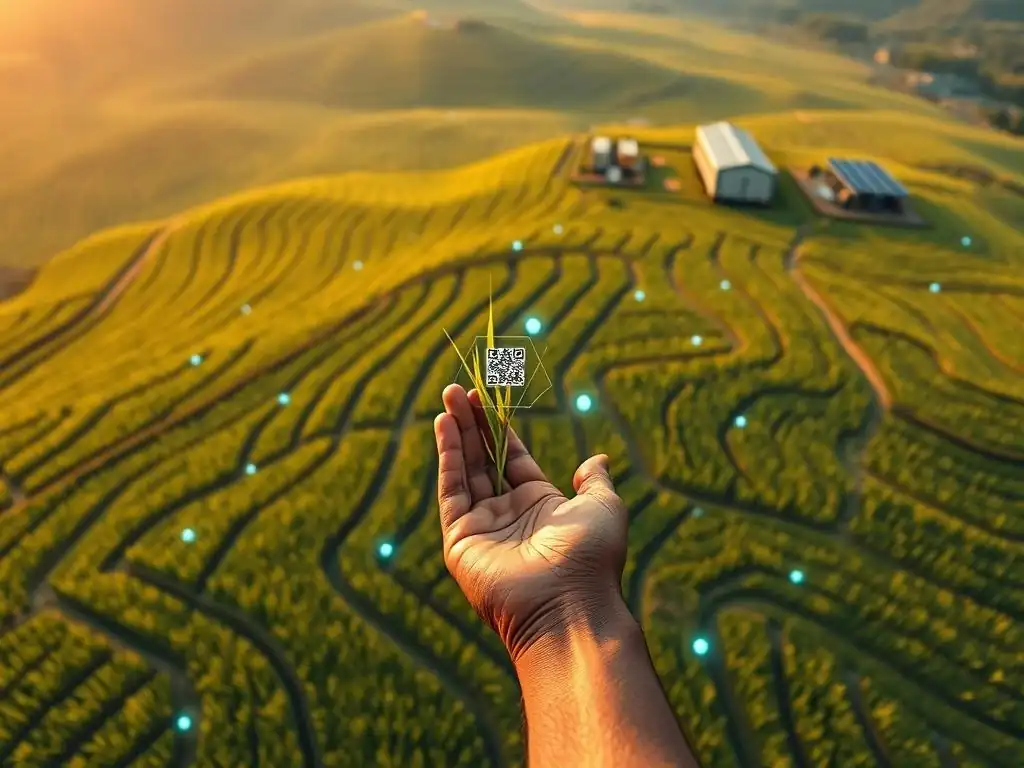
Direct Market Access and Fair Pricing for Farmers
Agricultural value chains often involve multiple intermediaries between the farmer and the final consumer. While these intermediaries provide essential services like logistics and distribution, they also add costs and reduce the farmer's share of the final price. Furthermore, farmers often lack direct access to market information, leaving them vulnerable to price manipulation by buyers. Blockchain technology can help disintermediate this process and provide farmers with greater access to markets and potentially fairer pricing.
Platforms built on blockchain can connect farmers directly with buyers, including restaurants, retailers, or even consumers, allowing them to negotiate terms and prices more directly. By creating a transparent record of product quality and origin on the blockchain, farmers can build a reputation based on the actual value of their produce, rather than being subject to generalized pricing. This direct interaction and transparency can lead to a larger share of the consumer price returning to the farmer. Some initiatives are exploring ways for farmers to list their produce on blockchain-based marketplaces, bypassing traditional distribution channels and capturing more value.
Secure and Transparent Payment Systems
Delays and lack of transparency in payment systems are significant challenges for many farmers. Payments can be slow, and the calculations behind the final amount received are often opaque, making it difficult for farmers to verify if they are being paid correctly according to agreed-upon terms. This financial uncertainty makes it difficult for farmers to plan, invest, and manage their operations effectively.
Blockchain-based payment systems, often utilizing cryptocurrencies or stablecoins, can offer secure, transparent, and potentially faster payment options. When integrated with smart contracts, payments can be automatically triggered upon verification of delivery or quality, as recorded on the blockchain. This eliminates manual processing delays and provides farmers with a clear, immutable record of all transactions and payments received. The transparency of the blockchain ledger means that farmers can easily see the transaction details, reducing the potential for errors or unfair deductions. This secure and transparent financial flow provides farmers with greater financial stability and control.
Building Trust and Accountability in Agricultural Transactions
Trust is fundamental to any supply chain, but the complex and often opaque nature of traditional agricultural networks can erode it. Farmers often rely on handshake agreements or paper contracts with limited recourse if disputes arise regarding quality, quantity, or payment. The lack of verifiable data makes it difficult to establish accountability when issues occur.
Blockchain creates a shared, immutable record of every transaction and data point related to a specific product or batch. This verifiable history builds inherent trust among participants because the data cannot be easily altered or disputed. For farmers, this means that records of their produce quality, delivery times, and contractual agreements are securely stored and accessible.
If a dispute arises, the blockchain provides an objective, tamper-proof source of truth to resolve disagreements quickly and fairly. This increased accountability across the supply chain empowers farmers by giving them verifiable evidence of their contributions and adherence to agreements, strengthening their position in negotiations and transactions.
Case Studies: Blockchain in Agricultural Supply Chains
Case Study 1: Traceability of Colombian Coffee Beans Using Blockchain
The journey of specialty coffee from remote farms in Colombia to consumers worldwide is complex, involving cooperatives, exporters, importers, roasters, and retailers. Ensuring fair compensation for farmers and providing consumers with verifiable information about origin, quality, and ethical sourcing is a significant challenge. Traditional methods rely on paper certificates and separate databases, making it difficult to track specific beans or verify claims effectively. This lack of transparency often means farmers receive a small fraction of the final retail price, and consumers lack confidence in ethical sourcing claims.
A project implemented by a major technology company and local partners utilized blockchain to create a transparent and traceable supply chain for premium Colombian coffee beans. The system registered farmers and their coffee lots on the blockchain, recording data points such as farm location, altitude, bean variety, and harvest details. As the coffee moved through washing, drying, milling, export, import, and roasting, each step was recorded as a transaction on the distributed ledger.
Data like quality scores from cupping sessions and certifications (e.g., organic, fair trade) were also added, linked to specific batches. Consumers could scan a QR code on the final product packaging to access this detailed journey and verify the coffee's origin and story.
Challenges Faced and Solutions Implemented
One significant challenge was onboarding smallholder farmers, many of whom had limited access to technology or understanding of blockchain. The solution involved partnering with local cooperatives and providing accessible interfaces, such as mobile apps or assistance from field agents, to help farmers register their produce and input data.
Data standardization across different stages and participants was another hurdle; this was addressed by developing a common data model and protocols for recording information on the blockchain. Ensuring data accuracy at the point of entry was also critical; this was tackled through training, verification steps within the process, and integrating with existing digital systems where possible.
Another challenge was ensuring all supply chain partners, from small mills to large roasters, adopted the system. This required demonstrating the clear benefits to each party, such as streamlined data management, reduced audit costs, improved inventory tracking, and enhanced brand reputation. Incentivizing participation, perhaps through preferential terms or shared data insights, was key to achieving network adoption and ensuring the integrity of the end-to-end blockchain traceability food supply.
Results Achieved: Improved Brand Reputation and Customer Confidence
The implementation of blockchain traceability yielded several positive results. For the brand, it significantly enhanced transparency and storytelling, allowing them to market the coffee's unique origin and the efforts of specific farmers directly to consumers. This verifiable narrative built trust and strengthened brand reputation, particularly among consumers willing to pay a premium for ethically sourced and high-quality products. Customer confidence increased as they could independently verify the authenticity and journey of the coffee they purchased by scanning the QR code, moving beyond simply trusting label claims.
While specific farmer income data is proprietary, such projects aim to enable farmers to command better prices by providing verifiable proof of quality and origin, potentially leading to improved livelihoods. The increased efficiency in data management and reporting across the supply chain also streamlined operations for participating businesses. This case demonstrates how blockchain can create a direct link between producers and consumers, adding value and building trust through enhanced blockchain traceability food supply.
Case Study 2: Australian Lamb Tracking Using Blockchain
Ensuring the integrity and authenticity of premium meat products like Australian lamb is vital for export markets and domestic consumers. The supply chain involves farms, livestock transporters, processing facilities, distributors, and retailers. Issues include verifying origin, tracking movements for biosecurity purposes, ensuring quality standards are met, and combating potential counterfeiting in international markets. Traditional systems often rely on paper manifests and centralized databases, which can be prone to errors and lack real-time visibility.
A pilot program in Australia explored using blockchain to track lamb from farm to plate. The system assigned unique digital identifiers to livestock, which were then linked to blockchain records capturing data points such as farm of origin, breed, health records, transportation details, processing dates, quality grades, and export information. RFID tags and other identifiers were used to link physical animals and cuts of meat to their digital twins on the blockchain. Participants in the supply chain, from farmers to export abattoirs and importers, recorded relevant data onto the shared ledger.
Enhanced Supply Chain Efficiency and Waste Reduction
The blockchain system provided enhanced visibility across the supply chain, allowing participants to track the real-time location and status of lamb shipments. This improved coordination between farms, transporters, and processing plants, leading to more efficient scheduling and logistics. By having a clear, immutable record of handling and processing steps, companies could better manage inventory and reduce delays. The ability to quickly verify the authenticity and quality of shipments also streamlined customs procedures for export.
Furthermore, improved traceability and monitoring capability helped in identifying bottlenecks and areas of potential waste. For instance, if delays were occurring at a specific processing plant, the data on the blockchain would make this evident, allowing for corrective actions. The enhanced transparency also helped in better forecasting and planning, leading to reduced spoilage and more optimized resource allocation throughout the supply chain. The project demonstrated the potential for efficiency gains through better data flow and coordination facilitated by blockchain.
Empowering Farmers with Data-Driven Decision-Making
While the immediate focus of this pilot was often on traceability and export efficiency, blockchain systems inherently generate valuable data that can empower farmers. By having access to verifiable records of their livestock's journey beyond the farm gate – including processing yields, quality grades assigned at the abattoir, and even potentially market feedback from buyers – farmers gain valuable insights. This data can inform on-farm decisions regarding breeding, feeding, and management practices to improve the quality and value of their livestock.
Knowing how their specific animals performed at different stages of the supply chain provides farmers with concrete data to identify best practices and areas for improvement. It also strengthens their position in discussions with processors and buyers by providing verifiable data on the quality of their produce. While direct price impacts are complex and market-dependent, having this data-driven understanding of their product's value downstream is a significant step towards empowering farmers with better information for business planning and negotiation within the blockchain traceability food supply network.
Overcoming Barriers to Blockchain Adoption in Agriculture
Addressing Data Privacy and Security Issues
While blockchain is inherently secure due to its cryptographic nature, implementing it in sensitive areas like agricultural supply chains raises specific data privacy and security concerns. Not all data points should be public; for example, specific farmer income details or proprietary processing techniques need to be protected. Public blockchains might expose too much data, while private or permissioned blockchains offer more control but require careful management of access rights. Ensuring that sensitive business data or farmer-specific information is protected while maintaining transparency for relevant parties is crucial.
Solutions involve using permissioned blockchain platforms where access to specific data layers is granted only to authorized participants. Cryptographic techniques like zero-knowledge proofs can allow verification of certain facts (e.g., "this produce is certified organic") without revealing the underlying sensitive data that proves it. Robust data governance policies and legal frameworks are also necessary to define data ownership, access rights, and responsibilities within the blockchain network. Educating participants on best practices for data security and privacy is also vital for successful adoption.
Ensuring Interoperability Between Blockchain Platforms
The blockchain landscape is evolving, with various platforms and protocols being developed (e.g., Hyperledger, Ethereum, Corda). It is likely that different companies or consortiums within the agricultural sector might adopt different blockchain solutions. A major barrier to creating truly seamless, end-to-end blockchain traceability food supply is the lack of interoperability between these disparate platforms. Data recorded on one blockchain system might not be easily accessible or verifiable by a system built on a different platform, creating data silos similar to the legacy systems blockchain aims to replace.
Addressing interoperability requires developing standards and protocols that allow different blockchain networks to communicate and exchange data securely. This could involve building 'bridges' between blockchains or adopting common data standards like GS1 identifiers for products and locations, which can be used across different platforms. Industry-wide collaboration is essential to agree upon common frameworks and technical standards for data sharing and verification across diverse blockchain implementations in agriculture. Initiatives focused on developing universal standards for supply chain data on blockchain are key to overcoming this hurdle.
Educating Farmers and Stakeholders on Blockchain Benefits
Perhaps the most significant non-technical barrier to blockchain adoption in agriculture is the need to educate farmers and other stakeholders about the technology, its benefits, and how to use it. Many farmers, particularly smallholders in developing regions, may have limited digital literacy or access to the necessary technology (smartphones, internet connectivity). They may also be skeptical of new technologies or wary of sharing data. Without their active participation and accurate data input at the source, the integrity of the entire blockchain traceability system is compromised.
Overcoming this requires targeted education and outreach programs that explain blockchain in simple, understandable terms, focusing on the tangible benefits for farmers, such as improved income, reduced risk, and greater control. Providing accessible technology interfaces (e.g., simple mobile apps, offline data capture methods) and local support is crucial. Similarly, educating intermediaries, processors, and retailers on the efficiency gains, cost reductions, and enhanced trust offered by blockchain is necessary to encourage their buy-in and participation in building a comprehensive blockchain traceability food supply network. Building trust in the technology and the implementing parties is paramount.
The Future of Blockchain in Agricultural Supply Chains
Emerging Trends in Blockchain-Based Agriculture
Several emerging trends are shaping the future of blockchain in agriculture. One is the integration of blockchain with other advanced technologies like the Internet of Things (IoT), artificial intelligence (AI), and satellite imagery. IoT sensors can provide real-time data on environmental conditions, equipment status, and livestock health, which can be recorded on the blockchain for verifiable monitoring. AI can analyze blockchain data alongside other datasets (weather, market prices) to provide predictive insights for farmers and supply chain managers. Satellite imagery can offer independent verification of farming practices or land use, with data potentially linked to blockchain records.
Another trend is the development of decentralized autonomous organizations (DAOs) or similar governance structures on the blockchain to manage agricultural cooperatives or supply chain networks. These structures could enable more equitable decision-making and distribution of value among participants. Furthermore, the tokenization of agricultural assets (like crops, livestock, or even land ownership rights) on the blockchain could facilitate new forms of financing, insurance, and market participation for farmers. These combined technologies promise to create more intelligent, interconnected, and equitable agricultural ecosystems.
Blockchain's Role in Sustainable Agriculture
Blockchain is poised to play a significant role in advancing sustainable agriculture practices. By providing immutable records of farming inputs (like water usage, pesticide application, or sustainable fertilizer use) and practices (like cover cropping or no-till farming), blockchain can offer verifiable proof of sustainability claims. This transparency can help combat greenwashing and allow consumers and businesses to support genuinely sustainable producers.
Blockchain can also facilitate carbon credit markets based on verifiable data of carbon sequestration practices implemented by farmers. Smart contracts could automate the issuance and trading of these credits based on blockchain-recorded data. Furthermore, tracking resource usage (water, energy) throughout the supply chain on a blockchain can help identify inefficiencies and encourage more sustainable operations. By creating a transparent and accountable system for recording and verifying sustainable practices, blockchain can incentivize environmentally friendly farming and supply chain management, contributing to a more resilient and sustainable food system.
Predictions for Blockchain Adoption in Food Traceability
Predictions for blockchain adoption in food traceability suggest a steady increase, driven by consumer demand for transparency, regulatory pressures, and the clear benefits demonstrated in pilot programs. While widespread, fully integrated adoption across entire global supply chains will take time, driven by the need for standardization and infrastructure development, we can expect to see continued growth in specific high-value or high-risk segments. Premium products (specialty coffee, fine wines, organic produce, seafood, meat) where provenance is a key selling point are likely to lead the way.
Regulatory bodies in various countries are exploring or piloting blockchain for food safety and traceability, which could accelerate adoption. As technology becomes more accessible and user-friendly, and as successful case studies multiply, the barriers to entry for smaller players, including farmers, will decrease. Within the next five to ten years, it is plausible that consumers will routinely interact with blockchain traceability food supply systems, using their phones to scan products and learn about their origins and journey, making transparent provenance the norm rather than the exception for a growing range of food items.
Conclusion: Transforming Agriculture with Blockchain
Blockchain's Potential to Revolutionize Food Systems and Empower Farmers
Blockchain technology holds immense potential to revolutionize agricultural food systems by addressing fundamental challenges of transparency, efficiency, and equity. By providing a decentralized, immutable, and transparent ledger, it enables end-to-end blockchain traceability food supply, allowing stakeholders to track products from farm to fork with unprecedented detail and reliability. This enhanced visibility is critical for improving food safety, combating fraud, and building trust among consumers.
Beyond traceability, blockchain empowers farmers by potentially providing more direct access to markets, ensuring secure and transparent payment systems via smart contracts, and offering verifiable data about their produce. This data-driven approach strengthens their position in the value chain, enabling them to potentially secure fairer prices and build reputations based on the quality and provenance of their goods. While challenges related to adoption, interoperability, and education persist, the demonstrated benefits in various pilot projects highlight the transformative power of blockchain for creating a more equitable and efficient agricultural landscape.
Call to Action: Adopting Blockchain for a Sustainable and Transparent Food System
The path towards a more sustainable and transparent food system requires collaborative action and the adoption of innovative technologies. Blockchain offers a proven framework for achieving these goals. Businesses across the agricultural supply chain – from producers and processors to distributors and retailers – should explore and invest in blockchain-based solutions. This involves piloting programs, collaborating with technology providers, and working towards industry-wide standards for data sharing and interoperability.
Furthermore, governments and regulatory bodies have a crucial role to play in supporting the development and adoption of blockchain for food safety and traceability through favorable policies, pilot funding, and establishing clear guidelines. Farmers and cooperatives should engage with initiatives exploring blockchain, understanding its potential benefits and advocating for systems that truly empower them. By collectively embracing the capabilities of blockchain traceability food supply, we can build a food system that is safer, more efficient, more sustainable, and ultimately, more beneficial for everyone involved, from the farmer who grows our food to the consumer who enjoys it.
Frequently Asked Questions
How does blockchain improve food safety in agricultural supply chains?
Blockchain enables end-to-end traceability, allowing consumers and businesses to quickly identify the source of contamination and prevent further spread. This transparency builds trust and reduces foodborne illness risks.
What role does blockchain play in empowering farmers within the agricultural sector?
Blockchain can provide farmers with direct access to markets, cutting out intermediaries and increasing their profits. It also helps them secure fair pricing and access to financing.
What are the main challenges in implementing blockchain for agricultural supply chains?
Challenges include the lack of digital infrastructure in many farming communities and the complexity of integrating blockchain with existing systems. Data privacy concerns also need careful consideration.
Beyond food safety, what other benefits does blockchain offer to the agricultural industry?
Blockchain can streamline processes, reduce supply chain inefficiencies, and improve inventory management. It also facilitates better data sharing and collaboration among stakeholders.
How is blockchain traceability helping to combat food fraud in agricultural supply chains?
By creating an immutable record of each product's journey, blockchain makes it extremely difficult to falsify origin or quality information. This increased accountability deters fraudulent activities.
Final Reflection: Cultivating Trust Through Transparency
The exploration of blockchain's potential to revolutionize agricultural supply chains underscores a critical need in our modern world: building unwavering trust in the food we consume. The journey from farm to table is often shrouded in opacity, leaving consumers vulnerable and farmers disempowered. Blockchain traceability offers a powerful solution, promising to not only enhance food safety but also to foster a more equitable and sustainable agricultural ecosystem.
The impact of this technology extends far beyond mere tracking and tracing. It represents a fundamental shift in how we perceive and interact with our food systems, fostering a deeper connection between consumers and the origins of their meals. This connection is crucial, as it empowers informed choices and supports ethical farming practices. The ultimate goal of farming is not the growing of crops, but the cultivation and perfection of human beings.
- Masanobu Fukuoka. This quote highlights the profound link between agriculture and human well-being, a link that blockchain can help strengthen.
As we look to the future, let us embrace the transformative power of blockchain to cultivate a more transparent, secure, and equitable food supply chain. Consider how you, as a consumer, a farmer, or a policymaker, can champion this technology to build a world where food safety is guaranteed, farmers are empowered, and trust flourishes from the soil to the plate. Let us all be active participants in shaping a future where the journey of our food is as nourishing as the food itself.
Okay, I'm ready. Please provide the article content so I can create the CTA. I need to understand the article's main themes and arguments to craft a relevant and effective call to action.
Leave a Reply