
Exploring Plasma Frameworks: From Minimal Plasma to Plasma Cash and Plasma MVP

Welcome to Blockchain Trends, your guide to understanding the revolutionary impact of blockchain technology.
Ever wondered how blockchain can scale beyond simple transactions? Dive into our exploration of Plasma frameworks decentralized applications and discover how these innovative solutions, from Minimal Plasma to Plasma Cash and Plasma MVP, are paving the way for truly scalable and interoperable decentralized applications. Uncover the potential of Plasma to revolutionize industries and reshape the future of decentralized systems. Learn more inside...
Exploring Plasma Frameworks: From Minimal Plasma to Plasma Cash and Plasma XT
- Introduction to Plasma Frameworks for Scalable Decentralized Applications
- Minimal Plasma: The Foundation of Plasma Architectures
- Plasma MVP (Minimum Viable Plasma): Enhancing Functionality and Security
- Plasma Cash: Focusing on Non-Fungible Tokens (NFTs) and Unique Assets
- Plasma XT: Addressing Data Availability and General Computation
-
Comparing Minimal Plasma, Plasma MVP, Plasma Cash, and Plasma XT: A Detailed Analysis
- Security Considerations: Comparing the Security Models of Each Plasma Framework
- Scalability Performance: A Comparison of Transaction Throughput and Latency
- Implementation Complexity: Assessing the Difficulty of Developing with Each Framework
- Choosing the Right Plasma Framework for Your Decentralized Application: Key Factors
- The Future of Plasma Frameworks and Blockchain Scalability
- Conclusion: Plasma Frameworks - Empowering Scalable and Efficient dApps
-
Frequently Asked Questions
- What are Plasma Frameworks and what problem do they solve?
- What are the main types of Plasma frameworks discussed in the article?
- How does Plasma Cash differ from other Plasma frameworks?
- What are some potential use cases for Plasma frameworks beyond cryptocurrencies?
- What are some of the challenges and limitations associated with Plasma frameworks?
- Final Reflection: The Enduring Promise of Scalable Decentralization
- Ignite Your Blockchain Journey!
Introduction to Plasma Frameworks for Scalable Decentralized Applications
Understanding Blockchain Scalability Challenges and the Need for Layer-2 Solutions
Blockchain technology, while revolutionary in its potential for decentralization and security, faces significant scalability challenges. Traditional blockchains, like Bitcoin and Ethereum in their initial forms, struggle to process a high volume of transactions efficiently. Bitcoin, for example, historically processes around 7 transactions per second (TPS), while Ethereum, before its major upgrades, hovered around 15-20 TPS.
These figures are dwarfed in comparison to centralized payment processors like Visa, which can handle thousands of transactions per second. This inherent limitation hinders the widespread adoption of blockchain for applications requiring high throughput, such as decentralized social media platforms, high-frequency trading DEXs, or global payment systems.
The bottleneck in blockchain scalability arises from the need for every node in the network to validate and record every transaction. This consensus mechanism, while crucial for security and decentralization, becomes computationally expensive and time-consuming as transaction volume increases. To overcome these limitations and unlock the full potential of decentralized applications (dApps), Layer-2 scaling solutions have emerged. These solutions aim to offload a significant portion of transaction processing from the main blockchain (Layer-1) to a secondary layer, thereby increasing throughput and reducing transaction costs without compromising security.
Plasma Frameworks: A Layer-2 Scaling Solution for Blockchain Applications
Plasma frameworks represent a prominent category of Layer-2 scaling solutions designed to enhance the transaction processing capabilities of blockchains, particularly for decentralized applications. Conceived by Joseph Poon and Vitalik Buterin, Plasma is essentially a framework for building "child chains" that are anchored to a main blockchain (like Ethereum). These child chains operate independently but inherit the security of the main chain through fraud proofs and data availability guarantees. By processing the majority of transactions on these child chains, Plasma significantly reduces the burden on the main chain, leading to increased transaction throughput and lower fees for users.
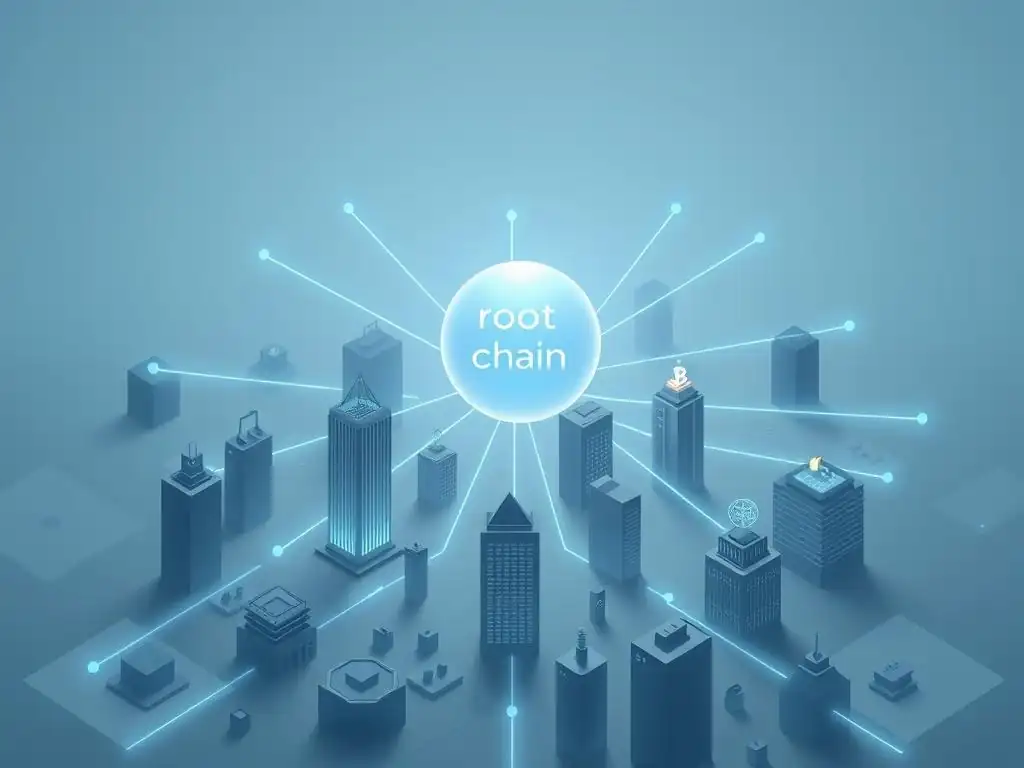
The core idea behind Plasma is to create a hierarchical structure of blockchains. The main chain acts as the root, ensuring the overall security and finality of transactions. Child chains, or Plasma chains, are then created as extensions of the main chain, each capable of handling a specific set of functionalities or applications.
Transactions within these Plasma chains are validated by a smaller set of validators, making them much faster and cheaper than transactions on the main chain. Crucially, Plasma employs fraud proofs, allowing users to challenge invalid transactions and exit the Plasma chain with their funds if necessary, thus maintaining a high level of security comparable to the main chain.
Plasma Frameworks and Decentralized Applications (dApps): Boosting Performance and Efficiency
Plasma frameworks are particularly well-suited for boosting the performance and efficiency of decentralized applications (dApps). Many dApps, especially those involving high user interaction or frequent transactions, are constrained by the limited scalability of Layer-1 blockchains. For instance, a decentralized social media platform built directly on Ethereum might become prohibitively expensive and slow to use as user activity increases. Plasma offers a solution by allowing such dApps to operate on dedicated Plasma chains, processing user actions, content posting, and interactions at a much higher speed and lower cost.
By leveraging Plasma, dApp developers can create applications that are more responsive, user-friendly, and capable of handling a larger user base. Consider a decentralized game with in-game assets represented as NFTs. Using a Plasma framework, the trading and transfer of these NFTs can occur on a dedicated Plasma chain, making the gaming experience smoother and more affordable for players.
Furthermore, the reduced transaction fees associated with Plasma can significantly lower the barrier to entry for users, encouraging wider adoption of decentralized applications across various domains. This improved efficiency directly translates to a better user experience and enables dApps to compete more effectively with traditional centralized applications in terms of performance.
Minimal Plasma: The Foundation of Plasma Architectures
Core Principles of Minimal Plasma: UTXO Model and Fraud Proofs
Minimal Plasma, the foundational iteration of Plasma frameworks, operates on a simplified model inspired by Bitcoin's Unspent Transaction Output (UTXO) structure. In this model, funds are represented as UTXOs, and transactions consume existing UTXOs to create new ones. This UTXO-based approach provides a clear and auditable transaction history, making it easier to reason about fund ownership and prevent double-spending. Each transaction in Minimal Plasma is broadcast to the Plasma chain validators, and a block of transactions is periodically committed to the main chain, typically Ethereum.
A cornerstone of Minimal Plasma's security is the fraud proof mechanism. Fraud proofs allow any user to challenge an invalid transaction included in a Plasma block. If a user detects an invalid transaction, they can submit a proof of fraud to the main chain.
Upon successful verification of the fraud proof by the main chain's smart contract, the invalid block is reverted, and the malicious actor is penalized. This mechanism ensures that Plasma chain operators are incentivized to act honestly and prevents them from stealing user funds or manipulating the chain's state. The combination of the UTXO model and fraud proofs forms the bedrock of Minimal Plasma's security and functionality.
Advantages and Limitations of Minimal Plasma for Payment Channels
Minimal Plasma offers several advantages, particularly for payment channel applications. Its simplicity and reliance on the UTXO model make it relatively straightforward to implement and understand. The fraud proof mechanism provides a robust security layer, ensuring that users retain control over their funds even within the Plasma chain environment. For payment channels, Minimal Plasma can facilitate fast and low-cost transactions between participants, making it ideal for micropayments and scenarios requiring frequent value transfers. Imagine a content platform where users pay per article or per minute of video streaming; Minimal Plasma based payment channels could enable seamless and inexpensive micropayments.
However, Minimal Plasma also has limitations. Its UTXO-based model, while beneficial for simplicity, can become less efficient when dealing with complex transactions or stateful applications. Furthermore, Minimal Plasma in its purest form is primarily designed for simple payment transfers and lacks native support for smart contracts or general computation. This restricts its applicability to more complex decentralized applications that require sophisticated logic or state management. For instance, building a decentralized exchange (DEX) with the basic Minimal Plasma framework would be challenging due to its limited functionality beyond simple payments.
Use Cases for Minimal Plasma: Simple Payment Applications
The primary use cases for Minimal Plasma revolve around simple payment applications where the focus is on efficient and low-cost value transfer. Payment channels, as previously mentioned, are a prime example. Applications requiring micropayments, such as pay-per-use services, content monetization platforms, or tipping systems, can greatly benefit from Minimal Plasma's capabilities. Consider a decentralized microblogging platform where users can tip content creators for valuable posts; Minimal Plasma could facilitate these tips with minimal transaction fees and near-instant confirmations.
Another relevant use case is remittances. Sending small amounts of money internationally can often be expensive and slow through traditional banking systems. Minimal Plasma-based payment channels could offer a more efficient and cost-effective alternative for remittances, especially in regions with limited access to traditional financial infrastructure. Furthermore, Minimal Plasma can be utilized for point-of-sale (POS) systems in retail environments, enabling faster and cheaper transactions for everyday purchases. While limited in scope compared to more advanced Plasma variants, Minimal Plasma serves as a valuable foundation and remains relevant for specific payment-focused decentralized applications.
Plasma MVP (Minimum Viable Plasma): Enhancing Functionality and Security
Introduction to Plasma MVP: Improvements Over Minimal Plasma
Plasma MVP (Minimum Viable Plasma) represents a significant step forward in the evolution of Plasma frameworks, building upon the foundations of Minimal Plasma while introducing key improvements in functionality and security. Recognizing the limitations of Minimal Plasma in handling more complex applications, Plasma MVP was designed to support a wider range of use cases and address some of the security concerns associated with earlier iterations. It retains the core principles of Plasma, such as child chains and fraud proofs, but adds crucial features like generalized exit mechanisms and explicit data availability requirements.
The primary motivation behind Plasma MVP was to create a more robust and versatile Plasma framework capable of supporting decentralized exchanges (DEXs) and other applications beyond simple payments. While Minimal Plasma effectively handles payment channels, its limited functionality hinders its applicability to more complex dApps. Plasma MVP addresses this by introducing a more generalized state transition system and enhanced exit mechanisms, making it possible to build more sophisticated applications while maintaining a high level of security. This evolution marked a crucial step in making Plasma frameworks more practical and applicable to a broader spectrum of decentralized applications.
Key Features of Plasma MVP: Exit Mechanisms and Data Availability
Two key features distinguish Plasma MVP and contribute to its enhanced functionality and security: generalized exit mechanisms and explicit data availability requirements. Generalized exit mechanisms provide a standardized and robust process for users to withdraw their funds from a Plasma chain back to the main chain. In case of operator misbehavior or chain downtime, users can initiate an "exit" and, through a challenge period and fraud proofs, securely retrieve their assets. This exit mechanism is crucial for user protection and ensures that even if a Plasma chain becomes compromised, user funds are safe.
Data availability is another critical aspect addressed by Plasma MVP. It mandates that Plasma chain operators must make transaction data publicly available. This requirement is essential for the fraud proof mechanism to function effectively. If transaction data is not available, users cannot verify the validity of transactions or construct fraud proofs. Plasma MVP enforces data availability through mechanisms like data withholding attacks and ensures that operators are accountable for making transaction data accessible to all participants. These features combined significantly strengthen the security and reliability of Plasma frameworks, making them suitable for more complex and valuable decentralized applications.
Plasma MVP for Decentralized Exchanges (DEXs) and Prediction Markets
Plasma MVP's enhanced functionality makes it particularly well-suited for decentralized exchanges (DEXs) and prediction markets. DEXs require the ability to handle complex order types, trading pairs, and state updates, which are beyond the capabilities of Minimal Plasma. Plasma MVP's generalized state transition system allows for the implementation of order books, matching engines, and other DEX functionalities within a Plasma chain environment. This enables the creation of faster and cheaper DEXs compared to those built directly on Layer-1 blockchains. For example, early DEX projects explored Plasma MVP to improve trading speeds and reduce gas costs for users.
Similarly, prediction markets, which involve complex state updates based on real-world events and require secure and transparent betting mechanisms, can benefit significantly from Plasma MVP. The framework's robust exit mechanisms and data availability guarantees are crucial for ensuring the integrity and fairness of prediction markets.
Users can confidently participate in prediction markets built on Plasma MVP, knowing that their funds are protected and the market operates transparently. The ability to handle more complex state transitions and ensure data availability makes Plasma MVP a viable option for a wider range of decentralized applications beyond simple payments, including trading platforms and prediction markets.
Challenges and Trade-offs of Implementing Plasma MVP: Data Availability Concerns
While Plasma MVP represents a significant improvement over Minimal Plasma, it still presents certain challenges and trade-offs in implementation, particularly concerning data availability. Ensuring data availability in a decentralized manner is a complex problem in itself. Plasma MVP relies on the assumption that at least one honest participant will monitor the Plasma chain and raise a fraud proof if data is withheld. However, in scenarios where all operators collude to withhold data, users might face difficulties in exiting the Plasma chain effectively.
Furthermore, the implementation of data availability sampling or other more robust data availability solutions adds complexity to the Plasma MVP architecture. Developers need to carefully consider the trade-offs between data availability guarantees, performance, and implementation complexity when building Plasma MVP-based applications. While Plasma MVP significantly enhances security compared to Minimal Plasma, addressing data availability concerns remains an ongoing area of research and development within the Plasma ecosystem. The trade-off often involves balancing stronger data availability guarantees with increased computational overhead and implementation difficulty.
Plasma Cash: Focusing on Non-Fungible Tokens (NFTs) and Unique Assets
Understanding Plasma Cash: A Data History Reduction Approach
Plasma Cash introduces a novel approach to Plasma frameworks by focusing on data history reduction, particularly beneficial for managing non-fungible tokens (NFTs) and unique digital assets. Unlike Minimal Plasma and Plasma MVP, which track the entire history of all transactions, Plasma Cash allows users to only track the history of their specific assets.
This drastically reduces the data burden for users and operators, making Plasma Cash highly efficient for applications dealing with NFTs and unique digital collectibles. Each NFT in Plasma Cash is assigned a unique ID and has its own transaction history, which users need to monitor to ensure the asset's validity.
The core innovation of Plasma Cash lies in its "per-coin history" approach. Instead of requiring users to download and verify the entire Plasma chain history, they only need to track the history of their own coins (NFTs). This is achieved through Merkle proofs and other cryptographic techniques that allow users to efficiently verify the validity of their asset's history without downloading the entire chain state. This data history reduction significantly improves scalability and efficiency, especially when dealing with a large number of unique assets, making Plasma Cash a compelling solution for NFT-centric applications.
Plasma Cash and Non-Fungible Tokens (NFTs): Efficient Management and Transfer
Plasma Cash is particularly well-suited for the efficient management and transfer of non-fungible tokens (NFTs). NFTs, by their very nature, represent unique digital assets, such as digital art, collectibles, or in-game items. Managing a large number of NFTs on a traditional blockchain can become expensive and cumbersome due to the need to track the history of each unique asset. Plasma Cash's per-coin history approach directly addresses this challenge by allowing users to efficiently manage and transfer their NFTs without being burdened by the entire chain's transaction history.
For NFT marketplaces and platforms, Plasma Cash offers significant advantages in terms of scalability and user experience. Trading NFTs on a Plasma Cash chain can be much faster and cheaper than trading them directly on a Layer-1 blockchain. Users can quickly transfer and trade their NFTs with minimal transaction fees, enhancing the overall user experience for NFT enthusiasts and collectors. Furthermore, the reduced data burden makes it easier for users to participate in NFT ecosystems, even with limited computational resources. This efficiency makes Plasma Cash a valuable framework for building scalable and user-friendly NFT platforms.
Benefits of Using Plasma Cash for Gaming and Digital Collectibles
Gaming and digital collectibles are prime examples of applications that can greatly benefit from using Plasma Cash. In blockchain-based games, in-game items are often represented as NFTs. Plasma Cash provides an efficient way to manage and trade these in-game assets, creating a smoother and more engaging gaming experience. Players can easily acquire, trade, and utilize their in-game NFTs within the Plasma Cash environment without encountering high transaction fees or slow confirmation times. This enhances the playability and economic viability of blockchain games.
Similarly, for digital collectible platforms, Plasma Cash offers a scalable and cost-effective solution for managing and trading digital art, virtual collectibles, and other unique digital assets. Artists and creators can distribute their digital collectibles on Plasma Cash platforms, allowing collectors to easily acquire and trade these assets with low fees and fast transactions. The reduced data burden also makes it more accessible for users to participate in digital collectible ecosystems, fostering wider adoption and growth of the digital collectibles market. Plasma Cash's focus on NFT efficiency makes it a compelling choice for applications in gaming and digital collectibles.
Limitations of Plasma Cash: History Size Per Token
Despite its advantages for NFTs, Plasma Cash has limitations, primarily related to the history size per token. While Plasma Cash reduces the overall data burden by focusing on per-coin history, each individual token still maintains its own transaction history that users need to track. As a token is transferred multiple times, its history grows, potentially increasing the data users need to manage for each token they own. This history size per token can become a limitation for NFTs that are frequently traded or have a long transaction history.
Furthermore, the complexity of managing per-coin history and ensuring data availability for each token adds to the implementation complexity of Plasma Cash. Developers need to carefully consider the trade-offs between data efficiency and implementation overhead when choosing Plasma Cash for their applications. While Plasma Cash excels in scenarios with a large number of unique assets and moderate transaction frequency per asset, applications with extremely high transaction frequency per token or very long token histories might encounter limitations related to history size management. This trade-off needs to be carefully evaluated based on the specific requirements of the decentralized application.
Plasma XT: Addressing Data Availability and General Computation
Understanding Plasma XT: Data Availability Committees and General Computation
Plasma XT represents a further evolution in Plasma frameworks, specifically designed to address the persistent challenge of data availability and expand Plasma's capabilities to support general computation. Building upon the lessons learned from previous Plasma iterations, Plasma XT introduces Data Availability Committees (DACs) and other mechanisms to strengthen data availability guarantees and enable the execution of more complex smart contracts within the Plasma chain environment. This makes Plasma XT a more versatile framework capable of supporting a wider range of decentralized applications, including DeFi and enterprise solutions.
The core innovation of Plasma XT lies in its use of DACs to enhance data availability. DACs are groups of trusted or semi-trusted entities responsible for ensuring that transaction data is available. Operators of the Plasma chain submit transaction data to the DAC, and the DAC members attest to its availability.
This mechanism provides a stronger guarantee of data availability compared to relying solely on individual users to monitor and challenge data withholding. Furthermore, Plasma XT is designed to support general computation, allowing developers to deploy and execute smart contracts within the Plasma chain, opening up possibilities for more complex dApps and functionalities.
Plasma XT and Complex dApps: Enabling More Functionality
Plasma XT's enhanced data availability and general computation capabilities make it suitable for building more complex decentralized applications (dApps) that require sophisticated logic and state management. Applications such as decentralized finance (DeFi) platforms, enterprise supply chain management systems, and complex decentralized marketplaces can benefit from Plasma XT's features. The ability to execute smart contracts within the Plasma chain enables developers to implement intricate functionalities and business logic directly within the Layer-2 environment, achieving both scalability and programmability.
For instance, DeFi applications often require complex financial instruments and protocols. Plasma XT's general computation support allows developers to deploy and execute smart contracts for lending, borrowing, derivatives, and other DeFi functionalities within a Plasma chain. This can significantly improve the scalability and reduce transaction costs for DeFi platforms compared to building them directly on Layer-1 blockchains. Similarly, enterprise applications requiring secure and scalable data management and processing can leverage Plasma XT to build decentralized solutions for supply chain tracking, data provenance, and other enterprise use cases.
Benefits of Using Plasma XT for DeFi and Enterprise Applications
The benefits of using Plasma XT are particularly pronounced in the context of DeFi and enterprise applications. For DeFi, Plasma XT offers a pathway to build scalable and cost-effective platforms for complex financial services. The ability to execute smart contracts within the Plasma chain allows for the creation of sophisticated DeFi protocols with lower transaction fees and faster confirmation times. This can contribute to the wider adoption of DeFi by making it more accessible and user-friendly. Furthermore, the enhanced data availability guarantees of Plasma XT increase the security and reliability of DeFi applications.
In the enterprise sector, Plasma XT provides a framework for building secure and scalable decentralized solutions for various business needs. Enterprises can leverage Plasma XT to create permissioned or private Plasma chains for managing sensitive data, tracking supply chains, and implementing secure data sharing protocols. The combination of scalability, security, and programmability makes Plasma XT a valuable tool for enterprises seeking to adopt blockchain technology for efficiency and innovation. The enhanced features of Plasma XT open up new possibilities for both DeFi and enterprise blockchain adoption.
Challenges and Trade-offs of Implementing Plasma XT: Trust Assumptions
While Plasma XT addresses key challenges in data availability and general computation, it also introduces new challenges and trade-offs, particularly concerning trust assumptions. The reliance on Data Availability Committees (DACs) introduces a degree of trust in the DAC members. While DACs enhance data availability guarantees, they also introduce a potential point of centralization or collusion if DAC members are not sufficiently decentralized or trustworthy. The security of Plasma XT depends on the assumption that a certain threshold of DAC members will act honestly and ensure data availability.
Furthermore, the implementation complexity of Plasma XT, with DACs and general computation support, is higher compared to simpler Plasma variants. Developers need to carefully design and implement DAC mechanisms, smart contract execution environments, and data availability protocols. The trade-off in Plasma XT is between enhanced functionality and security on one hand, and increased implementation complexity and trust assumptions on the other. Choosing Plasma XT requires careful consideration of the trust model, security requirements, and development resources available for the decentralized application.
Comparing Minimal Plasma, Plasma MVP, Plasma Cash, and Plasma XT: A Detailed Analysis
Security Considerations: Comparing the Security Models of Each Plasma Framework
Each Plasma framework offers varying levels of security based on its design and mechanisms. Minimal Plasma relies primarily on fraud proofs and the UTXO model for security. Its security is directly tied to the honesty of at least one participant monitoring the chain and the effectiveness of the fraud proof mechanism. Plasma MVP enhances security with generalized exit mechanisms and explicit data availability requirements, making it more robust against operator misbehavior and data withholding attacks. However, it still relies on the assumption of at least one honest observer for data availability.
Plasma Cash introduces a different security model focused on per-coin history and user responsibility for tracking their own assets. Its security depends on users diligently monitoring the history of their NFTs and initiating exits if necessary. While efficient for NFTs, this model places more security responsibility on individual users.
Plasma XT, with its Data Availability Committees (DACs), aims to strengthen data availability guarantees and improve overall security. However, it introduces trust assumptions related to the DAC members. The security models of these frameworks vary in their strengths and weaknesses, requiring developers to choose the framework that best aligns with their application's security needs and risk tolerance.
Scalability Performance: A Comparison of Transaction Throughput and Latency
In terms of scalability performance, all Plasma frameworks aim to significantly improve transaction throughput and reduce latency compared to Layer-1 blockchains. Minimal Plasma, being the simplest, can achieve high throughput for simple payment transactions. Plasma MVP, while more functional, may have slightly lower throughput than Minimal Plasma due to the overhead of generalized exits and data availability mechanisms. Plasma Cash, with its data history reduction approach, can achieve very high throughput for NFT-related transactions, particularly in terms of data processing efficiency.
Plasma XT, designed for general computation, might have a slightly lower throughput compared to simpler Plasma variants due to the computational overhead of smart contract execution and DAC operations. However, it still offers a significant scalability improvement over Layer-1 blockchains for complex applications. Transaction latency is generally low across all Plasma frameworks as transactions are primarily processed on the child chains. The specific throughput and latency achieved by each framework in practice depend on implementation details, network conditions, and the complexity of the application. Generally, all Plasma frameworks offer substantial scalability gains for decentralized applications.
Implementation Complexity: Assessing the Difficulty of Developing with Each Framework
The implementation complexity varies significantly across the different Plasma frameworks. Minimal Plasma, being the simplest, is relatively easier to implement and understand. Its UTXO-based model and basic fraud proofs make it a good starting point for developers new to Plasma technology. Plasma MVP introduces more complexity with generalized exit mechanisms and data availability considerations, requiring a deeper understanding of Plasma principles and smart contract development. Plasma Cash adds further complexity with its per-coin history approach and the need to manage individual token histories.
Plasma XT is the most complex framework to implement due to its Data Availability Committees, general computation support, and intricate data availability protocols. Developing with Plasma XT requires expertise in distributed systems, cryptography, smart contract development, and data availability techniques. The implementation complexity directly impacts development time, resources, and the likelihood of successful deployment. Developers should carefully assess their technical capabilities and project requirements when choosing a Plasma framework, considering the trade-off between functionality and implementation difficulty.
Choosing the Right Plasma Framework for Your Decentralized Application: Key Factors
Choosing the right Plasma framework for a decentralized application depends on several key factors. The application's specific use case is paramount. For simple payment applications, Minimal Plasma might suffice. For DEXs and prediction markets, Plasma MVP offers a good balance of functionality and security. For NFT platforms and gaming, Plasma Cash is highly efficient. For complex DeFi or enterprise applications requiring general computation, Plasma XT is the most suitable option, despite its added complexity and trust assumptions.
Security requirements are another critical factor. Applications handling high-value assets or sensitive data might require frameworks with stronger security guarantees, such as Plasma MVP or Plasma XT. Scalability needs should also be considered. Applications expecting high transaction volume or large numbers of unique assets might benefit from Plasma Cash or Plasma XT.
Finally, development resources and technical expertise play a crucial role. Simpler frameworks like Minimal Plasma are easier to implement for smaller teams or projects with limited resources, while more complex frameworks like Plasma XT require more specialized expertise and development effort. Carefully evaluating these factors will guide developers in selecting the most appropriate Plasma framework for their decentralized application.
The Future of Plasma Frameworks and Blockchain Scalability
Ongoing Research and Development in Plasma Technology
Research and development in Plasma technology are ongoing, focusing on addressing existing limitations and further enhancing its capabilities. Current research areas include improving data availability solutions beyond DACs, exploring more efficient fraud proof mechanisms, and enhancing the interoperability of Plasma chains with the main chain and other Layer-2 solutions. Researchers are also working on making Plasma frameworks more developer-friendly and easier to implement, aiming to lower the barrier to entry for wider adoption.
One promising area of research is in optimistic Plasma, which aims to reduce the latency of exits and improve the overall user experience. Another direction is exploring hybrid Plasma architectures that combine the strengths of different Plasma variants to create more versatile and efficient scaling solutions. The continuous evolution of Plasma technology demonstrates its ongoing relevance and potential as a key Layer-2 scaling solution for blockchain applications. Active research and development efforts are crucial for realizing the full potential of Plasma frameworks and addressing the evolving needs of the decentralized ecosystem.
Plasma Frameworks and Interoperability with Other Layer-2 Solutions
Interoperability between Plasma frameworks and other Layer-2 solutions, such as state channels and rollups, is becoming increasingly important for the future of blockchain scalability. Efforts are underway to explore how Plasma chains can interact with other Layer-2 solutions to create a more interconnected and efficient scaling ecosystem. For example, Plasma chains could be used in conjunction with state channels for specific types of transactions or integrated with rollups for enhanced data compression and transaction aggregation.
Achieving interoperability between different Layer-2 solutions can unlock synergistic benefits and create a more robust and versatile scaling infrastructure for decentralized applications. Standards and protocols are being developed to facilitate communication and asset transfers between different Layer-2 networks, including Plasma chains. This interoperability will be crucial for creating a seamless and scalable user experience across the decentralized web and for enabling the widespread adoption of blockchain technology. The future of blockchain scalability likely involves a combination of different Layer-2 solutions working together, with Plasma frameworks playing a significant role in this interconnected ecosystem.
The Role of Plasma in the Evolution of Decentralized Applications
Plasma frameworks are poised to play a significant role in the evolution of decentralized applications (dApps) by enabling greater scalability, efficiency, and user-friendliness. As dApps become more complex and demand higher transaction throughput, Layer-2 scaling solutions like Plasma will become increasingly essential for their viability and widespread adoption. Plasma frameworks offer a pathway to build dApps that can handle a large number of users and transactions without sacrificing decentralization or security.
In the future, we can expect to see more dApps leveraging Plasma frameworks across various sectors, including DeFi, gaming, social media, and enterprise solutions. Plasma's ability to enhance scalability and reduce transaction costs will make dApps more competitive with traditional centralized applications in terms of performance and user experience. Furthermore, the ongoing development and refinement of Plasma technology will further improve its capabilities and make it an even more compelling choice for dApp developers. Plasma frameworks are expected to be a key enabler in the continued growth and evolution of the decentralized application landscape.
Conclusion: Plasma Frameworks - Empowering Scalable and Efficient dApps
Plasma frameworks represent a powerful suite of Layer-2 scaling solutions designed to address the scalability challenges of blockchain technology and empower the development of efficient and scalable decentralized applications (dApps). From the foundational Minimal Plasma to the more advanced Plasma XT, each framework offers unique features and trade-offs, catering to different application needs and priorities. Minimal Plasma provides a simple and effective solution for payment channels, while Plasma MVP enhances functionality for DEXs and prediction markets. Plasma Cash excels in managing NFTs and digital collectibles, and Plasma XT expands Plasma's capabilities to support general computation and complex dApps.
By understanding the nuances of each Plasma framework – their security models, scalability performance, implementation complexity, and specific use cases – developers can make informed decisions about which framework best suits their decentralized application. As research and development continue to advance Plasma technology, and as interoperability with other Layer-2 solutions evolves, Plasma frameworks are poised to play a crucial role in shaping the future of blockchain scalability and driving the widespread adoption of decentralized applications across diverse industries.
Plasma frameworks are not just theoretical concepts but practical tools that are actively being developed and deployed to build a more scalable and efficient decentralized web.
Frequently Asked Questions
What are Plasma Frameworks and what problem do they solve?
Plasma frameworks are scaling solutions for blockchains. They aim to increase transaction throughput and reduce fees by creating child chains that handle transactions off the main chain, while maintaining security through the main chain's root.
What are the main types of Plasma frameworks discussed in the article?
The article explores several Plasma frameworks, including Minimal Plasma, Plasma Cash, and Plasma MVP. Each framework offers different tradeoffs in terms of complexity, functionality, and security guarantees to build decentralized applications.
How does Plasma Cash differ from other Plasma frameworks?
Plasma Cash uses non-fungible tokens (NFTs) to represent assets, making transaction tracking simpler. However, this approach can be less flexible and potentially less efficient for dealing with fungible tokens.
What are some potential use cases for Plasma frameworks beyond cryptocurrencies?
Plasma frameworks can be used in various enterprise applications and decentralized applications, such as supply chain management, identity management, and decentralized exchanges, improving scalability and reducing costs.
What are some of the challenges and limitations associated with Plasma frameworks?
Implementing and securing Plasma frameworks can be complex, requiring careful consideration of data availability, fraud proofs, and exit mechanisms. Also, regulatory uncertainty surrounding decentralized technologies can hinder adoption.
Final Reflection: The Enduring Promise of Scalable Decentralization
The journey through Plasma frameworks, from the foundational Minimal Plasma to the more sophisticated Plasma Cash and Plasma MVP, reveals a persistent and vital quest: achieving scalable decentralization for applications. While the landscape of blockchain technology continues to evolve rapidly, the core challenge of balancing security, speed, and decentralization remains paramount, making the exploration of these frameworks not just academically interesting, but critically relevant to the future of decentralized applications.
The impact of Plasma frameworks, though perhaps not yet fully realized in mainstream adoption, has profoundly shaped the direction of blockchain research and development. The pursuit of efficient off-chain scaling solutions underscores a fundamental belief in the power of decentralized systems to transform industries and empower individuals. This belief is beautifully captured in Andreas Antonopoulos's words: Blockchain is not just some technology; it is a socio-economic revolution that will change the world.
This revolution hinges on the ability to scale, and Plasma, in its various iterations, represents a significant step towards that goal.
As we conclude this exploration, I invite you to consider the implications of scalable decentralization in your own life. How can these technologies, and the principles they embody, be applied to create more transparent, equitable, and efficient systems in your own community or industry? The future of decentralized applications is not predetermined; it is being actively shaped by the choices we make today. Embrace the challenge, explore the possibilities, and contribute to building a future where the promise of blockchain is truly realized.
Ignite Your Blockchain Journey!
Thank you for exploring the world of Plasma frameworks. We hope this article has illuminated the various possibilities within Plasma, from the straightforward design of basic Plasma to the more sophisticated features of Plasma Cash and Plasma MVP. Now, it's time to put this knowledge into practice.
Here are some ways to get started:
- Dive deeper: Review the official documentation for Plasma MVP to understand its core implementation. This is your first step toward mastering its potential.
- Share this article with a blockchain enthusiast friend. Spark a conversation and learn from each other!
- Investigate lesser-known Plasma implementations. You might discover the next breakthrough in blockchain scaling.
What challenges will you tackle next in the realm of blockchain scalability? Share your thoughts in the comments below!
Leave a Reply