
From Farm to Fork: Blockchain & IoT for Food Safety and Transparency

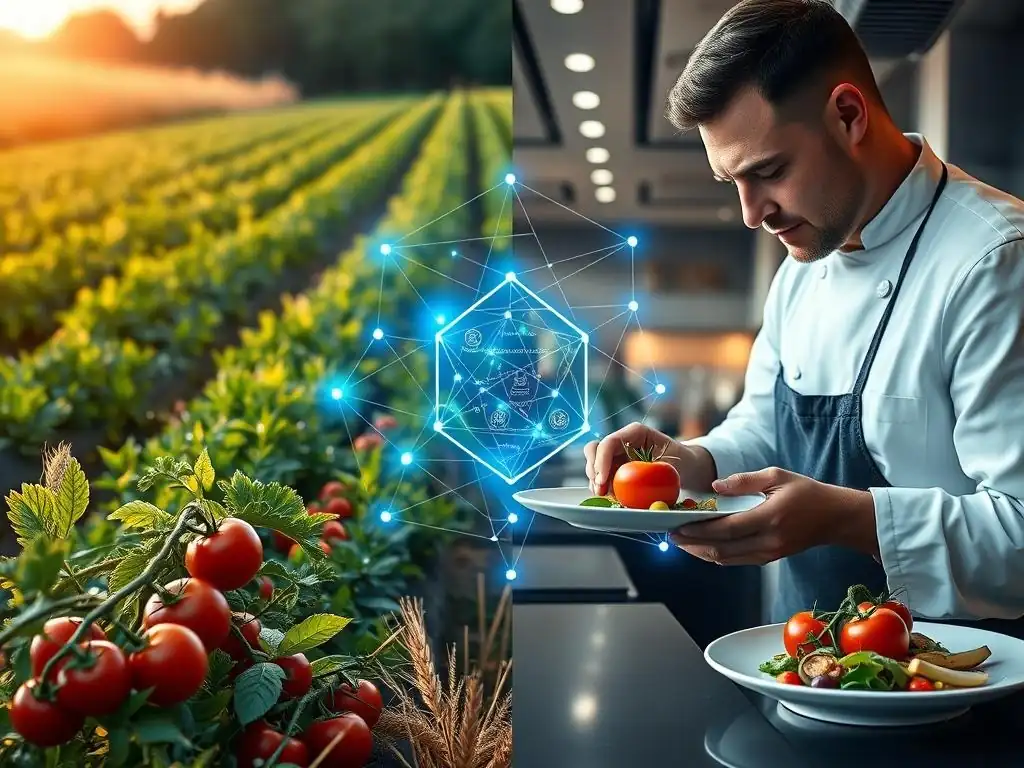
Welcome to Blockchain Trends, your compass in the rapidly evolving world of decentralized technology. Dive into a future where blockchain's reach extends far beyond digital currencies.
Ever wondered how technology can revolutionize our food supply chain? Our featured article, "From Farm to Fork: Blockchain & IoT for Food Safety and Transparency," explores the cutting-edge intersection of blockchain food safety tracking and the Internet of Things. Discover how these innovations are creating unprecedented levels of transparency and trust, ensuring the food we consume is safer and more traceable than ever before. Ready to unravel the potential? Let's explore!
From Farm to Fork: Blockchain & IoT for Food Safety and Transparency
- The Growing Need for Enhanced Food Safety and Transparency
- Blockchain Food Safety Tracking: An Introduction
- IoT's Role in Ensuring Food Safety Throughout the Supply Chain
- Combining Blockchain and IoT for Complete Food Traceability
- Use Cases: Blockchain and IoT in Action for Food Safety
- Addressing Food Fraud and Counterfeiting with Blockchain
- Challenges and Considerations for Implementing Blockchain and IoT
- The Future of Food Safety: Blockchain and IoT Trends
- Conclusion: Blockchain and IoT as Cornerstones of a Safer Food System
-
Frequently Asked Questions
- What is Blockchain food safety tracking and why is it important?
- How does blockchain work with IoT in Blockchain food safety tracking?
- What are the benefits of using Blockchain food safety tracking for businesses?
- What are the current challenges to widespread adoption of Blockchain food safety tracking?
- How will regulation impact the future of Blockchain food safety tracking?
- Final Reflection: Cultivating Trust in Every Bite
- Uncover Your Food's Journey: Take Control Now!
The Growing Need for Enhanced Food Safety and Transparency
Understanding Current Challenges in Food Supply Chains
Modern food supply chains are incredibly complex, often spanning continents and involving numerous intermediaries from farmers and processors to distributors and retailers. This complexity creates significant challenges in ensuring food safety and transparency. A lack of visibility at each stage of the journey can lead to difficulties in tracing the origin of contaminated food, prolonging outbreaks and increasing consumer risk.
For example, the 2018 romaine lettuce E. coli outbreak in the United States and Canada sickened over 200 people and took months to fully resolve, highlighting the slow and cumbersome nature of traditional traceback methods in large, distributed food systems. This incident underscored the critical need for faster and more precise methods to identify the source of contamination and prevent widespread illness.
Furthermore, consumers are increasingly demanding more information about the food they consume. They want to know where their food comes from, how it was produced, and whether it meets certain ethical and environmental standards. This demand for transparency is driven by growing awareness of food fraud, concerns about pesticide use, and a desire to support sustainable and responsible food production.
Traditional paper-based systems for tracking food products are often inefficient, prone to errors, and easily falsified, making it difficult to provide consumers with the reliable and detailed information they seek. The fragmented nature of current systems also hinders efficient recalls and effective supply chain management, impacting both consumer trust and business operations.
The Role of Technology in Revolutionizing Food Safety
Technology is playing an increasingly vital role in transforming food safety practices and enhancing transparency across the supply chain. From advanced sensors that detect contaminants to data analytics platforms that predict potential risks, technological innovations are offering solutions to many of the challenges plaguing traditional food systems. Specifically, the convergence of Blockchain and the Internet of Things (IoT) presents a powerful combination for creating more resilient, transparent, and secure food supply chains. These technologies offer the potential to move beyond reactive responses to food safety incidents and towards proactive prevention and rapid, targeted interventions.
By leveraging IoT devices to collect real-time data at every stage of the food journey and recording this information on a secure and immutable Blockchain, we can create an end-to-end digital record of food products. This digital record can track everything from farm conditions and processing details to storage temperatures and transportation routes.
This level of granular data enables faster and more accurate traceability in case of contamination, empowers consumers with unprecedented access to food provenance information, and ultimately builds greater trust in the food system. The application of these technologies promises to revolutionize how we approach food safety, moving from fragmented and opaque systems to integrated and transparent ecosystems.
Blockchain Food Safety Tracking: An Introduction
What is Blockchain Technology and How Does it Work?
Blockchain technology, at its core, is a distributed and immutable ledger that records transactions across many computers. Imagine a digital record book that is duplicated and shared across a network of participants. Each "block" in the chain contains a set of verified transactions, and once a block is added to the chain, it cannot be altered or deleted.
This immutability is ensured through cryptographic hashing, which creates a unique fingerprint for each block, and a consensus mechanism that requires network participants to agree on the validity of new blocks. This decentralized and tamper-proof nature of Blockchain makes it inherently secure and transparent.
In practical terms, for food safety tracking, each step in the supply chain, such as harvesting, processing, packaging, and shipping, can be recorded as a transaction on the Blockchain. Participants in the network, such as farmers, processors, distributors, and retailers, can access and contribute to this shared ledger, creating a single source of truth about the product's journey.
This eliminates the need for multiple, often incompatible, databases and reduces the risk of data manipulation or loss. The inherent security and transparency of blockchain make it an ideal foundation for building trust and accountability in complex systems like global food supply chains.
Key Benefits of Blockchain in Food Supply Chains
The application of Blockchain technology to food supply chains offers a multitude of benefits, primarily centered around enhanced traceability, transparency, and efficiency. One of the most significant advantages is the improved traceability of food products. By recording each step of the supply chain on the Blockchain, it becomes possible to track a food item back to its origin in seconds.
This rapid traceability is crucial for quickly identifying the source of contamination during a foodborne illness outbreak, enabling faster recalls and minimizing the impact on public health. For example, if a batch of spinach is found to be contaminated with Salmonella, the Blockchain record can immediately pinpoint the farm and batch from which it originated, allowing for targeted recalls instead of broad, costly, and wasteful market withdrawals.
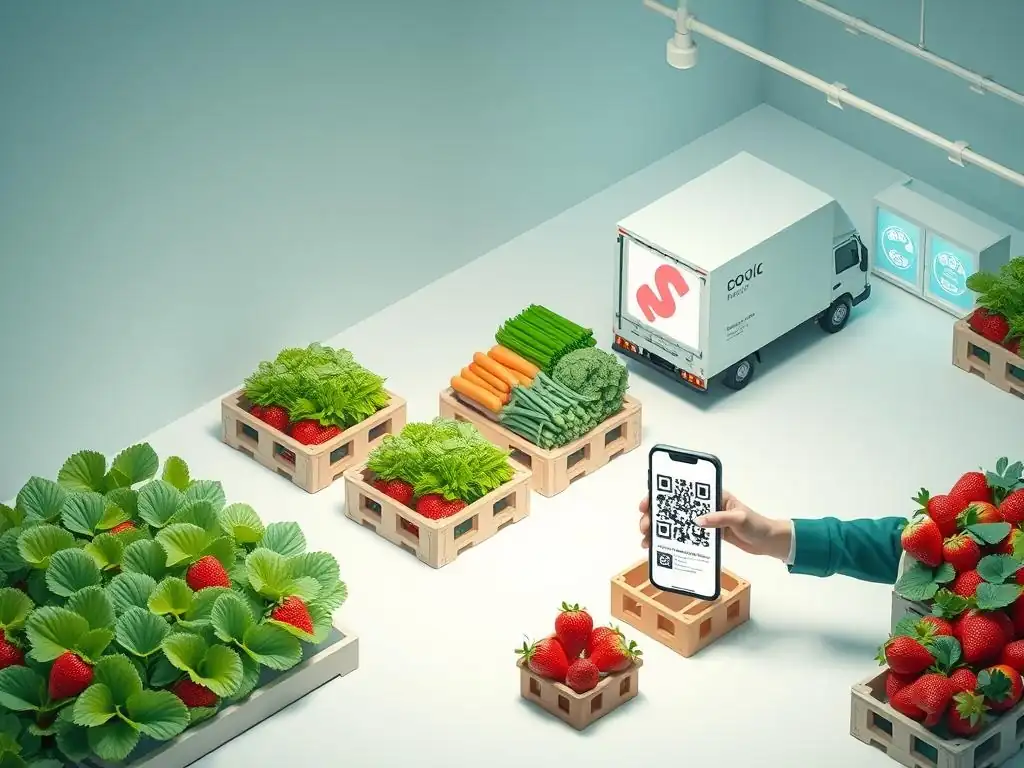
Beyond traceability, Blockchain enhances transparency by providing consumers and stakeholders with access to verifiable information about the food they consume. Consumers can potentially scan a QR code on a product label and access a wealth of information, including the farm of origin, processing dates, certifications, and even transportation details. This level of transparency builds consumer trust and empowers informed purchasing decisions.
Furthermore, Blockchain can streamline supply chain operations by automating processes, reducing paperwork, and improving communication between stakeholders. Smart contracts, self-executing agreements coded on the Blockchain, can automate payments and trigger actions based on pre-defined conditions, further enhancing efficiency and reducing disputes.
IoT's Role in Ensuring Food Safety Throughout the Supply Chain
Integrating IoT Sensors for Real-Time Monitoring
The Internet of Things (IoT) plays a crucial complementary role to Blockchain in revolutionizing food safety by providing the real-time data necessary to populate the Blockchain ledger with accurate and timely information. IoT devices, such as sensors and trackers, can be strategically deployed throughout the food supply chain to monitor critical parameters like temperature, humidity, location, and even the presence of contaminants. These sensors continuously collect data and transmit it wirelessly, providing a constant stream of information about the condition and location of food products as they move from farm to fork.
For instance, temperature sensors can be placed in refrigerated trucks and storage facilities to ensure that perishable goods are maintained at the correct temperature throughout their journey, preserving freshness and preventing spoilage. Humidity sensors can monitor storage conditions to prevent mold growth and maintain product quality. Location trackers, often using GPS technology, can provide real-time visibility into the movement of shipments, ensuring products are not diverted or delayed. The integration of IoT sensors provides a dynamic and proactive approach to food safety monitoring, moving beyond periodic checks to continuous, real-time oversight.
Temperature Tracking and Cold Chain Integrity with IoT
Maintaining the cold chain is paramount for the safety and quality of many food products, particularly perishables like meat, dairy, and seafood. Breaks in the cold chain, even for short periods, can lead to bacterial growth and spoilage, significantly increasing the risk of foodborne illness and reducing shelf life. IoT temperature sensors are instrumental in ensuring cold chain integrity by providing continuous and verifiable temperature monitoring throughout the supply chain. These sensors can be embedded in packaging, storage units, and transportation vehicles, constantly recording temperature data.
When integrated with a Blockchain system, this temperature data becomes an immutable record of the product's thermal history. If temperature excursions occur outside of acceptable ranges, alerts can be automatically triggered, allowing for timely interventions to prevent spoilage or safety issues. For example, if a refrigerated truck experiences a malfunction and the temperature rises above a critical threshold, an alert can be sent to the logistics provider, enabling them to take corrective action, such as transferring the goods to another refrigerated vehicle.
This proactive approach to cold chain management significantly reduces the risk of temperature-related food safety incidents and ensures product quality. Studies have shown that effective cold chain management, enabled by IoT, can reduce food waste by up to 20% in certain perishable categories.
IoT Devices for Traceability and Transparency
Beyond temperature monitoring, IoT devices contribute significantly to overall traceability and transparency in food supply chains. Radio-Frequency Identification (RFID) tags and Near-Field Communication (NFC) tags, which are types of IoT devices, can be attached to individual food products or batches, allowing for unique identification and tracking throughout the supply chain. These tags can store information about the product's origin, processing details, and other relevant data, which can be easily accessed using scanners or smartphones.
When combined with Blockchain, these IoT tags facilitate seamless data capture and integration into the immutable ledger. As a product moves through the supply chain, each scan of the RFID or NFC tag updates its location and status on the Blockchain. This creates a comprehensive and auditable trail of the product's journey, enhancing traceability and transparency for all stakeholders.
Consumers can also potentially interact with these tags using their smartphones to access detailed product information directly, empowering them with greater knowledge about the food they are purchasing. This combination of IoT devices and Blockchain provides a robust and user-friendly solution for enhancing food traceability and transparency.
Combining Blockchain and IoT for Complete Food Traceability
Creating a Secure and Transparent Food Supply Chain Ecosystem
The true power of Blockchain and IoT in food safety is realized when these technologies are combined to create a comprehensive and integrated ecosystem. IoT devices provide the real-time data capture capabilities, while Blockchain provides the secure and transparent platform for storing and sharing this data. This synergy creates a system where every stage of the food supply chain, from farm to fork, is digitally recorded, verifiable, and accessible to authorized stakeholders. This integrated approach addresses the limitations of traditional, fragmented systems and builds a foundation of trust and accountability.
In such an ecosystem, data from IoT sensors, such as temperature, humidity, location, and even environmental conditions on the farm, are automatically recorded on the Blockchain. This eliminates manual data entry, reduces the risk of errors or manipulation, and ensures data integrity. Participants across the supply chain, from farmers to retailers, can access and share relevant information on the Blockchain, fostering collaboration and improving communication. This interconnectedness and data transparency enable faster response times to food safety incidents, more efficient supply chain management, and greater consumer confidence.
Enhanced Visibility and Accountability Through Integrated Technologies
The integration of Blockchain and IoT provides unprecedented visibility into the food supply chain, allowing stakeholders to track products in real-time and identify potential issues before they escalate. This enhanced visibility extends across all stages of the supply chain, from farm production and processing to distribution and retail. For example, retailers can monitor the temperature of perishable goods in transit and ensure they arrive in optimal condition.
Processors can track the origin of raw materials and verify compliance with food safety standards. Consumers can gain insight into the journey of their food and make informed choices based on verified information.
This increased visibility also fosters greater accountability throughout the supply chain. Because all data is immutably recorded on the Blockchain, it becomes easier to identify the source of problems and hold responsible parties accountable. If a food safety issue arises, the Blockchain record can be quickly audited to pinpoint the point of failure and implement corrective actions. This enhanced accountability incentivizes all stakeholders to adhere to best practices and maintain high standards of food safety and quality. The combination of visibility and accountability is critical for building a more resilient and trustworthy food system.
Use Cases: Blockchain and IoT in Action for Food Safety
Case Study 1: Walmart's Blockchain Initiative for Mango Traceability
Walmart, a global retail giant, has been a pioneer in adopting Blockchain technology for food safety and traceability. In a notable initiative, Walmart implemented a Blockchain-based system to track mangoes from farm to store shelves. Prior to implementing Blockchain, tracing a package of mangoes back to its origin could take days, hindering rapid response to potential food safety issues. Using Blockchain, Walmart drastically reduced this traceback time to just seconds.
The system works by capturing data at each stage of the mango supply chain, from the farm in Mexico to the distribution centers and finally to Walmart stores in the United States. Farmers, packers, and distributors input data into the Blockchain, including farm location, harvest dates, batch numbers, and shipping information. This data is then accessible to all authorized participants in the supply chain, creating a transparent and auditable record of the mangoes' journey. This initiative demonstrated the significant potential of Blockchain to enhance food traceability and improve response times during food safety incidents.
Case Study 2: IBM Food Trust for Tracking Seafood Supply Chains
IBM Food Trust is a Blockchain-based platform designed to improve transparency and traceability across the food industry. One prominent use case of IBM Food Trust is in tracking seafood supply chains, which are often particularly complex and vulnerable to fraud and mislabeling. Seafood, due to its global sourcing and intricate processing pathways, presents significant traceability challenges. IBM Food Trust, utilizing Blockchain technology, provides a solution to these challenges by creating a shared and immutable record of seafood products as they move through the supply chain.
Companies like Bumble Bee Seafoods have partnered with IBM Food Trust to track their tuna products from the fishing vessel to the consumer. Data such as catch location, fishing method, processing details, and certifications are recorded on the Blockchain, providing consumers with unprecedented transparency into the origin and journey of their seafood. This initiative aims to combat illegal fishing, reduce seafood fraud, and build consumer trust in the seafood industry. The use of Blockchain in seafood traceability showcases its effectiveness in addressing complex supply chain challenges and promoting sustainability.
Benefits Observed in Real-World Implementations
The real-world implementations of Blockchain and IoT in food safety, such as those by Walmart and IBM Food Trust, have demonstrated tangible benefits. One of the most significant observed benefits is the dramatic reduction in foodborne illness investigation times. As seen in Walmart's mango traceability initiative, traceback times have been reduced from days to seconds, enabling faster identification of contamination sources and more targeted recalls. This rapid response capability is crucial for minimizing the impact of foodborne illness outbreaks and protecting public health.
Another key benefit is enhanced supply chain efficiency. Blockchain and IoT can streamline processes, reduce paperwork, and improve communication between stakeholders, leading to cost savings and improved operational efficiency. Furthermore, these technologies enhance brand reputation and consumer trust. By providing verifiable information about food provenance and safety, companies can differentiate themselves in the market and build stronger relationships with consumers who are increasingly demanding transparency. These real-world examples highlight the practical and impactful benefits of adopting Blockchain and IoT for food safety and traceability.
Addressing Food Fraud and Counterfeiting with Blockchain
Verifying Food Authenticity and Origin
Food fraud and counterfeiting are significant global issues, costing the food industry billions of dollars annually and posing risks to consumer health. Blockchain technology offers powerful tools to combat food fraud by verifying the authenticity and origin of food products. By recording the origin and journey of food items on an immutable Blockchain, it becomes significantly more difficult to introduce fraudulent products into the supply chain or misrepresent the origin or quality of food.
For instance, in the case of premium products like olive oil or honey, Blockchain can be used to verify the geographical origin and production methods. Data such as farm location, harvesting techniques, and processing certifications can be recorded on the Blockchain and linked to individual product batches. Consumers can then scan a QR code on the product and access this information, verifying the authenticity and origin claims.
This level of transparency and verification can help protect consumers from fraudulent products and build trust in premium food brands. Blockchain's ability to create an auditable and tamper-proof record of origin is a powerful weapon against food fraud.
Reducing Food Waste and Improving Efficiency
Beyond combating fraud, Blockchain and IoT can also contribute to reducing food waste and improving overall supply chain efficiency. By providing real-time visibility into inventory levels and product conditions, these technologies enable better demand forecasting and inventory management. IoT sensors can monitor storage conditions and alert stakeholders to potential spoilage issues, allowing for timely interventions to prevent food waste.
Furthermore, Blockchain can streamline logistics and reduce delays in the supply chain. Smart contracts can automate processes such as payments and customs clearances, speeding up the movement of goods and reducing the risk of spoilage due to delays. By optimizing inventory management, improving logistics, and preventing spoilage, Blockchain and IoT can contribute to significant reductions in food waste throughout the supply chain. The Food and Agriculture Organization of the United Nations estimates that roughly one-third of all food produced globally is wasted, and technologies like Blockchain and IoT offer promising solutions to address this issue.
Challenges and Considerations for Implementing Blockchain and IoT
Scalability and Interoperability Issues
While the potential of Blockchain and IoT for food safety is immense, there are challenges and considerations to address for successful implementation. Scalability is a key concern, particularly for large, complex food supply chains. Blockchain networks need to be able to handle a high volume of transactions and data efficiently as they scale to encompass vast global food systems. Similarly, IoT infrastructure needs to be robust and scalable to support the deployment of sensors and devices across geographically dispersed supply chains.
Interoperability is another significant challenge. Different Blockchain platforms and IoT devices may use different standards and protocols, making it difficult to integrate systems and share data seamlessly. Ensuring interoperability between different technologies and platforms is crucial for creating truly connected and transparent food supply chain ecosystems. Industry-wide collaboration and the development of open standards are essential to overcome these scalability and interoperability challenges.
Data Privacy and Security Concerns in a Decentralized System
Data privacy and security are paramount considerations when implementing Blockchain and IoT in food supply chains. While Blockchain offers inherent security features, it is essential to carefully consider data access permissions and ensure that sensitive information is protected. The decentralized nature of Blockchain means that data is distributed across multiple nodes, raising questions about data governance and control. Regulations like GDPR (General Data Protection Regulation) in Europe impose strict requirements on data privacy and security, which must be addressed in Blockchain implementations.
Similarly, IoT devices can be vulnerable to security breaches if not properly secured. Ensuring the security of IoT devices and the data they collect is crucial to prevent unauthorized access and data manipulation. Robust cybersecurity measures, including encryption and access controls, are essential to mitigate data privacy and security risks in Blockchain and IoT-enabled food supply chains. Balancing transparency with data privacy is a key challenge to navigate in these implementations.
Cost and Implementation Barriers
The initial cost of implementing Blockchain and IoT solutions can be a barrier for some food businesses, particularly smaller enterprises. Setting up the necessary infrastructure, including Blockchain platforms, IoT sensors, and data management systems, can require significant upfront investment. Furthermore, integrating these new technologies with existing legacy systems can be complex and costly.
Implementation barriers also include the need for technical expertise and training. Food industry stakeholders may need to acquire new skills and knowledge to effectively utilize and manage Blockchain and IoT systems. Overcoming these cost and implementation barriers requires a phased approach, starting with pilot projects and gradually scaling up implementation as benefits are demonstrated. Collaboration across the supply chain and potential government incentives can also help to reduce the financial burden and facilitate wider adoption.
The Future of Food Safety: Blockchain and IoT Trends
Emerging Technologies and Innovations in Food Tracking
The field of food safety technology is constantly evolving, with emerging technologies and innovations further enhancing the capabilities of Blockchain and IoT. One promising area is the development of more sophisticated and cost-effective IoT sensors. Advances in sensor technology are leading to smaller, more energy-efficient, and more versatile sensors that can monitor a wider range of parameters, including food quality indicators beyond temperature and humidity, such as freshness and spoilage markers.
Another innovation is the integration of Artificial Intelligence (AI) and Machine Learning (ML) with Blockchain and IoT. AI and ML algorithms can analyze the vast amounts of data generated by IoT sensors and stored on the Blockchain to identify patterns, predict potential food safety risks, and optimize supply chain operations. For example, AI can be used to predict demand fluctuations, optimize delivery routes, and proactively identify potential food safety hazards based on sensor data. The combination of these technologies holds immense potential for creating smarter and more resilient food systems.
The Impact of Regulation on Blockchain Food Safety Tracking
Regulation is playing an increasingly important role in shaping the future of Blockchain food safety tracking. Governments and regulatory bodies around the world are recognizing the potential of these technologies to enhance food safety and transparency and are beginning to explore regulatory frameworks to support their adoption. For instance, some countries are considering regulations that mandate the use of traceability systems for certain food products, potentially driving the adoption of Blockchain-based solutions.
Regulatory clarity and standardization are crucial for fostering wider adoption of Blockchain and IoT in the food industry. Clear guidelines on data privacy, security, and interoperability will help to build trust and confidence in these technologies. Furthermore, regulatory incentives, such as grants or tax breaks, could encourage food businesses to invest in and implement Blockchain and IoT solutions for food safety. The evolving regulatory landscape will significantly influence the trajectory of Blockchain food safety tracking in the coming years.
Predictions for the Future of Food Safety in the Next 5 Years
Looking ahead to the next 5 years, several key trends are likely to shape the future of food safety and the role of Blockchain and IoT. Firstly, we can expect to see wider adoption of Blockchain and IoT technologies across various segments of the food industry, moving beyond early adopters to mainstream implementation. As costs decrease and technology matures, more food businesses, including smaller enterprises, will adopt these solutions to enhance traceability, transparency, and efficiency.
Secondly, consumer demand for transparency and food provenance information will continue to grow, further driving the adoption of Blockchain-enabled traceability systems. Consumers will increasingly expect to have access to detailed information about the food they purchase, and technologies like Blockchain will become essential for meeting these expectations. Finally, we can anticipate greater integration of AI and ML with Blockchain and IoT, leading to more proactive and predictive food safety management systems. The convergence of these technologies will pave the way for a more transparent, secure, and efficient food system in the years to come.
Conclusion: Blockchain and IoT as Cornerstones of a Safer Food System
Summarizing the Benefits of Integrated Technologies
The integration of Blockchain and IoT represents a paradigm shift in food safety and transparency. By combining the real-time data capture capabilities of IoT with the secure and transparent ledger of Blockchain, we can create a food system that is more resilient, accountable, and trustworthy. The benefits are multifaceted, ranging from enhanced traceability and faster response to foodborne illness outbreaks to improved supply chain efficiency, reduced food fraud, and greater consumer confidence. These integrated technologies offer a powerful toolkit for addressing the complex challenges of modern food supply chains and building a safer food system for all.
The key advantages include rapid and accurate food safety tracking, enhanced transparency for consumers and stakeholders, improved cold chain management, reduced food waste, and stronger brand reputation. The real-world case studies and examples demonstrate the tangible benefits already being realized through the adoption of Blockchain and IoT in the food industry. While challenges remain, ongoing innovation and increasing regulatory support are paving the way for wider adoption and greater impact in the years ahead.
Call to Action: Embracing Innovation for a More Transparent and Secure Food Supply Chain
The journey towards a truly transparent and secure food supply chain is ongoing, and embracing innovation is crucial for continued progress. Food businesses, technology providers, regulatory bodies, and consumers all have a role to play in realizing the full potential of Blockchain and IoT in food safety. Food businesses are encouraged to explore and pilot these technologies, recognizing the long-term benefits for their operations and brand reputation. Technology providers should focus on developing scalable, interoperable, and user-friendly solutions that meet the specific needs of the food industry.
Regulatory bodies should work towards creating supportive frameworks that encourage innovation while ensuring data privacy and security. And consumers should continue to demand greater transparency and hold the food industry accountable for delivering safe and trustworthy products. By working together and embracing innovation, we can build a food system that is safer, more transparent, and more sustainable for generations to come.
Frequently Asked Questions
What is Blockchain food safety tracking and why is it important?
Blockchain food safety tracking uses blockchain technology to create a transparent and immutable record of a food product's journey from origin to consumer. This is important for traceability, accountability, and consumer trust.
How does blockchain work with IoT in Blockchain food safety tracking?
Blockchain provides the secure, distributed ledger, while IoT devices like sensors and RFID tags collect real-time data about temperature, location, and handling. This data is then recorded on the blockchain, ensuring accuracy and transparency.
What are the benefits of using Blockchain food safety tracking for businesses?
Businesses benefit from improved supply chain efficiency, reduced foodborne illness outbreaks, enhanced brand reputation, and easier regulatory compliance. They can also access valuable data for optimizing processes.
What are the current challenges to widespread adoption of Blockchain food safety tracking?
Challenges include the cost of implementation, the need for standardized data formats, and the complexity of integrating blockchain with existing systems. Scalability also remains a concern for some businesses.
How will regulation impact the future of Blockchain food safety tracking?
Regulations will likely focus on data privacy and security, as well as ensuring the accuracy and reliability of information recorded on the blockchain. Clear guidelines will be crucial for fostering trust and adoption.
Final Reflection: Cultivating Trust in Every Bite
The journey of food from farm to fork is often shrouded in mystery, but the potential of blockchain food safety tracking to revolutionize this process is undeniable. The insights shared in this article highlight not just technological advancements, but a fundamental shift towards greater accountability and consumer empowerment in the food industry, a change desperately needed in our increasingly complex global food system.
The promise of transparency offered by blockchain and IoT extends far beyond simply tracing origins; it fosters a deeper connection between consumers and the source of their food. This newfound visibility empowers us to make informed choices, supporting sustainable practices and holding producers accountable for the quality and safety of their products. The future of food is traceability. Consumers want to know where their food comes from, how it was produced, and that it is safe to eat.
This quote encapsulates the growing demand for transparency and the pivotal role technology plays in meeting that demand.
As we look ahead, let us embrace the potential of blockchain and IoT to cultivate a future where trust is not just an aspiration, but a fundamental ingredient in every meal. Consider the power you hold as a consumer to demand transparency and support businesses that prioritize food safety and ethical sourcing. By actively engaging with these technologies and advocating for their wider adoption, you can contribute to a more sustainable, equitable, and trustworthy food system for all.
Uncover Your Food's Journey: Take Control Now!
Thank you for exploring how blockchain and IoT are transforming food safety and transparency. With this knowledge, you can advocate for a safer, more transparent food supply chain. Are you ready to take action?
Here are some ways you can make a difference:
- Ask your local grocery stores and restaurants about their sourcing and traceability practices. Let them know you value food safety and transparency.
- Educate yourself further by researching initiatives and companies that specialize in blockchain-based food traceability.
- Share this article with friends and family to raise awareness about how blockchain can help create a safer, more transparent food system.
What questions do you have about the food you purchase, and how might blockchain provide answers? Share your thoughts in the comments below!
Leave a Reply