
Layer2 Transaction Sequencing: How Rollups Maintain Order and Security


Welcome to Blockchain Trends, your guide to understanding the revolutionary world of blockchain beyond the hype. Dive into the transformative potential of decentralized systems, from DeFi to enterprise applications, and navigate the evolving regulatory landscape.
Ever wondered how Layer 2 solutions like rollups ensure order and security while scaling blockchain networks? This article explores the crucial role of rollup transaction sequencing, revealing how these mechanisms offer significant security benefits and pave the way for a more efficient and robust blockchain future. Read on to discover how they work and why they matter.
- Introduction to Layer-2 Scaling and Transaction Sequencing
- Rollup Architectures and Sequencing Methods
- The Importance of Transaction Sequencing for Rollup Security
- How Rollup Sequencers Function
- Security Benefits of Rollup Transaction Sequencing
- Transaction Sequencing Challenges and Solutions
- Case Studies: Transaction Sequencing in Popular Rollups
- The Future of Layer-2 Transaction Sequencing
- Conclusion: The Vital Role of Sequencing in Rollup Security and Scalability
-
Frequently Asked Questions
- How does transaction sequencing work in Layer 2 rollups?
- What are the main benefits of using rollups for transaction sequencing?
- What is the role of the sequencer in maintaining security within a rollup?
- What are the potential risks associated with centralized sequencers in rollups?
- How do rollups contribute to the overall security of blockchain networks?
- Final Reflection: The Enduring Order of Decentralized Trust
- Unlock the Power of Layer2: Dive Deeper!
Introduction to Layer-2 Scaling and Transaction Sequencing
Understanding Blockchain Scalability Challenges
Blockchain technology, while revolutionary, faces inherent scalability limitations. Layer-1 blockchains, such as Ethereum, process all transactions directly on their main chain. This architecture, while secure and decentralized, can lead to congestion and high transaction fees as network usage increases.
For example, during periods of peak demand, like the surge in DeFi activity in 2020 and 2021, Ethereum transaction fees could spike to hundreds of dollars, making the network prohibitively expensive for many users and hindering broader adoption. Bitcoin, with its even more conservative block size and block time, faces similar, if not more pronounced, scalability constraints, processing only around 7 transactions per second on average. These limitations highlight the pressing need for solutions that can enhance transaction throughput without compromising the core tenets of blockchain security and decentralization.
The Role of Layer-2 Solutions in Addressing Scalability
Layer-2 scaling solutions emerge as a critical response to these Layer-1 limitations. These solutions operate "on top" of the main blockchain, handling transactions off-chain and then periodically anchoring them back to Layer-1 for security and finality. By processing transactions outside the congested Layer-1, Layer-2 solutions drastically increase transaction throughput and reduce costs.
Rollups, one of the most promising Layer-2 approaches, bundle or 'roll up' numerous transactions into a single transaction on the Layer-1 blockchain. This significantly reduces the computational and storage burden on the main chain. Estimates suggest that rollups can increase Ethereum's transaction throughput by orders of magnitude, potentially reaching thousands of transactions per second, dramatically improving scalability and user experience without sacrificing Layer-1 security.
Defining Transaction Sequencing in Rollups
Within the context of rollups, transaction sequencing is the process of ordering and arranging the transactions submitted by users before they are bundled and finalized on the Layer-1 chain. This process is not merely about chronological order; it's about establishing a definitive and verifiable sequence of operations that dictates the state transitions within the rollup. A well-defined transaction sequence is paramount for maintaining the integrity and security of the rollup.
It ensures that transactions are processed in a predictable and agreed-upon order, preventing double-spending, ensuring fair execution, and protecting against malicious manipulation. The sequencer, the component responsible for this ordering, plays a pivotal role in the functionality and security of any rollup solution.
Rollup Architectures and Sequencing Methods
Types of Rollups: Optimistic vs. ZK-Rollups
Rollups broadly fall into two main categories: Optimistic Rollups and Zero-Knowledge Rollups (ZK-Rollups), and their approaches to transaction sequencing and security differ. Optimistic Rollups, like Arbitrum and Optimism, assume transactions are valid by default. They post transaction data and state roots to Layer-1 and allow a challenge period, typically 7 days, during which anyone can submit a fraud proof if they detect an invalid transaction. Sequencing in optimistic rollups is often initially centralized for efficiency but can transition towards decentralization.
ZK-Rollups, such as zkSync and StarkNet, use cryptographic proofs to ensure transaction validity. They generate validity proofs off-chain and submit these proofs along with state updates to Layer-1. ZK-Rollups inherently offer faster finality as validity is cryptographically guaranteed, and sequencing is crucial for the efficient generation of these complex proofs.
Centralized vs. Decentralized Sequencing: Trade-offs
The choice between centralized and decentralized sequencing in rollups presents a significant trade-off. Centralized sequencers, often operated by the rollup developers initially, offer advantages in terms of speed and lower latency. They can process and order transactions quickly, providing a smoother user experience. However, they introduce a single point of failure and potential censorship.
A malicious or compromised centralized sequencer could theoretically manipulate transaction order or censor specific transactions. Decentralized sequencers, on the other hand, aim to distribute the sequencing responsibility across multiple participants, enhancing security and censorship resistance. This approach aligns more closely with the decentralized ethos of blockchain. However, decentralized sequencing can introduce complexities in terms of consensus mechanisms, latency, and coordination among sequencers, potentially impacting transaction processing speed.
Hybrid Sequencing Models
Recognizing the trade-offs between centralized and decentralized sequencing, hybrid models are emerging to strike a balance. These models often start with a centralized sequencer for initial efficiency and user experience, while outlining a roadmap for progressive decentralization. This might involve gradually transitioning sequencing responsibilities to a permissioned set of validators and eventually towards a fully permissionless and decentralized system.
Another hybrid approach combines elements of both centralized and decentralized control. For example, a system might employ a rotating set of sequencers, selected through a decentralized governance process, to mitigate the risks associated with a single centralized entity while maintaining a degree of efficiency. These hybrid models are designed to leverage the speed of centralized systems in the short term while progressively enhancing security and decentralization over time.
The Importance of Transaction Sequencing for Rollup Security
Preventing Front-Running and MEV (Miner Extractable Value) Exploits
Transaction sequencing is critical in mitigating front-running and Miner Extractable Value (MEV) exploits within rollups. Front-running occurs when malicious actors observe pending transactions and insert their own transactions with higher fees to be executed first, profiting at the expense of the original transaction initiator. MEV encompasses the total profit that can be extracted by strategically ordering transactions within a block, often exploiting arbitrage opportunities or liquidations in DeFi protocols.
Proper transaction sequencing mechanisms in rollups can significantly reduce these risks by implementing fair ordering algorithms, such as First-Come-First-Serve (FCFS) or by employing commit-reveal schemes. These mechanisms aim to minimize the ability of sequencers or other actors to manipulate transaction order for their own benefit, thus protecting rollup users from these harmful exploits.
Ensuring Fair Transaction Ordering in Rollups
Fair transaction ordering is essential for maintaining the integrity and trustworthiness of a rollup. If transaction sequencing is arbitrary or easily manipulated, it can undermine user confidence and create unfair advantages for certain participants. A fair sequencing mechanism ensures that transactions are processed based on predefined rules, such as the time of submission or a deterministic algorithm, rather than being subject to the sequencer's discretion or potential biases.
This fairness is crucial for applications like decentralized exchanges (DEXs) and other DeFi protocols operating on rollups, where predictable and unbiased transaction execution is paramount for a healthy and equitable ecosystem. Rollups that prioritize fair sequencing build a more robust and user-friendly environment, fostering greater adoption and participation.
Maintaining Data Availability and Integrity
Transaction sequencing is intrinsically linked to data availability and integrity within rollups. The sequencer is responsible for ensuring that transaction data is not only ordered correctly but also readily available and tamper-proof. Sequencers in rollups typically post transaction data to Layer-1 as calldata, ensuring that the data is publicly accessible and verifiable by anyone.
This data availability is crucial for the fraud-proof mechanism in Optimistic Rollups and for the verification of validity proofs in ZK-Rollups. Furthermore, the ordered sequence of transactions, when combined with the state roots posted to Layer-1, provides a verifiable history of the rollup's state transitions, ensuring data integrity. Without proper sequencing and data availability, the security and trust assumptions of rollups would be significantly compromised, potentially leading to state corruption or loss of funds.
How Rollup Sequencers Function
The Sequencer's Role in Batching and Ordering Transactions
The sequencer acts as the central operator within a rollup, responsible for receiving user transactions, ordering them, and batching them together before submitting them to the Layer-1 blockchain. When a user initiates a transaction on a rollup, it is sent to the sequencer. The sequencer then collects a series of these transactions over a period, orders them according to a defined algorithm (e.g., FCFS, fee-based prioritization), and bundles them into a single batch.
This batch of ordered transactions, along with the resulting state root, is then submitted as a single transaction to the Layer-1 chain. This batching process is a key element of rollup efficiency, as it amortizes the Layer-1 transaction costs across numerous Layer-2 transactions, significantly reducing individual transaction fees for users.
Consensus Mechanisms Used by Sequencers
While rollups leverage Layer-1 for finality and security, sequencers themselves may employ internal consensus mechanisms for ordering transactions, especially in decentralized setups. In simpler, often centralized sequencers, a basic ordering algorithm might suffice. However, as sequencers become more decentralized, they might incorporate more robust consensus protocols to ensure agreement on transaction order among multiple sequencers. These consensus mechanisms could range from simplified Byzantine Fault Tolerance (BFT) variations to more lightweight consensus protocols optimized for the rollup environment. The choice of consensus mechanism depends on the desired level of decentralization, fault tolerance, and performance requirements of the sequencer network.
Sequencer Selection Processes and Incentives
The process of selecting sequencers and incentivizing their honest behavior is crucial, especially in decentralized rollup designs. In early stages, sequencers might be operated by the rollup development team. However, for long-term sustainability and decentralization, more robust selection and incentive mechanisms are needed.
Sequencer selection could involve staking mechanisms, where potential sequencers stake tokens to participate, and slashing mechanisms to penalize malicious behavior. Incentives for sequencers might include transaction fees collected from rollup users or block rewards in the rollup's native token. Developing fair and effective sequencer selection and incentive models is an ongoing area of research and development in the rollup space, aiming to ensure that sequencers are both performant and trustworthy over time.
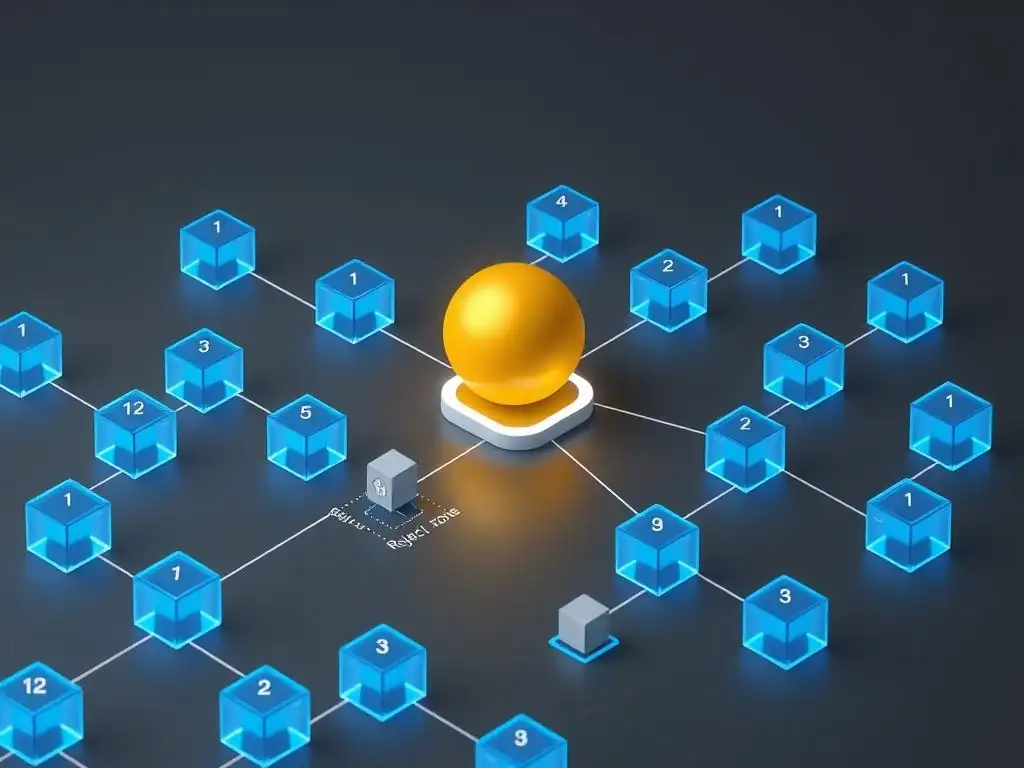
Security Benefits of Rollup Transaction Sequencing
Enhanced Security Compared to Layer-1 Transaction Ordering
Rollup transaction sequencing, when properly implemented, can offer enhanced security compared to the inherent transaction ordering mechanisms in Layer-1 blockchains. Layer-1 transaction ordering, especially in Proof-of-Work systems, can be susceptible to certain vulnerabilities like selfish mining or time-bandit attacks. Rollups, by abstracting transaction ordering and execution away from Layer-1 consensus, have the opportunity to implement more refined and secure sequencing mechanisms.
For instance, rollups can incorporate sophisticated fair ordering algorithms or commit-reveal schemes to mitigate MEV and front-running, vulnerabilities that are harder to address directly at the Layer-1 level. This focused approach to sequencing within rollups allows for more specialized security measures tailored to the specific needs of Layer-2 environments.
Reducing the Risk of Censorship and Malicious Activity
Well-designed transaction sequencing in rollups plays a vital role in reducing the risk of censorship and malicious activity. In a centralized sequencing model, the risk of censorship is a primary concern, as the sequencer could theoretically choose to exclude or delay certain transactions. However, even centralized sequencers in reputable rollups are often designed with safeguards, such as publicly posting all transaction data and state roots to Layer-1, making censorship attempts transparent and potentially punishable.
Decentralized sequencing further mitigates censorship risks by distributing sequencing responsibilities among multiple participants, making it significantly harder for any single entity to censor transactions. Furthermore, cryptographic techniques and fraud proofs in optimistic rollups, and validity proofs in ZK-Rollups, provide additional layers of security against malicious sequencer behavior, ensuring that even if a sequencer attempts to manipulate the transaction sequence or state, it can be detected and challenged.
Rollup Transaction Sequencing Benefits Security: A Deep Dive
Rollup transaction sequencing benefits security in multiple ways, forming a cornerstone of rollup security architecture. By establishing a deterministic and verifiable order of transactions, sequencing prevents double-spending and ensures state consistency within the rollup. Fair sequencing mechanisms minimize front-running and MEV exploits, protecting users from financial harm.
Data availability guarantees, enforced through sequencer operations and Layer-1 anchoring, ensure that transaction data is accessible for verification and dispute resolution. Furthermore, as rollups evolve towards decentralized sequencing, the reliance on a single, potentially vulnerable sequencer is reduced, enhancing censorship resistance and overall system robustness. The careful design and implementation of transaction sequencing are therefore paramount to realizing the security promises of rollup technology and fostering trust in Layer-2 scaling solutions.
Transaction Sequencing Challenges and Solutions
Potential Bottlenecks and Scalability Limitations
Despite the benefits, transaction sequencing in rollups faces its own set of challenges and potential limitations. A centralized sequencer can become a performance bottleneck if it cannot handle the transaction load as rollup adoption grows. Even with efficient sequencers, processing a massive volume of transactions and generating proofs or state commitments can introduce latency.
Furthermore, the communication overhead between the sequencer and Layer-1, especially when submitting large transaction batches, can also impact overall scalability. Solutions to these bottlenecks include optimizing sequencer software and hardware, exploring parallel processing techniques for transaction ordering and batching, and leveraging advancements in Layer-1 infrastructure, such as data sharding, to reduce the cost and latency of Layer-1 interactions.
Mitigating Sequencer Collusion and Attacks
Sequencer collusion and attacks represent significant security concerns, particularly in decentralized sequencing models. If a majority of sequencers collude, they could potentially manipulate transaction order, censor transactions, or even attempt to steal funds. Mitigation strategies include implementing robust consensus mechanisms among sequencers, employing slashing mechanisms to penalize malicious behavior, and designing systems where sequencer actions are auditable and verifiable by the wider rollup community.
Furthermore, research into distributed sequencer networks and novel cryptographic techniques is ongoing to further enhance the security and resilience of sequencing against collusion and attacks. Regular security audits and community monitoring are also crucial for identifying and addressing potential vulnerabilities in sequencer implementations.
The Future of Sequencer Decentralization and Security Enhancements
The future of rollup transaction sequencing points towards greater decentralization and enhanced security. Ongoing research and development are focused on creating more robust and efficient decentralized sequencing networks. This includes exploring various decentralized sequencer architectures, such as sequencer pools, rotating sequencer sets, and permissionless sequencer networks.
Innovations in cryptography, such as threshold cryptography and distributed key generation, are being explored to further secure sequencer operations and reduce reliance on trusted entities. Furthermore, advancements in fraud-proof and validity-proof technologies are continuously improving the security guarantees of rollups, making them increasingly resilient against malicious sequencer behavior and ensuring the integrity of Layer-2 transactions.
Case Studies: Transaction Sequencing in Popular Rollups
Examining Sequencing Methods in Arbitrum
Arbitrum, a leading Optimistic Rollup, initially employed a centralized sequencer operated by Offchain Labs, the development team. This sequencer, while centralized, is designed with transparency in mind. All transaction data is publicly posted to Layer-1, and the sequencer's actions are auditable.
Arbitrum's system relies on fraud proofs to ensure correctness; if the sequencer were to propose an invalid state transition, anyone can challenge it within the challenge period. Arbitrum is actively working towards decentralizing its sequencer, with plans to transition to a decentralized sequencer set in the future. This move towards decentralization aims to enhance censorship resistance and further align Arbitrum with the principles of blockchain decentralization.
Analyzing the Security Model of Optimism's Sequencer
Optimism, another prominent Optimistic Rollup, also started with a centralized sequencer managed by the Optimism Foundation. Similar to Arbitrum, Optimism's sequencer posts all transaction data to Layer-1, ensuring data availability and auditability. Optimism's security model heavily relies on its fraud-proof system, which allows for challenging invalid state transitions. Optimism is also committed to decentralizing its sequencer over time. Their approach involves gradually opening up sequencer participation and exploring different decentralized sequencer architectures. The focus is on maintaining a balance between performance, security, and decentralization as they progress towards a more decentralized sequencing model.
Comparing and Contrasting Sequencing Approaches Across Different Rollups
Comparing Arbitrum and Optimism, we see a common starting point: centralized sequencers for initial efficiency and ease of development, combined with robust fraud-proof systems for security. Both projects share a commitment to progressive decentralization of their sequencers. ZK-Rollups, like zkSync, often employ sequencers that are more tightly integrated with their validity-proof systems.
While some ZK-Rollups may also initially have centralized sequencers, the reliance on cryptographic validity proofs provides a different security model compared to Optimistic Rollups. The sequencing in ZK-Rollups is crucial for the efficient generation of these proofs. Across the rollup landscape, there is a spectrum of sequencing approaches, reflecting the evolving nature of Layer-2 technology and the ongoing pursuit of optimal balances between performance, security, and decentralization.
The Future of Layer-2 Transaction Sequencing
Innovations in Sequencer Technology and Design
The future of Layer-2 transaction sequencing is ripe with innovation. Researchers are exploring novel sequencer designs that enhance both performance and decentralization. One area of focus is improving sequencer throughput and reducing latency through techniques like parallel processing, optimized data structures, and more efficient communication protocols. Another key innovation is the development of more robust and decentralized sequencer networks. This includes exploring different consensus mechanisms for decentralized sequencers, such as Delegated Proof-of-Stake (DPoS) variations or novel BFT protocols tailored for rollup environments. Furthermore, advancements in hardware acceleration and specialized sequencer hardware could significantly boost sequencer performance and scalability.
The Impact of EIP-4844 (Proto-Danksharding) on Sequencing
EIP-4844, also known as Proto-Danksharding, is a significant Ethereum upgrade that will introduce cheaper data blobs for rollups. This upgrade is expected to have a profound impact on rollup transaction sequencing and overall rollup architecture. By significantly reducing the cost of posting data to Layer-1, EIP-4844 will make rollups even more cost-effective and scalable.
This cost reduction could also incentivize rollups to post more data to Layer-1, potentially enhancing data availability and security. Furthermore, EIP-4844 might influence sequencer design by allowing for larger transaction batches and potentially enabling new sequencing strategies that leverage the increased data availability and reduced costs.
The Evolution of Rollup Security and Decentralization
The evolution of rollup security and decentralization is intrinsically linked to advancements in transaction sequencing. As sequencer technology matures and decentralized sequencing models become more prevalent, rollups are poised to become even more secure and censorship-resistant. The ongoing transition towards decentralized sequencers will reduce single points of failure and enhance the overall robustness of rollup networks.
Combined with advancements in cryptographic techniques, fraud proofs, and validity proofs, the future of rollup security looks promising. The continued focus on improving transaction sequencing is a critical factor in realizing the full potential of rollups as a scalable and secure solution for the widespread adoption of blockchain technology.
Conclusion: The Vital Role of Sequencing in Rollup Security and Scalability
Transaction sequencing is not merely an operational detail within rollups; it is a fundamental mechanism that underpins both their security and scalability. A well-designed sequencing process is essential for maintaining state consistency, preventing malicious exploits like front-running and MEV, ensuring fair transaction ordering, and guaranteeing data availability. As rollups evolve, the focus on developing more robust, decentralized, and efficient sequencing solutions will be paramount. Rollup transaction sequencing benefits security by providing a controlled and verifiable method for ordering transactions, mitigating risks inherent in Layer-1 ordering, and paving the way for truly scalable and secure blockchain applications. The ongoing innovation in sequencer technology and the progressive decentralization of sequencing mechanisms are critical steps towards realizing the transformative potential of Layer-2 scaling solutions and bringing blockchain technology to a global scale.
Frequently Asked Questions
How does transaction sequencing work in Layer 2 rollups?
Transaction sequencing in rollups involves a designated entity (often a sequencer) ordering and batching transactions before submitting them to the Layer 1 blockchain. This process ensures data availability and consensus on transaction order.
What are the main benefits of using rollups for transaction sequencing?
Rollups offer significant benefits, including increased transaction throughput, lower transaction fees, and improved scalability compared to processing transactions directly on Layer 1.
What is the role of the sequencer in maintaining security within a rollup?
The sequencer plays a crucial role in security by ensuring valid transaction ordering and preventing double-spending. Mechanisms like fraud proofs or validity proofs verify the sequencer's actions.
What are the potential risks associated with centralized sequencers in rollups?
A primary risk is potential censorship resistance, where the sequencer could refuse to include certain transactions. Decentralized sequencer options are being explored to mitigate this.
How do rollups contribute to the overall security of blockchain networks?
Rollups enhance security by leveraging the security of the underlying Layer 1 blockchain. Transaction data and proofs are anchored on Layer 1, providing a strong security foundation for the rollup.
Final Reflection: The Enduring Order of Decentralized Trust
The intricate dance of transaction sequencing within Layer2 rollups, as explored in this article, isn't merely a technical detail; it's the bedrock upon which the security and scalability of decentralized finance are built. The benefits of meticulously ordered transactions ripple far beyond efficient processing, directly impacting the trustworthiness and reliability of the entire blockchain ecosystem, especially as we see increased adoption of Layer2 solutions.
The impact of robust rollup transaction sequencing extends beyond the technical realm, shaping the very fabric of trust in decentralized systems. Understanding the nuances of how order is maintained in these environments is crucial for anyone participating in or building upon the future of finance. Order is not merely the absence of chaos, but the presence of harmony.
This quote perfectly encapsulates the essence of transaction sequencing; it's not just about preventing errors, but about creating a harmonious and predictable environment where trust can flourish.
As you navigate the evolving landscape of blockchain technology, remember the fundamental importance of order and security. Consider how the principles discussed here – the meticulous sequencing of transactions – can be applied to other areas of your life, both digital and physical. Embrace the power of structured systems and contribute to building a future where trust is not just assumed, but meticulously engineered.
Unlock the Power of Layer2: Dive Deeper!
Thank you for exploring the intricacies of Layer2 transaction sequencing. We hope this article has clarified how rollups maintain order and security on blockchain networks. Now, it’s time to put that knowledge into action.
Ready to become a Layer2 expert? Here are a few ways to continue your journey:
- Experiment with a Testnet Rollup: Gain hands-on experience by deploying a simple smart contract or interacting with a decentralized application on a Layer2 test network. This will help you understand transaction sequencing in real-world scenarios.
- Join the Conversation: Share this article with your network and start a discussion about the future of Layer2 scaling solutions. What are the most significant challenges you foresee?
- Research Alternative Sequencing Mechanisms: Explore different methods of transaction sequencing beyond rollups, such as Validium or Plasma. How do these alternatives compare in terms of security and efficiency?
What innovative applications of Layer2 technology are you most excited about, and how do you believe secure transaction sequencing will enable their development?
Leave a Reply