
State Channels: A Deep Dive into OffChain Computation and State Updates


Welcome to Blockchain Trends, your guide to understanding the revolutionary impact of blockchain technology!
Ever wondered how to drastically improve transaction speeds and reduce fees without compromising security? Dive into our exploration of Blockchain state channels computation, a powerful scaling solution that moves complex calculations off-chain. Discover how this technology is reshaping DeFi and enterprise applications, offering a glimpse into the future of truly decentralized systems. Are you ready to unlock the next level of blockchain scalability? Let's begin!
State Channels: A Deep Dive into Off-Chain Computation and State Updates
- Understanding Blockchain Scalability Limitations and the Need for Off-Chain Solutions
- What are State Channels? An Introduction to Off-Chain Transactions
- How State Channels Work: A Step-by-Step Explanation
- Advantages of Using Blockchain State Channels for Computation
- Use Cases for State Channels in Blockchain Applications
- State Channels vs. Rollups: A Comparison of Layer-2 Solutions
- Security Considerations and Challenges in State Channel Implementation
- The Future of State Channels: Development and Adoption Trends
- Implementing a Simple Payment Channel: [Conceptual Overview]
-
Frequently Asked Questions
- What are blockchain state channels, and what problem do they solve?
- How does off-chain computation within a state channel work?
- What are the primary benefits of using blockchain state channels for computation?
- What are some limitations or challenges associated with implementing blockchain state channels?
- How do blockchain state channels contribute to the future of decentralized systems, particularly in relation to "Blockchain state channels computation"?
- Final Reflection: Embracing the Potential of Off-Chain Innovation
- Unlock the Power of Off-Chain Innovation!
Understanding Blockchain Scalability Limitations and the Need for Off-Chain Solutions
The Blockchain Scalability Problem: Transaction Throughput and Latency
Blockchain technology, while revolutionary, faces significant hurdles when it comes to scalability. Traditional blockchains like Bitcoin and Ethereum, in their base layers, are limited in the number of transactions they can process per second. Bitcoin, for instance, typically handles around 7 transactions per second (TPS), while Ethereum, before its major upgrades, hovered around 15-25 TPS.
This limited throughput leads to network congestion, especially during periods of high demand, resulting in increased transaction fees and longer confirmation times. Users might experience significant delays, waiting minutes or even hours for their transactions to be included in a block and considered finalized, a phenomenon known as latency.
The inherent architecture of most blockchains contributes to this scalability challenge. Each transaction needs to be validated by every node in the network and then recorded on the immutable ledger, a process that is intentionally designed to be robust and secure but inherently slow. As the user base and the number of applications built on these blockchains grow, these limitations become increasingly pronounced.
For blockchain to achieve mainstream adoption and support applications requiring high transaction volumes, such as widespread payment systems or high-frequency trading platforms, overcoming these scalability constraints is paramount. This necessity has driven the development of various Layer-2 scaling solutions, including state channels, which aim to enhance transaction processing capabilities without fundamentally altering the base layer protocol.
Exploring Layer-2 Scaling Solutions: State Channels and Rollups
To address the inherent scalability limitations of base-layer blockchains, the concept of Layer-2 solutions has emerged. These solutions operate "on top" of the main blockchain, enabling faster and cheaper transactions by moving a significant portion of the transaction processing off-chain. Two prominent categories of Layer-2 scaling solutions are state channels and rollups.
State channels, the focus of this article, allow participants to conduct multiple transactions off the main blockchain while only interacting with the main chain for channel opening and closing. This approach significantly reduces the load on the primary blockchain, as only the initial and final states of a series of transactions are recorded on-chain.
Rollups, another type of Layer-2 solution, operate differently. They execute transactions off-chain but post batched transaction data back to the main chain in a compressed form. This allows for increased throughput by processing numerous transactions in a single on-chain transaction.
While both state channels and rollups aim to improve blockchain scalability, they differ in their architecture, security models, and suitability for various use cases. State channels excel in scenarios involving frequent interactions between a known set of participants, while rollups are generally more versatile and can support a wider range of applications. Understanding the nuances of these Layer-2 solutions is crucial for appreciating the diverse approaches being taken to scale blockchain technology and unlock its full potential.
What are State Channels? An Introduction to Off-Chain Transactions
Defining State Channels: Secure Off-Chain Communication
State channels represent a powerful Layer-2 scaling technique designed to enhance the efficiency and speed of blockchain transactions. At their core, state channels enable participants to conduct multiple transactions off the main blockchain in a secure and private manner, only relying on the main chain for crucial actions like channel establishment and settlement. This is achieved by creating a dedicated communication pathway between participants, often secured by a smart contract on the underlying blockchain. This smart contract acts as an anchor, holding funds and enforcing the rules of the channel.
The essence of a state channel lies in its ability to facilitate direct, off-chain communication and state updates between participants. Instead of broadcasting every transaction to the entire blockchain network for validation, participants in a state channel exchange signed messages representing updated states of their agreement. These state updates can represent various actions, such as payments, data exchanges, or game moves, depending on the channel's purpose.
By performing these computations and state transitions off-chain, state channels bypass the typical blockchain transaction processing bottleneck, leading to significantly faster and cheaper interactions. The security of these off-chain interactions is maintained through cryptographic signatures and the underlying smart contract, which ensures that the final agreed-upon state is enforceable on the main blockchain.
Key Characteristics of State Channels: Speed, Cost-Effectiveness, and Privacy
State channels offer a compelling set of advantages that make them an attractive solution for specific blockchain applications. Speed is a primary benefit; transactions within a state channel are near-instantaneous. Since transactions occur directly between participants off-chain, they bypass the block confirmation times inherent in on-chain transactions, which can range from seconds to minutes or even longer depending on the blockchain and network congestion. This speed makes state channels ideal for applications requiring real-time interactions, such as gaming or high-frequency micro-payments.
Cost-effectiveness is another significant advantage. By minimizing on-chain transactions, state channels dramatically reduce transaction fees, often referred to as "gas costs" on platforms like Ethereum. Only channel opening and closing transactions incur on-chain fees, while all intermediate transactions within the channel are essentially free, aside from potential minimal communication costs between participants. This cost reduction is particularly beneficial for applications involving frequent, small-value transactions where high on-chain fees would be prohibitive.
Furthermore, state channels enhance privacy. The details of transactions conducted within a channel are not publicly broadcast on the blockchain. Only the channel opening and closing transactions are visible on the main chain, while the intermediate transaction details remain private between the channel participants. This enhanced privacy can be crucial for sensitive applications where transaction details should not be publicly accessible.
How State Channels Work: A Step-by-Step Explanation
Channel Initialization: Locking Funds on the Main Chain
The lifecycle of a state channel begins with its initialization, a crucial step that establishes the foundation for secure off-chain interactions. Channel initialization typically involves two or more participants who agree to engage in a series of transactions. This process starts with the participants deploying a smart contract onto the main blockchain. This smart contract serves as the anchor for the state channel and defines the rules governing the channel's operation, including how funds are locked, how state updates are processed, and how disputes are resolved.
Once the smart contract is deployed, each participant deposits a predetermined amount of cryptocurrency into the contract. This deposit effectively "locks" the funds on the main chain and commits them to the state channel. The locked funds represent the total value that can be transacted within the channel.
This initial on-chain transaction, which opens the channel, is the first and often the only interaction with the main blockchain until the channel is closed. The successful locking of funds signifies the formal establishment of the state channel, enabling participants to begin conducting off-chain transactions securely, backed by the on-chain smart contract and the locked capital.
Off-Chain Transaction Processing: Secure Communication and State Updates
After the channel is initialized and funds are locked, participants can begin engaging in off-chain transaction processing. This phase constitutes the core functionality of state channels, enabling efficient and rapid value exchange. Instead of broadcasting each transaction to the main blockchain, participants communicate directly with each other, exchanging signed messages to represent transaction updates. These messages essentially represent agreed-upon changes in the state of the channel, such as a transfer of funds from one participant to another.
Each transaction within the state channel involves creating and exchanging cryptographically signed state updates. For example, if Alice wants to pay Bob within a state channel, she creates a new state representing the updated balances, signs it with her private key, and sends it to Bob. Bob verifies Alice's signature and the validity of the state update. If Bob agrees with the new state, he also signs it and may send a signed copy back to Alice.
This exchange of signed state updates constitutes an off-chain transaction. Crucially, these transactions are not immediately broadcast to the main blockchain. Participants maintain the most recent agreed-upon state of the channel, and these state updates can occur as frequently as needed, enabling near-instantaneous transactions without incurring on-chain fees or waiting for block confirmations.
Channel Closure: Settling the Final State on the Main Chain
The final stage in the state channel lifecycle is channel closure, which involves settling the final agreed-upon state on the main blockchain. Once participants have completed their desired transactions within the channel, one of them initiates the channel closure process. This process involves submitting the latest mutually agreed-upon state to the on-chain smart contract that governs the channel. This submitted state represents the final balances and distribution of funds among the participants after all off-chain transactions have been conducted.
Upon receiving the channel closure transaction and the final state, the smart contract verifies the signatures and the validity of the state. If everything is valid, the smart contract executes the final state update on the main chain, distributing the locked funds according to the agreed-upon balances. This on-chain transaction effectively closes the state channel and releases the funds to the respective participants based on their final balances.
The channel closure transaction is the second, and typically final, interaction with the main blockchain. By settling only the final state on-chain, state channels significantly reduce the number of on-chain transactions required, achieving scalability and efficiency for a series of off-chain interactions.
Advantages of Using Blockchain State Channels for Computation
Reduced On-Chain Transaction Fees: Minimizing Gas Costs
One of the most compelling advantages of blockchain state channels is the significant reduction in on-chain transaction fees. On blockchains like Ethereum, every transaction executed on the main chain incurs a "gas" cost, which can fluctuate depending on network congestion. State channels drastically minimize these costs by moving the majority of transaction processing off-chain. Instead of paying gas fees for every transaction, users primarily incur fees only for opening and closing the channel.
Consider a scenario where users engage in frequent micro-transactions, such as in a pay-per-use service. If each transaction were to be processed directly on-chain, the accumulated gas fees could quickly become substantial, potentially exceeding the value of the micro-transactions themselves. State channels provide a solution by allowing numerous micro-transactions to occur off-chain, with only the initial channel setup and final settlement requiring on-chain transactions. This approach can lead to savings of 90% or more in transaction fees compared to processing all transactions directly on the main chain, making state channels a highly cost-effective solution for applications involving frequent interactions.
Faster Transaction Speeds: Near-Instantaneous Transactions
State channels offer a dramatic improvement in transaction speeds compared to on-chain transactions. Traditional blockchain transactions require confirmation from the network, which involves waiting for block creation and subsequent confirmations to ensure immutability. This process can take anywhere from seconds to minutes, or even longer during periods of network congestion. In contrast, transactions within state channels are near-instantaneous.
Because state channel transactions occur directly between participants off-chain, they bypass the block confirmation process entirely. Once participants agree on a state update and exchange signed messages, the transaction is effectively complete. This speed advantage is crucial for applications that demand real-time responsiveness, such as online gaming, fast-paced trading platforms, or any scenario requiring immediate feedback and rapid state updates. The near-instantaneous nature of state channel transactions unlocks possibilities for blockchain applications that were previously limited by the latency of on-chain transactions.
Enhanced Privacy: Protecting Transaction Details
Privacy is another significant benefit offered by blockchain state channels. In a standard on-chain transaction, all transaction details, including sender, receiver, and transaction amount, are publicly recorded on the blockchain ledger, accessible to anyone. State channels offer enhanced privacy by keeping the details of intermediate transactions off the public blockchain. Only the channel opening and closing transactions are visible on the main chain, revealing the initial deposit and final settlement amounts.
The transactions occurring within the state channel, represented by signed state updates, are exchanged directly between participants and are not broadcast to the entire blockchain network. This privacy feature is particularly valuable for applications where transaction details are sensitive or confidential, such as private payments, business transactions, or applications requiring data protection. By limiting the public visibility of transaction details, state channels provide a layer of privacy that is not inherent in standard on-chain transactions, making them suitable for use cases where confidentiality is paramount.
Improved Scalability: Handling High Transaction Volumes
State channels directly contribute to improved blockchain scalability by offloading a significant portion of transaction volume from the main chain. By enabling numerous transactions to occur off-chain within channels, state channels reduce congestion on the primary blockchain, allowing it to process other types of transactions more efficiently. This off-chain processing capability is crucial for handling high transaction volumes that would otherwise overwhelm the base layer of the blockchain.
Consider a scenario where a popular application experiences a surge in user activity, leading to a large volume of transactions. If all these transactions were processed on-chain, it could lead to network congestion, increased fees, and slower transaction times for everyone using the blockchain. By utilizing state channels, a significant portion of this transaction volume can be handled off-chain, preventing the main chain from becoming overloaded. This scalability improvement is essential for enabling blockchain technology to support applications with large user bases and high transaction throughput requirements, paving the way for wider adoption and more versatile blockchain ecosystems.
Use Cases for State Channels in Blockchain Applications
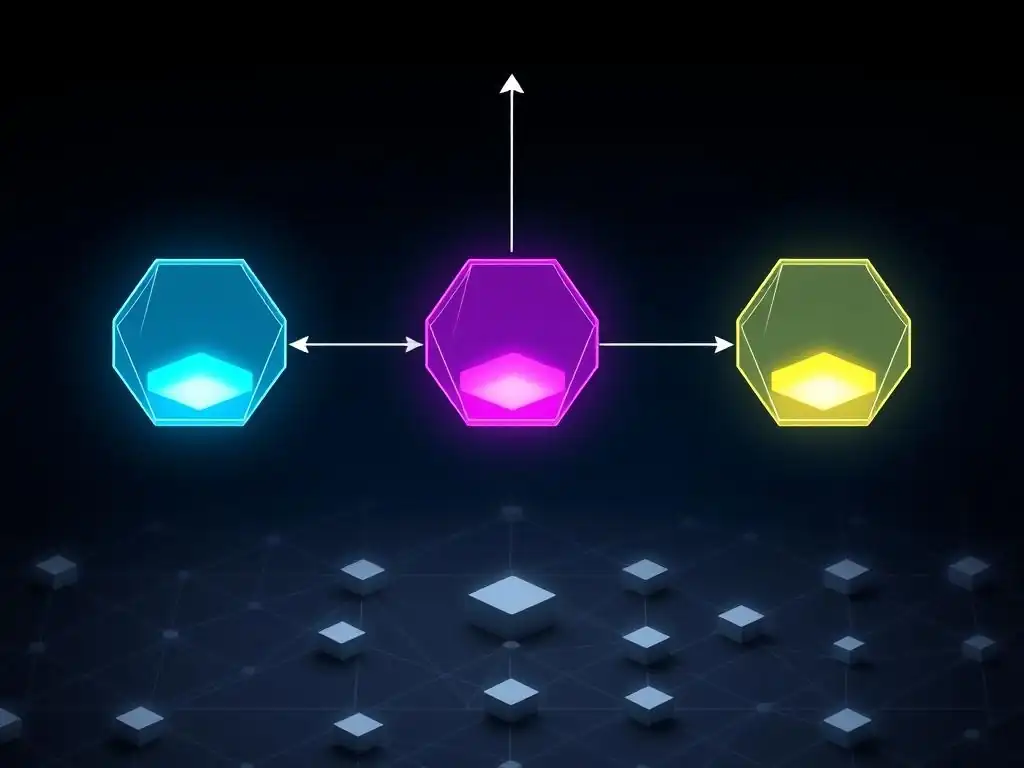
Payment Channels: Efficient Small-Value Transactions
Payment channels are arguably the most prominent and well-established use case for state channels. They are specifically designed to facilitate efficient and low-cost small-value transactions, particularly micropayments. The Lightning Network on Bitcoin is a prime example of a payment channel network in action, enabling faster and cheaper Bitcoin transactions compared to on-chain transactions. Payment channels are ideal for scenarios where frequent, small payments are needed, such as pay-per-view content, streaming services, or point-of-sale transactions.
In a payment channel, two parties can open a channel by locking funds and then conduct numerous payments back and forth off-chain. Only the channel opening and closing transactions are recorded on the Bitcoin blockchain, while the intermediate payments are processed instantly and with minimal fees within the channel. This makes payment channels significantly more efficient for micropayments than processing each small transaction directly on the blockchain, which would be prohibitively expensive and slow due to on-chain fees and confirmation times. Payment channels are therefore essential for enabling Bitcoin and other blockchains to be used for everyday, small-value transactions.
Gaming: Enabling Real-Time, Low-Latency Gameplay
The gaming industry presents another compelling use case for state channels, particularly for blockchain-based games that require real-time interactions and low latency. Traditional on-chain transactions are often too slow for the fast-paced nature of many games, where players need immediate feedback and rapid state updates. State channels can bridge this gap by enabling near-instantaneous transactions and state changes within the game environment.
In blockchain gaming, state channels can be used to facilitate in-game asset trading, player-versus-player battles, or any game mechanic that requires frequent interactions and quick responses. For example, in a fighting game, players could use a state channel to represent their match. Moves, attacks, and health updates could be processed as off-chain state updates within the channel, providing a seamless and responsive gameplay experience.
Only the final match outcome or significant in-game events might be recorded on the main chain. This approach allows blockchain games to offer gameplay comparable to traditional games in terms of speed and responsiveness, while still leveraging the benefits of blockchain for asset ownership and verifiable game logic.
Lottery Applications: Deterministic Outcome Generation
State channels can be effectively applied in lottery applications to ensure fairness, transparency, and deterministic outcome generation. Traditional lotteries often face concerns about fairness and trust in the outcome generation process. Blockchain technology can enhance transparency and verifiability, and state channels can further improve efficiency and reduce costs for lottery operations.
In a blockchain lottery using state channels, participants can join a channel to purchase lottery tickets. Ticket purchases and participant selections can be recorded as off-chain state updates. The lottery draw itself, or the process of determining the winning numbers, can be designed to be deterministic and verifiable, potentially using cryptographic techniques or verifiable random functions.
The outcome, including the winning numbers and winner selection, can then be finalized and recorded on the main chain upon channel closure. State channels enable efficient ticket sales and participation, while the blockchain ensures the integrity and verifiability of the lottery process, enhancing trust and fairness in the application.
Data Streaming: Micropayments for Data Consumption
Data streaming services can leverage state channels to implement micropayments for data consumption, enabling a pay-per-use model for accessing data streams. Traditional subscription models for data streaming can be inflexible and may not be suitable for users who only need to access data intermittently or for specific periods. State channels can facilitate a more granular payment model where users pay only for the data they consume, in small increments.
In a data streaming application using state channels, a user can open a channel with a data provider and make micropayments for each unit of data consumed, such as per minute of video streaming or per megabyte of data downloaded. As the user consumes data, state updates within the channel can reflect the accumulated micropayments. This pay-as-you-go approach offers greater flexibility and cost-effectiveness for users who only require sporadic data access. State channels can handle the high volume of micropayments efficiently off-chain, making this model economically viable and user-friendly for data streaming services and other similar applications.
State Channels vs. Rollups: A Comparison of Layer-2 Solutions
Key Differences in Architecture and Security Models
State channels and rollups, while both Layer-2 scaling solutions, differ significantly in their architecture and security models. State channels operate on a peer-to-peer basis, establishing direct communication pathways between participants. They rely on smart contracts on the main chain primarily for channel setup and dispute resolution. Security in state channels largely depends on the cryptographic integrity of the off-chain communication and the enforcement mechanisms within the smart contract. Channels are typically designed for interactions between a fixed set of participants who are known to each other, at least at the channel initiation.
Rollups, in contrast, operate by executing transactions off-chain and then "rolling up" or summarizing a batch of these transactions into a single on-chain transaction. There are two main types of rollups: Optimistic Rollups and Zero-Knowledge Rollups (ZK-Rollups). Optimistic Rollups assume transactions are valid unless proven otherwise and rely on a fraud-proof system for security.
ZK-Rollups use cryptographic proofs to guarantee the validity of off-chain transactions before they are committed to the main chain, offering stronger security guarantees. Rollups are generally more versatile and can support a broader range of applications than state channels, as they are not limited to direct peer-to-peer interactions and can handle more complex smart contract execution off-chain.
Trade-offs Between State Channels and Rollups for Specific Use Cases
The choice between state channels and rollups depends heavily on the specific use case and its requirements. State channels are particularly well-suited for applications that involve frequent interactions between a known and relatively small set of participants. Payment channels, gaming applications with player-to-player interactions, and data streaming micropayments are examples where state channels excel due to their speed, privacy, and cost-effectiveness for these types of interactions. However, state channels are less suitable for scenarios involving a large number of participants or complex smart contract logic that needs to be executed off-chain.
Rollups, on the other hand, are more broadly applicable and can handle a wider range of use cases. They are better suited for applications requiring general-purpose scalability, such as decentralized exchanges (DEXs), DeFi platforms, and applications with a large and dynamic user base. Rollups can handle more complex computations off-chain and offer greater flexibility.
However, rollups may introduce some latency due to the batching process and the need to post data to the main chain, and Optimistic Rollups may have longer withdrawal times due to the fraud-proof period. Therefore, the trade-offs between speed, versatility, security assumptions, and complexity must be carefully considered when choosing between state channels and rollups for a particular blockchain application.
Security Considerations and Challenges in State Channel Implementation
Potential Attack Vectors: Fraud and Data Manipulation
While state channels offer significant advantages, they also introduce specific security considerations and potential attack vectors that must be addressed during implementation. One potential risk is fraud, where a participant might attempt to submit an outdated or fraudulent state to the on-chain smart contract during channel closure. For example, a participant might try to revert to an earlier state that is more favorable to them, effectively attempting to reverse legitimate transactions that occurred off-chain.
Data manipulation is another potential concern. If the off-chain communication channels are not properly secured, there is a risk of man-in-the-middle attacks or other forms of data interception and manipulation. Attackers could potentially try to alter state updates in transit, leading to unauthorized fund transfers or incorrect channel states. Furthermore, denial-of-service attacks targeting the off-chain communication or the on-chain smart contract could disrupt channel operations or prevent timely dispute resolution. Addressing these potential attack vectors requires robust security measures, including secure communication protocols, proper state management, and effective dispute resolution mechanisms.
Security Measures: Multi-Signature Schemes and Dispute Resolution Mechanisms
To mitigate the security risks associated with state channels, several security measures are typically implemented. Multi-signature schemes are commonly used to enhance the security of fund management within the channel. Requiring multiple signatures for critical actions, such as channel closure or fund withdrawals, reduces the risk of unauthorized access or unilateral actions by a single participant. This ensures that all parties involved must agree on significant state changes, enhancing overall security.
Robust dispute resolution mechanisms are also crucial for state channel security. In case of disagreements or attempts at fraud, a well-defined dispute resolution process, enforced by the on-chain smart contract, is essential. This process typically involves participants submitting evidence of the latest valid state to the smart contract, which then adjudicates the dispute based on predefined rules and cryptographic proofs. Effective dispute resolution mechanisms deter fraudulent behavior and ensure that participants can confidently engage in off-chain transactions knowing that their rights and funds are protected by the on-chain smart contract.
Ensuring Data Integrity and Preventing Double Spending
Ensuring data integrity and preventing double-spending are fundamental security requirements for state channels. Cryptographic signatures play a vital role in maintaining data integrity. Every state update within a channel must be cryptographically signed by the relevant participant(s). These signatures provide proof of authenticity and ensure that state updates cannot be tampered with or forged. Verification of these signatures is a critical step in processing state updates and resolving disputes.
To prevent double-spending, state channels rely on the sequence of signed state updates. Each new state update invalidates previous states. When a channel is closed, the on-chain smart contract enforces the latest validly signed state, ensuring that funds are distributed according to the most recent agreed-upon balances. This mechanism prevents a participant from attempting to use funds that have already been spent or transferred in a previous state update. The combination of cryptographic signatures, state sequencing, and on-chain enforcement mechanisms ensures data integrity and effectively prevents double-spending within state channels, maintaining the security and reliability of off-chain transactions.
The Future of State Channels: Development and Adoption Trends
Ongoing Research and Development Efforts
The field of state channels is continuously evolving, with ongoing research and development efforts focused on enhancing their capabilities and expanding their applicability. One area of active research is generalized state channels, which aim to move beyond simple payment channels to support more complex state transitions and smart contract functionalities off-chain. This could enable state channels to be used for a wider range of applications beyond payments, including more complex decentralized applications (dApps).
Interoperability between different state channel networks is another key area of development. Currently, state channels are often designed to operate within a specific blockchain ecosystem. Research is underway to explore ways to enable state channels to interoperate across different blockchains, allowing for seamless value transfer and communication between different blockchain networks through state channel technology. Improvements in usability and user experience are also being actively pursued to make state channels more accessible and easier to use for both developers and end-users, which is crucial for wider adoption.
Integration with Other Layer-2 Solutions
The future of blockchain scaling is likely to involve a combination of different Layer-2 solutions working in synergy. Integration of state channels with other Layer-2 technologies, such as rollups and sidechains, is being explored to create hybrid scaling strategies that leverage the strengths of each approach. For instance, state channels could be used for frequent peer-to-peer interactions within a larger application that utilizes rollups for general-purpose scalability.
Combining state channels with rollups could offer a layered approach to scaling, where state channels handle high-frequency, low-latency interactions, while rollups provide broader scalability and support for more complex computations. Integration with sidechains, which are independent blockchains connected to the main chain, could further enhance scalability and interoperability by allowing state channels to operate across different blockchain environments. These integrated Layer-2 solutions are expected to play a crucial role in achieving the scalability and versatility needed for blockchain technology to reach mainstream adoption and support a wide range of applications.
The Role of State Channels in the Evolution of Blockchain Technology
State channels are poised to play a significant role in the evolution of blockchain technology, contributing to its scalability, efficiency, and user-friendliness. As blockchain adoption grows, the demand for faster and cheaper transactions will only intensify. State channels offer a proven and effective approach to address these scalability challenges, particularly for applications requiring high transaction throughput and low latency. Their ability to facilitate near-instantaneous and low-cost transactions makes them essential for enabling blockchain to support real-world applications that demand responsiveness and efficiency.
Furthermore, the privacy enhancements offered by state channels are increasingly important as users and businesses become more conscious of data protection and confidentiality. By keeping transaction details off the public blockchain, state channels provide a valuable privacy layer that can be crucial for sensitive applications and user adoption. As research and development in state channels continue to advance, and as integration with other Layer-2 solutions becomes more sophisticated, state channels are expected to become an increasingly integral part of the blockchain ecosystem, driving its evolution towards greater scalability, usability, and real-world applicability.
Implementing a Simple Payment Channel: [Conceptual Overview]
Setting up the Environment: [Prerequisites and Dependencies]
To conceptually implement a simple payment channel, you would typically need a blockchain development environment. This usually includes:
- A Blockchain Platform: Choose a blockchain platform that supports smart contracts, such as Ethereum or a similar platform.
- Development Tools: Install necessary development tools for your chosen platform. For Ethereum, this might include Truffle or Hardhat for smart contract development and deployment.
- Programming Language: Solidity is the most common language for Ethereum smart contracts. Familiarity with Solidity or a similar smart contract language is essential.
- Wallet and Provider: You will need a blockchain wallet to interact with the blockchain and a provider (like MetaMask or Infura) to connect your application to the blockchain network.
- Testing Framework: Utilize a testing framework to write unit and integration tests for your smart contracts and application logic to ensure correctness and security.
Implementing the Core Functionality: [Conceptual Steps]
The core functionality of a simple payment channel involves these conceptual steps:
- Smart Contract Deployment: Write and deploy a smart contract to the blockchain. This contract will manage the channel's funds and enforce the channel's rules. The contract should include functions for:
openChannel(): To initialize the channel and lock funds from participants.updateState(): (Conceptual, as state updates are off-chain) This function might not be directly in the contract for simple channels but the contract needs to understand the state format when closing.closeChannel(): To settle the final state on-chain and distribute funds.disputeChannel(): To handle dispute resolution if participants disagree on the final state.
- Off-Chain State Management: Implement logic for participants to communicate and exchange signed state updates off-chain. This involves:
- Defining a state structure that represents balances or channel status.
- Creating functions to generate and sign state updates.
- Implementing communication mechanisms for participants to exchange signed states (e.g., direct peer-to-peer communication).
- Channel Opening Process: Develop a process for users to call the
openChannel()function on the smart contract, depositing funds and initializing the channel. - Off-Chain Transaction Simulation: Simulate off-chain transactions by allowing users to create and exchange signed state updates, reflecting payments or other state changes.
- Channel Closing Process: Implement functionality for a participant to call the
closeChannel()function on the smart contract, submitting the latest agreed-upon state for on-chain settlement.
Testing and Deploying the Payment Channel: [Best Practices]
Testing and deploying a payment channel requires careful consideration of best practices:
- Thorough Testing: Write comprehensive unit tests for the smart contract functions and integration tests for the entire payment channel workflow. Test various scenarios, including normal operation, edge cases, and potential attack vectors.
- Security Audits: Conduct security audits of your smart contract code to identify and mitigate potential vulnerabilities. Consider using automated analysis tools and engaging professional auditors.
- Gas Optimization: Optimize your smart contract code to minimize gas costs for on-chain transactions (channel opening and closing).
- User Interface (UI) and User Experience (UX): Design a user-friendly interface for interacting with the payment channel, making it easy for users to open channels, send payments, and close channels.
- Deployment Strategy: Choose an appropriate deployment strategy. For testing and development, you can use local test networks. For production, deploy to a public blockchain network, considering network fees and security implications.
- Monitoring and Maintenance: Implement monitoring tools to track the performance and health of your payment channel application. Plan for ongoing maintenance and updates to address potential issues and improve functionality.
Frequently Asked Questions
What are blockchain state channels, and what problem do they solve?
State channels are a scaling solution that allows parties to interact and conduct transactions off-chain, significantly reducing the load on the main blockchain. This is done by establishing a private communication channel between participants.
How does off-chain computation within a state channel work?
Instead of every transaction being recorded on the blockchain, participants exchange signed transactions off-chain within the channel. Only the opening and closing states are recorded on the main blockchain, saving time and resources.
What are the primary benefits of using blockchain state channels for computation?
State channels offer increased transaction speed, lower fees (due to reduced on-chain activity), and improved privacy as transactions are not publicly visible until the channel is closed. This makes them suitable for high-frequency transactions.
What are some limitations or challenges associated with implementing blockchain state channels?
Challenges include complexity in setting up and managing channels, the need for all participants to be online and cooperative, and the potential for disputes requiring on-chain resolution, which can be complex.
How do blockchain state channels contribute to the future of decentralized systems, particularly in relation to "Blockchain state channels computation"?
They enable more scalable and efficient decentralized applications by handling a large volume of transactions off-chain. This allows for more complex computations and interactions without overwhelming the main blockchain network.
Final Reflection: Embracing the Potential of Off-Chain Innovation
The exploration of state channels reveals a powerful truth: blockchain scalability isn't just about on-chain throughput, but also about intelligently leveraging off-chain computation. The ability to conduct numerous transactions and state updates privately and efficiently, only anchoring the final result on the main chain, represents a significant leap forward in realizing the true potential of decentralized applications. This approach directly addresses the limitations that have hindered wider blockchain adoption, paving the way for more complex and resource-intensive applications.
The impact of state channels extends beyond mere technical improvements; it fundamentally alters how we interact with blockchain technology. The promise of faster, cheaper, and more private transactions resonates deeply, offering a glimpse into a future where blockchain seamlessly integrates into everyday life. This potential is beautifully captured by Andreas Antonopoulos: The blockchain is not only a technology, it's a social and political revolution.
State channels are a crucial tool in realizing that revolution, enabling a more user-friendly and accessible decentralized world.
As we conclude this deep dive into state channels, I invite you to consider the implications of this technology in your own life and work. How can you leverage the principles of off-chain computation to build more efficient and scalable solutions? How can you contribute to the development and adoption of state channels, helping to unlock the full potential of blockchain technology? Embrace the challenge, explore the possibilities, and become a part of shaping the future of decentralized innovation.
Okay, I'm ready to craft a Call to Action (CTA) for the end of an article titled "State Channels: A Deep Dive into Off-Chain Computation and State Updates," for Blockchain Trends (blockchaintrends.org). Here it is:
Unlock the Power of Off-Chain Innovation!
Thank you for diving into the world of State Channels! We hope you now have a clearer understanding of how these innovative solutions can revolutionize blockchain scalability and efficiency. Now, let's put that knowledge into action.
Here are a few ways to continue your journey:
- Dive into the Code: Explore open-source State Channel implementations on platforms like GitHub to understand the practical aspects of their setup and usage.
- Discuss potential use cases: Brainstorm with blockchain enthusiasts or consults in the realm of blockchain and find out if this technology can be implemented into any use case.
- Share your insights: Spark the conversation by sharing this article with your network on social media and help others discover the potential of off-chain computation.
What specific challenge in the blockchain space do you think State Channels can best address? Share your thoughts in the comments below!
Leave a Reply