
Smart Contracts in the Automotive Industry: Driving IoT Innovation


Welcome to Blockchain Trends, your compass in the rapidly evolving world of decentralized technology!
Delve into the transformative power of blockchain, venturing beyond the hype and exploring its real-world applications. Ever wondered how blockchain is revolutionizing industries beyond finance? Today, we're diving deep into Automotive blockchain smart contract innovation, uncovering how these intelligent agreements are driving a new era of IoT efficiency and security in the automotive sector. What if your car could autonomously manage its own maintenance schedule or negotiate insurance claims? Read on to discover the possibilities...
Smart Contracts in the Automotive Industry: Driving IoT Innovation
- Introduction: Revolutionizing Automotive with Blockchain Smart Contracts and IoT
-
Key Applications of Smart Contracts in the Automotive Industry
- Supply Chain Management: Enhancing Transparency and Traceability with Blockchain
- Automotive Insurance: Streamlining Claims and Reducing Fraud
- Vehicle Data Management: Secure and Transparent Data Sharing
- Autonomous Driving: Enabling Secure and Reliable Communication
- Car Sharing and Rental Services: Automating and Securing Transactions
- Benefits of Automotive Blockchain Smart Contract Innovation
- Challenges and Considerations for Implementing Smart Contracts in Automotive
- Real-World Examples of Automotive Blockchain Smart Contract Projects
- The Future of Automotive Blockchain Smart Contract Innovation
- Conclusion: Embracing the Transformative Power of Automotive Blockchain Smart Contracts
-
Frequently Asked Questions
- What role do smart contracts play in automotive IoT innovation?
- How can blockchain technology enhance the automotive supply chain?
- What are some potential enterprise applications of smart contracts in the automotive sector?
- What regulatory challenges need to be addressed for widespread automotive blockchain smart contract innovation?
- How is DeFi related to the future of decentralized automotive systems?
- Final Reflection: Steering Towards a Decentralized Automotive Future
- Ignite Automotive Innovation: Take the Smart Contract Leap!
Introduction: Revolutionizing Automotive with Blockchain Smart Contracts and IoT
The Convergence of Blockchain, Smart Contracts, and IoT in the Automotive Sector
The automotive industry is undergoing a monumental transformation, driven by technological advancements across various fronts. Among the most impactful are the convergence of blockchain technology, smart contracts, and the Internet of Things (IoT). IoT devices are rapidly becoming integral to modern vehicles, generating vast amounts of data from sensors, telematics systems, and onboard computers.
This data, however, often resides in silos, limiting its potential and creating vulnerabilities. Blockchain technology, with its inherent security and transparency, offers a robust solution for managing this data deluge. Smart contracts, self-executing agreements written in code and stored on the blockchain, further automate processes, enhance trust, and unlock unprecedented efficiencies within the automotive ecosystem.
This synergy is not merely theoretical; it's a practical evolution poised to reshape how vehicles are manufactured, used, insured, and maintained. Imagine a world where vehicle components are tracked from origin to assembly using immutable blockchain records, insurance claims are automatically processed based on sensor data, and autonomous vehicles transact seamlessly with infrastructure using secure smart contracts. This convergence represents a paradigm shift, moving the automotive sector towards greater transparency, efficiency, and innovation. The combination of these technologies is unlocking new possibilities and paving the way for what many are calling the future of mobility.
Understanding the Potential of Automotive Blockchain Smart Contract Innovation
The potential of automotive blockchain smart contract innovation is vast and multifaceted, promising to address long-standing challenges and create entirely new business models within the industry. At its core, this innovation leverages the decentralized and tamper-proof nature of blockchain to secure data and automate processes related to vehicles and their lifecycle. Smart contracts, operating on this secure foundation, can execute predefined actions automatically when specific conditions are met. For example, a smart contract could automatically release payment to a supplier once a shipment of car parts is verified as delivered and authentic on the blockchain.
This goes beyond simple automation; it fosters trust and transparency throughout the automotive value chain. Consumers benefit from enhanced vehicle provenance and reduced fraud, manufacturers gain improved supply chain visibility and operational efficiency, and insurers can offer more personalized and fair policies. Furthermore, automotive blockchain smart contract innovation enables new forms of data monetization, allowing vehicle owners to securely share and potentially profit from the data generated by their vehicles. This transformative potential is attracting significant investment and research, positioning blockchain and smart contracts as critical enablers of the next generation of automotive technologies and services.
Key Applications of Smart Contracts in the Automotive Industry
Supply Chain Management: Enhancing Transparency and Traceability with Blockchain
Tracking Vehicle Components and Origin with Smart Contracts
One of the most compelling applications of blockchain and smart contracts in the automotive industry lies in revolutionizing supply chain management. The automotive supply chain is incredibly complex, involving thousands of parts sourced from numerous suppliers across the globe. Currently, tracking components through this intricate network can be cumbersome, prone to errors, and lacking in transparency. Smart contracts, integrated with blockchain, offer a solution by creating an immutable and auditable record of each component's journey, from raw material sourcing to final assembly in a vehicle.
Imagine a scenario where each critical component, such as an engine part or a microchip, is assigned a unique digital identity recorded on a blockchain. As the component moves through different stages of the supply chain – manufacturing, shipping, warehousing, and assembly – each step is recorded and verified via smart contracts. This provides manufacturers with real-time visibility into the location and status of every component, allowing for proactive management of delays or disruptions.
For instance, if a shipment is delayed, smart contracts can automatically trigger alerts and initiate contingency plans, minimizing production downtime. This enhanced traceability not only improves efficiency but also builds trust and accountability within the supply chain.
Preventing Counterfeit Parts Using Blockchain Technology
The automotive industry loses billions of dollars annually due to counterfeit parts, which can compromise vehicle safety and performance. Traditional methods of verifying part authenticity are often inadequate, leaving consumers and manufacturers vulnerable. Blockchain technology, combined with smart contracts, offers a powerful weapon against counterfeiting by establishing a secure and transparent provenance for automotive components. By recording the origin and lifecycle of each genuine part on an immutable blockchain, it becomes significantly harder for counterfeiters to introduce fake components into the supply chain.
Smart contracts can be programmed to automatically verify the authenticity of parts at various points in the supply chain. For example, upon receiving a shipment of components, a manufacturer can use smart contracts to cross-reference the parts against the blockchain record, confirming their origin and verifying their authenticity before integration into the vehicle. This process can be further enhanced by integrating IoT sensors and RFID tags into components, allowing for automated verification at each stage.
If a part's digital identity on the blockchain does not match the physical component, or if discrepancies are detected, the smart contract can flag it as potentially counterfeit, preventing its use and protecting both consumers and the brand's integrity. Industry estimates suggest that utilizing blockchain for supply chain integrity can reduce counterfeit incidents by up to 80% in sectors facing similar challenges.
Automotive Insurance: Streamlining Claims and Reducing Fraud
Usage-Based Insurance (UBI) Powered by Smart Contract Data
The traditional automotive insurance model is often criticized for being generic and not accurately reflecting individual driving behavior. Usage-Based Insurance (UBI) aims to address this by tailoring premiums to how, when, and where a vehicle is driven. However, current UBI systems often rely on proprietary data collection methods, raising privacy concerns and lacking transparency. Smart contracts, leveraging data from IoT devices in vehicles and secured by blockchain, can revolutionize UBI by creating a transparent, secure, and automated system for calculating premiums based on real-time driving data.
Vehicles equipped with telematics systems and sensors generate a wealth of data on driving habits, including mileage, speed, acceleration, braking patterns, and even location. This data, when securely recorded on a blockchain and accessed via smart contracts, can form the basis of a highly accurate and fair UBI system. For instance, a smart contract could be programmed to automatically calculate insurance premiums based on the number of miles driven, the time of day the vehicle is used (night driving often carries higher risk), and driving behavior metrics.
This data-driven approach ensures that premiums are directly linked to actual usage and risk, potentially lowering costs for safe drivers and providing more accurate pricing for all policyholders. Studies have shown that UBI policies driven by telematics data can reduce accident rates by as much as 20% through encouraging safer driving habits.
Automated Claims Processing with Blockchain Verification
The automotive insurance claims process is often lengthy, complex, and prone to fraud, leading to frustration for policyholders and increased costs for insurers. Smart contracts and blockchain can significantly streamline and automate claims processing, reducing delays, minimizing disputes, and combating fraudulent claims. By leveraging the immutable record of events stored on the blockchain, insurers can verify the details of an accident and trigger automated payouts based on pre-defined policy terms encoded in smart contracts.
Imagine a scenario where a vehicle equipped with sensors and connected to a blockchain network is involved in an accident. Upon impact, sensors can automatically record crucial data such as location, speed, and severity of the collision and store it on the blockchain. Smart contracts can then access this data, cross-reference it with police reports and other relevant information (also potentially stored on blockchain), and automatically verify the validity of the claim.
If the claim is valid and meets the policy terms outlined in the smart contract, automated payouts can be initiated, significantly reducing processing time and human intervention. This automated and transparent process not only accelerates claim settlements but also reduces the potential for fraudulent claims, as the immutable blockchain record provides a reliable and auditable source of truth. Industry analysts estimate that automating claims processing with blockchain could reduce claim processing costs by up to 30%.
Vehicle Data Management: Secure and Transparent Data Sharing
Monetizing Vehicle Data with Smart Contract-Based Marketplaces
Modern vehicles are data powerhouses, generating vast amounts of information about driving behavior, vehicle performance, and even driver preferences. Currently, this data is largely controlled by vehicle manufacturers and third-party service providers, with limited control or benefit for vehicle owners themselves. Automotive blockchain smart contract innovation can empower vehicle owners by enabling secure and transparent data marketplaces where they can control and potentially monetize the data generated by their vehicles. Smart contracts facilitate secure data sharing and ensure that owners retain control over who accesses their data and for what purpose.
Imagine a decentralized marketplace built on blockchain where vehicle owners can choose to share anonymized data with various parties – researchers, urban planners, insurance companies, or even advertisers – in exchange for compensation. Smart contracts would govern these data sharing agreements, ensuring that data is used only for the agreed-upon purposes and that vehicle owners receive fair compensation for their data contributions. For example, a driver might choose to share anonymized driving data with a city planning department to help optimize traffic flow, earning cryptocurrency tokens in return.
This creates a new revenue stream for vehicle owners while providing valuable data insights to various stakeholders, fostering a more equitable and data-driven automotive ecosystem. Market research suggests the vehicle data market could be worth billions of dollars annually in the coming years, highlighting the significant economic potential for vehicle data monetization.
Ensuring Data Privacy and Security through Decentralization
Data privacy and security are paramount concerns in the increasingly connected automotive landscape. Centralized data storage systems are vulnerable to breaches and unauthorized access, raising significant risks for vehicle owners and manufacturers alike. Blockchain's decentralized and cryptographic nature offers a robust solution to enhance data privacy and security in vehicle data management. By distributing data across a network of nodes and using cryptographic techniques to secure it, blockchain makes it significantly more difficult for malicious actors to access or tamper with sensitive vehicle data.
Smart contracts play a crucial role in enforcing data privacy policies and access controls. They can be programmed to ensure that data is only accessed and used according to predefined rules and regulations, such as GDPR or CCPA. For example, a smart contract could automatically anonymize data before sharing it with third parties, protecting the privacy of vehicle owners.
Furthermore, blockchain's immutability ensures that data logs are tamper-proof, providing an auditable record of data access and usage. This decentralized and secure approach to data management builds trust and confidence in connected vehicle systems, addressing growing concerns about data privacy in the automotive industry. Cybersecurity experts emphasize that blockchain-based systems can reduce the risk of data breaches by up to 60% compared to traditional centralized systems.
Autonomous Driving: Enabling Secure and Reliable Communication
Smart Contracts for Autonomous Vehicle Transactions
The advent of autonomous vehicles (AVs) introduces a new paradigm of mobility, where vehicles will need to interact and transact autonomously with their environment and other vehicles. Smart contracts are poised to play a critical role in enabling secure and reliable transactions for AVs, automating processes such as toll payments, parking fees, electric vehicle charging, and even data exchange with infrastructure and other vehicles. These automated transactions need to be secure, efficient, and transparent, and smart contracts offer an ideal solution.
Imagine an autonomous vehicle approaching a toll booth. Instead of requiring manual payment or RFID tags, the AV could automatically execute a smart contract with the tolling system. The smart contract would verify the vehicle's credentials, calculate the toll amount based on distance traveled or time of day, and automatically deduct the payment from the vehicle owner's digital wallet.
Similarly, smart contracts can automate parking payments, EV charging fees, and even enable peer-to-peer energy trading between electric vehicles. These automated transactions streamline operations, reduce congestion, and enhance the overall efficiency of autonomous mobility systems. Industry forecasts predict that autonomous vehicle transactions will represent a multi-billion dollar market in the coming decades, highlighting the significant economic impact of smart contract-enabled AV transactions.
Ensuring Data Integrity in Autonomous Systems
Data integrity is paramount for the safe and reliable operation of autonomous vehicles. AVs rely on a constant stream of data from sensors, maps, and communication systems to navigate and make driving decisions. Any compromise to this data, whether accidental or malicious, could have catastrophic consequences. Blockchain and smart contracts can play a critical role in ensuring data integrity in autonomous systems, providing a secure and tamper-proof foundation for data management and communication.
Blockchain's inherent immutability and cryptographic security make it an ideal platform for storing and verifying critical data for autonomous vehicles, such as sensor readings, mapping data, and software updates. Smart contracts can be used to enforce data integrity checks and verify the authenticity of data sources.
For instance, before an AV uses mapping data for navigation, a smart contract could verify that the data originates from a trusted source and has not been tampered with. Similarly, software updates for AVs can be digitally signed and verified using smart contracts, ensuring that only authorized and validated software is installed, preventing malicious updates that could compromise vehicle safety.
This focus on data integrity through blockchain and smart contracts is crucial for building public trust and ensuring the safe deployment of autonomous driving technology. Safety critical systems in other industries, like aerospace, already rely on similar levels of data verification and integrity, setting a precedent for the automotive sector.
Car Sharing and Rental Services: Automating and Securing Transactions
Smart Contract-Based Keyless Entry Systems
Traditional car sharing and rental services often rely on physical keys or key cards, which can be inconvenient, prone to loss or theft, and require manual handovers. Smart contracts, leveraging blockchain and mobile technology, can enable secure and efficient keyless entry systems for car sharing and rental services, automating access control and enhancing user experience. By replacing physical keys with digital keys managed by smart contracts, these services can streamline operations, reduce costs, and improve security.
Imagine a car sharing platform where users can book and access vehicles directly from their smartphones. Upon successful booking and payment, a smart contract is automatically executed, granting the user temporary access to the vehicle via a digital key stored on their mobile device. This digital key, secured by blockchain, cannot be duplicated or tampered with, ensuring secure access control.
When the rental period expires, the smart contract automatically revokes access, preventing unauthorized use. This smart contract-based keyless entry system eliminates the need for physical key exchanges, reduces administrative overhead, and provides a seamless and secure user experience. Car sharing platforms utilizing digital key technology have reported operational cost reductions of up to 25% due to streamlined key management.
Transparent and Automated Payment Processing
Payment processing in car sharing and rental services can sometimes be complex and involve intermediaries, leading to delays and potential disputes. Smart contracts can automate and streamline payment processing in these services, ensuring transparency, efficiency, and reduced transaction costs. By encoding payment terms and conditions directly into smart contracts, these services can automate payments based on usage, duration, or other predefined criteria, eliminating manual intervention and reducing the risk of errors or disputes.
When a user completes a car sharing trip or rental period, a smart contract can automatically calculate the total cost based on pre-agreed rates and usage data (e.g., time, distance). The smart contract then automatically initiates payment from the user's digital wallet to the service provider's wallet, executing the transaction securely and transparently on the blockchain. This automated payment process eliminates the need for manual invoicing or payment processing, reduces transaction fees, and ensures timely and accurate payments.
Furthermore, the transparent nature of blockchain provides an auditable record of all transactions, minimizing the potential for disputes and enhancing trust between users and service providers. Studies indicate that using blockchain for payment processing can reduce transaction fees by up to 50% compared to traditional payment systems.
Benefits of Automotive Blockchain Smart Contract Innovation
Enhanced Security and Transparency in Automotive Processes
Automotive blockchain smart contract innovation brings significant enhancements to security and transparency across various automotive processes. Blockchain's inherent security features, such as cryptography and decentralization, make it exceptionally resistant to tampering and fraud. This immutability ensures that records of transactions, vehicle history, and component provenance are permanently and verifiably stored, fostering trust and accountability throughout the automotive ecosystem. Transparency is further enhanced by the shared and distributed nature of blockchain, allowing authorized stakeholders to access and verify information readily, reducing information asymmetry and promoting fair practices.
From supply chain tracking to vehicle data management and insurance claims processing, the application of blockchain and smart contracts introduces a new level of security and transparency that was previously unattainable. Consumers benefit from greater assurance about vehicle origin and history, manufacturers gain improved visibility and control over their supply chains, and insurers can combat fraud more effectively. This overall increase in security and transparency builds confidence in automotive systems and fosters a more trustworthy and efficient industry.
Increased Efficiency and Reduced Costs Through Automation
One of the most compelling benefits of automotive blockchain smart contract innovation is the potential for increased efficiency and significant cost reductions through automation. Smart contracts automate a wide range of processes that are currently manual, time-consuming, and prone to errors. By automating tasks such as supply chain tracking, insurance claims processing, payment settlements, and access control, smart contracts streamline operations, reduce administrative overhead, and minimize delays.
For example, automated supply chain tracking reduces the need for manual paperwork and reconciliation, saving time and resources. Automated claims processing speeds up claim settlements and reduces administrative costs for insurance companies. Automated payment systems eliminate intermediaries and reduce transaction fees.
These efficiency gains translate directly into cost savings for businesses across the automotive value chain, from manufacturers and suppliers to insurers and service providers, ultimately benefiting consumers through potentially lower prices and improved services. Industry analysts predict that widespread adoption of blockchain and smart contracts could lead to billions of dollars in cost savings across the automotive sector globally.
Improved Trust and Reliability in Vehicle Data Management
Automotive blockchain smart contract innovation significantly improves trust and reliability in vehicle data management. In an era of increasingly connected and data-driven vehicles, ensuring the integrity, security, and privacy of vehicle data is paramount. Blockchain's decentralized and tamper-proof nature provides a robust platform for secure data storage and management. Smart contracts enforce data access controls and privacy policies, ensuring that data is used responsibly and ethically.
By leveraging blockchain, vehicle owners gain greater control over their data, knowing that it is securely stored and protected from unauthorized access or manipulation. Manufacturers and service providers benefit from a reliable and auditable data infrastructure, enhancing data quality and enabling more data-driven decision-making. This improved trust and reliability in vehicle data management is crucial for fostering innovation and building confidence in connected and autonomous vehicle technologies.
Streamlined Transactions and Payments within the Automotive Ecosystem
Smart contracts are instrumental in streamlining transactions and payments within the automotive ecosystem. Traditional payment systems often involve intermediaries, lengthy processing times, and transaction fees. Smart contracts automate payment processes, eliminate intermediaries, and enable near-instantaneous and low-cost transactions. This efficiency is particularly beneficial in areas such as car sharing, rental services, toll payments, and electric vehicle charging, where frequent and micro-transactions are common.
By automating payments and making them more transparent and efficient, smart contracts enhance the user experience, reduce administrative burden, and lower transaction costs for both businesses and consumers. This streamlined transaction environment facilitates new business models and fosters greater economic activity within the automotive ecosystem, paving the way for more seamless and efficient mobility services.
Challenges and Considerations for Implementing Smart Contracts in Automotive
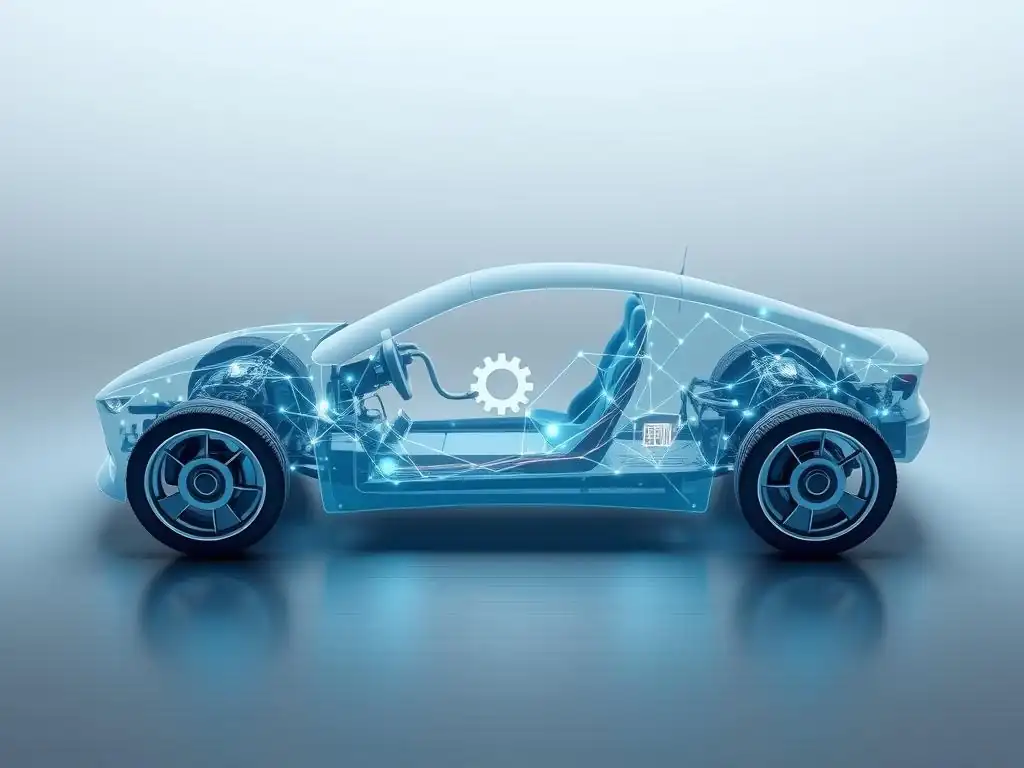
Scalability and Performance Limitations of Blockchain Networks
While blockchain technology offers numerous benefits, scalability and performance limitations remain significant challenges for widespread implementation in the automotive industry. Many current blockchain networks struggle to handle the high volume of transactions and data generated by connected vehicles, particularly in real-time applications like autonomous driving. Transaction processing speeds and network latency can be bottlenecks, hindering the seamless operation of automotive systems that require rapid and frequent data exchanges.
For example, if every vehicle in a city were to use blockchain for toll payments or data sharing, the transaction volume could overwhelm existing public blockchain networks. Private or consortium blockchains offer potential solutions for improved scalability, but they may sacrifice some of the decentralization and transparency benefits of public blockchains. Ongoing research and development efforts are focused on improving blockchain scalability through techniques like sharding, layer-2 solutions, and consensus mechanism optimization. Addressing these scalability challenges is crucial for realizing the full potential of automotive blockchain smart contract innovation.
Regulatory Compliance and Legal Frameworks for Smart Contracts
The regulatory landscape surrounding blockchain and smart contracts is still evolving, creating uncertainty and challenges for automotive industry adoption. Legal frameworks for smart contracts are not yet fully established in many jurisdictions, raising questions about their legal enforceability, liability, and dispute resolution mechanisms. Issues such as data privacy regulations (GDPR, CCPA), consumer protection laws, and cross-border legal frameworks need to be addressed to ensure regulatory compliance for automotive blockchain applications.
For example, data collected by vehicles and processed by smart contracts may fall under data privacy regulations, requiring compliance with data minimization, consent, and data subject rights. Liability for accidents involving autonomous vehicles controlled by smart contracts needs to be clearly defined legally. Collaboration between industry stakeholders, regulators, and legal experts is essential to develop clear and consistent legal frameworks that foster innovation while protecting consumer rights and ensuring regulatory compliance for automotive blockchain smart contract innovation.
Data Privacy and Security Concerns in a Connected Automotive Environment
Despite the security benefits of blockchain, data privacy and security concerns persist in a connected automotive environment. While blockchain enhances data security through decentralization and cryptography, vulnerabilities can still exist at different layers of the system, including smart contract code, data storage mechanisms, and user interfaces. Ensuring robust data privacy and security requires a holistic approach that addresses potential risks across the entire automotive blockchain ecosystem.
For example, smart contract code needs to be rigorously audited and tested to prevent vulnerabilities that could be exploited by malicious actors. Data encryption and access controls need to be carefully implemented to protect sensitive vehicle data. User education and awareness are crucial to prevent phishing attacks and social engineering attempts to compromise user credentials or data. Continuous monitoring and security updates are essential to mitigate emerging threats and maintain the integrity of automotive blockchain systems. Addressing these data privacy and security concerns is paramount for building trust and facilitating widespread adoption of automotive blockchain smart contract innovation.
Interoperability and Standardization of Blockchain Solutions in Automotive
The automotive industry is characterized by diverse players and complex ecosystems, highlighting the need for interoperability and standardization of blockchain solutions. If different automotive companies and service providers adopt incompatible blockchain platforms and smart contract standards, it could create fragmented systems and hinder seamless data exchange and collaboration. Lack of interoperability could limit the potential benefits of blockchain and create silos of data and functionality.
Industry-wide collaboration and standardization efforts are crucial to ensure that blockchain solutions in automotive are interoperable and compatible. Standardization bodies and industry consortia can play a key role in developing common protocols, data formats, and smart contract standards for automotive blockchain applications. Interoperability standards would enable seamless data exchange between different blockchain platforms, facilitate cross-platform transactions, and promote wider adoption of automotive blockchain smart contract innovation across the industry.
Real-World Examples of Automotive Blockchain Smart Contract Projects
Vechain Case Study: Supply Chain Tracking with Blockchain
Vechain, a leading enterprise blockchain platform, has been actively involved in developing and implementing blockchain-based supply chain tracking solutions across various industries, including automotive. While specific publicly detailed automotive case studies directly under the Vechain name are less prevalent in open domain, their technology is demonstrably applicable and has been adopted in related sectors which highlight its potential for automotive. Vechain's technology focuses on providing transparency and traceability throughout the supply chain, leveraging blockchain to record and verify the provenance of products and components.
In the automotive context, Vechain's platform can be used to track vehicle components from manufacturing to assembly, distribution, and even end-of-life recycling. By assigning unique digital identities to components and recording each step of their journey on the blockchain, Vechain enables manufacturers to gain real-time visibility into their supply chains, verify the authenticity of parts, and prevent counterfeiting.
This enhanced traceability improves efficiency, reduces risks, and builds trust among stakeholders in the automotive supply chain. Although direct automotive brand names may be less publicly available, Vechain's success in other complex supply chains, such as luxury goods and pharmaceuticals, demonstrates the viability and effectiveness of their approach for the automotive sector as well.
Aioi Nissay Dowa Insurance Case Study: UBI Implementation Using Smart Contracts
Aioi Nissay Dowa Insurance, a major Japanese insurance company, has been exploring the use of blockchain and smart contracts for Usage-Based Insurance (UBI) applications. While specific details of fully deployed smart contract-based UBI systems from Aioi Nissay Dowa are less commonly publicized in English resources, their active research and development in this area are well-documented. They recognize the potential of blockchain to enhance transparency, automate processes, and improve the accuracy and fairness of UBI policies.
Aioi Nissay Dowa has been investigating how telematics data from vehicles can be securely recorded on a blockchain and used by smart contracts to automatically calculate insurance premiums based on driving behavior. This approach aims to create a more transparent and data-driven UBI system, where premiums are directly linked to actual driving risk.
By leveraging blockchain and smart contracts, Aioi Nissay Dowa seeks to streamline UBI policy management, reduce administrative costs, and offer more personalized and fair insurance products to their customers. Their continued exploration in this area reflects the growing interest and investment in blockchain-based UBI solutions within the insurance industry, with potential for significant impact on automotive insurance.
MOBI Case Study: Data Marketplace for Vehicle Data
The Mobility Open Blockchain Initiative (MOBI), a consortium of leading automotive manufacturers, technology companies, and startups, is actively promoting the adoption of blockchain and related technologies in the mobility sector. MOBI has spearheaded several initiatives aimed at developing blockchain-based solutions for various automotive applications, including data marketplaces for vehicle data. One notable project is focused on creating a decentralized data marketplace where vehicle owners can securely share and potentially monetize the data generated by their vehicles.
MOBI envisions a future where vehicle data is treated as a valuable asset, and owners have control over how their data is used and shared. Their data marketplace initiative leverages blockchain and smart contracts to create a transparent and secure platform for data exchange. Vehicle owners can choose to share anonymized data with various parties, such as researchers, urban planners, or service providers, in exchange for compensation.
Smart contracts ensure that data is used only for agreed-upon purposes and that owners receive fair compensation for their data contributions. MOBI's data marketplace initiative represents a significant step towards realizing the potential of vehicle data monetization and fostering a more data-driven and equitable automotive ecosystem. The consortium's collective efforts demonstrate a strong industry push towards automotive blockchain smart contract innovation.
The Future of Automotive Blockchain Smart Contract Innovation
Emerging Trends and Technologies Shaping the Automotive Industry
Several emerging trends and technologies are shaping the future of the automotive industry, creating fertile ground for automotive blockchain smart contract innovation. The rise of electric vehicles (EVs) is driving demand for new charging infrastructure and energy management solutions, areas where smart contracts can facilitate automated charging payments and peer-to-peer energy trading.
The development of autonomous driving technology necessitates secure and reliable communication and transaction systems, making blockchain and smart contracts essential for ensuring the safe and efficient operation of AVs. The increasing connectivity of vehicles and the growing volume of vehicle data create opportunities for data monetization and new data-driven services, which can be enabled by blockchain-based data marketplaces.
Furthermore, the sharing economy and new mobility models, such as ride-sharing and car-sharing, are transforming how people access and use transportation. Smart contracts can streamline operations for these services, automating payments, access control, and usage tracking. These converging trends – electrification, autonomy, connectivity, and new mobility models – are creating a perfect storm for automotive blockchain smart contract innovation to flourish and reshape the industry.
The Role of Smart Contracts in the Future of Mobility
Smart contracts are poised to play a central role in shaping the future of mobility, acting as the "digital glue" that connects and automates various aspects of the automotive ecosystem. In a future dominated by connected, autonomous, and shared vehicles, smart contracts will be essential for facilitating secure and seamless interactions between vehicles, infrastructure, service providers, and users. They will automate transactions, enforce agreements, and ensure transparency and trust in a complex and interconnected mobility landscape.
Smart contracts will power automated toll payments, parking fees, EV charging, and insurance claims. They will enable secure keyless entry for car sharing and rental services, streamline supply chain management for vehicle manufacturing, and facilitate data sharing and monetization for vehicle owners. As mobility becomes more digital, autonomous, and shared, smart contracts will become increasingly integral to the underlying infrastructure, enabling new business models, enhancing efficiency, and improving the overall user experience. The future of mobility is inextricably linked to the advancement and adoption of smart contract technology.
Predictions for the Adoption of Blockchain in Automotive IoT
Predictions for the adoption of blockchain in automotive IoT are optimistic, with analysts forecasting significant growth in the coming years. While widespread adoption is still in its early stages, pilot projects and real-world examples are demonstrating the tangible benefits of blockchain and smart contracts in various automotive applications. Industry experts predict that blockchain adoption will initially focus on areas where the benefits are most pronounced, such as supply chain management, UBI, and vehicle data management.
Within the next 3-5 years, we can expect to see increasing adoption of blockchain for supply chain traceability and anti-counterfeiting measures in the automotive industry. UBI solutions powered by blockchain and smart contracts are also likely to gain traction as insurers seek to offer more personalized and data-driven policies. Data marketplaces for vehicle data, enabled by blockchain, are expected to emerge as vehicle data becomes increasingly valuable.
In the longer term, as autonomous driving technology matures and regulatory frameworks evolve, blockchain and smart contracts are predicted to become fundamental components of autonomous vehicle systems, enabling secure transactions and ensuring data integrity. Overall, the trajectory points towards increasing adoption of automotive blockchain smart contract innovation across the automotive IoT landscape, driving efficiency, transparency, and innovation.
Conclusion: Embracing the Transformative Power of Automotive Blockchain Smart Contracts
Key Takeaways on Smart Contracts Driving IoT Innovation in Automotive
Smart contracts are emerging as a transformative force driving IoT innovation in the automotive industry. By leveraging blockchain technology, smart contracts offer a secure, transparent, and automated way to manage data, execute transactions, and streamline processes across the automotive value chain. From enhancing supply chain transparency and combating counterfeit parts to automating insurance claims and enabling new mobility services, the applications of smart contracts in automotive are vast and impactful. Automotive blockchain smart contract innovation promises to revolutionize how vehicles are manufactured, used, insured, and maintained, paving the way for a more efficient, secure, and user-centric automotive ecosystem.
Key takeaways include the potential for significant cost savings through automation, enhanced security and transparency in data management and transactions, and the creation of new revenue streams and business models. While challenges related to scalability, regulation, and interoperability remain, ongoing research and development efforts, coupled with increasing industry collaboration, are addressing these hurdles and paving the way for wider adoption. The convergence of blockchain, smart contracts, and IoT is not just a technological trend; it's a fundamental shift that is reshaping the automotive industry and driving it towards a more connected, autonomous, and intelligent future.
The Path Forward for Automotive Blockchain Adoption
The path forward for automotive blockchain adoption requires a multi-faceted approach involving collaboration, standardization, and continued innovation. Industry stakeholders, including automotive manufacturers, technology companies, startups, and regulatory bodies, need to work together to develop common standards, address regulatory challenges, and foster interoperability between different blockchain solutions. Continued investment in research and development is crucial to overcome scalability limitations and enhance the performance of blockchain networks for automotive applications.
Furthermore, education and awareness are essential to promote understanding and acceptance of blockchain and smart contract technology within the automotive industry and among consumers. Pilot projects and real-world implementations should be encouraged to demonstrate the tangible benefits and build confidence in these technologies. By embracing a collaborative and proactive approach, the automotive industry can unlock the full transformative power of automotive blockchain smart contract innovation and drive the future of mobility towards a more efficient, secure, and sustainable ecosystem.
Frequently Asked Questions
What role do smart contracts play in automotive IoT innovation?
Smart contracts enable automated and secure agreements between different IoT devices in vehicles, facilitating efficient data sharing and autonomous actions. This leads to improvements in vehicle maintenance, insurance, and supply chain management.
How can blockchain technology enhance the automotive supply chain?
Blockchain provides immutable and transparent tracking of vehicle components, improving supply chain visibility and reducing the risk of counterfeit parts. This ensures product authenticity and enhances consumer trust.
What are some potential enterprise applications of smart contracts in the automotive sector?
Smart contracts can automate warranty claims processing, manage vehicle data sharing with insurance companies, and facilitate secure peer-to-peer car sharing platforms. This increases efficiency and reduces operational costs.
What regulatory challenges need to be addressed for widespread automotive blockchain smart contract innovation?
Regulation must focus on data privacy, cybersecurity, and standardization of smart contract protocols. Clear legal frameworks are needed to ensure compliance and accountability in decentralized automotive systems.
DeFi principles can be applied to create decentralized financing options for vehicle ownership, peer-to-peer insurance models, and autonomous payment systems for electric vehicle charging. This fosters innovation and accessibility in the automotive industry.
Final Reflection: Steering Towards a Decentralized Automotive Future
The exploration of smart contracts within the automotive industry reveals more than just technological advancements; it highlights a fundamental shift towards transparency and trust in a sector ripe for disruption. The potential for automotive blockchain smart contract innovation is no longer a distant possibility, but a tangible force reshaping how we interact with our vehicles, manage data, and even conduct business within the automotive ecosystem.
This technological evolution is deeply intertwined with our evolving understanding of ownership, security, and data privacy. The implications of decentralized vehicle management, supply chain tracking, and automated insurance claims resonate far beyond the technical realm, touching upon the very fabric of our social and economic structures. The future of transportation is not just about moving people and goods, but about moving information securely and efficiently.
This quote underscores the critical role smart contracts will play in building a more connected and trustworthy automotive landscape.
As we stand at the cusp of this automotive revolution, let us not merely observe, but actively participate in shaping its trajectory. Consider how you, as a consumer, a developer, or an industry leader, can contribute to fostering responsible and ethical automotive blockchain smart contract innovation. The road ahead is paved with opportunities to build a safer, more efficient, and more transparent automotive future for all.
Ignite Automotive Innovation: Take the Smart Contract Leap!
Thank you for exploring the transformative potential of smart contracts in the automotive industry. You've seen how the convergence of IoT and blockchain can lead to safer, more efficient, and smarter vehicles. Now, it's time to turn knowledge into action.
Here are some ways you can further engage with this innovative field:
- Connect with automotive blockchain companies to explore opportunities for investment, employment, or advisory roles—your involvement can help shape the future of transportation.
- Conduct research on current automotive blockchain projects, analyze their smart contract implementations, and identify opportunities for improvement or new applications.
- Share this article with your network on LinkedIn or Twitter using relevant hashtags to inspire a broader discussion about the possibilities.
Are you ready to drive the future of automotive innovation? What is one small step you will take this week to explore the intersection of smart contracts and the automotive industry?
Leave a Reply