
Optimistic Rollups: Scaling Ethereum with Smart Optimizations


Welcome to Blockchain Trends, your premier source for insightful analysis on the evolving world of decentralized technology.
Dive into the transformative potential of blockchain, moving beyond the hype to explore real-world applications in DeFi, enterprise solutions, and beyond. This week, we're unraveling a critical piece of the puzzle: Ethereum scaling optimistic rollups. How do these innovative solutions pave the way for a faster, more efficient Ethereum? Discover the smart optimizations driving this evolution and understand its impact on the future of blockchain scalability. Curious to see how it works and what's coming next? Read on to find out!
Optimistic Rollups: Scaling Ethereum for Mass Adoption
- Introduction to Ethereum Scaling and Layer-2 Solutions
-
Frequently Asked Questions
- What are Optimistic Rollups and how do they help scale Ethereum?
- How do Optimistic Rollups differ from other scaling solutions like ZK-Rollups?
- What is the "challenge period" in Optimistic Rollups, and why is it important?
- What are some potential downsides or limitations of using Optimistic Rollups?
- What are some real-world applications or projects currently utilizing Optimistic Rollups?
- Final Reflection: Embracing the Optimistic Future of Ethereum
- Unleash Ethereum's Potential: Become an Optimistic Innovator!
Introduction to Ethereum Scaling and Layer-2 Solutions
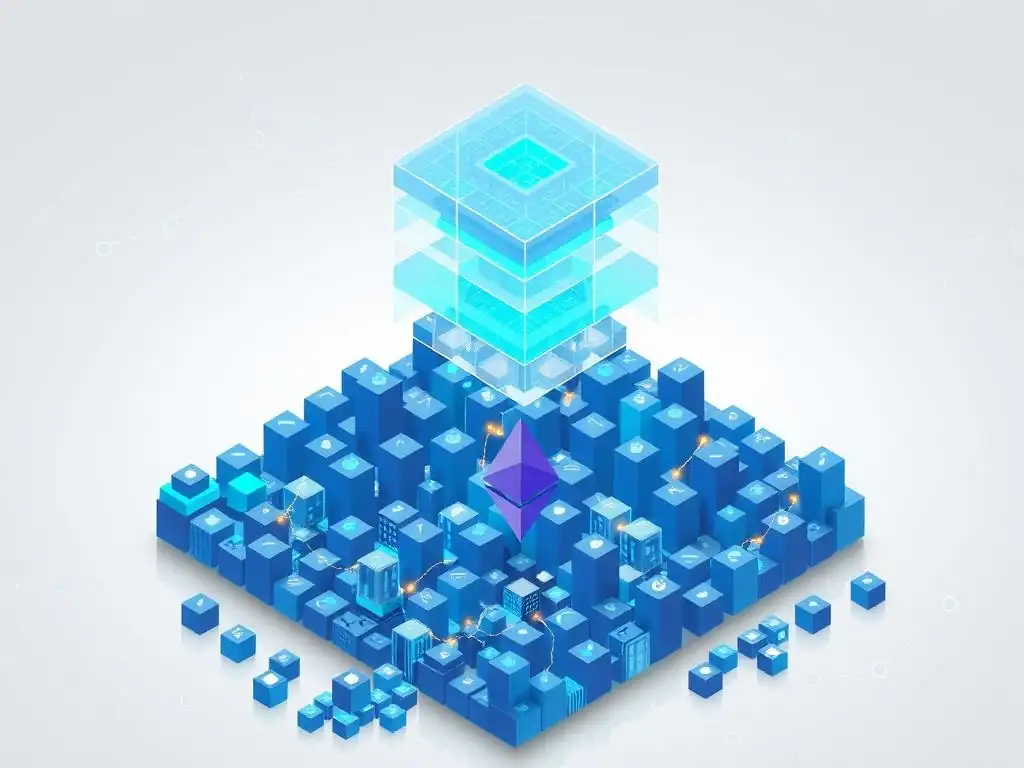
The Ethereum Scalability Bottleneck: Transaction Fees and Throughput Limitations
Ethereum, the leading platform for decentralized applications (dApps) and smart contracts, has faced significant challenges in scaling to meet the demands of a rapidly growing ecosystem. The core issue stems from its consensus mechanism and network architecture, which, while prioritizing security and decentralization, inherently limit transaction throughput. Ethereum's mainnet, also known as Layer-1, can process approximately 15-30 transactions per second (TPS).
This limited capacity becomes acutely apparent during periods of high network activity, such as during popular NFT drops or DeFi protocol surges, leading to network congestion and dramatically increased transaction fees, often referred to as "gas fees." These high fees and slow transaction times create a significant barrier to entry for many users and hinder the widespread adoption of Ethereum-based applications.
The impact of Ethereum's scalability bottleneck is evident in the soaring gas fees that users often encounter. In periods of peak demand, simple transactions can cost upwards of $50 or even $100, making microtransactions or frequent interactions prohibitively expensive. For example, during the NFT craze of 2021, gas fees frequently spiked to unsustainable levels, pricing out average users and hindering the growth of many promising dApps.
This situation underscores the urgent need for effective scaling solutions to maintain Ethereum's position as the premier blockchain platform and enable its mainstream adoption. Addressing these limitations is critical for Ethereum to realize its vision of a decentralized and accessible internet.
Exploring Layer-2 Scaling Solutions: Enhancing Ethereum's Capabilities
To overcome the scalability limitations of the Ethereum mainnet, a variety of Layer-2 scaling solutions have emerged. These solutions operate on top of the main Ethereum chain (Layer-1) and are designed to handle transactions off-chain, thereby increasing throughput and reducing costs without compromising the security and decentralization of the underlying Ethereum network.
Layer-2 solutions essentially offload transaction processing from the main chain, processing them in a separate environment and then periodically anchoring the results back to Layer-1. This approach drastically reduces congestion on the main chain, leading to faster transaction speeds and lower gas fees for users interacting with dApps.
Different Layer-2 solutions employ various techniques to achieve scalability. These include state channels, sidechains, Plasma, Validium, and rollups. State channels allow for direct, off-chain transactions between participants, only involving the main chain for opening and closing channels. Sidechains are independent blockchains that run parallel to the main chain and have their own consensus mechanisms, but are connected to Ethereum through bridges.
Plasma is a framework for building child chains that inherit security from the main chain. Validium utilizes validity proofs to ensure data integrity while processing transactions off-chain. Among these, rollups, particularly Optimistic Rollups and ZK-Rollups, have gained significant traction and are considered among the most promising scaling solutions for Ethereum due to their ability to inherit Ethereum's security while achieving substantial scalability improvements.
Optimistic Rollups: A Key Component of Ethereum's Scalability Roadmap
Optimistic Rollups are a type of Layer-2 scaling solution that has emerged as a prominent strategy for enhancing Ethereum's transaction processing capabilities. They are called "optimistic" because they operate under the assumption that transactions are valid by default. Instead of computing validity on the main chain, Optimistic Rollups execute transactions off-chain and post the transaction data and resulting state root to the Ethereum mainnet.
This off-chain computation significantly reduces the computational burden on the main chain, leading to increased throughput and lower gas fees. The "optimistic" nature comes into play during a challenge period, where anyone can challenge the validity of a transaction within a specific timeframe.
The strategic importance of Optimistic Rollups in Ethereum's scalability roadmap is substantial. Ethereum's developers and community actively support and invest in the development and deployment of rollups as a core component of its long-term scaling strategy. Vitalik Buterin, a co-founder of Ethereum, has consistently emphasized rollups, particularly Optimistic and ZK-Rollups, as the primary scaling solution for the foreseeable future.
Major Ethereum upgrades, such as the ongoing transition to Ethereum 2.0 (now known as the Consensus Layer and Execution Layer separation), are designed to complement and further enhance the effectiveness of Layer-2 solutions like Optimistic Rollups. By leveraging Optimistic Rollups, Ethereum aims to achieve the scalability necessary to support mass adoption and a thriving ecosystem of decentralized applications, while maintaining its core values of security and decentralization.
Frequently Asked Questions
What are Optimistic Rollups and how do they help scale Ethereum?
Optimistic Rollups are a layer-2 scaling solution for Ethereum. They bundle transactions off-chain, reducing congestion on the main chain and increasing transaction throughput.
How do Optimistic Rollups differ from other scaling solutions like ZK-Rollups?
While both are layer-2 rollups, Optimistic Rollups assume transactions are valid unless challenged, while ZK-Rollups use zero-knowledge proofs to prove validity upfront.
What is the "challenge period" in Optimistic Rollups, and why is it important?
The challenge period is a window of time where users can challenge the validity of a batched transaction. It's crucial for security and fraud prevention, ensuring only valid transactions are finalized.
What are some potential downsides or limitations of using Optimistic Rollups?
One downside is the longer withdrawal times due to the challenge period. Also, Optimistic Rollups are more susceptible to fraud if challenges are not properly monitored.
What are some real-world applications or projects currently utilizing Optimistic Rollups?
Several DeFi projects are using Optimistic Rollups to reduce transaction fees and increase transaction speed. This allows for more efficient trading and other on-chain activities.
Final Reflection: Embracing the Optimistic Future of Ethereum
The journey through the intricacies of Optimistic Rollups reveals more than just a technical solution; it unveils a pathway towards a more accessible and efficient Ethereum. The promise of significantly enhanced transaction throughput, coupled with Ethereum's robust security, positions Optimistic Rollups as a crucial stepping stone in realizing the full potential of decentralized applications. This isn't just about faster transactions; it's about empowering a future where blockchain technology can seamlessly integrate into everyday life.
The impact of Ethereum scaling solutions like Optimistic Rollups extends far beyond the technical realm. It's about democratizing access to decentralized finance (DeFi), enabling more affordable NFT minting, and fostering innovation across the entire Web3 ecosystem. The ability to scale Ethereum effectively is paramount to its long-term success and its ability to challenge traditional systems. As Vitalik Buterin famously stated: The Ethereum ecosystem is all-in on rollups as a scaling strategy for the near and medium term.
This commitment underscores the profound importance of Optimistic Rollups in shaping the future of Ethereum.
Now, as you reflect on the potential of Optimistic Rollups, consider how you can contribute to this exciting evolution. Whether you're a developer, investor, or simply a curious observer, the future of Ethereum is being built today. Embrace the optimistic spirit of innovation, explore the possibilities, and become a part of the movement that's shaping a more decentralized and accessible world.
Unleash Ethereum's Potential: Become an Optimistic Innovator!
Thank you for exploring the world of Optimistic Rollups with us. We hope this overview of Ethereum's scaling solutions has been informative and inspiring. Now, it's time to put that knowledge into action and help build a faster, more efficient blockchain ecosystem.
Here's how you can get involved:
- Experiment with Optimistic Rollup testnets and contribute to open-source projects. Hands-on experience is the best way to understand their capabilities and potential.
- Discover innovative Optimistic Rollup projects that are developing groundbreaking solutions and share your insights with the community.
- Engage in discussions about the advantages and challenges of Optimistic Rollups with fellow developers and enthusiasts on forums and social media to foster collaboration.
What innovative application of Optimistic Rollups will you explore next? Share your ideas in the comments below!
Leave a Reply