
Overcoming Supply Chain Complexity with Blockchain: Simplifying Global Networks


Welcome to Blockchain Trends, your compass in the rapidly evolving world of decentralized technologies. Beyond the hype of cryptocurrencies lies a revolution reshaping industries, from finance to supply chains. Curious about how this innovation is being implemented?
In this article, we delve into the practical applications and Blockchain supply chain simplification challenges, exploring how blockchain can overcome complexity and streamline global networks. Discover the opportunities and hurdles as we unpack the future of decentralized systems and their impact on your business. Ready to unlock the transformative power of blockchain in supply chain management?
Enhancing Pharmaceutical Supply Chain Security with Blockchain
- Understanding the Complexities of Pharmaceutical Supply Chains
- Blockchain Technology: A Solution for Pharmaceutical Supply Chain Challenges
- Blockchain Pharmaceutical Supply Chain: Practical Applications and Benefits
- Use Cases: Real-World Examples of Blockchain in Pharmaceutical Tracking
- Implementing Blockchain for Pharmaceutical Supply Chain: Key Considerations
- Overcoming Barriers to Blockchain Adoption in Pharmaceutical Supply Chains
- The Future of Blockchain in Pharmaceutical Supply Chain Management: Predictions and Trends
-
Frequently Asked Questions
- How can blockchain technology improve supply chain visibility?
- What are the main Blockchain supply chain simplification challenges that companies face when implementing this technology?
- How does blockchain enhance the security of supply chain data?
- What is the role of smart contracts in streamlining supply chain processes?
- How can blockchain help address issues related to counterfeit products in the supply chain?
- Final Reflection: Embracing Transparency in a Complex World
- Unlock Your Supply Chain's Potential
Understanding the Complexities of Pharmaceutical Supply Chains
The Challenges of Traditional Pharmaceutical Supply Chain Management
The pharmaceutical supply chain is inherently complex, involving numerous stakeholders from raw material suppliers and manufacturers to distributors, pharmacies, and ultimately, patients. Traditional management methods often rely on fragmented systems, manual data entry, and paper-based documentation, creating significant vulnerabilities. These archaic processes contribute to a lack of real-time visibility, making it difficult to track products accurately as they move through the network. This opacity is a major contributor to blockchain supply chain simplification challenges. Issues like inventory discrepancies, delays, and the potential for human error are commonplace, impacting efficiency and increasing operational costs across the entire chain.
Furthermore, the traditional model struggles with verifying the authenticity and integrity of pharmaceutical products. With multiple handoffs and disparate data silos, it's challenging to maintain a complete and trustworthy record of a drug's journey. This lack of a single source of truth makes it easier for counterfeit drugs to infiltrate the legitimate supply chain, posing a severe risk to public health. The manual verification of returns and chargebacks also adds significant administrative burden and cost, estimated to be substantial within the industry, further highlighting the need for greater efficiency and transparency to overcome these blockchain supply chain simplification challenges.
Impact of Globalization on Pharmaceutical Supply Chain Vulnerabilities
Globalization has dramatically expanded pharmaceutical supply chains, extending them across continents and involving a complex web of international partners and regulatory environments. While this global reach allows for wider access to medications and potentially lower manufacturing costs, it also introduces increased vulnerabilities. Longer transit routes, diverse storage conditions, and varied security standards across different regions create more opportunities for product degradation, theft, and tampering. Coordinating logistics across multiple borders, each with its own customs procedures and compliance requirements, adds layers of complexity and potential delays.
The extended global network means a pharmaceutical product might pass through dozens of intermediaries before reaching a patient. Each transfer point represents a potential point of failure or compromise. Maintaining the cold chain for temperature-sensitive drugs, for instance, becomes significantly more challenging and critical over vast distances and varied climates. The sheer number of handoffs and the lack of universal tracking standards exacerbate the blockchain supply chain simplification challenges faced by companies trying to ensure product integrity and security from origin to destination in this interconnected world.
Why Supply Chain Visibility is Crucial for Patient Safety
End-to-end visibility in the pharmaceutical supply chain is not merely an operational efficiency goal; it is a critical component of patient safety. Knowing the exact location, condition, and chain of custody for every drug product at any given moment allows for proactive identification and mitigation of risks. For example, if a batch of medication is exposed to temperatures outside its required range during transit, immediate visibility allows for that batch to be quarantined or recalled before it reaches a patient, preventing potential harm from degraded efficacy or safety issues.
Moreover, robust supply chain visibility is essential for combating the infiltration of counterfeit or substandard drugs. The World Health Organization (WHO) estimates that up to 10% of medical products in low- and middle-income countries are substandard or falsified, though this figure can vary widely by region and product type. Even in developed markets, counterfeit incidents occur.
Visibility allows stakeholders to verify the origin and authenticity of a product at multiple points, making it significantly harder for fake drugs to enter the legitimate supply stream. This ability to trace a product back to its source instantly is paramount in building trust and ensuring that patients receive safe and effective treatments, directly addressing key blockchain supply chain simplification challenges.
Blockchain Technology: A Solution for Pharmaceutical Supply Chain Challenges
How Blockchain Addresses Inefficiencies in Pharmaceutical Supply Chains
Blockchain technology offers a fundamentally new approach to managing the flow of goods and information in complex networks like the pharmaceutical supply chain. Its core design – a distributed, immutable ledger shared among participants – directly tackles many of the inefficiencies stemming from fragmented legacy systems and manual processes.
By providing a single, shared source of truth for tracking transactions and product movements, blockchain eliminates the need for constant reconciliation between disparate databases held by different parties. This streamlined data flow reduces administrative overhead, accelerates processes like invoicing and payments, and minimizes the errors associated with re-keying or cross-referencing information.
The use of smart contracts on a blockchain further enhances efficiency by automating contractual agreements and workflows. For instance, a smart contract can automatically trigger a payment to a distributor once a delivery is verified on the ledger, or initiate a notification if temperature data deviates from the required range. This automation removes bottlenecks, reduces the need for manual approvals, and ensures that conditions are met before actions are taken, leading to faster cycle times and reduced operational costs. Implementing such automated processes helps overcome significant blockchain supply chain simplification challenges by creating a more dynamic and responsive system.
Key Features of Blockchain for Pharmaceutical Supply Chain Management: Transparency, Security, and Traceability
Blockchain's inherent features of transparency, security, and traceability are particularly well-suited for the stringent requirements of the pharmaceutical industry. Transparency, in a permissioned blockchain network used for supply chains, means that authorized participants have access to a shared, real-time view of transactions relevant to them. This shared visibility fosters trust among stakeholders and makes it difficult for illicit activities or errors to go unnoticed. For example, regulators or auditors could be granted permission to view specific data flows to ensure compliance.
Security is ensured through cryptographic hashing and the distributed nature of the ledger. Each transaction is cryptographically linked to the previous one, forming a chain that is incredibly difficult to alter without invalidating subsequent blocks and requiring consensus from the network participants. This tamper-evident record ensures data integrity.
Traceability is perhaps the most immediate benefit; every movement, handoff, and status change of a pharmaceutical product can be recorded on the ledger, creating an unalterable audit trail from the point of manufacture through distribution to the point of dispense. This granular, secure record is invaluable for verifying product history and addressing blockchain supply chain simplification challenges related to tracking and verification.
Reducing Counterfeit Drugs with Blockchain's Immutable Ledger
Counterfeit pharmaceuticals are a global health crisis, estimated by some reports to cost the industry billions annually and, more importantly, endanger countless lives. Blockchain's immutable ledger provides a powerful tool in the fight against counterfeiting. By assigning a unique identifier (like a serialized code) to each product unit or batch at the point of manufacture and recording its journey on the blockchain, stakeholders downstream can verify its authenticity by checking the ledger. Any product whose identifier doesn't match a record on the trusted blockchain, or whose recorded history shows inconsistencies, can be flagged as potentially counterfeit.
The immutability of the ledger means that once a transaction or event (like a change of ownership or location scan) is recorded, it cannot be retroactively altered or deleted without the consensus of the network, which is practically impossible in a well-designed system. This makes it extremely difficult for counterfeiters to inject fake products into the legitimate supply chain and record false data to make them appear authentic.
The ability to verify the entire chain of custody against a secure, shared, and tamper-proof record significantly enhances the integrity of the pharmaceutical supply chain and directly addresses one of the most critical blockchain supply chain simplification challenges.
Blockchain Pharmaceutical Supply Chain: Practical Applications and Benefits
Enhancing Drug Traceability from Manufacturer to Patient
One of the most significant practical applications of blockchain in the pharmaceutical supply chain is enhancing end-to-end drug traceability. By serializing individual drug packages or batches and recording each significant event—such as manufacturing, packaging, shipping, receiving at a distribution center, dispensing at a pharmacy, and potentially even patient receipt—on a blockchain ledger, a comprehensive and immutable history is created.
This digital trail allows any authorized party along the chain to scan a product's unique identifier and instantly access its provenance and journey details. For example, a pharmacist could scan a bottle of medication and verify its manufacturing date, batch number, and every location it has passed through, confirming it followed the approved distribution path.
This granular level of traceability goes far beyond traditional track-and-trace systems that often rely on centralized databases susceptible to data silos or manipulation. With blockchain, the data is distributed and cryptographically secured, providing a higher level of trust in the information. This enhanced traceability is crucial for meeting regulatory requirements, such as those mandated by the US Drug Supply Chain Security Act (DSCSA), which aims for unit-level traceability by 2023. Implementing blockchain helps companies meet these stringent requirements more effectively and transparently, tackling core blockchain supply chain simplification challenges related to regulatory compliance and accurate tracking.
Streamlining Recall Processes and Reducing Risks with Blockchain
Pharmaceutical recalls, whether due to manufacturing defects, contamination, or labeling errors, are costly, complex, and potentially life-threatening if not executed quickly and accurately. Traditional recall processes can be slow and inefficient, relying on manual communication methods, fragmented inventory data, and best guesses about where affected products might be located within the vast distribution network. This often results in over-recalling products (pulling more stock than necessary, leading to significant financial losses) or, worse, failing to locate all affected units, leaving unsafe medication in circulation.
Blockchain's real-time, accurate, and immutable record of product location and ownership dramatically streamlines recall processes. If a specific batch or set of serialized units needs to be recalled, stakeholders can instantly query the blockchain ledger to identify exactly which entities (distributors, pharmacies, hospitals) received the affected products and in what quantities.
This precise information enables targeted recalls, reducing the scope and cost of the process while ensuring that all compromised units are identified and removed from the supply chain swiftly. The ability to quickly identify and isolate affected products mitigates risks to patient safety and minimizes financial losses for pharmaceutical companies, addressing critical blockchain supply chain simplification challenges related to risk management and response.
Improving Data Accuracy and Reducing Errors in Pharmaceutical Supply Chains
Data accuracy is paramount in the pharmaceutical industry, where errors can have severe consequences. Traditional supply chain processes often involve multiple data entry points and transfers between disparate systems, increasing the likelihood of human error, transcription mistakes, and data discrepancies. These inaccuracies can lead to incorrect inventory counts, shipping errors, delays in processing orders, and difficulties in conducting audits or investigations. Reconciling conflicting data across different parties is a time-consuming and resource-intensive task.
Blockchain helps improve data accuracy by creating a single, shared source of truth accessible to authorized participants. When data is recorded on the blockchain, it is validated by the network and becomes part of an immutable record. This reduces reliance on manual data entry and the need for reconciliation across multiple systems.
Furthermore, integrating blockchain with automated data capture technologies like scanners or IoT sensors can ensure that information about product movements or conditions is recorded directly onto the ledger with minimal human intervention. This leads to a more reliable and accurate dataset for tracking, inventory management, and compliance reporting, directly contributing to overcoming blockchain supply chain simplification challenges related to data integrity and reliability.
Use Cases: Real-World Examples of Blockchain in Pharmaceutical Tracking
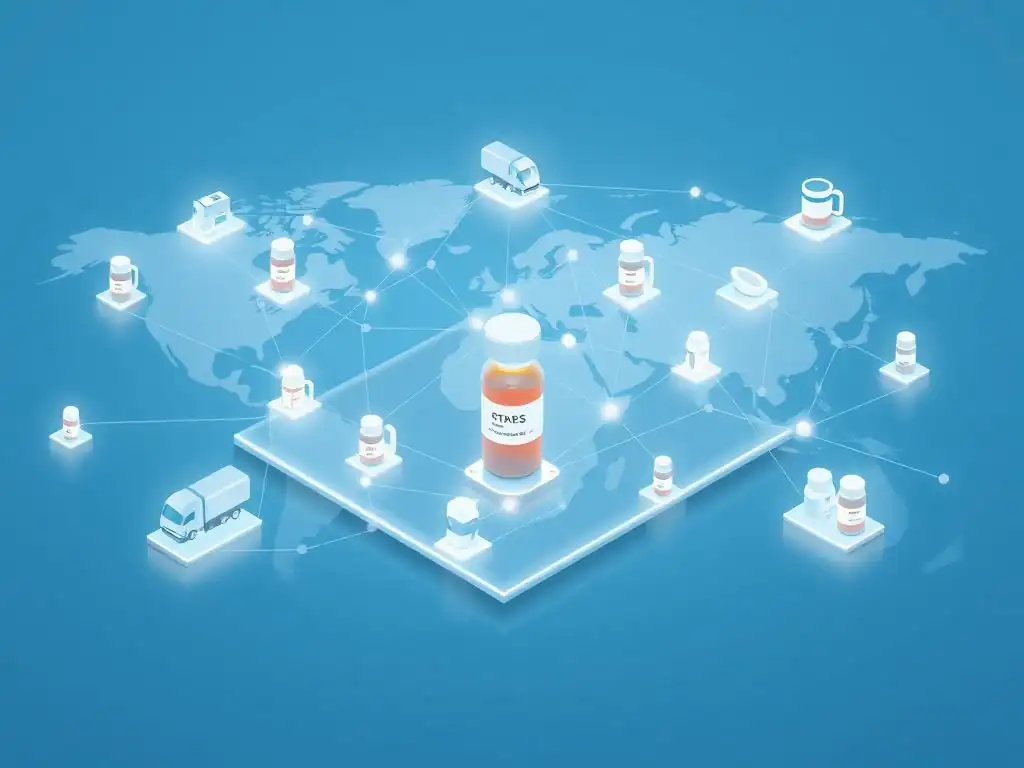
Case Study 1: MediLedger - Tracking Prescription Drugs with Blockchain
The MediLedger Project is a prominent example of blockchain technology being applied to the pharmaceutical supply chain, specifically focused on meeting the requirements of the U.S. Drug Supply Chain Security Act (DSCSA). Initiated by Chronicled, this consortium includes major pharmaceutical manufacturers, distributors, and other supply chain partners like Pfizer, Amgen, McKesson, and AmerisourceBergen. The primary goal is to create an interoperable network that allows participants to securely exchange information about product identifiers, ownership changes, and verification requests, particularly focusing on processes like chargebacks and returns which are sources of significant friction and potential fraud.
MediLedger utilizes a permissioned blockchain network, ensuring that only authorized parties can participate and access relevant data while maintaining privacy for competitive information. The project has conducted successful pilots demonstrating the ability to verify product authenticity and track ownership changes across multiple companies. By providing a shared, immutable record of transactions, MediLedger aims to reduce disputes, automate processes like chargebacks, and enhance the overall security and transparency of the prescription drug supply chain in the US. This initiative directly addresses key blockchain supply chain simplification challenges by building a collaborative, decentralized platform for data exchange and verification.
Case Study 2: IBM Food Trust - Improving Supply Chain Transparency for Medications
While primarily known for its application in the food industry, the principles and underlying technology of the IBM Food Trust platform are directly applicable to and being explored for the pharmaceutical sector. IBM Food Trust is built on Hyperledger Fabric, a permissioned blockchain framework designed for enterprise use.
It allows participants in a supply chain to upload, access, and share data about products as they move from origin to consumer. For the food industry, this has demonstrated the ability to trace a product from farm to fork in seconds, a process that could previously take days or weeks using traditional methods.
Applying this model to pharmaceuticals involves tracking medications from manufacturer through distributors and pharmacies. Participants can upload data such as manufacturing details, batch numbers, expiry dates, temperature logs (via IoT integration), and transaction records onto the shared ledger.
This creates a comprehensive, tamper-proof history for each unit or batch. While specific, large-scale public case studies solely focused on pharmaceuticals using the exact "IBM Food Trust" branding might still be emerging compared to food, the platform's architecture and successful deployment in complex food networks serve as a strong model for how blockchain can dramatically improve transparency and traceability in the pharmaceutical supply chain, tackling similar blockchain supply chain simplification challenges.
Lessons Learned from Early Blockchain Pharmaceutical Implementations
Early implementations of blockchain in the pharmaceutical supply chain, such as the MediLedger project and various pilots conducted by individual companies or smaller consortia, have provided valuable insights into the practicalities and challenges of adoption. One major lesson is the critical need for industry-wide collaboration and standardization.
A blockchain network is only as effective as the participation of its members; getting competing companies to agree on data formats, governance rules, and technical standards is a significant undertaking. Lack of interoperability between different potential blockchain platforms or with existing legacy systems (like ERP and WMS) has also proven to be a hurdle.
Another key learning is the importance of clearly defining the specific problem blockchain is intended to solve. While blockchain offers broad benefits, successful pilots often focus on a specific pain point, such as verifying returns, tracking high-value goods, or ensuring compliance with a particular regulation like DSCSA.
Furthermore, addressing concerns around data privacy—ensuring sensitive commercial data is not overexposed on the distributed ledger—and integrating with physical world processes (like scanning and data input) requires careful system design and robust governance models. These experiences highlight that overcoming blockchain supply chain simplification challenges requires not just technological implementation but also significant organizational and inter-company coordination.
Implementing Blockchain for Pharmaceutical Supply Chain: Key Considerations
Choosing the Right Blockchain Platform for Your Pharmaceutical Needs
Selecting the appropriate blockchain platform is a foundational decision when implementing a solution for the pharmaceutical supply chain. Given the need for privacy, security, and controlled access to sensitive data, permissioned blockchain platforms are generally preferred over public, permissionless ones like Bitcoin or Ethereum (though enterprise versions of Ethereum exist). Platforms like Hyperledger Fabric, R3 Corda, or enterprise-grade Ethereum variants allow organizations to control who can join the network, access data, and validate transactions. This is crucial for maintaining confidentiality and complying with regulations.
The choice of platform should also consider factors such as transaction throughput (the volume of transactions the network can handle per second), latency (how quickly transactions are confirmed), scalability, and cost of operation. Different platforms have varying consensus mechanisms and architectural designs that impact these factors.
Furthermore, the level of community support, the availability of development tools, and the expertise required to build and maintain solutions on the platform are important practical considerations. Evaluating these technical and operational aspects is essential for building a robust and effective blockchain pharmaceutical supply chain solution that can address blockchain supply chain simplification challenges at scale.
Data Integration and Interoperability Challenges in Pharmaceutical Blockchain
Integrating a blockchain solution with existing legacy systems is a significant technical challenge in pharmaceutical supply chain implementations. Pharmaceutical companies and their partners operate complex IT landscapes involving Enterprise Resource Planning (ERP) systems, Warehouse Management Systems (WMS), Transportation Management Systems (TMS), and various tracking databases. Getting these disparate systems, which may use different data formats and communication protocols, to seamlessly feed accurate and timely data onto the blockchain requires robust integration layers and APIs.
Interoperability between different blockchain networks is another potential challenge. As various consortia or companies might adopt different platforms or build their own networks, ensuring that data can flow between these networks (e.g., from a manufacturer's network to a distributor's network) becomes crucial for end-to-end visibility. Developing industry standards for data formats and communication protocols across different blockchain implementations is necessary to achieve true interoperability and avoid creating new data silos on the blockchain. Overcoming these data integration and interoperability hurdles is key to unlocking the full potential of blockchain in addressing blockchain supply chain simplification challenges.
Ensuring Scalability and Security of Blockchain Solutions
Scalability is a critical consideration for any enterprise-grade blockchain deployment, especially in a high-volume environment like the pharmaceutical supply chain. The network must be able to handle potentially millions or billions of serialized units and associated transactions without performance degradation. While permissioned blockchains generally offer better scalability than public ones, architectural design choices, consensus mechanisms, and infrastructure planning play a vital role in ensuring the platform can grow with the needs of the supply chain. Techniques like sharding or off-chain transactions for less critical data can help improve throughput.
Security on a blockchain extends beyond the cryptographic immutability of the ledger. It includes securing the nodes participating in the network, managing access controls for who can read or write data (especially sensitive commercial information), and protecting the private keys used to sign transactions. Robust identity management and authentication mechanisms are essential in a permissioned network.
Furthermore, the security of the "oracles"—the mechanisms that feed data from the physical world or legacy systems onto the blockchain—is paramount, as inaccurate or compromised input data can undermine the integrity of the entire system. Addressing these scalability and security concerns is fundamental to successfully implementing blockchain and tackling blockchain supply chain simplification challenges securely and effectively.
Overcoming Barriers to Blockchain Adoption in Pharmaceutical Supply Chains
Addressing Concerns About Data Privacy and Regulatory Compliance (e.g., DSCSA)
One of the primary barriers to widespread blockchain adoption in the pharmaceutical supply chain is navigating data privacy concerns and ensuring compliance with complex regulations like the US Drug Supply Chain Security Act (DSCSA) or Europe's Falsified Medicines Directive (FMD). While blockchain offers transparency, pharmaceutical companies are hesitant to expose sensitive commercial data, such as pricing, customer lists, or detailed inventory levels, to competitors or unauthorized parties on a shared ledger. Permissioned blockchains with granular access controls and the use of privacy-enhancing techniques like zero-knowledge proofs or data partitioning are essential to address these concerns.
Regulatory compliance poses specific blockchain supply chain simplification challenges. Regulations like DSCSA mandate interoperable electronic tracing of products at the unit level by 2023. While blockchain is well-suited for this, regulators need to understand and trust the technology. Demonstrating to regulatory bodies that a blockchain solution meets requirements for data integrity, security, and auditability is crucial. Furthermore, ensuring that the chosen platform and data model align with specific regulatory mandates regarding data retention, reporting, and verification processes requires close collaboration with legal and compliance teams.
Building Collaboration and Trust Among Pharmaceutical Supply Chain Stakeholders
The successful implementation of a blockchain network in the pharmaceutical supply chain hinges on the willingness of diverse stakeholders—manufacturers, wholesalers, distributors, pharmacies, hospitals, and even regulators—to collaborate and trust a shared system. These parties often have competing business interests, different technological capabilities, and established relationships based on existing processes. Persuading them to adopt a new, shared infrastructure and agree on common data standards and governance rules is a significant non-technical barrier.
Building trust requires transparent communication about the benefits, risks, and operational changes involved. Pilot projects with a subset of committed partners can demonstrate value and build confidence before scaling up. Establishing a neutral governance body or consortium to oversee the network's rules, standards, and dispute resolution mechanisms is often necessary. Addressing the concerns of smaller players who might lack the resources or technical expertise to integrate with a blockchain network is also important to ensure inclusivity and achieve widespread adoption, which is necessary to overcome the fragmented nature that contributes to blockchain supply chain simplification challenges.
The Importance of Standardization in Blockchain Pharmaceutical Initiatives
A critical factor for the long-term success and widespread adoption of blockchain in the pharmaceutical supply chain is the development and adherence to industry-wide standards. Without common standards for data formats (e.g., serialization identifiers, location codes, transaction types), communication protocols, and potentially even the underlying blockchain technology, the industry risks creating multiple, incompatible blockchain silos. This would recreate the very interoperability problems that blockchain is intended to solve, limiting the network effect and hindering seamless end-to-end traceability.
Standardization efforts need to involve industry consortia, standards bodies (like GS1), technology providers, and regulators. Defining common data models for key supply chain events, agreeing on how products should be serialized and identified on the blockchain, and establishing protocols for inter-network communication are essential steps. While competition among technology platforms is natural, agreement on core data layers and interoperability standards is vital for the industry as a whole to reap the full benefits of blockchain technology and effectively address blockchain supply chain simplification challenges on a unified front.
The Future of Blockchain in Pharmaceutical Supply Chain Management: Predictions and Trends
The Convergence of Blockchain, IoT, and AI in Pharmaceutical Supply Chains
The future of the pharmaceutical supply chain lies in the convergence of multiple disruptive technologies. Blockchain's secure, immutable ledger provides the trust layer for recording transactions and provenance data. Internet of Things (IoT) devices, such as temperature sensors in shipping containers or smart labels on packaging, can provide real-time data on product conditions and location. This sensor data can be automatically fed onto the blockchain via oracles, creating a verifiable record of environmental compliance throughout the journey.
Artificial Intelligence (AI) can then be layered on top of this rich, accurate dataset from blockchain and IoT. AI algorithms can analyze the combined data to identify anomalies indicative of potential tampering or diversion, predict potential cold chain failures based on historical data and sensor readings, optimize routes, or even automate compliance checks. This integration creates an intelligent, self-monitoring supply chain where decisions can be made based on verifiable, real-time data, significantly enhancing efficiency, security, and quality control, and offering advanced solutions to blockchain supply chain simplification challenges.
The Role of Blockchain in Ensuring Safe and Effective Drug Delivery
Beyond just tracking location, blockchain will play an increasingly vital role in ensuring the overall safety and efficacy of drug delivery. By immutably recording not only ownership transfers but also critical environmental data (like temperature, humidity, shock) captured by IoT sensors, the blockchain ledger becomes a comprehensive digital twin of the product's journey and condition. This ensures that temperature-sensitive medications, vaccines, and other critical drugs have been maintained within required specifications throughout their transit.
Furthermore, blockchain can facilitate secure communication and verification between all parties involved in the delivery process. This includes verifying the identity of handlers, confirming proper storage conditions at each transfer point, and providing patients or healthcare providers with the ability to verify the authenticity and history of a medication at the point of dispense using a simple scan. This end-to-end verification process, underpinned by a trusted blockchain record, builds confidence in the integrity of the drug and directly contributes to patient safety, tackling crucial blockchain supply chain simplification challenges related to product integrity and trust.
Preparing Your Organization for the Blockchain-Enabled Pharmaceutical Supply Chain
As the pharmaceutical supply chain evolves towards a blockchain-enabled future, organizations must begin preparing now to remain competitive and compliant. This preparation involves several key steps. Firstly, educate key stakeholders across the organization—including supply chain, IT, legal, compliance, and executive teams—about the potential and implications of blockchain technology. Understanding the technology's capabilities and limitations is crucial for identifying relevant use cases and setting realistic expectations regarding blockchain supply chain simplification challenges and benefits.
Secondly, assess your current supply chain processes and IT infrastructure to identify pain points that blockchain could address and evaluate the readiness of your systems for integration. Consider participating in industry consortia or pilot programs to gain hands-on experience and contribute to the development of industry standards. Finally, start building internal expertise or partner with technology providers who specialize in blockchain for supply chain. Developing a phased implementation strategy, starting with a specific, well-defined use case, can provide valuable learnings before scaling up across the entire supply chain network. Proactive engagement is key to navigating this transformative shift.
Frequently Asked Questions
How can blockchain technology improve supply chain visibility?
Blockchain provides an immutable ledger accessible to authorized parties, creating a single source of truth for tracking goods and materials throughout the supply chain. This improves transparency and accountability.
What are the main Blockchain supply chain simplification challenges that companies face when implementing this technology?
Key challenges include the lack of standardization across different blockchain platforms, the initial high implementation costs, and the need for collaboration among various stakeholders.
How does blockchain enhance the security of supply chain data?
Blockchain's decentralized and encrypted nature makes it extremely difficult to tamper with data. Each transaction is recorded as a block linked to the previous one, creating a secure and auditable trail.
What is the role of smart contracts in streamlining supply chain processes?
Smart contracts automate various processes such as payments, order fulfillment, and quality control based on pre-defined conditions. This reduces manual intervention and improves efficiency.
By tracking the provenance of goods from origin to consumer, blockchain can verify authenticity and prevent the introduction of counterfeit products into the supply chain. This protects both businesses and consumers.
Final Reflection: Embracing Transparency in a Complex World
The journey through the intricacies of global supply chains reveals a stark truth: complexity, if left unchecked, can cripple even the most robust networks. The promise of blockchain technology, as explored throughout this article, offers a beacon of hope, a pathway towards simplification and enhanced transparency in the face of ever-increasing challenges. The potential to revolutionize how goods and information flow across borders is not just a technological advancement; it's a fundamental shift in how we approach global commerce.
The impact of blockchain on supply chains extends far beyond mere efficiency gains. It fosters trust, accountability, and resilience, qualities that are increasingly vital in a world grappling with geopolitical uncertainty and environmental concerns. The ability to trace a product's journey from origin to consumer, with immutable records and verifiable data, empowers stakeholders at every level. The beauty of blockchain isn't just about efficiency; it's about creating a more equitable and sustainable future for global trade.
This shift towards transparency is not just a trend; it's a necessary evolution.
As we stand at the cusp of this technological revolution, I invite you to reflect on the implications of blockchain for your own sphere of influence. How can you leverage the principles of transparency, security, and collaboration to build more resilient and ethical supply chains? The future of global commerce hinges on our collective willingness to embrace these transformative technologies and to champion a world where information flows freely, trust is paramount, and complexity is finally tamed.
Unlock Your Supply Chain's Potential
Thank you for exploring how blockchain can revolutionize supply chain management. You've gained valuable insights into how this technology can simplify even the most complex global networks. Now, it's time to turn that knowledge into action!
Here’s how you can leverage blockchain to transform your supply chain:
- Investigate a pilot project within your organization to track a specific product from origin to consumer using a blockchain solution. Start small and learn quickly!
- Connect with fellow professionals on LinkedIn to share your thoughts and experiences on blockchain applications in supply chain management. Let’s learn from each other!
- Explore case studies on blockchaintrends.org showcasing real-world implementations of blockchain across various industries. Broaden your perspective!
What immediate step will you take to explore blockchain's impact on your supply chain? Share your plans in the comments below!
Leave a Reply