
Consumer Empowerment: Blockchain's Role in Verifying Product Authenticity Directly


Welcome to Blockchain Trends, your gateway to understanding the revolutionary impact of blockchain technology beyond the hype. Are you ready to unlock the secrets to a more transparent and trustworthy world?
Dive into the details as we explore how blockchain is reshaping industries, from decentralized finance to enterprise solutions. Today, we're focusing on a critical application: blockchain product authenticity verification. Discover how this technology is empowering consumers like never before, offering direct access to verifiable information and combating counterfeiting. Curious to see how it works? Keep reading to unravel the potential and challenges of this groundbreaking approach.
Consumer Empowerment: Blockchain's Role in Verifying Product Authenticity Directly
- Introduction: The Rise of Counterfeit Goods and the Need for Trust
- Blockchain Technology: A Solution for Product Authentication
- Blockchain Product Authenticity Verification: How It Works
- Benefits of Blockchain-Based Product Authentication for Consumers
- Real-World Examples: Blockchain in Action for Authenticity Verification
- Overcoming Challenges in Implementing Blockchain for Product Authentication
- The Future of Product Authentication: Blockchain and Beyond
- Conclusion: Empowering Consumers Through Blockchain Product Authenticity Verification
-
Frequently Asked Questions
- What is the primary benefit of using blockchain for product authenticity verification for consumers?
- How does blockchain help prevent counterfeiting in the product market?
- What types of products are best suited for blockchain-based authenticity verification?
- What are some potential challenges to widespread adoption of blockchain for product authenticity?
- How does "Blockchain Trends" see the future of blockchain in verifying product authenticity?
- Final Reflection: Empowering Trust Through Transparency
- Unveil Your Power: Demand Authentic Products!
Introduction: The Rise of Counterfeit Goods and the Need for Trust
The Global Impact of Counterfeiting on Consumers and Brands
Counterfeiting is a pervasive global issue with far-reaching consequences, impacting economies, legitimate businesses, and, crucially, consumers. The trade in fake goods deprives governments of tax revenue, fuels organized crime, and undermines consumer confidence.
Estimates from the Organisation for Economic Co-operation and Development (OECD) and the European Union Intellectual Property Office (EUIPO) have placed the value of imported fake goods worldwide at hundreds of billions of dollars annually, representing a significant percentage of global trade. This illicit trade is not limited to luxury items; it spans pharmaceuticals, electronics, apparel, automotive parts, and even food and beverages, posing serious health and safety risks to unsuspecting buyers.
For brands, counterfeiting erodes reputation, dilutes brand value, and leads to direct financial losses through lost sales and enforcement costs. Consumers bear the brunt of this problem by potentially purchasing unsafe or ineffective products, experiencing poor performance, and struggling with warranty claims or returns for non-authentic items. The sheer scale and sophistication of counterfeit operations make it increasingly difficult for traditional methods to effectively combat the problem, highlighting the urgent need for innovative solutions that can reliably verify product authenticity.
Why Current Authentication Methods Fall Short
Traditional methods for verifying product authenticity often rely on physical security features, certificates of authenticity, or centralized databases. While these methods have served their purpose to some extent, they are increasingly vulnerable to sophisticated counterfeiters. Physical features like holograms or special inks can be replicated with advancing printing technologies. Paper certificates are easily forged or lost. Centralized databases, while offering a digital record, are susceptible to single points of failure, data breaches, or manipulation by malicious actors, compromising the integrity of the authentication process.
Furthermore, these methods often require consumers to trust a third party – the brand, a certification body, or a retailer – to confirm authenticity. This reliance on intermediaries can add complexity, friction, and doubt, especially in a global marketplace where supply chains are opaque and multi-layered. The lack of a direct, verifiable link between the consumer and the product's origin or journey leaves a trust gap that counterfeiters exploit. This necessitates a more robust, transparent, and consumer-centric approach to blockchain product authenticity verification.
Blockchain Technology: A Solution for Product Authentication
Understanding Blockchain's Immutable Ledger for Enhanced Transparency
At its core, blockchain is a distributed ledger technology that records transactions across multiple computers. Once a block of data is added to the chain, it is cryptographically linked to the previous block, creating a tamper-evident history. This decentralized and distributed nature means there is no single point of control or failure, making it incredibly difficult for any single entity to alter past records without detection. This inherent immutability is a cornerstone for robust authenticity verification.
Applying this to supply chains, each step in a product's journey – from manufacturing and packaging to shipping and retail – can be recorded as a transaction on the blockchain. This creates a transparent and verifiable history for every individual item. While the full details of every transaction might not be public (depending on the blockchain type and implementation), the fact that a transaction occurred, validated by the network, provides a high level of trust. This enhanced transparency, facilitated by blockchain's immutable ledger, forms the basis for reliable blockchain product authenticity verification.
How Blockchain Ensures Data Integrity and Prevents Tampering
Data integrity is paramount when verifying product authenticity. If the record of a product's origin or journey can be altered, the entire authentication process is compromised. Blockchain technology addresses this through cryptographic hashing and the consensus mechanisms used to validate new blocks. Each block contains a hash of the previous block, creating a chain where any change to a past block would invalidate the subsequent hashes, immediately alerting the network to tampering.
Consensus mechanisms, such as Proof of Work or Proof of Stake, require agreement among network participants before new data is added, making it computationally or economically infeasible for a single party to maliciously alter records on a large, distributed network. This cryptographic security and decentralized validation process ensure that the historical data associated with a product on the blockchain remains accurate and untampered. This makes blockchain an exceptionally strong foundation for verifying product authenticity by guaranteeing the integrity of the data trail.
Blockchain Product Authenticity Verification: How It Works
Creating Unique Digital Identities for Products Using Blockchain
The first step in blockchain product authenticity verification is assigning a unique digital identity to each physical product. This is often done at the point of manufacture. Each item receives a unique identifier, such as a serial number or a Global Trade Item Number (GTIN), which is then associated with a digital token or record on the blockchain. This digital identity can be linked to specific attributes of the product, including its manufacturing date, batch number, materials used, and origin.
This unique digital fingerprint, immutably recorded on the blockchain, serves as the product's digital twin. It allows for the tracking and verification of the individual item throughout its lifecycle. Unlike generic batch tracking, this item-level identification ensures that each specific product has its own verifiable history tied to the blockchain, paving the way for precise and reliable authenticity verification using blockchain technology.
Tracking Products Through the Supply Chain with Blockchain Technology
Once a product has its unique digital identity established on the blockchain, its movement through the supply chain can be meticulously tracked. As the product changes hands – from manufacturer to distributor, distributor to retailer, and potentially even to the end consumer – each significant event or transfer can be recorded as a transaction on the blockchain. These transactions are timestamped and validated by the network, creating a chronological, transparent, and tamper-proof ledger of the product's journey.
This tracking process involves authorized parties in the supply chain updating the product's record on the blockchain using their unique digital keys. While the full details of commercial agreements might not be publicly visible, the fact of transfer or movement is recorded. This distributed tracking system provides an unprecedented level of visibility into the supply chain, making it difficult for counterfeit goods to be introduced undetected. The verifiable trail significantly enhances the ability to perform blockchain product authenticity verification at any point in the chain.
Smart Contracts: Automating Verification Processes
Smart contracts are self-executing contracts with the terms of the agreement directly written into code. They run on the blockchain and automatically execute actions when predefined conditions are met. In the context of blockchain product authenticity verification, smart contracts can automate various steps in the verification process, adding efficiency and removing the need for manual intervention or reliance on intermediaries.
For example, a smart contract could be programmed to automatically update a product's status on the blockchain when it arrives at a distribution center, or to trigger a notification if a product appears in an unexpected location. They can also define the conditions under which a product's authenticity status can be confirmed by a consumer scanning a code. Smart contracts ensure that the rules governing the product's digital journey are enforced automatically and transparently on the blockchain, streamlining and securing the process of verifying product authenticity.
QR Codes and Mobile Apps: Enabling Easy Consumer Authentication
Making blockchain product authenticity verification accessible to the end consumer is crucial for empowerment. This is typically achieved through simple interfaces like QR codes and dedicated mobile applications. A unique QR code, often printed directly on the product packaging or label, is linked to the product's specific digital identity on the blockchain.
Consumers can use a brand's or a third-party's mobile app to scan the QR code. The app then queries the blockchain, retrieves the product's recorded history and attributes, and presents this information to the consumer in an easy-to-understand format. This allows the consumer to instantly verify details such as the product's origin, manufacturing date, and journey through the supply chain, directly confirming its authenticity without needing to trust a retailer or a paper certificate. This direct interaction empowers consumers with the tools for reliable authenticity verification using blockchain.
Benefits of Blockchain-Based Product Authentication for Consumers
Direct Verification of Product Authenticity: Eliminating Middlemen
One of the most significant benefits of blockchain product authenticity verification for consumers is the ability to directly verify a product's legitimacy. By scanning a QR code or NFC tag linked to the blockchain, consumers can access the immutable history of the specific item they hold. This bypasses the need to rely solely on retailers, paper certificates, or potentially compromised centralized systems.
This direct access establishes a trust link between the consumer and the product's digital identity on the decentralized ledger. It shifts the power of verification into the hands of the buyer, allowing them to make informed decisions based on verifiable data recorded on the blockchain. This direct-to-consumer authentication mechanism significantly simplifies the process and builds confidence by removing layers of intermediaries that could potentially be points of failure or deception.
Increased Transparency and Trust in Product Origins
Blockchain technology provides an unprecedented level of transparency regarding a product's origin and journey. Every recorded step on the blockchain, from sourcing raw materials (in some advanced implementations) to manufacturing and distribution, contributes to a comprehensive and verifiable history. Consumers can potentially see where a product came from, when it was made, and how it reached them.
This transparency builds trust not just in the authenticity of the product, but also in the brand's supply chain practices. For example, consumers can verify claims about ethical sourcing, organic ingredients, or specific manufacturing conditions if these are recorded on the blockchain. This verifiable narrative enhances consumer trust and confidence, knowing that the information presented about the product's origin and journey is secured by the blockchain's integrity, enabling effective authenticity verification using blockchain.
Improved Consumer Confidence and Reduced Risk of Purchasing Counterfeits
The ability to easily and reliably verify product authenticity using blockchain directly leads to improved consumer confidence. Knowing they have a tool to check the legitimacy of a purchase before or after buying significantly reduces the anxiety associated with the risk of acquiring counterfeit goods. This is particularly important for high-value items, pharmaceuticals, or products where safety is a concern.
When consumers are empowered with reliable blockchain product authenticity verification tools, they are more likely to trust brands that implement such systems. This reduces the likelihood of accidental purchases of fakes, protecting consumers from financial loss and potential harm. The perceived reliability and security offered by blockchain-based systems foster a stronger sense of trust in the marketplace.
Decentralized Marketplaces: Fostering Trust and Transparency
Beyond individual product verification, blockchain technology can also underpin decentralized marketplaces that inherently promote trust and transparency. In such marketplaces, the authenticity of listed products could potentially be pre-verified on the blockchain, or the platform could provide the tools for buyers to perform blockchain product authenticity verification themselves.
Decentralized marketplaces can reduce reliance on central authorities for trust and instead leverage the transparency and security of the blockchain ledger. This model can help combat the proliferation of fake goods often found on large, centralized e-commerce platforms. By integrating authenticity verification using blockchain at the marketplace level, the overall ecosystem becomes more trustworthy for consumers.
Real-World Examples: Blockchain in Action for Authenticity Verification
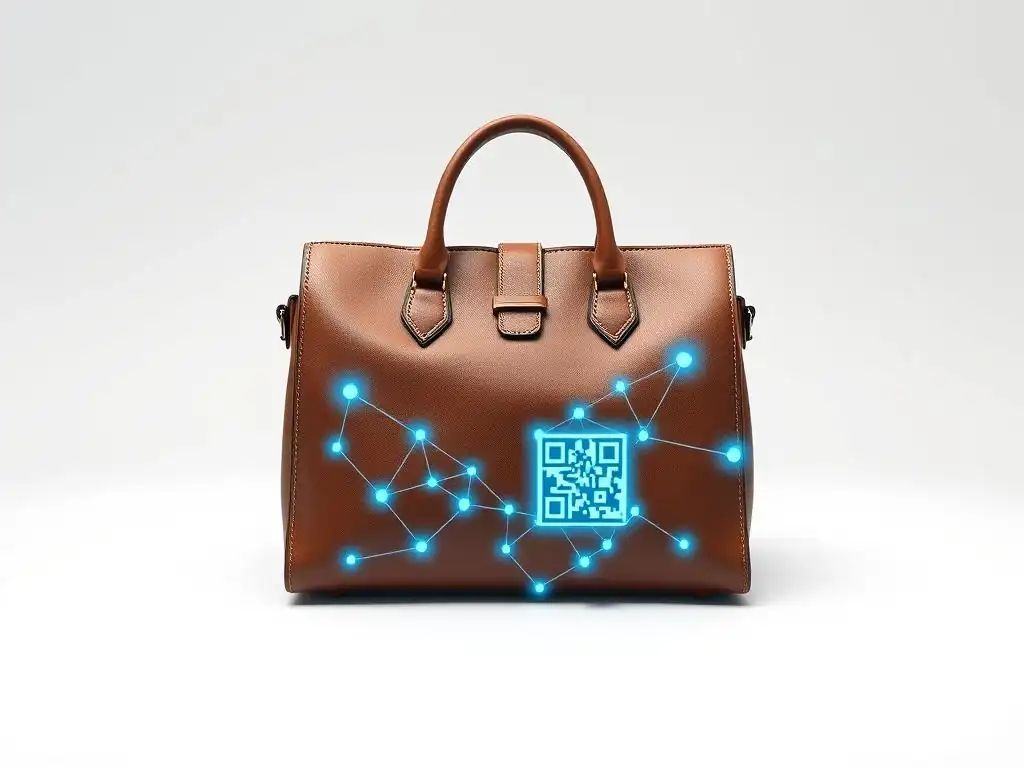
Case Study 1: Arianee - Tracking Luxury Goods with Blockchain
The luxury goods market is particularly vulnerable to counterfeiting due to the high value and desirability of the products. Arianee is a notable example of a project using blockchain specifically for this sector. They provide brands with a protocol to create unique digital identities for their products, often referred to as a "digital passport," stored on a dedicated blockchain.
When a consumer purchases a luxury item participating in the Arianee network, they receive this digital passport, typically accessed via a QR code or NFC tag on the product or its packaging. This passport contains verifiable information about the item's authenticity, ownership history, warranty, and other relevant details. Consumers can use the Arianee app to verify the product's authenticity, track its lifecycle events (like repairs or transfers of ownership), and prove its legitimacy, thereby providing robust blockchain product authenticity verification for high-end items.
Case Study 2: Mediledger - Verifying Pharmaceutical Products using Blockchain
Counterfeit pharmaceuticals pose a severe threat to public health. The MediLedger Project is an industry-driven initiative leveraging blockchain to improve traceability and verification within the pharmaceutical supply chain. It focuses on addressing the U.S. Drug Supply Chain Security Act (DSCSA) requirements for enhanced product tracing and verification.
MediLedger uses a permissioned blockchain to allow participants in the pharmaceutical supply chain – manufacturers, wholesalers, dispensers – to verify the authenticity and legitimacy of drug products as they move through the system. While direct consumer verification features are still evolving under the DSCSA framework, the underlying blockchain network ensures the integrity of the transaction history and product identifiers, making it significantly harder for counterfeit drugs to infiltrate the legitimate supply chain. This project demonstrates the critical application of authenticity verification using blockchain for safety-critical goods.
Case Study 3: Provenance - Ensuring the Authenticity of Food Products
Provenance is a platform that uses blockchain technology to track the origin and journey of food products, focusing on transparency and authenticity claims. They work with brands to create verifiable digital records for their products, capturing information about sourcing, production processes, certifications (like organic or fair trade), and supply chain movements.
By scanning a QR code on a food product, consumers can access its "digital passport" on the Provenance platform. This allows them to verify claims about the product's origin (e.g., which farm it came from), its journey (e.g., processing locations), and its authenticity. This system builds trust by providing consumers with direct access to verifiable information, supporting claims about sustainability, ethics, and quality through blockchain product authenticity verification in the food industry.
Overcoming Challenges in Implementing Blockchain for Product Authentication
Scalability Issues and Potential Solutions
One significant challenge for widespread blockchain product authenticity verification is scalability. Public blockchains like Ethereum, while decentralized, can face limitations in transaction speed and capacity, leading to high transaction costs (gas fees) and delays, especially when dealing with millions or billions of individual product tracking events. Enterprise-level supply chain tracking requires handling a massive volume of data quickly and efficiently.
Potential solutions involve utilizing private or permissioned blockchains designed for enterprise use, which can offer higher transaction throughput and lower costs. Layer 2 scaling solutions for public blockchains, such as rollups, can also increase transaction capacity. Furthermore, optimizing the data stored on the blockchain, perhaps storing only essential hash identifiers on-chain while linking to off-chain data storage for bulk information, can help manage scalability. Implementing efficient data structures and network protocols is key to making blockchain product authenticity verification feasible at scale.
Regulatory Considerations and Compliance
Implementing blockchain product authenticity verification systems must navigate a complex landscape of regulations, which vary significantly across different industries and jurisdictions. Data privacy laws, such as GDPR in Europe, require careful consideration regarding what information about products and supply chain participants is stored on the blockchain and how it is accessed. Industry-specific regulations, like those governing pharmaceuticals (e.g., DSCSA in the U.S.), also dictate specific requirements for traceability and verification that blockchain solutions must meet.
Compliance involves ensuring that the blockchain system aligns with legal frameworks for data handling, record-keeping, and supply chain integrity. This often requires working closely with legal experts and regulatory bodies. Permissioned blockchains can offer more control over data access and participant identity, which can be beneficial for compliance in regulated industries. Adapting blockchain product authenticity verification solutions to meet diverse and evolving regulatory demands is an ongoing challenge.
Consumer Education and Adoption Barriers
Even the most robust blockchain product authenticity verification system is ineffective if consumers don't understand how to use it or trust the technology. Blockchain is still perceived as complex by the general public, and educating consumers on the benefits and process of using a blockchain-based verification app presents a significant barrier to adoption. Consumers need to feel confident that scanning a QR code and viewing data on an app truly confirms authenticity.
Overcoming this requires user-friendly interfaces, clear communication from brands about why they are using blockchain and how it benefits the consumer, and potentially industry-wide initiatives to build general awareness and trust in blockchain-based authentication. The process must be as simple as possible – ideally, just a quick scan that provides an immediate, clear authenticity status. Reducing the technical complexity visible to the end-user is vital for driving widespread adoption of authenticity verification using blockchain.
The Future of Product Authentication: Blockchain and Beyond
Integration with IoT Devices for Real-Time Tracking
The future of blockchain product authenticity verification will likely involve seamless integration with Internet of Things (IoT) devices. Sensors attached to products or packaging can collect real-time data on conditions such as temperature, humidity, location, or even whether a package has been opened. This data can then be automatically recorded onto the blockchain, providing a richer, more dynamic, and verifiable history for each product.
For instance, temperature sensors on a shipment of pharmaceuticals could record temperature fluctuations directly onto the blockchain, providing immutable proof that the cold chain was maintained throughout transit. This real-time, automated data capture via IoT devices significantly enhances the granularity and reliability of the product's journey recorded on the blockchain, making blockchain product authenticity verification even more robust and insightful.
The Role of AI in Enhancing Blockchain-Based Authentication Systems
Artificial Intelligence (AI) can play a crucial role in enhancing blockchain product authenticity verification systems. AI algorithms can analyze the vast amounts of data recorded on the blockchain, identifying patterns or anomalies that might indicate attempted fraud or the presence of counterfeit goods. For example, AI could detect unusual shipping routes, multiple verifications of the same QR code in different locations simultaneously, or deviations from expected supply chain behavior.
Furthermore, AI can assist in analyzing product images or sensor data linked to the blockchain to detect subtle signs of tampering or counterfeit products. By combining the immutable record-keeping of blockchain with the pattern recognition and predictive capabilities of AI, companies can create highly sophisticated and proactive authenticity verification systems that are significantly harder for counterfeiters to bypass. AI can help turn raw blockchain data into actionable insights for improving authenticity verification using blockchain.
The Potential for Decentralized Authentication Marketplaces
Building upon the concept of decentralized marketplaces, the future could see the emergence of specialized decentralized authentication marketplaces. These platforms could act as neutral, blockchain-powered hubs where brands can register their products' digital identities and consumers can verify them, potentially across different industries and brands using a common standard.
Such marketplaces could leverage network effects, making blockchain product authenticity verification more accessible and standardized for both businesses and consumers. They could also incorporate features like peer-to-peer verification or reputation systems built on the blockchain. This decentralized model could foster a more open and trustworthy ecosystem for verifying product authenticity, moving away from proprietary, brand-specific apps towards interoperable solutions powered by the blockchain.
Conclusion: Empowering Consumers Through Blockchain Product Authenticity Verification
Blockchain: A Key Enabler for a More Transparent and Trustworthy Marketplace
The proliferation of counterfeit goods poses a significant threat to consumers and global commerce. Traditional authentication methods have proven insufficient against increasingly sophisticated counterfeiters. Blockchain technology offers a powerful and innovative solution by providing an immutable, transparent, and decentralized ledger for tracking products and verifying their legitimacy. By assigning unique digital identities to products and recording their journey on the blockchain, brands can create a verifiable history that consumers can directly access.
This capability for direct verification, facilitated by user-friendly interfaces like QR codes and mobile apps, empowers consumers by giving them the tools to independently confirm the authenticity of their purchases. Blockchain product authenticity verification is not just a technical upgrade; it is a fundamental shift towards building a more transparent and trustworthy relationship between brands and consumers, underpinned by the verifiable data on the blockchain.
The Long-Term Impact on Consumer Empowerment and Brand Protection
The long-term impact of widespread blockchain product authenticity verification is profound. For consumers, it translates to increased confidence, reduced risk of purchasing fakes, and greater trust in the products they buy and the brands they support. Empowered with verifiable information, consumers can make safer and more informed decisions, knowing they have a reliable way to confirm the legitimacy of goods.
For brands, implementing blockchain product authenticity verification protects their revenue and reputation, strengthens customer loyalty, and provides valuable supply chain insights. As the technology matures and integrates with IoT and AI, authenticity verification using blockchain will become even more seamless, reliable, and intelligent. Ultimately, blockchain is poised to become a standard tool in the fight against counterfeiting, creating a marketplace where authenticity is verifiable by anyone, anywhere, fostering a new era of consumer empowerment and brand integrity.
Frequently Asked Questions
What is the primary benefit of using blockchain for product authenticity verification for consumers?
The primary benefit is increased transparency and direct access to information. Consumers can independently verify a product's origin and history, bypassing traditional, potentially unreliable, sources.
How does blockchain help prevent counterfeiting in the product market?
Blockchain creates a tamper-proof record of a product's journey, from manufacturing to sale. This makes it significantly harder for counterfeiters to introduce fake products into the supply chain undetected.
What types of products are best suited for blockchain-based authenticity verification?
High-value items, luxury goods, pharmaceuticals, and products with a complex supply chain benefit most. Any product where authenticity is crucial and counterfeiting is prevalent stands to gain.
What are some potential challenges to widespread adoption of blockchain for product authenticity?
Challenges include the cost of implementation, the need for industry-wide collaboration to create standardized tracking systems, and ensuring consumer understanding and trust in the technology.
How does "Blockchain Trends" see the future of blockchain in verifying product authenticity?
"Blockchain Trends" believes blockchain will become increasingly important for consumer empowerment and supply chain security. The future involves more sophisticated applications and integration across various industries.
Final Reflection: Empowering Trust Through Transparency
The journey we've explored, tracing the potential of blockchain for blockchain product authenticity verification, isn't just a technological discussion; it's a conversation about trust. In a world increasingly saturated with counterfeits and deceptive marketing, the ability to definitively verify a product's origin and journey becomes paramount, not just for consumers, but for the integrity of entire industries. The implications extend far beyond simple purchase decisions, impacting ethical sourcing, environmental sustainability, and the very foundation of consumer confidence.
The rise of blockchain-enabled verification systems has profoundly influenced the cultural landscape, shifting the power dynamic back towards the consumer. This shift, driven by the demand for transparency and accountability, is not merely a trend, but a fundamental reshaping of the relationship between brands and their customers. Trust is the glue of life. It's the most essential ingredient in effective communication. It's the foundational principle that holds all relationships.
- Stephen Covey. This quote perfectly encapsulates the essence of what blockchain offers: a foundation of trust built on immutable data, empowering consumers to make informed choices.
As we conclude this exploration, I invite you to consider the power you hold as a consumer. Embrace the tools and technologies that offer transparency and authenticity. Demand verifiable proof of origin and ethical practices. By actively seeking out and supporting brands that prioritize transparency, you contribute to a future where trust is not a luxury, but a standard. Let us collectively build a marketplace where authenticity reigns, and consumer empowerment is not just a concept, but a lived reality.
Unveil Your Power: Demand Authentic Products!
Thank you for delving into how blockchain is revolutionizing consumer empowerment through product authentication. You now understand the potential to verify authenticity directly, cutting through counterfeit concerns. Now, let's turn that knowledge into action!
- Become an Authenticity Advocate: Demand blockchain-verified products from your favorite brands and retailers. Let your purchasing power drive change!: (Primary Action)
- Explore blockchain-based authentication platforms. Research which solutions resonate with your values and share your findings on social media.
- Start a conversation! Discuss the importance of product authenticity with friends and family, raising awareness about how blockchain can protect consumers.
What steps will you take today to ensure the products you buy are truly authentic? Share your commitment in the comments below!
Leave a Reply