
Automotive IoT Data Security: Blockchain for Connected and Autonomous Vehicles

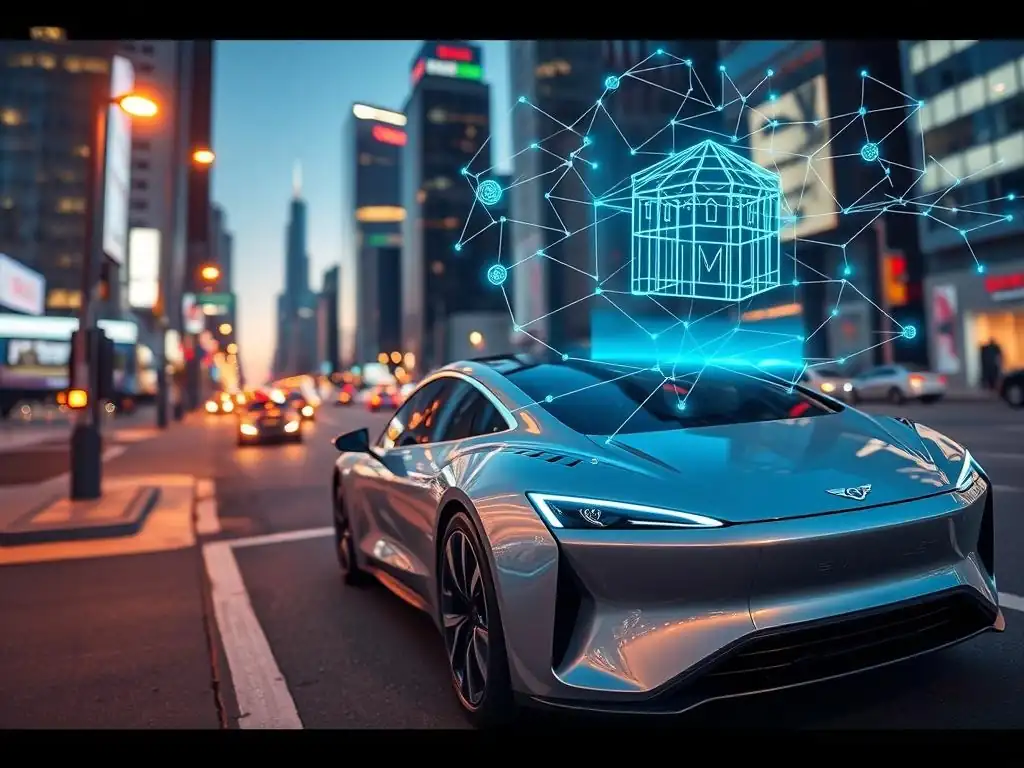
Welcome to Blockchain Trends, your compass in the rapidly evolving world of decentralized technology. Beyond the hype of cryptocurrencies, we delve into the real-world impact of blockchain. Ever wondered how blockchain can revolutionize industries beyond finance? This week, we're putting that question to the test by exploring how blockchain secures automotive IoT, unlocking safer and more reliable connected and autonomous vehicles. The future of mobility may depend on it – read on to discover why...
Automotive IoT Data Security: Blockchain for Connected and Autonomous Vehicles
- Introduction: The Rise of Automotive IoT and Security Concerns
- The Automotive IoT Data Security Challenge
- Blockchain Technology: A Solution for Automotive IoT Security
- Blockchain-Based Solutions for Securing Automotive IoT Data
- Use Cases and Applications of Blockchain in Automotive IoT
- Benefits of Implementing Blockchain for Automotive IoT Data Protection
- Challenges and Considerations for Blockchain Adoption in Automotive IoT
- Future Trends and Developments in Blockchain and Automotive IoT Security
- Conclusion: Securing the Future of Automotive IoT with Blockchain
-
Frequently Asked Questions
- How can blockchain technology enhance the security of Automotive IoT data?
- What are the primary benefits of using blockchain to secure data in connected and autonomous vehicles?
- What types of automotive IoT data can be secured using blockchain?
- How does blockchain address the challenges of data privacy in the context of connected and autonomous vehicles?
- What is the future outlook for blockchain adoption in securing Automotive IoT?
- Final Reflection: Securing the Road Ahead with Blockchain
- Secure Your Ride: Embrace Blockchain Innovation!
Introduction: The Rise of Automotive IoT and Security Concerns
The Expanding Landscape of Connected Vehicles and Autonomous Driving
The automotive industry is undergoing a monumental transformation, driven by the proliferation of Internet of Things (IoT) technologies within vehicles. Modern cars are no longer just machines for transportation; they are becoming sophisticated, data-generating hubs on wheels. This expansion includes everything from advanced driver-assistance systems (ADAS), such as lane departure warnings and automatic emergency braking, to in-car infotainment and navigation systems, and increasingly, autonomous driving capabilities.
The number of connected cars globally is projected to reach over 77 million by 2025, a significant jump from approximately 40 million in 2020, according to Statista. This exponential growth highlights the increasing reliance on software and network connectivity within vehicles, transforming them into complex IoT ecosystems.
This surge in connectivity and automation is fueled by the promise of enhanced safety, efficiency, and convenience. Connected vehicles can communicate with each other, infrastructure, and cloud services, enabling features like real-time traffic updates, predictive maintenance, and personalized driving experiences. Autonomous vehicles, representing the pinnacle of this technological evolution, rely heavily on a constant stream of data from sensors, cameras, and communication networks to navigate and operate safely without human intervention. However, this intricate web of connectivity also introduces significant security vulnerabilities, making automotive IoT data security a critical concern.
The Growing Threat of Cyberattacks on Automotive IoT Systems
The increasing complexity and connectivity of automotive IoT systems have unfortunately expanded the attack surface for cybercriminals. Modern vehicles, with their sophisticated electronic control units (ECUs), telematics systems, and communication interfaces, present multiple entry points for malicious actors. Reports from cybersecurity firms like Upstream Security indicate a dramatic rise in cyberattacks targeting connected vehicles, with a reported 99% increase in incidents between 2018 and 2021. These attacks range from relatively minor disruptions, such as disabling infotainment systems, to more serious threats like remote vehicle control, data theft, and even compromising safety-critical functions like braking and steering.
One of the most concerning aspects is the potential for large-scale, coordinated attacks targeting fleets of connected vehicles. Imagine a scenario where a vulnerability in a widely used vehicle component is exploited to simultaneously disable or manipulate thousands of cars. This could lead to widespread chaos, traffic accidents, and even pose a threat to public safety.
Furthermore, the valuable data generated by connected vehicles, including location data, driving habits, and personal information, makes them attractive targets for data breaches and ransomware attacks. Therefore, robust security measures are no longer an optional feature but an absolute necessity for the automotive industry to ensure the safety and trustworthiness of connected and autonomous vehicles.
Why Data Security is Paramount in the Automotive Industry
Data security in the automotive industry is not just about protecting personal information; it is fundamentally about ensuring safety and maintaining public trust. Unlike other IoT devices, compromised automotive systems can have direct and potentially life-threatening consequences. A successful cyberattack on a vehicle's braking system, for example, could lead to catastrophic accidents. Similarly, manipulation of sensor data in autonomous vehicles could result in incorrect navigation decisions, leading to collisions and injuries. The stakes are significantly higher compared to data breaches in other sectors, making robust security a non-negotiable priority.
Furthermore, the automotive industry is built on a foundation of trust. Consumers trust vehicle manufacturers to provide safe and reliable transportation. Cybersecurity incidents that compromise vehicle safety or data privacy can erode this trust, potentially damaging brand reputation and hindering the adoption of new technologies like autonomous driving.
The economic impact of cyberattacks can also be substantial, encompassing costs associated with recalls, repairs, legal liabilities, and reputational damage. Therefore, investing in strong data security measures is not just a technical imperative but also a strategic business decision for automotive companies seeking to thrive in the era of connected and autonomous vehicles. Blockchain secures automotive IoT by providing a robust and trustworthy foundation for data management.
The Automotive IoT Data Security Challenge
Vulnerabilities in Traditional Automotive Security Systems
Traditional automotive security systems have often relied on isolated and perimeter-based security approaches, which are proving inadequate in the face of increasingly sophisticated cyber threats and the interconnected nature of modern vehicles. Historically, vehicles were designed with limited external communication, and security was primarily focused on physical access and preventing theft. However, the integration of IoT technologies has exposed vulnerabilities in these legacy systems. Many existing in-vehicle networks, such as CAN bus, were not designed with security in mind and lack inherent security features like encryption and authentication.
Moreover, the complexity of modern vehicle software and the increasing reliance on third-party components introduce new vulnerabilities. Software bugs, misconfigurations, and supply chain weaknesses can be exploited by attackers to gain unauthorized access to vehicle systems. Over-the-Air (OTA) update mechanisms, while essential for delivering software improvements and security patches, can also become attack vectors if not properly secured.
The centralized nature of many automotive data management systems also creates a single point of failure, making them vulnerable to large-scale data breaches. These limitations highlight the urgent need for more robust and decentralized security solutions tailored to the specific challenges of automotive IoT.
The Need for Decentralized and Secure Data Management in Vehicles
The centralized architectures prevalent in traditional automotive systems are increasingly challenged by the sheer volume of data generated by connected vehicles and the growing need for secure and reliable data management. Centralized systems can become bottlenecks, are susceptible to single points of failure, and can be less transparent regarding data handling and access control. Decentralized data management, on the other hand, offers a more resilient, transparent, and secure approach, particularly well-suited for the distributed nature of automotive IoT.
A decentralized approach distributes data and processing across multiple nodes, reducing reliance on a single central authority and making the system more resistant to single points of failure. This architecture enhances security by making it more difficult for attackers to compromise the entire system. Furthermore, decentralization can improve data privacy by giving users more control over their data and enabling selective data sharing.
In the context of automotive IoT, decentralized data management can facilitate secure data sharing between vehicles, infrastructure, and service providers while ensuring data integrity and user privacy. Blockchain secures automotive IoT data through its inherent decentralized and secure nature.
Data Privacy and Ownership in the Age of Connected Cars
Connected cars generate vast amounts of data about driving behavior, location, and personal preferences, raising significant concerns about data privacy and ownership. Currently, the control over this data is often centralized with vehicle manufacturers or service providers, leaving users with limited transparency and control over how their data is collected, used, and shared.
Consumers are increasingly concerned about the potential for misuse of their data, including unauthorized tracking, profiling, and targeted advertising. Regulations like GDPR in Europe and CCPA in California are attempting to address these concerns, but the technical challenges of ensuring data privacy in complex automotive IoT ecosystems remain significant.
Blockchain technology offers a potential solution to enhance data privacy and empower users with greater control over their automotive data. By leveraging blockchain's decentralized and transparent nature, users could gain more visibility into how their data is being used and potentially control access permissions. Furthermore, blockchain-based systems can facilitate secure and privacy-preserving data sharing, allowing users to monetize their data while maintaining control over its usage. This shift towards user-centric data ownership and privacy is crucial for building trust and fostering the responsible development of connected and autonomous vehicle technologies.
Blockchain Technology: A Solution for Automotive IoT Security
How Blockchain Enhances Data Integrity and Security in Vehicle Networks
Blockchain technology, with its inherent characteristics of decentralization, immutability, and cryptographic security, presents a compelling solution for enhancing data integrity and security within automotive networks. Unlike traditional centralized systems, blockchain distributes data across a network of nodes, making it significantly more resistant to tampering and single points of failure. Every transaction or data record on a blockchain is cryptographically secured and linked to the previous record, creating an immutable and auditable chain of information. This inherent immutability ensures that data cannot be altered retroactively without detection, guaranteeing data integrity.
The cryptographic mechanisms employed in blockchain, such as hashing and digital signatures, further enhance security. Hashing ensures that any modification to data will result in a different hash value, making tampering immediately evident. Digital signatures provide authentication and non-repudiation, verifying the origin of data and preventing unauthorized modifications. By incorporating blockchain into automotive IoT systems, manufacturers can establish a robust foundation for secure data management, ensuring the integrity and authenticity of critical vehicle data, from sensor readings to software updates. Blockchain secures automotive IoT through cryptographic integrity and decentralized validation.
Decentralized Data Storage and Management for Automotive IoT
Blockchain facilitates decentralized data storage and management for automotive IoT, moving away from vulnerable centralized repositories. In a blockchain-based system, vehicle data can be distributed across a network of nodes, which could include vehicles themselves, edge devices, infrastructure providers, and authorized service providers. This decentralized approach eliminates the single point of failure associated with centralized databases, making the system more resilient to attacks and data loss. Furthermore, it enhances data availability, as data is replicated across multiple nodes, ensuring continuous access even if some nodes are compromised or offline.
Decentralized data management using blockchain also promotes transparency and auditability. Every data transaction is recorded on the blockchain ledger, providing a transparent and auditable record of data provenance and modifications. This transparency is particularly valuable in the automotive industry, where traceability and accountability are crucial for safety and regulatory compliance. For example, blockchain can track the history of vehicle components, ensuring provenance and preventing the use of counterfeit parts. It can also provide an auditable log of software updates, ensuring that vehicles are running authorized and secure software versions.
Immutability and Auditability: Key Benefits of Blockchain for Connected Cars
Immutability and auditability are key benefits of blockchain technology that are particularly advantageous for connected cars and autonomous vehicles. Immutability, the property of blockchain records being unchangeable once validated and added to the chain, ensures the integrity of critical vehicle data. This is essential for applications like recording sensor data for autonomous driving, logging maintenance history, and tracking vehicle provenance. For instance, sensor data used for autonomous navigation must be immutable to prevent manipulation by malicious actors that could compromise safety. Similarly, an immutable record of vehicle maintenance history can enhance transparency and trust in the used car market.
Auditability, the ability to easily verify the history and integrity of data on the blockchain, is crucial for regulatory compliance, incident investigation, and dispute resolution in the automotive industry. Regulators can use blockchain audit trails to verify compliance with safety standards and data privacy regulations. In the event of an accident involving an autonomous vehicle, an auditable blockchain record of sensor data and system logs can provide valuable insights for incident investigation and liability determination.
Furthermore, auditability can enhance trust and transparency between automotive stakeholders, including manufacturers, suppliers, service providers, and consumers. Blockchain secures automotive IoT data by providing inherent immutability and auditability.
Blockchain-Based Solutions for Securing Automotive IoT Data
Secure Over-the-Air (OTA) Updates Using Blockchain
Over-the-Air (OTA) updates are crucial for modern vehicles, enabling manufacturers to deliver software improvements, security patches, and new features without requiring physical visits to service centers. However, the OTA update process is a potential attack vector if not properly secured. Malicious actors could intercept or inject fraudulent updates, compromising vehicle functionality or introducing malware. Blockchain technology offers a robust solution to secure OTA updates by ensuring the authenticity and integrity of software updates.
By using blockchain, vehicle manufacturers can digitally sign software updates and record the update transaction on the blockchain. Vehicles can then verify the authenticity of an update by checking the digital signature against the manufacturer's public key stored on the blockchain. The blockchain record provides an immutable and auditable log of all software updates, ensuring transparency and traceability. This blockchain-based approach prevents unauthorized updates and ensures that only genuine and verified software is installed on vehicles, significantly enhancing the security of the OTA update process and protecting against malicious software injections.
Protecting Vehicle-to-Everything (V2X) Communication with Blockchain
Vehicle-to-Everything (V2X) communication, encompassing Vehicle-to-Vehicle (V2V), Vehicle-to-Infrastructure (V2I), Vehicle-to-Pedestrian (V2P), and Vehicle-to-Network (V2N) communication, is essential for connected and autonomous driving. V2X enables vehicles to exchange information with their surroundings, enhancing situational awareness, improving traffic flow, and enabling cooperative driving functionalities. However, the security of V2X communication is paramount, as compromised or manipulated V2X messages could lead to hazardous situations and accidents.
Blockchain can play a vital role in securing V2X communication by providing a secure and trusted platform for message exchange and identity management. Vehicles and infrastructure components can use blockchain-based identities to authenticate each other and ensure that V2X messages originate from trusted sources. Blockchain's immutability and auditability can also be used to record and verify V2X communication logs, providing a tamper-proof record of message exchanges.
Furthermore, blockchain can facilitate secure data sharing and coordination among vehicles and infrastructure, enabling more reliable and safer V2X functionalities. Blockchain secures automotive IoT communication channels, including V2X, through robust identity management and data integrity.
Blockchain for Secure Data Sharing and Monetization in the Automotive Ecosystem
The automotive ecosystem involves a multitude of stakeholders, including manufacturers, suppliers, service providers, insurance companies, and consumers. Secure and efficient data sharing among these stakeholders is crucial for various applications, such as predictive maintenance, usage-based insurance, and personalized services. However, concerns about data privacy, security, and data ownership often hinder data sharing initiatives. Blockchain technology provides a secure and transparent platform for data sharing and monetization in the automotive ecosystem.
Blockchain can enable secure and permissioned data sharing, allowing data owners to control who can access their data and for what purpose. Smart contracts on the blockchain can automate data sharing agreements and ensure that data is used according to pre-defined rules.
Furthermore, blockchain can facilitate data monetization by enabling data owners to securely share and sell their data while maintaining control over its usage and pricing. For example, vehicle owners could potentially monetize their driving data by securely sharing it with insurance companies or traffic management agencies through a blockchain-based platform, creating new revenue streams and incentivizing data sharing for the benefit of the entire ecosystem.
Car hacking and unauthorized access are significant threats to connected vehicles, potentially leading to vehicle theft, data breaches, and even safety-critical system manipulation. Traditional access control mechanisms in vehicles can be vulnerable to hacking and exploitation. Blockchain technology offers enhanced security measures to prevent car hacking and unauthorized access through decentralized identity management and secure access control.
Blockchain-based digital identities can replace traditional key-based access systems, providing a more secure and auditable method for vehicle access. Vehicle owners can use their private keys to authenticate themselves and authorize access to their vehicles. Blockchain can also be used to manage access permissions, granting different levels of access to different users or services. For example, a mechanic could be granted temporary access to vehicle diagnostic data through a blockchain-based access control system. By leveraging blockchain's security features, manufacturers can significantly strengthen vehicle security against hacking and unauthorized access, protecting both vehicle assets and driver safety.
Use Cases and Applications of Blockchain in Automotive IoT
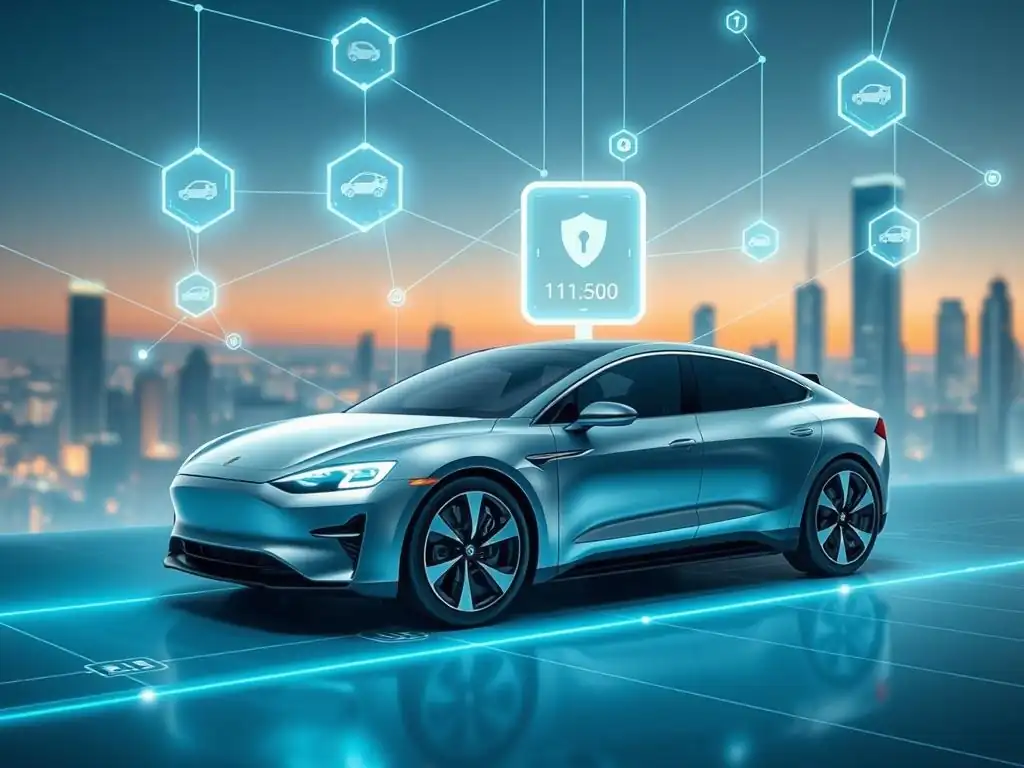
Supply Chain Management and Vehicle Provenance Tracking with Blockchain
The automotive supply chain is complex and global, involving numerous suppliers, manufacturers, and distributors. Ensuring transparency and traceability throughout the supply chain is crucial for quality control, preventing counterfeit parts, and verifying vehicle provenance. Blockchain technology offers a powerful solution for supply chain management and vehicle provenance tracking in the automotive industry.
By recording every step of the supply chain process on a blockchain, from raw material sourcing to vehicle assembly and distribution, manufacturers can create an immutable and transparent record of vehicle components and their origins. This blockchain-based tracking system can help prevent counterfeit parts from entering the supply chain, ensuring the quality and safety of vehicles. Furthermore, blockchain can provide verifiable vehicle provenance information, allowing consumers to trace the history of a vehicle, including its manufacturing origin, ownership history, and maintenance records.
This enhanced transparency builds trust and can improve the resale value of vehicles. Blockchain secures automotive IoT supply chains by providing transparent and tamper-proof tracking.
Blockchain-Based Insurance and Claims Processing for Autonomous Vehicles
Autonomous vehicles, with their advanced sensors and data-driven operation, are poised to revolutionize the insurance industry. However, traditional insurance models may not be well-suited for the unique characteristics of autonomous vehicles, particularly regarding liability and claims processing. Blockchain technology can facilitate more efficient, transparent, and potentially fairer insurance models and claims processing for autonomous vehicles.
Blockchain can enable usage-based insurance (UBI) models for autonomous vehicles, where premiums are dynamically adjusted based on actual driving behavior and mileage. Data from vehicle sensors, recorded and verified on a blockchain, can provide transparent and tamper-proof evidence for insurance calculations and claims processing. Smart contracts on the blockchain can automate claims processing, speeding up payouts and reducing administrative costs. Furthermore, blockchain can facilitate transparent and auditable liability determination in accidents involving autonomous vehicles, using sensor data and event logs recorded on the blockchain to establish fault and streamline claims resolution.
Secure and Transparent Ride-Sharing Platforms Powered by Blockchain
Ride-sharing platforms have transformed urban transportation, but concerns about data privacy, fare transparency, and driver compensation persist. Blockchain technology can enable the development of more secure, transparent, and equitable ride-sharing platforms, addressing some of the limitations of current centralized platforms.
Blockchain can facilitate decentralized ride-sharing platforms where drivers and riders can connect directly, bypassing centralized intermediaries. Smart contracts on the blockchain can automate fare calculations, payment processing, and driver compensation, ensuring transparency and fairness. Blockchain can also enhance data privacy by allowing riders and drivers to control their data and share it selectively. Furthermore, blockchain-based reputation systems can improve trust and safety on ride-sharing platforms by providing transparent and verifiable driver and rider ratings. These features can create a more equitable and user-centric ride-sharing ecosystem.
Blockchain for Secure Vehicle Identity and Access Management
Managing vehicle identities and access rights securely is critical for various automotive IoT applications, including fleet management, car sharing, and autonomous vehicle operation. Traditional vehicle identity and access management systems can be complex to manage and vulnerable to security breaches. Blockchain technology offers a decentralized and secure solution for vehicle identity and access management.
Blockchain can provide unique and immutable digital identities for vehicles, securely stored and managed on a distributed ledger. These blockchain-based vehicle identities can be used for authentication, authorization, and access control across various automotive services and applications. Smart contracts can automate access permissions, granting temporary or conditional access to vehicles based on pre-defined rules. For example, a fleet management company can use blockchain to manage access to its vehicles, granting access to authorized drivers based on their credentials stored on the blockchain. This blockchain-based approach simplifies vehicle identity and access management while enhancing security and control.
Benefits of Implementing Blockchain for Automotive IoT Data Protection
Enhanced Security and Data Integrity in Connected Vehicles
Implementing blockchain for automotive IoT data protection offers significant enhancements in security and data integrity. Blockchain's decentralized architecture eliminates single points of failure and makes it significantly harder for attackers to compromise the entire system. The cryptographic mechanisms inherent in blockchain, including hashing and digital signatures, ensure data integrity and authenticity, preventing tampering and unauthorized modifications. Immutability guarantees that recorded data cannot be retroactively altered, providing a trustworthy foundation for critical vehicle data.
These security features are crucial for protecting sensitive vehicle data, securing OTA updates, and ensuring the integrity of V2X communication. By leveraging blockchain, automotive manufacturers can build more resilient and trustworthy connected vehicles, reducing the risk of cyberattacks and data breaches. Blockchain secures automotive IoT by providing a robust and secure infrastructure for data management.
Improved Trust and Transparency in the Automotive Ecosystem
Blockchain's inherent transparency and auditability contribute to improved trust and transparency across the automotive ecosystem. The transparent nature of blockchain ledgers provides visibility into data provenance, transactions, and processes, fostering trust among stakeholders, including manufacturers, suppliers, service providers, and consumers. Auditability enables easy verification of data history and integrity, enhancing accountability and facilitating regulatory compliance.
This improved trust and transparency is particularly valuable in complex automotive applications like supply chain management, data sharing, and insurance claims processing. Blockchain can help build a more collaborative and trustworthy automotive ecosystem, fostering innovation and accelerating the adoption of new technologies like autonomous driving.
Reduced Risk of Cyberattacks and Data Breaches
By strengthening security and data integrity, blockchain implementation directly reduces the risk of cyberattacks and data breaches in automotive IoT systems. Blockchain's decentralized and tamper-proof nature makes it significantly more difficult for attackers to successfully compromise vehicle systems or steal sensitive data. Secure OTA updates and V2X communication, enabled by blockchain, minimize attack vectors and protect against malicious software injections and communication manipulation.
Reduced risk of cyberattacks translates to enhanced vehicle safety, minimized financial losses associated with data breaches and recalls, and improved brand reputation. Investing in blockchain-based security solutions is a proactive measure to mitigate cybersecurity risks and build more secure and resilient automotive systems.
Streamlined Data Management and Sharing Processes
Blockchain can streamline data management and sharing processes within the automotive industry. Decentralized data management eliminates bottlenecks associated with centralized systems and improves data availability and resilience. Smart contracts automate data sharing agreements and access control, simplifying data exchange between stakeholders and reducing administrative overhead.
Efficient and secure data sharing, facilitated by blockchain, enables new business models and innovative services in the automotive ecosystem. Predictive maintenance, usage-based insurance, and personalized services become more readily achievable with streamlined data management and sharing processes powered by blockchain.
Challenges and Considerations for Blockchain Adoption in Automotive IoT
Scalability and Performance Issues in Blockchain-Based Automotive Systems
Scalability and performance are significant challenges for blockchain adoption in automotive IoT. Automotive applications often require high transaction throughput and low latency, particularly for safety-critical functions like autonomous driving and real-time V2X communication. Traditional public blockchains may struggle to meet these performance requirements due to their inherent limitations in transaction processing speed and network congestion.
Private or consortium blockchains offer potential solutions to address scalability and performance concerns. These permissioned blockchains can be optimized for specific automotive use cases, offering higher transaction throughput and lower latency compared to public blockchains. Layer-2 scaling solutions, such as state channels and sidechains, are also being explored to improve the scalability of blockchain-based automotive systems. However, further research and development are needed to overcome scalability and performance limitations and ensure that blockchain can handle the demanding requirements of automotive IoT applications.
Regulatory and Compliance Considerations for Blockchain in the Automotive Industry
Regulatory and compliance considerations are crucial for blockchain adoption in the automotive industry. The automotive industry is heavily regulated, with stringent safety standards, data privacy regulations (e.g., GDPR, CCPA), and cybersecurity requirements. Blockchain implementations must comply with these regulations and address potential legal and compliance challenges.
Data privacy is a particularly important consideration, as blockchain's immutability and transparency can raise concerns about compliance with data privacy regulations. Solutions like privacy-preserving blockchains and data anonymization techniques are being explored to address these concerns. Regulatory clarity and industry standards are needed to guide the responsible and compliant adoption of blockchain in the automotive industry. Engaging with regulatory bodies and participating in standardization efforts are crucial steps for navigating the regulatory landscape and ensuring blockchain implementations are compliant and legally sound.
Interoperability and Standardization Challenges for Blockchain in Automotive IoT
Interoperability and standardization are essential for the widespread adoption of blockchain in automotive IoT. The automotive industry is characterized by a diverse ecosystem of manufacturers, suppliers, and service providers, each potentially adopting different blockchain platforms or solutions. Lack of interoperability between these systems could hinder data sharing, create silos, and limit the benefits of blockchain adoption.
Standardization efforts are needed to promote interoperability and ensure seamless data exchange between different blockchain-based automotive systems. Industry consortia and standardization bodies are working to develop common standards and protocols for blockchain in automotive IoT. Adopting open standards and promoting interoperability are crucial for realizing the full potential of blockchain in transforming the automotive industry and enabling seamless connectivity and data sharing across the ecosystem.
Implementation Costs and Technical Expertise Requirements
Implementing blockchain solutions in automotive IoT can involve significant implementation costs and require specialized technical expertise. Developing and deploying blockchain-based systems requires expertise in blockchain technology, cryptography, distributed systems, and automotive engineering. Integrating blockchain with existing automotive systems and infrastructure can be complex and require significant development effort.
The costs associated with blockchain implementation, including software development, hardware infrastructure, and personnel training, can be a barrier to entry for some automotive companies, particularly smaller suppliers and manufacturers. Addressing these challenges requires investing in education and training to build a skilled workforce in blockchain and automotive technologies. Furthermore, developing cost-effective and scalable blockchain solutions tailored to the specific needs of the automotive industry is crucial for promoting wider adoption.
Future Trends and Developments in Blockchain and Automotive IoT Security
The Convergence of Blockchain, AI, and IoT in Connected Vehicles
The convergence of blockchain, Artificial Intelligence (AI), and IoT is poised to drive significant advancements in connected vehicles. AI can enhance the intelligence and automation of connected vehicles, while blockchain can provide the secure and trustworthy data infrastructure needed for AI applications. IoT provides the connectivity and data generation capabilities that fuel both AI and blockchain.
AI algorithms can leverage blockchain-secured data for improved decision-making in autonomous driving, predictive maintenance, and personalized services. Blockchain can ensure the integrity and provenance of data used for AI training and inference, enhancing the reliability and trustworthiness of AI-powered automotive applications. This convergence of technologies promises to unlock new levels of intelligence, security, and efficiency in connected vehicles, paving the way for truly autonomous and intelligent transportation systems.
The Role of Blockchain in Enabling Secure Autonomous Driving
Blockchain technology plays a crucial role in enabling secure autonomous driving by addressing key security and data integrity challenges. Autonomous vehicles rely heavily on sensor data, communication networks, and software algorithms, all of which are potential targets for cyberattacks. Blockchain can provide a secure and tamper-proof foundation for autonomous driving systems, ensuring the integrity of sensor data, securing V2X communication, and protecting against malicious software modifications.
By securing critical data and communication channels, blockchain can enhance the safety and reliability of autonomous driving systems. Furthermore, blockchain can facilitate transparent and auditable data logging for autonomous vehicles, providing valuable evidence for incident investigation and liability determination. As autonomous driving technology matures, blockchain will become increasingly essential for building trust and ensuring the security of these complex and safety-critical systems. Blockchain secures automotive IoT and is fundamental to the safety of autonomous vehicles.
Advancements in Consortium Blockchains for Automotive Data Sharing
Consortium blockchains are emerging as a promising solution for automotive data sharing. Consortium blockchains are permissioned blockchains governed by a group of organizations, such as automotive manufacturers, suppliers, and service providers. They offer a balance between the decentralization of public blockchains and the control of private blockchains, making them well-suited for industry-specific data sharing initiatives.
Advancements in consortium blockchain platforms are focusing on improving scalability, performance, and privacy features to meet the specific requirements of the automotive industry. Consortium blockchains can facilitate secure and efficient data sharing among automotive stakeholders for various applications, including supply chain management, predictive maintenance, and usage-based insurance. These collaborative blockchain initiatives are driving innovation and accelerating the adoption of blockchain technology across the automotive ecosystem.
Conclusion: Securing the Future of Automotive IoT with Blockchain
Blockchain as a Cornerstone for Trust and Security in Connected Vehicles
Blockchain technology is emerging as a cornerstone for building trust and security in connected vehicles. Its inherent features of decentralization, immutability, and cryptography provide a robust foundation for securing automotive IoT data, systems, and communication channels. By addressing critical security challenges and enhancing data integrity, blockchain empowers the automotive industry to build more resilient, trustworthy, and safer connected vehicles.
As the automotive industry continues its rapid transformation towards connected and autonomous driving, blockchain will play an increasingly vital role in ensuring the security and trustworthiness of these technologies. Embracing blockchain is not just a technological upgrade but a strategic imperative for building a secure and sustainable future for automotive IoT.
The Potential of Blockchain to Revolutionize the Automotive Industry
The potential of blockchain to revolutionize the automotive industry extends beyond security. Blockchain can enable new business models, streamline processes, and foster greater collaboration across the automotive ecosystem. From supply chain management and vehicle provenance tracking to usage-based insurance and secure ride-sharing platforms, blockchain is unlocking innovative applications that can transform various aspects of the automotive industry.
By fostering transparency, efficiency, and trust, blockchain is empowering the automotive industry to embrace new technologies, enhance customer experiences, and drive sustainable growth. The transformative potential of blockchain is vast, and its continued evolution promises to reshape the automotive landscape in profound ways.
Call to Action: Fostering Collaboration for Secure Automotive Blockchain Implementations
Realizing the full potential of blockchain for automotive IoT security requires fostering collaboration across the industry. Automotive manufacturers, suppliers, technology providers, researchers, and regulatory bodies need to collaborate to develop common standards, address interoperability challenges, and promote responsible blockchain adoption. Sharing best practices, collaborating on pilot projects, and engaging in open-source initiatives can accelerate innovation and drive wider blockchain adoption in the automotive sector.
By working together, the automotive industry can harness the power of blockchain to build a more secure, transparent, and efficient future for connected and autonomous vehicles, ensuring that the benefits of these transformative technologies are realized safely and responsibly. Blockchain secures automotive IoT, and its successful implementation depends on collaborative efforts across the entire automotive ecosystem.
Frequently Asked Questions
How can blockchain technology enhance the security of Automotive IoT data?
Blockchain offers immutable record-keeping and decentralized authentication, making it incredibly difficult for hackers to tamper with vehicle data or gain unauthorized access. This ensures the integrity and confidentiality of sensitive information.
What are the primary benefits of using blockchain to secure data in connected and autonomous vehicles?
Using blockchain provides improved data transparency and traceability, enhances trust between stakeholders (e.g., manufacturers, suppliers, owners), and helps prevent data breaches and cyberattacks.
What types of automotive IoT data can be secured using blockchain?
Blockchain can secure a wide range of data, including vehicle diagnostics, location data, sensor readings, and over-the-air (OTA) software updates. This comprehensive protection is crucial for connected car security.
How does blockchain address the challenges of data privacy in the context of connected and autonomous vehicles?
While blockchain is transparent, techniques like zero-knowledge proofs and selective disclosure can be implemented to protect user privacy. These methods allow for data verification without revealing the underlying sensitive information.
What is the future outlook for blockchain adoption in securing Automotive IoT?
The future looks promising, with increasing interest from automotive manufacturers and technology providers. We expect to see widespread adoption as blockchain solutions mature and industry standards emerge, leading to safer and more secure connected vehicles.
Final Reflection: Securing the Road Ahead with Blockchain
The intricate web of data flowing through connected and autonomous vehicles presents unprecedented security challenges, making the need for robust protection more critical than ever. As our reliance on these technologies grows, so too does the potential for malicious actors to exploit vulnerabilities. This exploration of blockchain's potential to secure automotive IoT is not just a theoretical exercise; it's a vital step towards ensuring the safety and integrity of our future transportation systems.
The promise of a decentralized, tamper-proof ledger offered by blockchain has profoundly influenced how we perceive data security in the automotive industry. This technology offers a pathway to building trust and transparency within the complex ecosystem of connected vehicles, from manufacturers to consumers. Security is not a product, but a process.
This quote reminds us that securing automotive IoT with blockchain is an ongoing journey, requiring continuous innovation and adaptation to stay ahead of emerging threats.
Now, consider the implications of this technology in your own life. How can you, as a consumer, advocate for greater data security and transparency in the vehicles you drive? How can you, as a professional, contribute to the development and implementation of blockchain-based solutions that protect our connected world? The road to a secure automotive future is paved with innovation and collaboration; let us all play our part in building it.
Secure Your Ride: Embrace Blockchain Innovation!
Thank you for exploring how blockchain can revolutionize data security for connected vehicles. We hope you’ve gained valuable insights into protecting the future of automotive technology. Now, it's time to put that knowledge into action!
Here are a few steps you can take to drive the change:
- Dive Deep: Research and identify blockchain solutions tailored for automotive IoT data security needs. Understand the specifics of their implementations.
- Join the Conversation: Share this article with your network and discuss the potential of blockchain in securing connected vehicles. Let's spark wider awareness!
- Explore the Unseen: Investigate how emerging cryptographic techniques, beyond just blockchain, could further enhance data protection in autonomous vehicles.
What blockchain implementation do you think offers the most promising solution for safeguarding connected vehicle data, and why? Share your thoughts below!
Leave a Reply