
Managing Device Data in IoT Networks Using Blockchain Technology


Welcome to Blockchain Trends, your trusted source for navigating the ever-evolving landscape of blockchain technology.
Unlock the power of decentralized solutions beyond the hype. In today's article, we dive deep into Blockchain IoT device management, exploring how this innovative approach can revolutionize the way we secure and manage data in vast IoT networks. Curious how blockchain can solve the challenges of data integrity and security in your connected devices? Read on to discover the future of IoT management.
Managing Sensor Data in Smart Agriculture Using Blockchain Technology
- Introduction: Securing Agricultural Data with Blockchain
- The Challenges of Traditional Agricultural Data Management
- Blockchain Solutions for Agricultural Sensor Management
- How Blockchain IoT Device Management Works
- Benefits of Using Blockchain for Agricultural Data Management
- Use Cases of Blockchain in Agricultural Sensor Management
-
Implementing Blockchain for Agricultural Sensor Management: A Step-by-Step Guide
- Step 1: Defining Your Agricultural Data Management Needs
- Step 2: Choosing the Right Blockchain Platform [e.g., Hyperledger Fabric, Corda]
- Step 3: Developing Smart Contracts for Data Management
- Step 4: Integrating Blockchain with IoT Devices and Sensors
- Step 5: Testing and Deploying Your Blockchain-Based Agricultural Solution
- Overcoming the Challenges of Blockchain Integration in Agriculture
- The Future of Blockchain and Agricultural Data Management
- Conclusion: Blockchain's Transformative Impact on Agricultural Data
-
Frequently Asked Questions
- What are the primary challenges in managing data from IoT devices, and how does blockchain address them?
- How can blockchain technology improve the security of IoT device data?
- What role does blockchain play in enhancing trust and transparency within IoT networks?
- Beyond security and trust, what other benefits does blockchain offer for IoT device management?
- What are some potential regulatory considerations when implementing blockchain-based IoT device management solutions?
- Final Reflection: Securing the Future of IoT with Blockchain
- Secure Your IoT Future: Implement Blockchain Today!
Introduction: Securing Agricultural Data with Blockchain
The Growing Need for Secure Sensor Data Management in Agriculture
Modern agriculture is rapidly adopting Internet of Things (IoT) devices, particularly sensors, to enhance efficiency and productivity. These sensors collect a wealth of data, ranging from soil moisture and temperature to weather conditions and crop health. For example, precision agriculture techniques, heavily reliant on sensor data, are projected to manage over 50% of farmland in developed nations by 2025, according to a report by MarketsandMarkets.
This surge in data generation necessitates robust and secure management systems to ensure data integrity, prevent tampering, and facilitate reliable decision-making for farmers. The increasing reliance on data-driven agricultural practices makes the security of this data paramount to the success and sustainability of modern farming operations.
The vulnerability of agricultural data systems to cyber threats and data breaches is a growing concern. Traditional centralized data management systems are often susceptible to single points of failure and can be compromised, leading to data loss, manipulation, or unauthorized access. Consider the potential impact of a cyberattack on a large-scale farm that relies on sensor data to manage irrigation and fertilization – compromised data could lead to crop failure and significant economic losses.
Therefore, securing sensor data is not just about protecting information; it's about safeguarding the livelihoods of farmers and ensuring the stability of the food supply chain. This need for enhanced security is driving the exploration of innovative solutions like blockchain technology for agricultural data management.
Blockchain's Role in Revolutionizing Agricultural Data Security
Blockchain technology, initially known for its role in cryptocurrencies, offers a decentralized and tamper-proof solution for managing sensor data in agriculture. Its inherent security features, such as cryptographic hashing and distributed consensus mechanisms, make it exceptionally resilient against data manipulation and unauthorized access. Unlike traditional databases, blockchain stores data in blocks that are linked together chronologically and cryptographically secured, making it virtually impossible to alter past records without detection. This immutability is crucial for maintaining the integrity of agricultural data, ensuring that information collected by IoT sensors remains trustworthy and verifiable.
The application of blockchain in agricultural IoT device management extends beyond just security. It can foster transparency and trust across the entire agricultural supply chain. By recording sensor data on a blockchain, all stakeholders, from farmers to consumers, can access a verifiable and auditable record of agricultural practices and product provenance.
This transparency can be particularly valuable in building consumer confidence in food safety and origin, as well as enabling more efficient and trustworthy transactions within the agricultural ecosystem. Blockchain's potential to revolutionize agricultural data security lies in its ability to create a secure, transparent, and efficient system for managing the vast amounts of data generated by IoT devices in modern farming.
The Challenges of Traditional Agricultural Data Management
Centralized Data Silos: Hindering Data Sharing and Analysis
Traditional agricultural data management often relies on centralized systems, leading to the creation of data silos. These silos occur when different agricultural entities, such as farms, research institutions, and government agencies, store their data in isolated systems that are not easily accessible or interoperable.
For instance, a study by the Food and Agriculture Organization (FAO) of the United Nations highlighted that fragmented data systems in agriculture impede effective data sharing and collaboration, hindering the development of comprehensive agricultural insights and solutions. This lack of data integration prevents a holistic understanding of agricultural trends and limits the potential for data-driven innovation.
The consequences of these data silos are significant. Farmers may lack access to aggregated data that could inform best practices, optimize resource utilization, and improve yields. Researchers are hampered in their ability to conduct large-scale analyses and develop effective agricultural strategies. Policy makers struggle to gain a comprehensive view of the agricultural sector, making it difficult to formulate evidence-based policies.
For example, imagine a scenario where different farms in a region collect data on soil health but cannot easily share this information. This lack of data sharing prevents the identification of regional soil degradation patterns and the development of collaborative strategies to address these issues. Centralized data silos, therefore, represent a major impediment to progress in data-driven agriculture.
Lack of Transparency in Agricultural Supply Chains
Transparency in agricultural supply chains is increasingly important to consumers who demand to know the origin, quality, and safety of their food. However, traditional agricultural supply chains often lack transparency, making it difficult to track products from farm to table. This opacity can erode consumer trust and create opportunities for fraud and mislabeling.
For example, in 2013, the European horse meat scandal, where horse meat was fraudulently labeled as beef, highlighted the vulnerabilities of opaque food supply chains and the need for greater transparency. This incident, and others like it, underscore the importance of traceability and transparency in ensuring food authenticity and safety.
The lack of transparency also affects other stakeholders in the agricultural supply chain, including farmers, processors, and retailers. Farmers may struggle to prove the quality and origin of their produce, limiting their ability to access premium markets and receive fair prices. Processors and retailers face challenges in verifying the authenticity and safety of the products they handle. Without a transparent and verifiable system for tracking agricultural products, it is difficult to build trust and accountability across the supply chain. This lack of transparency can lead to inefficiencies, disputes, and ultimately, undermine the sustainability and integrity of the agricultural sector.
Difficulty in Verifying Data Provenance and Authenticity
Verifying the provenance and authenticity of agricultural data is a critical challenge in traditional data management systems. In centralized systems, data can be easily manipulated or altered without leaving a clear audit trail. This lack of data integrity makes it difficult to trust the information collected by sensors and other agricultural data sources.
For instance, in organic agriculture, verifying organic certification relies heavily on trust and manual audits, which can be time-consuming, expensive, and susceptible to fraud. The absence of a robust and tamper-proof system for verifying data provenance raises concerns about the reliability of agricultural data and the claims made about agricultural products.
The difficulty in verifying data authenticity also impacts the ability to trace foodborne illnesses and manage food safety risks effectively. If data on the origin and handling of agricultural products is unreliable, it becomes challenging to quickly identify the source of contamination and implement timely recalls. This can have serious consequences for public health and the reputation of the agricultural industry.
Moreover, the lack of verifiable data provenance can hinder efforts to combat illegal logging, fishing, and other unsustainable practices in agriculture. Ensuring data provenance and authenticity is therefore essential for building trust in agricultural data and supporting sustainable and responsible agricultural practices.
Blockchain Solutions for Agricultural Sensor Management
Decentralized Data Storage using Blockchain for Agricultural Data
Blockchain technology offers a solution to the limitations of centralized data storage by providing a decentralized platform for managing agricultural data. In a blockchain-based system, data is not stored in a single location but is distributed across a network of computers or nodes. This decentralized architecture eliminates the single point of failure associated with centralized systems and enhances data resilience.
For example, if one node in the network is compromised, the data remains secure and accessible through the other nodes, ensuring continuous data availability and integrity. This distributed nature of blockchain makes it significantly more robust and secure than traditional centralized databases.
Decentralized data storage using blockchain also promotes data ownership and control for farmers and other agricultural stakeholders. In traditional systems, farmers often relinquish control of their data to centralized platforms. With blockchain, farmers can retain ownership of their data and control who has access to it. This empowerment is particularly important for smallholder farmers who may be vulnerable to data exploitation by larger agricultural corporations. By leveraging blockchain for decentralized data storage, the agricultural sector can move towards a more equitable and farmer-centric data management paradigm, fostering greater trust and collaboration within the ecosystem.
Enhancing Data Security and Integrity with Blockchain Technology
Blockchain’s cryptographic features are instrumental in enhancing the security and integrity of agricultural data. Each block of data on a blockchain is cryptographically hashed, creating a unique fingerprint that is linked to the previous block. Any attempt to tamper with the data in a block would change its hash, breaking the chain and making the alteration immediately detectable.
This cryptographic immutability ensures that once data is recorded on the blockchain, it cannot be altered or deleted, guaranteeing data integrity. This is particularly crucial for sensitive agricultural data, such as yield data, soil analysis, and traceability information, where accuracy and reliability are paramount.
Furthermore, blockchain utilizes consensus mechanisms to validate transactions and data entries before they are added to the chain. These mechanisms, such as Proof-of-Work or Proof-of-Stake, require multiple nodes in the network to agree on the validity of a transaction, preventing fraudulent or erroneous data from being recorded. This distributed consensus process adds an extra layer of security and trust to the data stored on the blockchain.
For instance, in a blockchain-based agricultural sensor network, data from sensors would be validated by multiple nodes before being permanently recorded, ensuring the accuracy and trustworthiness of the sensor readings. This combination of cryptographic hashing and consensus mechanisms makes blockchain a highly secure platform for managing agricultural data.
Improving Transparency and Traceability in Agricultural Supply Chains
Blockchain technology significantly enhances transparency and traceability in agricultural supply chains by providing an immutable and auditable record of product journey from origin to consumer. Every step in the supply chain, from farm to processing facility to distribution center to retail outlet, can be recorded on the blockchain, creating a transparent and verifiable trail.
This end-to-end traceability allows consumers to easily verify the origin, quality, and authenticity of agricultural products. For example, a consumer scanning a QR code on a package of vegetables could access blockchain-recorded information about the farm where it was grown, the date of harvest, and the transportation history, building trust and confidence in the product.
The improved traceability offered by blockchain also benefits supply chain stakeholders by enabling efficient recall management and reducing food fraud. In case of a food safety issue, blockchain allows for rapid identification of the source of contamination and targeted recalls, minimizing the impact on consumers and the industry. Moreover, the transparency and auditability of blockchain records deter fraudulent activities, such as mislabeling and counterfeiting, safeguarding the integrity of agricultural products and supply chains. By fostering transparency and traceability, blockchain contributes to building more resilient, trustworthy, and consumer-centric agricultural supply chains.
How Blockchain IoT Device Management Works
Sensor Registration and Identity Management on the Blockchain
Implementing blockchain IoT device management in agriculture begins with securely registering sensors and IoT devices on the blockchain network. Each sensor is assigned a unique digital identity, essentially a cryptographic key pair, which is recorded on the blockchain. This digital identity serves as the sensor's verifiable credential, ensuring that only authorized devices can participate in the network and contribute data.
This registration process is akin to creating a digital passport for each sensor, establishing its authenticity and linking it to the blockchain system. For example, using a permissioned blockchain like Hyperledger Fabric, only registered and authorized sensors can communicate with the network and record data.
This sensor identity management on the blockchain is crucial for preventing unauthorized device access and data spoofing. By verifying the digital identity of each sensor before accepting data, the system ensures that data originates from legitimate and trusted sources. Furthermore, blockchain can track the lifecycle of each sensor, from deployment to decommissioning, providing a comprehensive audit trail of device activity. This robust identity management framework is fundamental to establishing a secure and trustworthy foundation for blockchain-based agricultural IoT device management.
Data Collection and Storage on a Distributed Ledger
Once sensors are registered, data collection and storage occur on the blockchain’s distributed ledger. Sensors continuously collect agricultural data – such as temperature, humidity, soil moisture, and pH levels – and transmit this data to the blockchain network. Instead of being stored in a central server, this data is distributed across multiple nodes in the blockchain network.
Each data transaction, representing sensor readings, is grouped into blocks and added to the chain after undergoing verification through a consensus mechanism. This process ensures data integrity and prevents tampering, as any alteration would require modifying all subsequent blocks across the distributed network, which is computationally infeasible.
The distributed nature of the blockchain ledger provides redundancy and resilience to data storage. Even if some nodes in the network fail or are compromised, the data remains accessible from other nodes, ensuring continuous data availability. Moreover, the chronological and immutable nature of the blockchain provides a time-stamped record of all sensor data, creating a verifiable audit trail of environmental conditions and agricultural practices. This secure and distributed data storage mechanism is a key advantage of using blockchain for managing agricultural sensor data, ensuring data reliability and trustworthiness over time.
Access Control and Permissions Management with Smart Contracts
Smart contracts, self-executing contracts with the terms of the agreement directly written into code, play a crucial role in managing access control and permissions within a blockchain-based agricultural IoT system. Smart contracts can be programmed to define who has access to specific sensor data and under what conditions. For example, a smart contract could grant a farmer full access to their farm’s sensor data, while granting agronomists read-only access for consultation purposes, and limiting access for other stakeholders based on predefined rules. These access permissions are automatically enforced by the smart contract, ensuring data privacy and security.
Smart contracts can also automate data sharing and data monetization processes. For instance, a smart contract could automatically share anonymized and aggregated sensor data with research institutions for agricultural research, while ensuring data privacy and compliance with data regulations.
Furthermore, smart contracts can facilitate data marketplaces where farmers can securely monetize their sensor data by granting access to authorized parties for specific purposes, such as crop insurance or supply chain optimization. By automating access control and permissions management, smart contracts enhance data security, privacy, and efficiency in blockchain-based agricultural IoT device management, enabling secure and controlled data sharing within the agricultural ecosystem.
Benefits of Using Blockchain for Agricultural Data Management
Enhanced Security and Trust in Agricultural Data
One of the primary benefits of using blockchain for agricultural data management is the enhanced security and trust it provides. Blockchain's decentralized and cryptographic nature inherently makes it more secure than traditional centralized systems, which are vulnerable to single points of failure and cyberattacks. The immutability of blockchain records ensures that agricultural data, once recorded, cannot be tampered with, fostering trust in the data's integrity.
For example, in a survey conducted by IBM, 75% of surveyed consumers indicated that they value transparency and traceability in food products, highlighting the growing demand for trustworthy food supply chains. Blockchain addresses this demand by providing a secure and transparent platform for managing agricultural data, building trust between producers, consumers, and other stakeholders.
This enhanced security and trust translates to increased confidence in the quality and authenticity of agricultural products. Consumers can rely on blockchain-verified data to make informed purchasing decisions, knowing that the information is accurate and tamper-proof. Businesses in the agricultural supply chain can also benefit from increased trust and transparency, leading to stronger partnerships and more efficient operations. By establishing a secure and trustworthy data environment, blockchain contributes to building a more resilient and reliable agricultural ecosystem.
Improved Data Integrity and Auditability
Blockchain significantly improves data integrity and auditability in agricultural data management. The immutable nature of the blockchain ledger ensures that data remains consistent and unaltered over time. Every data transaction is permanently recorded and time-stamped, creating a complete and verifiable audit trail. This auditability is crucial for regulatory compliance, quality assurance, and dispute resolution in the agricultural sector. For instance, in food safety regulations, authorities often require detailed records of production processes and product origins. Blockchain provides an auditable and transparent system that simplifies compliance and reduces the risk of regulatory penalties.
The improved data integrity and auditability also facilitate better decision-making based on reliable and verifiable data. Farmers can use blockchain-verified sensor data to optimize irrigation, fertilization, and pest control, leading to increased yields and reduced resource consumption. Supply chain managers can use blockchain data to track product movement, identify bottlenecks, and improve logistics efficiency. By providing a reliable and auditable data foundation, blockchain empowers stakeholders across the agricultural value chain to make informed decisions and improve operational performance.
Reduced Operational Costs and Increased Efficiency
While the initial implementation of blockchain solutions may involve some upfront investment, in the long term, it can lead to reduced operational costs and increased efficiency in agricultural data management. Blockchain's decentralized nature can eliminate the need for intermediaries and centralized data management infrastructure, reducing administrative overhead and transaction costs.
For example, in cross-border agricultural trade, blockchain can streamline documentation processes and reduce delays associated with traditional paper-based systems, leading to significant cost savings and improved efficiency. A study by McKinsey estimated that blockchain could reduce food supply chain costs by up to 20% by improving traceability and reducing fraud.
Furthermore, the automation capabilities of smart contracts can streamline various agricultural processes, such as payments, contract enforcement, and supply chain management. Smart contracts can automate payments to farmers upon delivery of produce, eliminating manual invoicing and payment processing. They can also automatically enforce contractual agreements between stakeholders, reducing disputes and improving trust. By automating processes and reducing reliance on intermediaries, blockchain contributes to increased efficiency and reduced operational costs in agricultural data management, making it a cost-effective solution for modern agriculture.
Streamlined Data Sharing and Interoperability
Blockchain facilitates streamlined data sharing and interoperability across different agricultural systems and stakeholders. By establishing a common and standardized data platform, blockchain breaks down data silos and enables seamless data exchange between farmers, processors, retailers, researchers, and government agencies. This interoperability is crucial for realizing the full potential of agricultural data and fostering collaboration within the sector. For example, research institutions can access anonymized and aggregated data from multiple farms to conduct large-scale agricultural studies, leading to faster innovation and improved agricultural practices.
The standardized data formats and protocols inherent in blockchain also simplify data integration with other agricultural technologies and platforms. Blockchain-based systems can be easily integrated with farm management software, weather data providers, and market information systems, creating a connected and integrated agricultural ecosystem. This interoperability enhances data accessibility, reduces data duplication, and promotes data-driven decision-making across the entire agricultural value chain. By fostering streamlined data sharing and interoperability, blockchain unlocks the potential of agricultural data to drive innovation, efficiency, and sustainability in the sector.
Use Cases of Blockchain in Agricultural Sensor Management
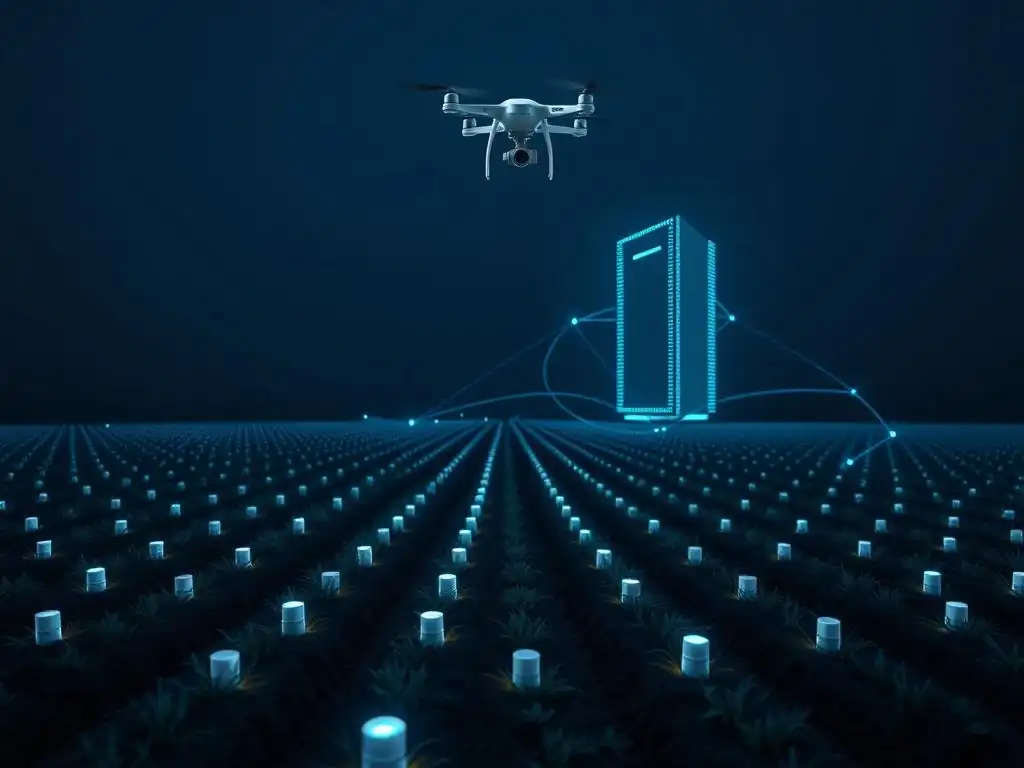
Tracking Produce from Farm to Table with Blockchain-Enabled Sensors
Blockchain-enabled sensors provide a powerful tool for tracking produce from farm to table, enhancing transparency and traceability throughout the agricultural supply chain. Sensors deployed in fields and along the supply chain can continuously monitor environmental conditions, product location, and handling practices, recording this data onto a blockchain ledger. This creates an immutable and verifiable record of the produce's journey, providing consumers with detailed information about its origin, quality, and safety. For example, companies like Provenance are using blockchain to track seafood from catch to consumer, providing transparency about fishing practices and product authenticity.
This farm-to-table tracking system benefits consumers by enabling them to make informed purchasing decisions based on verifiable information. It also benefits producers by allowing them to differentiate their products based on quality and sustainability practices, potentially commanding premium prices. Furthermore, in case of food safety recalls, blockchain-based tracking allows for rapid identification of affected products and efficient recall management, minimizing the impact on consumers and the industry. By providing end-to-end traceability, blockchain-enabled sensors build trust and transparency in the food supply chain, benefiting all stakeholders.
Monitoring Soil Conditions and Resource Usage for Sustainable Farming
Blockchain and IoT sensors can be effectively used to monitor soil conditions and resource usage, promoting sustainable farming practices. Sensors embedded in the soil can continuously measure parameters like moisture levels, nutrient content, and temperature, transmitting this data to a blockchain platform. This real-time data allows farmers to optimize irrigation, fertilization, and other resource inputs, reducing waste and minimizing environmental impact. For example, farmers can use blockchain-verified soil moisture data to implement precision irrigation, applying water only when and where it is needed, conserving water resources and improving crop yields.
By providing transparent and verifiable data on resource usage, blockchain can also support sustainability certifications and incentivize environmentally friendly farming practices. Consumers increasingly demand sustainably produced food, and blockchain can provide the necessary transparency to verify sustainability claims. Farmers who adopt sustainable practices and monitor their resource usage using blockchain-enabled sensors can demonstrate their commitment to environmental stewardship and gain access to premium markets. This application of blockchain supports the transition towards more sustainable and resource-efficient agricultural practices.
Verifying Organic Certification and Food Safety Standards
Blockchain technology offers a robust solution for verifying organic certification and food safety standards in agriculture. The traditional organic certification process often relies on manual audits and paper-based records, which can be time-consuming, expensive, and susceptible to fraud. Blockchain can streamline and enhance the verification process by creating a transparent and immutable record of organic practices and compliance with food safety standards. For example, farmers can record their organic farming practices, such as pesticide-free cultivation and soil management techniques, on a blockchain ledger, along with sensor data verifying compliance with organic standards.
This blockchain-based verification system provides consumers with greater assurance about the authenticity of organic and food safety claims. Certification bodies can also use blockchain to conduct more efficient and reliable audits, reducing costs and improving the integrity of certification schemes. Furthermore, regulators can leverage blockchain data to monitor compliance with food safety regulations and ensure consumer protection. By providing a transparent and tamper-proof verification mechanism, blockchain enhances trust in organic and food safety labels, supporting the growth of sustainable and safe food systems.
Optimizing Irrigation and Fertilization based on Real-Time Data
Real-time data from IoT sensors, combined with blockchain technology, can significantly optimize irrigation and fertilization practices in agriculture. Sensors deployed in fields continuously collect data on soil moisture, nutrient levels, and weather conditions. This data, recorded on a blockchain, provides a verifiable and real-time picture of the farm's environmental conditions.
Farmers can use this data to make data-driven decisions about irrigation and fertilization, applying water and nutrients precisely when and where they are needed, optimizing resource utilization and maximizing crop yields. For example, based on real-time soil moisture data, a farmer can adjust irrigation schedules to avoid overwatering or underwatering, improving water efficiency and plant health.
The use of blockchain ensures the integrity and reliability of the sensor data, providing farmers with trustworthy information for decision-making. Furthermore, smart contracts can be programmed to automate irrigation and fertilization processes based on sensor data, further enhancing efficiency and precision. For instance, a smart contract could automatically trigger irrigation systems when soil moisture levels fall below a certain threshold, optimizing water usage without manual intervention. By enabling data-driven and automated resource management, blockchain and IoT sensors contribute to more efficient, sustainable, and productive agricultural practices.
Implementing Blockchain for Agricultural Sensor Management: A Step-by-Step Guide
Step 1: Defining Your Agricultural Data Management Needs
The first crucial step in implementing blockchain for agricultural sensor management is to clearly define your specific data management needs. This involves identifying the pain points in your current system, the types of data you need to manage, and the desired outcomes of implementing blockchain. For example, are you primarily focused on improving traceability, enhancing data security, streamlining supply chain operations, or verifying sustainability claims? Clearly outlining your objectives will guide the subsequent steps and ensure that the blockchain solution is tailored to your specific requirements. A well-defined scope is essential for a successful blockchain implementation project.
Consider conducting a thorough assessment of your existing agricultural data management processes. Identify areas where data is fragmented, insecure, or inefficiently managed. Engage stakeholders across your agricultural ecosystem, including farmers, processors, retailers, and consumers, to gather their perspectives and understand their data needs. This collaborative approach will ensure that the blockchain solution addresses the most pressing challenges and delivers tangible benefits to all stakeholders. A comprehensive understanding of your data management needs is the foundation for a successful blockchain implementation.
Step 2: Choosing the Right Blockchain Platform [e.g., Hyperledger Fabric, Corda]
Selecting the appropriate blockchain platform is a critical decision that will significantly impact the performance, scalability, and security of your agricultural sensor management solution. Several blockchain platforms are suitable for enterprise applications, each with its own strengths and weaknesses. For permissioned blockchain applications in agriculture, Hyperledger Fabric and Corda are popular choices. Hyperledger Fabric is known for its modular architecture, scalability, and strong privacy features, making it well-suited for complex agricultural supply chains. Corda is designed for financial and commercial applications, emphasizing data privacy and interoperability, which can be valuable for agricultural finance and trade scenarios.
Consider factors such as the level of permissioning required, the scale of your network, the desired transaction throughput, and the specific features offered by each platform when making your selection. For agricultural applications requiring high levels of data privacy and control, a permissioned blockchain like Hyperledger Fabric or Corda is generally preferred over public blockchains like Ethereum, which are more transparent and less suitable for sensitive business data.
Evaluate the development tools, community support, and ecosystem maturity of each platform to ensure a smooth and efficient development process. Choosing the right blockchain platform is a strategic decision that will shape the long-term success of your agricultural sensor management solution.
Step 3: Developing Smart Contracts for Data Management
Smart contracts are the core logic engines of blockchain applications, automating processes and enforcing rules within the network. In agricultural sensor management, smart contracts are essential for defining data access permissions, automating data sharing, and executing pre-defined actions based on sensor data. For example, a smart contract could be developed to automatically grant access to sensor data to authorized parties based on their roles and permissions.
Another smart contract could automate payments to farmers upon verification of produce quality based on sensor data. Carefully designing and developing robust smart contracts is crucial for realizing the automation and efficiency benefits of blockchain in agriculture.
When developing smart contracts, focus on clarity, security, and efficiency. Smart contracts should be written in a clear and concise manner to ensure readability and maintainability. Thoroughly test and audit smart contracts to identify and mitigate potential security vulnerabilities. Optimize smart contract code for efficiency to minimize transaction costs and ensure fast execution. Consider using formal verification methods to mathematically prove the correctness and security of your smart contracts. Well-designed and rigorously tested smart contracts are the foundation for a secure and reliable blockchain-based agricultural sensor management system.
Step 4: Integrating Blockchain with IoT Devices and Sensors
Integrating blockchain with IoT devices and sensors involves establishing seamless communication and data exchange between the sensor network and the blockchain platform. This typically requires developing middleware or APIs (Application Programming Interfaces) that can translate data from sensors into a format compatible with the blockchain and vice versa. Ensure that the integration process is secure and preserves data integrity throughout the data flow.
Consider using secure communication protocols and encryption methods to protect sensor data during transmission to the blockchain. A robust and secure integration layer is essential for reliable data capture and management in a blockchain-based agricultural IoT system.
Choose IoT devices and sensors that are compatible with your chosen blockchain platform and integration methods. Consider factors such as data transmission protocols, power consumption, and environmental durability when selecting sensors for agricultural applications. Test the integration thoroughly to ensure seamless data flow and accurate data recording on the blockchain. Address potential challenges such as network connectivity issues, data latency, and device scalability during the integration process. A well-integrated system ensures that sensor data is reliably and securely captured and utilized within the blockchain environment.
Step 5: Testing and Deploying Your Blockchain-Based Agricultural Solution
The final step is to thoroughly test and deploy your blockchain-based agricultural sensor management solution. Conduct comprehensive testing in a simulated or pilot environment before full-scale deployment. Test all aspects of the system, including sensor data capture, blockchain transaction processing, smart contract execution, data access control, and user interfaces. Identify and resolve any bugs, performance bottlenecks, or security vulnerabilities during the testing phase. Phased deployment, starting with a pilot project in a limited area, is recommended to minimize risks and gather real-world feedback.
Develop a detailed deployment plan that outlines the steps for rolling out the blockchain solution across your agricultural operations. Provide adequate training and support to users to ensure smooth adoption and effective utilization of the new system. Continuously monitor the performance of the deployed system and gather user feedback to identify areas for improvement and optimization. Iterative development and continuous improvement are key to ensuring the long-term success and sustainability of your blockchain-based agricultural sensor management solution. Proper testing and a well-planned deployment strategy are crucial for realizing the full benefits of blockchain in agriculture.
Overcoming the Challenges of Blockchain Integration in Agriculture
Scalability Challenges with Blockchain in Agriculture
Scalability is a significant challenge for blockchain technology, particularly when applied to large-scale agricultural IoT networks with numerous sensors generating vast amounts of data. Traditional blockchain platforms, especially those using Proof-of-Work consensus mechanisms, can experience limitations in transaction throughput and processing speed, potentially hindering their ability to handle the high data volumes generated by agricultural sensors. For instance, public blockchains like Bitcoin have a limited transaction processing capacity compared to centralized database systems. Addressing scalability challenges is crucial for deploying blockchain in large-scale agricultural applications.
Several approaches can be employed to mitigate scalability issues in blockchain-based agricultural solutions. Layer-2 scaling solutions, such as state channels and sidechains, can offload transaction processing from the main blockchain, improving throughput. Sharding, a technique that divides the blockchain network into smaller partitions, can also enhance scalability by parallelizing transaction processing. Furthermore, choosing a more scalable blockchain platform, such as those utilizing Proof-of-Stake or Delegated Proof-of-Stake consensus mechanisms, can improve transaction processing capacity. Careful platform selection and the implementation of appropriate scaling solutions are essential for addressing scalability challenges in agricultural blockchain deployments.
Addressing Interoperability Issues between Blockchains and IoT Devices
Interoperability issues between different blockchain platforms and diverse IoT devices can pose challenges to seamless integration in agricultural applications. Different blockchain platforms may use incompatible protocols and data formats, making it difficult to exchange data and interact across different blockchain networks. Similarly, IoT devices from various manufacturers may use different communication protocols and data structures, creating integration complexities. Addressing these interoperability issues is crucial for building a cohesive and integrated blockchain-based agricultural ecosystem.
Standardization efforts and interoperability solutions are essential for overcoming these challenges. Developing standardized data formats and communication protocols for agricultural data can facilitate data exchange between different blockchain platforms and IoT devices. Blockchain interoperability protocols, such as cross-chain bridges and atomic swaps, can enable seamless data and value transfer between different blockchain networks. Adopting open standards and promoting collaboration among blockchain platforms and IoT device manufacturers are key steps towards achieving interoperability and building a more interconnected agricultural technology landscape.
Regulatory Considerations and Compliance for Blockchain in Agriculture
Regulatory considerations and compliance requirements are important aspects to address when implementing blockchain in agriculture. While blockchain technology is still relatively new, regulatory frameworks are evolving to address its implications in various sectors, including agriculture. Data privacy regulations, such as GDPR (General Data Protection Regulation) and CCPA (California Consumer Privacy Act), are particularly relevant to blockchain-based agricultural data management. Ensuring compliance with these regulations is crucial for protecting farmer and consumer data privacy.
Furthermore, regulations related to food safety, organic certification, and agricultural trade may also impact blockchain implementations in agriculture. Understand the relevant regulatory landscape in your jurisdiction and ensure that your blockchain solution complies with applicable regulations. Work closely with legal experts and regulatory bodies to navigate the evolving regulatory environment and ensure compliance. Proactive engagement with regulators and a commitment to regulatory compliance are essential for building trust and fostering the responsible adoption of blockchain technology in agriculture.
The Future of Blockchain and Agricultural Data Management
Emerging Trends in Blockchain-Based Agricultural Solutions
Several emerging trends are shaping the future of blockchain-based agricultural solutions. One trend is the increasing adoption of blockchain for supply chain finance in agriculture. Blockchain can streamline and automate agricultural financing processes, providing farmers with faster access to credit and improving financial transparency. Another trend is the use of blockchain for carbon credit trading in agriculture. Blockchain can create transparent and verifiable carbon markets, incentivizing farmers to adopt climate-smart agricultural practices and generate carbon credits that can be traded on the blockchain.
The integration of blockchain with other emerging technologies, such as AI and IoT, is also gaining momentum. AI algorithms can analyze blockchain-verified agricultural data to provide farmers with actionable insights and optimize farming practices. IoT devices provide the data input for blockchain systems, creating a synergistic combination that enhances efficiency, transparency, and sustainability in agriculture. These emerging trends indicate a promising future for blockchain technology in transforming agricultural data management and driving innovation in the sector.
The Potential for AI and Blockchain Integration in Agriculture
The integration of Artificial Intelligence (AI) and blockchain holds immense potential for revolutionizing agricultural data management. AI algorithms can leverage the secure and transparent data provided by blockchain to perform advanced analytics, predictive modeling, and automated decision-making in agriculture. For example, AI can analyze blockchain-verified sensor data to predict crop yields, optimize irrigation schedules, and detect plant diseases early on. Blockchain provides the trustworthy data foundation, while AI provides the analytical power to extract valuable insights and automate agricultural processes.
This synergy between AI and blockchain can lead to more efficient, precise, and sustainable agricultural practices. AI-powered agricultural applications can optimize resource utilization, reduce waste, and improve crop yields, contributing to increased food security and environmental sustainability. Furthermore, AI can enhance the transparency and traceability of blockchain-based agricultural supply chains, providing consumers with even greater assurance about the quality and origin of their food. The convergence of AI and blockchain is poised to unlock new levels of efficiency and intelligence in agricultural data management, transforming the way food is produced and distributed.
The Evolution of Standards and Protocols for Blockchain in Agriculture
The evolution of standards and protocols is crucial for the widespread adoption and interoperability of blockchain in agriculture. Standardized data formats, communication protocols, and APIs are needed to ensure seamless data exchange between different blockchain platforms, IoT devices, and agricultural systems. Industry consortia and standardization bodies are playing a key role in developing these standards and protocols, promoting interoperability and facilitating the growth of the agricultural blockchain ecosystem. For instance, organizations like GS1 are working on standards for traceability in food supply chains, which can be leveraged by blockchain-based solutions.
The development of open-source blockchain platforms and tools also contributes to standardization and reduces barriers to entry for agricultural stakeholders. Open-source initiatives foster collaboration and innovation, accelerating the development and adoption of blockchain in agriculture. As standards and protocols mature, interoperability will improve, and the agricultural blockchain ecosystem will become more integrated and efficient. The ongoing evolution of standards and protocols is essential for realizing the full potential of blockchain to transform agricultural data management and create a more connected and sustainable food system.
Conclusion: Blockchain's Transformative Impact on Agricultural Data
Key Takeaways: The Benefits of Blockchain for Agricultural Sensor Management
Blockchain technology offers a transformative solution for managing sensor data in smart agriculture, addressing critical challenges in security, transparency, and efficiency. Key benefits include enhanced security and trust in agricultural data through blockchain's immutable and decentralized nature. Improved data integrity and auditability ensure data reliability and facilitate regulatory compliance. Reduced operational costs and increased efficiency stem from streamlined processes and automation enabled by smart contracts. Streamlined data sharing and interoperability break down data silos and foster collaboration across the agricultural ecosystem. These benefits collectively contribute to a more resilient, efficient, and sustainable agricultural sector.
By leveraging blockchain for IoT device management, agriculture can unlock new levels of precision and transparency. From farm-to-table tracking to optimized resource management and verified certifications, blockchain empowers stakeholders across the agricultural value chain. The technology's ability to secure sensor data, enhance traceability, and automate processes positions it as a cornerstone of the future of data-driven agriculture. Embracing blockchain for agricultural sensor management is not just about adopting new technology; it's about building a more trustworthy, efficient, and sustainable food system for the future.
The Future of Secure and Decentralized Agricultural Networks
The future of agricultural networks is increasingly leaning towards secure and decentralized models, with blockchain playing a pivotal role in this evolution. As the agricultural sector becomes more data-driven and interconnected, the need for robust and trustworthy data management systems becomes paramount. Blockchain provides the foundation for building decentralized agricultural networks where data is securely shared, transparently managed, and collaboratively utilized by all stakeholders. These decentralized networks will empower farmers, enhance supply chain transparency, and foster greater trust and collaboration throughout the agricultural ecosystem.
The convergence of blockchain with other technologies like IoT, AI, and edge computing will further accelerate the development of intelligent and autonomous agricultural systems. Imagine a future where smart farms operate on decentralized blockchain networks, autonomously managing resources, optimizing production, and ensuring food safety and sustainability. This vision of secure and decentralized agricultural networks, powered by blockchain and other transformative technologies, holds the key to unlocking a more efficient, resilient, and sustainable food future for generations to come.
Frequently Asked Questions
What are the primary challenges in managing data from IoT devices, and how does blockchain address them?
Traditional IoT systems often struggle with data security, scalability, and trust. Blockchain provides a decentralized, immutable ledger that enhances security and transparency, and allows for more scalable data handling.
How can blockchain technology improve the security of IoT device data?
Blockchain's cryptographic features such as hashing and digital signatures ensure data integrity and prevent tampering. This makes it difficult for malicious actors to alter or falsify IoT device data.
What role does blockchain play in enhancing trust and transparency within IoT networks?
Blockchain creates a shared, auditable record of all transactions and data exchanges within the IoT network. This transparency fosters trust among participants as all actions are verifiable and cannot be unilaterally altered.
Beyond security and trust, what other benefits does blockchain offer for IoT device management?
Blockchain facilitates automated processes through smart contracts, enabling efficient device provisioning, data sharing, and access control. This reduces reliance on intermediaries and streamlines operations.
What are some potential regulatory considerations when implementing blockchain-based IoT device management solutions?
Compliance with data privacy regulations such as GDPR and CCPA is crucial. Additionally, regulations surrounding smart contracts and decentralized applications need to be carefully considered.
Final Reflection: Securing the Future of IoT with Blockchain
The exploration of Blockchain IoT device management reveals a critical need for secure and transparent data handling in our increasingly connected world. The vulnerabilities inherent in centralized IoT systems demand innovative solutions, and blockchain technology offers a compelling path towards mitigating these risks and fostering trust in the data generated by billions of devices. The potential impact on industries ranging from healthcare to supply chain management is immense, making this a pivotal moment for embracing decentralized security measures.
The integration of blockchain into IoT networks is not merely a technological advancement; it represents a fundamental shift in how we perceive and interact with data. The promise of immutable records and enhanced security resonates deeply, particularly as we become more reliant on the data generated by our devices. Data is the new oil, but blockchain is the refinery.
This quote encapsulates the transformative power of blockchain in refining raw data into valuable and trustworthy insights, paving the way for a more secure and efficient future.
As you consider the implications of Blockchain IoT device management, I invite you to reflect on your own role in shaping this technological landscape. How can you contribute to the development and adoption of secure, transparent, and decentralized IoT solutions? The future of our connected world depends on our collective commitment to building a more trustworthy and resilient infrastructure. Let us embrace the potential of blockchain to unlock the full potential of IoT, ensuring a future where data is not only abundant but also secure and verifiable.
Secure Your IoT Future: Implement Blockchain Today!
Thank you for exploring the intersection of blockchain and IoT. You now understand how this innovative combination can transform device data management by improving security and transparency. Are you ready to take the next step?
Here are some actions you can consider to strengthen your IoT network and explore blockchain integration:
- Initiate a Proof of Concept: Identify a small-scale IoT project within your organization to test blockchain-based data management solutions. This practical approach will offer valuable insights while minimizing risk.
- Investigate Digital Identity Solutions: Explore blockchain-based digital identity protocols for IoT devices. Consider how decentralized identifiers can improve device authentication and security.
- Share Your Ideas: Engage your team in discussions about the potential benefits and challenges of integrating blockchain into your IoT infrastructure. Which specific use cases do you believe could be transformed with this technology?
Leave a Reply