
Supply Chain as a Service (SCaaS): BlockchainEnabled Platforms for the Future


Welcome to Blockchain Trends, your compass in the ever-evolving world of decentralized technology. Beyond the hype, lies a revolution reshaping industries. Are you ready to discover how blockchain is transforming more than just finance?
In this exploration, we dive deep into the transformative impact of blockchain on logistics. Prepare to uncover the blockchain supply chain management benefits that are driving efficiency, transparency, and security in ways you never imagined. Discover how Supply Chain as a Service (SCaaS) platforms are leading the charge and what the future holds for this powerful synergy. Intrigued? Let's begin!
Blockchain-Enabled Supply Chain as a Service (SCaaS): Enhancing Transparency and Efficiency
- Introduction: Transforming Supply Chains with Decentralized Technologies
- Understanding Supply Chain as a Service (SCaaS)
- The Power of Blockchain in Supply Chain Management
- Blockchain-Enabled SCaaS Platforms: Features and Functionalities
- Blockchain Supply Chain Management Benefits: A Deep Dive
- Implementing Blockchain SCaaS: Key Considerations
- Real-World Examples of Blockchain SCaaS in Action
- The Future of Blockchain in Supply Chain: Trends and Predictions
- Overcoming Barriers to Blockchain SCaaS Adoption
- Conclusion: Building Resilient and Transparent Supply Chains with Blockchain SCaaS
-
Frequently Asked Questions
- How does blockchain enhance supply chain visibility?
- What are the key blockchain supply chain management benefits for businesses?
- How does SCaaS platforms leverage blockchain technology?
- What role does DeFi play in blockchain-enabled supply chains?
- What regulations are currently impacting the adoption of blockchain in supply chain management?
- Final Reflection: Unlocking Trust in the Supply Chain
- Empower Your Supply Chain: Embrace the Blockchain Revolution!
Introduction: Transforming Supply Chains with Decentralized Technologies
The Evolution of Supply Chain Solutions to SCaaS
Supply chain management has undergone significant transformations over the past few decades, moving from isolated, manual processes to complex, interconnected digital systems. Early solutions focused primarily on optimizing specific functions like warehousing or transportation. The advent of Enterprise Resource Planning (ERP) systems in the late 20th century brought integration across internal departments, while subsequent waves introduced supply chain planning (SCP) and supply chain execution (SCE) systems, often siloed or requiring complex point-to-point integrations. This evolution highlighted the growing need for more flexible, scalable, and accessible solutions.
The current wave is marked by the shift towards cloud-based platforms and service models, culminating in the concept of Supply Chain as a Service (SCaaS). SCaaS represents a paradigm where core supply chain functionalities – from planning and procurement to logistics and fulfillment – are delivered as on-demand services over the internet. This transition is driven by the need for greater agility, lower capital expenditure, and the ability to quickly adapt to market changes and disruptions. Unlike traditional software installations, SCaaS platforms offer subscription-based access to advanced capabilities, democratizing access to sophisticated tools previously only available to large enterprises.
Blockchain's Impact on Modern Supply Chain Management
Blockchain technology is fundamentally altering the landscape of modern supply chain management by addressing long-standing issues of trust, transparency, and efficiency. Its core distributed ledger technology creates a shared, immutable record of transactions and events across the network of participants, from raw material suppliers to end consumers. This inherent transparency allows all authorized parties to view the same version of truth regarding product origin, movement, and status, significantly reducing disputes and fostering collaboration.
The application of blockchain in supply chains delivers tangible benefits, often referred to as key blockchain supply chain management benefits. These include enhanced traceability, improved data integrity, reduced administrative costs associated with reconciliation and paperwork, and better management of risks like fraud and counterfeiting. By providing a secure, verifiable history of goods, blockchain enables businesses to build more resilient, trustworthy, and efficient supply networks that can respond quickly to disruptions and meet increasing consumer demands for ethical sourcing and product authenticity.
Understanding Supply Chain as a Service (SCaaS)
Defining SCaaS: Outsourcing Supply Chain Functions via Cloud Platforms
Supply Chain as a Service (SCaaS) is a model where organizations leverage third-party providers to manage some or all of their supply chain processes and operations through cloud-based platforms. Instead of owning and maintaining complex software systems or physical infrastructure, businesses subscribe to services that handle tasks such as demand forecasting, inventory management, warehouse operations, transportation logistics, and even procurement. This outsourcing model allows companies to access best-in-class technology and expertise without significant upfront investment or the burden of ongoing maintenance.
The core principle of SCaaS is accessibility and flexibility. Providers offer a suite of modular services that companies can select and combine based on their specific needs, scaling up or down as business requirements change. This shifts the focus from managing infrastructure and software licenses to managing service level agreements and integrating data flows. By adopting a SCaaS model, businesses can streamline operations, gain access to advanced analytics, and focus internal resources on core competencies rather than logistical complexities.
Key Benefits: Scalability, Cost Reduction, and Agility
One of the primary blockchain supply chain management benefits delivered through a SCaaS model is enhanced scalability. Cloud-based platforms can easily handle fluctuations in demand, allowing businesses to scale operations quickly during peak seasons or contract during downturns without significant capital expenditure or operational disruption. This elasticity is crucial in today's volatile global markets.
Beyond scalability, SCaaS offers substantial cost reduction. By moving from a capital expenditure model (buying software, hardware, facilities) to an operational expenditure model (subscription fees), companies can significantly lower their total cost of ownership. Providers often achieve economies of scale in technology, infrastructure, and expertise that individual companies cannot match. Furthermore, the agility gained allows businesses to rapidly adopt new technologies, optimize processes based on real-time data, and quickly reconfigure their supply chains in response to new opportunities or unforeseen events, driving competitive advantage.
The Power of Blockchain in Supply Chain Management
Blockchain's Core Attributes: Immutability, Distributed Ledger, and Consensus Mechanisms
At its heart, blockchain is a distributed, decentralized ledger technology that records transactions across many computers. Once a transaction is added to the blockchain, it is grouped into a block, which is then linked to the previous block, forming a chain. This structure is inherently immutable; tampering with a block would require altering all subsequent blocks across a vast network of participants, making it practically impossible to falsify historical records. This immutability is a fundamental blockchain supply chain management benefit, ensuring data integrity.
The distributed nature means that no single entity controls the entire ledger; copies are held and updated by multiple participants. This eliminates single points of failure and reduces reliance on central authorities, increasing trust among parties who may not otherwise trust each other. Consensus mechanisms, such as Proof-of-Work or Proof-of-Stake (or variations in private/consortium blockchains), ensure that all participants agree on the validity of new transactions before they are added to the ledger, maintaining the integrity and security of the chain without a central arbiter.
Addressing Challenges: Counterfeit Goods, Inefficient Tracking, and Lack of Transparency
Traditional supply chains are plagued by inefficiencies and vulnerabilities. Counterfeiting costs the global economy hundreds of billions of dollars annually, impacting industries from luxury goods and pharmaceuticals to electronics and automotive parts. Tracking goods often relies on disparate, incompatible systems, leading to delays, errors, and a lack of visibility once products leave one participant's control. This opaqueness makes it difficult to verify provenance, audit processes, or quickly respond to issues like product recalls.
Blockchain directly addresses these challenges. By creating an immutable, shared record of every touchpoint a product has along the supply chain – from manufacturing batch details and shipment logs to customs clearance and retail sale – blockchain enables end-to-end traceability. This verifiable history makes it incredibly difficult to introduce counterfeit goods undetected. The shared ledger provides a single source of truth accessible to all authorized parties, drastically improving tracking efficiency and providing unprecedented transparency into product journeys and participant activities, leading to significant blockchain supply chain management benefits.
Blockchain-Enabled SCaaS Platforms: Features and Functionalities
End-to-End Traceability and Provenance Verification
A key feature of blockchain-enabled SCaaS platforms is their ability to provide granular, end-to-end traceability. Every event in a product's lifecycle – creation, packaging, shipping, customs, storage, sale – can be recorded as a transaction on the distributed ledger. This creates a comprehensive digital history, or "digital twin," for each item or batch. Participants, with appropriate permissions, can access this history to verify the product's origin, handling, and current location.
This level of provenance verification is critical for industries where authenticity, safety, or ethical sourcing are paramount. For example, in the food industry, tracing an outbreak source can be reduced from days or weeks to seconds using blockchain. In the luxury goods market, consumers can verify authenticity by scanning a QR code linked to the blockchain record. This enhanced traceability is a core blockchain supply chain management benefit, building consumer trust and improving recall efficiency.
Real-Time Inventory Visibility and Optimization
Blockchain-enabled SCaaS platforms offer significant improvements in inventory visibility compared to traditional siloed systems. As goods move through the supply chain, their status changes (e.g., "in transit," "at warehouse," "sold") are recorded on the blockchain in near real-time. This shared, constantly updated ledger provides all network participants with an accurate, unified view of inventory levels and locations across the entire network, not just within their own four walls.
This real-time visibility allows for more accurate demand forecasting, better stock allocation, and reduced instances of stockouts or overstocking. By integrating blockchain data with other systems, such as IoT sensors providing location or condition data, SCaaS platforms can enable dynamic inventory optimization strategies. This improved visibility and control over inventory are tangible blockchain supply chain management benefits, leading to reduced holding costs and improved fulfillment rates.
Secure Data Sharing and Collaboration Among Participants
Collaboration across complex supply chains involving numerous independent parties is often hindered by a lack of trust and secure data-sharing mechanisms. Traditional methods rely on manual data exchange, electronic data interchange (EDI) which can be cumbersome and expensive, or centralized databases controlled by one party, creating trust issues. Blockchain-enabled SCaaS platforms facilitate secure and selective data sharing among authorized participants.
Using cryptographic principles, blockchain ensures that data recorded is secure and verifiable. Participants can control who sees what data using permissioned access models. This shared, yet controlled, environment allows for unprecedented collaboration. Suppliers, manufacturers, logistics providers, distributors, and retailers can share relevant data points on a neutral, trusted platform, streamlining communication, reducing disputes, and enabling more coordinated operations. This enhanced collaboration is a significant blockchain supply chain management benefit.
Smart Contract Automation for Payments and Compliance
Smart contracts are self-executing contracts with the terms of the agreement directly written into code on the blockchain. In a blockchain-enabled SCaaS platform, smart contracts can automate various supply chain processes based on predefined conditions being met. For instance, a smart contract could automatically trigger a payment to a supplier once a shipment is confirmed as received and verified on the blockchain.
This automation eliminates manual processing, reduces administrative overhead, and accelerates transactions. Smart contracts can also automate compliance checks, such as verifying that goods meet specific quality standards or regulatory requirements before triggering the next step in the process. This automation reduces human error, speeds up workflows, and ensures greater adherence to contractual obligations and regulations, contributing significantly to the operational blockchain supply chain management benefits.
Blockchain Supply Chain Management Benefits: A Deep Dive
Operational Efficiency and Cost Optimization
One of the most compelling advantages of leveraging blockchain in supply chain management is the significant boost in operational efficiency and resultant cost optimization. By providing a single, shared source of truth, blockchain reduces the need for time-consuming manual reconciliation of records between different parties. Tasks like verifying invoices against shipment manifests or confirming delivery status become instantaneous and verifiable.
Studies and pilot programs have shown dramatic reductions in paperwork and administrative effort. For example, some blockchain implementations in logistics have reported cutting processing time for trade documentation from days to hours. This streamlining minimizes delays, reduces labor costs associated with manual data entry and verification, and improves overall throughput. The automation enabled by smart contracts further contributes to efficiency by accelerating payments and other transactional processes, directly impacting the bottom line through reduced operational costs – a key blockchain supply chain management benefit.
Enhanced Security and Mitigation of Fraud Risks
Security is paramount in global supply chains, which are increasingly vulnerable to fraud, theft, and cyberattacks. Blockchain's inherent cryptographic security features provide a robust defense against these threats. The immutability of the ledger makes it virtually impossible for unauthorized parties to alter transaction histories or introduce false data without being detected by the network.
Furthermore, blockchain can help combat the massive issue of counterfeit goods. By creating a verifiable digital trail from origin to consumer, blockchain makes it incredibly difficult to insert fake products into the legitimate supply chain. Consumers and businesses can verify the authenticity of goods by checking their blockchain record. This enhanced security, protecting against both data manipulation and physical fraud, is a crucial blockchain supply chain management benefit, safeguarding brand reputation and consumer safety.
Improved Data Integrity and Trustworthiness
Maintaining accurate and trustworthy data is a persistent challenge in complex supply chains, where data is often siloed or prone to errors during manual transfer between systems. Blockchain fundamentally improves data integrity by creating a shared, tamper-evident record. Once data is added to the blockchain and validated by the network's consensus mechanism, it cannot be retroactively altered.
This ensures that all authorized participants are working with the same, accurate information. The shared ledger eliminates discrepancies that arise from different parties holding conflicting records. This single source of truth builds trust among participants, reducing disputes and facilitating smoother operations. The improved data integrity is a foundational blockchain supply chain management benefit that underpins many other advantages, enabling reliable analytics and decision-making.
Increased Transparency and Accountability Across the Supply Chain
Transparency is often lacking in traditional supply chains, making it difficult for stakeholders, including consumers and regulators, to gain visibility into product journeys and ethical practices. Blockchain provides unprecedented transparency by making relevant data points accessible to authorized network members. This means participants can see where goods came from, how they were handled, and who was responsible at each step.
This level of visibility fosters accountability. If an issue arises, such as a quality defect or a delay, the immutable record clearly shows which party was responsible during that specific phase of the supply chain. This encourages participants to adhere strictly to protocols and maintain high standards. Increased transparency satisfies growing consumer demand for ethically sourced and sustainably produced goods and helps companies comply with increasingly stringent regulations, representing a significant blockchain supply chain management benefit.
Implementing Blockchain SCaaS: Key Considerations
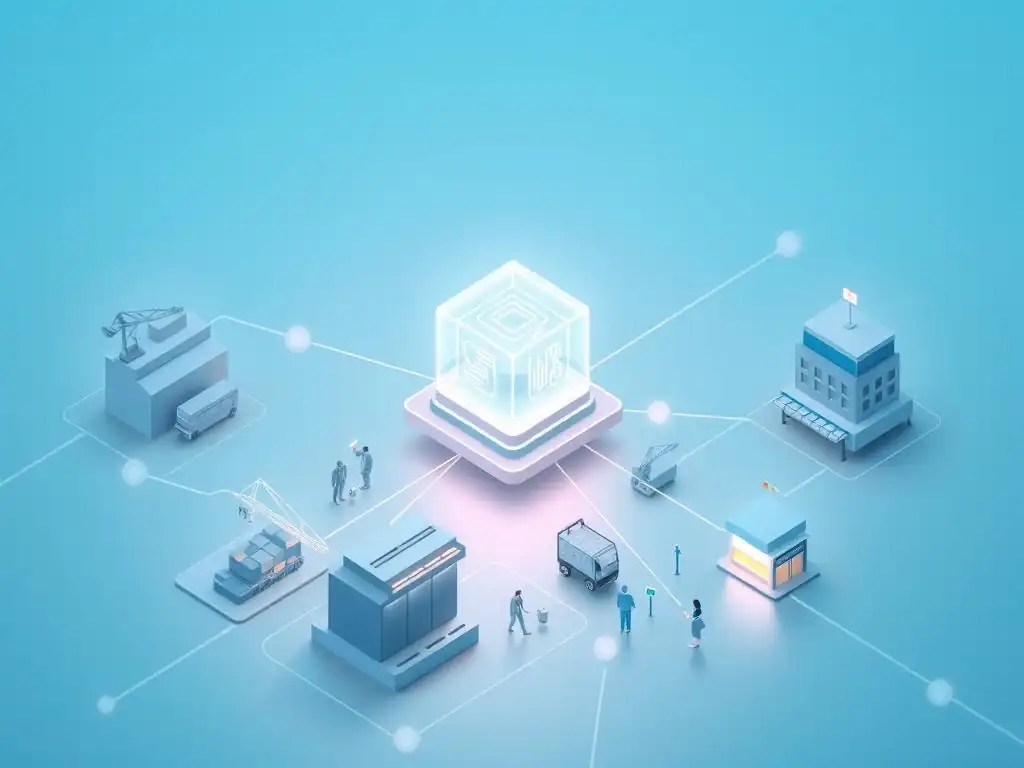
Selecting the Appropriate Blockchain Network (Public, Private, Consortium)
Implementing a blockchain-enabled SCaaS solution requires careful consideration of the underlying blockchain network type. Public blockchains (like Ethereum or Bitcoin) offer high decentralization and transparency but may face scalability limitations and lack the privacy required for sensitive commercial data. Private blockchains are controlled by a single entity, offering speed and privacy but sacrificing decentralization.
For most enterprise supply chain applications, a consortium or permissioned blockchain is often the preferred choice. These networks are governed by a group of pre-selected participants (e.g., key players in an industry) who control access and validate transactions. This model offers a balance of decentralization, privacy, scalability, and governance suitable for multi-party business processes while still delivering core blockchain supply chain management benefits. The selection depends heavily on the specific use case, the level of trust required among participants, and performance needs.
Integrating with Legacy Systems and ERP Platforms
One of the most significant technical challenges in adopting blockchain SCaaS is integrating the new platform with existing legacy systems, such as ERP (Enterprise Resource Planning) systems, Warehouse Management Systems (WMS), and Transportation Management Systems (TMS). These systems often contain critical operational data but were not designed to interact directly with distributed ledgers.
Successful integration requires developing robust APIs (Application Programming Interfaces) or middleware to ensure seamless data flow between legacy systems and the blockchain platform. This allows operational data (e.g., shipment confirmed, goods received) to be recorded on the blockchain while still leveraging the functionalities of existing systems for tasks like financial reporting or inventory planning. This integration is crucial to unlock the full blockchain supply chain management benefits without disrupting current operations.
Addressing Scalability and Performance Requirements
Supply chains generate massive volumes of data and require high transaction throughput, especially at peak times. While public blockchains have faced scalability challenges, enterprise-focused blockchain platforms and consortium networks are designed with higher performance in mind, often achieving thousands of transactions per second. However, it is critical to assess the platform's ability to handle the specific volume and velocity of transactions relevant to the supply chain in question.
Performance also relates to latency – the time it takes for a transaction to be confirmed on the ledger. Supply chain operations often require near real-time updates. Therefore, evaluating the consensus mechanism and network architecture to ensure it meets the required speed and scalability demands is essential. Careful planning and potentially phased rollouts are necessary to ensure the blockchain SCaaS solution can scale effectively with business growth and transaction volume.
Data Governance and Compliance with Regulations (e.g., GDPR)
Implementing a blockchain SCaaS solution necessitates a robust data governance framework. While blockchain offers immutability, it also raises questions about data privacy, particularly concerning regulations like GDPR (General Data Protection Regulation) which grant individuals the "right to be forgotten." Data stored on an immutable ledger cannot be easily erased, presenting a potential conflict.
Strategies to address this include storing sensitive personal data off-chain, with only a hashed reference on the blockchain, or using zero-knowledge proofs or other privacy-preserving techniques. Furthermore, consortium rules and smart contracts must enforce data access controls and ensure that only authorized parties can view specific information. Establishing clear policies on data ownership, access permissions, and compliance procedures from the outset is vital to navigate regulatory landscapes and ensure the responsible use of blockchain technology.
Real-World Examples of Blockchain SCaaS in Action
De Beers - Tracing Diamonds from Mine to Retail
De Beers, a leading diamond company, launched the Tracr platform, a blockchain-enabled system to track high-value diamonds throughout their journey from mine to retail. The diamond industry has long struggled with issues of provenance, ethical sourcing, and preventing "blood diamonds." Tracr assigns a unique digital ID to each diamond and records its movement and characteristics at every stage: mining, cutting, polishing, certification, and retail.
This system provides an immutable record of a diamond's origin and history, offering assurance to consumers and retailers about authenticity and ethical sourcing. Participants on the platform, including manufacturers and retailers, contribute data, creating a shared, transparent ledger. This initiative demonstrates a clear blockchain supply chain management benefit by enhancing trust and transparency in a complex, high-value supply chain and combating illicit trade.
Walmart - Tracking Food Products for Enhanced Safety and Recall Management
Walmart has been a pioneer in using blockchain for food traceability, particularly focusing on products like leafy greens. Following foodborne illness outbreaks that highlighted the inefficiency of traditional paper-based tracking methods, Walmart partnered with IBM to develop a blockchain solution. The system records data points such as farm origin, processing dates, and shipping information for each batch of produce.
In pilot tests, the time required to trace the origin of a food item was reduced from days or weeks to just seconds. This rapid traceability is critical during foodborne illness outbreaks, allowing for faster identification of contaminated products and targeted recalls, minimizing harm to consumers and reducing financial losses. This example powerfully illustrates the life-saving and efficiency-driving blockchain supply chain management benefits in the food industry.
Maersk - Streamlining Global Trade with Blockchain-Based Shipping Solutions
Maersk, the world's largest container shipping company, partnered with IBM to create TradeLens, a blockchain-based platform aimed at digitizing and streamlining global trade workflows. International shipping involves a complex web of carriers, ports, customs authorities, banks, and logistics providers, often relying on vast amounts of paper documentation. TradeLens provides a shared ledger for tracking containers and documenting events across the shipping process.
The platform records critical milestones like vessel departures, arrivals, customs releases, and container handovers. By providing a single, transparent, and immutable record accessible to all authorized parties, TradeLens reduces paperwork, minimizes manual data entry, and accelerates the flow of information. This leads to faster transit times, reduced costs, and improved predictability in global logistics, showcasing significant blockchain supply chain management benefits in international trade.
The Future of Blockchain in Supply Chain: Trends and Predictions
Integration with IoT Devices for Real-Time Data Capture
The future of blockchain in supply chain management is intrinsically linked with the Internet of Things (IoT). IoT sensors embedded in goods, containers, or vehicles can capture real-time data on location, temperature, humidity, shock, and other critical conditions. Integrating this data directly onto the blockchain creates a dynamic, verifiable record of a product's journey and environmental conditions.
For example, in cold chain logistics for pharmaceuticals or food, IoT sensors can continuously monitor temperature. If a temperature excursion occurs, this event can be automatically recorded on the blockchain, triggering alerts or smart contract actions. This combination of real-time physical data and immutable digital records enhances monitoring, improves quality control, and provides irrefutable evidence of handling conditions, amplifying the blockchain supply chain management benefits related to visibility and trust.
Use of AI and Machine Learning for Predictive Analytics
Blockchain's strength lies in providing highly accurate, trustworthy data. As vast amounts of supply chain data are recorded on distributed ledgers, this creates a rich dataset ripe for analysis using Artificial Intelligence (AI) and Machine Learning (ML). AI/ML algorithms can process this verified data to identify patterns, predict potential disruptions, optimize routes, forecast demand more accurately, and identify potential fraud or inefficiencies.
For instance, ML can analyze historical blockchain data on shipment times, weather patterns, and port congestion to predict delays. AI could analyze IoT sensor data recorded on the blockchain to predict equipment failure or product spoilage. Combining the integrity of blockchain data with the analytical power of AI/ML will enable more proactive, intelligent supply chain management, moving beyond simply tracking events to predicting and preventing issues, further maximizing blockchain supply chain management benefits.
Expansion of Decentralized Finance (DeFi) in Supply Chain Finance
Supply chain finance, involving processes like trade finance, factoring, and dynamic discounting, often suffers from complexity, lack of transparency, and limited access for smaller suppliers. Decentralized Finance (DeFi), which leverages blockchain and smart contracts to create open, permissionless financial protocols, has the potential to revolutionize supply chain finance.
DeFi applications could allow suppliers to receive instant payment upon proof of delivery recorded on the blockchain, using smart contracts to automate invoice financing or factoring. This could significantly improve cash flow for small and medium-sized enterprises (SMEs) within the supply chain. Furthermore, tokenization of assets on the blockchain could facilitate more liquid and accessible trade finance markets. The integration of DeFi principles offers substantial blockchain supply chain management benefits related to financial efficiency and inclusion.
Overcoming Barriers to Blockchain SCaaS Adoption
Ensuring Data Security and Addressing Privacy Concerns
Despite blockchain's inherent security features, implementing a SCaaS solution requires careful attention to data security and privacy. While the ledger is immutable, the data before it is added to the blockchain or stored off-chain must be secured. Ensuring robust cybersecurity measures for data input points and integrations is crucial.
Addressing privacy concerns, particularly regarding sensitive commercial data or personal information, is paramount. As mentioned, strategies like off-chain storage with on-chain hashes, zero-knowledge proofs, and strict permissioned access controls are necessary. Clearly defining data ownership, access rights, and governance policies within the consortium is vital to build trust among participants and navigate privacy regulations effectively.
Demonstrating ROI and Educating Stakeholders
A significant barrier to adoption is often the need to clearly demonstrate the Return on Investment (ROI) of blockchain SCaaS solutions. While the long-term blockchain supply chain management benefits in terms of efficiency, cost reduction, and risk mitigation are clear, quantifying these upfront can be challenging. Pilot projects with well-defined metrics are essential to prove value.
Educating stakeholders across the supply chain – from executives and IT teams to operational staff and external partners – is also critical. Blockchain is a complex technology, and misconceptions can hinder adoption. Providing clear training on how the platform works, its benefits, and how it impacts daily operations is necessary to foster buy-in and ensure successful implementation and utilization.
Establishing Industry Standards and Fostering Collaboration
For blockchain SCaaS to achieve widespread adoption, establishing industry-wide standards for data formats, protocols, and interoperability is crucial. Without common standards, different blockchain platforms may struggle to communicate, limiting the potential for truly interconnected supply chains. Initiatives by industry consortia are working towards developing these standards.
Fostering collaboration among potential participants is equally important. Blockchain's power in supply chain comes from its network effect – the more participants join, the more valuable it becomes. Building a consortium requires trust, shared governance models, and a willingness to collaborate on a shared platform, even among competing entities. Overcoming the inertia of traditional business practices and fostering this collaborative spirit is key to unlocking the full potential of blockchain supply chain management benefits.
Conclusion: Building Resilient and Transparent Supply Chains with Blockchain SCaaS
The Long-Term Impact of Blockchain on Supply Chain Transformation
Blockchain technology is not just an incremental improvement; it represents a fundamental shift in how supply chains can operate. Its long-term impact is the transformation of traditional, often opaque and fragmented, supply chains into highly transparent, secure, and efficient networks. By providing a single, immutable source of truth accessible to authorized parties, blockchain builds trust among disparate entities, enabling unprecedented levels of collaboration and coordination.
The verifiable traceability combats major issues like counterfeiting and ensures ethical sourcing. The automation capabilities streamline processes and reduce costs. Combined with the flexibility and scalability of the SCaaS model, blockchain-enabled platforms offer a powerful framework for building supply chains that are not only more efficient but also significantly more resilient to disruptions and adaptable to changing market demands. The enduring blockchain supply chain management benefits will reshape global commerce.
Preparing for a Future Driven by Decentralized Supply Chain Networks
The future of supply chain management is increasingly moving towards decentralized, interconnected networks powered by technologies like blockchain and IoT. Companies that proactively explore and adopt blockchain SCaaS solutions will be better positioned to thrive in this evolving landscape. Preparing involves understanding the technology, identifying relevant use cases within their own operations, and engaging with partners to explore collaborative initiatives.
Investing in the necessary infrastructure, developing expertise in blockchain integration, and establishing clear data governance policies are crucial steps. As industry standards mature and more consortiums form, the barriers to entry will decrease, making blockchain SCaaS more accessible. Embracing these decentralized models is key to unlocking the full spectrum of blockchain supply chain management benefits, enabling businesses to build supply chains that are not only efficient and cost-effective but also trusted, transparent, and truly resilient for the future.
Frequently Asked Questions
How does blockchain enhance supply chain visibility?
Blockchain provides a shared, immutable ledger that records every transaction, creating end-to-end transparency across the supply chain. This allows all participants to track goods in real-time, reducing fraud and improving efficiency. The enhanced visibility leads to better decision-making.
What are the key blockchain supply chain management benefits for businesses?
The primary benefits include increased transparency, improved traceability, and enhanced security. Blockchain also facilitates faster and more efficient transactions, reducing costs and improving overall supply chain performance. This can lead to a competitive advantage.
How does SCaaS platforms leverage blockchain technology?
SCaaS platforms integrate blockchain to offer secure and transparent supply chain management solutions. They facilitate data sharing and collaboration among all stakeholders, from manufacturers to consumers. This leads to improved efficiency and reduced costs.
What role does DeFi play in blockchain-enabled supply chains?
DeFi (Decentralized Finance) can streamline supply chain finance by enabling peer-to-peer lending and payments. This reduces reliance on traditional financial institutions and lowers transaction costs. DeFi also promotes greater financial inclusion for smaller suppliers.
What regulations are currently impacting the adoption of blockchain in supply chain management?
Regulatory uncertainty surrounding data privacy and security is a major concern. Compliance with regulations like GDPR is crucial for ensuring responsible blockchain implementation. The lack of standardized frameworks also presents a challenge for widespread adoption.
Okay, here's a final reflection designed to close your article "Supply Chain as a Service (SCaaS): Blockchain-Enabled Platforms for the Future," optimized for the keyword "Blockchain supply chain management benefits," and following the structure you provided:
Final Reflection: Unlocking Trust in the Supply Chain
The exploration of Supply Chain as a Service (SCaaS) through blockchain technology reveals a paradigm shift, where transparency and efficiency are no longer aspirations but achievable realities. The benefits, from enhanced traceability to reduced fraud, are not merely theoretical advantages; they represent a tangible pathway to building more resilient and trustworthy global supply chains in an increasingly complex world.
The potential of blockchain to revolutionize supply chain management extends far beyond cost savings and operational improvements. It fosters a new era of collaboration and accountability, empowering consumers to make informed choices and holding businesses to higher ethical standards. The future of supply chains is not just about moving goods; it's about moving information and building trust.
This shift towards transparency and ethical sourcing is not just a trend; it's a fundamental change in how we perceive and interact with the products we consume.
As we stand on the cusp of this technological revolution, let us consider the profound implications of blockchain-enabled SCaaS. What role will you play in shaping this future? How can you leverage these insights to advocate for greater transparency and sustainability in the supply chains that touch your life? The power to build a more ethical and efficient world lies within our collective understanding and adoption of these transformative technologies.
Empower Your Supply Chain: Embrace the Blockchain Revolution!
Thank you for exploring the transformative potential of blockchain technology in supply chain management. We hope this article has highlighted how blockchain is reshaping the future of global commerce by creating more transparent, resilient, and efficient supply chains. Now, it's time to take action!
Here are a few ways to apply the insights you've gained:
- Identify a specific area in your current supply chain that could benefit from blockchain integration and start researching suitable platforms. This is your primary step!
- Share this article with colleagues and industry peers to spark discussions on how blockchain can revolutionize supply chain operations. Let’s build a community of innovators!
- Explore related articles on Blockchain Trends to learn about successful blockchain implementations across various industries for inspiration and best practices.
What particular challenge in your supply chain could most benefit from a blockchain-powered solution? What are your initial ideas for addressing it? Share your thoughts in the comments below!
Leave a Reply