
Securing the Future of Global Trade: Blockchain's Promise for Supply Chain Security

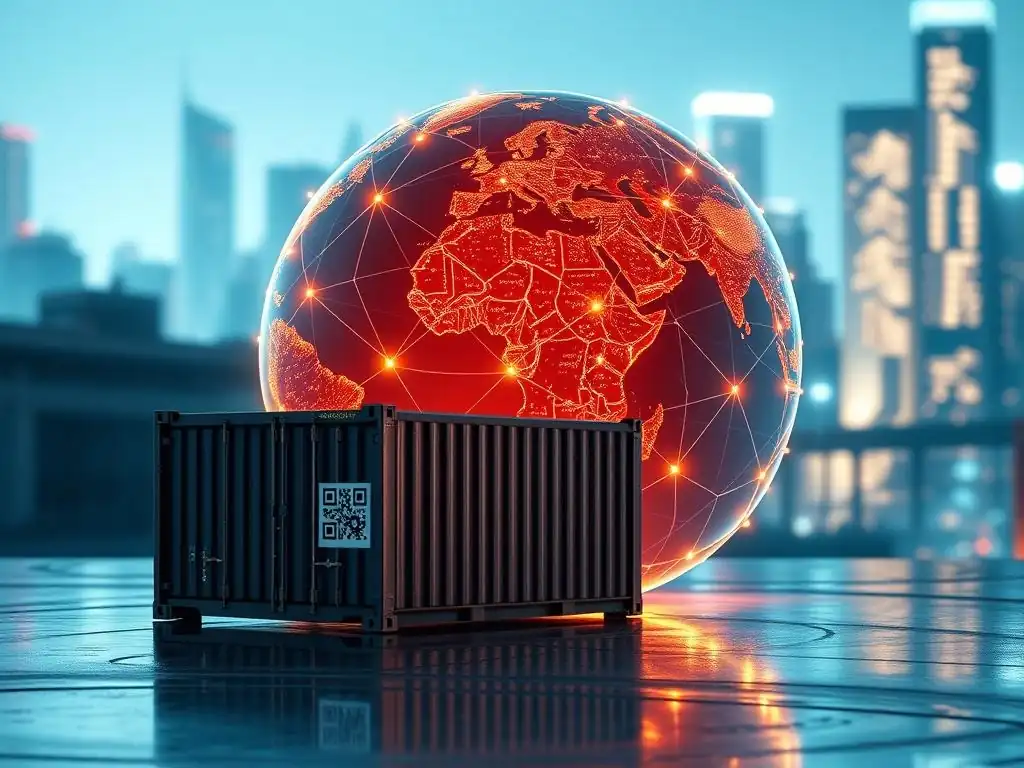
Welcome to Blockchain Trends, your compass in the rapidly evolving world of decentralized technology. Beyond the headlines about cryptocurrencies, blockchain is reshaping industries, from finance to supply chain management.
Are you ready to uncover how blockchain can revolutionize global trade? Dive into our exploration of blockchain supply chain security benefits and discover how this technology is forging a more transparent, efficient, and secure future for businesses worldwide. What vulnerabilities can it truly address, and what are the real-world implications? Let's unlock the answers together.
Securing the Future of Global Trade: Blockchain's Promise for Supply Chain Security
- Introduction: The Urgent Need for Enhanced Supply Chain Security
- Understanding Blockchain's Role in Supply Chain Management
- Blockchain Supply Chain Security Benefits: A Detailed Examination
- Real-World Applications of Blockchain for Supply Chain Security
- Overcoming Challenges in Blockchain Implementation for Supply Chains
- The Future of Blockchain in Supply Chain Security
- Conclusion: Embracing Blockchain for a Secure and Efficient Future of Global Trade
-
Frequently Asked Questions
- How does blockchain enhance supply chain security?
- What are the key benefits of using blockchain for supply chain management?
- What are some real-world examples of blockchain being used to improve supply chain security?
- What are the main challenges to implementing blockchain in supply chains?
- How does blockchain contribute to regulatory compliance in global supply chains?
- Final Reflection: Embracing Transparency in a Connected World
Introduction: The Urgent Need for Enhanced Supply Chain Security
The Growing Vulnerabilities in Global Supply Chains
Global supply chains have become increasingly complex, spanning multiple continents, intermediaries, and modes of transport. This intricate web, while enabling efficient global trade, simultaneously introduces significant vulnerabilities. Issues such as counterfeiting, theft, fraud, and data manipulation pose substantial risks, leading to billions of dollars in losses annually.
For instance, global losses from counterfeiting and piracy were estimated to reach $1.7 trillion in 2015 and were projected to grow to $2.8 trillion by 2022, highlighting the scale of the problem. These vulnerabilities not only impact revenue but also erode consumer trust and can pose serious health and safety risks, particularly in industries like pharmaceuticals and food.
Furthermore, the lack of transparency across different stages of the supply chain makes it difficult to pinpoint the source of disruptions or fraudulent activities. When a product moves from manufacturer to distributor, then to a retailer, and finally to the end consumer, each handover can be a point of failure or manipulation.
Manual record-keeping, siloed data systems, and reliance on paper documentation exacerbate these issues, creating blind spots that criminals can exploit. The COVID-19 pandemic further exposed the fragility of these systems, revealing how disruptions at one point can cascade throughout the entire chain, impacting everything from essential goods to critical manufacturing components.
How Blockchain Technology Addresses Supply Chain Challenges
Blockchain technology offers a revolutionary approach to tackling these deep-seated issues by creating a shared, immutable, and transparent ledger of transactions. Unlike traditional centralized databases, a blockchain is distributed across many computers, making it incredibly difficult for any single party to alter data without consensus from the network.
This inherent design addresses the lack of trust and transparency that plagues current supply chains. By recording every transaction – from the origin of raw materials to the delivery of the final product – on a blockchain, all authorized participants can have a single, verifiable source of truth regarding a product's journey.
The application of blockchain technology in supply chains provides a robust framework for enhancing security and efficiency. It enables real-time tracking, ensures the integrity of data related to product provenance and handling, and automates processes through smart contracts. This shift from opaque, fragmented systems to a transparent, interconnected network fundamentally changes how goods move and how information is shared. The potential blockchain supply chain security benefits are vast, promising reduced fraud, faster dispute resolution, and greater confidence among all stakeholders, from suppliers and logistics providers to regulators and consumers.
Understanding Blockchain's Role in Supply Chain Management
What is Blockchain and How Does it Work?
At its core, a blockchain is a decentralized, distributed ledger that records transactions across many computers. These transactions are grouped into "blocks," which are then chronologically linked together using cryptographic hashes, forming a "chain" of blocks. Once a block is added to the chain, it cannot be altered without changing all subsequent blocks, a task that is computationally infeasible due to the distributed nature of the network and the consensus mechanisms required to validate new blocks. This immutability is a cornerstone of blockchain's security features.
The process begins when a transaction occurs (e.g., a product changing hands). This transaction is broadcast to a network of computers, or "nodes." These nodes validate the transaction based on predefined rules. Once validated, the transaction is added to a block of other validated transactions. This new block is then added to the existing blockchain through a consensus mechanism (like Proof-of-Work or Proof-of-Stake), which ensures that all participating nodes agree on the state of the ledger. This distributed validation and storage mean there is no single point of failure, making the system highly resilient and resistant to tampering.
Key Features of Blockchain for Supply Chains: Transparency, Immutability, and Security
The inherent features of blockchain technology are particularly well-suited for improving supply chain operations. Transparency is achieved because all authorized participants on the network can view the same ledger data, tracking the movement and status of goods in near real-time. This shared visibility eliminates information silos and reduces disputes arising from data discrepancies. For instance, knowing exactly when a shipment left a port or arrived at a warehouse becomes instantly verifiable by all relevant parties.
Immutability, as mentioned, ensures that once data is recorded on the blockchain, it cannot be changed or deleted. This creates an unalterable audit trail of every transaction and event within the supply chain. If a product's temperature must remain within a certain range during transit, sensors can record data directly onto the blockchain, providing an immutable record that proves compliance or highlights deviations.
This feature is crucial for ensuring the authenticity and history of products, significantly enhancing blockchain supply chain security benefits. Security is embedded through cryptography; each block is cryptographically linked to the previous one, and transactions are secured using digital signatures. The decentralized nature further bolsters security by removing the central point of attack that traditional databases present.
Blockchain Supply Chain Security Benefits: A Detailed Examination
Enhanced Transparency and Traceability with Blockchain
One of the most significant blockchain supply chain security benefits is the dramatic increase in transparency and traceability. By recording every step a product takes on an immutable ledger, companies can achieve end-to-end visibility across their entire supply chain. This means tracking raw materials from their origin, through manufacturing, assembly, distribution, and finally to the consumer. Every transaction, including changes in ownership, location, and status, is recorded and accessible to authorized network participants.
This level of transparency allows businesses to quickly identify the source of issues, whether it's a quality defect, a delay, or a potential point of contamination. For example, in the event of a product recall, companies using blockchain can pinpoint the affected batch and its distribution path within minutes, rather than days or weeks, significantly reducing the impact on consumers and the business. This granular traceability not only improves responsiveness but also builds trust by providing consumers with verifiable information about the products they purchase, such as their origin and authenticity.
Reducing Counterfeiting and Fraud in the Supply Chain
Counterfeiting and fraud are pervasive problems that cost industries billions annually and can pose serious health risks. Blockchain offers a powerful tool to combat these issues. By creating a secure, verifiable digital identity for each product or batch, and recording its entire history on the blockchain, it becomes much harder for counterfeit goods to enter the legitimate supply chain. Companies can assign unique identifiers (like QR codes or RFID tags) linked to blockchain entries that verify a product's authenticity at any point.
Consumers and businesses can scan these identifiers to access the product's immutable history on the blockchain, verifying its origin and journey. This makes it extremely difficult for counterfeiters to replicate the entire, verifiable history of a genuine product. Furthermore, blockchain can track critical documentation, such as certificates of authenticity or compliance, preventing fraudulent claims. The transparency and immutability inherent in the technology provide a robust defense mechanism against fraudulent activities, significantly contributing to the overall blockchain supply chain security benefits.
Improved Data Integrity and Security Through Decentralization
Traditional supply chain data is often stored in disparate, centralized databases, making it vulnerable to hacking, errors, and unauthorized modifications. A key blockchain supply chain security benefit is the improvement of data integrity and security through its decentralized and cryptographic nature. Data recorded on a blockchain is distributed across multiple nodes, meaning there is no single point of failure that a malicious actor can target to compromise the entire system.
Any attempt to alter data on the blockchain would require changing the block on every node in the network, which is practically impossible for public or large private blockchains. Furthermore, the cryptographic linking of blocks ensures that any modification would break the chain, immediately alerting participants to the attempted tampering. This distributed ledger technology ensures that the data reflecting the state and history of goods in the supply chain is highly secure, accurate, and trustworthy, providing a reliable foundation for decision-making and auditability.
Streamlining Processes and Reducing Delays with Blockchain Technology
Beyond security, blockchain can significantly streamline supply chain processes, leading to increased efficiency and reduced delays. Many delays in traditional supply chains stem from manual processes, paper-based documentation, and the need for multiple parties to verify and reconcile information. Blockchain can automate these processes using smart contracts. Smart contracts are self-executing contracts with the terms of the agreement directly written into code.
For instance, a smart contract can automatically trigger payment to a supplier once a shipment is verified as received on the blockchain. This eliminates the need for manual invoicing and payment processing, speeding up transactions and reducing administrative overhead.
Similarly, customs clearance can be expedited by providing regulators with secure, real-time access to verified shipment data on the blockchain. By automating trust and verification, blockchain reduces the friction points in the supply chain, leading to faster movement of goods and significant cost savings, further enhancing the overall blockchain supply chain security benefits by reducing opportunities for delay-related issues or data discrepancies.
Real-World Applications of Blockchain for Supply Chain Security

Case Study 1: De Beers' Diamond Tracking with Blockchain
De Beers, a leading diamond company, launched the Tracr platform, a blockchain-based system to track diamonds from mine to retailer. The diamond industry has long faced challenges with provenance verification, combating conflict diamonds, and assuring consumers of their purchase's authenticity. Tracr assigns a unique ID to each rough diamond, recording its journey through cutting, polishing, certification, and retail on an immutable ledger.
This initiative provides unprecedented transparency and assurance regarding the origin and authenticity of diamonds. By recording each step on the blockchain, De Beers and participating partners create a secure and verifiable history for each stone. This not only enhances consumer trust but also strengthens efforts to prevent illicit diamonds from entering the market, demonstrating tangible blockchain supply chain security benefits in a high-value industry.
Case Study 2: Walmart's Food Traceability Initiative with Blockchain
Walmart has pioneered the use of blockchain for food traceability, particularly focusing on leafy greens. Following outbreaks of foodborne illnesses, the retail giant sought a faster way to trace contaminated produce back to its source. Traditionally, tracing a single product back through the supply chain could take days or even weeks, involving numerous phone calls, emails, and paper records.
By implementing a blockchain solution (in partnership with IBM Food Trust), Walmart significantly reduced this time. In a pilot test, tracing a package of mangoes from store back to farm took seconds using the blockchain, compared to the average of seven days using traditional methods. This rapid traceability is critical for public health and safety, allowing for quicker identification and removal of contaminated food from shelves, showcasing a direct public safety blockchain supply chain security benefit.
Case Study 3: Maersk and IBM's TradeLens Platform
Maersk, the world's largest container shipping line, partnered with IBM to create TradeLens, a blockchain-enabled platform for global supply chains. The platform aims to connect shippers, ports and terminals, customs authorities, and logistics providers on a single, shared ledger. The shipping industry is notoriously complex, involving hundreds of different parties and vast amounts of documentation, leading to delays, errors, and lack of visibility.
TradeLens provides a single source of truth for shipment data, including container movements, customs releases, and cargo manifests. By digitizing and sharing this information securely on a blockchain, it reduces the need for manual processes and paper documents, decreasing transit times and costs. For example, some estimates suggest the platform can reduce the time it takes for goods to travel from origin to destination by up to 40%, while also improving security and transparency across the complex network of global trade, illustrating broad blockchain supply chain security benefits across logistics.
Overcoming Challenges in Blockchain Implementation for Supply Chains
Scalability Issues and Potential Solutions
While promising, implementing blockchain in large-scale global supply chains faces challenges, particularly concerning scalability. Public blockchains, like Bitcoin or Ethereum, can process a limited number of transactions per second, which is insufficient for the high volume of transactions in major supply chains. As more participants and data are added, network performance can degrade.
However, significant progress is being made to address scalability. Layer 2 solutions, sidechains, and sharding are being developed and implemented to increase transaction throughput. Private and permissioned blockchains, which are more common in enterprise settings, can often achieve higher transaction speeds by limiting the number of participants and using more efficient consensus mechanisms. Ongoing research and development in blockchain architecture are continuously improving scalability, making it more viable for handling the demands of complex global logistics.
Interoperability Challenges and Standards Development
Another hurdle is interoperability – the ability of different blockchain networks and legacy systems to communicate and share data seamlessly. Supply chains involve diverse stakeholders using various technologies and platforms. Getting these disparate systems to work together with a blockchain can be complex. Without interoperability, data silos can reappear, undermining the benefits of a shared ledger.
Industry initiatives are working towards developing common standards and protocols for blockchain in supply chain management. Organizations like the Trusted IoT Alliance and the Blockchain in Transport Alliance (BiTA) are creating frameworks and standards to promote interoperability between different blockchain platforms and existing enterprise systems. API integrations and middleware solutions are also being developed to bridge the gap between legacy systems and new blockchain networks, facilitating smoother data exchange and enhancing blockchain supply chain security benefits across interconnected systems.
Regulatory Considerations and Compliance
The regulatory landscape for blockchain technology is still evolving globally. Different countries have varying stances on data privacy, digital signatures, and the legal status of smart contracts. Supply chains operate across multiple jurisdictions, making compliance with diverse regulations a significant challenge. Ensuring that a blockchain solution meets all relevant legal requirements, such as GDPR for data privacy or industry-specific regulations (e.g., pharmaceuticals), is crucial.
Companies implementing blockchain must navigate these complex legal waters, potentially requiring tailored solutions for different regions. Collaboration between industry stakeholders, regulators, and legal experts is essential to establish clear guidelines and frameworks. As regulatory clarity improves, it will pave the way for broader adoption and unlock the full blockchain supply chain security benefits within a compliant legal framework.
The Cost of Implementing Blockchain Solutions
Implementing a blockchain solution is not without cost. It requires investment in technology infrastructure, software development, integration with existing systems, and training for personnel. The complexity of migrating from legacy systems and ensuring smooth operation can be substantial, especially for large enterprises with deeply entrenched processes.
While initial implementation costs can be high, proponents argue that the long-term blockchain supply chain security benefits and efficiencies outweigh the upfront investment. Reduced losses from fraud and counterfeiting, faster processes, lower administrative costs, and improved supply chain resilience can lead to significant cost savings over time. Companies must conduct thorough cost-benefit analyses and potentially start with pilot projects to demonstrate value before a full-scale rollout.
The Future of Blockchain in Supply Chain Security
Emerging Trends: Blockchain and IoT Integration
A major emerging trend is the integration of blockchain with the Internet of Things (IoT). IoT devices, such as sensors tracking temperature, location, or humidity, can collect real-time data about the condition and environment of goods in transit. By linking these IoT devices to a blockchain network, the data they collect can be automatically and immutably recorded onto the ledger.
This integration creates a powerful synergy. The IoT provides the real-time physical data, while the blockchain provides a secure, transparent, and tamper-proof record of that data. This is particularly valuable for sensitive goods like food or pharmaceuticals, where maintaining specific conditions is critical. Any deviation recorded by an IoT sensor is instantly logged on the blockchain, providing verifiable proof of compliance or non-compliance, significantly enhancing blockchain supply chain security benefits related to product quality and handling integrity.
The Role of Blockchain in Building More Resilient Supply Chains
Recent global events have highlighted the need for more resilient supply chains capable of withstanding disruptions. Blockchain technology can play a crucial role in building this resilience. By providing end-to-end visibility, it allows companies to quickly identify where disruptions have occurred and assess their potential impact. The transparent, shared ledger enables better coordination among supply chain partners during crises.
Furthermore, blockchain can facilitate the creation of decentralized networks where information flows more freely and decisions can be made based on accurate, real-time data shared across the ecosystem. Smart contracts can automate responses to specific events, such as rerouting shipments or triggering alternative sourcing agreements based on predefined conditions. This inherent flexibility and data integrity contribute significantly to making supply chains more robust and adaptable, adding another layer to the blockchain supply chain security benefits by improving overall stability.
Predictions for the Adoption of Blockchain in Global Trade
Industry analysts predict significant growth in the adoption of blockchain technology within global trade and supply chain management in the coming years. Reports from various research firms consistently point towards a substantial increase in market size. For example, one analysis projected the global supply chain blockchain market size to grow from $253 million in 2020 to over $3.3 billion by 2026, indicating a compound annual growth rate (CAGR) of over 50%.
While challenges remain, the demonstrable blockchain supply chain security benefits, coupled with potential efficiency gains and cost reductions, are driving increasing interest and investment. As pilot projects prove successful and the technology matures, overcoming scalability and interoperability hurdles, blockchain is poised to become a standard component of modern, secure, and efficient global supply chain operations. Early adopters are setting the stage for widespread integration across various industries.
Conclusion: Embracing Blockchain for a Secure and Efficient Future of Global Trade
The Long-Term Vision for Blockchain-Enabled Supply Chains
The long-term vision for blockchain-enabled supply chains is one of unprecedented transparency, security, and efficiency. Imagine a global trade ecosystem where every product's journey is recorded on a secure, shared ledger, accessible to authorized parties. This would drastically reduce opportunities for fraud, counterfeiting, and theft. Disputes over shipment details or product authenticity would be resolved quickly using immutable blockchain data.
In this future, smart contracts would automate complex trade finance processes, customs declarations, and payments, significantly reducing administrative burdens and delays. Supply chains would be inherently more resilient, able to adapt quickly to disruptions thanks to real-time visibility and automated responses. This interconnected, trustworthy network promises not just enhanced blockchain supply chain security benefits, but a fundamental transformation in how goods are produced, transported, and consumed globally.
Call to Action: Embracing Blockchain for a More Secure and Transparent Global Trade Ecosystem
The evidence is clear: blockchain technology offers compelling solutions to the long-standing vulnerabilities in global supply chains. From enhancing transparency and traceability to combating counterfeiting and improving data security, the blockchain supply chain security benefits are substantial and transformative. While challenges related to implementation cost, scalability, and interoperability exist, they are actively being addressed by ongoing technological advancements and industry collaboration.
For businesses involved in global trade – manufacturers, logistics providers, retailers, and financial institutions – exploring and adopting blockchain solutions is no longer a futuristic concept but a strategic imperative. Embracing this technology can lead to significant operational efficiencies, reduced risk, improved customer trust, and a stronger competitive advantage. The path towards a more secure, transparent, and efficient global trade ecosystem lies in leveraging the power of blockchain.
Frequently Asked Questions
How does blockchain enhance supply chain security?
Blockchain provides a shared, immutable ledger, making it difficult to tamper with data. This increased transparency and traceability helps verify product authenticity and prevent counterfeiting.
What are the key benefits of using blockchain for supply chain management?
The main benefits include improved visibility, reduced fraud, and enhanced efficiency. Blockchain also fosters greater trust among stakeholders in the supply chain.
What are some real-world examples of blockchain being used to improve supply chain security?
Companies are using blockchain to track pharmaceutical products, food origins, and luxury goods. This ensures product authenticity and combats counterfeiting.
What are the main challenges to implementing blockchain in supply chains?
Challenges include scalability issues, lack of standardization, and the complexity of integrating with existing systems. Data privacy concerns also need to be addressed.
How does blockchain contribute to regulatory compliance in global supply chains?
Blockchain offers immutable records that provide evidence of compliance with regulations. This makes it easier to track product origins, certifications, and adherence to ethical sourcing practices.
Final Reflection: Embracing Transparency in a Connected World
The exploration of blockchain's potential within global trade reveals a critical truth: supply chain security is no longer a luxury, but a necessity for a thriving global economy. The vulnerabilities exposed by traditional systems demand innovative solutions, and blockchain offers a compelling path towards enhanced transparency, traceability, and trust in an increasingly interconnected world.
The impact of secure and efficient supply chains extends far beyond mere logistics; it shapes consumer confidence, fosters ethical sourcing, and ultimately, influences the stability of global markets. Witnessing the transformative potential of blockchain firsthand underscores the urgency of its adoption. The supply chain is the backbone of global commerce, and securing it is paramount to ensuring economic stability and consumer trust.
This quote encapsulates the profound responsibility we have to safeguard the intricate networks that deliver goods and services worldwide.
As we stand at the cusp of a new era in global trade, let us embrace the opportunities presented by blockchain technology. Consider how you, as a consumer, a business owner, or a policymaker, can champion the adoption of secure and transparent supply chains. The future of global trade hinges on our collective commitment to building a more resilient and trustworthy system for all.
Unleash the Power of Transparency: Secure Your Supply Chain Today!
Thank you for exploring how blockchain technology can enhance supply chain security. You've seen how it can foster trust and resilience in a complex world. Are you ready to take the next step?
Start by implementing a small, traceable segment of your supply chain using blockchain technology. Document your results and share your insights with colleagues. Consider collaborating with industry partners to develop shared standards and improve transparency collectively. Additionally, initiate a conversation on professional networks about the transformative impact of blockchain in supply chains, using relevant hashtags to connect with peers.
What is the immediate action you will take this week to explore blockchain's potential in your industry?
Leave a Reply