
Blockchain Sharding: The Ultimate Guide to Scaling Decentralized Networks


Welcome to Blockchain Trends, your compass in the ever-evolving world of decentralized technology!
Ever wondered how blockchain technology can truly scale beyond its current limitations? Delve into our exploration of blockchain scaling solutions benefits, beginning with an in-depth look at sharding. Discover how this revolutionary technique is paving the way for faster, more efficient, and truly scalable decentralized networks. Learn about the potential and the challenges that lie ahead as we unlock the future of blockchain. What will the future scalability be?
Blockchain Sharding: The Ultimate Guide to Scaling Decentralized Networks
- Introduction to Blockchain Sharding: A Critical Blockchain Scaling Solution
- What is Blockchain Sharding? A Deep Dive
- Types of Blockchain Sharding Architectures
- Blockchain Sharding Solutions Benefits: Addressing Scalability Challenges
- Alternative Blockchain Scaling Solutions: Beyond Sharding
- Challenges and Considerations in Implementing Blockchain Sharding
- Real-World Applications and Examples of Blockchain Sharding
- The Future of Blockchain Sharding and Decentralized Systems
- Conclusion: Embracing Blockchain Sharding for a Scalable Future
-
Frequently Asked Questions
- What is blockchain sharding and how does it improve blockchain performance?
- How does sharding address the "Blockchain Trilemma" (security, scalability, decentralization)?
- What are the main challenges associated with implementing blockchain sharding?
- What are some real-world applications or examples where blockchain sharding is being actively explored or implemented?
- What are the potential long-term benefits of blockchain scaling solutions like sharding for various industries?
- Final Reflection: Embracing the Scalable Future of Decentralization
- Unleash the Power of Scalable Blockchains!
Introduction to Blockchain Sharding: A Critical Blockchain Scaling Solution
The Blockchain Scalability Problem: Why Sharding Matters
Blockchain technology, since its inception with Bitcoin, has promised decentralization, security, and transparency. However, as blockchain networks have grown in popularity and adoption, a significant bottleneck has emerged: scalability. The scalability problem refers to the limitations in transaction processing speed and network capacity as the number of users and transactions increases. Traditional blockchains, in their original monolithic design, require every node in the network to process and validate every single transaction.
This consensus mechanism, while crucial for security and decentralization, inherently limits the transaction throughput. For instance, Bitcoin's network, designed to prioritize security and decentralization, can only handle around 7 transactions per second (TPS). Ethereum, while more advanced, still operates around 15-30 TPS in its current state. These figures are dwarfed by centralized payment processors like Visa, which can handle thousands of transactions per second.
This disparity hinders the widespread adoption of blockchain for applications requiring high transaction volumes, such as global payments, high-frequency trading, or social media platforms. Addressing blockchain scalability is not merely about increasing TPS; it's about enabling blockchain technology to fulfill its potential as a robust and widely usable infrastructure for a decentralized future. Without effective blockchain scaling solutions benefits, the promise of decentralized applications and Web3 remains constrained.
The need for blockchain scaling solutions becomes even more critical when considering the potential for mass adoption. Imagine a scenario where billions of devices and users interact with blockchain-based applications daily. The current throughput capabilities of most blockchains would be insufficient to handle such demand, leading to network congestion, increased transaction fees, and slower confirmation times.
This poor user experience would deter adoption and undermine the viability of blockchain technology for mainstream use cases. The scalability problem directly impacts the user experience, the cost-effectiveness of using blockchain networks, and ultimately, the overall success and applicability of decentralized technologies.
Therefore, finding robust and efficient blockchain scaling solutions benefits not only the technical performance of the network, but also the long-term viability and broader societal impact of blockchain technology. Sharding, as a potential solution, directly addresses these limitations by aiming to distribute the workload across the network, thereby increasing overall throughput and efficiency.
Understanding Decentralized Networks and Their Limitations
Decentralized networks, at their core, are designed to distribute control and decision-making power across multiple participants rather than centralizing it in a single entity. This fundamental principle is what provides blockchains with their characteristic security, censorship resistance, and transparency. In a traditional centralized system, a single server or authority handles all operations, creating a single point of failure and vulnerability. Decentralized networks, conversely, rely on a distributed ledger replicated across numerous nodes, each independently verifying and recording transactions.
This distributed nature makes the network more resilient to attacks and manipulation, as compromising a single node has minimal impact on the overall network integrity. The consensus mechanism, the heart of a decentralized network, ensures that all nodes agree on the state of the ledger, further enhancing security and trust. Examples of decentralized networks range from peer-to-peer file-sharing systems like BitTorrent to decentralized autonomous organizations (DAOs) managing digital assets.
However, this very decentralization, which is a strength in terms of security and resilience, presents inherent limitations when it comes to scalability. The requirement for each node to process every transaction creates a significant computational overhead. As the network grows, the amount of data and transactions that need to be processed and validated by each node increases proportionally, leading to slower transaction speeds and higher latency.
This is because the entire network must reach a consensus on every transaction before it is added to the blockchain. This process, while ensuring data integrity and security, becomes increasingly time-consuming and resource-intensive as the network scales. Furthermore, the bandwidth required for each node to communicate and synchronize with the entire network also increases, potentially leading to network congestion and further performance degradation.
These limitations are not inherent flaws of decentralization itself, but rather challenges that need to be addressed to realize the full potential of decentralized systems for mass-scale applications. Blockchain scaling solutions benefits aim to overcome these limitations without compromising the core principles of decentralization and security.
Exploring Blockchain Sharding as a Potential Solution
Blockchain sharding emerges as a promising blockchain scaling solution, drawing inspiration from database sharding techniques used in traditional distributed databases. In essence, sharding aims to break down the monolithic blockchain into smaller, more manageable pieces called "shards." Instead of every node processing every transaction, nodes are divided into groups and assigned to specific shards.
Each shard operates as its own independent blockchain, responsible for processing a subset of the network's transactions. This parallel processing significantly increases the overall transaction throughput of the network, as multiple shards can process transactions concurrently. Imagine a highway with multiple lanes instead of a single lane; sharding provides these multiple lanes, allowing for a much higher volume of traffic to flow smoothly.
The potential blockchain scaling solutions benefits of sharding are substantial. By distributing the computational and storage burden across shards, the network can handle a significantly larger number of transactions per second compared to a non-sharded blockchain. This increased throughput translates to faster transaction confirmation times and reduced transaction fees, making the network more efficient and user-friendly.
Moreover, sharding can improve the overall scalability of the network, allowing it to accommodate a growing number of users and applications without performance degradation. While still under active development and research, sharding represents a paradigm shift in blockchain architecture, moving away from the "one-size-fits-all" monolithic approach towards a more modular and scalable design.
It's important to note that implementing sharding in a decentralized and secure manner is a complex undertaking, requiring careful consideration of various technical challenges, including cross-shard communication, data availability, and security across shards. However, the potential gains in scalability and performance make sharding a crucial area of focus for the future of blockchain technology and its widespread adoption.
What is Blockchain Sharding? A Deep Dive
Defining Blockchain Sharding: Partitioning for Performance
Blockchain sharding, at its core, is a database partitioning technique adapted for blockchain technology to enhance scalability and performance. It involves dividing a blockchain network into smaller, manageable units called "shards." Think of it as partitioning a large database table into smaller tables, each containing a subset of the data. In the context of blockchain, these shards are essentially mini-blockchains, each with its own independent state, transaction history, and set of validators.
Instead of the entire network processing every transaction, each shard is responsible for processing only a fraction of the network's transactions. This division of labor allows for parallel processing, dramatically increasing the overall transaction throughput capacity of the blockchain network. The primary goal of sharding is to achieve horizontal scalability, meaning the network's capacity can be increased by simply adding more shards, similar to adding more servers to handle increased load in a traditional distributed system.
The key benefit of blockchain sharding, and the reason it's considered a significant blockchain scaling solution benefit, is the dramatic improvement in transaction processing speed. By distributing the workload across multiple shards, the network can process significantly more transactions concurrently.
For example, if a blockchain is sharded into 10 shards, theoretically, it could potentially process transactions up to 10 times faster than a non-sharded blockchain, assuming efficient cross-shard communication and minimal overhead. This performance boost is crucial for enabling blockchain technology to handle the demands of real-world applications requiring high transaction volumes.
Furthermore, sharding can also lead to reduced latency, as transactions within a shard can be confirmed more quickly since fewer validators are involved in the consensus process for each shard. The concept of partitioning for performance is central to sharding, allowing blockchain networks to break free from the scalability limitations inherent in monolithic architectures and pave the way for wider adoption and more complex decentralized applications.
How Sharding Works: Dividing the Blockchain
The process of dividing a blockchain into shards involves several key steps and considerations, ensuring that security, decentralization, and data integrity are maintained while achieving scalability. First, the network needs a mechanism to divide validators into groups and assign them to specific shards. This assignment process is crucial to prevent malicious actors from concentrating their power in a single shard and compromising its security.
Typically, this is achieved through random assignment mechanisms, often leveraging cryptographic randomness generated on the blockchain itself to ensure unpredictability and fairness. For instance, techniques like Verifiable Random Functions (VRFs) can be used to randomly select validators for each shard in a provably fair and secure manner.
Once validators are assigned to shards, each shard operates largely independently, maintaining its own ledger and processing transactions assigned to it. Transactions are routed to specific shards based on a sharding scheme, which could be based on account addresses, transaction types, or other criteria. For example, in account-based sharding, transactions involving accounts within a specific address range might be assigned to a particular shard.
Within each shard, validators participate in a consensus mechanism, similar to the main blockchain, to validate and finalize transactions within that shard. This intra-shard consensus ensures the security and integrity of transactions within each shard. The division of the blockchain is not merely a physical separation; it's a logical partitioning that distributes both the computational and storage burden.
Each shard only needs to maintain a portion of the overall blockchain state and process a subset of the network's transactions, significantly reducing the resource requirements for individual nodes and enabling the network to scale horizontally. This intricate process allows sharding to offer significant blockchain scaling solutions benefits without sacrificing the fundamental principles of blockchain technology.
The Role of Cross-Shard Communication
While sharding divides the blockchain into independent units for scalability, the need for interaction and communication between these shards is often unavoidable. Cross-shard communication is essential for scenarios where transactions involve accounts or data residing in different shards. For example, if Alice in shard A wants to send tokens to Bob in shard B, a mechanism is needed to facilitate this cross-shard transfer.
This inter-shard communication presents a significant technical challenge, as it needs to be secure, efficient, and maintain the overall consistency of the blockchain network. Inefficient or insecure cross-shard communication can become a bottleneck and undermine the scalability gains achieved through sharding.
Several approaches exist to address cross-shard communication, each with its own trade-offs in terms of security, latency, and complexity. One common approach is to use "receipts" or "proofs" to verify cross-shard transactions. When a transaction needs to be transferred between shards, the sending shard generates a cryptographic proof of the transaction's validity and sends it to the receiving shard.
The receiving shard then verifies this proof before processing the transaction on its side. Another approach involves using a "beacon chain" or "root chain" to coordinate cross-shard communication and maintain overall network state. The beacon chain acts as a central coordinator, facilitating communication and ensuring consistency across all shards.
Regardless of the specific approach, secure and efficient cross-shard communication is paramount for the successful implementation of sharding. It's crucial to minimize the overhead associated with cross-shard interactions to fully realize the blockchain scaling solutions benefits offered by sharding. Balancing the need for inter-shard communication with the goal of maintaining shard independence and maximizing parallel processing remains a key area of research and development in blockchain sharding.
Types of Blockchain Sharding Architectures
State Sharding: Dividing the Blockchain State
State sharding is arguably the most complex but potentially most impactful type of blockchain sharding. It involves partitioning the blockchain's state, which includes account balances, smart contract code, and other data, across different shards. In a non-sharded blockchain, every node maintains the entire state of the blockchain, requiring significant storage and processing power as the state grows.
State sharding aims to alleviate this burden by dividing the state into smaller, more manageable chunks, with each shard responsible for storing and managing only a portion of the overall state. This drastically reduces the storage and computational requirements for individual nodes, making it easier for more participants to join the network and contribute to its security.
The primary blockchain scaling solutions benefits of state sharding are related to improved node efficiency and reduced resource consumption. By reducing the state size that each node needs to handle, state sharding can enable faster state access, quicker transaction processing, and lower hardware requirements for validators. For example, in a state-sharded blockchain, a node in shard A would only need to store and manage the state related to accounts and smart contracts assigned to shard A, rather than the entire state of the blockchain.
This can significantly improve the performance and scalability of the network, particularly as the blockchain's state grows over time. However, state sharding also introduces significant technical challenges, particularly in managing cross-shard transactions and ensuring data availability.
Maintaining consistency and security across a partitioned state requires sophisticated mechanisms and careful protocol design. Despite these complexities, state sharding is considered a crucial component of achieving truly scalable and efficient blockchain networks for the long term.
Transaction Sharding: Processing Transactions in Parallel
Transaction sharding, also known as processing sharding, focuses on parallelizing the transaction processing workload across different shards. In this approach, the blockchain state itself may or may not be sharded, but the responsibility for processing and validating transactions is divided among shards. Each shard is assigned a subset of incoming transactions and is responsible for processing and including them in its own shard-chain.
This allows for concurrent transaction processing, significantly increasing the overall transaction throughput of the network. Transaction sharding is often considered a less complex form of sharding compared to state sharding, as it primarily focuses on distributing the computational workload of transaction processing rather than the more intricate task of partitioning the blockchain state.
The key blockchain scaling solutions benefits of transaction sharding lie in the enhanced transaction throughput and reduced processing time. By allowing multiple shards to process transactions in parallel, the network can handle a much higher volume of transactions compared to a non-sharded blockchain. For instance, if a network is divided into multiple transaction shards, each shard can process a portion of the incoming transactions simultaneously, leading to a significant increase in overall TPS.
This approach can be particularly effective in scenarios where transaction processing is the primary bottleneck to scalability. However, transaction sharding may not address scalability limitations related to state growth.
If the blockchain state continues to grow rapidly, even with parallel transaction processing, individual nodes may still face challenges in managing the large state size. Therefore, transaction sharding is often considered a complementary scaling solution that can be combined with other techniques, such as state sharding, to achieve comprehensive scalability.
Network Sharding: Segmenting the Network
Network sharding, conceptually the simplest form of sharding, involves dividing the blockchain network into smaller subnetworks or shards. Each shard operates as a largely independent network, with its own set of nodes and communication channels. Nodes are partitioned into different shards, and communication primarily occurs within each shard.
Inter-shard communication is minimized and typically handled through specific protocols or relay mechanisms. Network sharding aims to reduce network congestion and improve communication efficiency by limiting the number of nodes that each node needs to interact with directly. Instead of every node communicating with every other node in the entire network, nodes only need to communicate with other nodes within their assigned shard.
The primary blockchain scaling solutions benefits of network sharding are related to improved network efficiency and reduced communication overhead. By segmenting the network, the number of messages that each node needs to process and relay is significantly reduced, leading to lower network latency and improved overall network performance. This can be particularly beneficial in large networks with a high number of nodes, where network communication can become a significant bottleneck.
However, network sharding alone may not directly address scalability limitations related to transaction processing or state growth. While it can improve network efficiency, it doesn't inherently increase the number of transactions that can be processed per second or reduce the state size that nodes need to manage.
Therefore, network sharding is often used in conjunction with other sharding techniques, such as transaction or state sharding, to provide a more comprehensive blockchain scaling solution. It can be seen as an infrastructure optimization that complements other sharding approaches to enhance overall scalability and performance.
Comparison of Different Sharding Approaches: Security, Complexity, and Scalability Trade-offs
Each type of blockchain sharding – state, transaction, and network – offers distinct blockchain scaling solutions benefits but also presents different trade-offs in terms of security, complexity, and achieved scalability.
- State Sharding: Offers the most significant potential for scalability by addressing both transaction processing and state growth limitations. It can dramatically reduce the resource requirements for individual nodes and enable truly massive scaling. However, it is also the most complex to implement, introducing significant challenges in cross-shard transaction management, data availability, and maintaining security across a partitioned state. Security risks, such as single-shard takeover attacks, need to be carefully addressed.
- Transaction Sharding: Provides a good balance between scalability gains and implementation complexity. It effectively increases transaction throughput by parallelizing transaction processing. It is less complex than state sharding in terms of data management but may not fully address state growth limitations. Security considerations are somewhat less complex than state sharding, but ensuring fair transaction distribution and preventing shard imbalance are important.
- Network Sharding: Is the simplest to implement from a conceptual perspective and can improve network efficiency and reduce communication overhead. However, it offers the least direct impact on transaction throughput and state growth. It is primarily focused on optimizing network infrastructure rather than fundamentally changing transaction processing or state management. Security considerations are mainly related to network segmentation and inter-shard communication channels.
The choice of sharding approach depends on the specific scalability goals and priorities of a blockchain project. State sharding offers the highest potential scalability but comes with the highest complexity and security challenges. Transaction sharding provides a more pragmatic approach to improving throughput with moderate complexity. Network sharding offers network-level optimizations with relatively lower complexity but limited direct impact on core scalability bottlenecks. Often, hybrid approaches combining different sharding techniques are explored to leverage the strengths of each and mitigate their weaknesses, aiming for a holistic and robust blockchain scaling solution.
Blockchain Sharding Solutions Benefits: Addressing Scalability Challenges
Enhanced Transaction Throughput: Faster Processing Speeds
One of the most significant blockchain scaling solutions benefits of sharding is the dramatic enhancement of transaction throughput. Throughput, measured in transactions per second (TPS), represents the network's capacity to process transactions. Traditional blockchains, due to their monolithic architecture, face inherent limitations in TPS. For example, Bitcoin's throughput is limited to approximately 7 TPS, while Ethereum currently operates at around 15-30 TPS. These figures are insufficient for applications requiring high transaction volumes, such as global payment systems, decentralized exchanges, or social media platforms. Sharding directly addresses this bottleneck by enabling parallel transaction processing.
By dividing the network into multiple shards, each capable of processing transactions concurrently, the overall network throughput is significantly increased. Theoretically, with N shards, the network's throughput can approach N times the throughput of a single shard, assuming efficient shard coordination and minimal overhead. For example, if a sharded blockchain with 10 shards, each capable of processing 100 TPS, is implemented effectively, the network could potentially achieve a total throughput of close to 1000 TPS.
This represents a substantial improvement over non-sharded blockchains and brings blockchain technology closer to the performance levels required for mainstream adoption. Enhanced transaction throughput directly translates to faster processing speeds for users, enabling quicker transaction confirmations and a smoother user experience. This improvement is crucial for making blockchain applications more practical and user-friendly for everyday use cases.
Reduced Latency: Quicker Confirmation Times
Reduced latency is another key blockchain scaling solutions benefit offered by sharding, directly impacting the responsiveness and user experience of blockchain applications. Latency in blockchain refers to the time it takes for a transaction to be confirmed and added to the blockchain, essentially the transaction confirmation time. In non-sharded blockchains, especially during periods of network congestion, latency can increase significantly, leading to delays in transaction confirmations. This can be frustrating for users, particularly in time-sensitive applications like payments or trading. Sharding helps reduce latency by distributing the transaction processing workload and enabling faster consensus within each shard.
With sharding, transactions are processed and confirmed within individual shards, which are smaller and more manageable units compared to the entire network. The consensus process within a shard can be faster due to the reduced number of validators involved and the smaller scope of the consensus. This leads to quicker transaction confirmation times and lower latency.
For instance, in a sharded blockchain, a transaction might be confirmed within seconds or even sub-seconds within its assigned shard, compared to potentially minutes or longer in a congested non-sharded blockchain. Reduced latency is crucial for improving the usability and responsiveness of decentralized applications, making them feel more like traditional web applications in terms of speed and responsiveness. This faster confirmation time enhances the user experience and makes blockchain technology more suitable for real-time applications and use cases where quick transaction finality is essential.
Improved Scalability: Handling Increased Network Demand
Improved scalability is the overarching blockchain scaling solutions benefit that sharding aims to achieve, addressing the fundamental challenge of blockchain technology's ability to handle growing network demand. Scalability, in this context, refers to the network's capacity to maintain performance and efficiency as the number of users, transactions, and data increases. Traditional blockchains often struggle with scalability, experiencing performance degradation as the network grows. Sharding is designed to provide horizontal scalability, meaning the network's capacity can be increased by adding more shards, similar to adding more servers to a distributed system.
By partitioning the blockchain and distributing the workload, sharding allows the network to handle a significantly larger volume of transactions and data without performance bottlenecks. As network demand increases, more shards can be added to accommodate the growth, effectively scaling the network's capacity proportionally. This horizontal scalability is crucial for ensuring that blockchain networks can support mass adoption and handle the demands of a growing ecosystem of decentralized applications and users.
For example, a sharded blockchain can theoretically scale to support millions of users and billions of transactions per day by adding more shards as needed, maintaining consistent performance and low transaction fees even under heavy load. This ability to scale dynamically and efficiently is a core blockchain scaling solutions benefit that makes sharding a vital technology for the future of decentralized networks and their widespread adoption.
Cost-Effective Scaling: Optimizing Resource Utilization
Cost-effective scaling is another significant, often overlooked, blockchain scaling solutions benefit. Traditional methods of scaling blockchains, such as simply increasing block size or reducing block time, can lead to increased resource requirements for nodes and potentially compromise decentralization by making it harder for average users to run nodes. Sharding, in contrast, aims to optimize resource utilization and enable more cost-effective scaling by reducing the resource burden on individual nodes.
By partitioning the blockchain state and transaction processing, sharding reduces the computational, storage, and bandwidth requirements for nodes participating in each shard. Nodes only need to process and store a fraction of the overall blockchain data, making it easier and cheaper for individuals and smaller entities to run nodes and contribute to network security. This can lead to a more decentralized and robust network, as a wider range of participants can afford to operate nodes.
Furthermore, cost-effective scaling can also translate to lower transaction fees for users. As the network becomes more efficient and resource utilization is optimized, transaction processing costs can be reduced, making blockchain applications more accessible and affordable for a broader user base.
For example, sharding can potentially enable blockchain networks to handle a much larger volume of transactions without a proportional increase in transaction fees, making them more competitive with traditional payment systems and other centralized platforms. This cost-effectiveness is a crucial blockchain scaling solutions benefit, contributing to the long-term sustainability and widespread adoption of blockchain technology.
Alternative Blockchain Scaling Solutions: Beyond Sharding
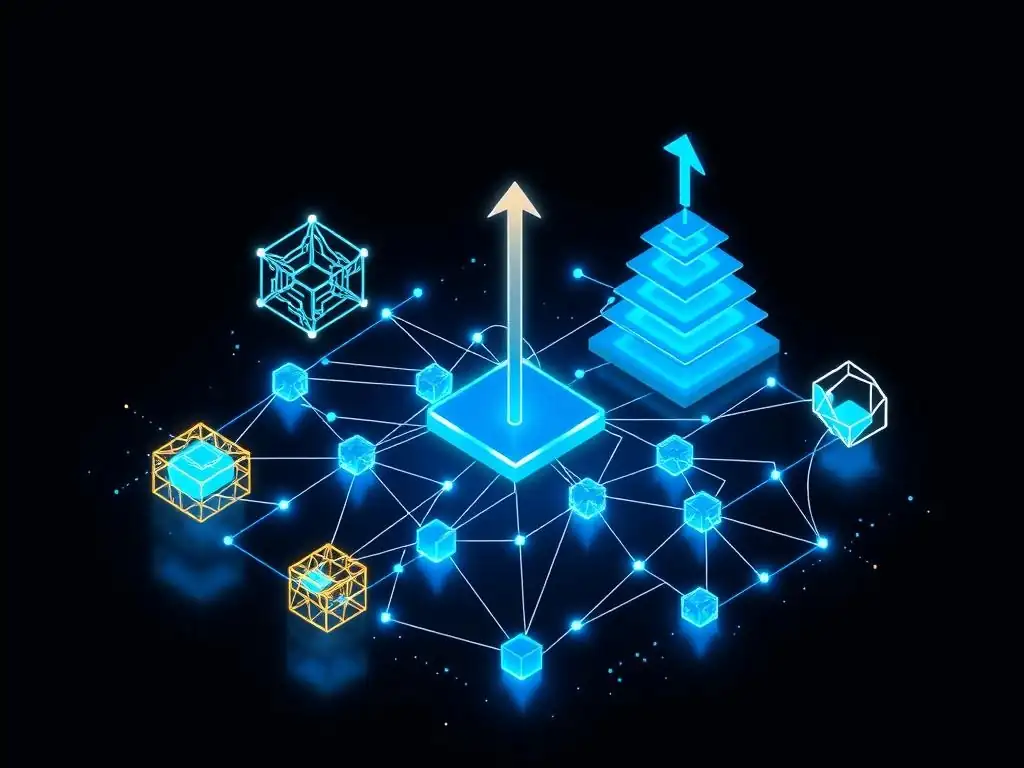
Layer-2 Scaling Solutions: A Complementary Approach
While sharding is a powerful on-chain blockchain scaling solution benefit, Layer-2 scaling solutions offer a complementary approach by moving transaction processing and computation off the main blockchain (Layer-1). Layer-2 solutions operate on top of the base blockchain, inheriting its security while providing increased throughput and reduced latency.
These solutions aim to offload the burden of processing every transaction directly on the main chain, thereby improving scalability without fundamentally altering the Layer-1 protocol. Layer-2 solutions are often considered faster to implement and deploy compared to sharding, as they typically involve building protocols and infrastructure on top of existing blockchains rather than making core protocol changes.
Examples of Layer-2 solutions include state channels, payment channels, and sidechains (which are also sometimes considered separately). State channels allow for off-chain transaction processing between a limited set of participants, only committing the final state to the main chain.
Payment channels, a specific type of state channel, are designed for frequent payments between two parties, significantly reducing on-chain transaction fees and latency. Layer-2 solutions offer immediate blockchain scaling solutions benefits in terms of increased throughput and reduced transaction costs for specific use cases, particularly for applications involving frequent and predictable interactions between users.
They are often seen as a near-term scaling solution that can be deployed alongside or in advance of more complex on-chain scaling solutions like sharding. Layer-2 solutions are not mutually exclusive with sharding; they can be used in conjunction to provide a multi-layered scaling approach, with Layer-2 handling frequent, smaller transactions and sharding addressing overall network capacity and state scalability.
Sidechains: Extending Blockchain Functionality
Sidechains represent another category of blockchain scaling solutions benefits, offering both scalability and extended functionality. A sidechain is essentially a separate blockchain that runs parallel to the main chain (parent chain) and is interoperable with it. Sidechains have their own consensus mechanisms, block parameters, and can be optimized for specific use cases, allowing for greater flexibility and customization compared to the main chain. They are connected to the main chain through a two-way peg mechanism, enabling assets and data to be transferred between the main chain and the sidechain.
Sidechains provide scalability by offloading transaction processing and application-specific logic from the main chain. Complex or high-volume applications can be deployed on sidechains, reducing congestion and improving performance on the main chain. Furthermore, sidechains can experiment with different consensus mechanisms, transaction models, and features that may not be suitable or desirable for the main chain.
For example, a sidechain could implement a more efficient consensus algorithm or support smart contracts with different programming languages. Sidechains offer blockchain scaling solutions benefits by providing a sandbox environment for innovation and experimentation, allowing developers to build and deploy applications with specific performance and functionality requirements without impacting the main chain's stability and security.
However, sidechains typically have their own security models, which may be weaker than the main chain's security depending on their design and implementation. The security of a sidechain is often independent of the main chain, so users need to consider the security trade-offs when using sidechain-based applications.
Optimistic Rollups: Off-Chain Computation for Scalability
Optimistic Rollups are a type of Layer-2 blockchain scaling solution benefit that focuses on off-chain computation and transaction execution to improve scalability. Rollups execute transactions off the main chain in a separate environment, "rolling up" multiple transactions into a single batch that is then submitted to the main chain. The "optimistic" aspect comes from the assumption that off-chain transactions are valid unless proven otherwise. Transactions are executed off-chain, and only the transaction data (calldata) is posted on-chain, significantly reducing the on-chain data footprint and computation required.
Optimistic Rollups achieve scalability by drastically reducing the computational and data burden on the main chain. Instead of verifying every individual transaction on-chain, the main chain only needs to verify the validity of the rollup batch, which is significantly less computationally intensive. If any invalid transaction is included in the batch, it can be challenged through a fraud-proof mechanism.
Fraud proofs allow participants to challenge the validity of a rollup batch by submitting proof of invalid transactions to the main chain. If a fraud proof is successful, the invalid batch is reverted, and the correct state is restored.
Optimistic Rollups offer significant blockchain scaling solutions benefits in terms of increased throughput and reduced transaction costs, while still leveraging the security of the main chain for data availability and dispute resolution. They are particularly well-suited for applications that involve complex computations or high transaction volumes, as they can offload a significant portion of the processing workload off-chain.
Validium: Data Availability and Scalability
Validium is another Layer-2 blockchain scaling solution benefit similar to rollups, but with a key difference in data availability. Like rollups, Validium executes transactions off-chain and submits batches of transactions to the main chain. However, unlike rollups, Validium does not necessarily post transaction data (calldata) on-chain. Instead, Validium relies on a separate data availability committee or mechanism to ensure that transaction data is available for verification and dispute resolution. This can further reduce the on-chain data footprint and potentially improve scalability compared to rollups.
Validium achieves scalability by minimizing the amount of data that needs to be posted on-chain. By outsourcing data availability to a separate committee, Validium can significantly reduce the cost and time required for on-chain data storage and processing. However, this approach introduces a trade-off in terms of trust and security.
The security of Validium relies on the trustworthiness and availability of the data availability committee. If the committee fails to make data available or becomes compromised, it could potentially impact the security and integrity of the Validium chain.
Validium offers blockchain scaling solutions benefits in terms of potentially higher scalability and lower transaction costs compared to rollups, but it also introduces a different security model that relies on the data availability committee. It is often considered suitable for applications where data privacy or cost optimization is prioritized over absolute on-chain data availability and where a trusted data availability committee can be established.
Challenges and Considerations in Implementing Blockchain Sharding
Security Concerns: Protecting Sharded Networks
Implementing blockchain sharding introduces new security challenges that must be carefully addressed to ensure the integrity and robustness of sharded networks. One of the primary security concerns is the potential for "single-shard takeover attacks." In a sharded network, each shard has a smaller set of validators compared to the entire network. If an attacker can compromise or control a significant portion of validators within a single shard, they could potentially manipulate transactions or the state within that shard, even if the overall network remains secure. This is because the security of each shard is somewhat isolated from other shards.
To mitigate single-shard takeover attacks, robust validator selection and assignment mechanisms are crucial. Randomness and unpredictability in validator assignment are essential to prevent attackers from targeting specific shards. Techniques like Distributed Key Generation (DKG) and Verifiable Random Functions (VRFs) are often employed to ensure fair and secure validator distribution. Furthermore, mechanisms for cross-shard validation and fraud detection are needed to detect and prevent malicious activities within individual shards from affecting the entire network.
For example, light clients or validators from other shards could periodically verify the state and transactions of a shard to detect anomalies. Security in sharded networks is not just about protecting individual shards but also about ensuring the security and consistency of the entire network despite the partitioning. Addressing these security concerns is paramount to realizing the blockchain scaling solutions benefits of sharding without compromising the fundamental security properties of blockchain technology.
Data Availability: Ensuring Data Integrity Across Shards
Data availability is a critical challenge in sharded blockchains, particularly in state sharding, where the blockchain state is partitioned across shards. Data availability refers to the guarantee that transaction data and blockchain state are accessible to all participants who need to verify the integrity of the network. In a sharded network, ensuring data availability across shards becomes more complex because each shard only stores a portion of the overall data. If data within a shard becomes unavailable, it could hinder the ability of validators and users to verify transactions and the overall state of the network.
To address data availability challenges, various techniques are employed. One common approach is data replication or redundancy within shards. Each shard can replicate its data across multiple nodes within the shard to increase resilience to node failures and ensure data availability even if some nodes become unavailable. Another approach is to use data availability sampling techniques, where nodes randomly sample data from different shards to probabilistically verify data availability across the entire network.
Erasure coding is also used to encode data in a way that allows for data reconstruction even if a portion of the encoded data is lost. Ensuring data availability in sharded networks is crucial for maintaining trust and verifiability. Without robust data availability mechanisms, the blockchain scaling solutions benefits of sharding could be undermined by concerns about data integrity and the ability to verify the blockchain's state.
Cross-Shard Communication Overhead: Optimizing Inter-Shard Interactions
As discussed earlier, cross-shard communication is essential for enabling transactions and interactions between different shards in a sharded blockchain. However, inefficient cross-shard communication can introduce significant overhead and potentially negate some of the scalability gains achieved through sharding. The overhead associated with cross-shard communication includes the time and resources required to transmit messages, verify proofs, and synchronize state between shards. If cross-shard communication becomes too frequent or too complex, it can become a bottleneck and limit the overall throughput of the network.
Optimizing cross-shard communication is crucial for maximizing the blockchain scaling solutions benefits of sharding. Several strategies are used to minimize cross-shard communication overhead. One approach is to design sharding schemes that minimize the need for cross-shard transactions in the first place. For example, by carefully partitioning accounts and applications across shards, the frequency of cross-shard interactions can be reduced.
Another approach is to use efficient cross-shard communication protocols that minimize message size and verification complexity. Techniques like asynchronous cross-shard communication and optimistic execution can also help reduce latency and improve efficiency. Furthermore, the choice of cross-shard communication architecture, such as using receipts, proofs, or a beacon chain, also impacts the overhead. Striking a balance between functionality and efficiency in cross-shard communication is essential for realizing the full potential of sharding as a blockchain scaling solution.
Complexity of Implementation: Technical Hurdles and Development Efforts
Implementing blockchain sharding is a highly complex undertaking, requiring significant technical expertise and development efforts. Sharding involves fundamental changes to the core blockchain protocol, affecting consensus mechanisms, data structures, networking protocols, and security models. Designing and implementing sharding requires addressing numerous technical challenges, including state partitioning, validator management, cross-shard communication, data availability, and security across shards. The complexity of sharding also stems from the need to maintain decentralization and security while achieving scalability. Balancing these competing goals requires careful design choices and rigorous testing.
The development effort required to implement sharding is substantial, often involving years of research, development, and testing. Existing blockchain codebases need to be significantly modified or rewritten to incorporate sharding functionality. Extensive testing and simulations are needed to ensure the stability, security, and performance of sharded networks before deployment.
The complexity of implementation also contributes to the longer timeframes often associated with sharding deployment compared to other blockchain scaling solutions benefits, like Layer-2 solutions. Despite the technical hurdles and development efforts, the potential scalability gains and long-term benefits of sharding make it a worthwhile pursuit for many blockchain projects aiming to achieve mass adoption and support complex decentralized applications. Overcoming these implementation complexities is crucial for unlocking the full potential of sharding as a transformative blockchain technology.
Real-World Applications and Examples of Blockchain Sharding
Ethereum 2.0: Sharding Implementation and Progress
Ethereum 2.0, now referred to as the Consensus Layer, is a major upgrade to the Ethereum blockchain that includes sharding as a key blockchain scaling solution benefit. Ethereum's sharding implementation, initially planned in multiple phases, aims to divide the Ethereum network into 64 shards. These shards are designed to operate in parallel, significantly increasing Ethereum's transaction throughput and overall scalability. Ethereum 2.0's sharding design is based on a beacon chain that coordinates the shards and manages validator assignments. Validators are randomly assigned to shards for specific periods, and cross-shard communication is facilitated through the beacon chain.
The implementation of sharding in Ethereum 2.0 is a multi-year undertaking, with ongoing research, development, and testing. While the initial roadmap envisioned sharding being implemented in a later phase, the Ethereum community is actively working towards integrating sharding to enhance scalability. The transition to a sharded Ethereum network is expected to significantly improve its capacity to handle a growing ecosystem of decentralized applications and users.
Ethereum 2.0's sharding implementation is a prominent example of a major blockchain project embracing sharding as a core blockchain scaling solution. Its progress and eventual deployment will have a significant impact on the broader blockchain landscape and the adoption of sharding technology. The challenges and lessons learned from Ethereum's sharding efforts will also be valuable for other blockchain projects considering sharding implementation.
Zilliqa: Pioneering Sharding in Practice
Zilliqa is one of the early blockchain projects to successfully implement and deploy sharding in practice. Zilliqa utilizes network sharding and transaction sharding to achieve high transaction throughput. Zilliqa's sharding architecture divides the network into multiple shards, each processing a subset of transactions in parallel. The number of shards in Zilliqa's network can dynamically adjust based on network demand, allowing for horizontal scalability. Zilliqa has demonstrated significantly higher transaction throughput compared to non-sharded blockchains, showcasing the practical blockchain scaling solutions benefits of sharding.
Zilliqa's mainnet, launched in 2019, has been operational with sharding for several years, providing real-world evidence of sharding's effectiveness in improving scalability. Zilliqa's experience and performance data serve as a valuable case study for other blockchain projects considering sharding implementation. Zilliqa's success in implementing sharding has demonstrated the feasibility and potential of sharding as a practical scaling solution for blockchain technology.
It has also contributed to the understanding of the challenges and best practices associated with sharding implementation in a live blockchain network. Zilliqa's pioneering work has paved the way for wider adoption and exploration of sharding as a viable blockchain scaling solution.
Near Protocol: Nightshade Sharding Approach
Near Protocol utilizes a unique sharding approach called "Nightshade," which aims to maximize scalability and efficiency. Nightshade sharding differs from traditional sharding approaches by not strictly dividing the blockchain state into completely separate shards. Instead, Nightshade uses a "validator-per-shard" approach, where each shard is validated by a rotating set of validators, but all shards contribute to a single blockchain. This approach is designed to simplify cross-shard communication and improve overall network efficiency.
Near Protocol's Nightshade sharding aims to achieve high throughput and low latency while maintaining data availability and security. Near claims to achieve near-infinite scalability through its Nightshade sharding design, allowing the network to scale dynamically as demand increases. Near Protocol's implementation of Nightshade sharding represents an innovative approach to sharding, exploring different trade-offs and optimizations compared to traditional sharding architectures.
Near's focus on usability and developer experience, combined with its sharding approach, positions it as a project aiming to address the scalability challenges hindering wider blockchain adoption. Near Protocol’s Nightshade sharding is another example of a project actively pursuing blockchain scaling solutions benefits through innovative sharding design and implementation.
The Future of Blockchain Sharding and Decentralized Systems
The Evolving Landscape of Blockchain Scalability
The landscape of blockchain scalability is constantly evolving, with ongoing research and development efforts exploring various blockchain scaling solutions benefits. Sharding is a prominent area of focus, but it's not the only approach being pursued. Layer-2 solutions, sidechains, rollups, and other scaling techniques are also rapidly advancing and gaining traction. The future of blockchain scalability is likely to involve a combination of different scaling solutions, working in concert to address the diverse scalability needs of various blockchain applications and use cases.
The development of more efficient consensus mechanisms, advancements in cryptography, and innovations in network architecture are also contributing to the evolving scalability landscape. As blockchain technology matures, we can expect to see further advancements in scalability, enabling blockchain networks to handle increasingly complex and demanding applications. The pursuit of scalable blockchains is driven by the growing need for decentralized systems that can support mass adoption and compete with the performance of centralized platforms.
The future of blockchain technology hinges on its ability to overcome scalability limitations and provide a robust and efficient infrastructure for a decentralized future. Continued innovation and collaboration in the blockchain scalability space are crucial for realizing the full potential of decentralized systems and their transformative impact across various industries.
The Impact of Sharding on Decentralized Applications (dApps)
Sharding has the potential to significantly impact the development and capabilities of decentralized applications (dApps). By providing enhanced blockchain scaling solutions benefits, sharding can enable dApps to handle a much larger number of users and transactions without performance degradation. This can unlock new possibilities for dApps, allowing them to support more complex functionalities, richer user experiences, and wider adoption. Applications that were previously limited by blockchain scalability, such as high-throughput decentralized exchanges, social media platforms, and complex gaming applications, can become more viable with sharding.
Sharding can also reduce transaction fees for dApp users, making decentralized applications more cost-effective and accessible to a wider audience. Lower transaction fees can encourage greater user participation and adoption of dApps. Furthermore, improved scalability can enable dApps to process transactions faster, leading to quicker response times and a smoother user experience, making them more competitive with traditional centralized applications.
The adoption of sharding can pave the way for a new generation of dApps that are more scalable, efficient, and user-friendly, driving the growth and mainstream adoption of decentralized technologies. As sharding becomes more widely implemented, we can expect to see a surge in the development and deployment of innovative and impactful dApps across various sectors.
Predictions and Trends for Blockchain Sharding Adoption
Predictions and trends for blockchain sharding adoption suggest a growing interest and adoption of sharding as a crucial blockchain scaling solution benefit in the coming years. As more blockchain projects recognize the limitations of non-sharded architectures and the increasing demand for scalability, sharding is expected to become a more prevalent and essential technology. Ethereum 2.0's sharding implementation is a major catalyst for sharding adoption, paving the way for other projects to follow suit. The success of early sharding implementations like Zilliqa also provides real-world validation of sharding's effectiveness.
We can expect to see further research and development in sharding techniques, leading to more efficient and secure sharding architectures. Hybrid approaches combining sharding with Layer-2 solutions are also likely to emerge as a comprehensive scaling strategy. The adoption of sharding will likely be gradual, starting with projects that require high scalability and are willing to invest in the complexity of sharding implementation.
As sharding technology matures and becomes more readily available, its adoption is expected to accelerate, becoming a standard component of scalable blockchain architectures. The trend towards sharding reflects a growing recognition that scalability is paramount for the long-term success and widespread adoption of blockchain technology, and sharding offers a promising path towards achieving that scalability.
Conclusion: Embracing Blockchain Sharding for a Scalable Future
Blockchain sharding represents a significant advancement in blockchain scaling solutions benefits, offering a promising path towards overcoming the scalability limitations that have hindered the widespread adoption of decentralized networks. By partitioning the blockchain and enabling parallel processing, sharding dramatically increases transaction throughput, reduces latency, and improves overall network scalability. While sharding introduces complexities and challenges, particularly in security and implementation, the potential gains in scalability and performance are substantial.
As demonstrated by projects like Ethereum 2.0, Zilliqa, and Near Protocol, sharding is not just a theoretical concept but a practical and viable approach to scaling blockchains. The ongoing research and development in sharding technology, coupled with the growing need for scalable decentralized systems, suggest that sharding will play a crucial role in the future of blockchain technology.
Embracing blockchain sharding and continuing to innovate in this area is essential for unlocking the full potential of decentralized applications and building a truly scalable and robust infrastructure for a decentralized future. The blockchain scaling solutions benefits offered by sharding are critical for realizing the vision of a world powered by secure, scalable, and decentralized technologies.
Frequently Asked Questions
What is blockchain sharding and how does it improve blockchain performance?
Blockchain sharding is a horizontal partitioning technique that divides the blockchain network into smaller, manageable shards. This allows for parallel transaction processing, significantly increasing throughput and reducing latency compared to traditional monolithic blockchains.
How does sharding address the "Blockchain Trilemma" (security, scalability, decentralization)?
Sharding aims to balance the Blockchain Trilemma by improving scalability without significantly compromising security or decentralization. Each shard validates its own transactions, reducing the computational burden on the entire network.
What are the main challenges associated with implementing blockchain sharding?
Implementing sharding presents challenges such as cross-shard transactions, which require complex communication protocols, and data availability issues that can arise if a shard becomes unavailable. These challenges must be addressed to maintain security and consistency.
What are some real-world applications or examples where blockchain sharding is being actively explored or implemented?
Various blockchain projects are exploring sharding, including Ethereum 2.0 (formerly known as Serenity) and Zilliqa. These implementations aim to improve transaction speeds and support a wider range of decentralized applications (dApps).
What are the potential long-term benefits of blockchain scaling solutions like sharding for various industries?
Blockchain scaling solutions like sharding promise to unlock the true potential of blockchain technology across various industries. This includes increased transaction throughput, lower transaction fees, and the ability to support more complex and demanding applications, ultimately leading to wider adoption.
Final Reflection: Embracing the Scalable Future of Decentralization
The intricate dance of blockchain sharding, as explored in this guide, isn't just a theoretical exercise; it's a critical imperative for the widespread adoption of decentralized technologies. The limitations of current blockchain infrastructures are undeniable, hindering their ability to handle the demands of a truly global, interconnected world. Without effective scaling solutions, the promise of decentralization risks remaining just that – a promise, unfulfilled.
The evolution of blockchain sharding reflects a deeper shift in our understanding of digital trust and collaboration. It underscores the necessity of continuous innovation to overcome technological hurdles and unlock the full potential of decentralized systems. The journey towards scalable blockchains is not merely a technical one; it's a cultural and societal transformation, empowering individuals and fostering greater transparency. The future of finance is decentralized, but it needs to be scalable to reach its full potential.
As we conclude this exploration of blockchain sharding, I invite you to consider your role in shaping this decentralized future. How can you contribute to the development and adoption of these scaling solutions? How can you leverage the blockchain scaling solutions benefits to build more equitable, transparent, and efficient systems? The future of decentralization is not predetermined; it is being actively shaped by the choices we make today. Embrace the challenge, explore the possibilities, and become a part of the revolution.
Unleash the Power of Scalable Blockchains!
Thank you for exploring the fascinating world of blockchain sharding. We hope you now have a clearer understanding of how this innovative technology can enable faster, more efficient decentralized networks. It's time to turn knowledge into action!
Here are some steps to help you further explore the potential of blockchain sharding:
- Deepen your understanding: Contribute to open-source sharding projects on platforms like GitHub. This hands-on experience offers valuable insights into real-world applications and the challenges involved.
- Share your insights: Engage with your network on social media by discussing the benefits and obstacles of sharding. Let's spark an ongoing conversation! Use hashtags such as #BlockchainSharding, #ScalingBlockchain, and #BlockchainTrends.
- Think creatively: Consider how sharding might impact specific industries like gaming or supply chain management. What innovative applications can you envision?
What are the main obstacles to widespread adoption of blockchain sharding, and how can we work together to overcome them? Share your thoughts below!
Leave a Reply