
Demystifying Decentralized Identity: An EasytoUnderstand Security Explanation


Welcome to Blockchain Trends, your guide to understanding the revolutionary power of blockchain beyond the hype!
Are you ready to unravel the complexities of decentralized identity? In a world increasingly reliant on digital interactions, securing personal information is paramount. Our latest article, a " Blockchain identity security explanation," offers a clear and concise breakdown of how blockchain technology is reshaping the landscape of digital trust. Discover how this groundbreaking approach enhances security and empowers individuals to control their data—and why it's crucial for the future of online interactions. Intrigued? Dive in to learn more!
- Understanding the Core Concepts of Decentralized Identity (DID)
- How Blockchain Technology Enhances Identity Security
- Exploring Different Types of Decentralized Identity Solutions
- The Security Advantages of Decentralized Identity over Centralized Systems
- Potential Challenges and Security Considerations in Decentralized Identity
- Real-World Applications of Decentralized Identity and Blockchain Security
- The Future of Blockchain Identity Security: Trends and Predictions
- Conclusion: Embracing the Potential of Decentralized Identity for a More Secure Future
-
Frequently Asked Questions
- What is decentralized identity (DID) and why is it important?
- How does blockchain technology contribute to blockchain identity security?
- What are the advantages of using blockchain for identity security compared to traditional methods?
- What are some potential applications of blockchain identity security beyond personal identification?
- What are the current challenges and future trends in blockchain identity security?
- Final Reflection: Embracing the Future of Identity
- Unlock Your Identity's Potential!
Understanding the Core Concepts of Decentralized Identity (DID)
What is Decentralized Identity (DID) and Why Does it Matter?
Decentralized Identity (DID) is a revolutionary approach to digital identity that aims to give individuals and entities complete control over their identity information. Unlike traditional centralized identity systems where personal data is stored and managed by organizations, DID empowers users to create, own, and manage their own digital identities independently. This shift is crucial in an increasingly digital world where individuals are constantly asked to share personal information online, often without full understanding or control over how it is used and protected.
The significance of DID lies in its potential to address fundamental flaws in current identity management practices. In today's systems, users are often forced to create multiple accounts and passwords across various platforms, leading to password fatigue and security vulnerabilities. Moreover, individuals have limited visibility and control over how their data is collected, stored, and shared by these centralized entities.
DID, by leveraging blockchain technology and cryptographic principles, offers a paradigm shift towards user-centricity, enhancing privacy, security, and interoperability in the digital realm. This is not just about convenience; it's about regaining ownership of our digital selves in a world where identity is becoming increasingly digital and vulnerable.
The Problems with Traditional Identity Management Systems
Traditional identity management systems, which rely on centralized authorities, face numerous challenges in today's interconnected digital landscape. One of the most pressing issues is the concentration of sensitive personal data in central databases. These databases become prime targets for cyberattacks, and data breaches have become increasingly frequent and costly.
In 2013, Yahoo experienced a massive data breach affecting 3 billion user accounts, exposing personal information like names, email addresses, and passwords. More recently, in 2019, a breach at Capital One compromised the data of over 100 million individuals. These incidents underscore the inherent vulnerability of centralized systems, where a single point of failure can lead to widespread data compromise and identity theft.
Beyond security risks, traditional systems also suffer from a lack of user control and transparency. Individuals often have little say in how their data is used and shared by organizations. Terms of service agreements are often lengthy and complex, making it difficult for users to fully understand the implications of sharing their data.
Furthermore, these systems frequently create silos of identity information, requiring users to repeatedly prove their identity to different service providers. This fragmented approach is inefficient and inconvenient, leading to a disjointed user experience. The lack of interoperability between different identity systems also hinders seamless data exchange and collaboration across platforms and organizations, further highlighting the limitations of centralized identity management.
The Key Principles Behind Self-Sovereign Identity (SSI)
Self-Sovereign Identity (SSI) is the foundational concept underpinning Decentralized Identity. It is built upon a set of core principles that prioritize individual autonomy and control over digital identity. One of the most crucial principles of SSI is user control. This means individuals have the ultimate authority over their identity data, deciding what information to share, with whom, and for what purpose. This contrasts sharply with traditional systems where organizations dictate the terms of data usage and access. SSI empowers individuals to act as their own identity providers, managing their credentials and data directly.
Another vital principle is data minimization. SSI advocates for sharing only the necessary information required for a specific interaction or transaction. Instead of disclosing broad sets of personal data, users can selectively share verifiable credentials that prove specific attributes, such as age or qualifications, without revealing unnecessary details like their full name or address.
This principle helps to reduce the attack surface for data breaches and enhances user privacy by limiting the amount of personal information circulating online. Furthermore, SSI emphasizes privacy by design, ensuring that privacy considerations are embedded into the architecture and functionality of identity systems from the outset. These principles collectively aim to create a more secure, private, and user-centric model for digital identity, moving away from the vulnerabilities of centralized systems.
How Blockchain Technology Enhances Identity Security
Blockchain's Role in Securing Decentralized Identities
Blockchain technology plays a pivotal role in bolstering the security of decentralized identities. At its core, blockchain provides a distributed and immutable ledger for recording identity-related information. Unlike centralized databases, blockchain's decentralized nature eliminates single points of failure, making it significantly more resilient to attacks. The data stored on a blockchain is distributed across a network of nodes, making it extremely difficult for malicious actors to tamper with or compromise the entire system. This inherent distribution enhances the robustness and availability of identity information.
Moreover, blockchain's cryptographic foundation underpins the security of DID. Cryptographic techniques such as hashing and digital signatures are fundamental to how blockchain secures data and verifies transactions. In the context of DID, blockchain can be used to anchor and verify verifiable credentials.
These credentials, issued by trusted entities, are cryptographically signed and linked to a user's DID on the blockchain. This allows for secure and verifiable proof of identity attributes without relying on centralized authorities to validate each interaction. The combination of decentralization and cryptography provides a strong foundation for building secure and trustworthy decentralized identity solutions, significantly enhancing blockchain identity security explanation.
Immutability and Transparency: Cornerstones of Blockchain Identity Security
Immutability and transparency are two key characteristics of blockchain that are fundamental to enhancing identity security in decentralized systems. Immutability in blockchain means that once data is recorded on the ledger, it cannot be altered or deleted. This characteristic is crucial for identity management because it ensures the integrity and permanence of identity records. For example, if a university issues a diploma credential and records it on a blockchain, this record remains permanently verifiable and cannot be fraudulently altered by either the individual or the issuing institution. This immutability builds trust in the authenticity and reliability of digital identities.
Transparency in blockchain, while often misunderstood in the context of privacy, plays a vital role in security. In many blockchain systems, transaction records are publicly auditable, meaning that while the content of a transaction (like the specific personal data) can be kept private through encryption, the fact that a transaction occurred and its cryptographic proof are publicly verifiable. This transparency allows for independent verification of the integrity of the identity system and can help detect and prevent fraudulent activities.
For instance, in a supply chain context, the transparent record of ownership and custody of goods, secured by blockchain identity, can be audited by multiple parties, enhancing accountability and reducing the risk of counterfeit products. This combination of immutability and controlled transparency significantly strengthens blockchain identity security explanation.
Cryptographic Techniques Used in Blockchain-Based Identity Solutions
Cryptographic techniques are the bedrock of security in blockchain-based identity solutions. Several key cryptographic methods are employed to ensure the confidentiality, integrity, and authenticity of decentralized identities. Hashing is a fundamental cryptographic function used to create a unique fingerprint of data. In DID systems, hashing is used to link DIDs to verifiable credentials and to secure data on the blockchain. For example, a user's DID document, containing public keys and service endpoints, is often hashed, and this hash is anchored on the blockchain, providing a tamper-proof link to the identity.
Digital signatures are another essential cryptographic technique used for authentication and non-repudiation. In DID, digital signatures are used to verify the authenticity of verifiable credentials. When an issuer creates a credential, they digitally sign it using their private key. Recipients can then verify the signature using the issuer's public key, ensuring that the credential is genuinely issued by the claimed authority and has not been tampered with.
Furthermore, public-key cryptography as a whole is foundational to DID. Each DID is associated with a public-private key pair. The public key is used to verify signatures and encrypt data intended for the DID owner, while the private key, kept secret by the owner, is used to create signatures and decrypt data. This cryptographic infrastructure provides the essential security mechanisms for managing and verifying decentralized identities, making blockchain identity security explanation more robust and trustworthy.
Exploring Different Types of Decentralized Identity Solutions
Blockchain-Based Identity Platforms: A Comparative Overview
Several blockchain-based identity platforms are emerging, each offering unique approaches to decentralized identity management. uPort, for example, is a self-sovereign identity platform built on the Ethereum blockchain. It allows users to create and control their own identities, issue and manage verifiable credentials, and securely interact with decentralized applications.
uPort emphasizes user-centricity and provides tools for developers to integrate DID capabilities into their applications. Another prominent platform is Veres One, which is designed specifically for verifiable credentials and decentralized identifiers. It focuses on interoperability and adherence to W3C standards for DID and verifiable credentials, aiming to facilitate seamless exchange of identity information across different systems.
Blockcerts, initially developed by MIT Media Lab, is an open standard for creating, issuing, and verifying blockchain-based digital credentials, primarily for academic certificates and professional licenses. Blockcerts leverages the Bitcoin blockchain to anchor credential data, ensuring immutability and verifiability. Unlike platforms that offer a broader identity management framework, Blockcerts focuses specifically on the secure issuance and verification of credentials.
Comparing these platforms reveals different focuses and architectural choices. Some prioritize broad identity management features while others specialize in credential management or interoperability. The landscape of blockchain-based identity platforms is still evolving, with ongoing development and innovation driving towards more robust and user-friendly decentralized identity solutions, contributing to the overall blockchain identity security explanation.
Tokenized Identities: Understanding the Benefits and Risks
Tokenized identities represent a specific approach within decentralized identity where identity attributes or credentials are represented as tokens on a blockchain. These tokens can be non-fungible tokens (NFTs) or other types of digital assets that represent specific aspects of an individual's identity. The benefits of tokenized identities include enhanced portability and control.
Since tokens are digital assets on a blockchain, they can be easily transferred and managed by the identity owner, providing greater control over how and with whom identity information is shared. For example, a tokenized driver's license could be presented digitally, and the user could selectively reveal only the necessary information, like age verification, without disclosing their full address.
However, tokenized identities also present risks and considerations. One key concern is the potential for token loss or theft. If the private key associated with the token is compromised, the identity represented by that token could be stolen or misused. Therefore, robust key management and security practices are crucial for tokenized identity systems.
Another consideration is the potential for creating secondary markets for identity tokens. While tokenization offers benefits in terms of control and portability, it also raises questions about the ethical implications of trading or transferring identity attributes as commodities. Careful design and governance are needed to mitigate these risks and ensure that tokenized identities are used responsibly and ethically within the broader context of blockchain identity security explanation.
Sovrin Network: A Permissioned Distributed Ledger for Identity
The Sovrin Network is a notable example of a permissioned distributed ledger specifically designed for self-sovereign identity. Unlike public blockchains like Bitcoin or Ethereum, Sovrin is a permissioned network, meaning that participation in the network is controlled and requires permission from the Sovrin Foundation. This permissioned approach allows for greater control over network governance and participant vetting, which is considered important for enterprise-grade identity solutions. Sovrin utilizes a distributed ledger technology that is optimized for identity management, focusing on privacy, security, and scalability for identity interactions.
One of the key features of Sovrin is its focus on privacy-preserving identity interactions. Sovrin employs zero-knowledge proofs and selective disclosure techniques to enable users to share only the minimum necessary information when interacting with services. This aligns with the principle of data minimization in SSI. Furthermore, Sovrin is designed for interoperability and adherence to open standards.
It actively promotes the adoption of W3C standards for DID and verifiable credentials, aiming to facilitate seamless integration with other identity systems and platforms. The Sovrin Foundation, a non-profit organization, governs the network and promotes its adoption across various sectors. While permissioned, Sovrin offers a robust and mature platform for exploring real-world applications of decentralized identity, particularly in enterprise and government contexts, contributing significantly to the practical understanding of blockchain identity security explanation.
The Security Advantages of Decentralized Identity over Centralized Systems
Enhanced Privacy and Control Over Personal Data
Decentralized Identity offers significant advantages in terms of enhanced privacy and control over personal data compared to centralized systems. In centralized systems, users often relinquish control over their data to organizations that collect and manage it. This lack of control leads to concerns about data breaches, misuse, and unauthorized sharing. DID, in contrast, empowers individuals to own and manage their identity data directly. Users create and store their identity information on their own devices or in decentralized storage, rather than relying on central repositories controlled by organizations. This shift in control is fundamental to enhancing privacy.
Furthermore, DID promotes data minimization. With DID, individuals can selectively disclose specific attributes or verifiable credentials, rather than sharing broad sets of personal data. For example, when proving age for accessing age-restricted content, a user can present a verifiable credential confirming their age without revealing their date of birth or full identity details.
This selective disclosure minimizes the amount of personal information exposed during interactions, reducing the risk of data breaches and identity theft. By putting users in control of their data and enabling data minimization, DID offers a more privacy-preserving approach to identity management, directly addressing a core weakness of centralized systems and bolstering blockchain identity security explanation.
Reduced Risk of Data Breaches and Identity Theft
Decentralized Identity architectures inherently reduce the risk of large-scale data breaches and identity theft, which are prevalent in centralized identity systems. Centralized systems, by their nature, create honeypots of sensitive personal data. These central databases are attractive targets for cybercriminals, and successful breaches can compromise the data of millions of users. The Equifax breach in 2017, affecting over 147 million individuals, is a stark example of the devastating consequences of centralized data breaches. DID, by distributing identity data and eliminating central repositories, significantly reduces this risk. There is no single point of failure holding vast amounts of personal information.
Moreover, DID architectures often leverage end-to-end encryption and zero-knowledge proofs, further enhancing security and privacy. End-to-end encryption ensures that data is encrypted at the source and remains encrypted until it reaches the intended recipient, protecting it from interception during transit.
Zero-knowledge proofs allow users to prove specific attributes without revealing the underlying data itself, minimizing the information shared and the potential for exposure. By distributing data, eliminating central honeypots, and incorporating advanced security technologies, DID architectures offer a more resilient and secure approach to identity management, significantly reducing the risk of data breaches and identity theft compared to centralized systems and reinforcing blockchain identity security explanation.
Mitigating Single Points of Failure in Identity Management
Centralized identity systems are vulnerable to single points of failure, which can disrupt services and compromise security. If a central identity provider experiences a system outage or a cyberattack, it can impact all services and applications that rely on that provider for authentication and authorization. In 2016, a major outage at Dyn, a DNS provider, disrupted access to numerous websites and online services, highlighting the fragility of centralized internet infrastructure. DID architectures, built on decentralized technologies like blockchain, are designed to mitigate these single points of failure.
Blockchain's distributed nature ensures that there is no single central authority that can be compromised to bring down the entire identity system. Data is replicated across a network of nodes, and the system can continue to function even if some nodes fail or are attacked. This distributed resilience is a key security advantage of DID over centralized systems.
Furthermore, DID systems are designed to be self-sovereign, meaning they are not dependent on any single organization or entity. Users control their own identities and are not reliant on a central provider for access or management. This decentralization and self-sovereignty make DID systems inherently more robust and resistant to single points of failure, enhancing the overall reliability and security of identity management and strengthening blockchain identity security explanation.
Potential Challenges and Security Considerations in Decentralized Identity
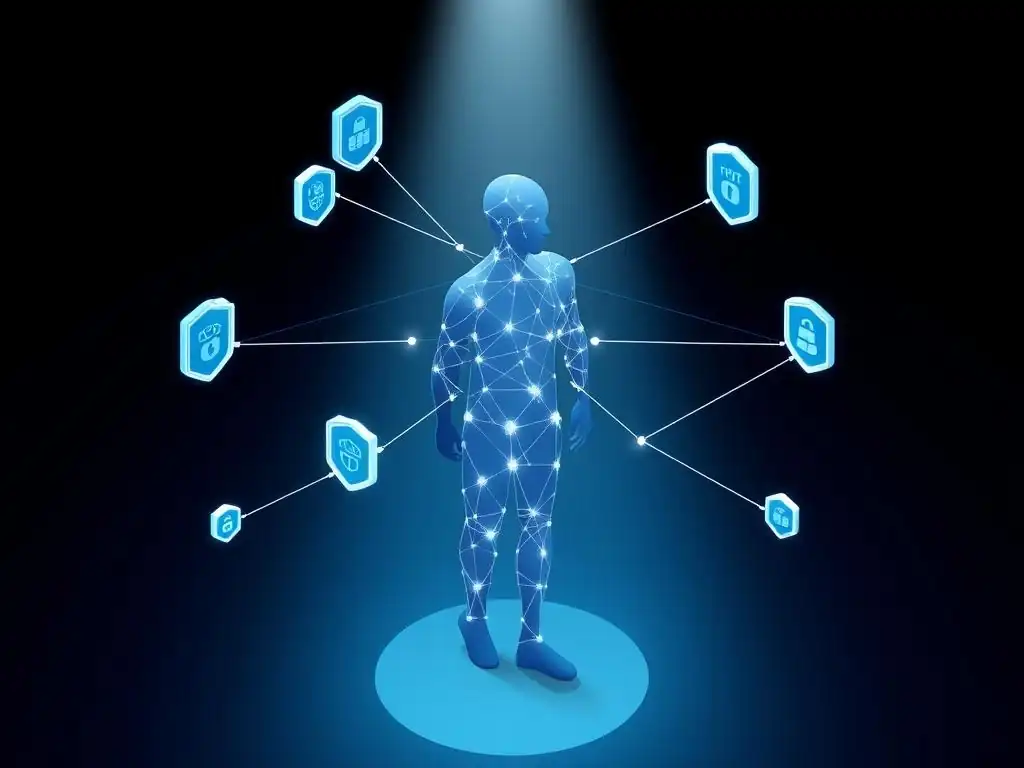
Scalability Issues in Blockchain Identity Security
While blockchain offers significant security benefits for decentralized identity, scalability remains a key challenge. Many blockchain networks, particularly those with strong security and decentralization, face limitations in transaction throughput and processing speed. For widespread adoption of DID, blockchain-based identity solutions need to be able to handle a large volume of identity-related transactions efficiently and cost-effectively. Public blockchains like Bitcoin and Ethereum, while highly secure, have inherent scalability limitations that can impact their suitability for large-scale identity management.
Layer-2 solutions, such as state channels and rollups, are being developed to address scalability issues on public blockchains. These solutions aim to offload transaction processing from the main blockchain to improve throughput and reduce transaction costs. Permissioned blockchains, like Hyperledger Fabric or Corda, offer higher transaction throughput compared to public blockchains but may sacrifice some degree of decentralization.
Choosing the right blockchain technology and scalability solution is crucial for building DID systems that can meet the performance demands of real-world applications. Furthermore, optimizing on-chain data storage and transaction processing for identity-related operations is an ongoing area of research and development to overcome scalability challenges in blockchain identity security explanation.
The Importance of Key Management and Recovery
Effective key management is paramount for the security of decentralized identity systems. In DID, users control their private keys, which are essential for managing their identities, signing transactions, and accessing their data. However, managing private keys securely can be challenging for average users. Losing a private key can lead to permanent loss of access to one's digital identity and associated credentials. Therefore, user-friendly and secure key management solutions are critical for widespread adoption of DID.
Key recovery mechanisms are also essential to mitigate the risk of key loss. Traditional key recovery methods, like centralized password resets, are not aligned with the principles of decentralization. Decentralized key recovery solutions, such as social recovery or multi-signature schemes, are being explored.
Social recovery allows users to designate trusted contacts who can help them recover their keys in case of loss. Multi-signature schemes require multiple keys to authorize actions, reducing the risk of single key compromise. Developing robust and user-friendly key management and recovery solutions is a critical area of focus to ensure the security and accessibility of decentralized identity systems, directly impacting blockchain identity security explanation.
Addressing Potential Attack Vectors in Decentralized Identity Systems
Despite the security advantages of DID, potential attack vectors still need to be addressed to ensure the robustness of decentralized identity systems. Private key compromise remains a significant threat. If a user's private key is stolen or compromised, an attacker can impersonate the user and potentially gain unauthorized access to their data or services. Phishing attacks, malware, and social engineering tactics can be used to steal private keys. Therefore, educating users about secure key management practices and promoting the use of secure key storage solutions, such as hardware wallets, is crucial.
Sybil attacks are another potential concern in decentralized systems. In a Sybil attack, an attacker creates multiple fake identities to gain control or disrupt the network. Mechanisms to prevent or mitigate Sybil attacks, such as proof-of-personhood or reputation systems, may be needed in DID systems. Furthermore, vulnerabilities in smart contracts or blockchain protocols themselves could be exploited to compromise identity systems. Regular security audits, penetration testing, and ongoing monitoring are essential to identify and address potential vulnerabilities and ensure the overall security of decentralized identity systems, contributing to a comprehensive blockchain identity security explanation.
Real-World Applications of Decentralized Identity and Blockchain Security
Decentralized Identity in Supply Chain Management
Decentralized Identity and blockchain security offer transformative potential for supply chain management. Traditional supply chains often suffer from inefficiencies, lack of transparency, and vulnerability to fraud. DID can be used to create verifiable digital identities for products, organizations, and individuals involved in the supply chain. For example, a manufacturer can issue a verifiable credential to a product, attesting to its authenticity and origin. This credential can be recorded on a blockchain, providing an immutable and transparent record of the product's provenance.
Throughout the supply chain, various stakeholders, such as distributors, retailers, and consumers, can verify the authenticity and provenance of products using DID. This enhances transparency and traceability in the supply chain, reducing the risk of counterfeit goods and improving accountability. For instance, in the pharmaceutical industry, DID can be used to track medications from manufacturing to point-of-sale, ensuring authenticity and preventing the distribution of counterfeit drugs.
Walmart's use of blockchain to track mangoes in its supply chain demonstrates the practical application of this technology for enhancing food safety and traceability. By leveraging DID and blockchain security, supply chains can become more efficient, transparent, and secure, benefiting businesses and consumers alike and highlighting the practical application of blockchain identity security explanation.
Securing Healthcare Data with Blockchain-Based Identities
Securing healthcare data is a critical challenge, and blockchain-based identities offer promising solutions. Traditional healthcare systems often struggle with data silos, interoperability issues, and security vulnerabilities. DID can empower patients with greater control over their healthcare data. Patients can create their own decentralized identities and use them to manage access to their medical records, granting permissions to healthcare providers and researchers as needed. This patient-centric approach enhances privacy and data security.
Blockchain can be used to create secure and interoperable healthcare data exchange platforms. Medical records can be cryptographically linked to patient DIDs on a blockchain, ensuring data integrity and authenticity. Healthcare providers can securely access patient records with patient consent, improving care coordination and reducing medical errors.
For example, Estonia's national e-health system leverages blockchain technology to secure patient data and enable secure data sharing among healthcare providers. Furthermore, DID can facilitate secure sharing of research data and enable patients to participate in clinical trials with greater control over their data. By enhancing patient control, data security, and interoperability, blockchain-based identities can revolutionize healthcare data management and improve patient outcomes, demonstrating the real-world impact of blockchain identity security explanation.
Decentralized Identity for Government Services and Citizen Verification
Government services and citizen verification processes can be significantly enhanced by decentralized identity solutions. Traditional government identity systems are often centralized, vulnerable to data breaches, and lack user-friendliness. DID can provide citizens with digital identities that are portable, secure, and under their control. Citizens can use their DIDs to access government services online, vote securely, and verify their identity for various purposes, such as accessing social benefits or applying for licenses.
Blockchain can be used to create secure and transparent government identity infrastructure. Digital identities can be anchored on a blockchain, ensuring immutability and verifiability. This can reduce identity fraud and improve the efficiency of government services.
For instance, Dubai is exploring the use of blockchain for a city-wide digital identity system, aiming to streamline government services and enhance citizen experience. Furthermore, DID can facilitate secure cross-border identity verification, enabling seamless access to services for citizens traveling or residing in different countries. By improving security, efficiency, and user experience, decentralized identity can transform government services and enhance citizen engagement, illustrating the broad applicability of blockchain identity security explanation.
The Future of Blockchain Identity Security: Trends and Predictions
The Convergence of Decentralized Identity and Web3
The convergence of Decentralized Identity and Web3 is a significant trend shaping the future of the internet. Web3 envisions a decentralized web where users have greater control over their data, digital assets, and online interactions. DID is a foundational building block for Web3, providing users with self-sovereign identities that are portable across different Web3 applications and platforms. In Web3, users can use their DIDs to control access to their data, manage their digital assets, and participate in decentralized governance.
DID enables user-centric data ownership in Web3. Instead of data being siloed within centralized platforms, users can control their data and selectively grant access to applications and services. This aligns with the Web3 vision of a more user-empowered and privacy-preserving internet.
Furthermore, DID facilitates decentralized authentication and authorization in Web3. Users can use their DIDs to securely log in to Web3 applications and authorize transactions without relying on centralized identity providers. The integration of DID and Web3 is driving the development of a more decentralized, user-centric, and secure internet ecosystem, underscoring the central role of blockchain identity security explanation in the evolution of the web.
The Role of Standards and Interoperability in Adoption
Standards and interoperability are critical for the widespread adoption of Decentralized Identity. For DID to become mainstream, different DID systems and platforms need to be interoperable, allowing users to seamlessly use their identities across various applications and services. The W3C Verifiable Credentials and Decentralized Identifiers specifications are playing a crucial role in establishing open standards for DID. These standards provide a common framework for building and implementing DID systems, promoting interoperability and reducing vendor lock-in.
Industry collaborations and standardization initiatives are essential to drive interoperability in the DID space. Organizations like the Decentralized Identity Foundation (DIF) are working to promote collaboration and develop common standards for DID. Interoperability is not just about technical compatibility; it also involves semantic interoperability, ensuring that different systems can understand and interpret identity data in a consistent way. Achieving broad interoperability will be key to realizing the full potential of DID and enabling seamless user experiences across the decentralized web, highlighting the importance of standardization for blockchain identity security explanation adoption.
Increased Focus on User Experience and Accessibility for Widespread Adoption
For Decentralized Identity to achieve widespread adoption, a significant focus needs to be placed on user experience (UX) and accessibility. Currently, managing DIDs and verifiable credentials can be complex and technically challenging for average users. User-friendly wallets, identity management tools, and onboarding processes are essential to make DID accessible to a broader audience. Simplifying key management, credential issuance, and identity verification processes is crucial for improving UX.
Furthermore, accessibility considerations are important to ensure that DID is inclusive and usable by people with diverse needs and technical skills. Designing DID solutions that are accessible to users with disabilities and those with limited technical literacy is critical for equitable adoption. The focus on UX and accessibility is shifting from purely technical considerations to user-centric design principles. Making DID easy to understand, use, and manage is essential to bridge the gap between technical innovation and mainstream adoption, ultimately driving the realization of blockchain identity security explanation benefits for everyone.
Conclusion: Embracing the Potential of Decentralized Identity for a More Secure Future
Decentralized Identity represents a paradigm shift in how we manage digital identities, offering a more secure, private, and user-centric approach compared to traditional centralized systems. By leveraging blockchain technology and cryptographic principles, DID empowers individuals with greater control over their personal data, reduces the risk of data breaches and identity theft, and mitigates single points of failure inherent in centralized identity management. While challenges like scalability, key management, and potential attack vectors remain, ongoing innovation and standardization efforts are paving the way for wider adoption.
From supply chain management to healthcare and government services, the real-world applications of DID are vast and transformative. As we move towards a more decentralized web, the convergence of DID and Web3 promises to reshape the internet landscape, placing users at the center of their digital lives.
Embracing the potential of Decentralized Identity is not just about technological advancement; it's about building a more secure, equitable, and user-empowered digital future where individuals truly own and control their digital identities. The journey towards widespread adoption requires continued collaboration, innovation, and a strong focus on user experience, but the promise of a more secure and user-centric digital world powered by blockchain identity security explanation makes the effort worthwhile.
Frequently Asked Questions
What is decentralized identity (DID) and why is it important?
DID refers to a self-sovereign approach to identity management. It's important because it gives individuals control over their personal data and reduces reliance on centralized authorities. This enhances privacy and security.
How does blockchain technology contribute to blockchain identity security?
Blockchain provides a tamper-proof and transparent ledger for storing identity claims. This allows for verifiable credentials that can be independently validated. It creates a secure foundation for decentralized identity systems.
What are the advantages of using blockchain for identity security compared to traditional methods?
Blockchain offers enhanced security through cryptography and immutability. It also provides greater transparency and user control over personal data. Traditional methods often lack these crucial features.
What are some potential applications of blockchain identity security beyond personal identification?
Beyond personal ID, blockchain identity can be used for supply chain tracking, verifying professional credentials, and managing access rights within organizations. Its versatility offers significant potential.
What are the current challenges and future trends in blockchain identity security?
Challenges include scalability and interoperability between different blockchain platforms. Future trends include increased adoption of verifiable credentials and improved user experience for managing DIDs.
Final Reflection: Embracing the Future of Identity
The journey through decentralized identity reveals a powerful shift in how we perceive and manage our digital selves. The promise of self-sovereign identity, secured by the immutable nature of blockchain, is no longer a futuristic concept but a tangible solution to the growing concerns surrounding data privacy and security in today's interconnected world. As centralized systems continue to face breaches and raise ethical questions, the need for a user-centric approach to identity management becomes increasingly critical.
This exploration into decentralized identity has profoundly underscored the importance of individual agency in the digital realm. The ability to control our own data, to selectively share information, and to participate in a more equitable digital ecosystem is not just a technological advancement, but a fundamental human right. Identity is not found, but chosen.
- Unknown. This quote encapsulates the essence of decentralized identity, empowering individuals to define and manage their digital presence on their own terms, fostering trust and transparency in online interactions.
As we stand at the cusp of a new era in digital identity, let us embrace the potential of decentralized technologies to build a more secure, private, and empowering future. Consider how you can advocate for and adopt these innovative solutions in your own life and communities. The future of identity is in our hands; let's shape it with intention, knowledge, and a commitment to safeguarding our digital sovereignty.
Unlock Your Identity's Potential!
Thanks for diving into the world of decentralized identity! We hope you now have a clearer understanding of how this technology is revolutionizing digital security. Now, let's put that knowledge into action:
- Start reclaiming control: Research and choose a decentralized identity wallet: that aligns with your needs and privacy preferences. This is your first step towards a more secure digital future!
- Explore other articles on Blockchain Trends to deepen your understanding of related blockchain technologies and their applications.
- Share this article with your network to help spread awareness about the importance of decentralized identity and its potential benefits for everyone!
What steps will you take to safeguard your digital identity today? Let's discuss in the comments!
Leave a Reply