
Blockchain for Secure Location Data Management in IoT Applications


Welcome to Blockchain Trends, your guide to navigating the revolutionary world of blockchain technology, far beyond just cryptocurrencies. Are you ready to discover how blockchain is reshaping industries? In this article, we delve into a fascinating application: blockchain secure IoT location. Imagine a world where location data is tamper-proof and verifiable. Intrigued? Read on to explore how blockchain is poised to revolutionize the security and reliability of IoT location services.
- Introduction: Enhancing Supply Chain Visibility with Blockchain
-
Frequently Asked Questions
- What role does blockchain play in securing location data in IoT?
- How can blockchain address privacy concerns related to IoT location tracking?
- What are the key benefits of using blockchain for IoT location management compared to traditional methods?
- How does blockchain enable secure IoT location data management for supply chain applications?
- What are the main challenges in implementing blockchain for secure IoT location?
- Final Reflection: Securing the Future with Decentralized Trust
- Secure Your Future: Embrace Blockchain for Location Data!
Introduction: Enhancing Supply Chain Visibility with Blockchain
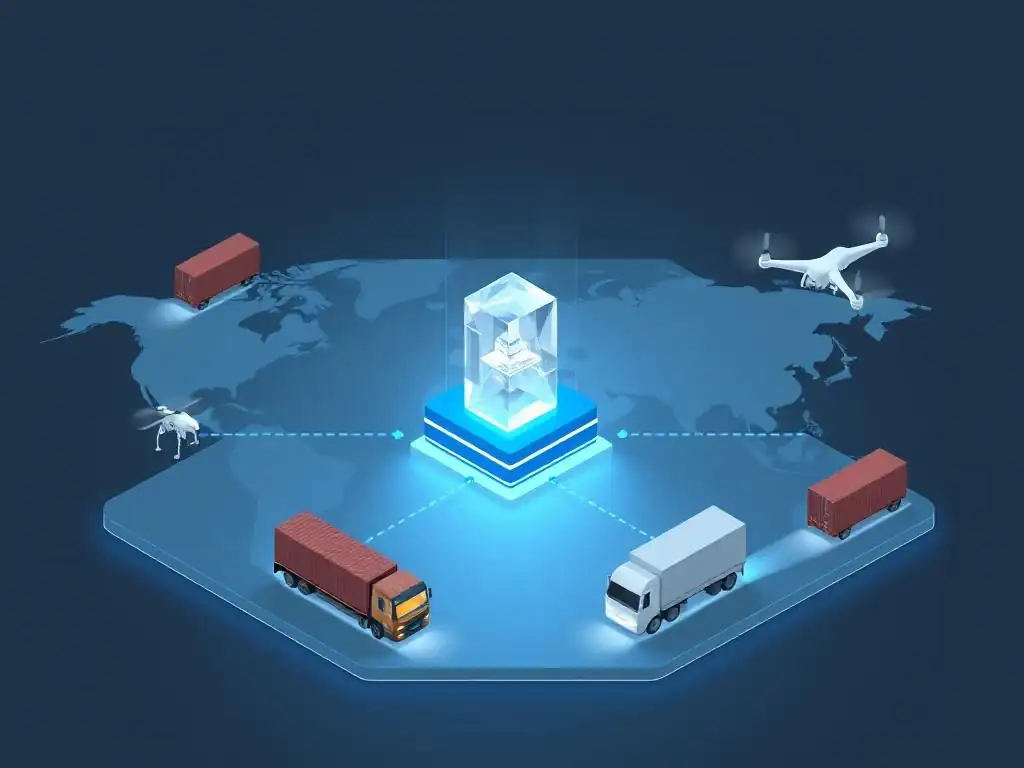
The Need for Transparency and Security in Modern Supply Chains
In today's interconnected global economy, supply chains are intricate networks involving numerous stakeholders, from raw material suppliers to end consumers. This complexity, while enabling efficiency and global reach, also introduces vulnerabilities related to transparency and security. Consumers are increasingly demanding to know the origin and journey of the products they purchase, driven by concerns about ethical sourcing, product quality, and safety.
For instance, the 2008 Chinese milk scandal, where melamine contamination affected hundreds of thousands of babies, highlighted the devastating consequences of opaque supply chains. Similarly, the rise in counterfeit goods, estimated by the OECD to be worth hundreds of billions of dollars annually, demonstrates the urgent need for enhanced security and traceability to protect both businesses and consumers. Businesses, too, require robust supply chain visibility to optimize operations, reduce risks, and ensure compliance with increasingly stringent regulations across different jurisdictions.
Furthermore, disruptions, whether due to geopolitical events, natural disasters, or unforeseen global crises like the COVID-19 pandemic, underscore the fragility of traditional supply chain models. The pandemic exposed critical weaknesses in supply chain resilience, leading to shortages of essential goods, production delays, and significant economic losses. A lack of real-time visibility into inventory levels, shipment statuses, and potential bottlenecks hindered effective responses and mitigation strategies.
Therefore, establishing transparent and secure supply chains is not merely a matter of best practice but a critical imperative for business continuity, consumer trust, and global economic stability. The ability to track and verify products throughout their lifecycle, from origin to consumption, is becoming a fundamental requirement for operating in the modern marketplace.
Blockchain's Role in Revolutionizing Supply Chain Management
Blockchain technology, initially popularized by cryptocurrencies, offers a powerful solution to address the challenges of transparency and security in modern supply chain management. Its inherent characteristics – decentralization, immutability, and transparency – make it uniquely suited to revolutionize how goods and information are tracked and managed across complex networks. Unlike traditional centralized databases, blockchain distributes data across multiple participants, making it tamper-proof and resistant to single points of failure.
This decentralized nature fosters trust and collaboration among diverse stakeholders who may not inherently trust each other. Imagine a scenario where every step in a product's journey, from raw material sourcing to final delivery, is recorded on a blockchain. This creates an immutable and auditable record accessible to authorized participants, providing unprecedented visibility and accountability.
The application of blockchain to supply chain management goes beyond simple tracking; it enables a fundamental shift towards greater efficiency, security, and trust. By leveraging cryptographic techniques and consensus mechanisms, blockchain ensures data integrity and authenticity, preventing fraud and counterfeiting. For example, luxury brands are exploring blockchain to combat the pervasive issue of counterfeit products by providing consumers with a verifiable digital certificate of authenticity linked to the physical item.
Moreover, smart contracts, self-executing agreements coded on the blockchain, can automate processes such as payments and shipment verification, streamlining operations and reducing administrative overhead. This potential for automation and enhanced security positions blockchain as a transformative technology capable of reshaping global supply chains for the better, fostering more resilient, transparent, and efficient ecosystems.
Frequently Asked Questions
What role does blockchain play in securing location data in IoT?
Blockchain provides a decentralized and immutable ledger for recording location data. This enhances security and prevents tampering, ensuring the integrity of the information.
Blockchain allows for granular control over data access, enabling users to grant or revoke permissions for location sharing. It can also facilitate privacy-preserving techniques like zero-knowledge proofs.
What are the key benefits of using blockchain for IoT location management compared to traditional methods?
Blockchain offers increased transparency, security, and trust compared to centralized systems. It also reduces reliance on intermediaries, lowering costs and improving efficiency.
How does blockchain enable secure IoT location data management for supply chain applications?
Blockchain allows for real-time tracking of goods with verifiable location data at each stage. This improves supply chain visibility and reduces the risk of counterfeiting or theft.
What are the main challenges in implementing blockchain for secure IoT location?
Scalability, interoperability, and the complexity of integrating blockchain with existing IoT infrastructure are key challenges. Regulatory uncertainty also presents an obstacle.
Final Reflection: Securing the Future with Decentralized Trust
The exploration of blockchain technology for secure location data management in IoT applications reveals a critical intersection of innovation and necessity. The need for verifiable and tamper-proof location data is no longer a futuristic concept but a present-day imperative, driven by the exponential growth of IoT devices and the increasing reliance on location-based services across various industries. This article underscores the potential of blockchain to revolutionize how we manage and trust location information in a world increasingly reliant on interconnected devices.
The impact of securing IoT location data extends far beyond mere technological advancement; it touches upon fundamental aspects of privacy, security, and trust in our digital lives. The ability to verify the provenance and integrity of location data is paramount to fostering confidence in IoT applications and preventing malicious manipulation. Trust is the glue of society. Without it, everything falls apart.
This quote, while broad, perfectly encapsulates the essence of why blockchain's decentralized trust mechanism is so vital in the context of IoT location data. It's about building a foundation of reliability in a landscape often plagued by vulnerabilities.
As we move forward, let us not only embrace the technological advancements presented by blockchain but also reflect on the ethical implications of location data management. Consider how you can advocate for responsible data practices and contribute to a future where IoT applications are not only innovative but also secure and trustworthy. The power to shape this future lies within each of us, and by understanding and applying the principles outlined in this article, we can collectively build a more secure and transparent world.
Secure Your Future: Embrace Blockchain for Location Data!
Thanks for diving into the world of blockchain and IoT! You've just unlocked insights into how to revolutionize location data management and security. Now, let's put that knowledge into action!
- Begin exploring integrating a blockchain solution into your IoT projects to leverage its secure and transparent characteristics.
- Share this article with colleagues or join the discussion on blockchain's potential to revolutionize industries on social media using #BlockchainTrends.
- Brainstorm unusual applications of blockchain tech; could you apply these principles to personal safety devices or tracking environmental changes?
What's one small, unexpected application of blockchain for location security that excites you the most? Share your ideas below!
Leave a Reply