
Blockchain vs. Traditional Databases for IoT Data Management: A Detailed Comparison

Welcome to Blockchain Trends, your go-to source for understanding the real-world applications of blockchain technology. Beyond the hype, we delve into the transformative power of decentralized systems. Ever wondered how blockchain can revolutionize the security of your IoT devices? This article explores precisely that, offering a detailed comparison of blockchain and traditional databases in the context of Blockchain IoT data security. Discover the strengths, weaknesses, and potential of each approach, and unlock the future of secure and reliable data management. Ready to see how blockchain can secure your connected world?
Blockchain vs. Traditional Databases for IoT Data Management: A Detailed Comparison
- Introduction: The Growing Need for Secure IoT Data Management
- Understanding Traditional Databases for IoT Data
- Blockchain Technology: A Decentralized Solution for IoT Data
-
Blockchain vs. Traditional Databases: A Feature-by-Feature Comparison
- Data Security: Decentralized vs. Centralized Security Models
- Scalability: Addressing Throughput and Transaction Costs
- Cost Efficiency: Comparing Infrastructure and Operational Expenses
- Data Integrity and Auditability: Traceability and Data Provenance
- Real-time Data Access and Latency: Evaluating Response Times
- Data Privacy and Compliance: GDPR and Data Governance
-
Use Cases: Blockchain and Traditional Databases in IoT Applications
- Traditional Databases: Suitable Scenarios for High-Volume, Low-Security IoT Data
- Blockchain in Supply Chain Management: Enhancing Transparency and Traceability
- Blockchain in Smart Homes: Securing IoT Devices and User Data
- Blockchain for Healthcare IoT: Protecting Sensitive Patient Information
- Blockchain in Energy Grids: Enhancing Security and Efficiency
- Addressing the Challenges of Implementing Blockchain for IoT
- Conclusion: Choosing the Right Data Management Solution for Your IoT Needs
-
Frequently Asked Questions
- How does blockchain enhance IoT data security compared to traditional databases?
- What are the key advantages of using blockchain for IoT data management beyond just security?
- What are some of the challenges of implementing blockchain for IoT data, particularly concerning scalability?
- How does blockchain facilitate decentralized finance (DeFi) applications within the IoT ecosystem?
- What role does regulation play in the adoption of blockchain for IoT data security, and what are some current concerns?
- Final Reflection: Securing the Future of IoT Data
- Unlock the Future: Start Leveraging Blockchain for Your IoT Data!
Introduction: The Growing Need for Secure IoT Data Management
The Proliferation of IoT Devices and the Resulting Data Volume
The Internet of Things (IoT) has witnessed explosive growth in recent years, transforming industries and daily life alike. From smart thermostats in homes to sophisticated sensors in industrial machinery, the number of connected devices is staggering. Industry analysts predict that by 2025, there will be over 75 billion IoT devices globally, a dramatic increase from the approximately 35 billion in 2020.
This massive deployment is generating unprecedented volumes of data, estimated to reach 79.4 zettabytes annually by 2025. This data deluge includes everything from environmental readings and equipment performance metrics to personal user data and sensitive health information. Effectively managing and securing this data is paramount for realizing the full potential of IoT and mitigating associated risks.
The sheer scale of IoT data presents significant challenges for traditional data management systems. Consider a smart city initiative deploying sensors across its infrastructure to monitor traffic flow, air quality, and energy consumption. These sensors generate continuous streams of data that need to be collected, processed, and analyzed in real-time to optimize city operations and resource allocation.
Furthermore, the data volume is not the only concern; the velocity and variety of IoT data, coming from diverse device types and communication protocols, add further complexity. This exponential growth in data volume and complexity necessitates a re-evaluation of existing data management paradigms to ensure scalability, efficiency, and, crucially, robust security.
Security Challenges in IoT Data Management: Vulnerabilities and Risks
The interconnected nature of IoT devices, while enabling numerous benefits, also creates a vast attack surface for malicious actors. IoT ecosystems are inherently vulnerable due to factors such as device heterogeneity, resource constraints on devices, and often lax security implementations in the rush to market. A 2020 report by Verizon found that 51% of organizations experienced an IoT-related security incident, highlighting the pervasive nature of these threats. Common vulnerabilities include weak default passwords, unencrypted communication protocols, and lack of regular security updates, making devices easy targets for exploitation.
The consequences of IoT security breaches can be severe, ranging from data breaches and privacy violations to physical harm and disruption of critical infrastructure. For example, compromised smart home devices could allow unauthorized access to personal data, home surveillance, or even control over physical security systems. In industrial IoT (IIoT), a successful cyberattack could disrupt manufacturing processes, damage equipment, or even cause safety hazards.
The Mirai botnet attack in 2016, which leveraged compromised IoT devices to launch massive DDoS attacks, demonstrated the potential for widespread disruption. Securing IoT data is not just about protecting information; it is about ensuring the safety, reliability, and trustworthiness of interconnected systems that are increasingly integral to modern life. Therefore, robust blockchain IoT data security solutions are becoming increasingly vital.
Exploring Blockchain for Enhanced IoT Data Security
Blockchain technology, initially known for its role in cryptocurrencies, offers a compelling alternative for addressing the security challenges inherent in IoT data management. Its decentralized, immutable, and transparent nature provides inherent security advantages over traditional centralized systems. Blockchain, as a Distributed Ledger Technology (DLT), eliminates single points of failure, a critical vulnerability in many current IoT architectures. By distributing data across a network of nodes, blockchain makes it significantly more difficult for attackers to compromise the entire system.
The cryptographic principles underpinning blockchain, including hashing and digital signatures, ensure data integrity and authenticity. Once data is recorded on a blockchain, it becomes virtually tamper-proof, providing a robust audit trail and preventing unauthorized modifications. Furthermore, blockchain's transparency, while sometimes perceived as a privacy concern, can be leveraged in permissioned or private blockchain networks to provide auditable access control and data provenance.
For IoT applications, blockchain can enhance blockchain IoT data security by securing device identities, protecting data transmissions, and ensuring the integrity of sensor readings. This exploration into blockchain's capabilities aims to understand how it can provide a more secure and resilient foundation for the rapidly expanding world of IoT.
Understanding Traditional Databases for IoT Data
Architecture of Traditional Databases: A Centralized Model
Traditional databases, the workhorses of data management for decades, typically operate on a centralized model. This architecture revolves around a central server or cluster of servers that store and manage all data. Clients, such as applications or IoT devices, connect to this central server to access and manipulate data. This centralized approach simplifies data management and provides a single point of control, making administration and updates relatively straightforward in many scenarios. Examples of traditional database systems commonly used include relational databases like MySQL, PostgreSQL, and Oracle, as well as NoSQL databases such as MongoDB and Cassandra.
In a centralized database system for IoT, all data collected from devices is transmitted to and stored within this central repository. Data processing, analysis, and querying are also performed centrally. While this model has been effective for many applications, its centralized nature introduces inherent vulnerabilities in the context of IoT.
All security measures are concentrated around protecting this central point, and if compromised, the entire system's data integrity and availability are at risk. Furthermore, the performance and scalability of the system are often limited by the capacity of the central server infrastructure. Understanding this centralized architecture is crucial to appreciating both the strengths and limitations when applied to the unique demands of IoT data management and blockchain IoT data security.
Strengths of Traditional Databases: Performance and Maturity
Traditional databases possess several strengths that have made them the dominant choice for data management for a long time. One of their primary advantages is performance, particularly in terms of read and write speeds for structured data. Relational databases, optimized over decades, excel at handling complex queries and transactions efficiently. For applications requiring high-throughput and low-latency data access, traditional databases often provide superior performance compared to blockchain in certain scenarios. Benchmark tests have consistently shown relational databases achieving significantly higher transaction processing rates than many blockchain platforms, particularly for complex operations.
Maturity is another key strength. Traditional database technologies are well-established and have a vast ecosystem of tools, expertise, and support. Database administrators and developers are readily available with deep knowledge of these systems.
Furthermore, robust features like transaction management, indexing, and query optimization are highly refined in traditional databases. For IoT applications where data structure is predictable and real-time analytics are critical, traditional databases can offer a mature and high-performance solution, provided that blockchain IoT data security is not the primary concern or is addressed through supplementary security layers. However, the inherent security limitations in their centralized nature must be carefully considered, especially given the escalating security threats in the IoT landscape.
Limitations of Traditional Databases in IoT Security: Single Points of Failure
Despite their strengths, traditional databases face significant limitations when it comes to securing IoT data, primarily due to their centralized architecture. The single point of failure is the most critical vulnerability. In a centralized system, all critical data and control mechanisms are concentrated in one location.
If this central server or data center is compromised through a cyberattack, natural disaster, or internal failure, the entire IoT system can be rendered inoperable, and sensitive data can be exposed or lost. This single point of failure represents a significant risk, particularly for critical infrastructure IoT deployments where continuous operation and data integrity are paramount.
Furthermore, traditional databases are susceptible to insider threats and data tampering. Because access control is managed centrally, a malicious insider with sufficient privileges can potentially alter or delete data without leaving a readily auditable trail within the database itself. While audit logs exist, they are also often stored centrally and can be manipulated.
In the context of IoT, where data integrity is crucial for decision-making and process automation, the potential for undetected data tampering is a serious concern. The lack of inherent immutability and distributed security in traditional databases contrasts sharply with the security-focused design principles of blockchain, making blockchain IoT data security a compelling alternative for many IoT applications demanding higher security guarantees.
Blockchain Technology: A Decentralized Solution for IoT Data
Blockchain Fundamentals: Distributed Ledger Technology (DLT)
Blockchain technology is fundamentally a type of Distributed Ledger Technology (DLT). Unlike traditional databases that rely on a central authority, DLT and specifically blockchain, distribute data across a network of computers, known as nodes. Each node maintains a copy of the ledger, ensuring redundancy and resilience.
Data is organized into blocks, which are cryptographically linked together in a chronological chain – hence the name "blockchain." This chain structure, combined with cryptographic hashing, ensures immutability; once a block is added to the chain, it becomes extremely difficult to alter or delete, as doing so would require changing all subsequent blocks and gaining consensus from the majority of the network.
The consensus mechanism is another cornerstone of blockchain technology. Before a new block can be added to the blockchain, it must be validated by a majority of the nodes in the network, according to a predefined consensus algorithm (e.g., Proof-of-Work, Proof-of-Stake). This consensus process ensures that all nodes agree on the validity of transactions and the state of the ledger, eliminating the need for a central trusted authority.
For IoT applications, this decentralized and trustless nature of blockchain offers significant advantages for blockchain IoT data security and data integrity, particularly in environments where devices are distributed and trust assumptions are minimal. Different types of blockchains exist, including public, private, and consortium blockchains, each offering different levels of access control and decentralization, allowing for tailored solutions based on specific IoT application needs.
Key Blockchain Features for IoT: Immutability, Transparency, and Security
Blockchain's inherent features align well with the security and data integrity requirements of IoT ecosystems. Immutability, as discussed, is a crucial feature. Once IoT sensor data is recorded on a blockchain, it becomes tamper-proof, creating a verifiable and auditable record of events. This immutability is invaluable for applications requiring data provenance and integrity, such as supply chain tracking, environmental monitoring, and healthcare data management. For example, in pharmaceutical supply chains, blockchain can ensure the authenticity and integrity of temperature-sensitive medications throughout their journey, preventing counterfeiting and ensuring patient safety.
Transparency, in the context of blockchain, refers to the ability to audit transactions and data stored on the ledger. While public blockchains offer complete transparency to anyone, permissioned or private blockchains can provide selective transparency, allowing authorized parties to access and verify data while maintaining privacy for sensitive information. This transparency enhances accountability and trust in IoT systems.
Security is another fundamental feature. Blockchain's decentralized nature eliminates single points of failure, and cryptographic techniques secure data and transactions. Furthermore, blockchain IoT data security is enhanced through features like access control mechanisms, encryption, and secure identity management, making it a robust platform for securing sensitive IoT data and device communications.
Enhancing IoT Data Integrity and Security with Blockchain
Blockchain technology significantly enhances IoT data integrity and security through several mechanisms. Firstly, decentralization inherently improves security by distributing risk and eliminating single points of failure. If one node in a blockchain network is compromised, the rest of the network remains operational and secure, as the ledger is replicated across multiple nodes.
This resilience is particularly beneficial for distributed IoT deployments where devices are geographically dispersed and potentially vulnerable. Secondly, cryptographic hashing ensures data integrity. Any attempt to tamper with data recorded on the blockchain would result in a change in the hash value, which would be immediately detectable by the network, thus preventing data manipulation.
Thirdly, blockchain can facilitate secure device identity and access management in IoT ecosystems. Each IoT device can be assigned a unique digital identity on the blockchain, enabling secure authentication and authorization. This can prevent unauthorized devices from accessing the network or tampering with data.
Smart contracts, self-executing agreements encoded on the blockchain, can automate security policies and access controls, ensuring consistent and tamper-proof enforcement. For instance, a smart contract could automatically revoke access to a device if it deviates from pre-defined operational parameters or exhibits malicious behavior. By leveraging these features, blockchain provides a robust foundation for enhancing blockchain IoT data security and building more trustworthy and resilient IoT systems.
Blockchain vs. Traditional Databases: A Feature-by-Feature Comparison
Data Security: Decentralized vs. Centralized Security Models
The fundamental difference in security models between blockchain and traditional databases lies in decentralization versus centralization. Traditional databases, with their centralized architecture, rely on perimeter security and access control mechanisms to protect a single point of data storage. This approach, while effective in many scenarios, creates a single point of failure and vulnerability. If the central server or data center is breached, all data is potentially at risk. Furthermore, insider threats pose a significant risk in centralized systems, as a compromised administrator account can grant access to vast amounts of sensitive data.
Blockchain, on the other hand, employs a decentralized security model. Data is distributed across a network of nodes, and consensus mechanisms ensure data integrity and validity. There is no single point of failure, making the system inherently more resilient to attacks.
Compromising a blockchain network requires simultaneously attacking a significant portion of the nodes, which is computationally expensive and practically infeasible for well-established blockchains. Moreover, the cryptographic principles underpinning blockchain, such as hashing and digital signatures, provide robust data integrity and authenticity. In terms of blockchain IoT data security, the decentralized model offers a significant advantage in mitigating risks associated with single points of failure and insider threats, providing a more robust and resilient security posture compared to centralized traditional databases.
Scalability: Addressing Throughput and Transaction Costs
Scalability is a crucial consideration when comparing blockchain and traditional databases for IoT data management. Traditional databases, particularly relational databases, have been optimized for high throughput and low latency for structured data, achieving thousands to millions of transactions per second (TPS) in some cases. However, scaling traditional databases often involves vertical scaling (upgrading server hardware) or complex horizontal scaling (distributing data across multiple servers), which can be costly and complex to manage.
Blockchain, in its original form (e.g., Bitcoin), has faced scalability challenges. Early blockchain platforms like Bitcoin and Ethereum have limited TPS, typically ranging from a few to tens of transactions per second. This limitation stems from the need for consensus across the network for each transaction, which can be time-consuming. However, significant advancements are being made to address blockchain scalability.
Layer-2 solutions like payment channels and rollups, as well as sharding techniques, are being developed and implemented to significantly increase blockchain throughput. Furthermore, newer blockchain platforms are designed with scalability in mind, achieving higher TPS compared to earlier generations. Transaction costs on blockchain can also vary depending on network congestion and gas fees, while traditional database costs are typically more predictable. For blockchain IoT data security to be viable in large-scale deployments, scalability solutions and cost-effective blockchain platforms are essential.
Cost Efficiency: Comparing Infrastructure and Operational Expenses
Cost efficiency is another important factor in choosing between blockchain and traditional databases for IoT data management. Traditional databases benefit from mature and widely available infrastructure. Cloud-based database services offer pay-as-you-go models, reducing upfront infrastructure investment. Operational expenses for traditional databases are also relatively well-understood and predictable, with established tools and expertise for database administration and maintenance.
Blockchain infrastructure, particularly for large-scale deployments, can be more complex and potentially more expensive in certain scenarios. Setting up and maintaining a blockchain network requires nodes, network infrastructure, and potentially specialized hardware. Public blockchains often have transaction fees (gas fees) that can fluctuate and add to operational costs.
However, private or consortium blockchains can mitigate some of these costs by controlling network participation and consensus mechanisms. Furthermore, the long-term security benefits of blockchain, such as reduced risk of data breaches and enhanced data integrity, can potentially offset higher initial infrastructure or operational costs. The cost-effectiveness of blockchain IoT data security solutions needs to be evaluated on a case-by-case basis, considering the specific requirements of the IoT application and the long-term value proposition of enhanced security and data integrity.
Data Integrity and Auditability: Traceability and Data Provenance
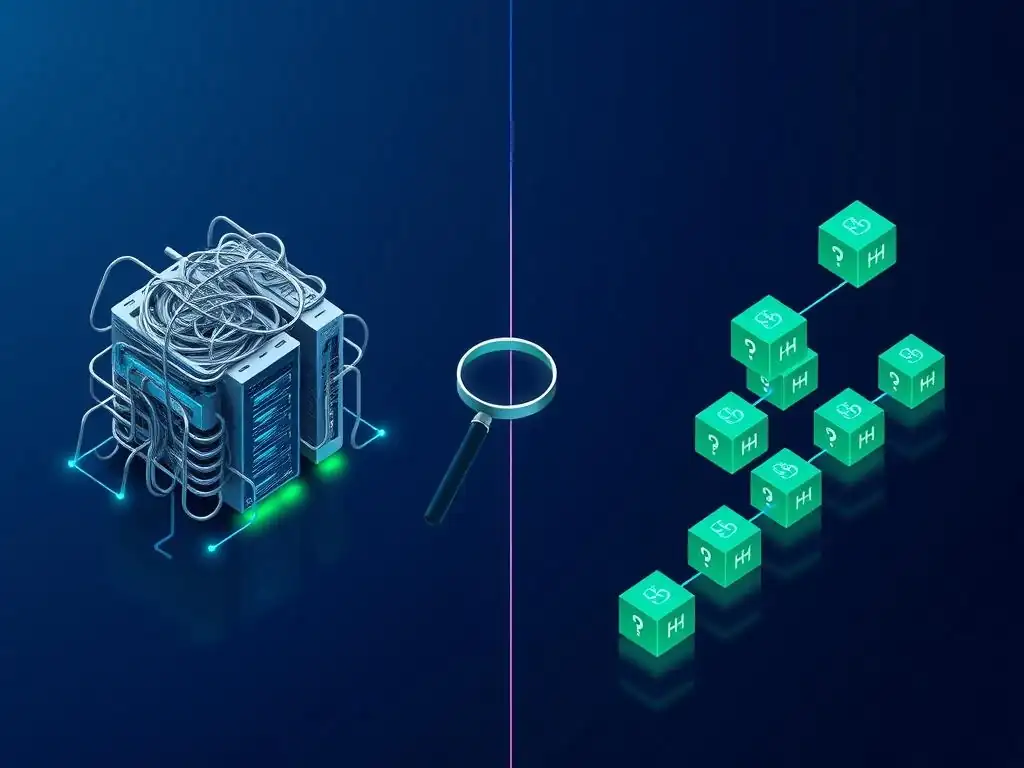
In terms of data integrity and auditability, blockchain offers significant advantages over traditional databases. Blockchain's immutable nature ensures that once data is recorded, it cannot be altered or deleted, providing a tamper-proof record of events. Cryptographic hashing and consensus mechanisms further enhance data integrity by detecting and preventing unauthorized modifications. This immutability is crucial for applications requiring data provenance, traceability, and non-repudiation. For example, in supply chain management, blockchain can provide a verifiable and auditable record of product origin, ownership, and movement, combating counterfeiting and ensuring product authenticity.
Traditional databases, while offering data integrity features like transaction logs and backups, do not inherently provide the same level of immutability and auditability as blockchain. Data in traditional databases can be modified or deleted, and while audit logs can track changes, they are also stored centrally and can potentially be tampered with.
Blockchain's distributed ledger and consensus mechanisms create a transparent and auditable record that is significantly more difficult to manipulate. For IoT applications where data integrity and provenance are paramount, such as regulatory compliance, legal evidence, or critical infrastructure monitoring, blockchain IoT data security and its inherent data integrity features offer a compelling advantage.
Real-time Data Access and Latency: Evaluating Response Times
Real-time data access and latency are critical considerations for many IoT applications. Traditional databases, especially in-memory databases and optimized relational databases, are designed for low-latency data access and high query performance. They can provide near real-time response times, often in milliseconds, making them suitable for applications requiring immediate data processing and feedback loops. For example, in industrial automation or autonomous driving, real-time data access and low latency are essential for control systems and decision-making.
Blockchain, in its current state, typically has higher latency compared to traditional databases, particularly for transaction confirmation. The time required for a transaction to be validated and added to a blockchain can range from seconds to minutes, depending on the blockchain platform and network congestion. This latency can be a limiting factor for applications requiring truly real-time data processing.
However, advancements in blockchain technology, such as faster consensus mechanisms and layer-2 solutions, are aimed at reducing latency and improving real-time performance. For blockchain IoT data security in applications requiring real-time data access, the trade-off between security and latency needs to be carefully considered, and appropriate blockchain solutions or hybrid architectures may be necessary.
Data Privacy and Compliance: GDPR and Data Governance
Data privacy and compliance, especially regulations like GDPR (General Data Protection Regulation), are increasingly important considerations for IoT data management. Traditional databases offer established mechanisms for data privacy and access control. Features like encryption, anonymization, and role-based access control can be implemented to protect sensitive data and comply with privacy regulations. Database administrators have granular control over data access and can implement policies to ensure data privacy and compliance.
Blockchain's transparency and immutability can present challenges for data privacy and compliance. Data recorded on a public blockchain is inherently transparent and potentially accessible to anyone. While encryption can be used to protect data confidentiality, managing encryption keys and ensuring compliance with regulations like GDPR can be complex in a blockchain environment.
However, permissioned or private blockchains offer more control over data access and privacy. Features like zero-knowledge proofs and homomorphic encryption are also being explored to enhance data privacy on blockchain. For blockchain IoT data security to be compliant with data privacy regulations, careful consideration of blockchain type, data encryption strategies, and access control mechanisms is necessary.
Use Cases: Blockchain and Traditional Databases in IoT Applications
Traditional Databases: Suitable Scenarios for High-Volume, Low-Security IoT Data
Traditional databases remain highly suitable for IoT applications where high-volume data ingestion and processing are paramount, and security requirements are relatively lower or can be addressed through supplementary security measures. Examples include environmental monitoring systems collecting vast amounts of sensor data on temperature, humidity, and air quality across a wide geographical area. These systems prioritize data volume and real-time analytics for environmental modeling and forecasting, and while data integrity is important, the security risks might be considered lower compared to applications handling sensitive personal or financial data.
Another suitable scenario is in smart agriculture, where numerous sensors monitor soil conditions, weather patterns, and crop health across large farms. The focus is on optimizing irrigation, fertilization, and pest control based on real-time data analysis, requiring high-throughput data processing. While security is relevant to protect against unauthorized access and data manipulation, the primary emphasis is on data volume and real-time analytics for operational efficiency.
In these high-volume, lower-security IoT applications, the performance and maturity of traditional databases, coupled with their cost-effectiveness, often make them the preferred choice. However, even in these scenarios, basic blockchain IoT data security principles, such as secure device authentication and encrypted communication, should be considered to mitigate fundamental security risks.
Blockchain in Supply Chain Management: Enhancing Transparency and Traceability
Blockchain technology offers significant advantages for supply chain management in IoT, particularly in enhancing transparency and traceability. By recording each step of a product's journey on a blockchain, from origin to consumer, a transparent and immutable record is created. This is particularly valuable for industries like pharmaceuticals, food and beverage, and luxury goods, where provenance and authenticity are critical. IoT sensors embedded in products or packaging can continuously update the blockchain with real-time location, temperature, and condition data.
For example, in the food industry, blockchain can track food products from farm to table, ensuring food safety and preventing food fraud. Consumers can scan a QR code on a product to access its complete history on the blockchain, verifying its origin, processing, and transportation. In pharmaceutical supply chains, blockchain can track temperature-sensitive medications, ensuring they are stored and transported within specified temperature ranges, preventing spoilage and counterfeiting. Blockchain IoT data security in supply chain management builds trust and accountability across the entire ecosystem, improving efficiency, reducing fraud, and enhancing consumer confidence.
Blockchain in Smart Homes: Securing IoT Devices and User Data
Smart homes, with their increasing number of interconnected devices, present significant security and privacy challenges. Blockchain can play a crucial role in securing smart home IoT devices and protecting user data. By using blockchain for device identity management and access control, unauthorized devices can be prevented from joining the network, and user data can be protected from unauthorized access. Smart contracts can automate security policies, such as device authentication and data sharing permissions.
For instance, blockchain-based identity solutions can ensure that only authorized devices can communicate with each other and access user data. Data collected by smart home devices, such as energy consumption, security camera footage, and personal preferences, can be encrypted and stored on a private blockchain, giving users greater control over their data and enhancing privacy. Blockchain IoT data security in smart homes can create a more secure and trustworthy environment, mitigating risks associated with hacking, data breaches, and privacy violations, fostering user adoption and confidence in smart home technologies.
Blockchain for Healthcare IoT: Protecting Sensitive Patient Information
Healthcare IoT, including wearable devices, remote patient monitoring systems, and connected medical equipment, generates highly sensitive patient data. Protecting the privacy and security of this data is paramount, and blockchain offers a promising solution. Blockchain can be used to secure patient medical records, manage device identities, and ensure data integrity in healthcare IoT ecosystems. Patient data can be encrypted and stored on a permissioned blockchain, with access granted only to authorized healthcare providers and patients themselves.
For example, blockchain can create a secure and interoperable platform for sharing patient medical records across different healthcare providers, improving care coordination and reducing medical errors. Wearable devices can securely transmit patient health data to the blockchain, providing a tamper-proof record of vital signs and health metrics for remote monitoring and diagnostics. Blockchain IoT data security in healthcare can enhance patient privacy, data integrity, and security compliance, fostering trust and enabling the wider adoption of connected healthcare technologies.
Blockchain in Energy Grids: Enhancing Security and Efficiency
Smart energy grids, leveraging IoT devices for monitoring and managing energy production and distribution, are critical infrastructure that requires robust security. Blockchain can enhance the security and efficiency of energy grids by securing communication between grid devices, managing energy transactions, and improving grid resilience. Blockchain can be used to secure data from smart meters, substations, and renewable energy sources, preventing unauthorized access and data manipulation.
For example, blockchain-based microgrids can enable peer-to-peer energy trading between prosumers (consumers who also produce energy), improving energy efficiency and reducing reliance on centralized energy providers. Smart contracts can automate energy transactions and grid management functions, enhancing efficiency and transparency. Blockchain IoT data security in energy grids can protect critical infrastructure from cyberattacks, improve grid stability, and facilitate the transition to more decentralized and sustainable energy systems.
Addressing the Challenges of Implementing Blockchain for IoT
Scalability Issues and Potential Solutions: Sharding and Layer-2 Protocols
Scalability remains a significant challenge for implementing blockchain in large-scale IoT deployments. Traditional blockchain platforms, as discussed, have limitations in transaction throughput and latency. For IoT applications generating massive volumes of data from millions of devices, scalability bottlenecks can hinder performance and increase costs. However, various scalability solutions are being developed and implemented to address these challenges. Sharding, a technique borrowed from database technology, involves partitioning the blockchain into smaller, manageable shards, allowing for parallel transaction processing and increased throughput.
Layer-2 protocols, such as payment channels and rollups, build on top of the main blockchain (Layer-1) to offload transaction processing. Payment channels enable off-chain transactions between parties, with only the final settlement recorded on the main blockchain. Rollups bundle multiple transactions into a single transaction on the main chain, reducing the load on Layer-1. These scalability solutions are crucial for enabling blockchain IoT data security in large-scale IoT deployments, allowing blockchain to handle the high data volume and transaction demands of connected devices without compromising performance.
Interoperability Challenges: Connecting Different Blockchain Networks
Interoperability is another challenge in the blockchain space, particularly when considering IoT deployments that may involve different blockchain networks or legacy systems. Different blockchain platforms often use incompatible protocols and data formats, making it difficult to exchange data and interact seamlessly between them. For IoT applications spanning multiple domains or organizations, interoperability is essential for data sharing and collaboration. Cross-chain communication protocols and blockchain bridges are being developed to address interoperability challenges.
These solutions enable the transfer of data and assets between different blockchain networks, allowing for more integrated and interconnected blockchain ecosystems. Standards and frameworks for blockchain interoperability are also emerging, aiming to promote compatibility and facilitate seamless communication between different blockchain platforms. Addressing interoperability is crucial for realizing the full potential of blockchain IoT data security in complex and heterogeneous IoT environments, enabling data sharing and collaboration across different blockchain networks and legacy systems.
The regulatory landscape for blockchain technology and IoT is still evolving, and navigating these regulations is a crucial consideration for implementing blockchain for IoT data management. Regulations related to data privacy (e.g., GDPR, CCPA), data security, and industry-specific compliance requirements (e.g., HIPAA for healthcare, PSD2 for finance) need to be carefully considered when deploying blockchain-based IoT solutions. Understanding the legal implications of using blockchain for data storage, data processing, and data sharing is essential to ensure compliance and avoid legal risks.
Working with legal experts and staying informed about evolving regulations are crucial steps in navigating the regulatory landscape. Choosing appropriate blockchain types (public, private, consortium) and implementing privacy-enhancing technologies can help address data privacy concerns. Adopting industry best practices and security standards for blockchain IoT data security can also contribute to regulatory compliance. Engaging with regulatory bodies and participating in industry discussions can help shape a regulatory framework that supports innovation while ensuring responsible and compliant use of blockchain technology in IoT.
Resource Consumption: Exploring Efficient Consensus Mechanisms for IoT
Resource consumption, particularly energy consumption, is a concern for some blockchain platforms, especially those using energy-intensive consensus mechanisms like Proof-of-Work (PoW). PoW, used by Bitcoin, requires significant computational power and energy to validate transactions, raising environmental concerns. For resource-constrained IoT devices, energy efficiency is paramount. Exploring more efficient consensus mechanisms is crucial for deploying blockchain in IoT environments. Proof-of-Stake (PoS) is a more energy-efficient alternative to PoW, where validators are selected based on the amount of cryptocurrency they hold and are willing to "stake," rather than computational power.
Other consensus mechanisms, such as Delegated Proof-of-Stake (DPoS) and Proof-of-Authority (PoA), are also being explored for their energy efficiency and suitability for different IoT use cases. Furthermore, optimizing blockchain protocols and implementing lightweight blockchain solutions can reduce resource consumption. Choosing energy-efficient consensus mechanisms and optimizing blockchain protocols are essential for making blockchain IoT data security solutions viable and sustainable for resource-constrained IoT devices and large-scale deployments.
Conclusion: Choosing the Right Data Management Solution for Your IoT Needs
Key Takeaways: Blockchain's Advantages in IoT Data Security and Integrity
Both blockchain and traditional databases have their strengths and weaknesses when it comes to IoT data management. Traditional databases excel in performance, maturity, and cost-effectiveness for high-volume, lower-security IoT applications. However, their centralized architecture presents inherent security vulnerabilities, particularly single points of failure and susceptibility to insider threats. Blockchain, with its decentralized, immutable, and transparent nature, offers significant advantages in blockchain IoT data security and data integrity. It eliminates single points of failure, enhances data provenance, and provides robust security through cryptographic mechanisms.
Blockchain is particularly well-suited for IoT applications requiring high security, data integrity, and transparency, such as supply chain management, smart homes, healthcare IoT, and energy grids. While scalability, interoperability, regulatory compliance, and resource consumption remain challenges for blockchain in IoT, ongoing advancements and solutions are addressing these limitations. The choice between blockchain and traditional databases depends on the specific requirements of the IoT application, particularly the trade-off between security needs, performance demands, cost considerations, and regulatory requirements.
Future Trends: The Evolution of Blockchain and IoT Integration
The integration of blockchain and IoT is expected to evolve significantly in the coming years. Advancements in blockchain scalability solutions, such as sharding and layer-2 protocols, will make blockchain more suitable for large-scale IoT deployments. Interoperability solutions will enable seamless communication and data exchange between different blockchain networks and legacy systems, fostering more integrated IoT ecosystems. Standardization efforts will further promote interoperability and facilitate wider adoption of blockchain in IoT.
The development of lightweight blockchain solutions and energy-efficient consensus mechanisms will address resource constraints in IoT devices, making blockchain more viable for edge computing and resource-limited environments. Furthermore, the convergence of blockchain with other emerging technologies like AI and edge computing will unlock new possibilities for intelligent and secure IoT applications. Blockchain IoT data security is poised to become increasingly important as IoT deployments grow in scale and complexity, driving further innovation and adoption of blockchain-based solutions for securing the connected world.
Making an Informed Decision: Evaluating Your Specific Requirements
Choosing the right data management solution for your IoT needs requires a careful evaluation of your specific requirements. Consider the sensitivity of your IoT data and the security risks involved. If security and data integrity are paramount, and you require robust data provenance and auditability, blockchain should be seriously considered. Evaluate the scalability requirements of your IoT application, considering the volume of data and transaction throughput. If high throughput and low latency are critical, and security is less of a concern, traditional databases might be more suitable, or a hybrid approach combining blockchain and traditional databases could be explored.
Analyze the cost implications of both blockchain and traditional database solutions, considering infrastructure, operational expenses, and potential long-term benefits of enhanced security and data integrity. Assess the regulatory landscape and compliance requirements relevant to your IoT application. Finally, consider the maturity and availability of expertise for both blockchain and traditional database technologies. By carefully evaluating these factors, you can make an informed decision and choose the data management solution that best meets your specific IoT needs and ensures robust blockchain IoT data security where it is most critical.
Frequently Asked Questions
How does blockchain enhance IoT data security compared to traditional databases?
Blockchain provides enhanced security through its immutable and decentralized nature. This contrasts with traditional databases, which are often centralized and vulnerable to single points of failure.
What are the key advantages of using blockchain for IoT data management beyond just security?
Besides enhanced security, blockchain offers improved data transparency and auditability in IoT networks. This can lead to increased trust and efficiency in data sharing and management.
What are some of the challenges of implementing blockchain for IoT data, particularly concerning scalability?
Scalability is a major challenge, as blockchain networks can struggle to handle the high volume and velocity of data generated by IoT devices. Transaction throughput and data storage limitations are also concerns.
How does blockchain facilitate decentralized finance (DeFi) applications within the IoT ecosystem?
Blockchain enables secure and transparent financial transactions between IoT devices, creating opportunities for autonomous payments and micro-transactions. This fosters new DeFi applications within the IoT landscape.
What role does regulation play in the adoption of blockchain for IoT data security, and what are some current concerns?
Regulation is crucial for establishing legal frameworks and standards for blockchain-based IoT solutions. Concerns include data privacy compliance (like GDPR) and the lack of clear regulatory guidance in some jurisdictions.
Final Reflection: Securing the Future of IoT Data
The exploration of blockchain's potential in securing IoT data, as compared to traditional databases, underscores a critical need in our increasingly connected world. The vulnerabilities inherent in centralized systems, coupled with the exponential growth of IoT devices, demand innovative solutions for data integrity and security. This comparison isn't just academic; it's a vital step towards safeguarding the vast streams of information generated by our smart devices and infrastructure.
The ongoing debate between blockchain and traditional databases highlights the evolving landscape of data management. Witnessing the increasing frequency of data breaches and the growing distrust in centralized authorities underscores the urgency of exploring decentralized, secure solutions. Data is the new oil, but without proper security, it's a spill waiting to happen.
This quote encapsulates the importance of prioritizing data security in the age of IoT, and blockchain offers a compelling alternative to traditional methods.
As we move forward, let us not simply accept the status quo. Consider the implications of insecure IoT data in your own life, from the privacy of your smart home to the security of critical infrastructure. Embrace the potential of blockchain and other innovative technologies to build a more secure and trustworthy future for the Internet of Things. The responsibility for securing our connected world rests with each of us, and informed exploration is the first step towards meaningful change.
Unlock the Future: Start Leveraging Blockchain for Your IoT Data!
Thank you for exploring the comparison between blockchain and traditional databases for IoT data management. We hope you've gained valuable insights into how blockchain's unique properties can revolutionize your approach to data security and integrity. Now, let's put that knowledge into action!
Here are a few steps you can take today:
- Research blockchain solutions tailored for IoT data management in your industry. This is the first step toward a more secure and efficient future.
- Share this article with your colleagues and spark a conversation about the potential of blockchain within your organization.
- Explore free online courses to expand your understanding of this transformative technology and its various applications.
Are you ready to embrace the power of blockchain and elevate your IoT data management? Which IoT applications are you most excited to explore with blockchain technology?
Leave a Reply