
Emerging Technologies in Supply Chain Tracking: Blockchain and Beyond the Hype

Welcome to Blockchain Trends, your go-to source for understanding the real-world impact of blockchain technology. Beyond the headlines, we delve into its transformative power across various sectors. Are you ready to uncover the tangible blockchain supply chain tracking benefits that are reshaping industries? Explore how this technology is moving beyond the hype and revolutionizing efficiency, transparency, and security – your journey into the future of decentralized systems starts here.
Emerging Technologies in Supply Chain Tracking: Blockchain and IoT Integration
- Blockchain Supply Chain Tracking: Enhancing Transparency and Security
- Beyond Blockchain: Exploring Complementary Technologies for Enhanced Tracking
- Addressing the Challenges of Blockchain Implementation in Supply Chain Management
- Case Studies: Real-World Applications of Blockchain in Supply Chain Tracking
- The Future of Supply Chain Tracking: Blockchain and Emerging Trends
- Maximizing ROI: Strategies for Successful Blockchain Supply Chain Implementation
- Conclusion: Embracing Innovation for a More Transparent and Efficient Supply Chain
-
Frequently Asked Questions
- What are the main benefits of using blockchain for supply chain tracking?
- How does blockchain technology improve transparency in supply chains?
- What are some examples of enterprise applications of blockchain in supply chain tracking?
- What regulations are currently in place, or being developed, to govern the use of blockchain in supply chains?
- Beyond blockchain, what other emerging technologies are being integrated with supply chain tracking?
- Final Reflection: Embracing Transparency in a Connected World
Blockchain Supply Chain Tracking: Enhancing Transparency and Security
Understanding the Fundamentals of Blockchain for Supply Chain Management
Blockchain technology, at its core, is a decentralized, distributed ledger that records transactions across many computers. This structure ensures that once a transaction is recorded, it is incredibly difficult, if not impossible, to alter without the consensus of the network.
In the context of supply chains, this means creating an immutable and transparent record of every step a product takes, from raw material sourcing through manufacturing, distribution, and finally to the consumer. Each participant in the supply chain can access this shared ledger, seeing the same information (based on their permission levels), which drastically reduces information asymmetry and builds trust among stakeholders.
Implementing blockchain for supply chain management involves creating a network of participants, each with a node on the blockchain. When a product moves or changes hands, or when a key event occurs (like quality inspection or customs clearance), this event is recorded as a transaction on the ledger. Cryptographic hashes link these transactions together, forming a chain of blocks.
This chain provides an auditable trail that is visible to all authorized parties, offering unprecedented levels of transparency. For instance, a consumer could potentially scan a QR code on a product and see its entire journey, verifying its origin and authenticity.
Key Advantages of Blockchain in Supply Chain Traceability
One of the most significant blockchain supply chain tracking benefits is the dramatic increase in transparency and traceability. Traditional supply chains often rely on disparate, siloed systems, making it difficult and time-consuming to track goods or pinpoint issues like delays, damage, or counterfeiting.
Blockchain provides a single, shared source of truth, allowing participants to trace a product's history instantly. This enhanced traceability is crucial for recalls, allowing companies to quickly identify affected batches and locations, potentially reducing the impact and cost of such events by an estimated 50-70% compared to traditional methods, as suggested by industry reports on pilot programs.
Beyond transparency, blockchain significantly boosts security and reduces fraud. The immutable nature of the ledger makes it extremely difficult for malicious actors to tamper with records, such as altering origin data or faking quality certifications. Smart contracts, self-executing contracts with the terms of the agreement directly written into code, can automate processes like payments upon delivery or verification of conditions (e.g., temperature thresholds), reducing the need for intermediaries and minimizing opportunities for error or fraud.
Furthermore, the distributed nature of the blockchain means there is no single point of failure, making the system more resilient against cyberattacks compared to centralized databases. These security features are paramount in high-value or sensitive supply chains like pharmaceuticals or luxury goods.
Beyond Blockchain: Exploring Complementary Technologies for Enhanced Tracking
IoT Integration with Blockchain for Real-Time Supply Chain Monitoring
Integrating Internet of Things (IoT) devices with blockchain technology creates a powerful synergy for real-time supply chain monitoring. IoT sensors attached to goods, vehicles, or storage facilities can collect vast amounts of data, such as location, temperature, humidity, and shock. This data provides a dynamic, granular view of conditions throughout the supply chain journey. By recording this sensor data onto a blockchain, companies can create an immutable and verifiable log of conditions, directly linking physical events in the real world to the digital ledger. This combination moves beyond static record-keeping to proactive monitoring and condition-based tracking.
This integration allows for automated actions based on real-time data. For example, if an IoT sensor detects a temperature excursion for a batch of temperature-sensitive pharmaceuticals, this event can be automatically recorded on the blockchain. A smart contract could then trigger an alert to stakeholders, initiate an investigation, or even automatically adjust payment terms based on pre-defined conditions. This eliminates manual data entry errors and provides an objective, tamper-proof record of environmental conditions, which is critical for ensuring product quality and safety, especially for perishable goods or sensitive components.
Combining IoT Sensors and Blockchain for Temperature-Sensitive Goods
For supply chains dealing with temperature-sensitive goods like food, pharmaceuticals, or certain chemicals, maintaining specific temperature ranges is not just about quality, but often about safety and regulatory compliance. IoT sensors, such as temperature loggers, can be placed within packaging or transport containers to continuously monitor the internal environment. These sensors can be configured to transmit data at regular intervals or when specific thresholds are breached.
By linking these IoT devices to a blockchain platform, each temperature reading or excursion event is recorded as an unchangeable transaction. This provides a verifiable history of the temperature profile for the entire journey. For instance, a pharmaceutical company transporting vaccines requiring storage between 2°C and 8°C can use blockchain and IoT to prove that the temperature never exceeded this range, providing irrefutable evidence of compliance for regulators and customers. This level of detailed, verifiable data significantly enhances trust and can prevent disputes related to product spoilage or efficacy loss.
AI and Machine Learning: Optimizing Supply Chain Logistics Through Predictive Maintenance
Artificial Intelligence (AI) and Machine Learning (ML) play a crucial role in moving supply chain tracking beyond simple visibility to predictive optimization. While blockchain provides the secure, transparent data foundation, AI and ML algorithms can analyze this data to identify patterns, predict potential issues, and recommend proactive actions. This includes analyzing historical tracking data, sensor readings, and external factors (like weather or traffic) to forecast delivery times more accurately, optimize routing, and manage inventory levels more efficiently.
Furthermore, AI can analyze the vast datasets generated by IoT devices and recorded on the blockchain to identify anomalies or potential risks that might not be immediately obvious. For example, subtle changes in vibration data from a sensor on a shipping container, when analyzed by an ML model, might indicate potential damage to goods inside before it's visually apparent. This predictive capability allows companies to intervene early, mitigating risks and improving overall supply chain resilience and efficiency.
Predictive Analytics for Equipment Failure using AI
One powerful application of AI in supply chain logistics is predictive maintenance for critical equipment, such as trucks, forklifts, or manufacturing machinery. By collecting data from sensors on this equipment (e.g., engine performance, vibration, temperature, usage patterns) and storing relevant operational logs on a secure platform, AI/ML models can be trained to predict when a component is likely to fail.
These models analyze historical data of equipment performance, maintenance records, and failure events to identify warning signs. For example, an ML algorithm might detect that a specific vibration pattern in a truck engine, combined with a rise in operating temperature, often precedes a breakdown within the next 500 miles. By predicting potential failures days or weeks in advance, companies can schedule maintenance proactively during planned downtime, rather than reacting to unexpected breakdowns. This minimizes costly disruptions, reduces emergency repair expenses, and ensures the continuous flow of goods, contributing significantly to the efficiency and reliability of the supply chain.
The Role of Cloud Computing in Scaling Supply Chain Visibility Platforms
Cloud computing provides the scalable infrastructure necessary to support advanced supply chain visibility platforms that integrate technologies like blockchain, IoT, and AI. Managing the sheer volume of data generated by potentially millions of IoT devices and the computational resources required for blockchain nodes and AI analytics would be prohibitively expensive and complex for most companies to handle with on-premises infrastructure. Cloud platforms offer flexible, on-demand computing power, storage, and networking capabilities.
Leveraging the cloud allows businesses to quickly deploy and scale their blockchain-based supply chain solutions without massive upfront investments in hardware. Cloud services also provide access to managed blockchain services, IoT platforms, and AI/ML tools, simplifying the development and deployment process. This accessibility and scalability are crucial for enabling widespread adoption of these technologies across complex, global supply networks. Cloud infrastructure ensures that the visibility platform can handle increasing transaction volumes and data streams as more participants and devices are added to the network.
Addressing the Challenges of Blockchain Implementation in Supply Chain Management
Overcoming Data Silos in Blockchain Supply Chains
One significant hurdle in implementing blockchain for supply chains is integrating the technology with existing legacy systems, which often operate in isolated data silos. Traditional supply chain systems (like ERP, WMS, TMS) were not designed to share data seamlessly with external partners or a decentralized ledger. Data is frequently stored in proprietary formats within individual organizations, making it difficult to achieve the shared, single view of truth that blockchain promises. Extracting, transforming, and loading this data onto a blockchain requires significant effort and robust integration layers.
Addressing this challenge involves implementing middleware and API layers that can connect disparate systems to the blockchain network. This often requires significant upfront investment in IT infrastructure and development. Furthermore, it necessitates a high degree of collaboration among supply chain partners to agree on data standards, formats, and protocols for sharing information on the blockchain. Establishing common data models and governance rules is critical to breaking down these silos and ensuring that all participants are contributing and accessing data in a consistent and usable manner, unlocking the full blockchain supply chain tracking benefits.
Data Security and Regulatory Compliance in Supply Chain Tracking Systems
While blockchain enhances security through immutability and cryptography, implementing it in supply chains introduces new security considerations, particularly regarding data privacy and access control. Not all data generated in a supply chain is meant to be public, and sensitive information (like pricing, customer details, or proprietary manufacturing processes) must be protected. Ensuring that only authorized parties can access specific types of data on the shared ledger is paramount. This often involves using permissioned blockchains where access is restricted, or employing techniques like zero-knowledge proofs to verify data without revealing the underlying information.
Regulatory compliance adds another layer of complexity. Different industries and geographies have varying regulations regarding data storage, privacy (e.g., GDPR), and traceability requirements. Supply chain blockchain solutions must be designed to meet these diverse legal frameworks. For example, in pharmaceuticals, strict regulations govern the tracking and reporting of drug movements. A blockchain solution must be able to comply with serialization requirements and provide necessary data access to regulatory bodies while simultaneously protecting commercially sensitive information. Navigating this complex landscape requires careful legal and technical planning during implementation.
Interoperability Challenges: Connecting Legacy Systems with Blockchain
Connecting legacy Enterprise Resource Planning (ERP) and Warehouse Management Systems (WMS) with a blockchain presents significant technical and operational challenges. These older systems often have rigid architectures, limited API capabilities, and use outdated data formats. Integrating them with a modern, distributed technology like blockchain requires developing custom connectors or using specialized integration platforms. This process can be time-consuming, expensive, and may require significant modifications to existing IT infrastructure.
Furthermore, ensuring data consistency and synchronization between the legacy system and the blockchain is critical. Any discrepancy can undermine the integrity of the blockchain record. This requires robust data validation processes and error handling mechanisms. The challenge is compounded when multiple supply chain partners, each using different legacy systems, need to connect to the same blockchain network. Establishing common integration standards and protocols across the network is essential but requires extensive coordination and agreement among all participants.
Case Studies: Real-World Applications of Blockchain in Supply Chain Tracking
Tracking Coffee Beans from Farm to Consumer with Blockchain
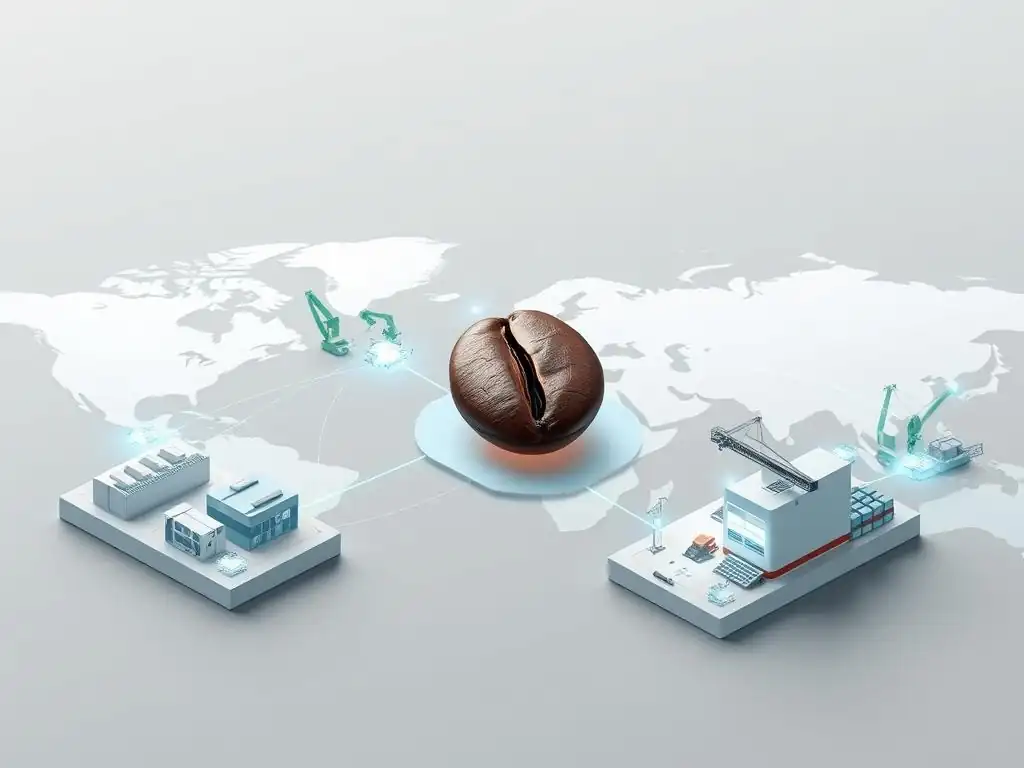
Blockchain technology is being successfully applied to track coffee beans, providing transparency and authenticity from origin to cup. Companies like Farmer Connect, using IBM Food Trust (a blockchain-based platform), enable consumers to trace their coffee back to the specific farm. By scanning a QR code on the product packaging, consumers can view information about the coffee's origin, details about the farmer, certifications (like organic or fair trade), and the journey it took through processing, export, import, and roasting.
This blockchain application addresses issues of provenance, quality assurance, and fair compensation for farmers. Transactions representing steps like harvesting, washing, milling, exporting, and roasting are recorded on the blockchain, creating an immutable history. This transparency helps build consumer trust and can potentially allow farmers to receive a premium for high-quality, ethically sourced beans by providing verifiable proof of origin and process. Pilots have shown the ability to trace a batch of coffee from farm to store in seconds, compared to days or weeks with traditional paper-based methods.
Enhancing Seafood Traceability with Blockchain Technology
The seafood industry faces significant challenges with fraud, mislabeling, and illegal fishing. Blockchain is being used to enhance traceability and combat these issues. Platforms like the one developed by the World Wildlife Fund (WWF) and partners in the South Pacific track tuna from the point of catch through processing, distribution, and sale. Data points recorded on the blockchain include catch location, vessel information, species, weight, and handling details.
By creating a secure and shared record of the seafood's journey, blockchain makes it much harder to introduce illegally caught fish or mislabel species. Participants, including fishermen, processors, distributors, and retailers, contribute data to the shared ledger. This provides regulators and consumers with verifiable proof of the seafood's origin and sustainability. Companies using such systems report a significant reduction in the time required for audits and compliance checks, alongside increased consumer confidence in the authenticity and sustainability of the products they purchase.
Streamlining Automotive Parts Logistics and Reducing Counterfeiting with Blockchain
The automotive industry suffers billions of dollars in losses annually due to counterfeit parts, which also pose significant safety risks. Blockchain technology offers a solution to streamline logistics and verify the authenticity of automotive components throughout the supply chain. Companies are exploring and implementing blockchain platforms to track parts from manufacturing through assembly plants, distribution centers, and repair shops.
Each part can be assigned a unique digital identity recorded on the blockchain. As the part moves, key events like manufacturing date, quality checks, shipping, and installation are logged as transactions. This creates a verifiable history for every component. For example, a blockchain pilot involving major automotive players demonstrated the ability to track parts across multiple tiers of suppliers, improving visibility and reducing the risk of counterfeit parts entering the legitimate supply chain. The immutable record serves as proof of authenticity and origin, helping manufacturers and consumers trust the integrity of the parts used in vehicles.
The Future of Supply Chain Tracking: Blockchain and Emerging Trends
The Evolution of Smart Contracts for Automated Supply Chain Processes
The future of blockchain in supply chain tracking will heavily rely on the increased sophistication and widespread adoption of smart contracts. Currently, smart contracts are often used for relatively simple, trigger-based actions, such as releasing payment upon delivery confirmation. However, their evolution will involve handling more complex logistics scenarios, integrating with more diverse data sources (beyond just IoT sensors), and executing multi-party agreements autonomously.
Future smart contracts will likely incorporate machine learning outputs to make more nuanced decisions. For instance, a smart contract could dynamically adjust shipping routes based on predictive traffic analysis or automatically reorder inventory based on AI-driven demand forecasts, all while recording these actions immutably on the blockchain. This move towards highly automated, intelligent contracts will reduce manual intervention, minimize errors, and significantly accelerate transaction speed across the supply chain network, delivering substantial blockchain supply chain tracking benefits.
Decentralized Supply Chain Networks: Improving Resilience and Agility
The trend towards decentralized supply chain networks, powered by blockchain, aims to improve resilience and agility compared to traditional hub-and-spoke models. By enabling peer-to-peer interactions and data sharing among participants without relying on a central authority or single point of control, these networks can become more robust against disruptions. Information flows more freely and directly between approved parties, allowing for faster decision-making and response times.
In a decentralized network, if one node or participant faces an issue, the entire network doesn't collapse. Data is replicated across multiple nodes, ensuring availability. This structure inherently builds resilience. Furthermore, decentralized networks can more easily onboard new partners and adapt to changing market conditions or disruptions by leveraging the collective intelligence and distributed resources of the network members. This agility is crucial in today's volatile global environment, allowing supply chains to pivot quickly in response to unforeseen events.
Enhanced Data Analytics for Supply Chain Optimization
The vast, transparent, and immutable dataset generated by blockchain-based supply chains, combined with IoT data, provides an unprecedented opportunity for enhanced data analytics. With a single, trustworthy source of truth about product movements, conditions, and transactions, companies can apply advanced analytical techniques to gain deeper insights into their operations. This goes beyond simple tracking to understanding performance bottlenecks, identifying inefficiencies, and optimizing processes.
Analytics can reveal patterns in transit times, identify routes prone to delays or temperature excursions, analyze supplier performance based on on-chain records, and predict future demand or potential disruptions with greater accuracy. By leveraging AI and business intelligence tools on this rich dataset, organizations can move towards truly data-driven decision-making, optimizing inventory levels, improving logistics planning, reducing waste, and ultimately driving down costs while improving service levels.
Maximizing ROI: Strategies for Successful Blockchain Supply Chain Implementation
Identifying Key Performance Indicators (KPIs) for Blockchain Supply Chain Efficiency
To demonstrate the value and maximize the return on investment (ROI) of blockchain in supply chain tracking, organizations must clearly identify and measure relevant Key Performance Indicators (KPIs). These KPIs should focus on the specific blockchain supply chain tracking benefits being targeted. Examples include:
- Reduction in dispute resolution time: Measuring how quickly discrepancies in shipments or quality issues are resolved compared to pre-blockchain processes.
- Increase in traceability speed: Quantifying how fast a product's origin and journey can be traced (e.g., from days to seconds).
- Reduction in losses due to counterfeiting/fraud: Estimating the financial impact of reduced illicit activity.
- Improvement in on-time delivery rates: Analyzing the impact of enhanced visibility and prediction.
- Reduction in administrative costs: Measuring savings from automating processes via smart contracts or reducing manual data entry.
- Increase in consumer trust/engagement: Tracking metrics related to product verification uptake or positive brand perception shifts.
Establishing baseline metrics before implementation is crucial to accurately measure the improvements attributable to the blockchain solution. Continuous monitoring of these KPIs post-implementation allows organizations to quantify the tangible blockchain supply chain tracking benefits and make data-driven adjustments.
Building a Strong Business Case for Blockchain Adoption in Supply Chain Operations
Building a compelling business case is essential for securing the necessary investment and organizational buy-in for blockchain adoption. This involves clearly articulating the specific problems the technology will solve and quantifying the potential benefits. The business case should outline the current inefficiencies, risks (like fraud or lack of transparency), and costs associated with the existing supply chain processes.
It should then detail how blockchain technology, potentially combined with IoT and AI, will address these issues, referencing the identified KPIs. For example, highlighting the potential for a 60% reduction in dispute resolution time or a 15% decrease in losses from counterfeiting can make a strong financial argument. The business case must also consider the implementation costs, including technology development, integration with legacy systems, training, and ongoing maintenance, providing a realistic ROI projection over a defined period (e.g., 3-5 years). Including pilot program results or industry benchmarks can further strengthen the case.
Integrating Blockchain into Existing ERP and WMS Systems
Successful blockchain supply chain implementation requires seamless integration with existing enterprise systems like ERP (Enterprise Resource Planning) and WMS (Warehouse Management Systems). These systems hold critical operational data that needs to be recorded on the blockchain, such as purchase orders, inventory levels, shipment details, and quality control results. Manual data entry into the blockchain platform is inefficient, error-prone, and defeats the purpose of automation and real-time visibility.
Integration typically involves using APIs (Application Programming Interfaces) or middleware to connect the ERP/WMS databases and workflows with the blockchain network. This allows data to flow automatically from the operational system to the blockchain ledger when relevant events occur (e.g., goods received, shipment dispatched). This requires careful mapping of data fields and business processes between the systems. While technically challenging, effective integration ensures that the blockchain ledger accurately reflects the physical reality of the supply chain, automating data capture and maximizing the blockchain supply chain tracking benefits by providing a unified, trustworthy view of operations.
Conclusion: Embracing Innovation for a More Transparent and Efficient Supply Chain
The Transformative Power of Blockchain and Emerging Technologies
The convergence of blockchain with complementary technologies like IoT and AI is fundamentally transforming supply chain tracking. Blockchain provides the foundational layer of trust, transparency, and security through its immutable, distributed ledger. This addresses long-standing issues of data silos, lack of visibility, and susceptibility to fraud inherent in traditional supply chain models. The verifiable history and shared source of truth empower all participants with accurate, timely information, leading to improved decision-making and accountability.
When combined with IoT, which provides real-time physical data, and AI, which offers predictive insights and automation capabilities, the power of blockchain supply chain tracking benefits is amplified exponentially. This technological synergy enables granular, condition-based monitoring, predictive logistics, automated processes via smart contracts, and deep analytical insights. The result is not just better tracking, but a more intelligent, resilient, and responsive supply chain network capable of adapting to complex global demands and disruptions.
Charting a Course for the Future of Supply Chain Tracking
Charting a course for the future of supply chain tracking involves strategically adopting and integrating these emerging technologies. It requires organizations to move beyond pilot projects to scalable, production-ready solutions. This necessitates investing in the right technology platforms, developing new technical skills, and, crucially, fostering collaboration and data-sharing agreements among supply chain partners. Interoperability between different blockchain networks and legacy systems will remain a key focus area for future development.
The journey involves defining clear objectives, identifying the most impactful use cases (e.g., high-value goods traceability, cold chain monitoring, anti-counterfeiting), and focusing on achieving measurable blockchain supply chain tracking benefits. As standards evolve and the technology matures, decentralized autonomous organizations (DAOs) could potentially govern aspects of supply chain networks, further enhancing decentralization and participant ownership. The future points towards highly transparent, automated, and intelligent supply chains that leverage the unique strengths of blockchain in conjunction with the power of IoT and AI, creating unprecedented levels of efficiency, security, and trust from end to end.
Frequently Asked Questions
What are the main benefits of using blockchain for supply chain tracking?
Blockchain offers enhanced transparency and traceability by creating an immutable record of product journeys. This leads to increased efficiency and reduced counterfeiting.
How does blockchain technology improve transparency in supply chains?
Blockchain provides a shared, distributed ledger that all participants can access. This creates a single source of truth about product origin, location, and handling, improving overall supply chain visibility.
What are some examples of enterprise applications of blockchain in supply chain tracking?
Examples include tracking food products from farm to table to ensure food safety, verifying the authenticity of luxury goods to combat counterfeiting, and managing pharmaceutical supply chains to prevent drug diversion.
What regulations are currently in place, or being developed, to govern the use of blockchain in supply chains?
Regulatory frameworks are still evolving, but many are focusing on data privacy, security, and compliance with existing supply chain regulations. Governments are exploring the use of blockchain for customs clearance and trade facilitation.
Beyond blockchain, what other emerging technologies are being integrated with supply chain tracking?
Technologies like IoT sensors and AI-powered analytics are being combined with blockchain. This provides real-time data and predictive insights, further optimizing supply chain operations.
Final Reflection: Embracing Transparency in a Connected World
The exploration of blockchain and emerging technologies in supply chain tracking reveals more than just efficiency gains; it highlights a fundamental shift towards unprecedented transparency and accountability. In a world increasingly demanding ethical sourcing and product integrity, these technologies offer a powerful means to verify claims, combat counterfeiting, and build consumer trust, ultimately reshaping the very fabric of global commerce.
The journey towards widespread adoption is ongoing, but the potential impact on our cultural and social landscape is undeniable. The ability to trace a product's journey from origin to consumer empowers us to make informed choices and hold businesses accountable for their practices. The future of supply chains is not just about moving goods faster; it's about moving them with integrity and transparency.
This quote encapsulates the essence of what these technologies promise: a future where trust is not just assumed, but verifiable.
As we stand at the cusp of this technological revolution, let us not merely be passive observers. Consider how you, as a consumer, a business owner, or a policymaker, can champion the adoption of these technologies. Embrace the power of transparency, demand accountability, and contribute to a future where the origins and impact of every product are readily accessible. The benefits of blockchain supply chain tracking, and the technologies that follow, are not just theoretical; they are the building blocks of a more ethical and sustainable world.
Unleash the Future of Your Supply Chain Today!
Thank you for exploring the exciting world of blockchain and innovative tracking solutions. You've gained valuable insights into how these technologies can revolutionize transparency and efficiency. Now, it's time to turn that knowledge into action and elevate your supply chain.
Here are some steps you can take right now:
- Implement a pilot project using blockchain or IoT sensors to track a specific product line within your supply chain. This hands-on experience will generate valuable data and insights.
- Explore alternative tracking solutions beyond blockchain, such as AI-powered predictive analytics for demand forecasting and route optimization. Keep your options open!
- Share this article with your network on LinkedIn or Twitter using the hashtag #SupplyChainInnovation. Let’s start a conversation and build a community of innovators.
Which part of your supply chain do you think would benefit most from advanced tracking technologies? What's the first small step you will take to make it happen?
Leave a Reply