
CrossChain DeFi and DAO Governance: Decentralized DecisionMaking Across Chains

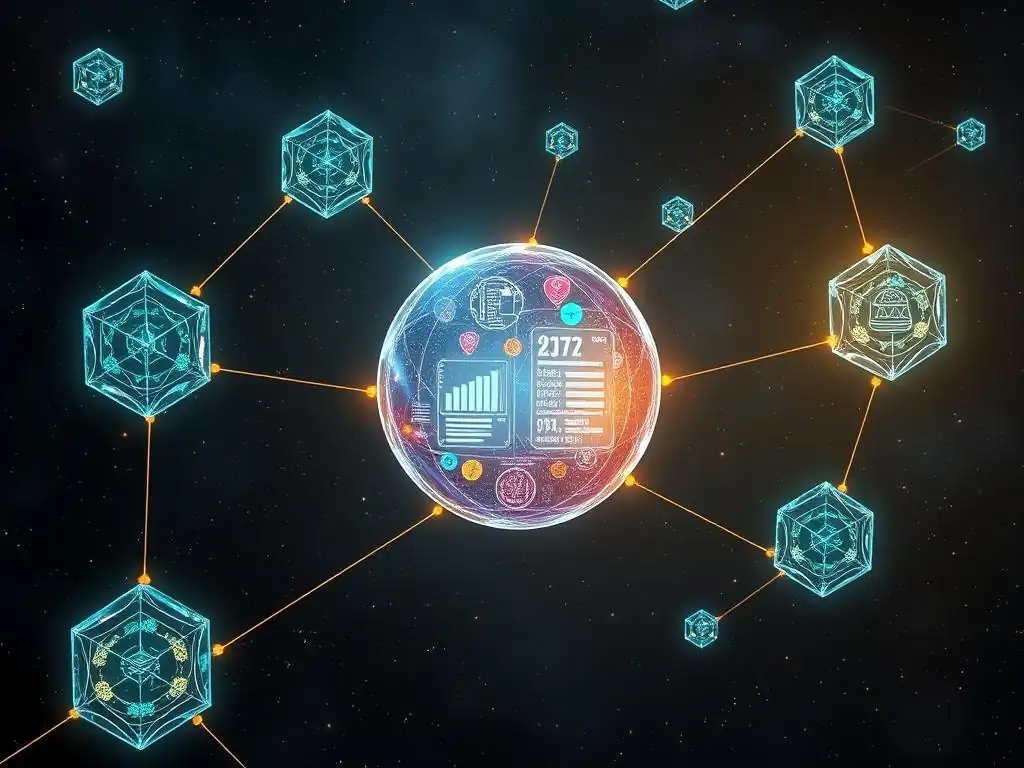
Welcome to Blockchain Trends, your guide to navigating the evolving world of decentralized technology!
Dive deep into the transformative power of blockchain beyond cryptocurrency. Are you ready to unravel the complexities of CrossChain DeFi governance strategies and discover how they're reshaping the future of decentralized decision-making? Explore the intricate landscape of DAOs operating across multiple chains and uncover the innovative approaches shaping their governance. Let's begin this exploration!
Cross-Chain DeFi and DAO Governance: Decentralized Decision-Making Across Chains
- Introduction to Cross-Chain DeFi Governance
- Decentralized Autonomous Organizations (DAOs) and Cross-Chain DeFi
- Cross-Chain DeFi Governance Strategies: A Deep Dive
- Key Considerations for Implementing Cross-Chain DeFi Governance
- Case Studies: Successful Cross-Chain DeFi Governance Implementations
- The Future of Cross-Chain DeFi Governance
- Conclusion: Embracing Decentralized Decision-Making Across Chains
-
Frequently Asked Questions
- What is CrossChain DeFi governance and why is it important?
- How does CrossChain governance differ from traditional DeFi governance?
- What are some common challenges in implementing CrossChain DeFi governance strategies?
- How can DAOs effectively participate in CrossChain governance?
- What is the future outlook for CrossChain DeFi governance?
- Final Reflection: Embracing Decentralized Harmony
- Ignite Your Cross-Chain Governance Journey!
Introduction to Cross-Chain DeFi Governance
Understanding the Evolution of DeFi Governance Models
Decentralized Finance (DeFi) governance has undergone significant evolution since the inception of the space. Initially, many DeFi protocols adopted centralized or multi-signature governance models for expediency and control during their nascent stages. These early models often involved core teams or foundations holding significant decision-making power, enabling rapid iteration and responses to emerging challenges. For instance, in the early days of MakerDAO, key decisions regarding stability fees and system parameters were largely driven by the Maker Foundation. However, as DeFi matured and the ethos of decentralization gained prominence, the community began pushing for more distributed and transparent governance mechanisms.
The shift towards decentralized governance models in DeFi reflects a broader aspiration for community ownership and resilience against single points of failure or manipulation. This evolution includes the rise of token-based voting, where holders of a protocol's native token gain the right to participate in governance proposals.
Platforms like Compound Finance pioneered this model, distributing COMP tokens to users and enabling them to vote on protocol upgrades and parameter adjustments. This transition marked a crucial step towards more democratic and community-driven DeFi ecosystems, fostering greater trust and long-term sustainability as control shifted from centralized entities to a wider base of stakeholders.
The Challenges of Centralized Governance in a Multi-Chain World
In the burgeoning multi-chain landscape, centralized governance models face significant limitations and introduce critical vulnerabilities. When DeFi protocols operate across multiple blockchains, relying on a single centralized entity to manage governance becomes inherently problematic. This central point of control can become a bottleneck, hindering the agility and responsiveness needed to adapt to the diverse and rapidly evolving conditions on different chains. For example, a centralized decision-making body might struggle to efficiently coordinate upgrades or address security concerns across various blockchain ecosystems with differing technical architectures and community norms.
Furthermore, centralized governance in a multi-chain environment amplifies the risks of censorship and single points of failure. If governance decisions are dictated by a central authority, it opens up the possibility of manipulation or biased outcomes that may not align with the interests of all users across different chains. Consider a scenario where a centralized governance body prioritizes changes beneficial to users on one chain while neglecting the needs or concerns of users on another.
Such disparities can lead to fragmentation of the community, erode trust, and ultimately undermine the decentralized ethos of DeFi. The inherent complexities of managing multiple interconnected blockchain environments necessitate governance models that are inherently distributed and resilient.
Why Cross-Chain Governance is Essential for DeFi's Future
Cross-chain governance is not merely an option but a fundamental necessity for the sustainable growth and widespread adoption of DeFi. As DeFi protocols increasingly expand their reach across multiple blockchains to tap into diverse user bases and liquidity pools, the need for coordinated and decentralized decision-making becomes paramount.
Without robust cross-chain governance mechanisms, DeFi risks becoming fragmented, inefficient, and vulnerable to inconsistencies and conflicts arising from disparate governance frameworks on different chains. Imagine a lending protocol operating on both Ethereum and Polygon without a unified governance system; parameter adjustments on one chain might not be reflected on the other, leading to arbitrage opportunities or systemic imbalances.
The future of DeFi hinges on its ability to seamlessly operate and innovate across various blockchain ecosystems. Cross-chain governance enables this interoperability by establishing shared decision-making processes that span multiple chains. This ensures that protocols can evolve in a cohesive and coordinated manner, maintaining consistency and security across their entire multi-chain footprint.
For example, a well-designed cross-chain governance system allows token holders on different chains to collectively vote on proposals affecting the protocol's overall strategy, security upgrades, or the allocation of resources across different chains. This unified approach strengthens the resilience of DeFi protocols, fosters greater community participation, and ultimately unlocks the full potential of a truly interconnected and decentralized financial system.
Decentralized Autonomous Organizations (DAOs) and Cross-Chain DeFi
The Role of DAOs in Decentralized Finance
Decentralized Autonomous Organizations (DAOs) are emerging as the cornerstone of governance in Decentralized Finance, embodying the very essence of decentralization and community ownership. DAOs are essentially internet-native organizations governed by rules encoded as smart contracts on a blockchain, eliminating the need for traditional hierarchical structures and intermediaries. In the context of DeFi, DAOs empower token holders to collectively manage and direct the evolution of protocols through transparent and auditable on-chain voting mechanisms. This transition from centralized control to DAO-driven governance is critical for fostering trust, security, and long-term sustainability within the DeFi ecosystem.
DAOs play a multifaceted role in DeFi, extending beyond simple voting rights. They facilitate the decentralized management of protocol parameters, such as interest rates, collateral ratios, and tokenomics. They enable community-driven upgrades and feature implementations, ensuring that protocols adapt and evolve in response to user needs and market dynamics.
Furthermore, DAOs often manage protocol treasuries, democratizing the allocation of funds for development, marketing, and community initiatives. For instance, Uniswap's DAO governs a substantial treasury, allowing UNI token holders to propose and vote on grants, protocol improvements, and strategic partnerships. This comprehensive role of DAOs underscores their importance in establishing genuinely decentralized and community-owned DeFi protocols.
Exploring DAO Governance Mechanisms for Cross-Chain Protocols
Governing cross-chain protocols presents unique challenges and necessitates innovative adaptations of traditional DAO governance mechanisms. While standard on-chain voting systems work effectively within a single blockchain environment, orchestrating governance across multiple chains requires protocols to bridge communication gaps and synchronize decision-making processes. One approach involves employing cross-chain messaging protocols to relay governance proposals and voting outcomes between different chains. For example, a proposal initiated on Ethereum could be communicated to a protocol's instance on Polkadot, allowing token holders on both chains to participate in the voting process.
Another crucial aspect of cross-chain DAO governance is the need for robust identity and state management across chains. Protocols must accurately track token balances and voting power of participants across different blockchain networks to ensure fair and accurate representation in governance decisions. Solutions like token bridges and cross-chain identity layers are becoming increasingly important for enabling seamless and secure cross-chain governance. Furthermore, exploring mechanisms like optimistic governance and dispute resolution systems tailored for cross-chain environments is essential for mitigating potential conflicts and ensuring the integrity of decentralized decision-making in a multi-chain future.
Benefits of DAO-Driven Cross-Chain Decision-Making
Adopting DAO-driven governance for cross-chain DeFi protocols unlocks a multitude of benefits, enhancing resilience, decentralization, and community participation. Firstly, DAOs foster greater resilience by distributing governance authority across a broad base of token holders, mitigating the risks associated with centralized control or single points of failure. This decentralized approach makes cross-chain protocols more robust against censorship, manipulation, and internal conflicts, as decisions are collectively made by a diverse community rather than a select few.
Secondly, DAO-driven governance significantly strengthens the decentralization ethos of cross-chain DeFi. By empowering users across different blockchains to participate in decision-making, DAOs ensure that protocols are truly community-owned and governed, aligning with the core principles of Web3. This level of decentralization is crucial for building trust and fostering long-term sustainability, as users are incentivized to actively participate in the protocol's evolution and success.
Finally, DAOs enhance community engagement by providing transparent and accessible mechanisms for participation. Token holders are not merely users but active stakeholders with a direct voice in shaping the future of the protocol, fostering a stronger sense of ownership and commitment within the cross-chain DeFi ecosystem.
Cross-Chain DeFi Governance Strategies: A Deep Dive
Strategy 1: Token-Based Voting Across Multiple Chains
Token-based voting is a foundational governance strategy in DeFi, and its adaptation for cross-chain environments involves extending voting rights to token holders across all chains where the protocol operates. This approach ensures that governance power is distributed proportionally to token ownership, regardless of the chain where the tokens are held. Implementing token-based cross-chain voting necessitates robust mechanisms for accurately tracking token balances and facilitating voting participation across different blockchains. This strategy is conceptually straightforward and aligns with the core principles of decentralized governance, empowering a broad community of stakeholders.
Implementing Snapshot for Cross-Chain Governance
Snapshot is a popular off-chain voting tool that can be effectively adapted for cross-chain governance. While Snapshot itself operates off-chain to save on gas costs, it can be integrated with cross-chain messaging protocols to facilitate voting across multiple blockchains. The implementation typically involves using a cross-chain bridge to verify token balances on different chains at a specific block height (the snapshot).
Voters can then cast their votes on Snapshot, and the results are aggregated and relayed back on-chain, potentially to a designated "home chain" for execution. This approach leverages the efficiency of off-chain voting while maintaining the integrity of cross-chain governance by anchoring voting power to on-chain token holdings.
Advantages and Disadvantages of Token-Based Cross-Chain Voting
Token-based cross-chain voting offers several advantages, primarily its simplicity and alignment with core DeFi principles. It ensures that governance power is directly tied to token ownership, promoting a fair and democratic decision-making process. This model can also encourage broader participation as it allows token holders across all supported chains to have a voice in governance. However, there are also disadvantages.
Gas costs for cross-chain transactions involved in relaying voting data can be significant. Furthermore, ensuring accurate and secure tracking of token balances across multiple chains can be technically complex and require robust cross-chain infrastructure. The potential for voter apathy, a common challenge in token-based governance, can also be amplified in cross-chain scenarios if participation is perceived as more cumbersome.
Strategy 2: Layered Governance Structures with Cross-Chain Communication
Layered governance structures introduce a hierarchical approach to cross-chain decision-making, aiming to balance efficiency and decentralization. This strategy typically involves establishing distinct governance layers, each responsible for specific aspects of the protocol or operations on particular chains. Cross-chain communication protocols then facilitate coordination and information flow between these layers, enabling a cohesive governance framework across the multi-chain ecosystem. This approach can improve scalability and specialization by delegating responsibilities while maintaining overall alignment through inter-layer communication.
Building a Layered DAO for a Cross-Chain Lending Protocol
Consider a cross-chain lending protocol operating on Ethereum, Avalanche, and Fantom. A layered DAO structure could be implemented with a "core DAO" responsible for overarching protocol parameters and strategic direction, and "chain-specific DAOs" for managing localized parameters and operations on each individual chain.
For example, the core DAO might decide on the overall risk management framework and asset listing policies, while chain-specific DAOs could adjust interest rates and collateral types based on the unique market conditions and user needs of their respective chains. Cross-chain communication channels would ensure that decisions made at each layer are consistent with the overall protocol strategy and that information flows effectively between layers.
How Layered Governance Enhances Security and Scalability
Layered governance can enhance both security and scalability in cross-chain DeFi. By decentralizing decision-making responsibilities across multiple layers, it reduces the risk of a single point of failure or governance bottleneck. If one chain-specific DAO is compromised, the overall protocol governance remains secure, as the core DAO and other chain-specific DAOs are still operational.
Scalability is improved by allowing chain-specific DAOs to manage localized operations and parameters independently, reducing the burden on the core governance layer and enabling faster decision-making at the local level. This division of responsibilities allows the protocol to adapt more efficiently to the diverse and dynamic conditions of a multi-chain environment, while maintaining a unified and secure governance framework.
Strategy 3: Delegated Proof-of-Stake (DPoS) for Cross-Chain Governance
Delegated Proof-of-Stake (DPoS) is a consensus mechanism that can be adapted for cross-chain governance to enhance efficiency and participation. In a DPoS system, token holders vote to elect a set of delegates who are then responsible for validating transactions and, in the context of governance, for representing the community in decision-making processes. Applying DPoS to cross-chain governance can streamline proposal validation and execution, especially in scenarios where rapid consensus is needed across multiple blockchains. This approach can potentially reduce the overhead associated with broad-based token voting while retaining a degree of decentralization through delegate election.
Applying DPoS Consensus to Secure Cross-Chain Bridges
DPoS can play a crucial role in securing cross-chain bridges, which are vital components of cross-chain DeFi infrastructure. Delegated validators, elected by token holders, can be responsible for verifying the validity of cross-chain transactions and ensuring the secure transfer of assets between blockchains. This approach leverages the collective security of the DPoS validator set to mitigate risks associated with bridge vulnerabilities.
Furthermore, the DPoS governance framework can be used to manage upgrades and parameter adjustments of the cross-chain bridge itself, ensuring its ongoing security and functionality. By integrating DPoS into cross-chain bridge operations, protocols can enhance both the security and governance of these critical infrastructure components.
The Impact of DPoS on Governance Participation
While DPoS can improve efficiency, it can also impact governance participation. On one hand, it can encourage greater engagement from delegates, who are incentivized to actively participate in governance to maintain their elected positions. Delegates may also be more knowledgeable and better equipped to make informed decisions compared to the broader token holder base.
However, DPoS can also lead to reduced participation from regular token holders, who may feel less directly involved in governance decisions, as their influence is mediated through elected delegates. Striking the right balance between delegate responsibility and broader community engagement is crucial for ensuring that DPoS-based cross-chain governance remains sufficiently decentralized and representative of the entire stakeholder community.
Strategy 4: Quadratic Voting for Fairer Cross-Chain Decision-Making
Quadratic Voting (QV) is a voting mechanism designed to mitigate the disproportionate influence of large token holders, promoting fairer and more equitable decision-making. In QV, voters can allocate their votes across multiple proposals, but the cost of each additional vote increases quadratically. This mechanism makes it significantly more expensive for a single entity to dominate voting outcomes, even with substantial token holdings. Applying QV to cross-chain governance can be particularly beneficial in ensuring that decisions reflect the preferences of a broader range of stakeholders across different blockchains, rather than being skewed by whales concentrated on a single chain.
Implementing Quadratic Voting in a Cross-Chain DeFi DAO
Implementing QV in a cross-chain DeFi DAO requires careful consideration of how to aggregate and process votes from different chains. One approach involves using a cross-chain voting platform that supports QV and can integrate with multiple blockchains. Voters on each chain would connect their wallets to the platform and cast their votes, with the QV mechanism applied to their vote allocation.
The platform would then aggregate the votes from all participating chains and determine the outcome based on the quadratic voting results. This approach leverages existing QV infrastructure and extends its benefits to cross-chain governance scenarios, promoting fairer representation of diverse stakeholder preferences.
Addressing Sybil Attacks in Cross-Chain Quadratic Voting
Sybil attacks, where malicious actors create multiple fake identities to manipulate voting outcomes, are a concern in any voting system, including quadratic voting. In a cross-chain context, mitigating Sybil attacks becomes even more critical. Robust identity verification mechanisms are essential to ensure that each voter represents a unique individual or entity and prevent the creation of fake voting accounts across different chains.
Solutions like decentralized identity (DID) systems and proof-of-personhood protocols can be integrated with cross-chain QV platforms to strengthen Sybil resistance. Furthermore, monitoring voting patterns and implementing anomaly detection systems can help identify and mitigate potential Sybil attacks in real-time, ensuring the integrity of cross-chain quadratic voting processes.
Key Considerations for Implementing Cross-Chain DeFi Governance
Security Risks and Mitigation Strategies
Implementing cross-chain DeFi governance introduces unique security risks that must be carefully addressed. The increased complexity of managing governance across multiple blockchains expands the attack surface and creates new vulnerabilities. Smart contract vulnerabilities, cross-chain bridge exploits, and governance attacks become amplified in a multi-chain environment. Robust security measures are paramount to protect the integrity of cross-chain governance processes and prevent malicious actors from manipulating decision-making or compromising protocol security.
Auditing Smart Contracts in a Cross-Chain Environment
Rigorous auditing of smart contracts is crucial in a cross-chain environment. Protocols should undergo comprehensive security audits by reputable firms specializing in blockchain security. Audits should not only focus on the core governance contracts but also on all smart contracts involved in cross-chain communication, bridge operations, and state management. Furthermore, continuous monitoring and regular security updates are essential to address newly discovered vulnerabilities and adapt to the evolving threat landscape. A proactive and thorough approach to smart contract auditing is a cornerstone of securing cross-chain DeFi governance.
Preventing Governance Attacks Across Multiple Chains
Preventing governance attacks across multiple chains requires a multi-faceted approach. Protocols should implement robust access controls and multi-signature schemes to protect governance keys and prevent unauthorized modifications. Time-lock mechanisms can be used to delay the execution of governance proposals, providing a window for community review and potential intervention in case of malicious proposals.
Furthermore, implementing rate limiting and anomaly detection systems can help identify and mitigate potential governance attacks in real-time. Educating the community about governance security best practices and fostering a culture of vigilance are also crucial for strengthening the overall resilience against governance attacks in a cross-chain context.
Scalability Challenges and Solutions
Scalability is a significant challenge for cross-chain DeFi governance. Executing governance proposals and relaying voting data across multiple blockchains can be gas-intensive and time-consuming, especially as the number of participating chains and governance actions increases. Optimizing gas costs and improving the efficiency of cross-chain governance processes are essential for ensuring that protocols can scale effectively and remain responsive to community needs.
Optimizing Gas Costs for Cross-Chain Governance Proposals
Optimizing gas costs for cross-chain governance proposals is crucial for making participation affordable and scalable. Employing off-chain voting tools like Snapshot for proposal signaling and preliminary voting can significantly reduce on-chain gas consumption. Batching multiple governance actions into single transactions can also minimize gas costs. Furthermore, exploring gas-efficient cross-chain communication protocols and data relay mechanisms is essential for reducing the overhead associated with cross-chain governance processes. Continuously optimizing smart contract code for gas efficiency and leveraging Layer-2 scaling solutions are also important strategies for addressing gas cost challenges.
Utilizing Layer-2 Solutions to Improve Scalability
Layer-2 scaling solutions, such as optimistic rollups and zero-knowledge rollups, can offer significant improvements in scalability for cross-chain governance. These solutions can process governance transactions and voting data off-chain, while still inheriting the security of the underlying Layer-1 blockchains. By leveraging Layer-2 solutions, protocols can significantly reduce gas costs and increase transaction throughput for governance operations, making cross-chain governance more efficient and scalable. Exploring the integration of Layer-2 solutions with cross-chain communication protocols and governance frameworks is a promising avenue for addressing scalability challenges in cross-chain DeFi.
Interoperability Standards and Protocols
Interoperability is the bedrock of seamless cross-chain DeFi governance. Establishing and adopting interoperability standards and protocols is crucial for enabling different blockchains to communicate and interact effectively in governance processes. Standardized messaging formats, cross-chain communication protocols, and interoperable identity solutions are essential for facilitating smooth and secure cross-chain governance operations.
The Role of IBC (Inter-Blockchain Communication) in Cross-Chain Governance
The Inter-Blockchain Communication protocol (IBC) is a prominent example of an interoperability standard that can significantly enhance cross-chain governance. IBC provides a standardized framework for secure and reliable communication between different blockchains, enabling seamless transfer of data and assets. In the context of governance, IBC can facilitate the relaying of governance proposals, voting data, and execution commands between IBC-enabled chains. Adopting IBC can streamline cross-chain governance processes, reduce complexity, and improve the overall interoperability of DeFi protocols operating across IBC-compatible blockchains.
Exploring Other Interoperability Solutions for Seamless Governance
Beyond IBC, various other interoperability solutions are emerging that can contribute to seamless cross-chain governance. LayerZero, Chainlink CCIP, and Wormhole are examples of cross-chain messaging protocols that offer different approaches to bridging communication gaps between blockchains. Exploring and adopting these solutions, based on their specific strengths and suitability for different use cases, is crucial for building robust and interoperable cross-chain governance frameworks. Furthermore, ongoing research and development in interoperability technologies are essential for paving the way for increasingly seamless and efficient cross-chain DeFi governance in the future.
Case Studies: Successful Cross-Chain DeFi Governance Implementations
Case Study 1: Aave - A Token-Based Cross-Chain Governance Model
Aave, a leading decentralized lending protocol, exemplifies a token-based cross-chain governance model. Aave operates on multiple blockchains, including Ethereum, Avalanche, and Polygon, and utilizes its native token, AAVE, for governance across all deployed chains. AAVE token holders can participate in governance proposals through the Aave governance portal, irrespective of the chain where their tokens are held. This unified governance system ensures that decisions affecting the protocol are made collectively by the Aave community across its entire multi-chain ecosystem.
Analysis of Aave's Governance Structure and Outcomes
Aave's governance structure is characterized by a multi-step process, including proposal creation, temperature checks, snapshot voting, and on-chain execution. This structured approach allows for community deliberation and ensures that governance decisions are well-vetted before implementation. Aave Improvement Proposals (AIPs) cover a wide range of topics, including protocol upgrades, parameter adjustments, risk management, and treasury management.
Analysis of Aave's governance outcomes reveals a high level of community participation and a track record of successful protocol evolution driven by decentralized decision-making. For example, Aave's community has actively voted on proposals to integrate new assets, adjust risk parameters across different markets, and expand the protocol to new blockchain networks.
Lessons Learned from Aave's Cross-Chain Governance Experience
Aave's cross-chain governance experience provides valuable lessons for other protocols venturing into multi-chain deployments. Firstly, establishing a unified token-based governance system across all chains is crucial for ensuring consistent and cohesive decision-making. Secondly, a well-defined and transparent governance process, like Aave's multi-step AIP framework, is essential for fostering community participation and trust. Thirdly, actively engaging with the community and providing clear communication channels are vital for successful decentralized governance. Aave's experience demonstrates that token-based cross-chain governance, when implemented effectively, can empower communities and drive the sustainable growth of DeFi protocols across multiple blockchain ecosystems.
Case Study 2: Chainlink - A Layered Governance Approach
Chainlink, a decentralized oracle network, showcases a layered governance approach that balances off-chain reporting with on-chain governance. Chainlink's decentralized oracle networks (DONs) operate off-chain to fetch and deliver data to smart contracts. Governance of these off-chain operations is primarily managed through a layered approach, with node operators and the Chainlink Foundation playing key roles. On-chain governance, facilitated by the LINK token, focuses on high-level protocol parameters and strategic decisions, complementing the off-chain governance of the oracle networks.
Examining the Effectiveness of Chainlink's Off-Chain Reporting and On-Chain Governance
Chainlink's layered governance model effectively leverages the strengths of both off-chain reporting and on-chain governance. Off-chain reporting through DONs allows for efficient and scalable data delivery, while on-chain governance ensures transparency and community oversight of critical protocol parameters. This hybrid approach enables Chainlink to maintain a high degree of decentralization while also achieving operational efficiency and responsiveness. The effectiveness of this model is evident in Chainlink's widespread adoption as a leading oracle solution in the DeFi space, demonstrating its ability to provide reliable and secure data feeds through a robust and decentralized governance framework.
How Chainlink Achieved Decentralization Through Layered Governance
Chainlink's layered governance model contributes to decentralization in several ways. The decentralized nature of DONs, with numerous independent node operators, ensures resilience and mitigates single points of failure in data reporting. The on-chain governance through LINK token holders provides community oversight and control over key protocol parameters, preventing centralized control by the Chainlink Foundation.
This combination of decentralized off-chain operations and community-driven on-chain governance creates a robust and balanced decentralization framework. Chainlink's layered approach highlights that achieving decentralization in complex systems may require a combination of governance mechanisms tailored to different aspects of the protocol, rather than relying solely on a single governance model.
The Future of Cross-Chain DeFi Governance
Emerging Trends in Decentralized Decision-Making
The future of cross-chain DeFi governance is being shaped by several emerging trends in decentralized decision-making. One prominent trend is the increasing sophistication of DAO tooling and infrastructure, making it easier and more efficient to manage complex cross-chain governance processes. Platforms offering cross-chain voting, proposal management, and treasury management are becoming more prevalent, simplifying the implementation and operation of cross-chain DAOs. Another trend is the exploration of novel governance mechanisms beyond simple token voting, such as conviction voting, liquid democracy, and futarchy, which aim to improve the quality and inclusivity of decentralized decision-making in cross-chain environments.
The Impact of Cross-Chain Governance on DeFi Adoption
Cross-chain governance is poised to have a profound impact on DeFi adoption. By enabling seamless and coordinated decision-making across multiple blockchains, it removes a major barrier to the growth and interoperability of the DeFi ecosystem. Robust cross-chain governance frameworks will foster greater trust and confidence in DeFi protocols operating across multiple chains, attracting more users and capital.
Furthermore, cross-chain governance will unlock new possibilities for innovation and collaboration in DeFi, as protocols can more easily integrate and leverage the strengths of different blockchain ecosystems. Ultimately, effective cross-chain governance will be a key driver of mainstream DeFi adoption and the realization of a truly interconnected and decentralized financial system.
Predictions for the Evolution of Cross-Chain DAOs
The evolution of cross-chain DAOs is likely to be characterized by increasing specialization and modularity. We can expect to see the emergence of specialized DAOs focused on specific aspects of cross-chain governance, such as cross-chain identity management, dispute resolution, and treasury management. Modular DAO frameworks will enable protocols to easily assemble and customize their governance structures by integrating different DAO components and mechanisms.
Furthermore, advancements in AI and machine learning may play a role in automating certain aspects of cross-chain governance, such as proposal analysis and risk assessment, enhancing the efficiency and effectiveness of decentralized decision-making. The future of cross-chain DAOs points towards a more sophisticated, interconnected, and automated landscape of decentralized governance.
Conclusion: Embracing Decentralized Decision-Making Across Chains
The Importance of Robust Cross-Chain DeFi Governance Strategies
Robust cross-chain DeFi governance strategies are not merely a technical consideration but a foundational requirement for the long-term success and sustainability of the decentralized finance ecosystem. As DeFi expands across multiple blockchain networks, the ability to make coordinated, decentralized decisions across these diverse environments becomes increasingly critical. Effective cross-chain governance ensures protocol coherence, mitigates risks associated with fragmentation, and empowers communities to collectively shape the future of decentralized finance. Without well-defined and implemented cross-chain governance strategies, DeFi risks becoming siloed and inefficient, hindering its potential to revolutionize the financial landscape.
Key Takeaways for Building Effective Cross-Chain DAOs
Building effective cross-chain DAOs requires careful planning and consideration of several key takeaways. Firstly, prioritize interoperability by leveraging cross-chain communication protocols and standards to enable seamless information flow and decision synchronization across different blockchains. Secondly, adopt governance mechanisms that are scalable, secure, and inclusive, considering the unique challenges and opportunities of a multi-chain environment.
Thirdly, focus on community engagement and education to ensure active participation and informed decision-making from token holders across all supported chains. Finally, embrace continuous iteration and adaptation, as the cross-chain DeFi landscape is rapidly evolving, and governance strategies must be flexible and responsive to emerging challenges and opportunities.
Call to Action: Participate in Shaping the Future of Decentralized Governance
The future of decentralized governance, particularly in the context of cross-chain DeFi, is being actively shaped by the community. We encourage developers, token holders, and DeFi enthusiasts to actively participate in shaping this future. Engage in governance discussions, propose improvements, and contribute to the development of robust cross-chain governance frameworks.
By collectively participating, we can build a more decentralized, secure, and equitable financial system that leverages the transformative potential of blockchain technology across multiple chains. The power of decentralized decision-making lies in the hands of the community, and active participation is crucial for realizing the full promise of cross-chain DeFi governance.
Frequently Asked Questions
What is CrossChain DeFi governance and why is it important?
CrossChain DeFi governance refers to the decentralized decision-making processes that operate across multiple blockchain networks in the DeFi space. It's important because it enables more robust and inclusive governance in a multi-chain ecosystem.
How does CrossChain governance differ from traditional DeFi governance?
Traditional DeFi governance typically operates within a single blockchain. CrossChain governance, however, allows for governance participation and decision-making to span across multiple chains, potentially increasing voter turnout and diversifying opinions.
What are some common challenges in implementing CrossChain DeFi governance strategies?
Challenges include technical complexities in bridging governance tokens and data across chains, managing security risks associated with cross-chain communication, and ensuring consistent governance rules across different blockchains.
How can DAOs effectively participate in CrossChain governance?
DAOs can participate by utilizing cross-chain messaging protocols to signal votes and proposals across different chains. They can also employ wrapped governance tokens to enable voting on multiple chains with a single token holding.
What is the future outlook for CrossChain DeFi governance?
The future looks promising, with increasing adoption of standardized cross-chain communication protocols and the development of more sophisticated governance mechanisms designed for multi-chain environments, leading to increased interoperability and collaboration.
Final Reflection: Embracing Decentralized Harmony
The exploration of CrossChain DeFi governance strategies reveals a critical juncture in the evolution of decentralized finance. The promise of seamless, interconnected ecosystems hinges on our ability to establish robust and transparent governance mechanisms across disparate chains. This isn't just about technical interoperability; it's about fostering a collaborative and equitable future for DeFi.
The impact of CrossChain DeFi governance extends far beyond the realm of cryptocurrency. It represents a fundamental shift towards more inclusive and participatory decision-making processes, empowering individuals and communities to shape the future of finance. This resonates deeply with the core principles of decentralization and challenges the traditional, centralized power structures that have long dominated the financial landscape. The future of finance is decentralized, and the future of governance is participatory.
This quote encapsulates the spirit of CrossChain DeFi governance, highlighting the need for collaborative and community-driven approaches.
As we stand at the cusp of this new era, let us embrace the challenge of building truly decentralized and interconnected governance systems. Consider how you can contribute to this evolution, whether through active participation in DAOs, advocating for transparent governance models, or simply educating yourself and others about the potential of CrossChain DeFi. The future of finance is being written now, and your voice matters.
Ignite Your Cross-Chain Governance Journey!
Thank you for exploring the world of Cross-Chain DeFi and DAO governance. We hope you've gained valuable insights into the potential of decentralized decision-making across multiple blockchains. Now it's time to turn that knowledge into action.
Here are a few ways you can take the next step:
- Get involved: Find a decentralized autonomous organization that utilizes cross-chain governance and learn about its decision-making process. Consider proposing a small, thoughtful improvement to help enhance its governance model.
- Explore: Stay updated on the latest developments in cross-chain messaging protocols and infrastructure that enable these DAOs. Consider contributing to open-source projects in this space.
- Share: Engage with your community to discuss the challenges and opportunities of cross-chain governance. Help raise awareness about this exciting frontier!
What innovative cross-chain governance experiments have you seen, and what unique challenges might these emerging decentralized structures face? Share your thoughts below!
Leave a Reply