
CrossChain DeFi and Rollups: Understanding Layer2 Interoperability


Welcome to Blockchain Trends, your compass in the ever-evolving world of decentralized innovation. Ever wondered how to navigate the complexities of CrossChain DeFi and unlock the true potential of Layer2 scaling? Dive into our latest analysis to understand how rollups are revolutionizing interoperability and reshaping the future of advanced DeFi strategies. Discover how these advancements are breaking down silos and paving the way for a more interconnected and efficient decentralized ecosystem. Ready to explore the future of DeFi?
Cross-Chain DeFi and Rollups: Enhancing Interoperability and Scalability
- Introduction to Cross-Chain DeFi Layer 2 Scaling
- Understanding Rollups: A Key Layer 2 Scaling Technology
- Cross-Chain DeFi: Bridging the Gap Between Blockchains
- Layer 2 Interoperability: Combining Rollups and Cross-Chain Technology
- Rollups and Cross-Chain DeFi: Use Cases and Applications
- Evaluating the Risks and Challenges of Cross-Chain DeFi Layer 2
- The Future of Cross-Chain DeFi Layer 2 Scaling
- Conclusion: Embracing the Potential of Cross-Chain DeFi and Rollups
-
Frequently Asked Questions
- What are the main benefits of CrossChain DeFi in the context of Layer2 scaling solutions?
- How do Layer2 rollups contribute to scaling CrossChain DeFi applications?
- What are the key challenges involved in achieving secure and efficient CrossChain interoperability with Layer2s?
- How does the integration of CrossChain DeFi and Layer2 solutions impact regulatory compliance?
- What is the future outlook for CrossChain DeFi Layer2 scaling, and what trends are expected to emerge?
- Final Reflection: Bridging the Decentralized Future
- Unlock the Potential of Cross-Chain DeFi!
Introduction to Cross-Chain DeFi Layer 2 Scaling
The Need for Layer 2 Scaling Solutions in Decentralized Finance (DeFi)
Decentralized Finance (DeFi) has witnessed explosive growth, attracting billions of dollars in value and a rapidly expanding user base. However, this growth has exposed inherent limitations in the scalability of underlying Layer 1 blockchains, particularly Ethereum, which has historically been the dominant platform for DeFi applications. The surge in DeFi activity has led to network congestion, resulting in exorbitant transaction fees, often referred to as "gas fees."
During peak periods, simple transactions could cost users tens or even hundreds of dollars, effectively making DeFi inaccessible to many smaller participants and hindering its broader adoption. This scalability bottleneck directly impacts the user experience, limiting the potential for DeFi to become a truly mainstream financial system.
The limitations of Layer 1 scalability not only affect transaction costs but also the speed and throughput of the network. Traditional blockchains like Ethereum, in their base layer, are designed for security and decentralization, which often comes at the expense of transaction processing speed.
This can lead to slow transaction confirmations, creating delays and inefficiencies for DeFi applications that require rapid execution, such as trading on decentralized exchanges (DEXs) or liquidations in lending protocols. To overcome these challenges and unlock the full potential of DeFi, Layer 2 scaling solutions have emerged as crucial innovations, aiming to enhance transaction throughput and reduce costs without compromising the security and decentralization principles of the underlying Layer 1.
Exploring Cross-Chain Interoperability in the DeFi Ecosystem
Beyond the scalability challenges within individual blockchains, the DeFi ecosystem is also facing fragmentation across multiple, independent blockchain networks. Projects and assets are increasingly distributed across various Layer 1 chains like Binance Smart Chain, Avalanche, Polygon, and others, each with its own unique ecosystem and community.
This siloed environment creates inefficiencies and limits the potential for composability and network effects that are essential for a thriving DeFi space. Users and developers are often forced to choose between different ecosystems, limiting their access to the full range of DeFi opportunities and hindering the seamless flow of capital and information across the broader landscape.
Cross-chain interoperability is the key to breaking down these silos and creating a more unified and efficient DeFi ecosystem. It refers to the ability of different blockchains to communicate and interact with each other, enabling the transfer of assets and data across chains in a seamless and secure manner.
Achieving robust cross-chain interoperability would unlock significant benefits, including increased capital efficiency, expanded user access to diverse DeFi applications, and the creation of more complex and innovative financial instruments that leverage the strengths of multiple blockchain platforms. This interconnected vision of DeFi promises to be far more powerful and impactful than the current fragmented state, driving greater innovation and wider adoption of decentralized financial services.
Understanding Rollups: A Key Layer 2 Scaling Technology
What are Rollups and How Do They Work?
Rollups are a prominent Layer 2 scaling solution designed to increase the transaction throughput of Layer 1 blockchains, like Ethereum, while retaining their security. They operate on the principle of performing transaction execution off-chain, meaning that the computationally intensive task of processing transactions is moved away from the main Layer 1 blockchain. Instead of every transaction being processed and validated directly on Layer 1, rollups bundle or "roll up" numerous transactions into a single batch. This batch of transactions is then submitted to the Layer 1 chain as a single transaction, drastically reducing the burden on the main chain.
The crucial aspect of rollups is that while transaction execution happens off-chain, transaction data is still posted on-chain. This on-chain data availability is what ensures the security and data integrity of the rollup. By making transaction data publicly available on Layer 1, rollups inherit the security and censorship resistance of the underlying blockchain.
Anyone can verify the correctness of the rollup's state transitions by examining the on-chain data and re-executing the transactions. This mechanism allows rollups to achieve significantly higher transaction throughput and lower fees compared to Layer 1, while still benefiting from the robust security of the main chain.
Different Types of Rollups: Optimistic vs. ZK-Rollups
Rollups are broadly categorized into two main types: Optimistic Rollups and Zero-Knowledge Rollups (ZK-Rollups), each employing a distinct approach to ensuring the validity of off-chain transactions. The primary difference lies in how they handle transaction verification and fraud prevention. Optimistic Rollups, as their name suggests, optimistically assume that transactions are valid by default.
They do not compute validity proofs for each batch of transactions. Instead, they allow a challenge period during which anyone can submit a "fraud proof" if they believe a transaction in the rollup batch is invalid. If a fraud proof is successfully submitted, the rollup state is rolled back to the correct point, and the fraudulent transaction is penalized.
ZK-Rollups, on the other hand, take a more proactive approach to validity. They utilize Zero-Knowledge proofs, a cryptographic technique that allows proving the validity of a computation without revealing any specific information about the computation itself. For every batch of transactions, ZK-Rollups generate a cryptographic proof, called a validity proof, which mathematically proves that all transactions in the batch were executed correctly according to the rollup's rules.
This validity proof is then submitted to the Layer 1 chain along with the transaction batch. Because of these validity proofs, ZK-Rollups offer faster finality compared to Optimistic Rollups, as there is no need for a challenge period. Both types of rollups offer significant scaling improvements over Layer 1, but they differ in their security mechanisms, finality times, and technological complexity, influencing their suitability for different cross-chain DeFi applications.
Optimistic Rollups: Advantages and Disadvantages for Cross-Chain DeFi
Optimistic Rollups present several advantages that make them attractive for cross-chain DeFi applications. One of the primary benefits is their relative simplicity and EVM (Ethereum Virtual Machine) compatibility. Many Optimistic Rollups are designed to be highly compatible with existing Ethereum smart contracts and developer tools, making it easier for DeFi projects to migrate or deploy their applications on these Layer 2 solutions with minimal code changes.
This ease of deployment and the large existing ecosystem of Ethereum-based DeFi projects make Optimistic Rollups a readily accessible scaling solution for cross-chain scenarios. Furthermore, they generally have lower computational overhead compared to ZK-Rollups, potentially leading to lower gas fees within the rollup itself.
However, Optimistic Rollups also have disadvantages that are crucial to consider in the context of cross-chain DeFi. The most significant drawback is the challenge period associated with fraud proofs. Typically, this period can last for 7 days, during which withdrawals from the rollup back to Layer 1 are delayed.
This delay can be a significant impediment for time-sensitive DeFi activities, such as arbitrage trading or participating in fast-moving yield farming opportunities across different chains. In a cross-chain environment where speed and responsiveness are often paramount, this withdrawal delay can limit the effectiveness of Optimistic Rollups for certain DeFi use cases.
Moreover, while the fraud proof mechanism provides security, it relies on the assumption that there will always be honest participants monitoring the rollup and submitting fraud proofs when necessary. In cross-chain DeFi, where interactions may involve less transparent or less scrutinized rollup environments, the robustness of this security model needs careful evaluation.
ZK-Rollups: Enhancing Privacy and Scalability in Cross-Chain Applications
ZK-Rollups offer compelling advantages for cross-chain DeFi, particularly in terms of enhanced privacy and scalability. The use of Zero-Knowledge proofs in ZK-Rollups provides a strong cryptographic guarantee of transaction validity without the need for a lengthy challenge period. This results in significantly faster transaction finality compared to Optimistic Rollups, often achieving finality within minutes or even seconds. This rapid finality is highly beneficial for cross-chain DeFi applications that require quick settlement, such as decentralized exchanges facilitating cross-chain trading or protocols enabling fast-paced arbitrage opportunities across different blockchain ecosystems.
Furthermore, ZK-Rollups inherently offer greater potential for privacy. Zero-Knowledge proofs can be constructed in ways that conceal transaction details while still proving their validity. This privacy-enhancing feature can be particularly valuable in cross-chain DeFi, where users may want to protect their trading strategies or financial positions from public scrutiny across multiple chains. However, ZK-Rollups are also more technologically complex to develop and implement compared to Optimistic Rollups.
EVM compatibility has historically been a challenge for ZK-Rollups, although advancements are being made in this area. Developing ZK-Rollups that are both highly performant and fully EVM-compatible for cross-chain DeFi applications requires significant engineering effort and ongoing innovation. Despite the complexity, the benefits of faster finality, enhanced privacy, and potentially higher scalability make ZK-Rollups a promising technology for the future of cross-chain DeFi Layer 2 scaling.
Cross-Chain DeFi: Bridging the Gap Between Blockchains
The Challenges of Cross-Chain Communication
Establishing seamless communication between different blockchains presents significant technical hurdles. Blockchains, by their very nature, are designed to be independent and self-contained systems. They often employ different consensus mechanisms, programming languages, data structures, and cryptographic algorithms. This heterogeneity makes direct communication and data exchange inherently complex. For instance, transferring assets from a blockchain using Proof-of-Work consensus to one using Proof-of-Stake requires a mechanism to bridge these fundamentally different security models and validation processes.
Furthermore, blockchains operate in isolated environments, lacking native awareness of events or data on other chains. This "blockchain isolation" necessitates the development of specialized protocols and infrastructure to facilitate cross-chain interactions. Ensuring the security and reliability of cross-chain communication is paramount. Vulnerabilities in cross-chain bridges or protocols could lead to exploits that impact multiple blockchains and compromise user funds. The challenge lies in creating secure, efficient, and trustless mechanisms for blockchains to interact and share information, enabling the vision of a truly interconnected and interoperable DeFi ecosystem.
Cross-Chain Bridges: Enabling Asset Transfers and Data Sharing
Cross-chain bridges are essential infrastructure components that enable the transfer of assets and data between different blockchains. They act as intermediaries, facilitating communication and value exchange across otherwise isolated blockchain networks. Various types of bridges exist, each with its own architecture and security trade-offs.
One common type involves "wrapping" assets. For example, to use Bitcoin on Ethereum, a wrapped version of Bitcoin, like Wrapped Bitcoin (wBTC), is created on Ethereum, backed by real Bitcoin held in custody on the Bitcoin network. The bridge mechanism ensures that the wrapped asset on the destination chain is pegged to the value of the original asset on the source chain.
Another type of bridge utilizes liquidity pools on both the source and destination chains. Users deposit assets into liquidity pools on the source chain, and the bridge mechanism mints equivalent assets on the destination chain, drawing from the liquidity pool on that chain. Bridges can also be categorized based on their trust model.
Some bridges are more centralized, relying on a trusted set of validators or custodians to facilitate transfers. Others aim for greater decentralization, employing cryptographic techniques and smart contracts to minimize trust assumptions. Cross-chain bridges are fundamental for enabling cross-chain DeFi applications, allowing users to move assets across different ecosystems to access diverse opportunities and compose functionalities from various blockchains.
Security Considerations for Cross-Chain DeFi Bridges
Security is paramount in cross-chain DeFi bridges, as they represent a critical point of vulnerability in the interconnected blockchain landscape. Bridges often handle large volumes of assets and complex cross-chain transactions, making them attractive targets for malicious actors. Numerous high-profile exploits targeting cross-chain bridges have occurred, resulting in significant financial losses. These vulnerabilities often stem from weaknesses in the bridge's design, such as centralized components, flawed smart contract code, or insufficient security audits. The complexity of cross-chain communication and the need to manage state and consensus across multiple blockchains introduce inherent security challenges.
One major security concern is the "bridge trilemma," which highlights the difficulty of simultaneously achieving decentralization, security, and capital efficiency in cross-chain bridges. Decentralized bridges, while aiming for greater security and censorship resistance, can be more complex to build and may have lower capital efficiency. Bridges relying on external validators or custodians introduce trust assumptions and potential points of failure.
Securing cross-chain bridges requires rigorous security audits, robust monitoring systems, and ongoing research into more secure and decentralized bridge architectures. As cross-chain DeFi continues to evolve, prioritizing bridge security is crucial for protecting user funds and fostering trust in the broader ecosystem.
Layer 2 Interoperability: Combining Rollups and Cross-Chain Technology
How Rollups Facilitate Cross-Chain DeFi Transactions
Rollups significantly enhance the efficiency and cost-effectiveness of cross-chain DeFi transactions. By processing transactions off-chain and batching them onto Layer 1, rollups dramatically reduce the gas fees associated with interacting with the main blockchain. This is particularly beneficial for cross-chain transactions, which often involve multiple interactions across different chains and can quickly become prohibitively expensive on Layer 1. Instead of incurring high gas costs for each step of a cross-chain interaction on the base layer, users can leverage rollups to perform the bulk of the transaction processing in a cheaper and faster Layer 2 environment.
Furthermore, rollups can improve the speed of cross-chain transactions. While traditional cross-chain interactions on Layer 1 can be slow due to network congestion and confirmation times, rollups offer faster transaction processing and finality. This speed advantage is crucial for time-sensitive cross-chain DeFi activities, such as arbitrage trading or liquidations. By combining the scaling benefits of rollups with cross-chain bridges, users can experience a more seamless and efficient cross-chain DeFi experience, enabling them to participate in opportunities across multiple blockchains without being hindered by high costs and slow transaction speeds.
The Role of Atomic Swaps in Cross-Chain Rollup Environments
Atomic swaps play a critical role in enabling secure and trustless cross-chain transactions within rollup environments. An atomic swap is a mechanism that allows for the exchange of assets between two different blockchains (or in this case, rollups or rollup and Layer 1) in a way that is guaranteed to be either fully executed or fully canceled.
This "all-or-nothing" characteristic eliminates the risk of one party fulfilling their part of the exchange while the other party does not, a potential vulnerability in non-atomic cross-chain transactions. Atomic swaps achieve this atomicity through the use of smart contracts and cryptographic hashlocks, ensuring that both parties must cooperate and execute their parts of the transaction within a specific timeframe.
In the context of cross-chain rollups, atomic swaps enable users to trade assets residing on different rollups or between a rollup and the main Layer 1 chain in a decentralized and trustless manner. By utilizing atomic swap protocols within rollup environments, cross-chain DeFi platforms can offer more secure and user-friendly trading experiences, eliminating the need for centralized intermediaries or trusted custodians to facilitate cross-chain asset exchanges. This enhances the overall security and decentralization of cross-chain DeFi, making it more resilient and accessible to a wider range of users.
Benefits of Combining Rollups and Cross-Chain Bridges
The synergistic combination of rollups and cross-chain bridges unlocks significant benefits for the DeFi ecosystem, paving the way for a more scalable, efficient, and interconnected decentralized financial landscape. Rollups address the scalability limitations of individual blockchains, reducing transaction fees and increasing throughput. Cross-chain bridges overcome the fragmentation of the DeFi ecosystem by enabling asset and data transfers between different blockchains. When combined, these technologies create a powerful framework for cross-chain DeFi Layer 2 scaling.
This combination leads to significantly reduced transaction costs for cross-chain interactions, making cross-chain DeFi more accessible to a broader user base, including smaller participants. It also results in faster transaction speeds, improving the user experience and enabling more sophisticated and time-sensitive cross-chain DeFi strategies.
Furthermore, the combined approach can enhance capital efficiency by allowing assets to be seamlessly moved and utilized across different blockchain ecosystems to access the most attractive yield opportunities or trading venues. Ultimately, the integration of rollups and cross-chain bridges is crucial for realizing the full potential of cross-chain DeFi and building a truly interconnected and efficient decentralized financial system.
Rollups and Cross-Chain DeFi: Use Cases and Applications
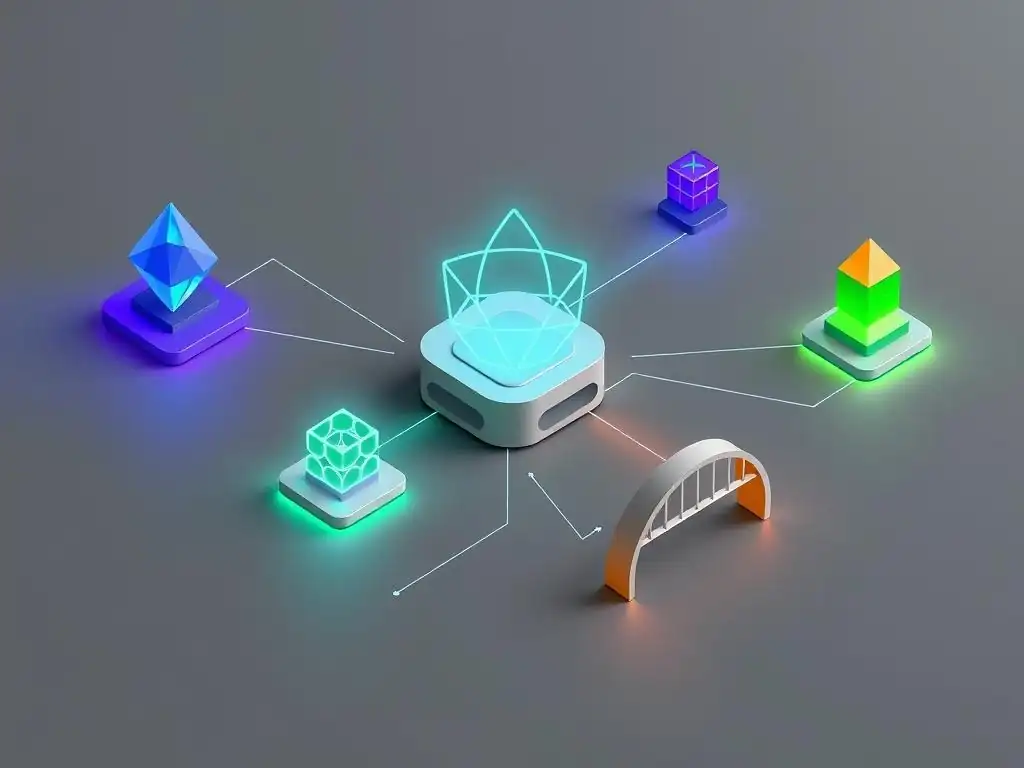
Cross-Chain Lending and Borrowing Platforms on Layer 2
Layer 2 scaling solutions, particularly rollups, are poised to revolutionize cross-chain lending and borrowing platforms. Traditional cross-chain lending often faces challenges related to high gas fees and slow transaction times on Layer 1 blockchains, making it expensive and inefficient, especially for smaller loans or frequent interactions. By deploying lending and borrowing protocols on rollups, platforms can significantly reduce transaction costs and accelerate loan processing, making cross-chain lending more accessible and practical.
Imagine a user wanting to borrow ETH using BTC as collateral. On Layer 1, bridging BTC to Ethereum and then engaging with a lending platform can be costly and time-consuming.
However, with Layer 2 cross-chain solutions, users can potentially bridge their BTC to a Bitcoin-pegged asset on a rollup and then interact with a lending platform also deployed on the same or an interoperable rollup, all within a low-fee and fast transaction environment. This enhanced efficiency can unlock new possibilities for cross-chain lending and borrowing, attracting more users and capital to these platforms and fostering greater financial inclusion across different blockchain ecosystems.
Decentralized Exchanges (DEXs) Leveraging Rollups for Cross-Chain Trading
Decentralized Exchanges (DEXs) are increasingly leveraging rollups to facilitate efficient and cost-effective cross-chain trading. Cross-chain DEXs aim to enable users to trade assets residing on different blockchains directly, without relying on centralized intermediaries. However, building truly decentralized and efficient cross-chain DEXs on Layer 1 has been challenging due to scalability limitations and high gas fees. Rollups offer a solution by providing a Layer 2 environment where cross-chain trading can occur with significantly lower costs and faster execution speeds.
DEXs built on rollups can utilize cross-chain bridges to facilitate the transfer of assets from various blockchains into the rollup environment. Once assets are within the rollup, trading can occur at Layer 2 speeds and fees. For example, a DEX on a ZK-rollup could allow users to trade Bitcoin-pegged assets against Ethereum-based tokens with near-instant finality and minimal gas costs.
This can significantly improve the user experience of cross-chain trading, making it more competitive with centralized exchanges in terms of speed and cost while retaining the benefits of decentralization and self-custody. Furthermore, rollups can enable more complex trading strategies and order types in cross-chain DEXs, enhancing their functionality and attracting more sophisticated traders.
Cross-Chain Yield Aggregation Strategies with Layer 2 Scalability
Yield aggregation is a popular DeFi strategy where users seek to maximize their returns by automatically allocating their assets across various yield-generating opportunities. However, in a fragmented cross-chain DeFi landscape, manually managing yield aggregation across multiple blockchains can be complex, time-consuming, and expensive due to gas fees. Layer 2 scaling solutions, particularly rollups, are making cross-chain yield aggregation strategies more accessible and efficient.
Rollups can enable the development of sophisticated yield aggregators that can seamlessly navigate and optimize yields across different blockchains. These platforms can utilize cross-chain bridges to move assets between chains and rollups, automatically deploying capital to the highest-yielding opportunities available across the DeFi ecosystem. By leveraging the low-fee environment of rollups, these yield aggregators can rebalance portfolios and execute complex strategies more frequently and cost-effectively, maximizing returns for users.
For instance, a yield aggregator on a rollup could automatically shift assets between lending protocols on different chains or participate in yield farms across multiple ecosystems, all while minimizing gas costs and optimizing for the best possible yield for its users. This enhanced efficiency and accessibility can democratize sophisticated cross-chain yield aggregation strategies, making them available to a wider range of DeFi participants.
Evaluating the Risks and Challenges of Cross-Chain DeFi Layer 2
Smart Contract Security Risks in Cross-Chain Rollup Deployments
Deploying smart contracts in cross-chain rollup environments introduces unique security risks that must be carefully considered. While rollups themselves enhance scalability, they also add complexity to the system. Smart contracts operating within rollups interact with both the Layer 2 environment and the underlying Layer 1 blockchain, increasing the potential attack surface. Vulnerabilities in smart contracts on either layer could be exploited, potentially leading to loss of funds or disruption of operations.
Cross-chain rollup deployments often involve intricate interactions between smart contracts on different blockchains and within the rollup itself, requiring meticulous design and rigorous security audits. The logic for handling cross-chain asset transfers, state synchronization, and fraud proofs (in Optimistic Rollups) needs to be flawlessly implemented to prevent exploits.
Furthermore, the relative novelty of cross-chain rollup technologies means that there may be fewer battle-tested security best practices and auditing frameworks available compared to more established Layer 1 smart contract development. Developers and auditors must be particularly vigilant in identifying and mitigating potential security risks specific to cross-chain rollup environments, ensuring the robustness and reliability of these systems.
Liquidity Fragmentation Across Different Chains and Rollups
Despite the advancements in cross-chain technology and Layer 2 scaling, liquidity fragmentation remains a significant challenge in the DeFi ecosystem. While cross-chain bridges and rollups aim to connect different blockchains and enhance capital efficiency, they can also inadvertently contribute to liquidity fragmentation if not carefully designed and implemented. Liquidity can become spread across multiple chains, rollups, and bridge implementations, making it harder for users to find deep liquidity for trading or lending activities.
For example, if multiple rollups and bridges exist for transferring ETH to different Layer 2 environments, liquidity for wrapped ETH might become fragmented across these various venues. This fragmentation can lead to higher slippage for traders, reduced capital efficiency for yield farmers, and a less seamless user experience overall.
Addressing liquidity fragmentation requires efforts to improve interoperability between different rollups and bridges, standardize asset representations across chains, and develop liquidity aggregation mechanisms that can effectively pool liquidity from various sources. Overcoming liquidity fragmentation is crucial for realizing the full potential of cross-chain DeFi Layer 2 scaling and creating a truly unified and efficient decentralized financial ecosystem.
Regulatory Uncertainty Surrounding Cross-Chain DeFi Applications
The regulatory landscape surrounding DeFi, and particularly cross-chain DeFi applications, is still evolving and remains largely uncertain. Regulators globally are grappling with how to classify and oversee decentralized technologies and cross-border financial activities in the crypto space. Cross-chain DeFi, by its nature, involves interactions across multiple jurisdictions and potentially complex legal frameworks, raising novel regulatory challenges.
The lack of clear regulatory guidelines creates uncertainty for developers, users, and institutions involved in cross-chain DeFi. Projects may face difficulties in complying with regulations across different jurisdictions, and users may be unsure about the legal status and tax implications of participating in cross-chain DeFi activities.
Regulatory uncertainty can also stifle innovation and investment in the space, as businesses may be hesitant to engage in activities with unclear legal standing. As cross-chain DeFi matures, it is crucial for industry stakeholders to engage with regulators to foster constructive dialogue and work towards developing clear and appropriate regulatory frameworks that promote innovation while mitigating potential risks and protecting users.
The Future of Cross-Chain DeFi Layer 2 Scaling
Emerging Trends in Cross-Chain Rollup Interoperability
The future of cross-chain DeFi Layer 2 scaling is being shaped by several emerging trends, particularly in the area of rollup interoperability. Initially, rollups were largely designed as isolated scaling solutions for individual blockchains. However, the need for seamless communication and asset transfer between different rollups is becoming increasingly apparent. Emerging trends focus on enabling interoperability between different rollup types (Optimistic and ZK-Rollups) and between rollups deployed on different Layer 1 chains.
One promising trend is the development of "rollup bridges" that allow for direct communication and asset transfers between different rollups. These bridges aim to overcome the limitations of needing to always route assets back to Layer 1 to move between rollups. Another trend is the standardization of rollup interfaces and communication protocols, which would facilitate easier integration and interoperability between different rollup implementations. As rollup technology matures, we can expect to see further advancements in cross-rollup interoperability, creating a more interconnected and unified Layer 2 ecosystem for cross-chain DeFi.
The Potential of Modular Blockchains for Cross-Chain DeFi
Modular blockchains represent a paradigm shift in blockchain architecture that could significantly impact the future of cross-chain DeFi. Traditional monolithic blockchains handle all core functions – execution, consensus, data availability, and settlement – within a single layer. Modular blockchains, in contrast, separate these functions into distinct, specialized layers. This modular design offers greater flexibility and customization, potentially simplifying and enhancing cross-chain DeFi.
In a modular blockchain architecture, specialized layers can be optimized for specific tasks. For example, a dedicated data availability layer could ensure efficient and scalable data storage for rollups, while separate execution layers could be tailored for different types of applications or virtual machines. This modularity can simplify the development of cross-chain solutions by allowing different blockchains to specialize in different functionalities and interoperate more seamlessly. Modular blockchains could potentially provide a more robust and scalable foundation for cross-chain DeFi, enabling greater composability and efficiency across the entire decentralized ecosystem.
Advancements in Zero-Knowledge Proofs and their Impact on Cross-Chain Scalability
Advancements in Zero-Knowledge (ZK) proofs are expected to play a crucial role in shaping the future of cross-chain scalability. ZK-proofs, as used in ZK-Rollups, offer significant advantages in terms of privacy, scalability, and faster finality. Ongoing research and development in ZK-proof technologies are leading to more efficient proof generation and verification, reduced computational overhead, and enhanced privacy features.
These advancements will likely make ZK-Rollups even more attractive for cross-chain DeFi applications, particularly in scenarios where privacy and fast finality are paramount. Furthermore, ZK-proofs are being explored for other cross-chain applications beyond rollups, such as more secure and efficient cross-chain bridges and privacy-preserving cross-chain transactions. As ZK-proof technology continues to mature, it has the potential to unlock new possibilities for cross-chain scalability and privacy, driving further innovation and adoption in the decentralized finance space.
Conclusion: Embracing the Potential of Cross-Chain DeFi and Rollups
Key Takeaways on Layer 2 Interoperability for Decentralized Finance
Cross-chain DeFi Layer 2 scaling, driven by technologies like rollups and cross-chain bridges, represents a critical evolution in the decentralized finance landscape. Layer 2 solutions are essential for overcoming the scalability limitations of Layer 1 blockchains, reducing transaction costs, and improving transaction speeds, making DeFi more accessible and efficient for a broader user base. Rollups, particularly Optimistic and ZK-Rollups, offer distinct approaches to scaling, each with its own advantages and trade-offs in terms of security, finality, and complexity.
Cross-chain bridges are indispensable for breaking down blockchain silos and enabling the transfer of assets and data across different ecosystems, fostering a more interconnected and unified DeFi environment. Combining rollups and cross-chain bridges synergistically unlocks significant benefits, enhancing scalability, reducing costs, and improving the user experience for cross-chain DeFi applications. However, it is crucial to acknowledge and address the risks and challenges associated with cross-chain DeFi Layer 2, including smart contract security, liquidity fragmentation, and regulatory uncertainty.
The Long-Term Vision for a Seamless and Interconnected DeFi Ecosystem
The long-term vision for DeFi is a seamless and interconnected ecosystem where users can effortlessly access and utilize financial services across different blockchains, without being constrained by high costs, slow speeds, or fragmented liquidity. Cross-chain DeFi Layer 2 scaling is a crucial step towards realizing this vision. Technologies like rollups and cross-chain bridges are paving the way for a future where cross-chain transactions are as simple and intuitive as transactions within a single blockchain today.
As these technologies mature and interoperability improves, we can expect to see a more unified and efficient DeFi ecosystem emerge. Users will be able to seamlessly move assets and access opportunities across different chains, optimizing for yield, trading opportunities, and specific functionalities without the friction and costs currently associated with cross-chain interactions. This interconnected DeFi future promises to be more robust, resilient, and accessible, unlocking the full potential of decentralized finance and driving its mainstream adoption.
Frequently Asked Questions
What are the main benefits of CrossChain DeFi in the context of Layer2 scaling solutions?
CrossChain DeFi with Layer2s enables enhanced interoperability between different blockchains, allowing for the seamless transfer of assets and data. This promotes greater capital efficiency and opens up new possibilities for decentralized applications (dApps).
How do Layer2 rollups contribute to scaling CrossChain DeFi applications?
Layer2 rollups significantly increase transaction throughput by processing transactions off-chain and only submitting summarized data to the main chain. This reduces congestion on the main chain and enables faster and cheaper transactions for CrossChain DeFi users.
What are the key challenges involved in achieving secure and efficient CrossChain interoperability with Layer2s?
Security vulnerabilities in bridge protocols and the complexity of coordinating state across different chains are significant hurdles. Ensuring consistent data availability and preventing malicious actors from exploiting vulnerabilities are also critical.
How does the integration of CrossChain DeFi and Layer2 solutions impact regulatory compliance?
The increased complexity of CrossChain DeFi and Layer2 scaling makes regulatory oversight more challenging. Regulators are grappling with how to apply existing frameworks to these novel technologies and ensure investor protection.
What is the future outlook for CrossChain DeFi Layer2 scaling, and what trends are expected to emerge?
The future likely involves more sophisticated bridging solutions, increased adoption of zero-knowledge rollups, and greater collaboration between different blockchain ecosystems. We can expect to see more user-friendly interfaces that abstract away the complexity of CrossChain transactions.
Final Reflection: Bridging the Decentralized Future
The exploration of CrossChain DeFi and Layer2 scaling solutions, particularly rollups, reveals a critical juncture in the evolution of decentralized finance. The promise of seamless interoperability and enhanced scalability is no longer a distant dream, but a tangible goal within reach. The ability to move assets and execute complex financial operations across different blockchains, without the crippling limitations of high fees and slow transaction times, is poised to unlock unprecedented potential for innovation and adoption.
This journey towards a truly interconnected DeFi ecosystem has profoundly influenced the very fabric of our understanding of decentralized finance. It's not just about faster transactions or cheaper fees; it's about fostering a more inclusive and accessible financial system for everyone. The potential to democratize access to financial services, regardless of geographical location or socioeconomic status, is immense. The future of finance is decentralized, and the future of decentralization is cross-chain.
This quote encapsulates the fundamental shift we are witnessing, a shift towards a more collaborative and interconnected blockchain landscape.
As we stand on the cusp of this new era, I invite you to reflect on the implications of CrossChain DeFi and Layer2 scaling for your own understanding of finance and technology. Consider how these advancements can empower you to participate in a more equitable and efficient financial system. Embrace the potential of interoperability, explore the possibilities of rollups, and become an active participant in shaping the future of decentralized finance. The future is not just being built; it's being built together.
Unlock the Potential of Cross-Chain DeFi!
Thank you for exploring the evolving landscape of cross-chain decentralized finance and Layer 2 interoperability with us. Now that you understand the potential of rollups and cross-chain interactions, it’s time to apply that knowledge and help shape the future of decentralized finance.
Here’s how you can get started:
- Dive Deeper: Begin by identifying a promising Layer 2 project or cross-chain protocol that aligns with your interests, and research its potential impact on DeFi. This is your first step toward becoming a knowledgeable participant!
- Explore recent research papers on the topic. Since cross-chain technology is constantly evolving, understanding the underlying code isn’t the only way to stay informed. Read publications and updates to keep yourself current.
- Join the conversation: Share this article with fellow blockchain enthusiasts and initiate discussions about the future of cross-chain DeFi. Knowledge grows through collaboration!
Are you ready to explore the endless possibilities of cross-chain DeFi and rollups? What innovative applications do you see benefiting most from this technology?
Leave a Reply