
CrossChain DeFi Tools and Platforms: Your Essential Guide to Navigation


Welcome to Blockchain Trends, your go-to source for uncovering the real potential of blockchain technology! Curious about navigating the burgeoning world of Decentralized Finance beyond simple token swaps? This week, we delve into the exciting realm of CrossChain DeFi investment strategies. Discover how to leverage cutting-edge tools and platforms to unlock new opportunities and potentially maximize your returns in the DeFi space. What innovative approaches are leading the charge, and what are the risks to consider? Let's explore the future of interconnected finance together...
- Understanding Cross-Chain DeFi Investment Strategies: A Comprehensive Overview
- Essential Tools for Navigating the Cross-Chain DeFi Landscape
- Top Cross-Chain DeFi Platforms for Advanced Investors
- Optimizing Your Cross-Chain DeFi Investment Strategies
- The Future of Cross-Chain DeFi: Trends and Predictions
-
Frequently Asked Questions
- How can CrossChain DeFi tools help improve investment strategies?
- What are some key features to look for in a CrossChain DeFi platform?
- What are the main risks associated with using CrossChain DeFi platforms?
- How does regulation impact the development and adoption of CrossChain DeFi investment strategies?
- What is the future outlook for CrossChain DeFi and its impact on the broader financial landscape?
- Final Reflection: Embracing the Interconnected Future of Finance
- Unlock the Future: Start Navigating Cross-Chain DeFi Today!
Understanding Cross-Chain DeFi Investment Strategies: A Comprehensive Overview
What is Cross-Chain DeFi and Why is it Important?
Cross-Chain DeFi, or Decentralized Finance, represents the evolution of DeFi beyond the confines of single blockchain networks. Traditionally, DeFi ecosystems operated in silos, with assets and applications locked within their native chains like Ethereum, Binance Smart Chain, or Solana. Cross-Chain DeFi breaks down these barriers, enabling the seamless transfer of assets and data between different blockchains.
This interoperability is crucial because it unlocks a more efficient, scalable, and user-friendly DeFi environment. Imagine a scenario where yield farming opportunities are significantly higher on one blockchain compared to another, but your assets are locked on a different chain. Cross-chain DeFi solves this by allowing you to move your assets to where the opportunities are most lucrative, effectively expanding your investment horizons.
The importance of Cross-Chain DeFi stems from its potential to solve key limitations of the current DeFi landscape. Fragmented liquidity, network congestion, and high transaction fees on popular chains like Ethereum have hindered wider adoption. By connecting different blockchains, Cross-Chain DeFi aggregates liquidity, reduces congestion by distributing activity across multiple networks, and offers users access to a broader range of services and assets.
For example, a user might want to leverage the faster transaction speeds and lower fees of Polygon while still participating in a unique lending protocol available only on Avalanche. Cross-chain DeFi makes such scenarios possible, fostering a more interconnected and dynamic financial ecosystem. This interconnectedness is not just about convenience; it's about creating a more robust and resilient DeFi ecosystem that can cater to a wider audience and a greater variety of financial needs.
The Rise of Cross-Chain Interoperability in Decentralized Finance
The rise of Cross-Chain interoperability in Decentralized Finance is a direct response to the limitations encountered within single-chain ecosystems. Early DeFi projects were predominantly built on Ethereum, which, while pioneering, faced scalability issues as the ecosystem grew. This led to network congestion and soaring gas fees, making DeFi inaccessible to many smaller investors. Alternative Layer-1 blockchains like Binance Smart Chain, Solana, and Avalanche emerged, each offering unique advantages in terms of speed, cost, and consensus mechanisms. However, this proliferation of blockchains resulted in fragmented liquidity and isolated DeFi communities.
Cross-Chain technology emerged as the natural solution to bridge these isolated ecosystems. The initial phase saw the development of basic cross-chain bridges, primarily focused on asset transfers. As the DeFi space matured, so did the complexity and sophistication of cross-chain solutions. We moved from simple token bridges to more intricate protocols that facilitate cross-chain smart contract calls and data sharing.
This evolution is driven by the increasing demand for seamless user experiences in DeFi and the recognition that a multi-chain future is not just probable, but already unfolding. The total value locked (TVL) in cross-chain bridges has, at times, exceeded $20 billion, illustrating the significant capital flow and user adoption in this sector. This growth signifies a paradigm shift towards a more interconnected and collaborative DeFi landscape, where users are no longer restricted by the boundaries of a single blockchain.
Key Benefits of Utilizing Cross-Chain DeFi Platforms
Utilizing Cross-Chain DeFi platforms unlocks a multitude of benefits for investors and users alike, transforming the way we engage with decentralized finance. One of the primary advantages is enhanced capital efficiency. By accessing opportunities across multiple chains, investors can deploy their capital where it yields the highest returns, irrespective of the asset's native chain.
This dynamic allocation maximizes potential profits and reduces the opportunity cost of keeping assets idle on a single, potentially less profitable, blockchain. For instance, yield farming APRs (Annual Percentage Rates) can vary significantly between chains; Cross-Chain DeFi allows users to chase the highest yields without being constrained by network limitations.
Another key benefit is diversification and risk mitigation. Cross-Chain DeFi allows investors to diversify their portfolio across different blockchain ecosystems, reducing the risk associated with relying on a single chain. If one blockchain experiences network issues, security breaches, or a downturn in its ecosystem, assets spread across multiple chains are less vulnerable.
Furthermore, accessing diverse DeFi protocols across different chains increases exposure to a wider range of investment strategies and asset classes. Consider the scenario where a user is interested in both Ethereum-based blue-chip DeFi protocols and emerging opportunities on newer chains like Fantom or Arbitrum. Cross-Chain DeFi platforms provide a unified interface to interact with these diverse ecosystems, simplifying portfolio management and risk diversification.
Finally, Cross-Chain DeFi platforms often provide access to lower transaction fees and faster transaction speeds. By strategically utilizing chains with lower gas costs and faster block times, users can significantly reduce their operational expenses and improve the efficiency of their DeFi activities.
Cross-Chain Bridges: Bridging the Gap Between Blockchains
Cross-Chain bridges are fundamental infrastructure in the Cross-Chain DeFi landscape, acting as conduits for transferring assets and data between different blockchain networks. In essence, they solve the problem of blockchain isolation by enabling interoperability. Think of them as digital bridges connecting distinct financial continents, allowing for the free flow of capital and information.
Without bridges, users would be confined to the DeFi ecosystem of a single blockchain, missing out on opportunities and facing limitations in asset mobility. Bridges achieve this by employing various technical mechanisms, often involving locking assets on the source chain and minting representative assets (wrapped tokens) on the destination chain, or utilizing liquidity pools on both chains to facilitate swaps.
The functionality of cross-chain bridges is essential for enabling various Cross-Chain DeFi investment strategies. For example, to participate in a yield farming opportunity on Avalanche with ETH held on Ethereum, a user needs to utilize a bridge to transfer their ETH to the Avalanche network. This process typically involves depositing ETH into a bridge contract on Ethereum, which then verifies the deposit and releases an equivalent amount of wrapped ETH (e.g., WETH.e on Avalanche) on the Avalanche chain.
This wrapped asset can then be used within the Avalanche DeFi ecosystem. The security and efficiency of these bridges are paramount, as they handle significant volumes of assets and are critical components of the entire Cross-Chain DeFi infrastructure.
Popular Cross-Chain Bridge Solutions: Multichain, LayerZero, Wormhole
Several prominent cross-chain bridge solutions have emerged, each with its own architecture, supported chains, and security features. Multichain, formerly known as Anyswap, is one of the most widely used bridge protocols, supporting a vast array of blockchains including Ethereum, Binance Smart Chain, Fantom, Polygon, Avalanche, and many others. Multichain boasts a substantial TVL, often exceeding billions of dollars, and facilitates the transfer of a wide range of tokens. Its popularity stems from its extensive chain support and relatively user-friendly interface, making it a common choice for users seeking to move assets between different ecosystems.
LayerZero is a newer, more technologically advanced cross-chain interoperability protocol that distinguishes itself by focusing on security and efficiency. Instead of relying on intermediate chains or validators, LayerZero utilizes oracles and relayers to transmit messages between chains, reducing reliance on a single point of failure. This innovative approach is designed to enhance security and lower transaction costs.
LayerZero is rapidly gaining traction and supports chains like Ethereum, Avalanche, Fantom, and others, with plans for further expansion. Wormhole is another significant player, known for its speed and support for high-throughput blockchains like Solana. Wormhole also employs a multi-signature guardian network to secure cross-chain transfers.
It facilitates bridging between Solana, Ethereum, Polygon, Avalanche, and other chains. While Wormhole has experienced security incidents in the past, it remains a popular option due to its speed and chain compatibility. When selecting a bridge, users should consider factors like supported chains, fees, speed, security audits, and community reputation.
Assessing the Security Risks of Cross-Chain Bridges
While cross-chain bridges are vital for interoperability, they also introduce significant security risks to the DeFi ecosystem. Bridges often act as central hubs accumulating vast amounts of assets, making them lucrative targets for exploits and attacks. The complexity of bridge architectures, involving smart contracts on multiple chains and intricate messaging systems, creates a larger attack surface compared to single-chain protocols.
A major security concern arises from the "wrapping" mechanism. When assets are bridged, they are essentially locked on one chain and represented by wrapped versions on another. Vulnerabilities in the wrapping or unwrapping process can lead to assets being stolen or locked indefinitely.
Several high-profile exploits of cross-chain bridges have underscored these risks. For instance, the Wormhole bridge suffered a $325 million exploit in 2022 due to a vulnerability in its smart contract. Similarly, the Ronin bridge, used for the Axie Infinity game, was attacked for over $600 million.
These incidents highlight the nascent stage of cross-chain security and the ongoing challenges in securing these complex systems. Users must exercise caution when utilizing bridges, researching their security audits, understanding their underlying mechanisms, and diversifying their bridge usage rather than relying on a single solution. The DeFi community is actively working on enhancing bridge security through advancements in cryptographic techniques, formal verification, and decentralized governance models, but the risks remain a critical consideration for anyone engaging in Cross-Chain DeFi investment strategies.
Cross-Chain Aggregators: Optimizing Your DeFi Returns
Cross-chain aggregators are tools designed to simplify and optimize the process of finding and accessing the best yield opportunities across multiple DeFi ecosystems. In a fragmented DeFi landscape, navigating different blockchains, protocols, and yield farming strategies can be complex and time-consuming. Cross-chain aggregators address this challenge by providing a unified interface that scans various DeFi platforms across multiple chains, identifies the most profitable opportunities, and allows users to invest directly through their platform. They act as intelligent routing systems for DeFi investments, streamlining the user experience and maximizing returns.
These aggregators work by integrating with numerous DeFi protocols and bridges across different blockchains. They continuously monitor yield rates for various assets and strategies, such as lending, staking, and liquidity providing, on chains like Ethereum, Binance Smart Chain, Avalanche, Polygon, and others. When a user seeks to invest, the aggregator automatically routes their funds through the most efficient bridges and protocols to access the highest available yields.
This process often involves complex calculations to account for bridge fees, transaction costs, and potential slippage, ensuring users get the best possible returns net of all expenses. Cross-chain aggregators significantly reduce the research and operational overhead for investors, making Cross-Chain DeFi investment strategies more accessible and efficient, especially for those who are not deeply technical or lack the time to constantly monitor the market.
How Cross-Chain Aggregators Simplify Investment
Cross-chain aggregators drastically simplify the investment process in Cross-Chain DeFi by abstracting away the complexities of navigating multiple blockchains and protocols. Instead of manually researching yield opportunities on different chains, bridging assets, and interacting with individual DeFi platforms, users can access a wide range of options through a single aggregator interface. This simplification is crucial for broader adoption of Cross-Chain DeFi, as it lowers the technical barrier to entry for new users and saves time and effort for experienced investors.
Consider a user wanting to find the best yield for their stablecoins. Without an aggregator, they would need to manually check yield farming platforms on Ethereum, Binance Smart Chain, Polygon, and other chains, compare APRs, consider bridging costs, and then execute each investment individually. A cross-chain aggregator automates this entire process.
The user simply connects their wallet to the aggregator, selects their desired asset (e.g., USDT), and the aggregator presents a list of the highest yielding options across supported chains, ranked by net APR after accounting for all costs. With a few clicks, the aggregator handles the bridging, swapping, and staking on the chosen platform, streamlining the entire investment workflow. This ease of use and efficiency are key advantages of cross-chain aggregators, making Cross-Chain DeFi investment strategies more accessible to a wider audience.
Top Cross-Chain Aggregators for Enhanced Yield: Beefy Finance, Rango Exchange
Several aggregators stand out in the Cross-Chain DeFi space for their features, supported chains, and user base. Beefy Finance, while initially focused on Binance Smart Chain, has expanded to become a prominent multi-chain yield aggregator. Beefy Finance automates yield farming strategies across numerous blockchains, including Avalanche, Fantom, Polygon, and more.
It is known for its "vaults," which are automated investment strategies that compound yields and optimize returns for users. Beefy Finance is particularly popular for its user-friendly interface and wide range of yield farming opportunities, making it a good starting point for those new to cross-chain aggregation. As of late 2023, Beefy Finance has managed billions in TVL across its supported chains, demonstrating its widespread adoption.
Rango Exchange is another powerful cross-chain aggregator, focusing on decentralized exchange (DEX) aggregation and routing across multiple blockchains. While Beefy Finance is primarily focused on yield farming, Rango Exchange excels in finding the best swap rates for tokens across different DEXs and chains. It supports a vast number of blockchains and DEXs, including those on Ethereum, Binance Smart Chain, Solana, and many others.
Rango Exchange not only aggregates DEXs but also integrates with bridges, enabling users to swap tokens across chains in a single transaction. This cross-chain swapping capability is a significant advantage for users looking to rebalance their portfolio or access assets on different chains efficiently. Rango Exchange is particularly useful for users who frequently trade and swap tokens across different blockchain ecosystems, providing optimized routes and minimizing slippage and transaction fees.
Cross-Chain Wallets: Managing Assets Across Multiple Chains
Cross-chain wallets are essential tools for managing assets and interacting with DeFi applications across multiple blockchain networks. Traditional wallets are often chain-specific, meaning they are designed to primarily support assets and applications on a single blockchain, like Ethereum or Bitcoin. In the Cross-Chain DeFi environment, where users hold assets and engage with protocols on various chains, a cross-chain wallet becomes indispensable for streamlining asset management and simplifying interactions. These wallets allow users to view and manage their holdings across different blockchains from a single interface, eliminating the need to switch between multiple wallets for each chain.
The functionality of cross-chain wallets extends beyond just asset viewing. They also facilitate cross-chain transactions, allowing users to send and receive assets across different blockchains directly from their wallet interface, often in conjunction with integrated bridge functionalities. Furthermore, many cross-chain wallets are designed to seamlessly connect with DeFi applications on various chains, enabling users to participate in yield farming, lending, borrowing, and other DeFi activities without having to constantly switch wallets or manage multiple private keys. This unified experience is crucial for simplifying the user journey in Cross-Chain DeFi and promoting wider adoption.
Securely Storing and Transferring Assets on Different Blockchains
Securely storing and transferring assets across different blockchains is a primary concern in Cross-Chain DeFi, and cross-chain wallets play a crucial role in addressing this. These wallets employ various security mechanisms to protect user assets across multiple networks. One key aspect is private key management. Reputable cross-chain wallets utilize robust encryption and secure storage for private keys, ensuring that users retain control of their assets while minimizing the risk of unauthorized access. Many wallets also support hardware wallet integrations, providing an extra layer of security by storing private keys offline.
When it comes to cross-chain transfers, security is paramount. Cross-chain wallets often integrate with secure bridge protocols or utilize multi-signature schemes to ensure the integrity of transactions. For example, when initiating a cross-chain transfer, the wallet may interact with a bridge contract to lock assets on the source chain and mint corresponding wrapped assets on the destination chain, while securely managing the user's keys and transaction signatures throughout the process.
Users should always choose reputable cross-chain wallets with a proven track record of security, conduct thorough research, and follow best practices for wallet security, such as enabling two-factor authentication and being cautious of phishing attempts. Regularly updating the wallet software and keeping private keys secure are essential steps for safeguarding assets in the Cross-Chain DeFi environment.
Best Cross-Chain Wallet Options: MetaMask, Trust Wallet
Several wallet options cater to the needs of Cross-Chain DeFi users, offering varying degrees of cross-chain functionality and chain support. MetaMask, while initially known as an Ethereum wallet, has evolved to support multiple EVM-compatible chains, including Binance Smart Chain, Polygon, Avalanche, Fantom, and many others. By adding custom network configurations, users can effectively use MetaMask as a multi-chain wallet for these EVM-compatible ecosystems. MetaMask’s browser extension and mobile app provide a user-friendly interface for managing assets and interacting with DeFi applications across these chains. Its widespread adoption and extensive integration with DeFi platforms make it a popular choice.
Trust Wallet, acquired by Binance, is another prominent mobile wallet that offers broad cross-chain support. Trust Wallet supports a vast array of blockchains beyond just EVM-compatible chains, including Bitcoin, Solana, and many others.
It provides a unified interface for managing assets across these diverse networks and also includes a built-in Web3 browser, allowing users to access DeFi applications on different chains directly from the wallet app. Trust Wallet is known for its ease of use, extensive chain support, and integration with Binance services, making it a convenient option for users who are active in various blockchain ecosystems.
While MetaMask and Trust Wallet are popular choices, other wallets like Rainbow Wallet (focused on EVM chains) and Phantom (primarily for Solana but expanding) are also emerging as strong contenders in the cross-chain wallet space, each with its own strengths and focus. Users should evaluate their specific needs and chain preferences when selecting a cross-chain wallet.
Top Cross-Chain DeFi Platforms for Advanced Investors
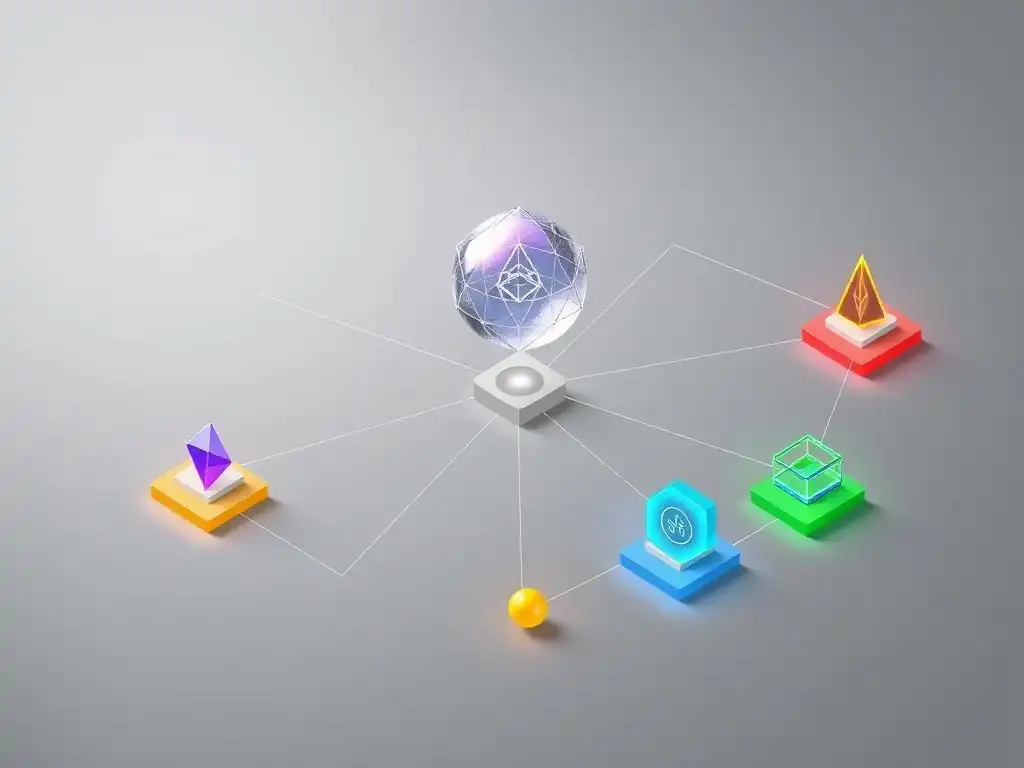
Exploring Leading Cross-Chain DeFi Protocols
The Cross-Chain DeFi landscape is rapidly evolving, with several protocols emerging as leaders in providing innovative cross-chain financial services. These platforms are pushing the boundaries of interoperability and offering advanced investment opportunities that were previously unattainable within single-chain ecosystems. These leading protocols often specialize in different areas, such as cross-chain swaps, lending, borrowing, yield aggregation, or derivatives, catering to the diverse needs of advanced investors seeking sophisticated Cross-Chain DeFi investment strategies.
These platforms are characterized by their focus on security, efficiency, and user experience. They often employ advanced technologies like secure multi-party computation (MPC), zero-knowledge proofs, and novel consensus mechanisms to enhance cross-chain interoperability and mitigate security risks. Furthermore, they are continually innovating to develop new cross-chain financial products and services, expanding the possibilities for Cross-Chain DeFi investment strategies. Understanding the features and functionalities of these leading protocols is crucial for advanced investors looking to navigate and capitalize on the opportunities within the Cross-Chain DeFi space.
Platform Highlight: Thorchain - Features and Investment Opportunities
Thorchain stands out as a unique and powerful cross-chain decentralized exchange (DEX) protocol. Unlike most bridges that rely on wrapped assets, Thorchain facilitates native asset swaps across different blockchains. This means users can directly swap Bitcoin for Ether, or Litecoin for Binance Coin, without relying on intermediaries or wrapped tokens. Thorchain achieves this through its Continuous Liquidity Pools (CLPs) and a network of validators that secure cross-chain transactions. This native asset swapping capability is a significant advantage, as it eliminates the risks and complexities associated with wrapped assets and enhances capital efficiency.
Thorchain offers various investment opportunities centered around its native RUNE token and its liquidity pools. Users can earn yield by providing liquidity to Thorchain’s pools, receiving a share of swap fees and block rewards. This "impermanent loss protected" liquidity provision is a key feature of Thorchain, designed to mitigate the risks associated with providing liquidity to volatile asset pairs.
Furthermore, RUNE holders can participate in network security and governance by staking their tokens. Thorchain’s focus on native asset swaps and its unique liquidity pool design make it a compelling platform for advanced investors seeking exposure to Cross-Chain DeFi investment strategies, particularly those interested in decentralized and secure cross-chain trading. However, it is important to note that Thorchain has a complex architecture and understanding its intricacies is crucial before investing.
Platform Highlight: Synapse Protocol - Features and Investment Opportunities
Synapse Protocol is another prominent player in the Cross-Chain DeFi space, focusing on building a robust and versatile cross-chain infrastructure. Synapse is known for its cross-chain bridge, which supports a wide range of blockchains and assets, facilitating efficient and cost-effective transfers. Beyond bridging, Synapse has expanded into a broader ecosystem that includes Synapse Pools, which are cross-chain stablecoin pools designed to optimize yield and reduce impermanent loss, and Synapse Governance, which allows SYN token holders to participate in the protocol's decision-making process.
Synapse offers various investment opportunities, primarily centered around its SYN token and its Synapse Pools. Users can earn yield by providing liquidity to Synapse Pools, receiving a share of swap fees and SYN token rewards. These pools are designed to be cross-chain, meaning they can aggregate liquidity from different blockchains, enhancing capital efficiency and reducing fragmentation.
Furthermore, SYN token holders can stake their tokens to earn rewards and participate in governance, influencing the future development of the Synapse Protocol. Synapse's focus on building a comprehensive cross-chain infrastructure and its emphasis on stablecoin liquidity pools make it an attractive platform for advanced investors seeking exposure to Cross-Chain DeFi investment strategies, especially those focused on stablecoin yield optimization and cross-chain asset management. Synapse's robust bridge and growing ecosystem position it as a key platform in the evolving Cross-Chain DeFi landscape.
Comparing Cross-Chain DeFi Platforms: Fees, Security, and Functionality
When choosing a Cross-Chain DeFi platform, advanced investors must carefully compare different options based on several key factors: fees, security, and functionality. Fees associated with cross-chain transactions can vary significantly between platforms. Bridges typically charge fees for asset transfers, which can be a percentage of the transaction value or a fixed fee. Aggregators may also charge fees for their routing and optimization services. Investors need to consider these fees and factor them into their investment calculations to ensure profitability. Platforms with lower fees can significantly enhance returns, especially for high-frequency trading or large-volume transactions.
Security is paramount in Cross-Chain DeFi. As highlighted earlier, bridges are prime targets for exploits. Investors should prioritize platforms with robust security measures, including thorough security audits, transparent security protocols, and a strong track record of security. Understanding the underlying security mechanisms of a platform, such as its consensus mechanism, validator network, and smart contract security practices, is crucial.
Platforms that have undergone reputable security audits and have a proactive approach to security updates are generally preferred. Functionality refers to the range of services and features offered by a platform. Some platforms specialize in specific areas, like cross-chain swaps or yield aggregation, while others offer a broader suite of services.
Investors should choose platforms that align with their specific investment goals and strategies. Factors to consider include the number of supported chains, the types of assets available, the range of DeFi protocols integrated, the user interface, and the availability of advanced features like portfolio management tools or analytics dashboards. A comprehensive comparison across these three dimensions – fees, security, and functionality – is essential for making informed decisions when selecting a Cross-Chain DeFi platform.
Identifying the Right Cross-Chain DeFi Platform for Your Investment Goals
Identifying the right Cross-Chain DeFi platform is a personalized process that depends heavily on individual investment goals, risk tolerance, and technical expertise. An investor seeking high-yield opportunities might prioritize platforms known for their yield aggregation capabilities and access to diverse yield farming strategies across multiple chains. Platforms like Beefy Finance and aggregators that scan numerous chains for optimal APRs would be relevant choices.
For investors focused on cross-chain trading and swaps, platforms like Thorchain, with its native asset swaps, or Rango Exchange, with its DEX aggregation and cross-chain routing, would be more suitable. The need for specific asset exposure also influences platform selection. If an investor wants to access DeFi opportunities on a particular blockchain, they need to ensure the platform supports that chain and the desired assets.
Risk tolerance is a critical factor. Investors with a lower risk tolerance might prefer platforms with a strong security reputation and a track record of minimal exploits, even if it means potentially lower yields. They might also opt for platforms that focus on more established and audited protocols.
Conversely, investors with a higher risk tolerance might be willing to explore newer, potentially higher-yielding platforms, acknowledging the increased risk associated with emerging technologies. Technical expertise also plays a role. Some Cross-Chain DeFi platforms are more user-friendly and intuitive, catering to less technical users, while others are more complex and require a deeper understanding of DeFi concepts and blockchain technology.
Beginner investors might start with simpler platforms and gradually explore more advanced options as their knowledge and experience grow. Ultimately, the "right" platform is the one that best aligns with an investor's individual profile, balancing their investment goals, risk appetite, and technical capabilities.
Optimizing Your Cross-Chain DeFi Investment Strategies
Risk Management in Cross-Chain DeFi: Mitigating Potential Losses
Risk management is paramount in Cross-Chain DeFi, given the inherent complexities and emerging nature of this space. Mitigating potential losses requires a proactive and informed approach, focusing on understanding and addressing the various risks involved. One of the primary risks is smart contract risk. Cross-Chain DeFi platforms rely heavily on smart contracts, and vulnerabilities in these contracts can lead to exploits and loss of funds. Thoroughly researching the audit history and security practices of any platform is crucial. Look for platforms that have undergone multiple audits by reputable security firms and have a transparent approach to addressing vulnerabilities.
Another significant risk is bridge risk. As highlighted earlier, cross-chain bridges are critical infrastructure but also represent significant security vulnerabilities. Bridge exploits have resulted in substantial losses in the past. Diversifying bridge usage, understanding the security mechanisms of different bridges, and staying informed about bridge security incidents are essential risk mitigation strategies.
Volatility risk is inherent in the cryptocurrency market, and Cross-Chain DeFi amplifies this risk by exposing investors to a wider range of assets and protocols across different chains. Portfolio diversification across chains and asset classes can help mitigate volatility risk. Finally, operational risk includes user error, wallet security, and platform downtime. Using reputable wallets, practicing secure wallet management, and being aware of the operational reliability of platforms are important aspects of risk management in Cross-Chain DeFi.
Understanding Smart Contract Risks in Cross-Chain Environments
Understanding smart contract risks is particularly crucial in Cross-Chain DeFi environments due to the increased complexity and interconnectedness of protocols. Cross-chain smart contracts often involve interactions across multiple blockchains, adding layers of complexity that can introduce new vulnerabilities. A vulnerability in a smart contract on one chain can potentially impact assets or operations on other connected chains. Reentrancy attacks, flash loan attacks, and logic errors are common types of smart contract vulnerabilities that can be exploited.
Reentrancy attacks involve recursively calling a vulnerable contract function to drain funds. Flash loan attacks leverage uncollateralized loans to manipulate market prices or exploit contract logic within a single transaction. Logic errors are flaws in the intended functionality of the smart contract that can be exploited for malicious purposes.
In the context of Cross-Chain DeFi, smart contract risks are amplified because vulnerabilities can propagate across chains through bridge protocols or cross-chain interactions. For example, a vulnerability in a bridge's smart contract on one chain could be exploited to drain assets on another chain that is connected through the bridge. Therefore, it is essential to thoroughly research the smart contract security of any Cross-Chain DeFi platform or protocol before investing.
This includes reviewing security audit reports, understanding the platform's approach to smart contract development and testing, and staying informed about any reported vulnerabilities or security incidents. Utilizing platforms with a strong security focus and a proactive approach to smart contract security is a key risk mitigation strategy in Cross-Chain DeFi.
Best Practices for Secure Cross-Chain DeFi Investing
Adopting best practices for secure Cross-Chain DeFi investing is crucial for protecting assets and mitigating potential losses. Thoroughly research platforms and protocols before investing. Understand their security measures, audit history, team reputation, and community feedback. Don't rely solely on marketing materials; delve into technical documentation and independent reviews. Diversify your portfolio across multiple platforms and chains. Avoid concentrating all your assets on a single platform or bridge, as this increases vulnerability to platform-specific risks. Diversification reduces the impact of any single exploit or platform failure.
Use reputable and secure wallets. Opt for wallets with a strong security track record, hardware wallet support, and active security updates. Practice secure wallet management, including storing seed phrases offline and enabling two-factor authentication. Stay informed about security risks and vulnerabilities. Follow security news, project updates, and community discussions to stay abreast of emerging threats and potential vulnerabilities in the Cross-Chain DeFi space. Start with small investments.
When exploring new Cross-Chain DeFi strategies or platforms, begin with smaller amounts to test the waters and gain experience before committing larger sums. Be cautious of overly high yields. Unusually high APRs can be indicative of higher risks or unsustainable models. Exercise skepticism and investigate the underlying mechanisms generating such yields. By consistently applying these best practices, investors can significantly enhance the security of their Cross-Chain DeFi investments and navigate this evolving landscape with greater confidence.
Maximizing Yield and Returns with Advanced Cross-Chain Techniques
Maximizing yield and returns in Cross-Chain DeFi requires employing advanced techniques that leverage the unique opportunities offered by interoperability. One key strategy is yield farming optimization across chains. Actively monitor yield farming opportunities on different blockchains and utilize cross-chain aggregators to identify and access the highest APRs. Dynamically reallocate assets across chains to capitalize on changing yield landscapes, taking into account bridge fees and transaction costs. This active yield optimization can significantly enhance returns compared to passively holding assets on a single chain.
Cross-chain arbitrage is another advanced technique. Price discrepancies for the same asset can sometimes exist across different decentralized exchanges on different blockchains. Cross-chain arbitrage involves quickly moving assets between chains to profit from these price differences. This strategy requires sophisticated tools and fast execution to be profitable, as arbitrage opportunities are often short-lived.
Leveraging cross-chain lending and borrowing protocols can also enhance returns. Borrowing assets on one chain at lower interest rates and lending them on another chain at higher rates can generate arbitrage profits. Furthermore, cross-chain lending platforms can offer access to a wider pool of borrowers and lenders, potentially leading to better interest rates and utilization ratios. Advanced Cross-Chain DeFi investors continuously explore and adapt their strategies to capitalize on emerging opportunities and maximize their returns in this dynamic and evolving space.
Strategies for Leveraging Cross-Chain Opportunities
Several specific strategies can be employed to leverage Cross-Chain opportunities and enhance investment returns. Cross-Chain Yield Aggregation is a core strategy. Utilize cross-chain aggregators like Beefy Finance or similar platforms to automatically allocate assets to the highest yielding opportunities across multiple chains. These aggregators simplify the process of finding and accessing optimal yields, saving time and effort.
Cross-Chain Liquidity Provisioning is another powerful strategy. Provide liquidity to cross-chain liquidity pools, such as those on Thorchain or Synapse Protocol, to earn yield from swap fees and protocol rewards. These pools often offer attractive APRs and can be less prone to impermanent loss compared to traditional AMM pools.
Cross-Chain Staking is also emerging as a viable strategy. Some protocols offer cross-chain staking opportunities, allowing users to stake assets on one chain and earn rewards in another. This can provide access to unique staking opportunities and diversify staking rewards across different ecosystems. Cross-Chain Options and Derivatives are advanced strategies for sophisticated investors.
As the Cross-Chain DeFi space matures, we are seeing the emergence of cross-chain options and derivatives platforms that allow users to trade and hedge risks across different blockchains. These strategies are complex and require a deep understanding of financial instruments and cross-chain mechanics, but they offer potential for significant returns and risk management in the Cross-Chain DeFi landscape. Successfully leveraging these strategies requires continuous learning, adaptation, and careful risk management.
Utilizing Cross-Chain Lending and Borrowing Protocols
Utilizing cross-chain lending and borrowing protocols presents unique opportunities to optimize capital efficiency and enhance returns in Cross-Chain DeFi. Traditional lending and borrowing in DeFi are typically confined to a single blockchain. Cross-chain protocols break down these limitations, allowing users to borrow and lend assets across different networks. This opens up several strategic possibilities.
Yield arbitrage through borrowing and lending is a key application. If borrowing rates for an asset are lower on chain A and lending rates for the same asset are higher on chain B, users can borrow on chain A and lend on chain B to capture the interest rate differential. This strategy requires careful monitoring of interest rates and consideration of cross-chain transfer costs.
Cross-chain collateralization is another significant advantage. Users can potentially collateralize assets on one chain to borrow assets on another chain. This expands the range of collateral options and can improve capital efficiency. For example, a user might collateralize ETH on Ethereum to borrow stablecoins on Polygon for yield farming purposes, leveraging their existing ETH holdings to access opportunities on a different chain.
Accessing liquidity across chains is also facilitated by cross-chain lending and borrowing. Protocols can aggregate liquidity from different chains, providing borrowers with access to larger pools of capital and lenders with access to a wider range of borrowers. However, it's crucial to understand the risks associated with cross-chain lending and borrowing protocols, including smart contract risks, liquidation risks, and the complexities of managing positions across multiple chains. Thorough research and careful risk management are essential when utilizing these advanced protocols.
The Future of Cross-Chain DeFi: Trends and Predictions
The Evolution of Cross-Chain Technology and its Impact on DeFi
The evolution of cross-chain technology is poised to profoundly impact the future of DeFi, shaping a more interconnected, efficient, and user-friendly decentralized financial ecosystem. Early cross-chain solutions were primarily focused on basic asset bridging, but the technology is rapidly advancing towards more sophisticated interoperability. We are seeing the development of more secure and efficient bridge architectures, such as those utilizing light clients, zero-knowledge proofs, and optimistic rollups.
These advancements aim to reduce bridge vulnerabilities and improve transaction speeds and costs. Cross-chain messaging protocols are also becoming more prevalent, enabling not just asset transfers but also the exchange of arbitrary data and smart contract calls between blockchains. This will unlock more complex cross-chain DeFi applications beyond simple token swaps.
Standardization of cross-chain communication is another crucial trend. As more cross-chain protocols emerge, the need for interoperable standards becomes increasingly important. Standardized protocols will facilitate seamless communication and integration between different cross-chain solutions, fostering a more cohesive and interoperable DeFi ecosystem.
The increasing focus on user experience will also drive the evolution of cross-chain technology. Future cross-chain solutions will prioritize ease of use, abstracting away the complexities of multi-chain interactions and providing users with seamless and intuitive interfaces. This evolution of cross-chain technology is expected to accelerate the growth and adoption of Cross-Chain DeFi, making it more accessible and powerful for a wider range of users and use cases.
Emerging Trends in Cross-Chain Interoperability
Several emerging trends are shaping the future of cross-chain interoperability and will significantly impact Cross-Chain DeFi. Account abstraction is a key trend that aims to simplify user experience by allowing users to manage assets and interact with applications across multiple chains using a single account and address. This eliminates the need for separate wallets and addresses for each chain, greatly simplifying cross-chain interactions.
Interchain Security is another crucial trend focused on enhancing the security of cross-chain protocols. This involves developing shared security models where multiple chains can benefit from the security of a larger, more robust network, reducing the risk of individual chain vulnerabilities.
Cross-chain composability is a highly anticipated trend. This refers to the ability of smart contracts on different chains to seamlessly interact and compose with each other, creating complex and interconnected DeFi applications that span multiple blockchains. Cross-chain composability will unlock entirely new possibilities for DeFi innovation and create a more synergistic and collaborative ecosystem.
Layer-3 interoperability solutions are also emerging, building on top of existing Layer-2 scaling solutions to further enhance cross-chain scalability and efficiency. These solutions aim to provide even faster and cheaper cross-chain transactions, making Cross-Chain DeFi more accessible and practical for high-volume applications. These emerging trends collectively point towards a future where blockchain interoperability is seamless, secure, and scalable, paving the way for a truly interconnected and powerful decentralized financial system.
How Cross-Chain DeFi Will Shape the Future of Decentralized Finance
Cross-Chain DeFi is poised to fundamentally reshape the future of decentralized finance, moving it from fragmented, isolated ecosystems to a unified, interconnected, and more efficient global financial system. Increased capital efficiency will be a major outcome. By breaking down blockchain silos, Cross-Chain DeFi will unlock previously fragmented liquidity, allowing capital to flow more freely and efficiently to the most productive opportunities across different networks.
This will lead to higher yields, lower borrowing costs, and a more dynamic and competitive DeFi market. Enhanced scalability and reduced congestion are also expected. By distributing DeFi activity across multiple chains, Cross-Chain DeFi will alleviate network congestion on individual chains, leading to faster transaction speeds and lower fees, making DeFi more accessible to a wider audience.
Greater innovation and new financial products will emerge. Cross-chain interoperability will enable the development of entirely new types of DeFi applications and financial products that were not possible within single-chain ecosystems. Cross-chain composability will unlock synergistic innovations and create a more diverse and robust DeFi landscape.
Improved user experience is a critical aspect. Cross-Chain DeFi will drive the development of more user-friendly interfaces and tools that abstract away the complexities of multi-chain interactions, making DeFi more accessible and intuitive for mainstream users. Ultimately, Cross-Chain DeFi is paving the way for a more interconnected, efficient, scalable, and user-friendly decentralized financial system that has the potential to revolutionize the global financial landscape and empower individuals with greater financial autonomy and opportunity.
Frequently Asked Questions
How can CrossChain DeFi tools help improve investment strategies?
CrossChain DeFi tools facilitate access to a broader range of investment opportunities across different blockchain networks. This allows investors to diversify their portfolios and potentially achieve higher returns by capitalizing on unique opportunities available on various chains, ultimately improving risk management.
What are some key features to look for in a CrossChain DeFi platform?
Essential features include security measures to protect against bridge exploits, user-friendly interfaces for navigating complex protocols, and robust liquidity support to ensure efficient trading and swaps across chains.
What are the main risks associated with using CrossChain DeFi platforms?
The primary risks include bridge vulnerabilities, which can lead to loss of funds; smart contract bugs, which can be exploited; and impermanent loss, which can occur when providing liquidity to pools with volatile assets.
How does regulation impact the development and adoption of CrossChain DeFi investment strategies?
Regulatory uncertainty can hinder innovation and adoption. Clear regulatory frameworks are needed to provide legal clarity and protect investors, while also encouraging responsible innovation and preventing illicit activities in the CrossChain DeFi space.
What is the future outlook for CrossChain DeFi and its impact on the broader financial landscape?
CrossChain DeFi is expected to grow significantly, fostering greater interoperability between blockchains and unlocking new opportunities for decentralized finance. This could lead to a more efficient and accessible global financial system, though challenges remain in terms of security and scalability.
Final Reflection: Embracing the Interconnected Future of Finance
The exploration of CrossChain DeFi tools and platforms reveals more than just technological advancements; it highlights the fundamental shift towards a more interconnected and accessible financial ecosystem. The barriers that once confined assets to isolated blockchains are dissolving, paving the way for innovative investment strategies and a truly decentralized financial landscape. This evolution is not just about technology; it's about empowering individuals with greater control and flexibility over their financial futures.
The impact of CrossChain DeFi extends far beyond the realm of cryptocurrency enthusiasts. It represents a democratization of finance, offering opportunities previously unavailable to many. This shift is not without its challenges, requiring careful navigation and a deep understanding of the underlying technologies. However, the potential rewards are immense, promising a future where financial services are more efficient, transparent, and inclusive. The future of finance is decentralized, and cross-chain interoperability is the key to unlocking its full potential.
As we stand at the cusp of this new era, it's crucial to embrace the spirit of exploration and innovation that defines the CrossChain DeFi movement. Consider how these tools and platforms can empower you to diversify your investment portfolio, access new opportunities, and participate in the evolution of finance. The future of finance is being built today, and your engagement is essential in shaping a more equitable and prosperous financial future for all.
Thank you for exploring the world of cross-chain DeFi with us. We hope you now feel empowered with the knowledge to navigate this innovative landscape. The journey doesn't end here — it's time to take the leap and begin your cross-chain DeFi adventure!
Here's how to get started:
- Dive in: Begin experimenting with a cross-chain DeFi platform using a small amount of funds to familiarize yourself with the ecosystem. This hands-on experience is the most effective way to learn!
- Share this guide with fellow crypto enthusiasts and spark a conversation about the potential of cross-chain DeFi.
- Contribute to the community forum by suggesting additional cross-chain tools or platforms you've found useful. Let's build a comprehensive resource together!
Ready to bridge the gap and explore the boundless opportunities of cross-chain DeFi? Which platform will you experiment with first, and why?
Leave a Reply