
Navigating DeFi Forks and Upgrades: Understanding Associated Risks


Welcome to Blockchain Trends, your compass in the rapidly evolving world of decentralized technology. Beyond the hype, blockchain is reshaping industries, from finance to supply chain management. In this article, we delve into the intricacies of DeFi forks risk assessment, a critical consideration for anyone navigating the advanced DeFi landscape. Are you prepared to understand the potential pitfalls lurking within these decentralized evolutions? Read on to uncover the hidden dangers and opportunities that await.
Navigating DeFi Forks and Upgrades: Understanding Associated Risks
- Introduction to DeFi Forks and Upgrades
- Understanding DeFi Forks: A Deep Dive
- DeFi Upgrades: Enhancing Functionality and Security
- Assessing DeFi Forks Risk Assessment: Key Considerations
- Evaluating Risks in DeFi Upgrades
- DeFi Forks Risk Assessment: Practical Tools and Strategies
- DeFi Upgrade Risk Mitigation: Best Practices
- Real-World Examples: DeFi Forks and Upgrades Case Studies
- Future Trends in DeFi Forks and Upgrades
- Conclusion: Navigating the Complex Landscape of DeFi Forks and Upgrades
-
Frequently Asked Questions
- What are DeFi forks, and why are they relevant to risk assessment?
- What specific risks should users be aware of when participating in DeFi forks?
- How does the regulatory landscape impact the risk assessment of DeFi forks?
- What due diligence steps should be taken before investing in or using a DeFi fork?
- How can users stay informed about potential risks associated with DeFi forks and upgrades?
- Final Reflection: Embracing Evolution, Mitigating Risk
- Dive Deeper: Chart Your Course in the Evolving DeFi Landscape!
Introduction to DeFi Forks and Upgrades
The Evolution of DeFi Protocols Through Forks and Upgrades
Decentralized Finance (DeFi) protocols are in a constant state of evolution, driven by the need to innovate, improve security, and adapt to the rapidly changing landscape of blockchain technology. Forks and upgrades are fundamental mechanisms in this evolution, allowing DeFi protocols to iterate and enhance their functionalities.
Similar to software development in traditional tech, but with the added complexity of decentralization and immutability, DeFi protocols leverage forks and upgrades to introduce new features, fix vulnerabilities, and even fundamentally alter their operational parameters. This continuous improvement cycle is crucial for DeFi's growth and long-term viability, distinguishing it from more static financial systems.
The open-source nature of most DeFi protocols facilitates this evolutionary process. Developers can propose changes, and communities can collectively decide on the direction of the protocol. Forks and upgrades are not merely technical adjustments; they are reflections of community consensus and the ongoing pursuit of better, more robust DeFi solutions. From the earliest iterations of decentralized exchanges to sophisticated lending platforms and yield aggregators, each step in DeFi's advancement has often been marked by strategic forks and upgrades aimed at pushing the boundaries of what's possible in decentralized finance.
Importance of Understanding Risks in DeFi Innovation
While DeFi forks and upgrades are essential for progress, they also introduce a significant layer of complexity and potential risks. Understanding these risks is paramount for users, developers, and the broader DeFi ecosystem. The rapid pace of innovation in DeFi means that protocols are often deployed and iterated upon quickly, sometimes before vulnerabilities are fully understood or addressed. Forks and upgrades, while intended to improve systems, can inadvertently create new attack vectors or exacerbate existing weaknesses if not carefully managed and rigorously tested.
The financial stakes in DeFi are substantial, with billions of dollars locked in various protocols. Therefore, a lack of adequate risk assessment during forks and upgrades can lead to significant financial losses for users. Risks can range from smart contract exploits in newly forked code to unforeseen economic consequences of protocol changes.
Furthermore, the decentralized nature of DeFi means that accountability can be diffused, making it even more critical for individuals to be informed and proactive in understanding and mitigating the risks associated with protocol evolution. A robust DeFi forks risk assessment framework is therefore not just beneficial but absolutely necessary for sustainable growth and user confidence in the space.
Understanding DeFi Forks: A Deep Dive
What are DeFi Forks? Definition and Types
In the context of DeFi, a fork refers to a modification or divergence in the codebase of a blockchain or a DeFi protocol. Essentially, it's when a project's development path splits, potentially creating a new, distinct version of the protocol. Forks can arise from various motivations, ranging from technical upgrades and bug fixes to fundamental disagreements within the community about the protocol's future direction. Understanding the different types of forks is crucial for assessing their potential impact and associated risks.
There are primarily two types of forks in DeFi: hard forks and soft forks. A hard fork represents a radical change to the protocol that is not backward compatible. This means that the new version of the protocol is fundamentally different from the old one, and nodes running the old software will not recognize transactions from the new version, leading to a permanent split in the blockchain or protocol.
In contrast, a soft fork is a backward-compatible change. Nodes running the older software will still recognize transactions from the new version, although they may not be able to fully utilize the new features. Soft forks are generally less disruptive and are often used for minor upgrades and bug fixes.
Hard Forks vs. Soft Forks in Decentralized Finance
Hard forks in DeFi represent a significant departure from the original protocol, often resulting in the creation of a new, separate entity. A prominent example outside of DeFi, but illustrative of the concept, is the Ethereum Classic fork from Ethereum. This hard fork occurred due to a disagreement on how to handle a major hack, leading to a split in the community and the creation of two distinct blockchains.
In DeFi, hard forks might be initiated for substantial protocol upgrades, changes in consensus mechanisms, or even ideological differences within the development team or community. Hard forks carry a higher degree of risk due to their disruptive nature and the potential for community fragmentation.
Soft forks, on the other hand, are designed to be less disruptive and more easily adopted. They typically involve adding new rules or functionalities to the protocol while maintaining compatibility with older versions. For instance, a soft fork could introduce a new type of transaction or optimize gas fees without fundamentally altering the protocol's core structure.
While soft forks are generally considered less risky than hard forks, they still require careful planning and testing to ensure they do not introduce unintended vulnerabilities or compatibility issues within the existing DeFi ecosystem. The choice between a hard fork and a soft fork depends on the magnitude of the changes being implemented and the desired level of disruption to the existing protocol and its users.
Motivations Behind DeFi Forks: Innovation, Governance, and Security
DeFi forks are driven by a variety of motivations, broadly categorized into innovation, governance, and security. Innovation is a primary driver, as developers continually seek to enhance protocol functionality, introduce new features, and improve efficiency. Forks allow for experimentation with novel mechanisms, such as new consensus algorithms, tokenomic models, or DeFi primitives. For instance, a fork might be initiated to integrate a new scaling solution or to introduce cross-chain compatibility. This constant pursuit of innovation is what keeps DeFi at the cutting edge of financial technology.
Governance also plays a crucial role in DeFi forks. Disagreements within the community about the protocol's direction, upgrades, or even fundamental principles can lead to forks. If a significant portion of the community believes the protocol should evolve in a different direction, a fork can be seen as a way to realize that vision. Governance forks often reflect differing philosophies or priorities within the decentralized community.
Security concerns are another major motivation for forks. If a critical vulnerability is discovered in a protocol, a fork might be necessary to implement a fix or to completely overhaul the vulnerable component. Security-focused forks are crucial for maintaining the integrity and trustworthiness of DeFi platforms, especially given the high stakes involved.
DeFi Upgrades: Enhancing Functionality and Security
Types of DeFi Upgrades: Protocol Improvements and Feature Additions
DeFi upgrades are distinct from forks, although the terms are sometimes used interchangeably. Upgrades generally refer to planned improvements and enhancements to an existing DeFi protocol that are intended to be adopted by the entire community, rather than leading to a split. These upgrades can encompass a wide range of changes, from minor bug fixes and optimizations to significant protocol improvements and the addition of entirely new features. The goal of DeFi upgrades is to iteratively enhance the protocol's performance, security, and user experience without creating a permanent divergence in the codebase.
Protocol improvements often focus on enhancing the underlying mechanisms of the DeFi platform. This could include optimizing smart contract code for gas efficiency, improving transaction speed, or enhancing the security of the consensus mechanism. Feature additions, on the other hand, involve introducing new functionalities to the protocol, such as support for new asset types, the integration of new DeFi primitives like options or futures, or the implementation of advanced features like cross-chain operability. Both types of upgrades are crucial for keeping DeFi protocols competitive, secure, and responsive to the evolving needs of the decentralized finance ecosystem.
The Role of Governance in DeFi Upgrade Proposals and Implementation
Governance is a cornerstone of DeFi upgrades, ensuring that changes are implemented in a decentralized and community-driven manner. Most DeFi protocols have established governance mechanisms, often involving token holders who can vote on proposals for protocol upgrades. These proposals typically outline the rationale for the upgrade, the technical details of the proposed changes, and the potential impact on the protocol and its users. The governance process ensures that upgrades are not implemented unilaterally but are subject to community scrutiny and approval.
The process usually begins with a proposal submitted by developers or community members. This proposal is then discussed and debated within the community, often through forums, governance platforms, and community calls. Token holders then vote on the proposal, typically using their governance tokens to express their support or opposition.
The voting process is often time-bound, allowing for broad participation and deliberation. If the proposal receives sufficient support, it is then implemented by the development team. The level of decentralization in governance varies across DeFi protocols, but the principle of community involvement in upgrade decisions is a defining characteristic of the space.
Security Audits and Testing Before DeFi Upgrade Deployment
Given the potential risks associated with any code modification in DeFi, rigorous security audits and testing are indispensable steps before deploying any protocol upgrade. Security audits are conducted by independent third-party firms specializing in smart contract security. These firms meticulously review the code changes introduced by the upgrade, looking for potential vulnerabilities, bugs, and security flaws that could be exploited by malicious actors. Audits are not just a formality; they are a critical safeguard to protect user funds and maintain the integrity of the DeFi protocol.
Beyond audits, comprehensive testing is also essential. This includes unit testing of individual code components, integration testing to ensure different parts of the protocol work together seamlessly after the upgrade, and system-wide testing to simulate real-world usage scenarios. Many DeFi projects also employ bug bounty programs, incentivizing external security researchers to identify and report potential vulnerabilities in the upgraded code.
Staging environments and testnets are often used to deploy and test upgrades in a controlled environment before they are rolled out to the mainnet. This multi-layered approach to security and testing is crucial to minimize the risk of introducing vulnerabilities during DeFi upgrades and to ensure the continued safety of user assets.
Assessing DeFi Forks Risk Assessment: Key Considerations
Smart Contract Vulnerabilities Introduced by Forks
DeFi forks, while aiming to improve or innovate upon existing protocols, inherently introduce new codebases, which can be fertile ground for smart contract vulnerabilities. Even if a fork is based on a well-audited protocol, modifications during the forking process can inadvertently introduce new bugs or security flaws. These vulnerabilities might range from simple logic errors to more complex reentrancy vulnerabilities or oracle manipulation issues. The rush to launch a forked protocol can sometimes lead to shortcuts in testing and auditing, increasing the risk of undiscovered vulnerabilities.
Furthermore, forks often involve changes to the protocol's economic incentives or governance mechanisms, which can create new attack vectors. For example, changes in tokenomics might create opportunities for arbitrage or manipulation that were not present in the original protocol. Similarly, modifications to governance contracts could introduce vulnerabilities in the voting or proposal processes.
A thorough DeFi forks risk assessment must meticulously examine the new codebase for potential smart contract vulnerabilities, considering not just the code itself but also the economic and governance implications of the changes. Real-world examples, like vulnerabilities exploited in nascent forked projects, highlight the importance of this rigorous assessment.
Liquidity Fragmentation and its Impact on DeFi Forks
Liquidity fragmentation is a significant risk associated with DeFi forks, particularly hard forks that result in the creation of a separate protocol and token. When a protocol forks, liquidity can become split between the original and the forked version, reducing the overall efficiency and depth of the market for both. This fragmentation can lead to increased slippage for traders, reduced yields for liquidity providers, and overall diminished usability of both protocols. If a fork is not widely adopted, the forked protocol may struggle to attract sufficient liquidity, rendering it less functional and potentially vulnerable to price manipulation.
The impact of liquidity fragmentation is particularly pronounced in decentralized exchanges (DEXs) and lending platforms. For DEXs, fragmented liquidity pools can lead to wider bid-ask spreads and reduced trading volume. For lending platforms, it can result in lower utilization rates and higher borrowing costs.
Moreover, liquidity fragmentation can exacerbate the risks of impermanent loss for liquidity providers in automated market makers (AMMs). A DeFi forks risk assessment must carefully consider the potential for liquidity fragmentation and its impact on the functionality and viability of both the original and the forked protocols. Strategies to mitigate liquidity fragmentation, such as incentivizing liquidity migration or establishing cross-chain bridges, should be evaluated as part of the risk assessment.
Governance Disputes and Community Conflicts in DeFi Forked Projects
Governance disputes and community conflicts are inherent risks in DeFi forks, especially those arising from disagreements or ideological differences. Forks can often be contentious events, leading to divisions within the community and potentially impacting the long-term success of both the original and the forked projects. Disagreements can arise over the direction of the protocol, the distribution of resources, or even fundamental principles of decentralization. These conflicts can manifest in governance votes, online discussions, and even social media campaigns, creating a potentially toxic and unproductive environment.
Community fragmentation can weaken both the original and the forked protocols. A divided community may be less effective at governing the protocol, attracting new users, and fostering innovation. Furthermore, governance disputes can lead to uncertainty and instability, deterring users and investors.
In extreme cases, governance conflicts can result in further forks or even the abandonment of a project. A comprehensive DeFi forks risk assessment must evaluate the potential for governance disputes and community conflicts, considering the underlying motivations for the fork and the existing dynamics within the community. Assessing the strength and cohesion of both the original and forked communities is crucial for understanding the long-term viability and risks associated with a DeFi fork.
Technical Risks Associated with DeFi Fork Implementations
Beyond smart contract vulnerabilities, DeFi forks carry a range of other technical risks associated with their implementation. These risks can stem from errors in the forking process itself, compatibility issues with existing DeFi infrastructure, or unforeseen interactions with other protocols. The complexity of forking a live, operating DeFi protocol introduces numerous opportunities for technical glitches and unexpected behavior. For instance, a fork might inadvertently disrupt integrations with oracles, wallets, or other DeFi services, leading to malfunctions or security breaches.
Data migration and state synchronization between the original and forked protocols also present significant technical challenges. Ensuring that user balances, positions, and other critical data are accurately transferred to the forked protocol is essential, but errors in this process can lead to loss of funds or inconsistencies. Furthermore, the forked protocol may inherit technical debt or architectural limitations from the original protocol, which can be difficult to address in the new codebase.
A thorough DeFi forks risk assessment must encompass a broad range of technical risks, considering not only smart contract security but also the complexities of implementation, integration, and data migration. Rigorous testing and careful planning are crucial to mitigate these technical risks and ensure a smooth and secure fork implementation.
Evaluating Risks in DeFi Upgrades
Smart Contract Audit Challenges in Upgraded Protocols
While security audits are essential for DeFi upgrades, they also present unique challenges. Upgraded protocols often involve complex code changes, making audits more intricate and time-consuming. Auditors must not only review the new code but also understand how it interacts with the existing codebase and identify any potential vulnerabilities introduced by the modifications. The rapid pace of DeFi innovation means that upgrades are often implemented quickly, potentially squeezing the timeline for thorough audits. This time pressure can increase the risk of overlooking subtle vulnerabilities or edge cases.
Furthermore, upgrades may introduce new functionalities or architectural patterns that auditors are less familiar with. Auditing novel DeFi mechanisms or complex protocol interactions requires specialized expertise and a deep understanding of the underlying cryptographic and economic principles.
The effectiveness of an audit depends heavily on the skill and experience of the auditors, and the limited pool of qualified smart contract auditors can be a bottleneck in the DeFi upgrade process. A robust risk assessment for DeFi upgrades must acknowledge the challenges of smart contract audits and ensure that sufficient time and resources are allocated for thorough and independent security reviews by experienced auditors.
Potential Bugs and Errors Introduced During the Upgrade Process
Even with rigorous testing and audits, DeFi upgrades carry the inherent risk of introducing bugs and errors. Software development, especially in complex systems like DeFi protocols, is prone to human error. Bugs can creep into the codebase during the upgrade process, despite the best efforts of developers and auditors. These bugs might be subtle and not immediately apparent, potentially lying dormant until specific conditions trigger them, at which point they could cause significant disruptions or financial losses.
The complexity of DeFi protocols, with their intricate interactions between smart contracts, oracles, and external systems, increases the likelihood of introducing unintended consequences during upgrades. Even seemingly small changes can have cascading effects that are difficult to predict. Moreover, the decentralized and immutable nature of blockchain technology makes it challenging to fix bugs once they are deployed on-chain.
While emergency patches and protocol pauses are sometimes possible, they are not always feasible or desirable, and they can disrupt protocol functionality. A realistic risk assessment for DeFi upgrades must acknowledge the potential for bugs and errors and emphasize the importance of proactive mitigation strategies, such as thorough testing, staged rollouts, and robust monitoring systems.
Compatibility Issues with Existing DeFi Infrastructure
DeFi upgrades can sometimes lead to compatibility issues with existing DeFi infrastructure, including wallets, explorers, and other DeFi protocols. If an upgrade introduces significant changes to the protocol's interface or data structures, it may break integrations with services that rely on the old version. This can disrupt user experience, create confusion, and potentially lead to errors or loss of funds if users interact with the upgraded protocol using incompatible tools. For example, a wallet that is not updated to support the new protocol version might display incorrect balances or fail to process transactions correctly.
Compatibility issues can also arise between upgraded DeFi protocols and other DeFi applications that rely on them. If an upgrade changes the way a protocol interacts with other protocols, it could break composability and disrupt the functioning of interconnected DeFi ecosystems.
Addressing compatibility issues often requires coordinated updates across multiple DeFi projects and infrastructure providers, which can be a complex and time-consuming process. A comprehensive DeFi upgrades risk assessment must consider the potential for compatibility issues and include strategies for mitigating these risks, such as providing clear communication to users and developers, offering upgrade guides, and coordinating updates with ecosystem partners.
Risks of Centralization in Upgrade Decision-Making
While DeFi protocols strive for decentralization, the upgrade process can sometimes introduce risks of centralization, particularly in the decision-making and implementation phases. In some DeFi projects, a small core team of developers may have disproportionate influence over upgrade proposals and their implementation. This centralization can undermine the principles of decentralized governance and create vulnerabilities if the core team is compromised or makes flawed decisions. Even in protocols with robust governance mechanisms, voter participation can sometimes be low, effectively giving a small group of active participants outsized influence over upgrade decisions.
Centralization risks can manifest in various ways, such as the core team pushing through upgrades without sufficient community consensus, or the upgrade process being vulnerable to manipulation or censorship by a central entity. Furthermore, if the upgrade implementation is controlled by a small group, it can become a single point of failure, increasing the risk of errors or malicious attacks.
A thorough risk assessment for DeFi upgrades must evaluate the level of decentralization in the upgrade process, considering the governance mechanisms, community participation, and the influence of core development teams. Promoting truly decentralized governance and ensuring broad community involvement in upgrade decisions are crucial for mitigating centralization risks and upholding the core values of DeFi.
DeFi Forks Risk Assessment: Practical Tools and Strategies
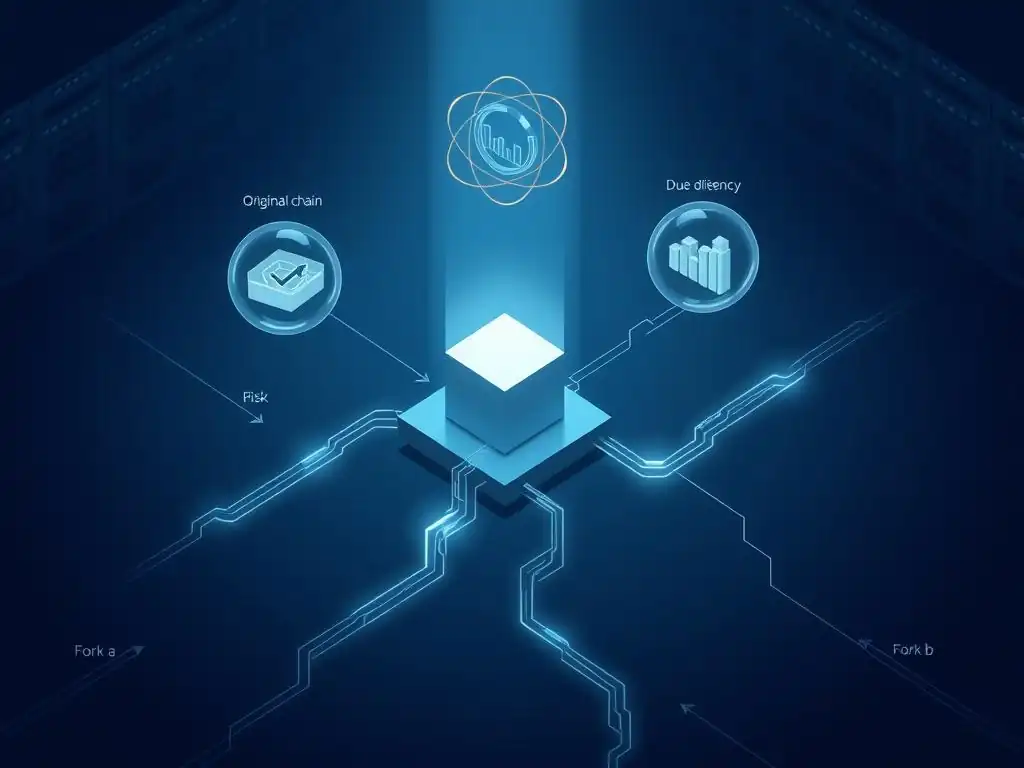
Risk Assessment Frameworks for DeFi Forks
To effectively conduct a DeFi forks risk assessment, utilizing established risk assessment frameworks is crucial. Frameworks like FAIR (Factor Analysis of Information Risk) or NIST Risk Management Framework can be adapted to the specific context of DeFi forks. These frameworks provide a structured approach to identifying, analyzing, and evaluating risks associated with forks. They typically involve steps such as risk identification, risk analysis (assessing likelihood and impact), risk evaluation (prioritizing risks), and risk treatment (developing mitigation strategies).
In the context of DeFi forks, risk identification would involve pinpointing potential vulnerabilities, liquidity fragmentation risks, governance challenges, and technical implementation issues. Risk analysis would then assess the probability of these risks materializing and the potential financial or operational impact. Risk evaluation helps prioritize which risks require the most immediate attention and resources. Finally, risk treatment involves developing strategies to mitigate, transfer, accept, or avoid identified risks. Utilizing a structured framework ensures a comprehensive and systematic approach to DeFi forks risk assessment, rather than relying on ad-hoc or incomplete evaluations.
Due Diligence Checklist for Evaluating DeFi Forks
A practical tool for DeFi forks risk assessment is a due diligence checklist. This checklist should encompass key areas of risk and provide a structured way to evaluate the potential risks associated with a specific fork. The checklist should include items such as:
- Smart Contract Security: Has the forked codebase undergone a thorough security audit by a reputable firm? Are the audit reports publicly available? Have identified vulnerabilities been addressed?
- Liquidity Analysis: What is the initial liquidity of the forked protocol? Is there a plan to incentivize liquidity migration or growth? What is the potential for liquidity fragmentation?
- Governance Assessment: What are the governance mechanisms of the forked protocol? Is governance decentralized and community-driven? Are there potential governance disputes or community conflicts?
- Team and Development: Who are the developers behind the fork? What is their track record and experience? Is the development team transparent and responsive?
- Technical Implementation: How complex is the fork implementation? Are there potential technical challenges or compatibility issues? Has the fork been thoroughly tested?
- Tokenomics: What are the tokenomics of the forked protocol? Are the token incentives aligned with the long-term success of the protocol? Are there potential tokenomic vulnerabilities?
This checklist serves as a guide for users and investors to systematically evaluate the risks associated with DeFi forks before engaging with them. It encourages a more informed and cautious approach to navigating the complex landscape of forked DeFi projects.
Monitoring On-Chain Data for Risk Signals in DeFi Forks
Monitoring on-chain data is a proactive strategy for identifying risk signals in DeFi forks and upgrades. Analyzing on-chain metrics can provide early warnings of potential problems or vulnerabilities. Key metrics to monitor include:
- Transaction Volume and Liquidity: A sudden drop in transaction volume or liquidity on a forked protocol could indicate a loss of user confidence or a potential exploit.
- Smart Contract Interactions: Unusual patterns of smart contract interactions, such as large withdrawals or unexpected function calls, could signal malicious activity or vulnerabilities being exploited.
- Gas Prices and Network Congestion: Spikes in gas prices or network congestion associated with a forked protocol might indicate increased activity due to an exploit or a popular new feature, requiring further investigation.
- Governance Activity: Monitoring governance proposals, voting patterns, and community discussions can provide insights into potential governance disputes or vulnerabilities in the governance mechanism.
- Token Price Volatility: Extreme price volatility of the forked protocol's token could be a sign of market manipulation, low liquidity, or underlying risks.
Tools like blockchain explorers, analytics dashboards, and on-chain monitoring services can be used to track these metrics in real-time. Setting up alerts for unusual activity can enable early detection of risk signals and allow for timely responses to mitigate potential harm. Proactive on-chain monitoring is an essential component of a robust DeFi forks risk assessment and risk management strategy.
DeFi Upgrade Risk Mitigation: Best Practices
Implementing Security Audits and Bug Bounty Programs
To mitigate risks associated with DeFi upgrades, implementing robust security audits and bug bounty programs is paramount. Security audits should be conducted by reputable, independent firms with expertise in smart contract security. These audits should be comprehensive, covering all code changes introduced by the upgrade, and should be performed before the upgrade is deployed to the mainnet. Audit reports should be made publicly available to enhance transparency and build user confidence.
Bug bounty programs incentivize ethical hackers and security researchers to identify and report vulnerabilities in the upgraded protocol. These programs offer rewards for discovering and responsibly disclosing bugs, providing an additional layer of security testing beyond formal audits. Bug bounty programs should be ongoing, not just limited to the upgrade deployment phase, to continuously monitor and improve the protocol's security posture. Combining thorough security audits with active bug bounty programs creates a strong defense against vulnerabilities and significantly reduces the risk of exploits in DeFi upgrades.
Decentralized Governance and Community Involvement
Decentralized governance and active community involvement are crucial for mitigating risks in DeFi upgrades. Ensuring that upgrade decisions are made through transparent and community-driven governance processes reduces the risk of centralized control and flawed decision-making. This involves empowering token holders to participate in upgrade proposals, voting, and discussions. Clear and well-documented governance mechanisms are essential, along with tools and platforms that facilitate community participation.
Active community involvement extends beyond governance voting. It includes open communication channels for developers, users, and community members to discuss upgrade proposals, raise concerns, and contribute to the upgrade process. Transparency in the upgrade process, including sharing development plans, audit reports, and testing results, builds trust and fosters a more resilient and secure DeFi ecosystem. By embracing decentralized governance and fostering active community involvement, DeFi protocols can mitigate risks associated with upgrades and ensure that changes are implemented in a way that benefits the entire community.
Staged Rollouts and Canary Testing for DeFi Upgrades
Staged rollouts and canary testing are best practices for mitigating risks during the deployment of DeFi upgrades. Instead of deploying a major upgrade to the entire protocol at once, a staged rollout involves gradually deploying the upgrade to a subset of the network or users. This allows for real-world testing in a limited environment, minimizing the impact of potential bugs or errors. If issues are detected during the staged rollout, they can be addressed before the upgrade is fully deployed.
Canary testing is a specific type of staged rollout where the upgrade is initially deployed to a small "canary" group of users or nodes. This canary group acts as an early warning system, allowing for the detection of issues in a live environment before they affect the broader user base.
After the canary testing phase, if no major issues are identified, the upgrade can be gradually rolled out to the rest of the network. Staged rollouts and canary testing provide a crucial safety net for DeFi upgrades, allowing for early detection and mitigation of risks before they can cause widespread disruption or financial losses.
Real-World Examples: DeFi Forks and Upgrades Case Studies
Case Study 1: Ethereum Classic Fork - Lessons Learned
The Ethereum Classic (ETC) fork, which occurred in 2016, provides valuable lessons for understanding DeFi forks risk assessment, even though it predates the DeFi boom. ETC forked from Ethereum (ETH) due to a disagreement over how to handle the DAO hack. This hard fork resulted in two separate blockchains, each with its own community and development path. One key lesson is the risk of community fragmentation and governance disputes leading to forks. The ETC fork highlighted how fundamental disagreements within a community can lead to a permanent split, impacting both the original and the forked chain.
Another lesson from the ETC fork is the importance of understanding the motivations and consequences of forks. While the ETC fork was driven by ethical and philosophical differences, DeFi forks are often driven by economic incentives, innovation, or governance disputes. Understanding these motivations is crucial for assessing the potential risks and long-term viability of a forked protocol.
The ETC fork also underscored the technical complexities of hard forks and the challenges of maintaining two separate blockchains. While not directly in DeFi, this historical event offers crucial insights into the dynamics and risks associated with blockchain forks that are relevant to DeFi forks risk assessment.
Case Study 2: Compound's Governance Upgrades - Risk Mitigation Strategies
Compound's governance upgrades offer a case study in successful risk mitigation strategies for DeFi protocol enhancements. Compound has implemented numerous governance upgrades to improve its lending protocol, add new features, and enhance security. A key strategy employed by Compound is its robust decentralized governance process. Upgrade proposals are thoroughly vetted by the community through a transparent voting process, ensuring community consensus and mitigating the risk of unilateral or flawed decisions.
Compound also prioritizes security audits for all significant upgrades. Independent security firms are engaged to audit code changes, and audit reports are publicly disclosed. This commitment to security audits enhances user confidence and reduces the risk of vulnerabilities being introduced during upgrades.
Furthermore, Compound has demonstrated a proactive approach to bug bounty programs, incentivizing the community to identify and report potential issues. Compound's case highlights the effectiveness of combining decentralized governance, security audits, and bug bounty programs as best practices for mitigating risks associated with DeFi upgrades. Their approach serves as a model for other DeFi protocols seeking to implement upgrades safely and responsibly.
Analyzing the Impact of Forks and Upgrades on DeFi Ecosystem Stability
Forks and upgrades, while essential for DeFi innovation, can have a mixed impact on the overall stability of the DeFi ecosystem. Well-executed upgrades that enhance security, efficiency, and functionality generally contribute to ecosystem stability by improving the robustness and usability of DeFi protocols. However, poorly managed forks or upgrades, especially those resulting in vulnerabilities, community fragmentation, or liquidity disruption, can negatively impact ecosystem stability. The frequency and nature of forks and upgrades can also influence stability. Too many disruptive forks or poorly tested upgrades can create uncertainty and erode user confidence, potentially destabilizing the ecosystem.
Conversely, a healthy pace of well-managed upgrades can foster innovation and growth, strengthening the DeFi ecosystem over time. The key lies in balancing the need for innovation with the imperative of stability and security. Protocols that prioritize rigorous risk assessment, thorough testing, decentralized governance, and transparent communication are more likely to contribute to a stable and thriving DeFi ecosystem. Analyzing the historical impact of forks and upgrades on DeFi ecosystem metrics, such as total value locked (TVL), user adoption, and market volatility, can provide valuable insights into the complex interplay between protocol evolution and ecosystem stability.
Future Trends in DeFi Forks and Upgrades
The Evolution of DeFi Governance Models
DeFi governance models are continuously evolving, and future trends will likely focus on enhancing decentralization, efficiency, and resilience in upgrade processes. One trend is the increasing adoption of more sophisticated governance mechanisms, such as quadratic voting or futarchy, aimed at improving the quality of decision-making and mitigating the influence of whales or special interests. Layered governance models, where different aspects of protocol governance are handled by different mechanisms or stakeholders, may also become more prevalent.
Another trend is the integration of on-chain governance tools directly into DeFi protocols, streamlining the upgrade process and reducing reliance on off-chain signaling or coordination. Decentralized autonomous organizations (DAOs) are playing an increasingly important role in DeFi governance, and their evolution will likely shape future governance models. Expect to see further experimentation with governance tokens, voting mechanisms, and community participation models as DeFi protocols strive for more robust and truly decentralized governance of forks and upgrades.
Emerging Technologies for Secure and Efficient DeFi Upgrades
Emerging technologies are being explored to enhance the security and efficiency of DeFi upgrades. Formal verification techniques, which use mathematical proofs to verify the correctness of smart contract code, could play a larger role in ensuring the security of upgraded protocols. Advanced testing methodologies, such as fuzzing and symbolic execution, can help uncover subtle vulnerabilities that might be missed by traditional audits. Layer-2 scaling solutions and modular blockchain architectures may also facilitate more efficient and less risky upgrades by allowing for isolated testing and deployment of protocol changes.
Furthermore, advancements in smart contract development languages and tools are making it easier to write secure and auditable code, reducing the likelihood of introducing vulnerabilities during upgrades. Research into upgradeable smart contract patterns and secure code migration techniques is ongoing, aiming to simplify and de-risk the upgrade process. These technological advancements, combined with improved development practices and security protocols, will contribute to making DeFi upgrades more secure, efficient, and less prone to risks in the future.
The Role of Regulation in Shaping the Future of DeFi
Regulation is poised to play an increasingly significant role in shaping the future of DeFi, including how forks and upgrades are managed. As DeFi gains mainstream adoption, regulatory scrutiny is intensifying, and policymakers are grappling with how to regulate this nascent industry. Regulations may impact DeFi forks and upgrades in various ways, such as requiring stricter security standards for protocols, mandating transparency in governance processes, or imposing liability for protocol vulnerabilities or exploits.
Regulatory frameworks could also influence the types of forks and upgrades that are permissible or encouraged. For example, regulators might favor soft forks over hard forks due to their less disruptive nature. Compliance with regulations may become a key factor in the design and implementation of DeFi upgrades, potentially leading to more standardized and auditable upgrade processes. The evolving regulatory landscape will likely necessitate closer collaboration between DeFi developers, legal experts, and policymakers to ensure that innovation in DeFi can continue while addressing regulatory concerns and protecting users from risks associated with forks and upgrades.
Emphasizing the Importance of Ongoing Risk Assessment in DeFi
Navigating the complex landscape of DeFi forks and upgrades necessitates a continuous and diligent approach to risk assessment. As this exploration has highlighted, forks and upgrades, while vital for DeFi's evolution and innovation, are inherently intertwined with various risks. These risks span from smart contract vulnerabilities and liquidity fragmentation to governance disputes and technical implementation challenges. A one-time risk assessment is insufficient; the dynamic nature of DeFi requires ongoing monitoring, evaluation, and adaptation of risk management strategies.
The DeFi ecosystem is in constant flux, with new protocols, technologies, and attack vectors emerging regularly. Therefore, DeFi participants – users, developers, and investors alike – must cultivate a culture of continuous risk awareness and proactive risk mitigation. This involves staying informed about protocol upgrades, understanding the associated risks, and utilizing available risk assessment tools and frameworks. Ongoing risk assessment is not merely a best practice; it is a fundamental prerequisite for sustainable growth, user safety, and the long-term viability of decentralized finance.
Promoting Responsible Innovation and Development in Decentralized Finance
The future of DeFi hinges on responsible innovation and development practices, particularly in the context of forks and upgrades. While pushing the boundaries of financial technology is essential, it must be balanced with a strong commitment to security, transparency, and user protection. Responsible innovation in DeFi means prioritizing rigorous security audits, thorough testing, and decentralized governance in all protocol upgrades and forks. It also entails clear and transparent communication with the community about proposed changes, potential risks, and mitigation strategies.
Development practices should emphasize modularity, auditability, and upgradeability of smart contracts, making future upgrades less risky and more efficient. Collaboration within the DeFi community, sharing best practices, and learning from both successes and failures are crucial for fostering responsible innovation. Ultimately, promoting responsible innovation and development in decentralized finance is not just about mitigating risks; it is about building a more robust, secure, and sustainable financial system that benefits all participants. By embracing a culture of responsibility and prioritizing user safety, DeFi can realize its transformative potential and reshape the future of finance.
Frequently Asked Questions
What are DeFi forks, and why are they relevant to risk assessment?
DeFi forks are basically copies of existing decentralized finance protocols. Understanding them is crucial for risk assessment because they can introduce new vulnerabilities and financial risks to users.
What specific risks should users be aware of when participating in DeFi forks?
Key risks include smart contract vulnerabilities, liquidity fragmentation, and potential for rug pulls. Thorough due diligence is essential to mitigate these risks.
How does the regulatory landscape impact the risk assessment of DeFi forks?
The regulatory environment surrounding DeFi is still evolving. Lack of clear regulations adds uncertainty and risk, potentially leading to future compliance issues for DeFi fork projects and their users.
What due diligence steps should be taken before investing in or using a DeFi fork?
Users should scrutinize the fork's codebase, the team's reputation, and the economic incentives at play. Audits by reputable firms are also a key indicator of security.
How can users stay informed about potential risks associated with DeFi forks and upgrades?
Staying informed involves following industry news, participating in community forums, and utilizing risk assessment tools specific to the DeFi space.
Final Reflection: Embracing Evolution, Mitigating Risk
The intricate landscape of Decentralized Finance (DeFi) is in constant flux, and as we've explored, the evolution through forks and upgrades presents both immense opportunities and significant risks. Understanding these risks, as we've outlined in our DeFi forks risk assessment, is no longer a luxury, but a necessity for anyone participating in this rapidly evolving ecosystem. The potential for innovation is undeniable, but without a clear-eyed understanding of the inherent dangers, we risk undermining the very foundations of trust and transparency that DeFi seeks to establish.
The continuous cycle of forking and upgrading profoundly shapes the cultural and social landscape of DeFi. It's a testament to the community's drive for improvement and adaptation, but also a reminder of the inherent instability that comes with such rapid change. The need for robust risk assessment frameworks, as we've discussed, is paramount. As Vitalik Buterin wisely stated: The goal of Ethereum is not to be a platform that is perfect, but to be a platform that is good enough, and that is constantly improving.
This sentiment perfectly encapsulates the spirit of DeFi, but also underscores the importance of vigilance and proactive risk management.
Now, as you navigate the exciting, yet often turbulent, waters of DeFi, remember the lessons we've explored. Don't be swayed by the allure of quick gains without first conducting a thorough DeFi forks risk assessment. Embrace the spirit of innovation, but temper it with a healthy dose of skepticism and a commitment to understanding the potential pitfalls. The future of DeFi depends on informed participation, and your diligence is crucial in shaping a more secure and sustainable ecosystem for all.
Dive Deeper: Chart Your Course in the Evolving DeFi Landscape!
Thanks for exploring the intricate world of DeFi forks and upgrades with Blockchain Trends. We hope you've gained valuable insights into navigating the associated risks and opportunities. Are you ready to take control and strengthen your understanding?
Here are a few steps you can take right now:
- Actively research upcoming forks and upgrades in your favorite DeFi protocols. Staying informed is your best defense.
- Share your insights! Join the discussion on our Blockchain Trends forum and exchange ideas with fellow DeFi enthusiasts. Let's learn together!
- Consider setting up a test account on a separate wallet to experiment with new features and protocols before committing real assets.
What steps will you take today to better understand and manage the risks associated with DeFi forks and upgrades? Share your plan in the comments below!
Leave a Reply