
Stablecoin Wrapped Assets: Expanding DeFi Interoperability


Welcome to Blockchain Trends, your compass in the rapidly evolving world of decentralized technology. Delve into the innovative landscape beyond cryptocurrencies, where blockchain is reshaping industries and redefining trust. Curious about how to unlock the full potential of decentralized finance? Our latest exploration dives deep into DeFi stablecoin interoperability benefits, revealing how wrapped assets are paving the way for a more connected and efficient financial future. Prepare to discover the strategic advantages and transformative possibilities that await!
Stablecoin Wrapped Assets: Expanding DeFi Interoperability
- Introduction: Unlocking DeFi Growth with Stablecoin Interoperability
- What are Wrapped Stablecoins? A Deep Dive
- Benefits of DeFi Stablecoin Interoperability
- The Technology Behind Stablecoin Wrapping
- Popular Wrapped Stablecoin Implementations
- Risks and Challenges of Wrapped Stablecoins
- The Future of Stablecoin Interoperability in DeFi
- Case Studies: Real-World Examples of DeFi Stablecoin Interoperability
- Conclusion: Leveraging Stablecoin Wrapped Assets for a More Connected DeFi Ecosystem
-
Frequently Asked Questions
- What are wrapped assets in the context of DeFi stablecoin interoperability?
- How does wrapping stablecoins contribute to DeFi stablecoin interoperability benefits?
- What are the potential risks associated with using wrapped stablecoins?
- What are some examples of DeFi platforms that benefit from the use of wrapped stablecoins?
- What is the future outlook for DeFi stablecoin interoperability and the use of wrapped assets?
- Final Reflection: Embracing the Borderless Future of Finance
- Unlock the Power of DeFi: Start Exploring Now!
Introduction: Unlocking DeFi Growth with Stablecoin Interoperability
Understanding the Need for Cross-Chain Stablecoin Solutions
The decentralized finance (DeFi) landscape is characterized by a multitude of independent blockchain networks, each hosting its own vibrant ecosystem of protocols and applications. While this diversity fosters innovation, it also presents a significant challenge: fragmentation. Liquidity and user activity are often siloed within individual chains, limiting the potential for composability and network effects that are crucial for DeFi's growth.
Stablecoins, designed to maintain a stable value typically pegged to fiat currencies like the US dollar, are fundamental building blocks in DeFi, used for trading, lending, borrowing, and yield farming. However, the lack of seamless interoperability between stablecoins across different blockchains hinders their utility and restricts the overall efficiency of the DeFi space. Imagine a user holding USDC on Ethereum wanting to participate in a promising yield farming opportunity on Solana.
Without cross-chain solutions, this user would face cumbersome processes involving centralized exchanges or complex bridging mechanisms, often incurring high fees and delays. This friction inhibits the free flow of capital and limits the potential for users to access the best opportunities across the entire DeFi ecosystem.
The need for cross-chain stablecoin solutions stems directly from this fragmentation. The current DeFi infrastructure operates much like isolated islands, preventing the seamless transfer of value and information. For DeFi to reach its full potential and truly challenge traditional finance, it must evolve towards a more interconnected and interoperable system.
Stablecoins, as the primary medium of exchange and store of value in DeFi, are central to this evolution. Enabling stablecoins to move freely and efficiently between different blockchains is not just about convenience; it is about unlocking deeper liquidity, fostering greater capital efficiency, and ultimately, paving the way for a more unified and robust decentralized financial system. Solutions that facilitate cross-chain stablecoin transfers, such as wrapped assets, are therefore crucial for breaking down these silos and realizing the vision of a truly interconnected DeFi future.
The Role of Wrapped Assets in Bridging DeFi Ecosystems
Wrapped assets emerge as a pivotal solution to address the challenge of DeFi interoperability, particularly for stablecoins. In essence, a wrapped asset is a tokenized representation of another asset from a different blockchain, allowing it to be used on a new chain while maintaining a 1:1 value peg to the original asset. Consider Bitcoin (BTC), the largest cryptocurrency, which was initially native to its own blockchain. Wrapped Bitcoin (WBTC) on Ethereum allows users to utilize BTC within the Ethereum DeFi ecosystem.
This concept extends seamlessly to stablecoins. For example, if a user holds USDT on the Tron network and wants to use it on Ethereum, they can wrap their Tron-based USDT to create an equivalent amount of wrapped USDT (often denoted as USDT.e or similar) on Ethereum. This wrapped version then functions as a native Ethereum asset, fully compatible with Ethereum-based DeFi protocols.
The role of wrapped assets in bridging DeFi ecosystems is multifaceted. Firstly, they provide a mechanism for transferring value between chains without relying on centralized intermediaries or complex exchange processes. Secondly, they unlock liquidity that would otherwise remain isolated within individual blockchains. By bringing stablecoins and other assets from various chains onto a single platform, wrapped assets contribute to a more unified and liquid DeFi environment.
Thirdly, they enable cross-chain composability. Protocols and applications on one chain can now interact with and utilize assets originating from other chains through their wrapped representations. This opens up new possibilities for innovative DeFi products and services that span multiple blockchains, enhancing the overall functionality and user experience of the decentralized finance space. Wrapped assets are not just about moving assets; they are about building bridges that connect disparate DeFi ecosystems and foster a more interconnected and efficient financial future.
What are Wrapped Stablecoins? A Deep Dive
Defining Wrapped Stablecoins and Their Functionality
Wrapped stablecoins are tokenized versions of existing stablecoins that operate on a blockchain network different from the stablecoin's native chain. They are designed to mirror the value of the original stablecoin, typically at a 1:1 ratio. For example, if you wrap one USDT (Tether) originally issued on the Ethereum blockchain and bridge it to Solana, you would receive one wrapped USDT on Solana, which is intended to maintain the same value as the original USDT.
The key functionality of wrapped stablecoins lies in their ability to extend the reach and usability of stablecoins across multiple blockchain ecosystems. Without wrapping, a stablecoin issued on one blockchain is generally confined to that network's DeFi environment. Wrapped stablecoins break down these barriers, allowing users to leverage their stablecoin holdings in a wider range of DeFi applications and across different chains.
The functionality of wrapped stablecoins relies on a process of locking the original stablecoin on its native chain and issuing a representative wrapped token on the target chain. This process ensures that the wrapped token is always backed by an equivalent amount of the original stablecoin held in reserve. Think of it as creating a digital "receipt" for the original stablecoin, which can be used on a different blockchain.
This receipt, the wrapped stablecoin, provides access to the value of the underlying asset without actually moving the original asset itself. This mechanism is crucial for maintaining the peg and ensuring that users can always redeem their wrapped stablecoins for the underlying asset if needed.
The functionality also extends to the reverse process – unwrapping – which allows users to redeem their wrapped stablecoins and retrieve the original stablecoin on its native chain. This bi-directional functionality is essential for the usability and credibility of wrapped stablecoins within the DeFi ecosystem.
How Wrapped Stablecoins Facilitate Cross-Chain Transfers
Wrapped stablecoins facilitate cross-chain transfers through a process that involves locking, minting, burning, and unlocking mechanisms. When a user wants to transfer a stablecoin from its native chain (Chain A) to another chain (Chain B), they initiate a "wrapping" process. This typically involves depositing their stablecoin into a smart contract or with a custodian on Chain A. Upon verification of the deposit, an equivalent amount of wrapped stablecoin is "minted" on Chain B.
This minted wrapped stablecoin is then transferred to the user's address on Chain B. Effectively, the original stablecoins are locked on Chain A, and a corresponding representation of that value is created on Chain B. This process avoids the complexities and potential risks associated with directly transferring assets across different blockchain architectures.
To move the stablecoin back from Chain B to Chain A, a reverse process called "unwrapping" is employed. The user initiates a request to unwrap their wrapped stablecoin on Chain B. This typically involves burning or destroying the wrapped stablecoins on Chain B, effectively removing them from circulation.
Upon confirmation of the burn, the equivalent amount of original stablecoin is then "unlocked" and released back to the user from the reserve on Chain A. This burning and unlocking mechanism ensures that the total supply of stablecoins across both chains remains consistent and that the 1:1 peg between the wrapped and original stablecoin is maintained. The entire process, from wrapping to unwrapping, is designed to be relatively seamless for the user, abstracting away the underlying technical complexities of cross-chain communication and asset management.
The Mechanics of Wrapping and Unwrapping Stablecoins
The mechanics of wrapping and unwrapping stablecoins are crucial for understanding how these assets function and maintain their peg. The wrapping process generally involves a few key steps. First, the user initiates a wrap request through a designated protocol or platform.
This usually involves specifying the amount of stablecoin to be wrapped, the target chain, and the recipient address on the target chain. Second, the user deposits the specified amount of stablecoin into a smart contract or a custodial wallet address on the original chain. This deposit acts as collateral, backing the wrapped stablecoins that will be issued.
Third, upon confirmation of the deposit transaction on the original chain, the wrapping protocol verifies the transaction. Fourth, once verified, the protocol triggers the minting of an equivalent amount of wrapped stablecoin on the target chain. These newly minted wrapped stablecoins are then sent to the recipient address provided by the user on the target chain.
The unwrapping process is essentially the reverse of wrapping. First, the user initiates an unwrap request through the protocol, specifying the amount of wrapped stablecoin to be unwrapped and the recipient address on the original chain. Second, the user submits their wrapped stablecoins to the protocol on the target chain.
Third, the protocol verifies the unwrap request and initiates the burning or destruction of the submitted wrapped stablecoins on the target chain. Fourth, upon confirmation of the burn, the protocol triggers the release of the equivalent amount of original stablecoin from the collateral reserve on the original chain. These original stablecoins are then sent to the recipient address provided by the user on the original chain.
The entire process is typically facilitated by smart contracts, which automate the locking, minting, burning, and unlocking steps, ensuring transparency and security. However, the specific implementation details can vary depending on the particular wrapping protocol and whether it employs a custodial or non-custodial approach.
Benefits of DeFi Stablecoin Interoperability
Enhanced Liquidity Across Decentralized Exchanges (DEXs)
DeFi stablecoin interoperability significantly enhances liquidity across decentralized exchanges (DEXs). Liquidity in DeFi is often fragmented across different blockchains. For example, a DEX on Ethereum might have deep liquidity for ETH-USDC pairs, while a DEX on Solana might have liquidity concentrated in SOL-USDC pairs. However, the overall liquidity for USDC across the entire DeFi ecosystem remains segmented.
Wrapped stablecoins bridge this gap by allowing stablecoins to move freely between chains, effectively pooling liquidity across different DEXs. Imagine a scenario where a trader wants to execute a large trade involving USDC on a DEX with relatively low liquidity on a specific chain. With stablecoin interoperability, the trader can access wrapped USDC from other chains, injecting liquidity into the DEX and facilitating the trade with reduced slippage and improved price execution.
This enhanced liquidity translates to several benefits for DEX users and the broader DeFi ecosystem. Firstly, traders experience tighter spreads and reduced price slippage, especially for larger trades. Secondly, increased liquidity attracts more users and trading volume to DEXs, fostering a more vibrant and efficient trading environment. Thirdly, it enables the development of more complex and sophisticated DeFi strategies that rely on cross-chain liquidity aggregation.
For instance, yield aggregators can optimize yields across different chains by seamlessly moving stablecoins between platforms with the highest returns. According to data from DeFiLlama, the total value locked (TVL) in cross-chain bridges has grown significantly in recent years, reaching billions of dollars. This growth underscores the increasing importance of interoperability for unlocking liquidity and driving the expansion of the DeFi space. Enhanced liquidity through stablecoin interoperability is a cornerstone for building a more robust and efficient decentralized financial system.
Increased Capital Efficiency for DeFi Users
DeFi stablecoin interoperability leads to increased capital efficiency for DeFi users by allowing them to utilize their stablecoin holdings across a wider range of opportunities and platforms. In a fragmented DeFi landscape, users are often forced to hold stablecoins on multiple chains to participate in different ecosystems, leading to idle capital and reduced efficiency.
For example, a user might need to hold USDC on Ethereum to participate in Ethereum DeFi protocols and also hold USDT on Binance Smart Chain to access opportunities on that chain. This compartmentalization of capital limits the user's ability to optimize their asset allocation and potentially miss out on higher-yielding opportunities available on other chains.
Wrapped stablecoins address this inefficiency by enabling users to move their stablecoins to the chains where they can be deployed most effectively. Users can consolidate their stablecoin holdings and then bridge them to the specific chains where they wish to participate in yield farming, lending, borrowing, or other DeFi activities.
This flexibility maximizes the utilization of capital and allows users to pursue the most attractive opportunities across the entire DeFi ecosystem, regardless of the chain on which they originate. Consider a user who primarily uses the Avalanche network but identifies a lucrative yield farming opportunity on Fantom.
With wrapped stablecoins, they can easily bridge their stablecoins from Avalanche to Fantom and participate in the yield farm, increasing their capital efficiency and potential returns. This enhanced capital efficiency not only benefits individual users but also contributes to a more efficient allocation of capital within the broader DeFi ecosystem, driving overall growth and innovation.
Expanding Stablecoin Utility and Use Cases in DeFi
DeFi stablecoin interoperability significantly expands the utility and use cases of stablecoins within the decentralized finance ecosystem. By enabling stablecoins to move freely across different blockchains, wrapped stablecoins unlock a wider range of applications and opportunities for stablecoin holders. Previously, the utility of a stablecoin was largely confined to the ecosystem of its native blockchain.
For instance, DAI on Ethereum was primarily used within the Ethereum DeFi ecosystem. However, with wrapped DAI available on chains like Polygon or Avalanche, DAI's utility expands to these ecosystems as well, allowing users on those chains to access the benefits of DAI, such as its decentralized and algorithmic nature.
This expanded utility manifests in several ways. Firstly, wrapped stablecoins increase the accessibility of stablecoins to users on different chains. Users who prefer to operate on specific chains can now utilize their preferred stablecoins, regardless of where those stablecoins were originally issued.
Secondly, it fosters greater composability within DeFi. Protocols and applications on different chains can now integrate with and utilize a wider variety of stablecoins through their wrapped representations. This leads to more diverse and innovative DeFi products and services.
Thirdly, it strengthens the role of stablecoins as the fundamental unit of account and medium of exchange within DeFi. As stablecoins become more universally accessible and usable across different chains, their importance in facilitating DeFi transactions and value transfer increases. For example, wrapped stablecoins can be used in cross-chain lending platforms, cross-chain DEX aggregators, and cross-chain yield optimization strategies, further solidifying their role as essential building blocks in the DeFi space.
DeFi Stablecoin Interoperability Benefits: A Summary
These benefits can be categorized into enhanced liquidity, increased capital efficiency, and expanded utility. Enhanced liquidity arises from the pooling of stablecoin liquidity across different decentralized exchanges (DEXs), leading to tighter spreads, reduced slippage, and a more efficient trading environment. This benefits traders and attracts more volume to DEXs, fostering a more robust DeFi ecosystem. Increased capital efficiency stems from the ability of users to move their stablecoins to the chains where they can be deployed most effectively, maximizing asset utilization and potential returns. This flexibility allows users to pursue the best opportunities across the entire DeFi landscape, regardless of chain limitations.
Expanded utility is achieved by making stablecoins accessible and usable across a wider range of blockchains and DeFi applications. Wrapped stablecoins unlock new use cases and opportunities for stablecoin holders, fostering greater composability and innovation within DeFi. By breaking down the silos between different blockchain ecosystems, stablecoin interoperability paves the way for a more connected, efficient, and user-friendly DeFi environment.
These collective benefits contribute to the maturation and mainstream adoption of DeFi, bringing it closer to realizing its potential as a truly global and accessible financial system. The ability to seamlessly transfer and utilize stablecoins across chains is a critical step towards achieving a more unified and powerful decentralized financial future.
The Technology Behind Stablecoin Wrapping
Custodial vs. Non-Custodial Wrapping Solutions
The technology behind stablecoin wrapping encompasses both custodial and non-custodial solutions, each with distinct trade-offs in terms of security, decentralization, and user experience. Custodial wrapping solutions rely on a centralized intermediary, or custodian, to manage the underlying stablecoins and mint the wrapped versions. In a custodial model, users deposit their stablecoins with the custodian, who then issues the equivalent amount of wrapped stablecoins on the target chain.
The custodian holds the private keys to the deposited stablecoins, acting as a trusted third party responsible for securing the assets and facilitating the wrapping and unwrapping processes. Wrapped Bitcoin (WBTC) on Ethereum, initially launched by BitGo, is a prominent example of a custodial wrapping solution. While custodial solutions can offer ease of use and potentially faster transaction speeds, they introduce counterparty risk, as users must trust the custodian to securely manage their assets.
Non-custodial wrapping solutions, on the other hand, aim to minimize or eliminate reliance on centralized intermediaries. These solutions typically utilize smart contracts and decentralized protocols to automate the wrapping and unwrapping processes. In a non-custodial model, users lock their stablecoins into a smart contract on the original chain.
This smart contract then verifies the deposit and triggers the minting of wrapped stablecoins on the target chain, often through a decentralized network of validators or relayers. Ren Protocol and tBTC are examples of projects that have pursued non-custodial wrapping approaches. Non-custodial solutions generally offer greater transparency and security compared to custodial options, as they reduce reliance on trusted third parties and leverage the inherent security of blockchain technology and smart contracts.
However, non-custodial solutions can sometimes be more complex to implement and may involve trade-offs in terms of transaction speed or user experience compared to custodial alternatives. The choice between custodial and non-custodial wrapping solutions often depends on the specific priorities and risk tolerance of users and protocols.
Smart Contracts and the Wrapping Process
Smart contracts are fundamental to the wrapping process, particularly in non-custodial and even some custodial implementations. Smart contracts are self-executing agreements written in code and deployed on a blockchain. They automate and enforce the terms of an agreement without the need for intermediaries.
In the context of stablecoin wrapping, smart contracts play a crucial role in managing the locking, minting, burning, and unlocking of stablecoins and their wrapped representations. A typical wrapping process involving smart contracts begins with a user initiating a wrap request through a decentralized application (dApp) that interacts with the relevant smart contracts. The dApp guides the user through the process of depositing their stablecoins into a designated smart contract on the original chain.
This smart contract, often referred to as a "vault" or "bridge" contract, is programmed to securely hold the deposited stablecoins as collateral. Upon receiving confirmation of the deposit transaction, the smart contract triggers a series of actions. It may emit an event signaling a successful deposit, which is then observed by a network of relayers or oracles.
These relayers or oracles verify the event and relay the information to a smart contract on the target chain. The smart contract on the target chain, upon receiving verification, then mints the corresponding amount of wrapped stablecoin and transfers it to the user's address on the target chain.
Similarly, for unwrapping, smart contracts on both chains coordinate the burning of wrapped stablecoins and the unlocking of the original stablecoins held in the vault contract. Smart contracts ensure that the wrapping and unwrapping processes are transparent, auditable, and executed according to pre-defined rules, minimizing the need for trust in intermediaries and enhancing the overall security and reliability of wrapped stablecoin protocols.
Security Considerations for Wrapped Stablecoin Protocols
Security is paramount for wrapped stablecoin protocols due to the significant value locked within them and the potential for vulnerabilities to be exploited. Several security considerations are crucial for ensuring the robustness and reliability of these protocols. Smart contract vulnerabilities are a primary concern.
The smart contracts that govern the wrapping and unwrapping processes must be rigorously audited by independent security firms to identify and mitigate potential bugs, vulnerabilities, or exploits. A single vulnerability in a smart contract could lead to significant financial losses for users and damage the reputation of the protocol. Therefore, comprehensive security audits and ongoing monitoring are essential.
Custodial risk is another critical consideration, especially for custodial wrapping solutions. Users relying on custodians must trust that the custodian will securely manage the deposited stablecoins and not engage in fraudulent or negligent behavior. Custodial solutions should implement robust security measures, including cold storage of private keys, multi-signature wallets, and regular security audits, to minimize the risk of theft or loss of funds.
Decentralized and non-custodial solutions aim to mitigate custodial risk by minimizing reliance on trusted third parties, but they introduce their own set of security considerations. These may include risks associated with the decentralized network of validators or relayers, as well as the complexity of the smart contract logic.
Furthermore, bridge protocols that facilitate cross-chain communication can also be vulnerable to attacks, as highlighted by several high-profile bridge exploits in the DeFi space. Therefore, robust security practices, including thorough smart contract audits, proactive vulnerability monitoring, and well-designed protocol architecture, are crucial for ensuring the long-term security and viability of wrapped stablecoin protocols.
Popular Wrapped Stablecoin Implementations
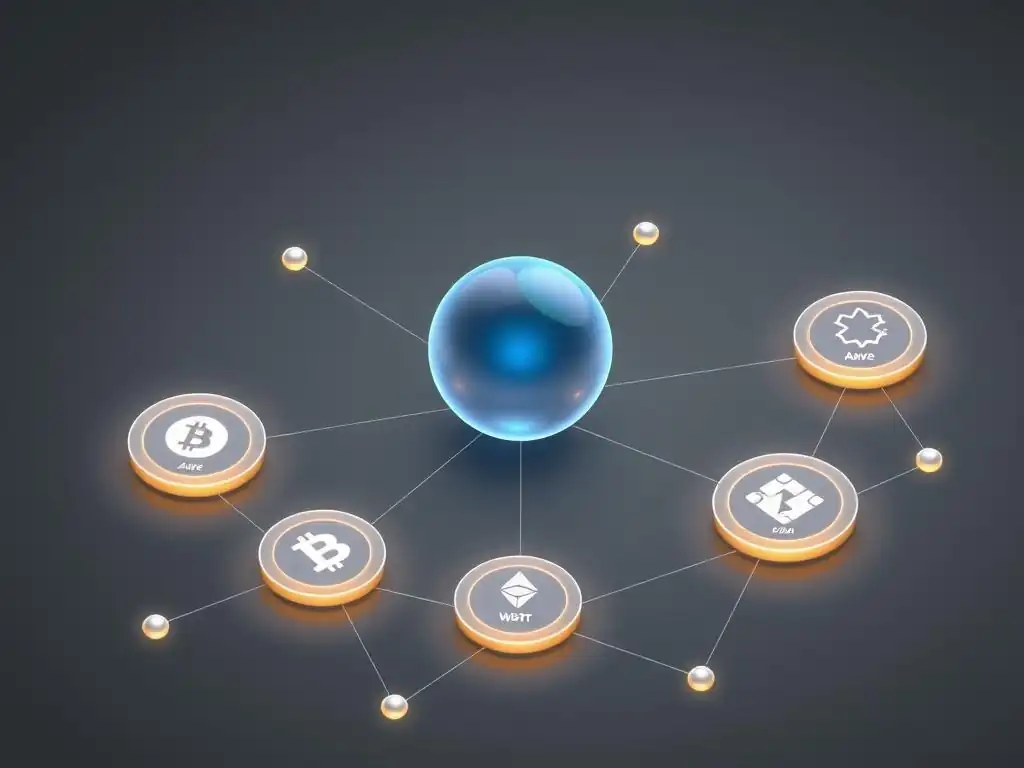
Wrapped Bitcoin (WBTC) on Ethereum: An Early Example
Wrapped Bitcoin (WBTC) on Ethereum stands as a pioneering example of asset wrapping in DeFi and provides valuable insights into the mechanics and impact of wrapped assets, including stablecoins. Launched in early 2019, WBTC was designed to bring Bitcoin's liquidity and value to the Ethereum ecosystem, enabling Bitcoin holders to participate in Ethereum-based DeFi applications. WBTC is a custodial wrapped asset, initially managed by BitGo, a cryptocurrency custodian.
The process of minting WBTC involves users depositing BTC with BitGo, who then mints an equivalent amount of WBTC on Ethereum. WBTC is backed 1:1 by BTC held in custody, with proof of reserves publicly auditable on the Bitcoin blockchain.
WBTC quickly gained traction within the Ethereum DeFi ecosystem, becoming a widely used asset in lending protocols, DEXs, and yield farming opportunities. Its success demonstrated the demand for cross-chain asset interoperability and paved the way for the development of wrapped stablecoins and other wrapped assets. As of late 2023, WBTC remains one of the most prominent wrapped assets in DeFi, with billions of dollars in market capitalization and significant integration across various Ethereum DeFi protocols.
According to data from wBTC.network, there are over 200,000 WBTC in circulation, representing a substantial amount of Bitcoin locked within the Ethereum ecosystem. WBTC's early success highlighted the potential of wrapped assets to unlock liquidity, enhance capital efficiency, and expand the utility of assets across different blockchain networks, setting a precedent for the subsequent development and adoption of wrapped stablecoins.
Ren Protocol (REN): Cross-Chain Asset Transfers
Ren Protocol (REN) represents a different approach to cross-chain asset transfers, focusing on a more decentralized and permissionless model compared to custodial solutions like WBTC. Ren Protocol is an open-source protocol designed to enable the private and permissionless transfer of value between blockchains. It utilizes a network of decentralized nodes, known as Darknodes, to facilitate the wrapping and unwrapping of assets across chains.
Unlike WBTC, which relies on a centralized custodian, Ren Protocol aims to create a more trustless and censorship-resistant cross-chain bridge. Users can use Ren Protocol to wrap various assets, including Bitcoin, Bitcoin Cash, and Zcash, and transfer them to other blockchains like Ethereum, Solana, and Binance Smart Chain.
The Ren Protocol operates through a network of Darknodes that lock and unlock assets on their native chains and mint and burn wrapped representations on other chains. These Darknodes are incentivized to act honestly and securely through a bond requirement and slashing mechanism. Ren Protocol emphasizes privacy and security in its cross-chain transfers, utilizing secure multi-party computation (sMPC) to ensure that the private keys controlling the locked assets are never revealed to any single party.
While Ren Protocol offers a more decentralized alternative to custodial wrapping solutions, it also introduces its own complexities and potential risks associated with the decentralized network of Darknodes and the cryptographic security mechanisms employed. Despite these challenges, Ren Protocol has played a significant role in advancing the development of decentralized cross-chain infrastructure and providing a viable option for users seeking non-custodial asset wrapping solutions.
Comparing Different Approaches to Stablecoin Wrapping
Comparing different approaches to stablecoin wrapping reveals a spectrum of solutions ranging from custodial to non-custodial, each with its own set of advantages and disadvantages. Custodial solutions, exemplified by WBTC (though initially for Bitcoin, the principles apply to stablecoins), offer simplicity and potentially faster transaction speeds. They can be easier to integrate into existing DeFi platforms and may provide a more user-friendly experience for less technically savvy users.
However, custodial solutions introduce counterparty risk, requiring users to trust the custodian to securely manage their assets. The security and reputation of the custodian are crucial factors in evaluating custodial wrapping solutions.
Non-custodial solutions, such as those envisioned by Ren Protocol and other decentralized bridge protocols, prioritize decentralization and trustlessness. They aim to minimize or eliminate reliance on centralized intermediaries by utilizing smart contracts and decentralized networks to manage the wrapping and unwrapping processes. Non-custodial solutions generally offer greater transparency and security from a counterparty risk perspective.
However, they can be more complex to implement, may involve higher gas fees or slower transaction times, and may require a more technically proficient user base. Furthermore, the security of non-custodial solutions depends heavily on the robustness of the smart contracts and the security of the decentralized network facilitating the cross-chain transfers.
The optimal approach to stablecoin wrapping often depends on the specific use case, the risk tolerance of users, and the desired balance between security, decentralization, user experience, and cost. As the DeFi space matures, we are likely to see a continued evolution and diversification of stablecoin wrapping solutions, catering to different needs and preferences within the ecosystem.
Risks and Challenges of Wrapped Stablecoins
Smart Contract Vulnerabilities and Security Audits
Smart contract vulnerabilities represent a significant risk for wrapped stablecoin protocols. As the core technology underpinning these protocols, smart contracts manage the locking, minting, burning, and unlocking of stablecoins. Any vulnerabilities in these contracts can be exploited by malicious actors, potentially leading to the theft of locked assets or the disruption of the protocol's functionality.
The complexity of smart contract code, particularly in cross-chain bridge protocols, increases the potential for bugs and vulnerabilities to be introduced. Even seemingly minor flaws can have catastrophic consequences given the substantial value often locked within these protocols. Several high-profile exploits in DeFi, including bridge hacks, have underscored the importance of robust smart contract security.
Security audits are therefore paramount for mitigating the risk of smart contract vulnerabilities. Reputable and independent security firms should conduct thorough audits of the smart contracts underlying wrapped stablecoin protocols. These audits involve a comprehensive review of the code to identify potential vulnerabilities, logic errors, and security weaknesses. Audits should be performed not only during the initial development phase but also on an ongoing basis as protocols evolve and are upgraded.
Following audit recommendations and implementing necessary security patches are crucial steps in minimizing smart contract risks. Furthermore, bug bounty programs can incentivize white-hat hackers to identify and report vulnerabilities, further enhancing the security of wrapped stablecoin protocols. While security audits and bug bounties are essential, they are not foolproof, and the ever-evolving landscape of smart contract security requires continuous vigilance and proactive security measures.
Regulatory Uncertainty Surrounding Wrapped Assets
Regulatory uncertainty poses a significant challenge to the widespread adoption and long-term viability of wrapped assets, including stablecoins. The regulatory landscape for cryptocurrencies and DeFi is still evolving globally, and the specific treatment of wrapped assets remains unclear in many jurisdictions. Regulators are grappling with how to classify and regulate these novel financial instruments, considering factors such as their underlying assets, custodianship, and cross-chain nature. The lack of clear regulatory guidelines creates uncertainty for both protocol developers and users, potentially hindering innovation and adoption.
Different jurisdictions may adopt varying approaches to regulating wrapped assets. Some regulators may view wrapped stablecoins as derivatives or securities, subjecting them to securities laws and regulations. Others may focus on the underlying stablecoin and apply existing stablecoin regulations to the wrapped versions. The custodial aspects of some wrapped asset solutions may also attract regulatory scrutiny, particularly in relation to anti-money laundering (AML) and know-your-customer (KYC) compliance.
Furthermore, cross-border regulatory complexities arise when wrapped assets bridge different jurisdictions with varying regulatory frameworks. Navigating this regulatory uncertainty requires careful legal analysis and proactive engagement with regulators. Wrapped stablecoin protocols and service providers need to stay informed about evolving regulations, adopt compliance measures where applicable, and advocate for clear and sensible regulatory frameworks that foster innovation while mitigating risks.
Dependence on Centralized Custodians (in some cases)
Dependence on centralized custodians, inherent in some wrapped stablecoin implementations, introduces custodial risk and counterparty risk. Custodial wrapping solutions rely on a trusted third party, the custodian, to hold the underlying stablecoins and mint the wrapped representations. This creates a single point of failure and a potential target for malicious actors. If the custodian is compromised, either through hacking, internal fraud, or regulatory action, users of the wrapped stablecoin could lose their underlying assets. The trustworthiness and security practices of the custodian are therefore critical factors in assessing the risk associated with custodial wrapped stablecoins.
Counterparty risk also arises from the reliance on a centralized custodian. Users are essentially entrusting their assets to the custodian, relying on their operational soundness and financial stability. If the custodian faces financial difficulties or goes bankrupt, the wrapped stablecoin and the underlying assets could be at risk. While reputable custodians implement security measures such as cold storage and multi-signature wallets, and often undergo audits, custodial risk remains an inherent limitation of centralized wrapping solutions.
Decentralized and non-custodial wrapping solutions aim to mitigate custodial risk by reducing or eliminating reliance on centralized intermediaries. However, even non-custodial solutions may involve some degree of trust in the protocol developers or the decentralized network facilitating the cross-chain transfers. Users need to carefully evaluate the level of custodial risk associated with different wrapped stablecoin implementations and choose solutions that align with their risk tolerance.
Liquidity Risks and Price Slippage
Liquidity risks and price slippage can arise in the context of wrapped stablecoins, particularly during periods of high volatility or market stress. While wrapped stablecoins are designed to maintain a 1:1 peg to their underlying assets, deviations from this peg can occur, especially when wrapping or unwrapping large amounts or during periods of rapid price fluctuations.
Liquidity on the wrapping and unwrapping platforms, as well as on the DEXs where wrapped stablecoins are traded, plays a crucial role in maintaining price stability. If liquidity is insufficient, large trades can lead to significant price slippage, causing wrapped stablecoins to temporarily deviate from their intended peg.
Furthermore, liquidity risks can be exacerbated by the cross-chain nature of wrapped stablecoins. The process of wrapping and unwrapping involves transferring assets between different blockchains, which can introduce delays and potential bottlenecks, particularly during periods of network congestion. If the unwrapping process is slow or inefficient, users may experience delays in redeeming their wrapped stablecoins for the underlying assets, potentially leading to temporary price dislocations.
To mitigate liquidity risks and price slippage, wrapped stablecoin protocols and platforms should ensure sufficient liquidity on both the wrapping/unwrapping mechanisms and the trading venues where wrapped stablecoins are exchanged. Market makers and liquidity providers play a vital role in maintaining stable prices and minimizing slippage. Users should also be aware of potential liquidity risks and exercise caution when trading large volumes of wrapped stablecoins, particularly during volatile market conditions.
The Future of Stablecoin Interoperability in DeFi
Emerging Trends in Cross-Chain Stablecoin Development
Emerging trends in cross-chain stablecoin development point towards a future with greater efficiency, decentralization, and user-friendliness. One prominent trend is the increasing focus on non-custodial and trustless bridging solutions. Protocols are actively developing and refining decentralized bridges that minimize reliance on centralized intermediaries and enhance security through cryptographic techniques and decentralized networks. Zero-knowledge proofs and optimistic rollups are being explored as potential technologies to further enhance the security and efficiency of cross-chain bridges for stablecoins.
Another emerging trend is the development of more capital-efficient wrapping mechanisms. Traditional wrapping methods often require locking the full value of the wrapped asset in reserve, which can be capital-intensive. Protocols are exploring techniques such as fractional reserves or cross-chain lending to reduce the capital requirements for wrapping and improve capital efficiency. Furthermore, there is a growing emphasis on improving the user experience of cross-chain stablecoin transfers.
Efforts are underway to simplify the wrapping and unwrapping processes, reduce transaction fees, and enhance the speed and reliability of cross-chain bridges. This includes the development of more user-friendly interfaces and integrations with popular DeFi wallets and platforms. The future of cross-chain stablecoin development is likely to be characterized by continued innovation focused on enhancing security, efficiency, decentralization, capital efficiency, and user experience.
The Potential for Standardized Wrapping Protocols
The potential for standardized wrapping protocols could significantly streamline and improve the interoperability of stablecoins across DeFi. Currently, various wrapped stablecoin implementations exist, often with different technical specifications and compatibility issues. Standardization could address these fragmentation challenges and foster greater interoperability across the DeFi ecosystem. A standardized wrapping protocol could define common interfaces, data formats, and security standards for wrapped stablecoins, enabling seamless integration between different protocols and platforms. This would simplify the development of cross-chain DeFi applications and improve the overall user experience.
Standardization could also enhance the security and auditability of wrapped stablecoins. By establishing common security standards and best practices, standardized protocols could reduce the risk of vulnerabilities and exploits. Furthermore, standardized protocols could facilitate interoperability between different bridging solutions. Imagine a scenario where multiple bridges adhere to a common standard, allowing users to seamlessly switch between bridges and access the most efficient or secure option.
However, achieving standardization in a decentralized and rapidly evolving space like DeFi can be challenging. It requires collaboration and consensus-building among various stakeholders, including protocol developers, infrastructure providers, and the broader DeFi community. Despite these challenges, the potential benefits of standardized wrapping protocols for stablecoins are significant and warrant continued exploration and discussion within the DeFi ecosystem.
The Impact of Layer-2 Solutions on Stablecoin Interoperability
Layer-2 solutions are poised to play a significant role in enhancing stablecoin interoperability within the DeFi ecosystem. Layer-2 scaling solutions, such as rollups and sidechains, are designed to improve the scalability and efficiency of blockchain networks, particularly Ethereum. These solutions can significantly reduce transaction fees and increase transaction throughput, making cross-chain stablecoin transfers more cost-effective and faster. Optimistic rollups and zk-rollups, in particular, offer promising avenues for scaling stablecoin transactions while maintaining a high level of security.
Layer-2 solutions can also facilitate native cross-chain stablecoin transfers within the same blockchain ecosystem. For example, different Layer-2 networks built on top of Ethereum can interoperate more seamlessly than separate Layer-1 blockchains. This can lead to the development of Layer-2 specific wrapped stablecoin implementations that offer faster and cheaper transfers within the Ethereum ecosystem.
Furthermore, Layer-2 solutions can potentially simplify the development of cross-chain bridges. By reducing congestion and transaction costs on the base Layer-1 chain, Layer-2 solutions can make cross-chain communication more efficient and reliable. As Layer-2 adoption continues to grow, their impact on stablecoin interoperability is expected to become increasingly significant, paving the way for a more scalable and interconnected DeFi ecosystem.
Case Studies: Real-World Examples of DeFi Stablecoin Interoperability
Wrapped Stablecoins in Cross-Chain Yield Farming Platforms
Wrapped stablecoins are actively utilized in cross-chain yield farming platforms to enable users to access yield opportunities across multiple blockchain networks. These platforms leverage wrapped stablecoins to aggregate liquidity and provide users with access to yield farms on different chains through a single interface.
For example, a user holding USDC on Ethereum can use a cross-chain yield farming platform to deposit their USDC and earn yield on a farm operating on Avalanche or Fantom, without needing to manually bridge their assets and navigate different platforms. Platforms like Beefy Finance and Autofarm have implemented cross-chain yield farming strategies that utilize wrapped stablecoins to optimize yield across various chains.
These platforms typically employ smart contracts to automate the wrapping and bridging of stablecoins, as well as the deployment of funds into yield farms on different chains. Wrapped stablecoins act as the bridge currency, facilitating the seamless movement of capital between chains for yield optimization purposes. Cross-chain yield farming platforms using wrapped stablecoins offer several benefits to users.
They simplify the process of participating in yield farming across multiple chains, reduce the complexity of managing assets across different ecosystems, and potentially enhance yield by accessing opportunities that would otherwise be inaccessible. The growing popularity of cross-chain yield farming platforms demonstrates the practical utility and demand for stablecoin interoperability in DeFi.
The Role of Wrapped Stablecoins in Cross-Chain Lending Protocols
Wrapped stablecoins play a crucial role in cross-chain lending protocols, enabling users to borrow and lend stablecoins across different blockchain networks. Cross-chain lending platforms leverage wrapped stablecoins to facilitate the movement of liquidity between chains, allowing borrowers on one chain to access lenders on another chain, and vice versa. For instance, a user on Solana needing to borrow USDT can potentially borrow wrapped USDT originating from Ethereum through a cross-chain lending protocol. Platforms like Celer Network's cBridge and LayerZero's Stargate have facilitated cross-chain lending functionalities, utilizing wrapped stablecoins as the primary asset for cross-chain borrowing and lending.
In cross-chain lending protocols, wrapped stablecoins serve as both collateral and loan assets. Users can deposit wrapped stablecoins as collateral to borrow other assets, or they can borrow wrapped stablecoins against their collateral. The cross-chain nature of these protocols expands the pool of available liquidity for both borrowers and lenders, potentially leading to more competitive interest rates and improved capital efficiency.
Wrapped stablecoins enable the creation of a more interconnected and efficient lending market across DeFi, breaking down the silos between individual blockchain ecosystems. The development and adoption of cross-chain lending protocols using wrapped stablecoins are contributing to a more integrated and robust decentralized financial system.
Conclusion: Leveraging Stablecoin Wrapped Assets for a More Connected DeFi Ecosystem
The Significance of Interoperability for the Future of Finance
The significance of interoperability for the future of finance, particularly decentralized finance (DeFi), cannot be overstated. Interoperability, the ability of different blockchain networks and systems to communicate and interact seamlessly, is crucial for unlocking the full potential of DeFi and realizing its vision of a more accessible, efficient, and interconnected financial system.
In a fragmented DeFi landscape, where liquidity and user activity are siloed across multiple blockchains, interoperability is the key to breaking down these barriers and fostering a more unified and robust ecosystem. Stablecoin wrapped assets are a vital component of this interoperability vision, providing a mechanism for transferring value and accessing opportunities across different chains.
Interoperability is not just about technical connectivity; it is about creating a more inclusive and efficient financial system that benefits users worldwide. By enabling seamless cross-chain transactions and interactions, interoperability can reduce friction, lower costs, and enhance the user experience in DeFi. It can also foster greater composability, allowing for the development of more complex and innovative DeFi products and services that span multiple blockchains.
Ultimately, interoperability is essential for DeFi to mature and compete effectively with traditional finance. Just as the internet revolutionized communication and information sharing, interoperability has the potential to revolutionize finance, creating a more open, interconnected, and accessible financial future.
Embracing Innovation in Stablecoin Technology
Embracing innovation in stablecoin technology is paramount for the continued growth and evolution of DeFi. Stablecoins are fundamental building blocks in the DeFi ecosystem, serving as the primary medium of exchange, store of value, and unit of account. Innovation in stablecoin technology is crucial for addressing existing limitations, enhancing efficiency, and expanding the utility of stablecoins within DeFi. Wrapped stable assets represent one significant innovation in stablecoin technology, enabling cross-chain interoperability and unlocking new use cases.
However, innovation in stablecoins extends beyond wrapped assets. Algorithmic stablecoins, over-collateralized stablecoins, and hybrid stablecoin models are all examples of ongoing innovation aimed at improving the stability, scalability, and decentralization of stablecoins. Further innovation is needed to address challenges such as regulatory uncertainty, scalability limitations, and security risks associated with stablecoins. Embracing experimentation, research, and development in stablecoin technology is essential for pushing the boundaries of what is possible and creating more robust, efficient, and user-friendly stablecoin solutions for the future of DeFi. This includes exploring new consensus mechanisms, collateralization strategies, and governance models for stablecoins.
Achieving Seamless and Efficient Cross-Chain Stablecoin Transactions
Achieving seamless and efficient cross-chain stablecoin transactions is a critical objective for the DeFi ecosystem. The current landscape of cross-chain transfers can still be complex, costly, and time-consuming, hindering the widespread adoption of interoperable DeFi solutions. Efforts are needed to streamline and optimize the process of transferring stablecoins across different blockchains, making it as seamless and user-friendly as possible. This includes improving the speed and efficiency of cross-chain bridges, reducing transaction fees, and enhancing the user experience of wrapping and unwrapping processes.
Technological advancements, such as Layer-2 scaling solutions, more efficient bridge protocols, and standardized wrapping protocols, will play a crucial role in achieving seamless cross-chain stablecoin transactions. Furthermore, collaboration and standardization across different DeFi protocols and platforms are essential for fostering greater interoperability and simplifying the user journey.
Ultimately, the goal is to create a DeFi environment where users can effortlessly move their stablecoins and access opportunities across different chains without friction or complexity. Achieving seamless and efficient cross-chain stablecoin transactions is not just a technical challenge; it is a key enabler for realizing the full potential of DeFi and building a more connected and accessible financial future.
Frequently Asked Questions
What are wrapped assets in the context of DeFi stablecoin interoperability?
Wrapped assets are digital representations of other assets held on a different blockchain. They allow users to use assets from one chain on another, effectively bridging different ecosystems for increased liquidity and utility.
How does wrapping stablecoins contribute to DeFi stablecoin interoperability benefits?
Wrapping stablecoins enables their seamless transfer and use across different DeFi platforms. This enhances liquidity, trading opportunities, and overall efficiency within the decentralized finance landscape.
What are the potential risks associated with using wrapped stablecoins?
Risks include smart contract vulnerabilities in the wrapping/unwrapping process, custodial risks if the original asset is held by a centralized entity, and potential de-pegging risks if the wrapped asset loses its 1:1 value relationship.
What are some examples of DeFi platforms that benefit from the use of wrapped stablecoins?
Decentralized exchanges (DEXs) benefit from increased liquidity, lending platforms gain access to a wider range of collateral, and yield farming protocols can offer more diverse investment opportunities. All contributing to DeFi ecosystem growth.
What is the future outlook for DeFi stablecoin interoperability and the use of wrapped assets?
The future likely involves more sophisticated cross-chain solutions, enhanced security protocols, and greater regulatory clarity. This will further drive adoption and unlock the full potential of decentralized finance.
Final Reflection: Embracing the Borderless Future of Finance
The exploration of stablecoin wrapped assets and their impact on DeFi interoperability reveals a landscape brimming with potential, yet still navigating its nascent stages. The promise of seamless asset transfer and enhanced liquidity across disparate blockchain ecosystems is no longer a distant dream, but a tangible reality being actively shaped today. This evolution has profound implications for the accessibility and efficiency of decentralized finance, paving the way for a more inclusive and interconnected financial future.
The rise of DeFi stablecoin interoperability is not merely a technological advancement; it's a cultural shift towards a more democratized and accessible financial system. Witnessing the evolution of these technologies firsthand underscores the importance of fostering collaboration and innovation within the blockchain space. The beauty of DeFi lies in its composability – the ability to build upon existing protocols to create entirely new financial instruments and services. Interoperability is the key to unlocking this potential fully.
This sentiment resonates deeply, highlighting the transformative power of interconnectedness in shaping the future of finance.
As we stand on the cusp of this new era, let us not only marvel at the technological advancements, but also consider the ethical implications and societal impact of DeFi. Embrace the opportunity to educate yourselves, contribute to the ongoing dialogue, and actively participate in shaping a future where finance is truly decentralized, accessible, and beneficial for all. The future of finance is being written now, and your understanding and engagement are crucial to ensuring its equitable and sustainable development.
Unlock the Power of DeFi: Start Exploring Now!
Thanks for diving into the world of stablecoin wrapped assets and DeFi interoperability. You've now got a solid understanding of how these innovations are shaping the future of finance. Ready to put that knowledge into action?
Here are a few next steps you can take:
- Dive into Wrapping: Choose a stablecoin you're familiar with and explore how to wrap it for use on a different blockchain platform. This hands-on experience is the best way to truly understand the process.
- Explore different DeFi platforms and note their approaches to wrapped assets: How do they incentivize liquidity?
- Share this article with your friends and colleagues and start a conversation about the future of DeFi!
What innovative use cases for stablecoin wrapped assets can you envision that would further enhance DeFi interoperability? Let's discuss in the comments!
Leave a Reply