
USDC Strategies Unveiled: Maximizing Yield with Circle's Stablecoin


Welcome to Blockchain Trends, your go-to source for understanding the revolutionary power of blockchain.
Ever wondered how to unlock the full potential of stablecoins beyond simple holding? Dive into the world of USDC yield strategies and discover how to maximize your returns. This week, we're unveiling advanced techniques to leverage Circle's stablecoin in the DeFi space. Ready to explore the intricacies of optimizing your USDC holdings? Let's begin...
- Stablecoin Strategies Unveiled: Maximizing Yield with USDT and USDC
-
Exploring Diverse USDT and USDC Yield Strategies for Enhanced Returns
- Lending and Borrowing Platforms: A Core Stablecoin Yield Strategy
- Liquidity Provisioning with USDT and USDC: Earning Trading Fees
- Staking Stablecoins: Earning Rewards Through Validation and Governance (If Applicable)
- Yield Aggregators: Optimizing Stablecoin Yield Through Automation
- Advanced Strategies: Combining USDT and USDC with Other DeFi Protocols
- Risk Management in Stablecoin Yield Farming: Protecting Your Investments
- Optimizing Your Stablecoin Yield Strategy: A Step-by-Step Guide
- The Future of Stablecoin Yield Strategies: Trends and Innovations
- Frequently Asked Questions
- Final Reflection: Navigating the Future of Stablecoin Yield
- Unlock Your USDC Potential: Start Earning Today!
Stablecoin Strategies Unveiled: Maximizing Yield with USDT and USDC
What are USDT and USDC and Why are they Popular Stablecoins?
USDT (Tether) and USDC (USD Coin) are the two most dominant stablecoins in the cryptocurrency market, designed to maintain a 1:1 peg with the US dollar. This peg aims to provide stability in the volatile world of digital assets, making them crucial for traders, investors, and decentralized finance (DeFi) protocols.
USDT, issued by Tether Limited, was the first major stablecoin and remains the most widely used in terms of trading volume and market capitalization. USDC, issued by Circle in partnership with Coinbase, is known for its regulatory compliance and transparency, often perceived as a more trustworthy alternative due to its reserve audits and adherence to US financial regulations.
The popularity of USDT and USDC stems from their ability to bridge the gap between traditional fiat currencies and the crypto ecosystem. They offer a stable store of value and a convenient medium of exchange within the crypto space, enabling users to move funds in and out of volatile cryptocurrencies without needing to convert back to traditional banking systems immediately. This accessibility and stability have made them foundational components of the DeFi landscape, serving as base currencies for trading pairs, lending platforms, and various yield-generating strategies.
The Benefits of Holding USDT and USDC: Stability and Accessibility
Holding USDT and USDC offers several key benefits, primarily centered around stability and accessibility within the cryptocurrency market. Stability, in this context, refers to their peg to the US dollar, which aims to minimize price fluctuations compared to more volatile cryptocurrencies like Bitcoin or Ethereum. This makes stablecoins ideal for preserving capital during market downturns or for users who prefer to avoid the price volatility inherent in other digital assets. For instance, if a trader anticipates a market correction, they can convert their holdings into USDT or USDC to protect their portfolio's value in dollar terms.
Accessibility is another significant advantage. USDT and USDC are widely available across numerous cryptocurrency exchanges and DeFi platforms globally. This broad accessibility ensures that users can easily acquire, transfer, and utilize these stablecoins regardless of their geographic location or the specific platform they are using. Furthermore, they facilitate seamless entry and exit points for users interacting with the crypto market, allowing for quick conversions between fiat and crypto without the delays and fees often associated with traditional banking systems. This ease of access and stability makes them essential tools for navigating and participating in the digital economy.
USDT and USDC in the Context of Decentralized Finance (DeFi)
In the realm of Decentralized Finance (DeFi), USDT and USDC are indispensable. They act as fundamental building blocks for a wide range of DeFi applications, including lending and borrowing platforms, decentralized exchanges (DEXs), and yield farming protocols. Their stability allows for the creation of financial products that mirror traditional finance but operate in a transparent, permissionless, and often more efficient manner. For example, lending platforms utilize USDT and USDC to offer stable interest rates to lenders and provide borrowers with access to dollar-denominated loans, creating a decentralized credit market.
Furthermore, USDT and USDC are crucial for liquidity provision in DEXs. By pairing them with other cryptocurrencies in liquidity pools, users can facilitate trading and earn transaction fees. The stability of these stablecoins reduces the risk of impermanent loss when compared to providing liquidity with two volatile assets. This makes them attractive for users seeking to earn passive income in DeFi while mitigating some of the inherent risks. Their integration across numerous DeFi protocols highlights their central role in enabling the growth and functionality of the decentralized financial ecosystem, making stablecoin yield strategies a cornerstone of DeFi investment.
Exploring Diverse USDT and USDC Yield Strategies for Enhanced Returns
Lending and Borrowing Platforms: A Core Stablecoin Yield Strategy
Lending and borrowing platforms form a cornerstone of stablecoin yield strategies in DeFi. These platforms connect users who want to lend their USDT or USDC to earn interest with users who need to borrow these stablecoins, typically by providing collateral in other cryptocurrencies. This creates a decentralized money market where interest rates are determined by supply and demand, often offering attractive yields compared to traditional savings accounts or fixed-income instruments. Prominent platforms like Aave and Compound exemplify this model, allowing users to deposit USDT or USDC and earn interest that fluctuates based on utilization rates.
The attractiveness of stablecoin lending lies in its relatively lower risk profile compared to other DeFi strategies. Since USDT and USDC are pegged to the US dollar, the principal value is intended to remain stable, and the yield comes from the interest earned. This contrasts with strategies involving more volatile cryptocurrencies where price fluctuations can significantly impact returns and even lead to losses. The accessibility and ease of participation in these lending platforms have made them a popular entry point for individuals seeking to generate USDC yield and maximize returns in the DeFi space.
Understanding Lending Pools and Interest Rates
Lending pools on platforms like Aave, Compound, and Cream Finance operate using smart contracts that automatically manage deposits and loans. Users deposit their USDT or USDC into these pools, contributing to the available liquidity. The interest rates offered are dynamic and algorithmically adjusted based on the pool's utilization rate. When the demand to borrow stablecoins is high (high utilization), interest rates for lenders increase, incentivizing more deposits. Conversely, when borrowing demand is low (low utilization), interest rates decrease. This mechanism aims to maintain a balance between lenders and borrowers.
Interest rates can vary significantly across platforms and even within the same platform depending on the specific stablecoin and market conditions. For instance, during periods of high market volatility or increased borrowing demand for leveraged trading, interest rates on USDT and USDC might spike. Conversely, during calmer periods, rates may be lower. It's crucial for users to monitor these rates and understand the factors influencing them to optimize their stablecoin yield strategies and make informed decisions about where and when to lend their assets.
Risks and Mitigation Strategies for Stablecoin Lending
While stablecoin lending is considered relatively less risky compared to other DeFi strategies, it's not entirely risk-free. One primary risk is smart contract risk, which is inherent in all DeFi protocols. Smart contracts are lines of code that govern the lending and borrowing processes, and vulnerabilities in this code could potentially lead to loss of funds.
Another risk is platform risk, which encompasses the possibility of platform failures, hacks, or governance disputes that could negatively impact users' assets. Furthermore, while USDT and USDC are designed to be stable, there's always a degree of counterparty risk associated with the issuing entities (Tether and Circle) and the possibility of de-pegging events, although these are less frequent with USDC due to its regulatory compliance.
To mitigate these risks, users should adopt several strategies. Thoroughly researching and choosing reputable platforms with a history of security and audits is paramount. Diversifying lending across multiple platforms can reduce exposure to platform-specific risks. Staying informed about platform updates, security audits, and any potential vulnerabilities is also crucial. Finally, understanding the mechanics of the lending protocol, including the collateralization ratios and liquidation processes, can help users make informed decisions and manage their risk effectively when seeking to maximize returns with USDC yield strategies.
Liquidity Provisioning with USDT and USDC: Earning Trading Fees
Liquidity Provisioning (LP) with USDT and USDC on Decentralized Exchanges (DEXs) like Uniswap, SushiSwap, and Curve Finance offers another avenue for generating yield. In this strategy, users deposit pairs of tokens, often including USDT or USDC and another cryptocurrency, into liquidity pools. These pools facilitate trading on the DEX, and liquidity providers earn a portion of the trading fees generated from swaps made within their pool. The appeal of this strategy lies in earning passive income from the trading activity of others.
Stablecoins like USDT and USDC are particularly attractive for liquidity provisioning due to their stability. When paired with another cryptocurrency, the stablecoin side of the pair helps to mitigate the risk of impermanent loss compared to pairs consisting of two volatile assets. Furthermore, the high trading volume of stablecoin pairs on DEXs, especially against major cryptocurrencies like ETH or BTC, often translates to substantial fee generation, making liquidity provisioning with USDT and USDC a potentially lucrative USDC yield strategy for users aiming to maximize returns.
Participating in Automated Market Makers (AMMs) with Stablecoins
Automated Market Makers (AMMs) are the technological backbone of DEXs, enabling decentralized trading without traditional order books. Platforms like Uniswap and SushiSwap utilize the Constant Product Market Maker model, where the price of tokens in a pool is algorithmically determined based on the ratio of tokens available. When users provide liquidity to these AMMs, they are essentially depositing tokens into these smart contract-governed pools, allowing traders to swap between them. In return for providing this liquidity, providers receive LP tokens representing their share of the pool, which entitle them to a proportional share of the trading fees.
Participating in AMMs with stablecoins typically involves pairing USDT or USDC with another cryptocurrency, such as ETH, BTC, or other altcoins. For example, a common pool might be USDC/ETH on Uniswap. When traders swap between USDC and ETH in this pool, a small percentage of each trade is distributed as fees to the liquidity providers in proportion to their stake. This fee accumulation forms the yield for liquidity providers, and the potential for high trading volumes in popular stablecoin pairs makes AMM participation a compelling USDC yield strategy for those seeking to maximize returns.
Impermanent Loss: A Key Consideration for Stablecoin Liquidity Providers
Impermanent Loss (IL) is a crucial concept to understand for anyone engaging in liquidity provisioning on AMMs, even when using stablecoins. IL occurs when the price ratio of the tokens in a liquidity pool changes after you've deposited them. Although stablecoins are designed to maintain a stable price, impermanent loss can still occur, particularly when paired with a volatile asset. If the price of the non-stablecoin asset in the pair significantly increases or decreases relative to the stablecoin, the value of your LP tokens might be less than if you had simply held the tokens outside of the pool.
However, when providing liquidity with USDT or USDC paired with another cryptocurrency, the risk of IL is generally reduced compared to pools with two volatile assets. If the price of the paired cryptocurrency increases, you might experience some IL, but the stablecoin's presence helps cushion the impact.
Conversely, if the price of the paired cryptocurrency decreases, the stablecoin helps to preserve some of the value. Despite the reduced risk, it's essential for liquidity providers to be aware of IL and to choose pools where the potential trading fees outweigh the potential for impermanent loss when pursuing USDC yield strategies to maximize returns.
Staking Stablecoins: Earning Rewards Through Validation and Governance (If Applicable)
Staking, in the traditional Proof-of-Stake (PoS) sense, is not directly applicable to USDT and USDC in the same way as it is for native blockchain tokens like ETH or SOL. USDT and USDC are stablecoins issued on existing blockchains and do not have their own independent staking mechanisms for network validation. However, the term "staking" is sometimes loosely used in the context of DeFi to describe locking up USDT or USDC in certain protocols to earn rewards, often through participation in governance or other mechanisms that are not strictly blockchain validation.
While direct staking of USDT or USDC for network validation is not a primary stablecoin yield strategy, there are instances where protocols might offer "staking-like" rewards for locking up these stablecoins. These might involve participating in governance processes or contributing to the security or functionality of a specific DeFi platform. It’s important to differentiate these mechanisms from traditional PoS staking and understand the specific reward structures and risks associated with them when considering different approaches to maximize returns with USDC yield strategies.
Different Staking Mechanisms for USDT and USDC (If Applicable)
In the DeFi ecosystem, various mechanisms that resemble staking might be available for USDT and USDC, although they are not true PoS staking. Some platforms may offer rewards for locking up stablecoins in their protocols as a way to incentivize liquidity provision or user participation. For example, some governance protocols might reward users who stake USDT or USDC to participate in voting on protocol upgrades or parameter changes. These rewards are typically distributed in the platform's native token or sometimes in additional stablecoin yield.
Another form of "staking" might involve locking up USDT or USDC in certain DeFi protocols that utilize them for internal operations or as part of their security model. In these cases, users might receive rewards for contributing their stablecoins to the protocol's functionality.
It’s crucial to carefully examine the specific mechanics of these "staking" opportunities, understand the reward structure, and assess the associated risks, as they can vary significantly across different platforms and are often not as straightforward as traditional cryptocurrency staking. When exploring USDC yield strategies aiming to maximize returns, users should thoroughly research the specific "staking" mechanism and its underlying protocol.
Assessing Staking Risks and Potential Rewards
While "staking-like" mechanisms for USDT and USDC in DeFi can offer potential rewards, it's essential to carefully assess the associated risks. The risks are often protocol-specific and can include smart contract risks, platform risks, and governance risks. Smart contract vulnerabilities could lead to loss of staked funds, while platform risks encompass the potential for platform failures or hacks. Governance risks arise if the governance token or mechanism associated with the "staking" opportunity is poorly designed or manipulated.
The potential rewards for these "staking" mechanisms can also vary considerably. They might be presented as attractive Annual Percentage Yields (APYs), but it's crucial to understand whether these yields are sustainable and what factors might influence them.
Rewards might be paid in the platform's native token, which could be volatile, or in stablecoins, which offers more predictable returns. Before engaging in any "staking-like" strategy with USDT or USDC, users should conduct thorough due diligence on the platform, understand the risks involved, and evaluate whether the potential rewards justify those risks in their pursuit of USDC yield strategies to maximize returns.
Yield Aggregators: Optimizing Stablecoin Yield Through Automation
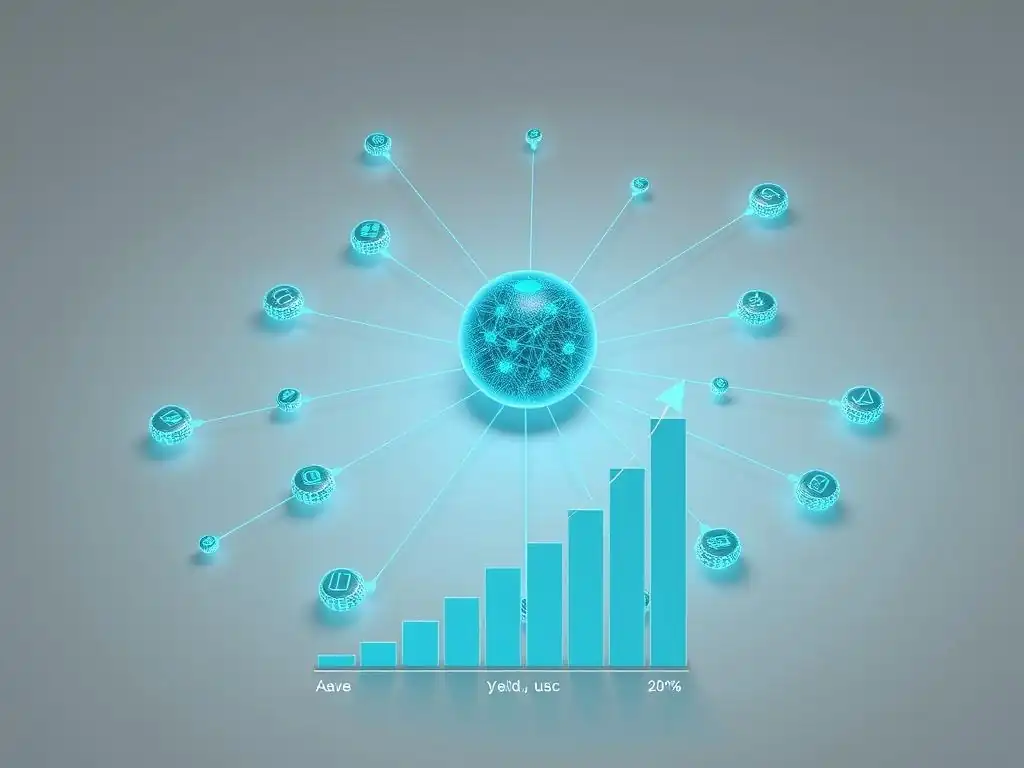
Yield aggregators are DeFi protocols designed to automate the process of finding and optimizing yield across various DeFi platforms. These platforms, such as Yearn Finance and Beefy Finance, employ sophisticated strategies to automatically move deposited assets, including USDT and USDC, between different lending platforms, liquidity pools, and other yield-generating opportunities to seek out the highest possible returns. Yield aggregators aim to simplify the process of yield farming and maximize returns for users who may not have the time or expertise to actively manage their USDC yield strategies manually.
The primary benefit of using yield aggregators is convenience and efficiency. Instead of manually researching and moving funds between different platforms, users can deposit their USDT or USDC into a yield aggregator, and the protocol handles the complexities of yield optimization. This can save users time and potentially increase their overall returns by continuously seeking out and capitalizing on the best available yield opportunities in the DeFi space.
How Yield Aggregators Maximize USDT and USDC Returns
Yield aggregators utilize various strategies to maximize USDT and USDC returns. They continuously monitor interest rates on lending platforms like Aave and Compound, swap fees on DEXs like Uniswap and SushiSwap, and other yield-generating opportunities across the DeFi ecosystem. When a more profitable opportunity arises, the aggregator automatically moves deposited funds to that platform or strategy. This automated switching between strategies is often referred to as "yield farming" or "strategy rotation."
Furthermore, some yield aggregators employ more complex strategies, such as leveraging positions or participating in yield farming opportunities with platform-specific tokens. By automating these complex strategies, yield aggregators can potentially generate higher returns than individual users might achieve by manually managing their assets. They often optimize gas fees by batching transactions and employing efficient smart contract code. This automation and optimization are key to how yield aggregators aim to maximize returns for users seeking effective USDC yield strategies.
Understanding the Fees and Risks Associated with Yield Aggregators
While yield aggregators offer convenience and the potential for enhanced returns, it's crucial to understand the associated fees and risks. Yield aggregators typically charge performance fees, which are a percentage of the yield generated, and sometimes withdrawal fees. These fees reduce the net returns for users, and it's important to factor them into the overall profitability assessment. Fee structures vary between aggregators, so users should carefully compare them.
The risks associated with yield aggregators include smart contract risk, aggregator platform risk, and strategy risk. Smart contract vulnerabilities in the aggregator's code could lead to loss of funds. Platform risk encompasses the possibility of the aggregator platform being compromised or experiencing operational issues.
Strategy risk refers to the risks inherent in the underlying yield farming strategies employed by the aggregator, which could include impermanent loss, liquidation risk in leveraged positions, or risks associated with specific DeFi protocols that the aggregator interacts with. Users should thoroughly research the aggregator's security practices, audit history, and strategy transparency before entrusting their USDT or USDC to these platforms in pursuit of USDC yield strategies to maximize returns.
Advanced Strategies: Combining USDT and USDC with Other DeFi Protocols
For users seeking even higher potential returns and willing to take on more complexity and risk, advanced strategies combining USDT and USDC with other DeFi protocols offer avenues for enhanced yield. These strategies often involve leveraging stablecoins to participate in more sophisticated DeFi activities, such as leveraged trading, cross-chain arbitrage, or participation in complex yield farming schemes. These advanced approaches are designed for users with a deeper understanding of DeFi and a higher risk tolerance who aim to maximize returns beyond basic USDC yield strategies.
These advanced strategies often involve interacting with multiple DeFi protocols simultaneously, requiring a more proactive and hands-on approach to portfolio management. They can be significantly more profitable than simpler strategies but also carry a correspondingly higher level of risk, demanding careful research, monitoring, and risk management.
Using USDT and USDC as Collateral for Leveraged Trading
USDT and USDC can be used as collateral in decentralized margin trading platforms to engage in leveraged trading. Leveraged trading allows users to amplify their trading positions by borrowing funds, increasing both potential profits and potential losses. By using stablecoins as collateral, traders can take leveraged positions on other cryptocurrencies, effectively betting on price movements while maintaining a stable collateral base in dollar terms. Platforms like dYdX and Mango Markets facilitate decentralized leveraged trading using stablecoins as collateral.
While leveraged trading can significantly amplify potential returns, it also dramatically increases risk. If the price of the asset being traded moves against the trader's position, liquidation can occur, resulting in the loss of collateral. Using USDT or USDC as collateral does not eliminate this risk; it merely provides a stable base for the collateral. Leveraged trading is a high-risk, high-reward strategy that should only be undertaken by experienced traders who fully understand the risks involved and have robust risk management strategies in place when seeking to maximize returns through USDC yield strategies.
Cross-Chain Arbitrage Opportunities with USDT and USDC
Cross-chain arbitrage involves exploiting price differences for USDT and USDC across different blockchains or decentralized exchanges operating on different chains. Due to the fragmented nature of the DeFi ecosystem, price discrepancies for the same stablecoin can sometimes arise between different blockchains or DEXs. For example, USDT might be trading at a slightly different price on Ethereum-based DEXs compared to Solana-based DEXs. Arbitrageurs can capitalize on these price differences by buying USDT on the cheaper platform and selling it on the more expensive platform, profiting from the price differential.
Executing cross-chain arbitrage strategies with USDT and USDC can be complex and requires sophisticated tools and infrastructure to monitor prices across multiple chains and execute trades quickly. Transaction costs and bridge fees associated with moving stablecoins between chains also need to be factored into the profitability calculation. While cross-chain arbitrage can offer potentially high returns, it's a competitive and technically challenging strategy best suited for experienced DeFi users with access to advanced trading tools and a deep understanding of cross-chain operations when pursuing complex USDC yield strategies to maximize returns.
Risk Management in Stablecoin Yield Farming: Protecting Your Investments
Identifying and Assessing Potential Risks in DeFi
Participating in DeFi yield farming, even with stablecoins like USDT and USDC, entails various risks that users must understand and assess. Smart contract risk is a primary concern, as vulnerabilities in the code governing DeFi protocols could lead to loss of funds. Platform risk encompasses the possibility of platform failures, hacks, or rug pulls, where developers maliciously abscond with user funds.
Impermanent loss is relevant in liquidity provisioning, even with stablecoins. De-pegging risk, although less frequent with USDC, remains a potential concern for stablecoins in general. Systemic risk in DeFi, where the failure of one protocol can cascade to others, also exists.
Furthermore, regulatory risk is an evolving factor as governments worldwide begin to scrutinize and regulate DeFi activities. Changes in regulations could impact the legality or viability of certain yield farming strategies. Understanding and continuously monitoring these risks is crucial for anyone engaging in stablecoin yield strategies to maximize returns while protecting their investments.
Diversification Strategies for USDT and USDC Holdings
Diversification is a fundamental risk management strategy in DeFi, as it is in traditional finance. For USDT and USDC holdings, diversification can involve spreading capital across multiple yield-generating strategies and platforms. Instead of concentrating all stablecoins in a single lending platform, users can diversify by allocating funds to liquidity pools on different DEXs, yield aggregators, and potentially exploring different types of stablecoin yield strategies.
Diversifying across different DeFi protocols reduces exposure to platform-specific risks, such as smart contract vulnerabilities or platform failures. It also helps to mitigate the impact of any single strategy underperforming. By spreading risk across various opportunities, users can create a more resilient and balanced portfolio when aiming to maximize returns with USDC yield strategies while managing potential downsides.
Implementing Risk Management Tools and Techniques
Implementing robust risk management tools and techniques is essential for protecting investments in stablecoin yield farming. This includes utilizing portfolio tracking tools to monitor asset allocation, yield performance, and potential losses across different DeFi platforms. Setting stop-loss orders, where applicable, can help limit potential losses in leveraged positions or volatile strategies. Regularly reviewing and rebalancing portfolios to maintain desired risk levels is also crucial.
Furthermore, staying informed about security audits, platform updates, and potential vulnerabilities in the protocols being used is paramount. Utilizing DeFi risk assessment tools and resources that analyze smart contract security, platform risk scores, and other relevant metrics can aid in making informed decisions about where to allocate capital. Employing these tools and techniques proactively enhances the ability to manage risks effectively when pursuing USDC yield strategies to maximize returns.
Smart Contract Security and Audits: Ensuring the Safety of Your Funds
Smart contract security and audits are paramount considerations for anyone participating in DeFi. Smart contracts govern the functionality of DeFi protocols, and vulnerabilities in their code can be exploited by malicious actors, leading to loss of funds. Before engaging with any DeFi platform, users should prioritize platforms that have undergone rigorous smart contract audits by reputable security firms. Audit reports should ideally be publicly available and transparent, outlining the scope of the audit, findings, and any identified vulnerabilities and remediation efforts.
While audits do not guarantee complete security, they significantly reduce the risk of exploiting known vulnerabilities. Users should also look for platforms that prioritize ongoing security practices, including bug bounty programs and proactive monitoring for suspicious activity. Understanding the security posture of a DeFi protocol and its commitment to smart contract security is a critical step in ensuring the safety of funds when participating in USDC yield strategies to maximize returns.
Optimizing Your Stablecoin Yield Strategy: A Step-by-Step Guide
Setting Clear Investment Goals and Risk Tolerance
The first step in optimizing your stablecoin yield strategy is to define clear investment goals and assess your risk tolerance. What are you hoping to achieve with your USDC yield strategies? Are you seeking to generate a steady stream of passive income, maximize returns aggressively, or somewhere in between? Understanding your financial objectives will guide your strategy selection and risk appetite. Risk tolerance is equally crucial – how much potential loss are you comfortable with in pursuit of higher yields?
A conservative investor with low-risk tolerance might prioritize stablecoin lending on well-established platforms, accepting lower yields for greater security. A more risk-tolerant investor might explore liquidity provisioning on DEXs or even advanced strategies like yield aggregators or leveraged trading, aiming for higher returns but accepting greater potential for volatility and loss. Clearly defining these parameters at the outset is fundamental to building a suitable and sustainable stablecoin yield strategy.
Researching and Selecting the Right DeFi Platforms
Thorough research is essential for selecting the right DeFi platforms for your USDC yield strategies. Evaluate platforms based on their reputation, security track record, audit history, and the yields they offer. Compare interest rates on lending platforms, trading fees on DEXs, and APYs offered by yield aggregators. Consider the Total Value Locked (TVL) in a platform as an indicator of its popularity and liquidity, but also investigate the platform's governance, community support, and transparency.
Read reviews, participate in community forums, and understand the platform's documentation and smart contract code, if possible. Prioritize platforms that have undergone security audits and have a proven track record of security and reliability. Selecting reputable and well-vetted platforms is crucial for mitigating platform risk and ensuring the safety of your funds when aiming to maximize returns with USDC yield strategies.
Monitoring Your Portfolio and Adjusting Your Strategy
Once you have implemented your stablecoin yield strategy, continuous monitoring of your portfolio and performance is crucial. Track your yields, monitor asset allocation across different platforms and strategies, and assess any potential impermanent loss in liquidity pools. Stay updated on market conditions, interest rate fluctuations, and any changes in the DeFi protocols you are using.
Be prepared to adjust your strategy as market conditions evolve. If interest rates on a lending platform decline, you might consider shifting funds to a more profitable opportunity. If a new, promising yield aggregator emerges, evaluate its potential and consider allocating a portion of your portfolio. Active monitoring and strategic adjustments are key to optimizing your USDC yield strategies over time and consistently aiming to maximize returns.
Tax Implications of Stablecoin Yield Farming: Staying Compliant
Understanding the tax implications of stablecoin yield farming is essential for staying compliant with tax regulations in your jurisdiction. Yield earned from lending, liquidity provisioning, staking, or other DeFi activities is generally considered taxable income. The specific tax treatment can vary depending on your location and local tax laws. It's crucial to keep accurate records of all DeFi transactions, including deposits, withdrawals, yields earned, and any fees paid.
Consult with a qualified tax advisor or accountant who is familiar with cryptocurrency and DeFi taxation to ensure you are correctly reporting your income and complying with all applicable tax obligations. Tax regulations in the DeFi space are still evolving, so staying informed and seeking professional advice is crucial for avoiding tax-related issues and maintaining compliance while engaging in USDC yield strategies to maximize returns.
The Future of Stablecoin Yield Strategies: Trends and Innovations
Emerging DeFi Protocols and Their Impact on Stablecoin Yield
The DeFi landscape is constantly evolving, with new protocols and innovations emerging regularly that impact stablecoin yield strategies. Layer-2 scaling solutions, like Polygon and Arbitrum, are reducing transaction costs and increasing transaction speeds, potentially making yield farming more accessible and profitable, especially for smaller investors. Cross-chain DeFi protocols are breaking down silos between different blockchains, creating new opportunities for cross-chain yield optimization and arbitrage with USDT and USDC.
Furthermore, innovations in algorithmic stablecoins and new yield farming mechanisms are continually being developed. Protocols focusing on more capital-efficient lending and borrowing, or novel approaches to liquidity provisioning, could reshape the future of USDC yield strategies and how users maximize returns in the DeFi space. Staying abreast of these emerging protocols and trends is crucial for adapting and optimizing yield strategies in the ever-changing DeFi environment.
Regulatory Developments and Their Potential Effects on USDT and USDC
Regulatory developments represent a significant factor that could shape the future of stablecoin yield strategies and the broader DeFi ecosystem. Increased regulatory scrutiny of stablecoins, particularly USDT, and DeFi protocols is anticipated globally. Regulations could impact the issuance, redemption, and usage of stablecoins, potentially affecting their availability and the yields that can be generated from them.
Stricter Know Your Customer (KYC) and Anti-Money Laundering (AML) requirements for DeFi platforms could become more prevalent, impacting user privacy and accessibility. The regulatory landscape is still evolving, and the specific impacts on USDT, USDC, and stablecoin yield strategies are yet to be fully determined. Monitoring regulatory developments and understanding their potential implications is essential for navigating the future of DeFi and adapting yield strategies accordingly.
The Evolution of Stablecoin Strategies in the DeFi Ecosystem
The evolution of stablecoin strategies in the DeFi ecosystem is likely to be driven by technological advancements, regulatory pressures, and market demand for yield. We can anticipate further innovation in yield optimization techniques, potentially with more sophisticated automated strategies and cross-chain capabilities. The integration of Real World Assets (RWAs) into DeFi could also create new avenues for stablecoin yield generation, linking traditional finance with decentralized finance.
As the DeFi ecosystem matures, we might see a greater emphasis on risk management and sustainability in yield strategies. Protocols that prioritize security, transparency, and regulatory compliance are likely to gain prominence. The future of USDC yield strategies and the quest to maximize returns will likely be characterized by a dynamic interplay between innovation, regulation, and the ongoing evolution of the DeFi landscape.
Frequently Asked Questions
What are some common USDC yield strategies?
Common strategies include lending USDC on DeFi platforms like Aave and Compound, providing liquidity in decentralized exchanges (DEXs) like Uniswap, and staking USDC in yield farming programs.
How risky are USDC yield strategies?
Risks vary depending on the strategy. Smart contract vulnerabilities, impermanent loss in liquidity pools, and counterparty risk with lending platforms are key considerations. Thorough research is crucial.
What are the potential returns from USDC yield strategies?
Returns can range from low single-digit APY for conservative strategies to double-digit APY for riskier approaches. Market conditions and platform incentives significantly influence yields.
How does regulation affect USDC yield strategies?
Regulatory scrutiny is increasing. Compliance with KYC/AML regulations is essential for platforms offering these services. Changes in regulations could impact the availability and legality of certain strategies.
What are the key factors to consider when choosing a USDC yield strategy?
Consider your risk tolerance, investment time horizon, and the reputation and security of the platform. Always diversify your holdings to mitigate potential losses.
The exploration of USDC yield strategies, as detailed throughout this article, isn't merely an academic exercise; it's a crucial roadmap for navigating the evolving landscape of decentralized finance. The potential for maximizing returns on stablecoins like USDC is not just about individual profit, but about fostering a more robust and accessible financial ecosystem for everyone.
The rise of DeFi and the increasing sophistication of yield-generating protocols have profoundly impacted how we perceive and interact with our finances. This article has highlighted the importance of understanding these complex systems, not just for seasoned investors, but for anyone seeking financial empowerment. The future of finance is decentralized, and stablecoins like USDC are the building blocks of that future.
This quote encapsulates the transformative potential of these technologies and the responsibility we have to understand and utilize them wisely.
Now, as you consider the strategies outlined here, I invite you to reflect on your own financial goals and risk tolerance. How can you leverage the power of USDC and DeFi to build a more secure and prosperous future for yourself and your community? The opportunities are vast, but they require careful consideration, continuous learning, and a commitment to responsible participation. Embrace the challenge, explore the possibilities, and become an active architect of your own financial destiny.
Unlock Your USDC Potential: Start Earning Today!
Thank you for exploring the world of USDC yield strategies with us! You've now gained valuable insights into maximizing your returns with Circle's stablecoin. It's time to put that knowledge into action and start making your USDC work harder for you.
Here's what you can do right now:
- Dive into yield farming! Explore different DeFi platforms and allocate a small portion of your USDC to test the waters. Remember to start small and manage your risk.
- Share your newfound wisdom! Discuss these strategies with fellow crypto enthusiasts on forums or social media. Help others discover the power of USDC.
- Experiment with automatic compound interest applications! Explore tools like Yearn or Beefy Finance to optimize your yield strategies.
What are you waiting for? Now that you have all the tools to get started, which strategy will you use to maximize your USDC yield today? Let us know in the comments!
Leave a Reply