
Blockchain & AI for Verification of Credentials and Certifications: Ensuring Trust in Professional Skills


Welcome to Blockchain Trends, your premier source for understanding the revolution unfolding beyond cryptocurrency. Delve into the transformative power of blockchain technology, exploring its impact on DeFi, enterprise solutions, and the evolving regulatory landscape.
Intrigued by how blockchain and AI are converging to reshape trust? This article explores the groundbreaking potential of Blockchain AI credential verification. Discover how this powerful synergy is ensuring the authenticity and reliability of professional skills and certifications, and consider the implications for a future where trust is verified, not just assumed. Read on to unlock the secrets behind this innovative approach!
Blockchain & AI for Verification of Credentials and Certifications: Ensuring Trust in Professional Skills
- Introduction: The Growing Need for Credential Verification
- Understanding Blockchain Technology for Credentials
- Exploring AI's Role in Enhancing Credential Security
- Blockchain AI Credential Verification: A Synergistic Approach
- Use Cases of Blockchain and AI in Credential Verification
- Benefits of Blockchain-Based AI Credential Verification Systems
- Challenges and Considerations for Implementing Blockchain AI Credential Verification
- The Future of Credential Verification: Blockchain and AI Leading the Way
- Conclusion: Building a Trusted Future with Blockchain and AI-Powered Credentials
-
Frequently Asked Questions
- How can blockchain technology enhance the verification of credentials?
- What role does AI play in the blockchain-based credential verification process?
- What are the key benefits of using Blockchain & AI for credential verification compared to traditional methods?
- How does blockchain-based credential verification improve the job application process?
- What are some of the potential regulatory challenges associated with using blockchain and AI for credential verification?
- Final Reflection: Building Trust in a Digital World
- Empower Your Future: Verify & Validate with Confidence!
Introduction: The Growing Need for Credential Verification
The Problem of Fake Credentials and Skills Inflation
In today's globalized and rapidly evolving job market, the verification of credentials and certifications has become increasingly critical. The ease with which digital documents can be manipulated has led to a surge in fake credentials, undermining the integrity of academic achievements, professional certifications, and even employment histories. Reports indicate that a significant percentage of job applications contain falsified information.
For example, a study by Checkster revealed that approximately 78% of resumes contain some form of misrepresentation, ranging from inflated skills to outright fabrications of qualifications. This widespread issue of fake credentials not only harms individuals and organizations relying on accurate skill assessments but also contributes to skills inflation, where genuine qualifications are devalued due to the proliferation of fraudulent claims.
Skills inflation further exacerbates the problem. As more individuals present credentials, both genuine and fake, employers are forced to demand higher qualifications for the same roles, leading to an upward spiral of required certifications and degrees. This cycle disadvantages qualified candidates who may lack the resources to constantly upgrade their credentials, while those with fraudulent documents can deceptively navigate the system.
The economic consequences are substantial, with businesses potentially hiring underqualified individuals, leading to decreased productivity, increased errors, and reputational damage. Furthermore, the erosion of trust in credentials weakens the foundations of professional development and undermines the efforts of legitimate educational and certification bodies.
How Blockchain and AI Can Revolutionize Credential Verification
Blockchain and Artificial Intelligence (AI) offer a powerful synergy to address the growing challenges of credential verification. Blockchain technology, with its inherent security and transparency, provides an immutable ledger for storing and verifying credentials. This decentralized system ensures that once a credential is recorded, it cannot be altered or tampered with, thereby establishing a robust foundation of trust. AI complements blockchain by adding intelligent layers of analysis and automation to the verification process. AI algorithms can efficiently process vast amounts of data, identify patterns indicative of fraud, and automate the often-laborious tasks associated with traditional credential checks.
The combination of blockchain's security and AI's intelligence creates a revolutionary approach to credential verification. Blockchain ensures the integrity and authenticity of the credential itself, while AI enhances the efficiency, accuracy, and scalability of the verification process. This synergy can transform how individuals, educational institutions, professional organizations, and employers manage and verify credentials. By leveraging Blockchain AI credential verification systems, we can move towards a more secure, transparent, and efficient ecosystem that fosters trust in professional skills and qualifications, mitigating the risks associated with fake credentials and skills inflation.
Understanding Blockchain Technology for Credentials
Blockchain's Immutable Ledger: A Foundation for Trust
Blockchain technology's core innovation lies in its immutable ledger system. This distributed and decentralized database records transactions in blocks that are cryptographically linked and secured. Once a block of data, such as a credential record, is added to the chain, it becomes virtually impossible to alter or delete it.
This immutability is achieved through cryptographic hashing and consensus mechanisms, ensuring that every participant in the network has an identical and verified copy of the ledger. For credential verification, this means that once an institution issues a certificate or degree and records it on a blockchain, the record becomes a permanent and tamper-proof testament to that achievement.
The inherent transparency of many blockchain networks further enhances trust. While personal data within a credential can be protected through privacy measures, the fact that the record exists and has been validated on the blockchain is publicly verifiable. This transparency reduces the reliance on centralized authorities and intermediaries, shifting the power to credential holders and verifiers.
For instance, instead of contacting a university registrar to confirm a degree, an employer could directly verify the credential on the blockchain, knowing that the information is authentic and has not been tampered with. This foundation of trust is crucial in combating credential fraud and establishing confidence in professional qualifications.
Decentralized Identity (DID) and Self-Sovereign Identity (SSI) in Credentials
Decentralized Identity (DID) and Self-Sovereign Identity (SSI) are crucial concepts in leveraging blockchain for credential verification. DID is a W3C standard that allows individuals to control their digital identities without relying on centralized authorities. SSI builds upon DID, empowering individuals to manage and control their own credentials. In the context of blockchain-based credentials, SSI means that individuals, not institutions, own and control their digital credentials. When a university issues a diploma on a blockchain using SSI principles, the graduate receives a digital credential that they can store in their digital wallet and selectively share with employers or other verifiers.
This approach contrasts sharply with traditional systems where credentials are often held by issuing institutions, and individuals must request verification each time they need to prove their qualifications. With SSI, individuals gain greater control over their personal data and decide who has access to their credentials and for what purpose. Furthermore, SSI enhances privacy by minimizing data sharing.
Instead of providing copies of physical certificates, individuals can grant verifiers access to their blockchain-based credentials for a limited time and specific purpose. This paradigm shift towards user-centric identity and data control is a key advantage of blockchain in credential verification, promoting both efficiency and privacy.
Smart Contracts for Automated Credential Issuance and Verification
Smart contracts, self-executing contracts with the terms of the agreement directly written into code, play a pivotal role in automating credential issuance and verification on blockchain platforms. These contracts can be programmed to automatically issue credentials upon the fulfillment of predefined conditions. For example, a smart contract could be set up to automatically issue a course completion certificate to students who achieve a passing grade in an online course, as soon as their grades are officially recorded in the university's system. This automation eliminates manual processes, reduces administrative overhead, and accelerates the issuance timeline.
Beyond issuance, smart contracts can also streamline the verification process. When an employer needs to verify a candidate's credential, they can interact with the smart contract associated with that credential on the blockchain. The smart contract can automatically verify the authenticity and validity of the credential against the issuing institution's records.
This process is significantly faster and more efficient than traditional methods, which often involve manual checks, phone calls, and document exchanges. Smart contracts ensure that verification is conducted in a transparent, secure, and auditable manner, reducing the potential for errors and fraud while accelerating the overall credential verification workflow.
Exploring AI's Role in Enhancing Credential Security
AI-Powered Fraud Detection in Credential Applications
Artificial Intelligence significantly enhances credential security by providing advanced fraud detection capabilities. AI algorithms, particularly machine learning models, can be trained on vast datasets of both legitimate and fraudulent credentials to identify patterns and anomalies that are indicative of forgery or manipulation. These systems can analyze various aspects of a credential application, including document formats, issuing institution details, applicant information, and even linguistic patterns within the submitted documents to detect inconsistencies and red flags that might escape manual review.
For example, AI can be trained to recognize subtle variations in logos, fonts, and signatures that are often present in fake documents. Furthermore, AI can cross-reference applicant data against multiple databases, such as blacklists of known fraudulent credentials or inconsistencies in educational histories across different applications.
Sophisticated AI models can also analyze behavioral patterns associated with fraudulent applications, such as unusual application timing, geographic anomalies, or inconsistencies in submitted information across multiple platforms. By automating and enhancing fraud detection, AI significantly reduces the workload on human reviewers and improves the accuracy and speed of identifying potentially fraudulent credentials, thereby bolstering the overall security of credential verification processes.
AI for Skills Assessment and Competency Mapping
AI's role in credential verification extends beyond fraud detection to include sophisticated skills assessment and competency mapping. Traditional credentials often provide a limited view of an individual's actual skills and competencies. AI can analyze data from various sources, including resumes, project portfolios, online learning platforms, and even social media profiles (with user consent), to create a more comprehensive and nuanced picture of an individual's skill set. Natural Language Processing (NLP) and machine learning algorithms can extract skills and competencies from unstructured text data, such as job descriptions and project reports, and map them to standardized skill frameworks.
This capability is particularly valuable for employers seeking to identify candidates with the specific skills needed for particular roles. AI-powered systems can go beyond simply verifying credentials to assess the actual competency level associated with those credentials. For instance, AI can analyze the curriculum and learning outcomes of a degree program, coupled with student performance data, to provide a more detailed understanding of the skills acquired by a graduate than a degree certificate alone. This deeper level of skills assessment enables more effective talent matching, personalized learning pathways, and a more accurate representation of an individual's professional capabilities.
Using Machine Learning to Validate Experience Claims
Validating experience claims is a persistent challenge in credential verification, and machine learning offers powerful tools to address this. Resumes and work histories often contain inflated or fabricated experience details, making it difficult for employers to accurately assess a candidate's practical skills and work history. Machine learning algorithms can analyze employment history data, cross-referencing information with public records, professional networks like LinkedIn (with user authorization), and even employer databases (where available and permissible) to validate the authenticity and consistency of experience claims.
For example, machine learning models can detect inconsistencies in employment dates, job titles, and responsibilities across different sources. They can also analyze the network of connections and endorsements on professional platforms to assess the credibility of claimed experience.
Furthermore, AI can analyze textual descriptions of job roles and responsibilities to identify keywords and phrases that are indicative of specific skill sets and experience levels, comparing these against industry benchmarks and job market trends. By leveraging machine learning to validate experience claims, organizations can significantly reduce the risk of hiring individuals with misrepresented work histories and ensure a more accurate assessment of a candidate's practical capabilities.
Blockchain AI Credential Verification: A Synergistic Approach
Combining Blockchain's Security with AI's Intelligence
The synergy of blockchain and AI in credential verification creates a system that is greater than the sum of its parts. Blockchain provides the secure, immutable, and transparent infrastructure necessary for storing and verifying credentials, ensuring data integrity and preventing tampering. AI adds the intelligence layer, enabling automated fraud detection, advanced skills assessment, and efficient processing of large datasets. By combining these technologies, we achieve a robust and sophisticated credential verification system that addresses both the security and efficiency challenges of traditional methods.
Blockchain's cryptographic security guarantees the authenticity of the credential itself, while AI algorithms enhance the verification process by identifying anomalies, validating experience claims, and providing deeper insights into skills and competencies. This combination is particularly powerful in combating sophisticated forms of credential fraud that may bypass traditional manual checks. The immutable nature of blockchain records, coupled with AI's analytical capabilities, creates a formidable barrier against fraudulent activities and establishes a higher level of trust in verified credentials.
Enhanced Security and Reduced Fraud with AI-Blockchain Integration
The integration of AI and blockchain significantly enhances security and reduces fraud in credential verification systems. Blockchain's inherent immutability and transparency make it extremely difficult to tamper with or forge credential records. AI further strengthens security by providing real-time fraud detection capabilities. AI algorithms can continuously monitor credential applications and verification requests, identifying suspicious patterns and flagging potentially fraudulent activities for further investigation. This proactive approach to fraud prevention is a major improvement over reactive methods that rely on manual checks and post-hoc investigations.
Real-world examples demonstrate the effectiveness of this integration. For instance, several universities are piloting blockchain-based diploma systems combined with AI-powered verification platforms. These systems have reported a significant reduction in instances of fake diploma submissions and a faster, more efficient verification process. Industry analysts estimate that Blockchain AI credential verification can reduce credential fraud by as much as 80-90% compared to traditional methods, leading to substantial cost savings and improved trust in professional qualifications across various sectors.
Streamlined Credential Verification Processes Through Automation
Automation is a key benefit of integrating blockchain and AI in credential verification, leading to streamlined and more efficient processes. Traditional credential verification methods are often time-consuming, labor-intensive, and prone to errors due to manual data entry and checks. Blockchain automates the credential issuance and storage process, while AI automates the verification and validation steps. Smart contracts on blockchain can automatically issue credentials upon completion of courses or certifications, and AI algorithms can automatically verify credentials against blockchain records and other relevant data sources.
This automation drastically reduces the turnaround time for credential verification, from days or weeks in traditional systems to potentially minutes or even seconds in Blockchain AI systems. For employers, this means faster hiring processes and reduced administrative burden. For individuals, it simplifies the process of sharing and verifying their credentials, giving them greater control and convenience. The streamlined processes enabled by Blockchain AI credential verification systems contribute to significant cost savings, improved efficiency, and a better overall experience for all stakeholders involved in the credential ecosystem.
Use Cases of Blockchain and AI in Credential Verification
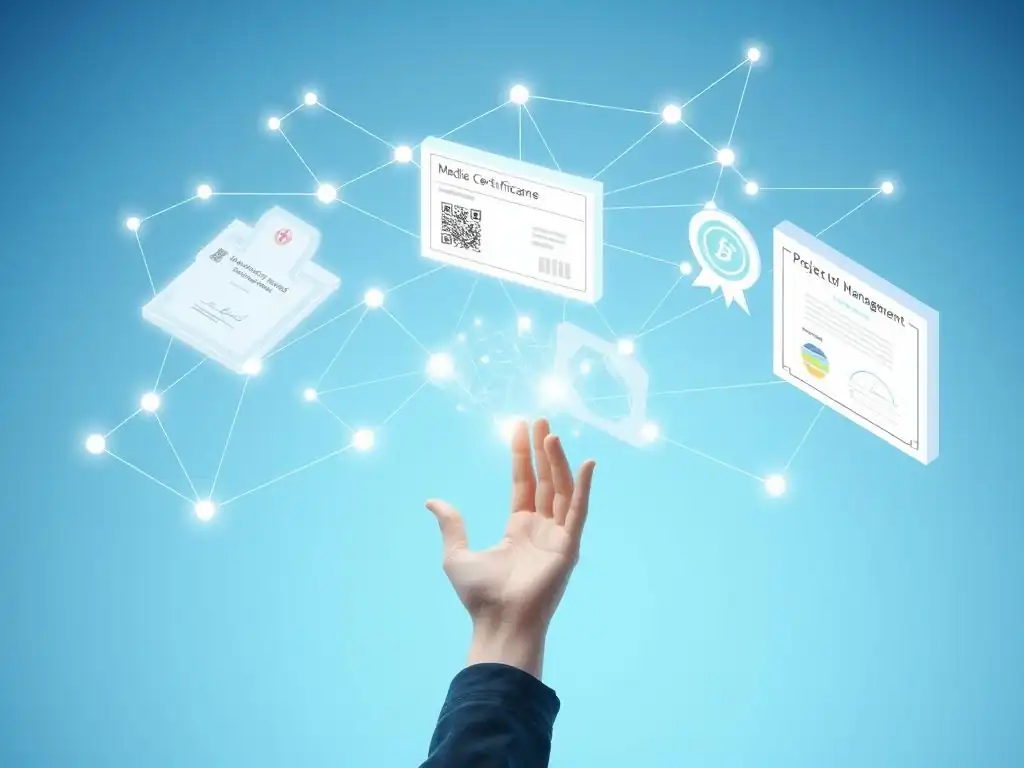
Academic Credentials: Verifying Degrees and Certificates
The verification of academic credentials, such as degrees and certificates, is a prime use case for Blockchain AI credential verification. Universities and educational institutions worldwide are increasingly exploring blockchain-based systems to issue and manage digital diplomas and transcripts. For example, the Massachusetts Institute of Technology (MIT) has piloted a blockchain-based digital diploma system, allowing graduates to securely share their diplomas with employers and other institutions. These digital diplomas are tamper-proof and easily verifiable, eliminating the need for traditional paper-based verification processes.
AI enhances this process by automating the verification of these digital credentials. AI algorithms can instantly verify the authenticity of a blockchain-based diploma against the issuing university's records, without requiring manual intervention. Furthermore, AI can be used to analyze academic transcripts and coursework details to provide a more comprehensive understanding of a graduate's academic achievements and skill sets. This combination of blockchain and AI creates a highly efficient and secure system for verifying academic credentials, benefiting both educational institutions and employers.
Professional Certifications: Ensuring Competency and Expertise
Professional certifications, which validate competency and expertise in specific fields, are another crucial area where Blockchain AI credential verification offers significant advantages. Organizations issuing professional certifications, such as those in IT, finance, and healthcare, can leverage blockchain to issue tamper-proof digital certificates. For instance, organizations like CompTIA and Cisco are exploring blockchain-based certification systems to enhance the security and credibility of their certifications. These digital certifications are easily verifiable and reduce the risk of fraudulent certifications being presented.
AI plays a critical role in verifying these professional certifications by automating the verification process and enhancing security. AI algorithms can verify the authenticity of a blockchain-based certification and also assess the relevance and validity of the certification in relation to specific job roles or industry standards. Moreover, AI can continuously monitor the validity of certifications, tracking expiration dates and renewal requirements, ensuring that professionals maintain their credentials and demonstrate ongoing competency. This integrated approach provides employers with greater confidence in the professional certifications presented by candidates, enhancing the overall credibility of professional development and expertise validation.
Healthcare Credentials: Validating Medical Licenses and Training
In the healthcare sector, the verification of credentials, including medical licenses, certifications, and training records, is paramount for patient safety and regulatory compliance. Blockchain and AI offer a robust solution to streamline and secure the verification of healthcare professional credentials. Organizations are exploring blockchain to create secure and immutable records of medical licenses, professional certifications, and continuing medical education credits. This ensures that patient care is provided by qualified and properly licensed professionals.
AI enhances healthcare credential verification by automating the process and adding layers of intelligence. AI algorithms can verify the authenticity of blockchain-based medical licenses and certifications, cross-referencing data with regulatory bodies and licensing boards. AI can also analyze training records and continuing education credits to ensure that healthcare professionals meet ongoing competency requirements. Furthermore, AI can play a role in detecting fraudulent credentials and identifying individuals practicing medicine without proper authorization. This integrated Blockchain AI approach strengthens patient safety and regulatory compliance within the healthcare industry.
Employment Verification: Confirming Work History and Skills
Employment verification, which involves confirming work history, job titles, and skills claimed by job applicants, is a critical aspect of the hiring process that can be significantly improved by Blockchain AI credential verification. Blockchain can be used to create verifiable records of employment history, where employers can issue digital employment badges or verifiable credentials to employees upon their departure. These digital records can include details of job roles, responsibilities, and performance achievements, providing a more comprehensive and trustworthy representation of an individual's work history.
AI enhances employment verification by automating the process and validating the accuracy of claimed work history and skills. AI algorithms can verify the authenticity of blockchain-based employment records and cross-reference information with employer databases and professional networks (with user consent). AI can also analyze resume data and compare it with verified employment records to identify inconsistencies or red flags.
Furthermore, AI can assess the skills and competencies gained through past employment experiences, providing employers with a more nuanced understanding of a candidate's practical capabilities and suitability for specific roles. This integrated system streamlines employment verification, reduces fraud, and improves the accuracy of talent acquisition processes.
Benefits of Blockchain-Based AI Credential Verification Systems
Increased Trust and Transparency in the Hiring Process
Blockchain-based AI credential verification systems significantly increase trust and transparency in the hiring process. By providing immutable and verifiable records of credentials and skills, blockchain eliminates much of the uncertainty and risk associated with traditional verification methods. Employers can have greater confidence in the authenticity of the credentials presented by job applicants, knowing that these credentials have been verified and recorded on a secure blockchain ledger. This increased trust reduces the potential for hiring mistakes and promotes a more meritocratic and fair hiring process.
Transparency is also enhanced through blockchain's distributed and auditable nature. While personal data within credentials can be protected, the verification process itself becomes more transparent. Employers can track the verification status of credentials and understand the basis upon which they were validated. This transparency builds confidence among both employers and job seekers, creating a more open and trustworthy hiring ecosystem. The reduction in fraud and the increase in transparency contribute to a more efficient and reliable talent acquisition process for organizations.
Reduced Costs and Time Associated with Traditional Verification Methods
Traditional credential verification methods are often costly and time-consuming. They typically involve manual processes, phone calls, document exchanges, and reliance on third-party verification agencies. Blockchain-based AI credential verification systems drastically reduce both the costs and time associated with these traditional methods. Automation through blockchain and AI eliminates much of the manual labor involved in verification, reducing administrative overhead and processing times.
Studies estimate that blockchain-based systems can reduce credential verification costs by up to 70-80% compared to traditional methods. The speed of verification is also significantly improved, with blockchain AI systems often completing verifications in minutes or seconds, compared to days or weeks for traditional processes. These cost and time savings translate to significant efficiency gains for organizations, particularly those that hire large numbers of employees or frequently verify credentials. The reduced burden and increased speed make Blockchain AI credential verification a highly attractive alternative to traditional approaches.
Improved Data Security and Privacy for Credential Holders
Blockchain-based AI credential verification systems improve data security and privacy for credential holders. Traditional systems often involve sharing sensitive personal data with multiple parties during the verification process, increasing the risk of data breaches and privacy violations. Blockchain, particularly when combined with Decentralized Identity (DID) and Self-Sovereign Identity (SSI) principles, empowers individuals to control their own credentials and minimize data sharing.
With SSI, individuals own their digital credentials and selectively grant access to verifiers only when necessary and for specific purposes. This reduces the risk of data breaches and unauthorized access to personal information. Furthermore, blockchain's cryptographic security protects credential data from tampering and unauthorized modifications. AI can also enhance privacy by anonymizing data during verification processes and ensuring compliance with data privacy regulations like GDPR. The improved data security and privacy features of Blockchain AI credential verification systems are crucial in building trust and promoting user adoption.
Greater Efficiency in Skills Matching and Talent Acquisition
Blockchain AI credential verification systems contribute to greater efficiency in skills matching and talent acquisition. By providing more accurate and verifiable information about an individual's credentials, skills, and experience, these systems enable employers to make better-informed hiring decisions. AI-powered skills assessment and competency mapping, integrated with blockchain-verified credentials, provide a more comprehensive and nuanced understanding of a candidate's capabilities than traditional resumes and certificates alone.
This improved information flow facilitates more effective skills matching, connecting employers with the most qualified candidates for specific roles. The faster and more efficient verification processes also accelerate the talent acquisition cycle, reducing time-to-hire and improving overall recruitment efficiency. Furthermore, the increased trust and transparency in credential verification lead to a more meritocratic and skills-based hiring environment, benefiting both employers and job seekers. The enhanced efficiency in skills matching and talent acquisition makes Blockchain AI credential verification a valuable asset for organizations seeking to optimize their human resources processes.
Challenges and Considerations for Implementing Blockchain AI Credential Verification
Scalability Issues in Blockchain Networks
Scalability remains a significant challenge for some blockchain networks, potentially impacting the widespread implementation of Blockchain AI credential verification systems. Public blockchains, while offering decentralization and security, can face limitations in transaction throughput and processing speed, particularly as the number of users and transactions increases. If a credential verification system relies on a public blockchain, scalability issues could lead to delays in verification times and increased transaction costs, hindering user experience and adoption.
To address scalability concerns, various solutions are being explored, including layer-2 scaling solutions, sharding, and the use of private or consortium blockchains. Private or consortium blockchains, while less decentralized than public blockchains, can offer higher throughput and better scalability for specific applications like credential verification within a closed ecosystem. Choosing the appropriate blockchain infrastructure and implementing scaling solutions are crucial considerations for ensuring the long-term viability and performance of Blockchain AI credential verification systems.
Data Privacy Regulations and Compliance
Data privacy regulations, such as GDPR and CCPA, pose important considerations for the implementation of Blockchain AI credential verification systems. These regulations mandate strict requirements for the collection, storage, and processing of personal data, including credentials and certifications. Blockchain's immutable nature and decentralized structure present both opportunities and challenges for data privacy compliance. While blockchain can enhance data security and transparency, it also requires careful consideration of how personal data is stored and managed on the ledger to ensure compliance with privacy regulations.
Solutions like zero-knowledge proofs and selective disclosure can be employed to enhance privacy on blockchain by allowing verification of credentials without revealing the underlying personal data. Furthermore, systems must be designed to comply with data subject rights, such as the right to access, rectify, and erase personal data, even when stored on a blockchain. Careful attention to data privacy considerations and proactive implementation of privacy-enhancing technologies are essential for ensuring that Blockchain AI credential verification systems are compliant with relevant regulations and protect the privacy of credential holders.
Interoperability Between Different Blockchain and AI Systems
Interoperability between different blockchain and AI systems is a crucial challenge for the widespread adoption of Blockchain AI credential verification. Currently, various blockchain platforms and AI technologies exist, often operating in silos. Lack of interoperability can hinder the seamless exchange of credential data and verification processes across different systems and organizations. For instance, credentials issued on one blockchain platform may not be easily verifiable on another platform, limiting the utility and reach of blockchain-based credentials.
To address interoperability challenges, standardization efforts are essential. Developing common standards for credential formats, verification protocols, and data exchange formats can facilitate interoperability between different Blockchain AI systems. Initiatives like the W3C Verifiable Credentials standard are steps in the right direction, but broader industry collaboration and standardization are needed to achieve seamless interoperability. Bridging the gaps between different blockchain and AI ecosystems is crucial for realizing the full potential of Blockchain AI credential verification on a global scale.
The Need for Standardization in Credential Formats
The lack of standardization in credential formats currently poses a barrier to the widespread adoption of Blockchain AI credential verification. Different institutions and organizations issue credentials in various formats, making it difficult to achieve universal verification and interoperability. Without standardized credential formats, verifying credentials across different issuers and systems becomes complex and inefficient. For example, academic transcripts, professional certifications, and employment records often follow different formats and data structures, hindering automated processing and verification.
Developing and adopting standardized credential formats is crucial for enabling seamless Blockchain AI credential verification. Standardized formats should define common data fields, encoding schemes, and verification protocols for different types of credentials. Industry consortia, standards bodies, and government agencies need to collaborate to establish and promote the adoption of these standardized formats. Standardization will simplify credential issuance, verification, and exchange, paving the way for more efficient and interoperable Blockchain AI credential verification systems and facilitating wider adoption across various sectors.
The Future of Credential Verification: Blockchain and AI Leading the Way
The Rise of Digital Credentials and Micro-credentials
The future of credential verification is inextricably linked to the rise of digital credentials and micro-credentials, trends that are significantly accelerated by blockchain and AI technologies. Digital credentials, also known as verifiable credentials, are electronic representations of qualifications and skills that are easily shareable and verifiable online. Micro-credentials are focused, skills-based certifications that validate specific competencies acquired through short courses or learning experiences. Both digital credentials and micro-credentials are gaining traction as the demand for flexible, lifelong learning and skills-based hiring increases.
Blockchain provides the secure and tamper-proof infrastructure for issuing and managing digital credentials and micro-credentials, while AI enhances their value by providing advanced verification and skills assessment capabilities. The combination of blockchain and AI enables the creation of dynamic and portable digital credentials that can adapt to the evolving needs of the job market. As digital credentials and micro-credentials become more prevalent, Blockchain AI credential verification systems will play a central role in ensuring their authenticity, validity, and widespread acceptance across educational institutions, professional organizations, and employers.
Market Outlook: Growth and Adoption of Blockchain AI Credential Verification
The market outlook for Blockchain AI credential verification is promising, with significant growth and adoption anticipated across various sectors. Industry analysts project substantial growth in the blockchain-based credentialing market, driven by the increasing need for secure and efficient verification solutions. The integration of AI further enhances the value proposition of these systems, making them even more attractive to organizations seeking to combat credential fraud and improve talent acquisition processes.
Early adopters of Blockchain AI credential verification systems are already demonstrating the benefits in sectors like education, healthcare, and professional certification. As awareness of the advantages grows and the technology matures, wider adoption is expected across industries. Factors driving market growth include the increasing prevalence of remote work, the globalization of the job market, and the growing recognition of the importance of skills-based hiring. The convergence of blockchain and AI is poised to revolutionize credential verification, creating a substantial market opportunity and transforming how individuals and organizations manage and validate professional qualifications.
Implications for Education, Employment, and the Future of Work
The widespread adoption of Blockchain AI credential verification has profound implications for education, employment, and the future of work. In education, blockchain-based digital diplomas and transcripts can streamline administrative processes, reduce costs, and empower students with greater control over their academic records. Micro-credentials validated by blockchain and enhanced by AI can facilitate lifelong learning and skills development, enabling individuals to continuously upskill and reskill to meet the demands of the evolving job market.
In employment, Blockchain AI credential verification can create a more transparent and efficient hiring process, reducing fraud and improving skills matching. Employers can have greater confidence in the qualifications of job applicants, leading to better hiring decisions and improved workforce productivity.
For the future of work, these technologies can contribute to a more skills-based and meritocratic job market, where individuals are recognized and rewarded for their verified skills and competencies, regardless of traditional credentials or backgrounds. The transformative potential of Blockchain AI credential verification extends across the entire education-to-employment ecosystem, shaping a more efficient, equitable, and skills-focused future of work.
Conclusion: Building a Trusted Future with Blockchain and AI-Powered Credentials
The Potential of Blockchain AI for a More Transparent and Efficient Job Market
Blockchain AI credential verification holds immense potential to create a more transparent and efficient job market. By leveraging the security of blockchain and the intelligence of AI, these systems can address the critical challenges of credential fraud, inefficient verification processes, and skills mismatches. The immutable and verifiable nature of blockchain-based credentials, combined with AI-powered fraud detection and skills assessment, establishes a foundation of trust and reliability in professional qualifications. This enhanced trust and efficiency can benefit all stakeholders in the job market, including individuals, educational institutions, professional organizations, and employers.
The move towards Blockchain AI credential verification represents a significant step towards a more meritocratic and skills-based economy. By focusing on verified skills and competencies rather than solely relying on traditional credentials, these systems can unlock new opportunities for individuals and organizations alike. A more transparent and efficient job market, powered by Blockchain AI credential verification, fosters greater fairness, reduces friction in talent acquisition, and promotes economic growth by connecting the right talent with the right opportunities.
Investing in Blockchain and AI for Enhanced Credential Integrity
Investing in Blockchain and AI technologies for credential verification is crucial for building a future where professional skills and qualifications are trusted and readily verifiable. Educational institutions, professional organizations, and businesses should explore and adopt Blockchain AI credential verification systems to enhance the integrity of their credentials and streamline their verification processes. Government agencies and regulatory bodies also have a role to play in promoting the development and adoption of standards and frameworks for Blockchain AI credential verification, fostering interoperability and ensuring data privacy compliance.
By investing in these technologies, we can collectively build a more secure, transparent, and efficient credential ecosystem. This investment will not only combat credential fraud and reduce costs but also foster greater trust in professional qualifications, empower individuals to control their digital identities, and create a more equitable and skills-driven job market. The future of credential verification is undoubtedly being shaped by the synergistic power of blockchain and AI, and embracing these technologies is essential for building a trusted and efficient future of work.
Frequently Asked Questions
How can blockchain technology enhance the verification of credentials?
Blockchain creates a tamper-proof and transparent ledger where credential information can be permanently stored and easily verified. This eliminates the need for intermediaries and reduces the risk of fraudulent credentials.
What role does AI play in the blockchain-based credential verification process?
AI can automate the process of matching credentials to individuals and institutions, and detecting anomalies that might indicate fraudulent activity. It can also enhance the user experience by streamlining the verification workflow.
What are the key benefits of using Blockchain & AI for credential verification compared to traditional methods?
Improved security and trust, reduced administrative overhead, and enhanced efficiency are some major benefits. Traditional methods are often time-consuming, expensive, and vulnerable to forgery.
How does blockchain-based credential verification improve the job application process?
It allows candidates to directly share verified credentials with employers, eliminating the need for third-party verification agencies. This speeds up the hiring process and builds employer confidence.
What are some of the potential regulatory challenges associated with using blockchain and AI for credential verification?
Data privacy concerns, compliance with GDPR, and the need for clear legal frameworks for digital credentials are key challenges. Ensuring data security and ethical AI usage are also important considerations.
Final Reflection: Building Trust in a Digital World
The exploration of Blockchain AI credential verification reveals a powerful synergy poised to revolutionize how we perceive and validate professional skills. In a world increasingly reliant on digital representations of achievement, the need for unshakeable trust in credentials has never been more critical. This fusion of technologies offers a pathway to a future where verifying skills is seamless, secure, and universally accessible, fostering a more equitable and transparent professional landscape.
The impact of this technology extends far beyond simple verification; it touches upon the very fabric of trust in our institutions and professional relationships. My own belief is that widespread adoption of blockchain and AI for credentialing will not only combat fraud but also empower individuals to take control of their professional narratives. Trust is the glue of life. It's the most essential ingredient in effective communication. It's the foundational principle that holds all relationships.
- Stephen Covey. This quote perfectly encapsulates the essence of what blockchain AI credential verification aims to achieve: to rebuild and reinforce trust in a digital age.
As we stand on the cusp of this technological shift, I invite you to consider the implications of verifiable credentials in your own life. How might this technology empower you to showcase your skills and achievements with greater confidence? How can you contribute to building a future where trust is not a privilege, but a fundamental right? Let us embrace the potential of Blockchain AI credential verification to forge a more transparent, equitable, and trustworthy world for all.
Okay, I'm ready to write a Call to Action based on the article "Blockchain & AI for Verification of Credentials and Certifications: Ensuring Trust in Professional Skills" for the website Blockchain Trends (blockchaintrends.org). Here's the CTA:
Empower Your Future: Verify & Validate with Confidence!
Thanks for delving into the world of blockchain and AI's transformative power in verifying credentials! Now that you understand how these technologies are revolutionizing trust in professional skills, it's time to take control and ensure your own achievements are recognized.
Here's how you can get started:
- Claim Your Digital Identity: Begin researching platforms that offer blockchain-based credentialing and explore setting up your own secure digital identity to showcase your skills and certifications. This is your primary action!
- Explore ways of storing your data on an IPFS and connecting it to a blockchain as a proof of its existence.
- Join discussions on blockchain and AI forums related to education and career development to share your insights and learn from others.
What steps will you take today to leverage blockchain and AI for securing and showcasing your professional credentials?
Leave a Reply